
Start here
What’s This About
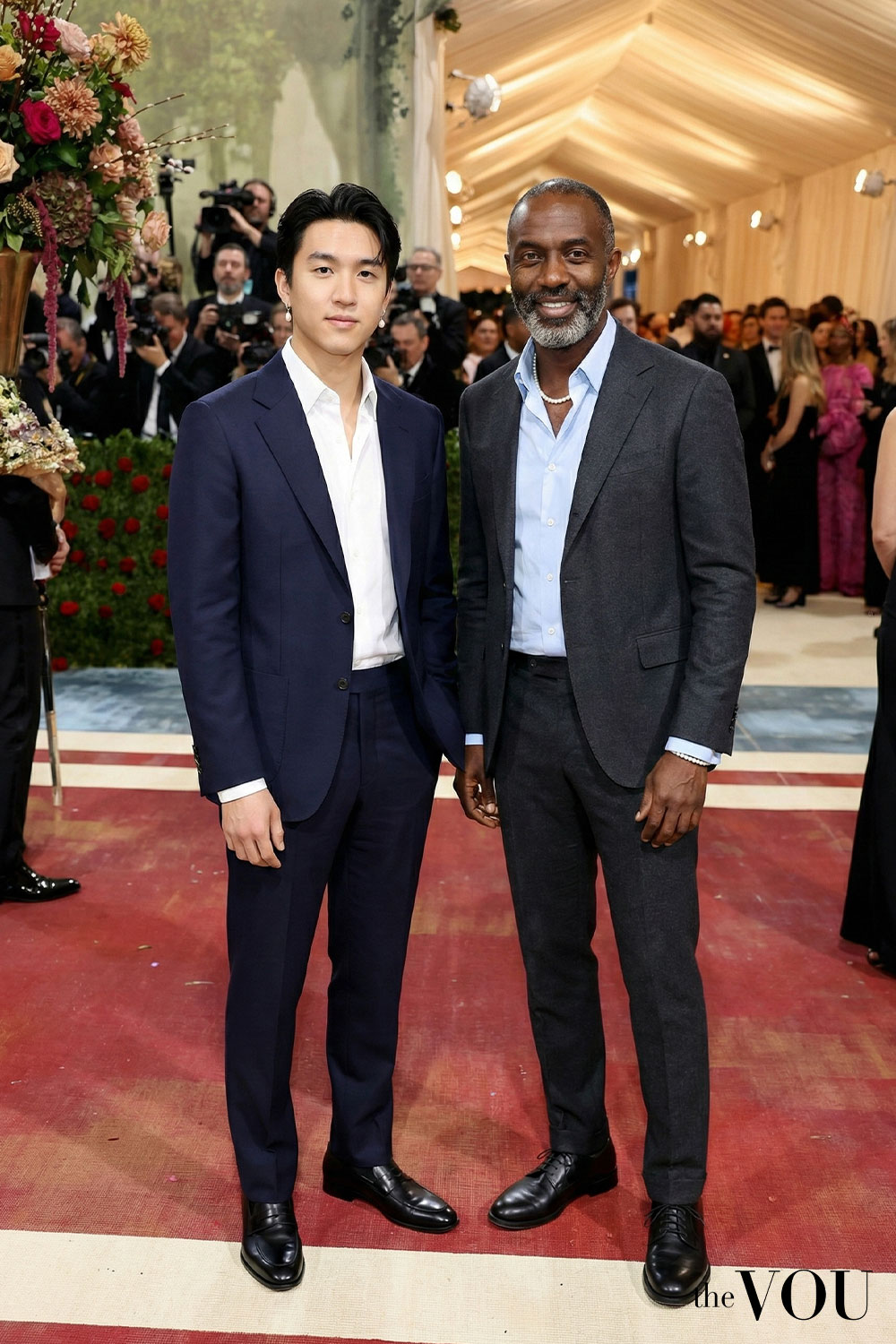
Men wearing pearls became a widely reported trend from 2019, and today men wear pearl necklaces, bracelets, pendants and earrings with both casual and tailored clothes.
This guide explains the trend and how to choose and wear pearls, such as
What was reported about men wearing pearls in 2019 and 2020
Why men have worn pearls for centuries
Freshwater, Akoya, Tahitian, South Sea and baroque pearls
The seven quality factors the GIA uses
How to wear pearls for everyday, work, formal events and weddings
and many more!
Start with one understated pearl accessory and build from there if you enjoy wearing it.
Key Points
01Harry Styles wore a single pearl earring at the May 2019 Met Gala and a pearl necklace on his December 2019 press tour, according to W magazine.
02Lustre is possibly the most important quality factor, according to the GIA.
03Put pearls on after cologne and wipe them with a soft cloth before putting them away.
04Buy pearl jewellery to enjoy wearing it, not as an investment.
Pearls for men, why they are back and how to wear them
Pearl necklaces, bracelets and earrings have become a regular sight on men in fashion coverage since 2019, and many men now wear them as casually as a watch or a ring.
This guide explains how the trend grew, why men have worn pearls for centuries, how to choose pearl jewellery, and how to wear it from everyday outfits to weddings.
How the trend grew, and what was reported when
W magazine reported on 18 December 2019 that Harry Styles had worn a single pearl earring with his Gucci outfit at the Met Gala in May 2019, and that by December he was wearing a pearl necklace throughout the press tour for his album “Fine Line”, including on “The Graham Norton Show” on 5 December 2019.
On 10 March 2020, The Wall Street Journal published an article by Jacob Gallagher headlined “The Latest Must-Have Accessory for Men Is…a Pearl Necklace?”.
Vogue France reported on 17 July 2020 that a report by the shopping platform Lyst named pearls as a leading men’s jewellery trend of 2020, and that searches for pearl jewellery similar to jewellery Styles had worn rose by 31% after he was seen in a pearl necklace the previous December.
The same Vogue France article named A$AP Rocky, Shawn Mendes, Pharrell Williams and Billy Porter among the men wearing pearls, and noted that A$AP Rocky had worn a double necklace of pearls during the Spring/Summer 2019 fashion week season.
Since then, pearl necklaces and earrings have stayed in menswear collections and on red carpets, and are now one of several jewellery options men use alongside chains, rings and watches.
Why men are choosing pearl jewellery
A wider idea of men’s jewellery
Men’s jewellery is no longer limited to a watch and a wedding ring.
Pearls fit into that wider range because they are understated, have a soft lustre rather than sparkle, and work with both casual and tailored clothes.
Less division between men’s and women’s accessories
Some jewellers and fashion brands now design pearl jewellery without labelling it for men or women.
A short pearl necklace can look as natural with a blazer as it does over a vintage band T-shirt.
Visible examples
When well-known men wear pearls at widely photographed events, the coverage gives other men an example of how to wear them, as the reporting above shows.
Social media spreads those examples further, as men share their own ways of wearing pearls.
Can men wear pearls? Men have worn them for centuries
Pearls have had feminine associations in many cultures, for example through their links with the Moon and with Venus, but men have worn them for thousands of years.
The International Gem Society notes that Chinese historians recorded pearls as early as 2206 BCE.
In ancient Rome, pearls were a sign of wealth and rank, and W magazine notes that Julius Caesar decreed that only members of the ruling class could wear them.
Mughal emperors in India and many European rulers, including Henry VIII, wore pearls in their jewellery and sewn onto their clothes.
Sir Walter Raleigh, a courtier and favourite of Queen Elizabeth I, was painted in 1588 wearing a large pearl earring.
In 20th-century Western fashion, pearls became mainly associated with women’s jewellery, which is why men wearing them now can feel new even though it has a long history.
What pearls can mean to the wearer
A natural pearl forms when a mollusc coats a tiny irritant with layers of nacre over time; a cultured pearl forms the same way around a bead or tissue placed in the mollusc by a farmer.
For some wearers, that slow process makes a pearl a fitting symbol of patience or of something valuable coming out of difficulty.
The symbolism of pearls varies between cultures, from wisdom and wealth to the Moon and tears, so the meaning is yours to choose.
Others simply like the way pearls look, which is reason enough.
Buying guide to pearl jewellery for men
Types of pearls
Freshwater cultured pearls are the most commonly produced pearls, grown mainly in China, in a wide range of shapes, sizes and colours, and usually the most affordable.
Akoya cultured pearls are saltwater pearls from Japan and China, usually white or cream and round, the classic choice for a single strand or small studs.
Tahitian cultured pearls, saltwater pearls from French Polynesia, come in grey, black or brown, often with green, blue or purple overtones.
South Sea cultured pearls are large saltwater pearls from Australia, Indonesia and the Philippines, ranging from white and silver to golden.
Baroque pearls are pearls of any type with an irregular shape, popular in men’s jewellery for their natural, imperfect look.
Prices vary widely with type, size and quality, so compare several jewellers before you buy, and remember that a higher price is not a guarantee of better quality.
Size and proportion
Pearl size is measured in millimetres across the pearl.
As a rough guide, 6 to 8 mm pearls look discreet, 8 to 10 mm pearls are noticeable without dominating, and larger pearls, often used as single pendants, make a stronger statement.
Your build, your neck and how bold you want the look to be matter more than any fixed size, so try different sizes on if you can.
Quality factors to check
The Gemological Institute of America (GIA) uses seven value factors for pearls.
Size
Shape, where round is the rarest cultured shape, but baroque shapes are a style choice rather than a flaw
Colour, meaning the main body colour, plus any overtone or iridescent shimmer
Lustre, or how sharply the surface reflects light, which the GIA describes as possibly the most important factor
Surface, judged by how few and how slight the marks, spots or ridges are
Nacre quality, since thin nacre can look dull and wear through
Matching, which in a necklace or bracelet means how well the pearls match each other
Ask the seller whether pearls have been dyed or treated, especially very dark or brightly coloured ones.
How men wear pearls
Short pearl necklaces
A short necklace that sits around the base of the neck or just below the collarbone is the most common style for men.
Smaller pearls of a similar size look the most understated and suit everyday wear.
Pearl bracelets
A pearl bracelet is an easy first step, because it is less visible than a necklace.
Wear it on its own or with a leather band or metal cuff.
Single pearl pendants
A baroque or Tahitian pearl on a leather cord or a simple chain contrasts a rough texture with a smooth one and suits casual outfits.
Pearl earrings
A small single pearl stud or a pearl drop earring is a subtle option, and the one Harry Styles wore to the 2019 Met Gala drew wide attention to the style.
Mixing materials
Pearls combine well with other materials, which is one reason they can upgrade your style without looking formal.
Common combinations include the following.
Oxidised silver and blackened metals
Leather cords and woven bands
Brushed or matt gold
Stainless steel
Small coloured gemstones
Styling pearl jewellery by occasion
Everyday casual
Wear a pearl bracelet or a single pendant with a crew-neck jumper, dark jeans and white trainers.
One pearl accessory is usually enough for a casual outfit.
Smart casual
Wear a short pearl necklace of small pearls with a white Oxford shirt, top button open, stone chinos and brown loafers, adding a leather bracelet if you like.
Business
Choose small pearl studs or a pearl bracelet that sits under your shirt cuff, and check what is usual in your workplace.
Pearls in an office setting look best when they support the outfit rather than lead it.
Formal events
Wear a Tahitian pearl pendant on a fine silver chain with a dark suit and an open-collared shirt, or pearl cufflinks with a shirt and tie.
Weddings and milestones
A groom or guest can wear a short pearl necklace with an open collar, or pearl cufflinks or studs with a tie.
Some men also buy pearl jewellery to mark a birthday, a new job or another milestone.
Where to buy pearl jewellery
Specialist pearl jewellers
Specialist pearl jewellers can explain the type, size and quality of each strand; for example, The Pearl Source has a section of men’s pearl necklaces and bracelets.
Established jewellery houses
Japanese pearl jewellers such as Mikimoto and Tasaki, and some fashion houses, sell pearl jewellery at higher prices.
Buying online
Online, look for these details.
The pearl type, size in millimetres and any treatment stated clearly
A clear returns policy
A grading report or certificate for high-value pearls
Customer reviews with photographs
Independent jewellers
An independent jeweller can source specific pearls and make a design to your taste.
Caring for pearl jewellery
Pearls are soft organic gems that can be damaged by acids, chemicals and scratches, so they need gentler care than metal jewellery.
Put them on last, after cologne, aftershave and hair products.
Wipe after wearing. Mikimoto notes that perspiration can harm lustre, so wipe pearls gently with a soft cloth before putting them away.
Store separately. Harder gemstones and metal can scratch pearls, so keep them in a soft pouch or their own compartment.
Avoid chemicals and water, so take pearls off before swimming, showering or cleaning, and do not use an ultrasonic cleaner.
Wear them, as Mikimoto advises against leaving pearls shut away for long periods.
Restring regularly, and have strung necklaces and bracelets checked and restrung by a jeweller, especially if the thread has stretched.
Sourcing and sustainability
Pearl farming depends on clean water, and how farms are run varies.
When you buy, ask the jeweller where and how the pearls were farmed, and look for the points below.
Clear information on the pearl type and where it was farmed
Details of farming practices
Sellers willing to answer questions about sourcing
Is men’s pearl jewellery an investment?
Buy pearl jewellery because you will enjoy wearing it, not as an investment.
Natural pearls are rare, and rare large pearls can be valuable, but most pearl jewellery is cultured, and there is no simple, standard resale market for it.
If you are spending a lot, ask for a grading report and keep your receipt and any certificate.
Will the trend last?
No one can promise how long a trend will last.
Pearls have stayed in menswear since the coverage of 2019 and 2020, and because men wore them for centuries before that, they are likely to remain one of the jewellery choices open to men.
Frequently asked questions about men wearing pearls
Q. Are pearls too feminine for men?
No; pearls have had feminine associations, but men have worn them throughout history, from Roman and Mughal rulers to European courtiers.
Today they are widely worn by men and styled with both casual and tailored clothes.
Q. What size pearls should men wear?
Smaller pearls, around 6 to 8 mm, are the most discreet; larger ones make a bolder statement, and single pendant pearls can be bigger still.
Try sizes on if you can, because the right size depends on your build and the look you want.
Q. Can you wear pearls to work?
Often, if you choose discreet pearls such as a bracelet, small studs or a short necklace worn under the collar, and check what is usual in your workplace.
Q. How much should I spend on my first pearl jewellery?
Freshwater pearls are usually the most affordable way to try the look.
Set a budget you are comfortable with, compare several jewellers, and move on to Akoya or Tahitian pearls later if you enjoy wearing them.
Q. Do pearls suit all skin tones?
You can try pearls with any skin depth.
Hold the actual pearl, whether white, cream, golden or dark, beside your face and against the clothes you will wear it with.
The size of the pearl, its lustre and the colours around it all change how it looks.
Skin depth alone does not tell you which pearl to choose.
What men wearing pearls really means
For most men, wearing pearls is simply a choice of accessory they like.
Whether you start with a freshwater bracelet or a Tahitian pendant, choose pearls that you enjoy and that suit the clothes you already wear.
Sources
Steph Eckardt, “We Need to Talk About Harry Styles’s Pearl Necklace”, W magazine, 18 December 2019.
Alexandre Marain, “Could pearls be the biggest men’s jewelry trend of 2020?”, Vogue France, 17 July 2020.
Jacob Gallagher, “The Latest Must-Have Accessory for Men Is…a Pearl Necklace?”, The Wall Street Journal, 10 March 2020.
GIA, Pearl quality factors and pearl description.
Mikimoto America, Pearl care.
International Gem Society, Pearl symbolism and legends.