
Start here
What’s This About
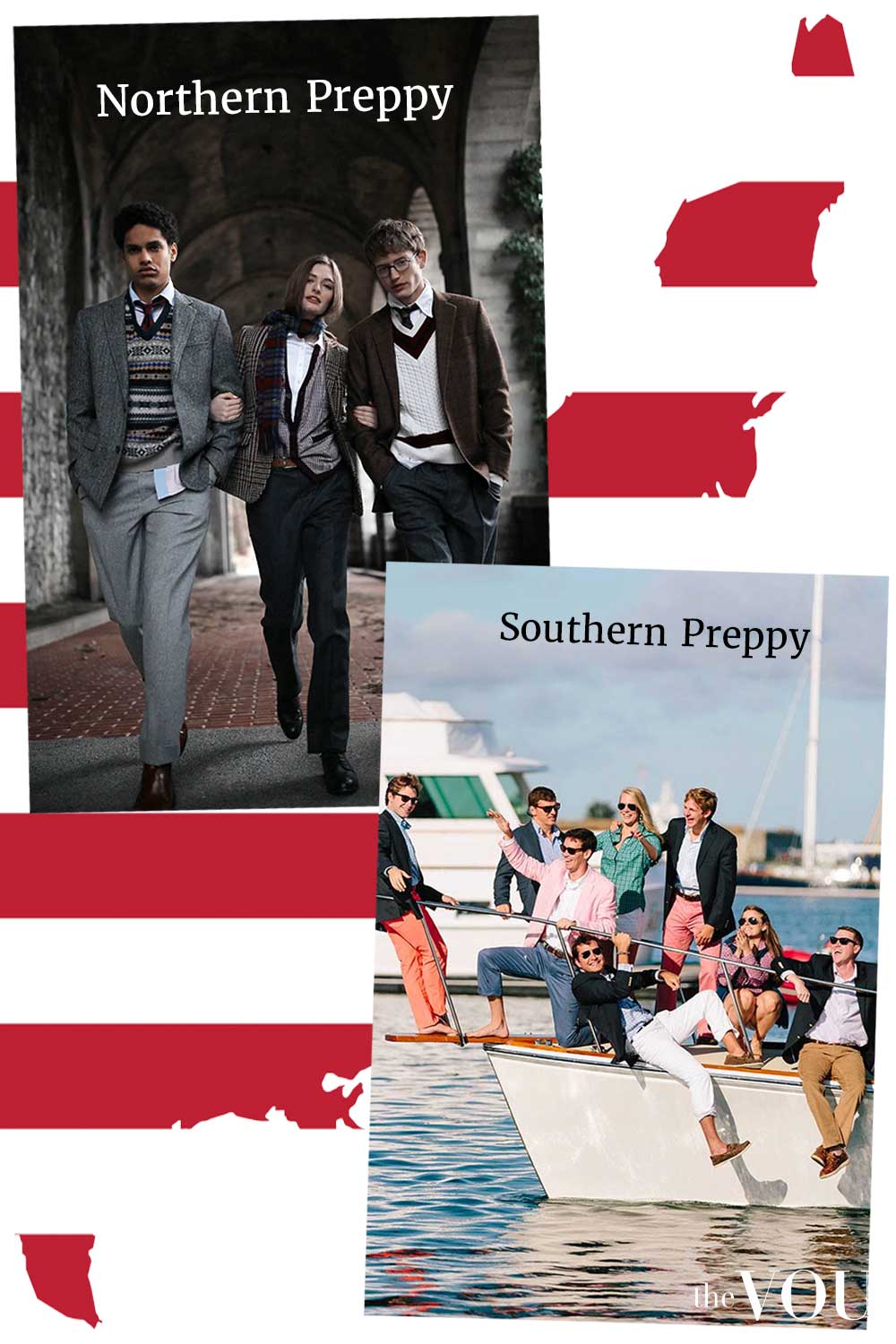
Northern preppy leans on navy, tweed and heavier cloth for cold winters, while Southern preppy leans on seersucker, linen and colour for hot summers.
This guide compares the two regional versions of American preppy, such as:
What both versions share
Why climate drives most of the differences
Garment-by-garment comparison of jackets, shirts, trousers and shoes
The documented history of seersucker in the South
Outfit ideas for a Northern autumn and a Southern summer
and many more!
The labels are conventions, so choose by your climate and the occasion rather than by region.
Key Points
01Both versions share the Oxford button-down, navy blazer, chinos and loafers.
02Seersucker suits were advertised in New Orleans as early as 1867.
03Hot-weather comfort depends on fabric weight and weave more than on any regional label.
04A navy blazer works in both regions and every season.
Northern preppy and Southern preppy are two regional takes on the same American wardrobe: the Northern version leans on navy, grey, tweed and heavier cloth for cold winters, while the Southern version leans on seersucker, linen, madras and lighter colours for long, hot summers.
This guide compares the two garment by garment, explains the documented history behind the main differences, and gives outfit ideas for each, so you can decide which suits your climate and the occasions you dress for.
“Northern” and “Southern” here are informal labels rather than fixed rules, and plenty of people in Boston wear seersucker in August while plenty in Atlanta wear tweed in January.
The clothes also say nothing certain about anyone’s school, income or family, so choose them for comfort, climate and taste.
What the two versions share
Both versions come from the American preppy and Ivy League wardrobe that grew up around north-eastern universities and preparatory schools in the first half of the twentieth century.
Both rest on the same foundations: the Oxford cloth button-down shirt, the navy blazer, chinos, knitwear and leather loafers.
Our guides to the Northern preppy style and the Southern preppy style cover each version on its own in more depth.
Why the two versions differ
The main reason is climate.
New England winters call for wool flannel, tweed, heavy knitwear, waterproof boots and warm coats, while summers in much of the South are long, hot and humid, which favours open, lightweight cotton and linen.
Local events add their own customs, such as college football games and autumn walks in the North, and garden parties, summer weddings and horse races in the South.
Seersucker is the clearest example of a regional association with a documented history.
The puckered cotton came originally from the Indian subcontinent, and the Historic New Orleans Collection has found seersucker suits advertised in New Orleans as early as 1867.
The New Orleans clothing maker Haspel later did much to promote seersucker suits in the twentieth century.
In 1996 Senator Trent Lott of Mississippi began Seersucker Thursday in the US Senate, a summer day when members wore seersucker; it lapsed in 2012 and was revived in 2014, when Bill Cassidy of Louisiana, then a congressman, brought it back in the House and the Senate followed.
Northern and Southern preppy garment by garment
The table shows typical choices in each region, and each column describes a tendency rather than a uniform.
Scroll horizontally to see all columns →
| Garment | Northern preppy tends towards | Southern preppy tends towards |
|---|---|---|
| Jacket | A navy wool blazer, a tweed sports jacket or a grey flannel suit | A seersucker, linen or madras jacket, or a lightweight navy blazer |
| Shirt | An Oxford cloth button-down in white or blue | An Oxford button-down in pastel colours, or a poplin, linen or gingham shirt |
| Trousers | Grey flannel trousers, heavier chinos and corduroy | Light cotton chinos, linen trousers and brightly coloured trousers |
| Knitwear | Shetland and cable-knit jumpers worn for much of the year | A light cotton jumper over the shoulders on a cool evening |
| Outerwear | A duffle coat, pea coat, waxed jacket or camel overcoat | A light rain jacket or a cotton or waxed jacket for mild winters |
| Shoes | Penny loafers, brogues and rubber-soled duck boots | Penny or tassel loafers, boat shoes, white bucks and suede shoes |
| Neckwear and accessories | Repp stripe ties, wool scarves and leather gloves | Bow ties, needlepoint belts, Panama or straw hats and pocket squares |
| Colour | Navy, grey, brown, burgundy and forest green | Navy and white with pink, mint, yellow, light blue and faded red |
Northern preppy in more detail
The Northern wardrobe is built for changing seasons.
A navy blazer, an Oxford button-down and grey flannel trousers form its most familiar outfit, and a tweed jacket replaces the blazer in autumn.
Shetland and cable-knit jumpers are worn over shirts for much of the year, and a rugby shirt is a common weekend alternative.
For snow and rain, rubber-soled duck boots and a duffle or pea coat are typical.
Striped Breton shirts often appear in nautical outfits on the coast in summer, though the shirt began as a French naval garment rather than a New England one.
The colours are mostly dark and muted, which hides wear and suits grey winter light.
Southern preppy in more detail
The Southern wardrobe is built for heat.
A blue and white seersucker suit or jacket is its best-known garment, worn with a white or pastel shirt and loafers.
Linen and madras jackets, pastel Oxford shirts, gingham shirts and light chinos fill the rest of the summer wardrobe.
Accessories carry much of the colour: bow ties, needlepoint belts stitched with small motifs, straw hats and pocket squares.
Southern winters are generally mild, so a navy blazer over a light jumper often replaces a heavy overcoat.
Colour
The Northern palette centres on navy, grey, brown, burgundy and forest green, and the Southern palette adds pink, mint, yellow, light blue and faded red to navy and white.
Light colours reflect more sunlight than dark ones, which is one practical reason pale clothes are popular in hot weather.
Navy works in both regions and in every season, so a navy blazer is the easiest starting point whichever version you prefer.
Fabric and weight
The weight and weave of the cloth matter more for comfort than any regional label.
For cold weather, choose wool flannel, tweed, corduroy and heavier cotton twill.
For hot weather, choose seersucker, linen, cotton poplin, madras and open-weave or lightweight wool, which let air move and dry more quickly than dense cloth.
Check the fibre content on the label and hold the cloth up to the light: the more light that passes through, the cooler the garment is likely to feel.
Outfit ideas
These suggestions can be built from clothes many readers already own.
Northern autumn weekend
Wear: a brown tweed jacket, a blue Oxford button-down shirt, a navy Shetland crew-neck jumper, khaki chinos and brown penny loafers, with duck boots if it is wet.
Northern winter office
Wear: a navy blazer, a white Oxford button-down shirt, a burgundy repp tie, grey flannel trousers, dark brown brogues and a camel overcoat.
Southern summer event
Wear: a blue and white seersucker suit, a white or pale pink shirt, a madras or silk bow tie, brown suede loafers and a straw Panama hat.
Southern summer weekend
Wear: a mint or pink Oxford button-down with the sleeves rolled, stone chinos or chino shorts, a needlepoint or canvas belt and brown leather boat shoes.
A mixed outfit for spring
Wear: a navy blazer, a pink Oxford button-down shirt, stone chinos, a needlepoint belt and burgundy penny loafers.
This combines the Northern navy blazer with Southern colour and works in either region.
Combining the two
Most readers will mix both versions as the seasons change, and that is the most practical way to use them.
Good combinations include an Oxford button-down with a needlepoint belt, a bow tie with a tweed jacket in autumn, and penny loafers with pastel chinos in spring.
Before an event, check the weather, the dress code on the invitation and how formal the venue is, because those decide what fits the occasion far more than whether a garment counts as Northern or Southern.
For five ready-made warm-weather looks, see our Southern preppy summer outfit ideas.
Quizzes and personal help from The VOU
None of these tools is needed to wear the outfits above, but some readers like extra help when choosing clothes.
You can read about choosing an image consultant and what an image consultant does, and our guides to dressing for your body shape and seasonal colour analysis explain two optional frameworks for thinking about proportion and colour.
For more on dressing for the setting, see styling by occasion, location, season and time of day.
For the vocabulary behind this guide, see our explainers on clothing, garments, fashion accessories, menswear silhouettes and outfits.
We also cover heritage luxury brands and how logo-heavy luxury designs come across, and our fashion style guide explains personal and historic styles.
1. Check your body shape
Check your body shape with the body shape quiz for men.
2. Find your seasonal colours
Find your seasonal colours with the seasonal colour quiz for men.
3. Take the fashion style quiz
Take the fashion style quiz for men to see which styles and outfit ideas match what you like wearing.
Book a consultation for personal help
If you would like personal help after the three quizzes, you can book a consultation with The VOU’s image consultants and stylists through our styling services for men, or contact us with questions.