

Start here
What’s This About
Avant-garde fashion is design that deliberately challenges accepted ideas of cut, material and wearability, while haute couture is a legally protected French category of made-to-measure, hand-finished clothing.
This explainer covers the ideas behind avant-garde menswear, such as:
where the term comes from and its roots in early 20th-century art
the designers who shaped it, from Pierre Cardin to Craig Green
how avant-garde differs from haute couture
how its ideas reach everyday menswear
and many more!
For outfits and a step-by-step wardrobe, see our avant-garde guide for men.
Key Points
01Avant-garde comes from the French military term for the advance guard, the troops who go ahead of the main force.
02Its fashion roots lie in early 20th-century art movements such as Dada and Surrealism; in menswear, Pierre Cardin’s 1960s space-age designs and the Japanese designers who arrived in Paris in 1981 (showing menswear there from the mid-1980s) were turning points.
03Haute couture is a protected name in France for houses approved by the Chambre Syndicale; avant-garde is an attitude with no such rules.
04Several landmark avant-garde collections often cited in menswear, such as Comme des Garçons’ 1997 Body Meets Dress, were womenswear, and that is worth knowing when you read fashion history.
In the ever-evolving world of men’s fashion, two terms often spark intrigue and confusion: avant-garde and haute couture.
While both represent pinnacles of sartorial creativity, they differ significantly in their approach, purpose, and execution.
This guide explains avant-garde fashion, how it differs from haute couture, and its place in menswear.
What is Avant Garde?
Avant Garde describes an experimental and innovative approach to design and styling that challenges established fashion styles, traditional silhouettes, the use of conventional materials, and cultural understandings of what fashion can be.
Like an artistic rebellion within the fashion industry, Avant-garde intends to expand the boundaries of fashion as a form of cultural and artistic expression and question the status quo.
Whether it is the garment’s structural composition or how it is presented and accessorised, Avant-garde fashion aims to provoke thought, evoke emotion, and invite interpretation.
In menswear, Avant-Garde experimental designs and novel styling approaches push boundaries, challenge conventions, and redefine the very concept of clothing.
At its core, avant-garde fashion is characterised by:
- Unconventional silhouettes and proportions
- Innovative use of materials and textures
- Conceptual designs that often blur the line between art and fashion
- A disregard for traditional notions of wearability or practicality
Avant Garde Fashion Roots
The term “avant-garde” comes from French military language: the advance guard, or vanguard, is the part of an army that goes ahead of the main force, and the phrase was later used for artists working ahead of their time.
The avant-garde movement in fashion has its origins in early 20th-century art movements, particularly Dadaism and Surrealism.
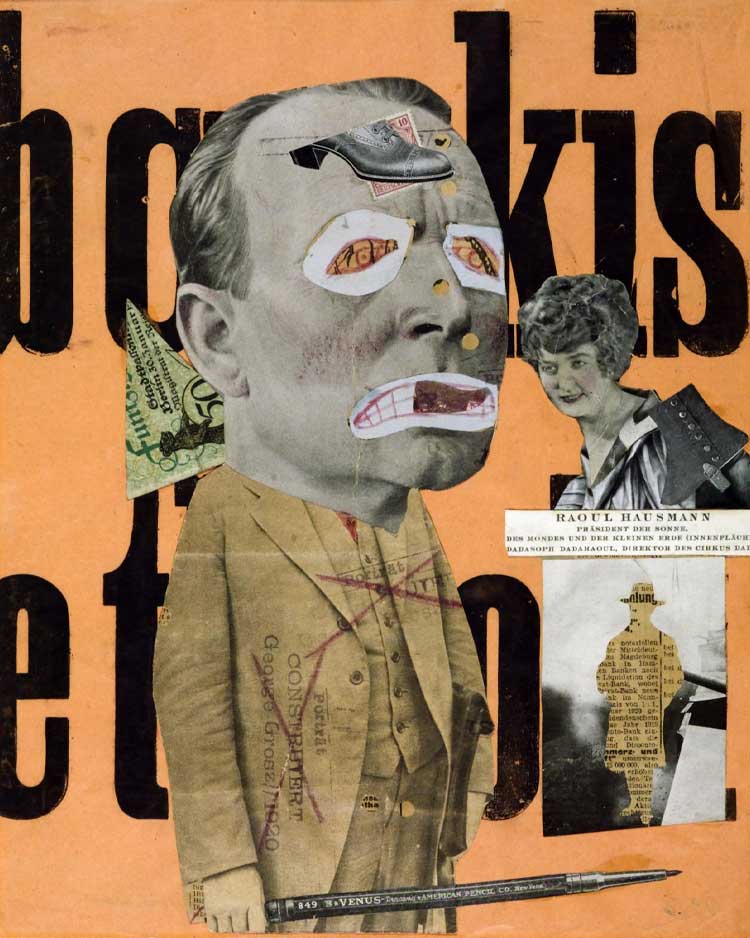
These artistic revolutions sought to challenge established norms and provoke thought, principles that avant-garde fashion designers would later adopt.
In menswear, the avant-garde movement gained significant traction in the 1960s and 1970s.
Designers like Pierre Cardin and Rudi Gernreich introduced futuristic details and unisex designs that defied traditional masculine aesthetics.
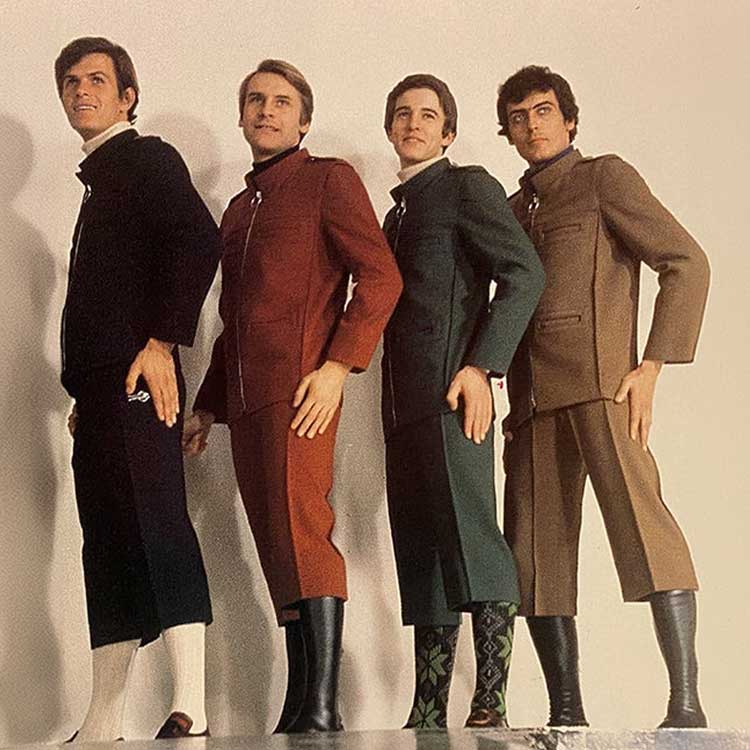
Cardin’s space-age inspired collections, featuring geometric shapes and novel materials, exemplified how avant-garde fashion could push menswear into new territories.
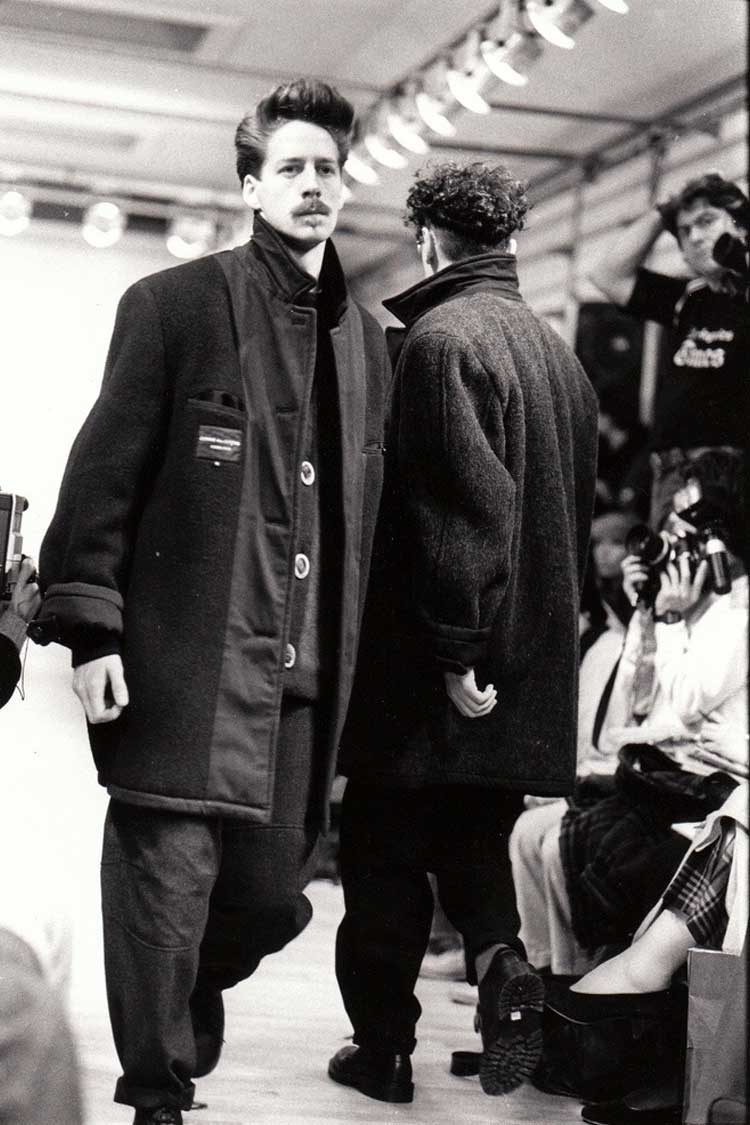
Designer Rei Kawakubo of Comme des Garçons famously challenged the form-fitting ideals of menswear in the 1980s with her oversized, asymmetrical creations as early examples of Avant-Garde men’s fashion.
Avant Garde in the 21st Century
Today, avant-garde designers often work in four main areas: material innovation, sustainability, gender fluidity and technology.
Material Innovation
The use of unconventional materials is a hallmark of avant-garde fashion.
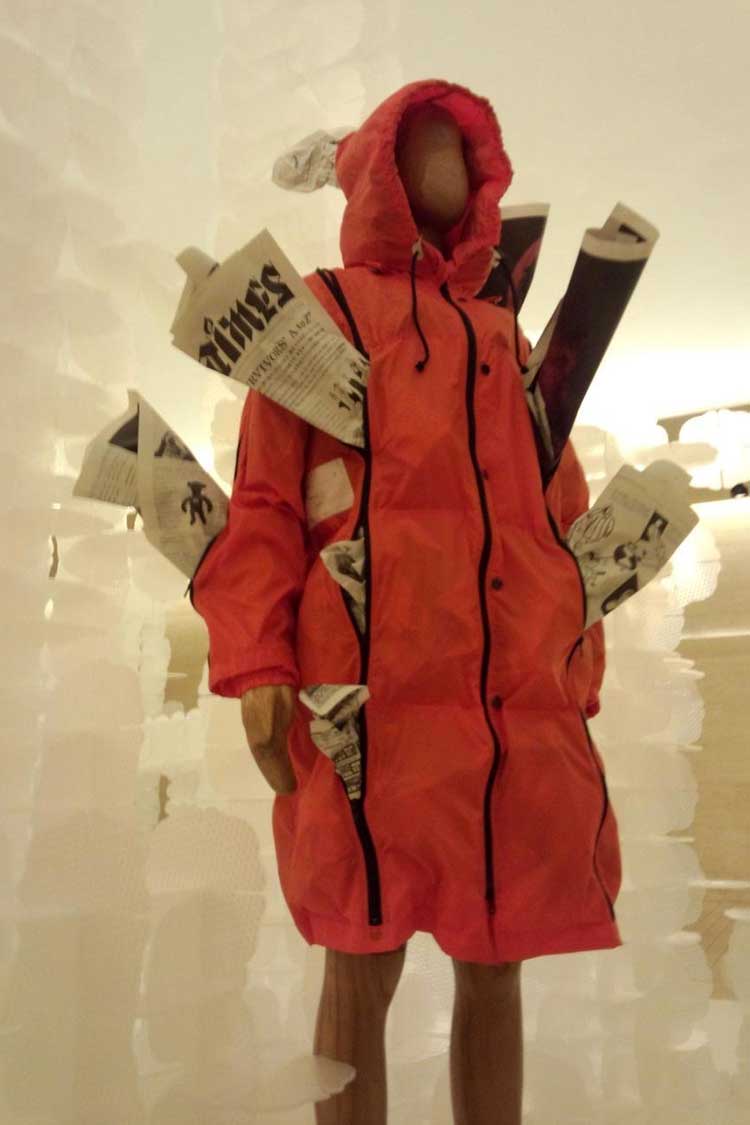
For example, Kosuke Tsumura, the designer behind Final Home, created a coat made from nylon with multiple pockets that could be filled with newspaper for insulation, challenging traditional notions of menswear functionality and adaptability.
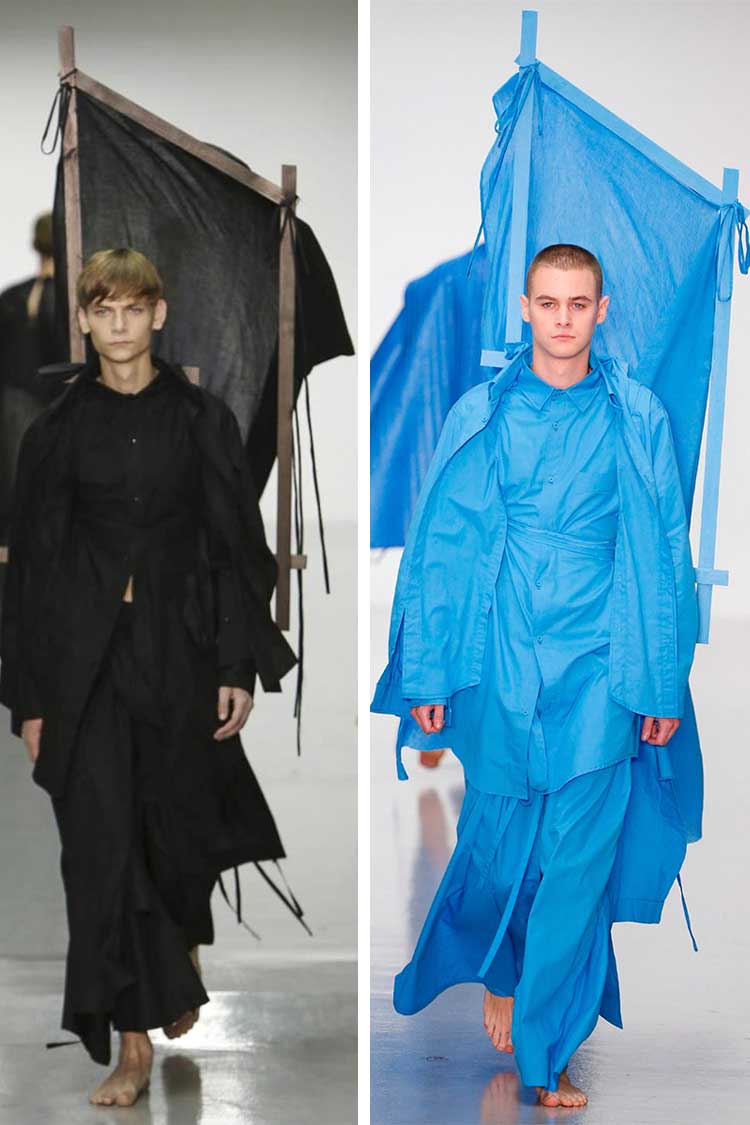
Craig Green, a British menswear designer, has used unconventional structures, such as wooden frames strapped to models’ backs, alongside more familiar workwear fabrics, pushing the boundaries of what menswear can be.
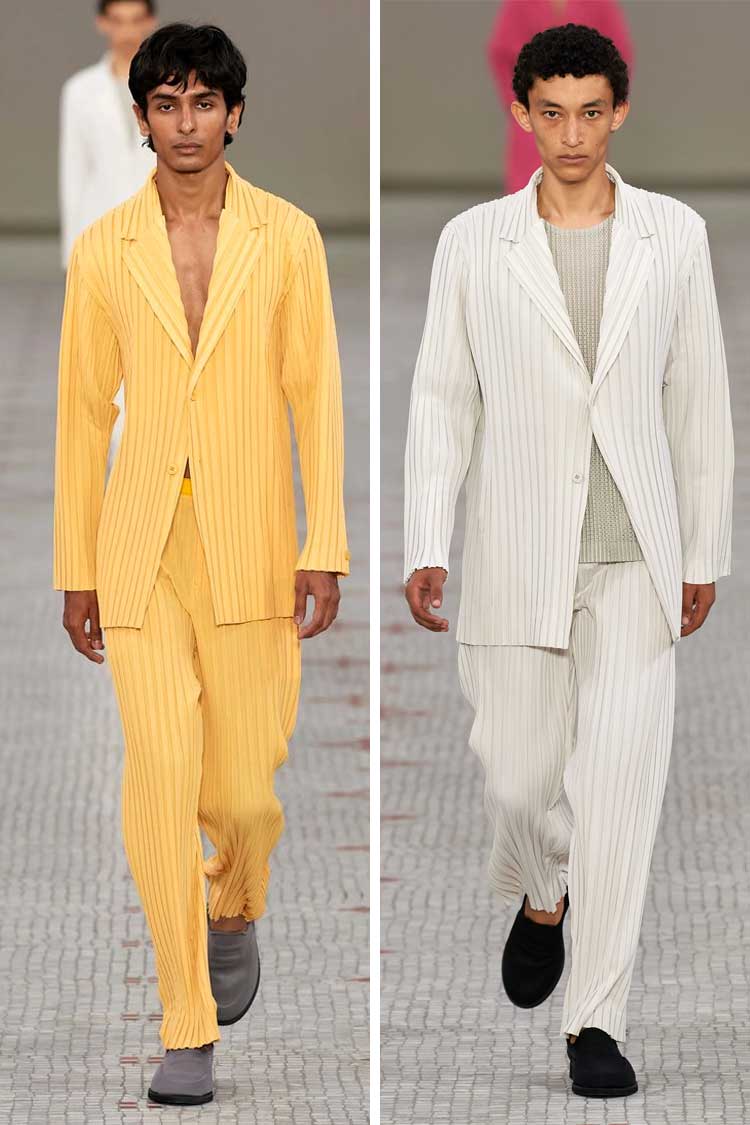
Similarly, Issey Miyake’s revolutionary pleating techniques have redefined how fabric interacts with the male form.
Sustainability
Some avant-garde designers are also at the forefront of sustainable fashion.
Brands like Maharishi use recycled military fabrics to create thought-provoking, eco-conscious menswear.
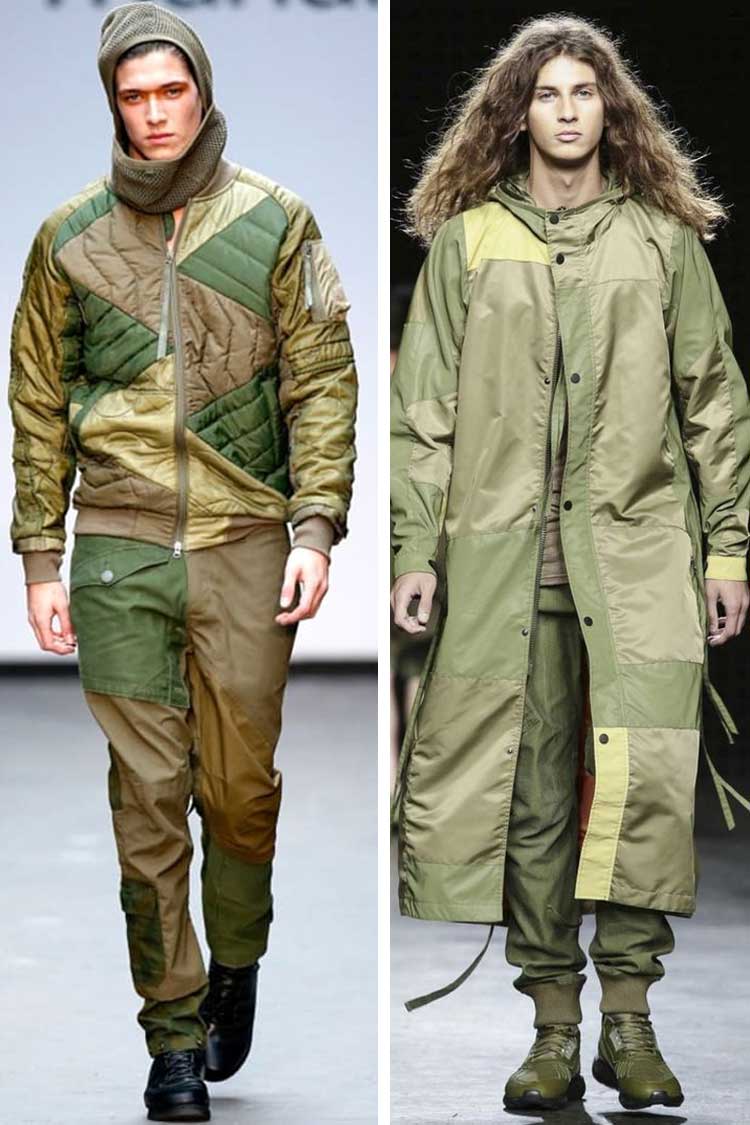
This approach not only challenges aesthetic norms but also questions the fashion industry’s environmental impact.
Gender Fluidity
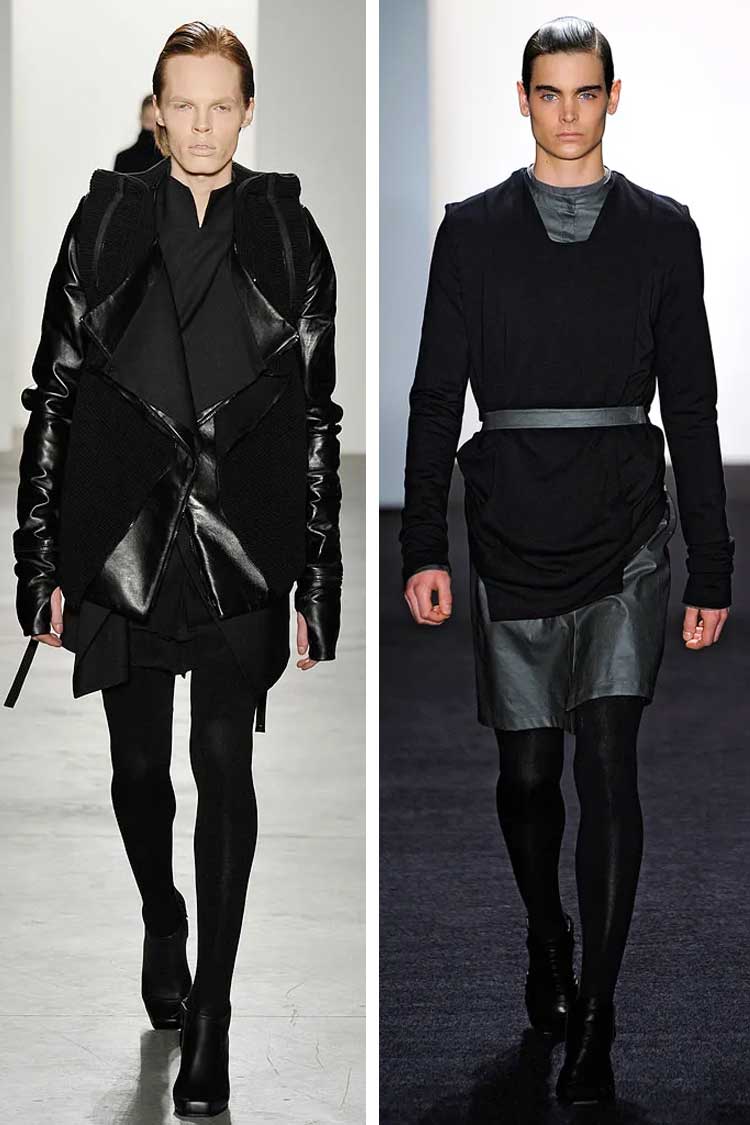
Avant-garde menswear often blurs gender lines.
Designers like Rad Hourani and J.W. Anderson create collections that challenge traditional notions of masculinity, offering a more fluid approach to men’s fashion.
Technology Integration
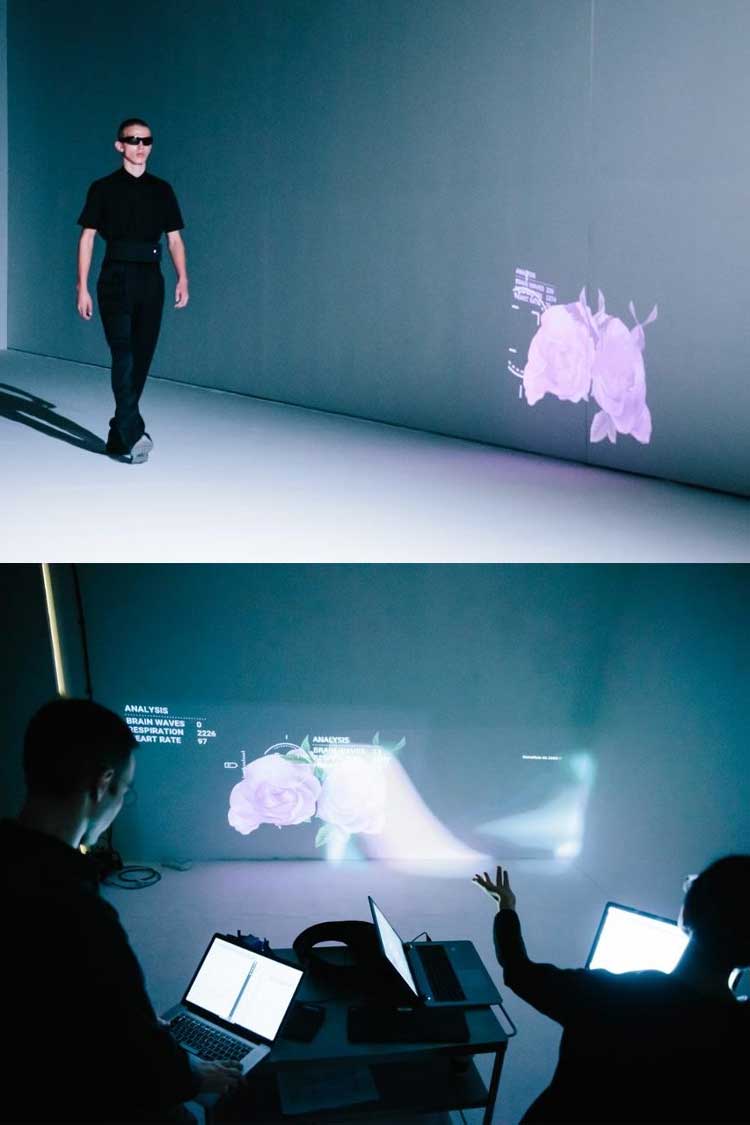
The integration of technology in clothing is another frontier for avant-garde menswear.
Hussein Chalayan, for instance, has created garments that change shape mechanically, including his 2000 Remote Control Dress, a womenswear design that merged fashion with performance and technology.
Key Figures in Avant-Garde Menswear
Several designers have made significant contributions to avant-garde menswear, each bringing their unique vision to challenge traditional notions of masculine dress:
Pierre Cardin
A pioneer of space-age fashion, Cardin’s futuristic designs in the 1960s and 70s pushed menswear into new frontiers.
His use of geometric shapes, novel synthetic fabrics, and unconventional silhouettes in men’s clothing laid the groundwork for much of today’s avant-garde fashion.
Cardin’s ‘Cosmocorps’ collection in 1964 envisioned a unisex future for fashion.
Issey Miyake
Miyake’s innovative approach to fabric and form has revolutionised menswear.
His women’s line Pleats Please (1993) made garment pleating his signature, and in 2013 the menswear line Homme Plissé brought the same heat-pressed pleats to men’s clothing.
Miyake’s ‘A-POC’ (A Piece of Cloth) concept, where entire garments are cut from one continuous tube of knitted fabric, challenged traditional notions of garment construction.
Yohji Yamamoto
Known for his oversized silhouettes and monochromatic palettes, Yamamoto’s designs challenge Western tailoring traditions.
His work often features asymmetrical cuts and deconstructed details, redefining masculine elegance.
Yamamoto’s 1981 Paris debut, a women’s collection of loose black layers, shocked the Paris press; he first showed menswear there in 1984, bringing the same oversized black tailoring to men.
Rick Owens
Owens’ gothic, post-apocalyptic aesthetic has led the press to nickname him the “Lord of Darkness”.
His menswear collections feature draped fabrics, unconventional proportions, and a subversive take on traditional masculinity.
His spring/summer 2014 women’s show, staged in September 2013 with step teams, challenged conventional fashion presentations.
Thom Browne
While rooted in traditional tailoring, Browne’s surrealist approach to menswear pushes boundaries.
His shrunken suits and theatrical runway shows challenge perceptions of conventional men’s fashion.
Browne’s signature grey suit, dramatically shortened and tightened, has become an iconic avant-garde reinterpretation of classic menswear.
Rei Kawakubo (Comme des Garçons)
Kawakubo’s work for Comme des Garçons has consistently challenged notions of beauty and function in womenswear and, through Comme des Garçons Homme Plus (from 1984), in menswear.
Her spring/summer 1997 women’s collection Body Meets Dress, often called Lumps and Bumps, used padding to distort the body, questioning idealised body shapes in fashion.
Walter Van Beirendonck
As part of the Antwerp Six, Van Beirendonck’s colourful, often whimsical designs push the boundaries of menswear.
His work often incorporates political and social commentary, using fashion as a medium for expressing complex ideas.
Raf Simons
Simons’ work in menswear often draws from youth subcultures and contemporary art.
His oversized silhouettes and graphic-heavy designs have significantly influenced modern streetwear and high fashion alike.
Craig Green
Green’s work often blurs the line between fashion and art installation.
His collections feature conceptual designs that challenge traditional notions of masculinity and functionality in menswear.
Gareth Pugh
Pugh’s futuristic, often sculptural designs push the boundaries of wearability.
His use of unconventional materials and dramatic silhouettes create a bold vision of future-focused menswear.
Hussein Chalayan
Chalayan’s work often incorporates technology and conceptual details.
His ‘Remote Control Dress’ and other tech-integrated designs have expanded the definition of what clothing can be and do.
Jun Takahashi (Undercover)
Takahashi’s work for Undercover often combines streetwear with high-concept design.
His collections frequently feature intricate narratives and subversive takes on popular culture.
Boris Bidjan Saberi
Saberi’s work is known for its avant-garde take on streetwear, often incorporating experimental fabric treatments and unconventional proportions.
His designs blend influences from street culture with high-end tailoring techniques.
Kosuke Tsumura
Best known for his brand Final Home, Tsumura’s work centres on the concept of clothing as shelter.
His best-known design, a transparent nylon jacket filled with removable pockets, challenges conventional notions of menswear functionality.
Tsumura’s designs often blur the line between fashion and survival gear, prompting reflection on clothing’s role in modern society.
J.W. Anderson
Jonathan Anderson’s eponymous label has been at the forefront of challenging gender norms in fashion.
His menswear collections often incorporate traditionally feminine details, such as ruffles, crop tops, and corset-inspired designs.
Anderson’s work continually questions and redefines the boundaries of masculine dress, making him a key figure in contemporary avant-garde menswear.
Avant-Garde vs Haute Couture in Menswear
While both avant-garde and haute couture represent the pinnacle of fashion creativity, they differ in several important ways:
Purpose
Avant-garde menswear primarily aims to challenge conventions and push boundaries. It’s often more concerned with concept than wearability.
Haute couture, on the other hand, focuses on creating the highest quality, made-to-measure garments for a select clientele.
Production
Avant-garde designs may be produced in limited quantities but are not necessarily made-to-measure.
Haute couture, by definition, involves hand-made, custom-fitted garments created for individual clients.
Regulation
In France, the term “haute couture” is protected by law and can only be used by houses granted the designation by the French Ministry of Industry, on the recommendation of the Fédération de la Haute Couture et de la Mode.
Couture is almost entirely womenswear; for men, the nearest equivalent is bespoke tailoring.
Avant-garde has no such regulations.
Aesthetics
While haute couture often represents the epitome of refined luxury, avant-garde menswear may intentionally subvert traditional notions of beauty or elegance.
For example, Comme des Garçons’ “lumps and bumps” womenswear collection deliberately distorted the human form, challenging conventional ideals of the body.
The Impact of Avant-Garde on Mainstream Menswear
Despite its often challenging nature, avant-garde fashion significantly influences mainstream menswear:
Trickle-Down Effect
Details of avant-garde designs often find their way into ready-to-wear collections.
For instance, the oversized silhouettes popularised by avant-garde designers in the 1980s have become a staple in contemporary menswear.
Changing Perceptions
Avant-garde menswear challenges societal norms around masculinity and dress.
This has paved the way for greater experimentation and self-expression in mainstream men’s fashion.
Material Innovation
The avant-garde’s experimentation with new materials and techniques often leads to innovations that benefit the wider fashion industry.
For example, Issey Miyake’s heat-pleating technique has influenced sportswear and everyday clothing design.
The Future of Avant-Garde in Menswear
As we look to the future, avant-garde menswear continues to evolve:
Digital Fashion
With the rise of digital spaces and virtual realities, avant-garde designers are exploring digital-only garments.
These creations exist solely in virtual spaces, pushing the boundaries of what constitutes “clothing”.
Biomaterials
Avant-garde designers are at the forefront of experimenting with lab-grown materials.
Designers like Suzanne Lee are creating garments from bacterial cellulose, opening up new possibilities for sustainable and innovative menswear.
Wearable Technology
The integration of technology into clothing is likely to become more seamless and sophisticated.
Avant-garde menswear may lead the way in creating garments that respond to the environment or the wearer’s body.
Conclusion
Avant-garde fashion in menswear represents a vital force of creativity and innovation. While it may seem distant from everyday wear, its influence permeates all levels of men’s fashion.
By challenging conventions and pushing boundaries, avant-garde designers pave the way for new possibilities in how men dress and express themselves.
Unlike haute couture, which perfects existing forms, avant-garde menswear reimagines what those forms could be.
It asks us to reconsider our preconceptions about clothing and masculinity.
As technology and materials change, avant-garde designers are likely to keep testing what menswear can be.
Whether you’re a fashion enthusiast or simply curious about the forces shaping men’s style, understanding avant-garde fashion offers invaluable insights into menswear’s past, present, and future.
It reminds us that fashion is not just about clothing but about ideas, identity, and the ever-evolving nature of self-expression.
If you want to wear the look, our avant-garde fashion guide for men covers the essential garments and ten complete outfits.
Styling Beyond Avant-garde Fashion
Knowing what avant-garde fashion is and how it is applied in modern styles is a step towards dressing like a successful, confident gentleman, and our men’s styling and shopping guides are here to help.
To dress well, it helps to know your body shape and seasonal colour palette, so you can choose clothes that fit and colours that work with your skin, eyes and hair.
It also helps to know how to style garments, footwear and accessories for a look of subtle luxury.
With that in place, you can choose from heritage fashion brands and dress for the occasion, location, season and time of day.
You can start with our three quizzes, then book a consultation if you would like personal help:
1. Check Your Body Shape
Different garments suit different builds, so knowing your body shape is a practical first step; take our body shape quiz for men.
2. Find Your Seasonal Colours
Not every colour works equally well with your natural colouring; take our seasonal colour quiz for men to explore your seasonal colours.
3. Find Your Fashion Style
Next, look at your personal fashion style; our fashion style quiz for men suggests a style, outfit ideas and brands to explore.
Personal Help from The VOU
If you would like personal help, our professional styling services for men are paid consultations; the shop page lists what each one includes.
You can also read about our image consultants and fashion stylists.
Owning luxury clothes is not enough on its own; knowing your body shape, colour palette and how to style for the occasion comes first.
Contact us to book a consultation.