
Start here
What’s This About:
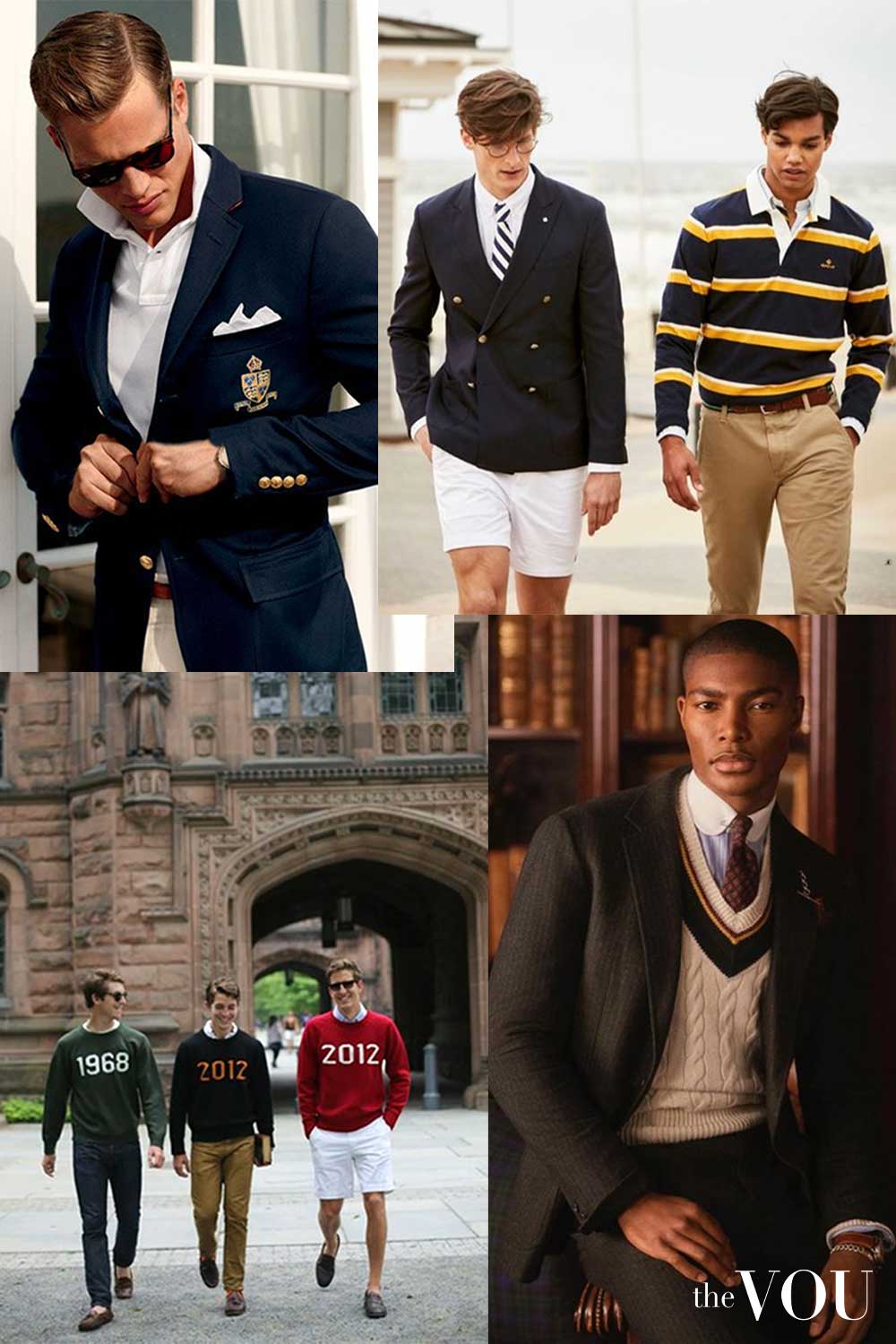
Ivy League style works for adult life because a navy blazer, Oxford shirts, chinos, knitwear and loafers can be dressed up or down for each setting.
This guide adapts the Ivy wardrobe to work and weekends, such as:
– Where each core Ivy garment works best
– A smart outfit for events and business meetings
– Suit choices for an interview or formal office
– A business-casual office outfit
– Fit checks that separate a relaxed cut from a poor fit
– Colours that combine into a small capsule wardrobe
and many more!
Check your workplace or event dress code first, then build from the garments you already own.
Key Points:
01The same navy blazer suits an office with a tie and a weekend with an open collar.
02A double-breasted blazer is not traditional Ivy, but it gives a more formal outline if you prefer it.
03Check jacket shoulders first, because they are the hardest area for a tailor to alter.
04Judge clothes by fabric, construction and fit rather than label or price; second-hand shops are a good source.
Ivy League style adapts well to adult life because its core garments, a navy blazer, Oxford button-down shirts, chinos, knitwear and loafers, move easily between an office, an interview, a dinner and a weekend.
This guide shows how to adjust the same wardrobe for each of those settings, with fit, colour and layering advice that works whatever your budget.
If you are new to the style, our explainer on what Ivy League fashion is covers its definition and history first.
Where Ivy League style comes from
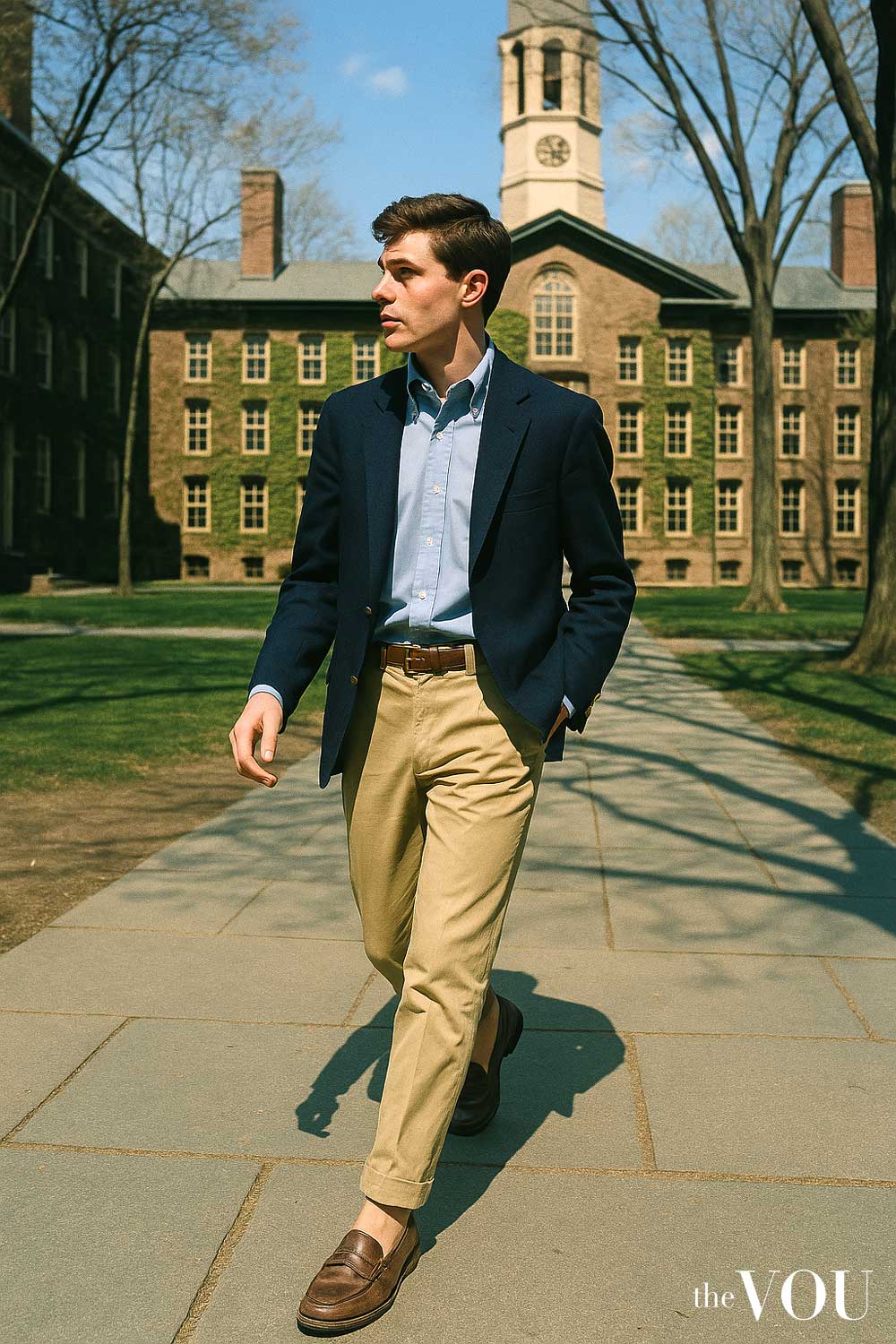
Ivy style grew from the clothes students wore on north-eastern American campuses in the first half of the twentieth century, supplied by outfitters such as Brooks Brothers and J. Press.
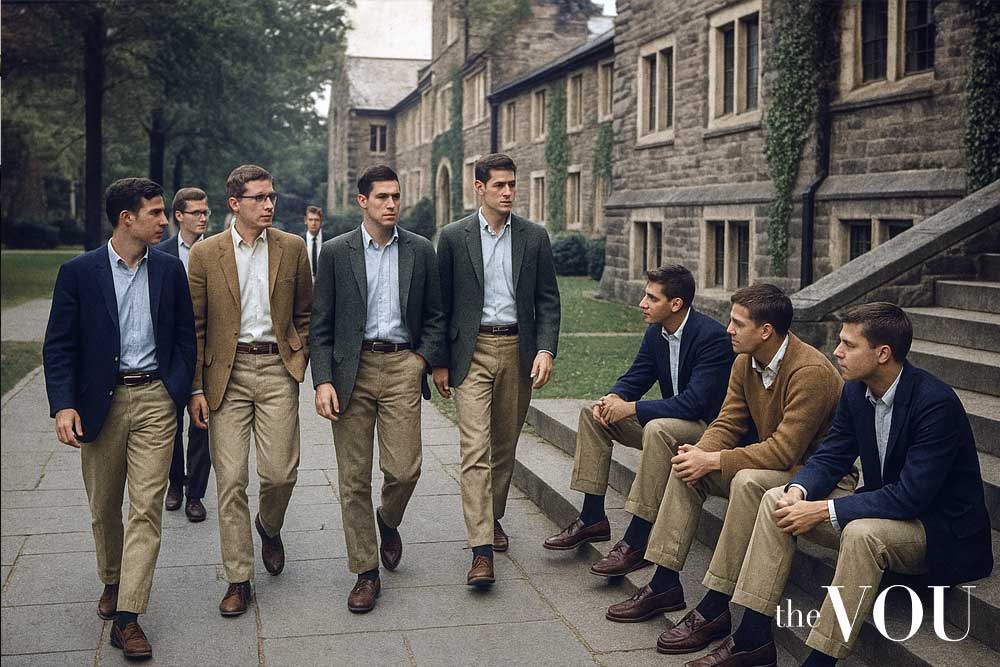
The Museum at FIT’s Ivy Style exhibition traces how those firms adapted English garments such as tweed jackets and polo coats, and how the look spread well beyond the campus after the Second World War.
The eight universities that gave the look its name formally became the Ivy League athletic conference in 1954.
Today the look is often grouped with the Old Money look, a recent label for polished, logo-free dressing that says nothing about a wearer’s background or income.
The core Ivy garments and where each one works
You need only a handful of garments to cover most situations; our guide to Old Money wardrobe essentials and our preppy wardrobe guide go through each one in more detail.
Navy blazer
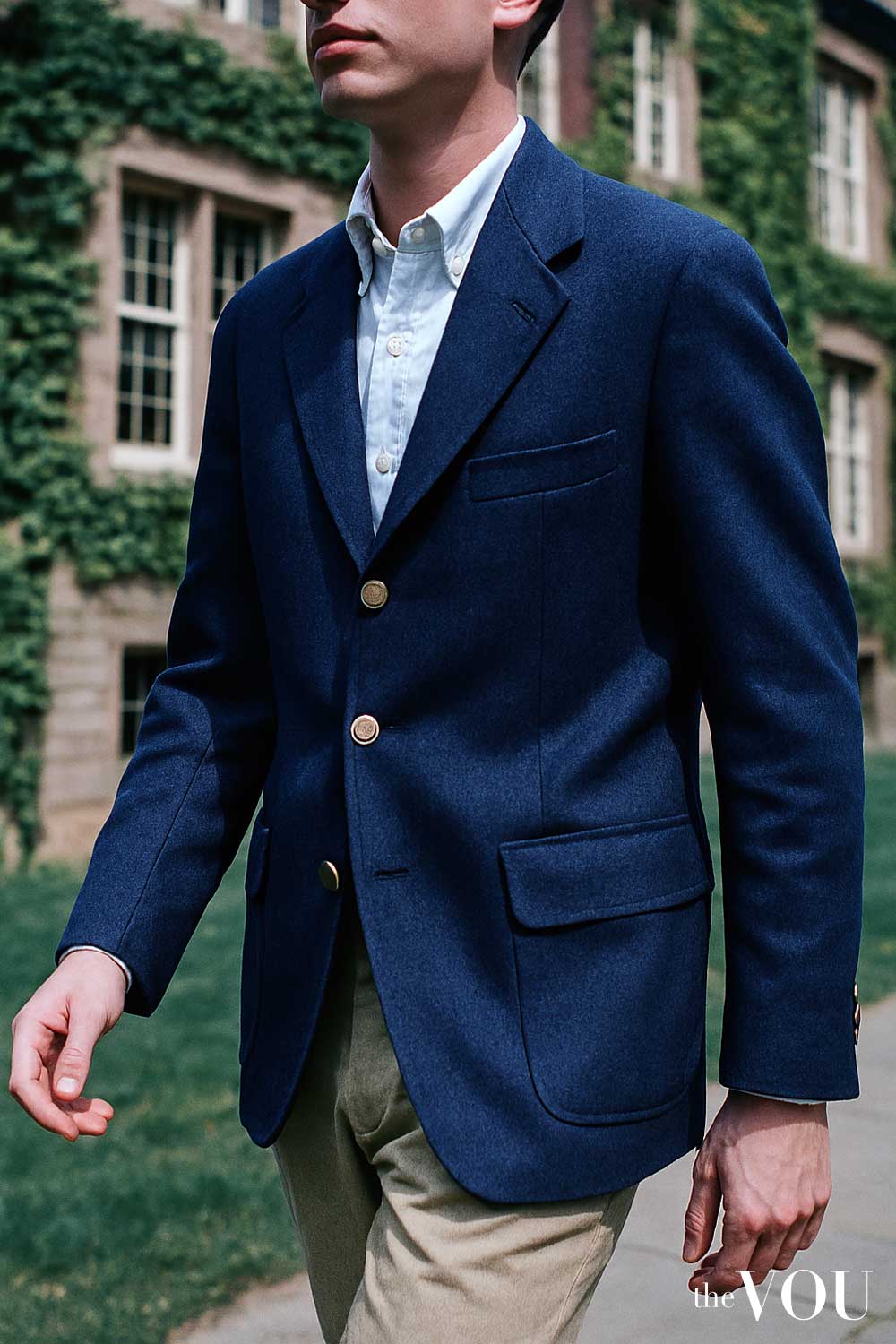
A single-breasted navy blazer, traditionally with three buttons and a lapel that rolls to the middle button, is the most adaptable Ivy jacket.
Worn with grey trousers and a tie, it suits a business-casual office or a smart dinner; worn with chinos and an open collar, it suits a weekend lunch.
Our guide to the Old Money style blazer covers cuts and fabrics, and Brooks Brothers and Ralph Lauren are two long-established sources, although any well-fitting navy blazer works.
Oxford cloth button-down shirt

The Oxford shirt is made from a basketweave cotton called Oxford cloth and has a collar fastened with small buttons, an idea Brooks Brothers took from the collars of English polo players.
White and pale blue go with everything; wear them with a tie in the office or open-collared with chinos at the weekend.
Gant, Tommy Hilfiger and Ralph Lauren are among the brands that make them.
Chinos

Chinos are cotton twill trousers, traditionally flat-fronted with a straight leg.
Khaki, stone, navy and olive cover most needs, and they suit business-casual offices, errands and family gatherings; J.Crew and Gant are two of many brands that sell them.
Penny loafers
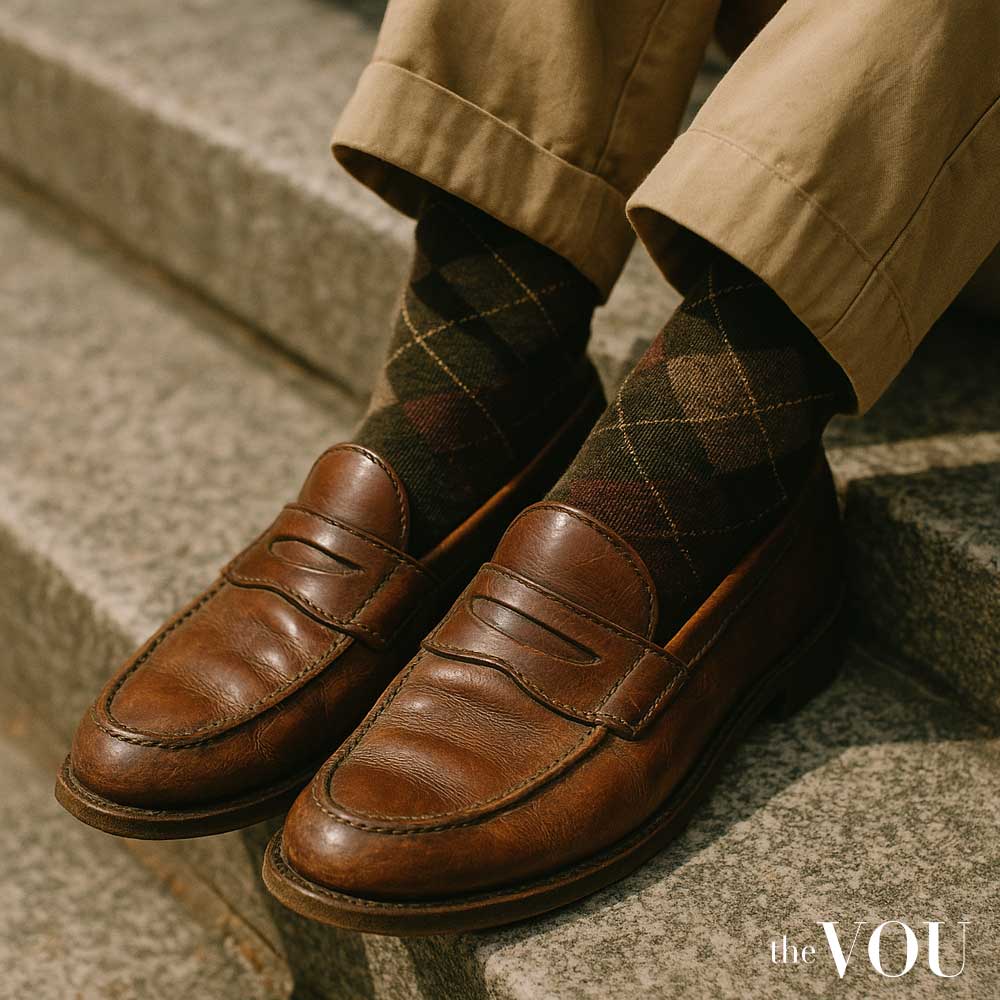
Penny loafers are slip-on leather shoes with a strap across the top that has a slot in it.
G.H. Bass, whose Weejuns are a long-running penny loafer, and Alden are two makers; in brown or burgundy, loafers suit business-casual offices, dinners and weekends, but a formal office or interview may call for lace-ups.
Cable-knit sweater
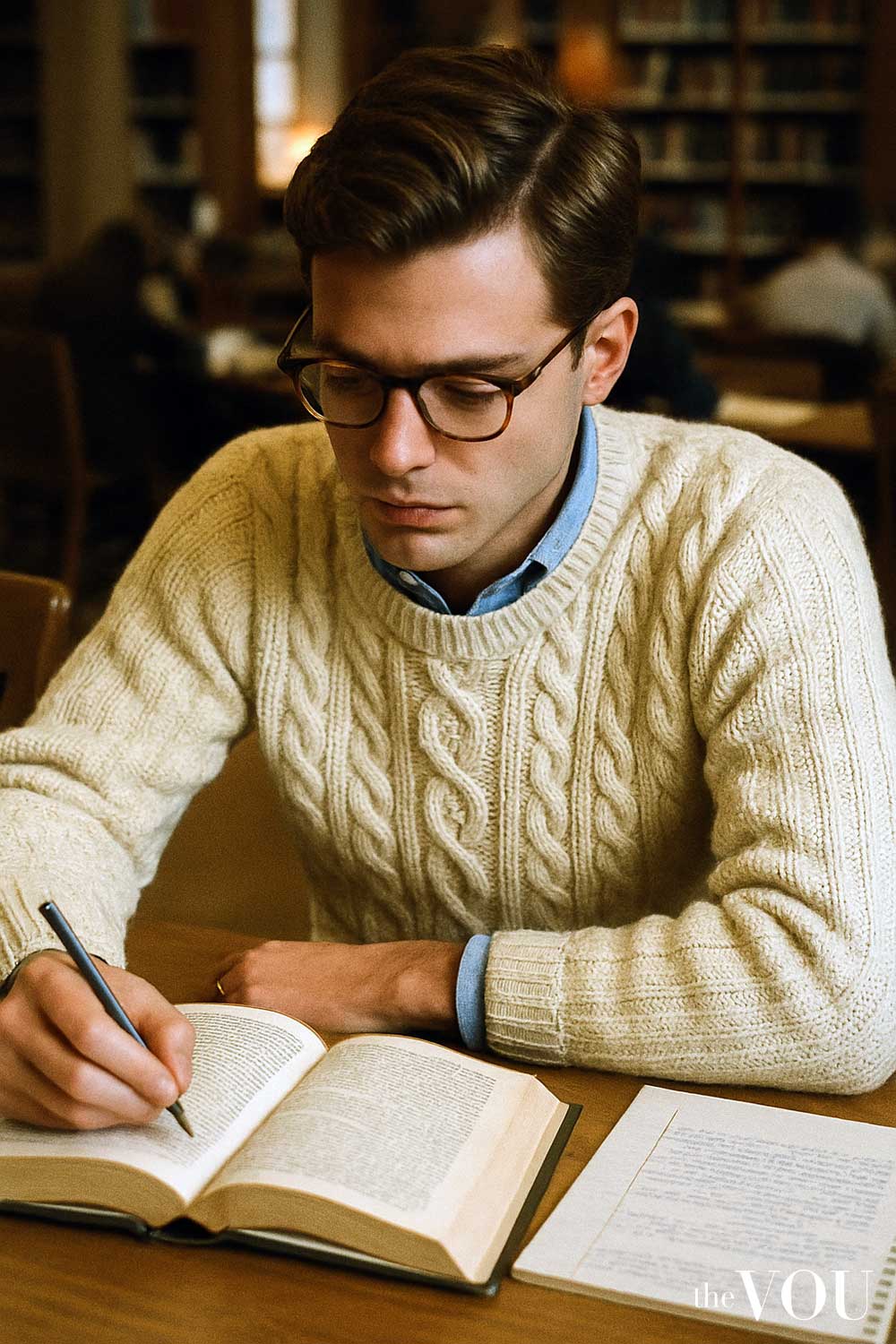
Cable-knit sweaters have raised, rope-like patterns and come as crewnecks, V-necks and cardigans in wool or cashmere.
Layer one over an Oxford shirt for a casual Friday, an autumn weekend or a holiday dinner; Ralph Lauren and Lacoste are among the brands that make them.
Ivy style by occasion
The same garments become more or less formal depending on what you combine them with.
The outfits below are suggestions, so check the dress code of your workplace or event first.
A smart event or business meeting
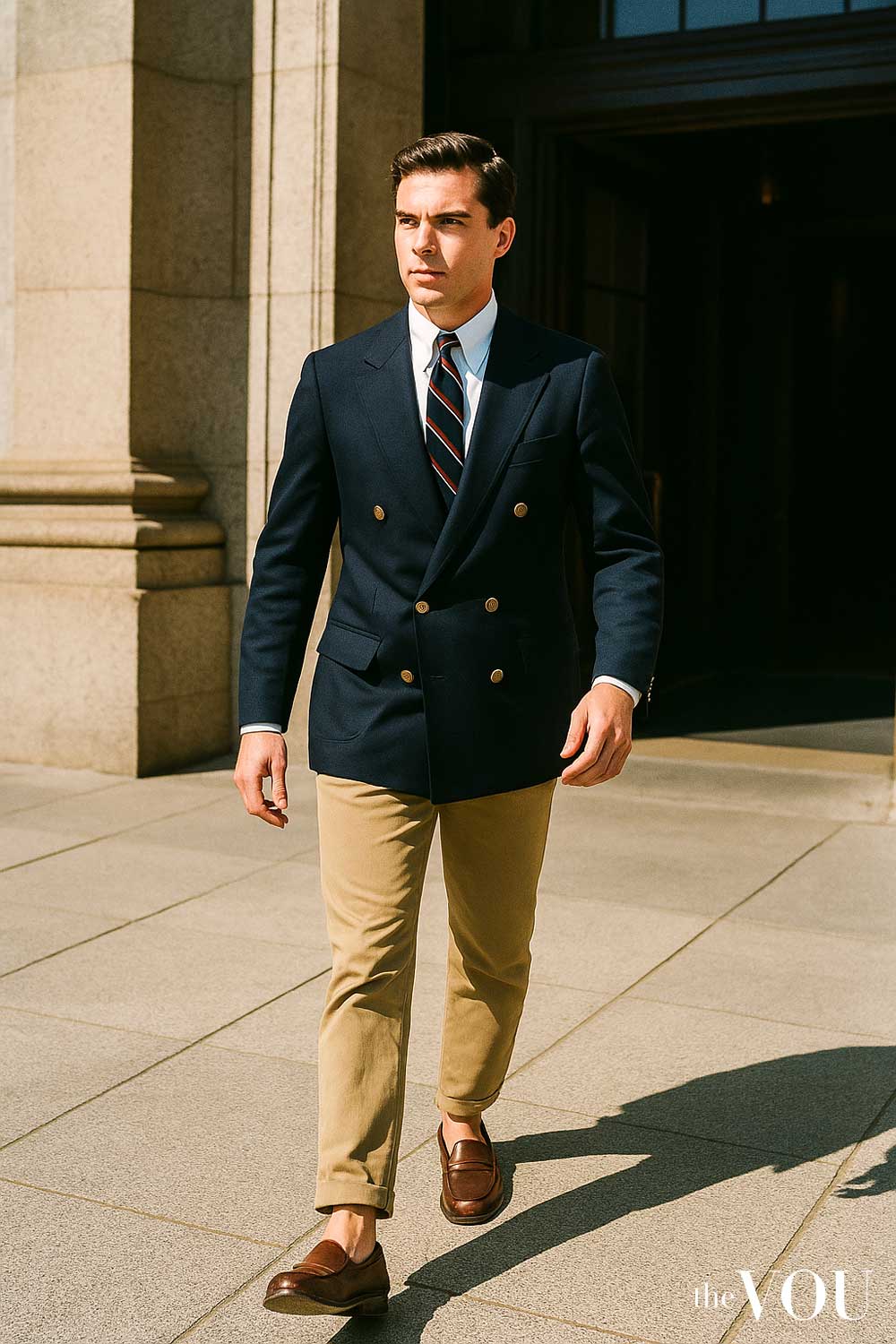
This outfit is the dressiest version of the look.
Wear: a navy blazer, single- or double-breasted, a white Oxford shirt, a repp tie, khaki or grey trousers and brown penny loafers or lace-ups.
A double-breasted blazer is not traditional in the sack-cut Ivy wardrobe, but it gives a sharper, more formal outline if you prefer it.
For a touch of classic preppy style, choose a tie with club-style stripes, picking colours you like rather than ones that signal a membership you do not have.
A job interview or formal office
Where a suit is expected, a plain navy or charcoal suit, a white or pale blue shirt, a repp or plain tie and dark lace-up shoes keeps to the Ivy spirit.
For a formal event or an interview, a double-breasted suit is another option.
A business-casual office

Wear: an Oxford shirt, chinos or grey flannel trousers, a navy blazer or a crewneck sweater and loafers, with the tie optional.
A weekend
Wear: a cable-knit sweater or a rugby shirt over an Oxford shirt, chinos, boat shoes or loafers, and a waxed cotton or quilted jacket in cold weather.
Styling tips
A few principles help the look work in any of these settings.
Fit
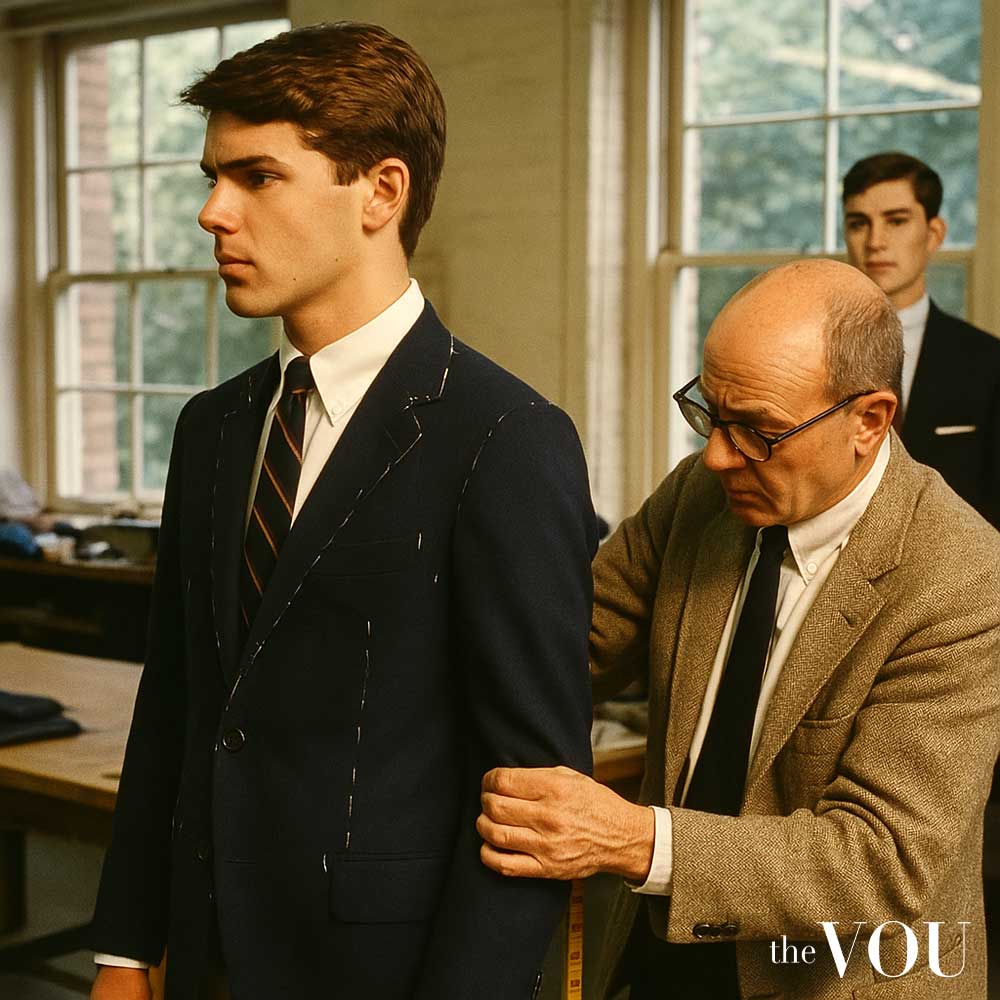
Check fit first: the jacket should sit cleanly on your shoulders, the sleeves should show a little shirt cuff, and trousers should reach your shoes without bunching.
Traditional Ivy jackets are cut fairly straight on purpose, so a slightly relaxed shape is a chosen silhouette; a tailor can adjust sleeves, waist and trouser length, while shoulders are hard to alter.
Colour
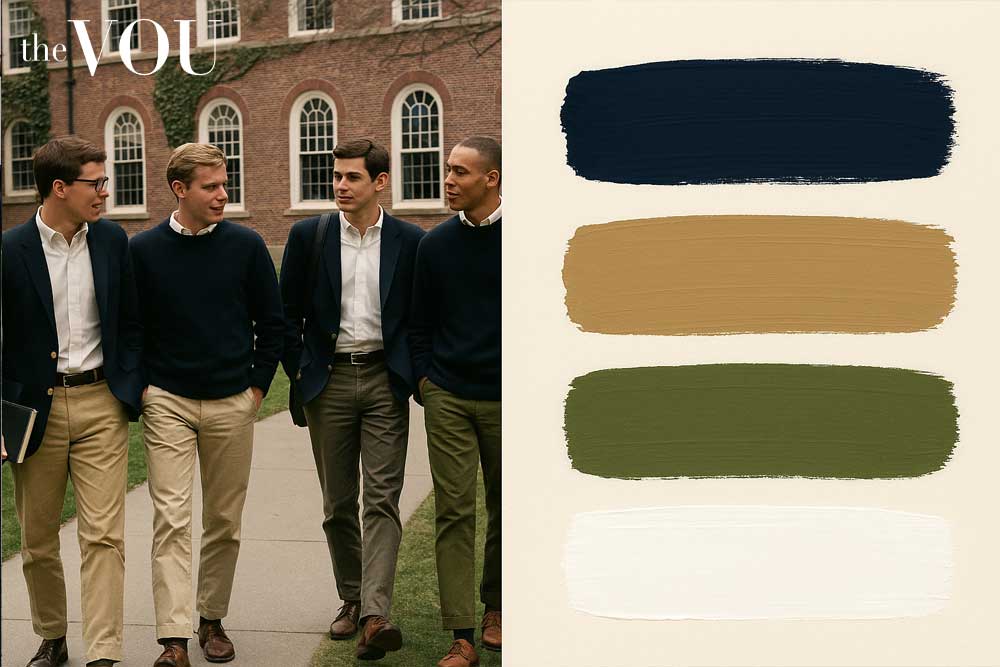
Navy, white, khaki, olive and cream combine easily, with stronger colour kept to a tie, socks or a sweater.
A small set of garments in these colours forms a capsule wardrobe that gives many combinations.
Layering

A blazer over a sweater over an Oxford shirt adds warmth and texture in colder months, as long as the jacket has room for the knit.
Accessories
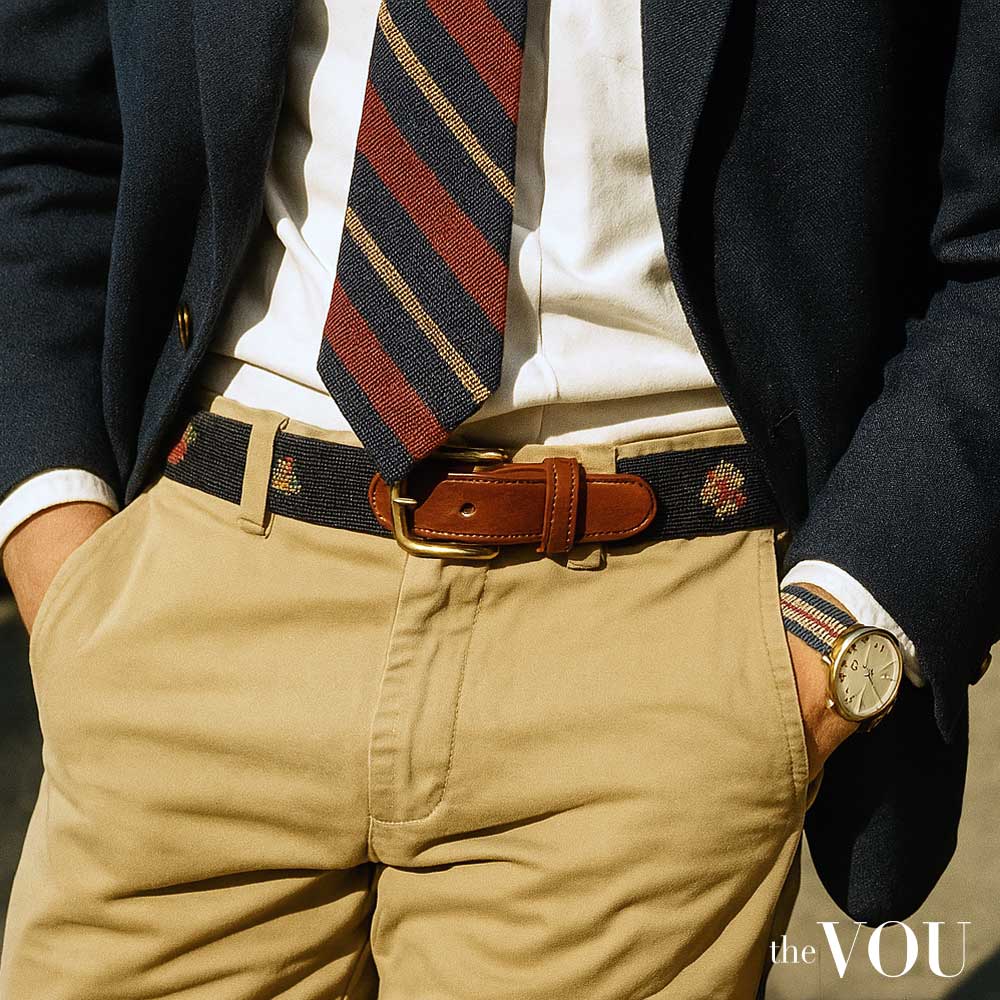
A repp tie, a needlepoint or leather belt, argyle socks or a watch on a fabric strap add interest without overwhelming the outfit.
Brooks Brothers and Ralph Lauren sell accessories in this style, as do many smaller makers.
Durable clothes

Choose garments for their fabric, construction and fit rather than their label or price, and look after them according to the care label.
Second-hand and vintage shops are a good source of blazers, tweed jackets and Oxford shirts, and our guide to looking Old Money on a budget has more ideas.
Optional tools from The VOU
If you would like to explore further, The VOU has free quizzes: a Face Shape Quiz, a Seasonal Colour Analysis Quiz, a Body Shape Quiz and a Fashion Style Quiz.
None of them is required to wear the outfits above.
For personal help after the quizzes, you can book a consultation through The VOU’s paid analysis services, including a Professional Face Shape Analysis package with hairstyle, facial hair and eyewear suggestions.
A combined Complete Image Transformation Package combines the face shape, seasonal colour, body shape and fashion style analyses.
Related questions
–Which clothing brands are linked with Ivy League style?
–What are some Ivy League outfit ideas?
–Which Brooks Brothers clothes are worth buying?
–What is the dark academia style for men?
–How can you look Old Money on a budget?
Mandy Meyer’s focus at The VOU is men’s body-shape styling, garment fit and outfit proportions. Her coverage addresses the practical questions behind a wardrobe choice: how a jacket sits across the shoulders, how trousers fall and how different cuts change the silhouette a wearer wants to create.
Her subject areas include the triangle, inverted triangle, rectangle, oval, trapezoid, hourglass and diamond labels used in body-shape styling. These provide starting references for comparing visible proportions; they do not capture every body or prescribe one correct way to dress. The focus connects those observations with garment shape, construction, length and the relationship between the upper and lower parts of an outfit.
Mandy’s editorial coverage combines visual comparisons with fit checks for comfort and movement. Readers can consider whether a cut gives them the room they need, where clothing pulls or gathers and which changes might support their preferred look. The aim is to make menswear choices more understandable while keeping personal preferences and the wearer’s own styling goals central.