

Start here
What’s This About
The punk aesthetic is the visual vocabulary of punk dress: black leather, tartan, safety pins, studs and chains, torn and customised garments, and symbols such as the circled A.
This page breaks that vocabulary down so you can recognise and use it, such as:
where the look came from in mid-1970s New York and London
the patterns, symbols, colours and materials
the shapes and hardware that make an outfit read as punk
the punk offshoots, and the “-punk” labels that are not punk at all
and many more!
For outfits and styling, read our punk fashion guide for men.
Key Points
01Punk dress grew up around the mid-1970s music scenes of New York, centred on CBGB, and London, centred on Malcolm McLaren and Vivienne Westwood’s King’s Road shop.
02Its core visuals are black leather, tartan, safety pins, studs, chains, torn or customised garments and do-it-yourself badges and slogans.
03Bootlace colour “codes” are folklore from skinhead and punk scenes; meanings varied by place and time, so do not treat any colour as a fixed message.
04Steampunk, cyberpunk and similar “-punk” labels are fiction and design genres, not punk dress.
What is the Punk Aesthetic?
The punk aesthetic is the set of patterns, symbols, colours, materials and shapes that make clothes, accessories and footwear read as punk.
For what an aesthetic means in fashion more generally, see our guide to aesthetics in fashion; for punk as a social group, see our guide to fashion subcultures.
The Origin of the Punk Aesthetic
Punk dress grew up around the punk rock scenes of the mid-1970s.
In New York, the scene centred on the club CBGB, with musicians such as Richard Hell, Patti Smith and Blondie; the Metropolitan Museum of Art’s 2013 exhibition PUNK: Chaos to Couture opened with that scene.
In London, Malcolm McLaren and Vivienne Westwood’s shop at 430 King’s Road, renamed SEX and then Seditionaries, sold the clothes most associated with British punk, such as the 1976 bondage trousers now held by the V&A and the Met.
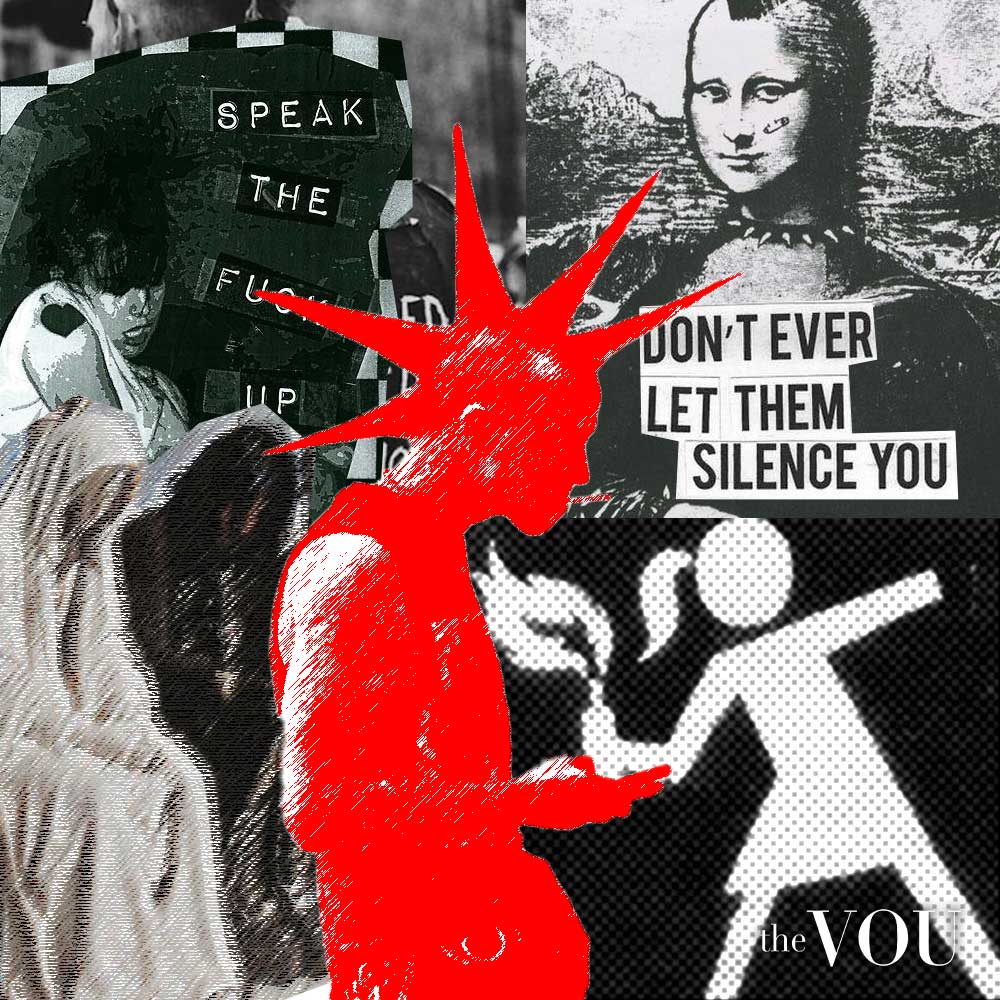
Punk was loud and anti-establishment, but its politics varied widely from band to band and fan to fan, so the look signals rebellion rather than one fixed set of views.
Over time, its clothing became a general symbol of rebellion, and designers have borrowed from it ever since.
Main Punk Aesthetic Features
Punk dress pushes against neat, mainstream clothing through damage, hardware, shock symbols and do-it-yourself customisation.
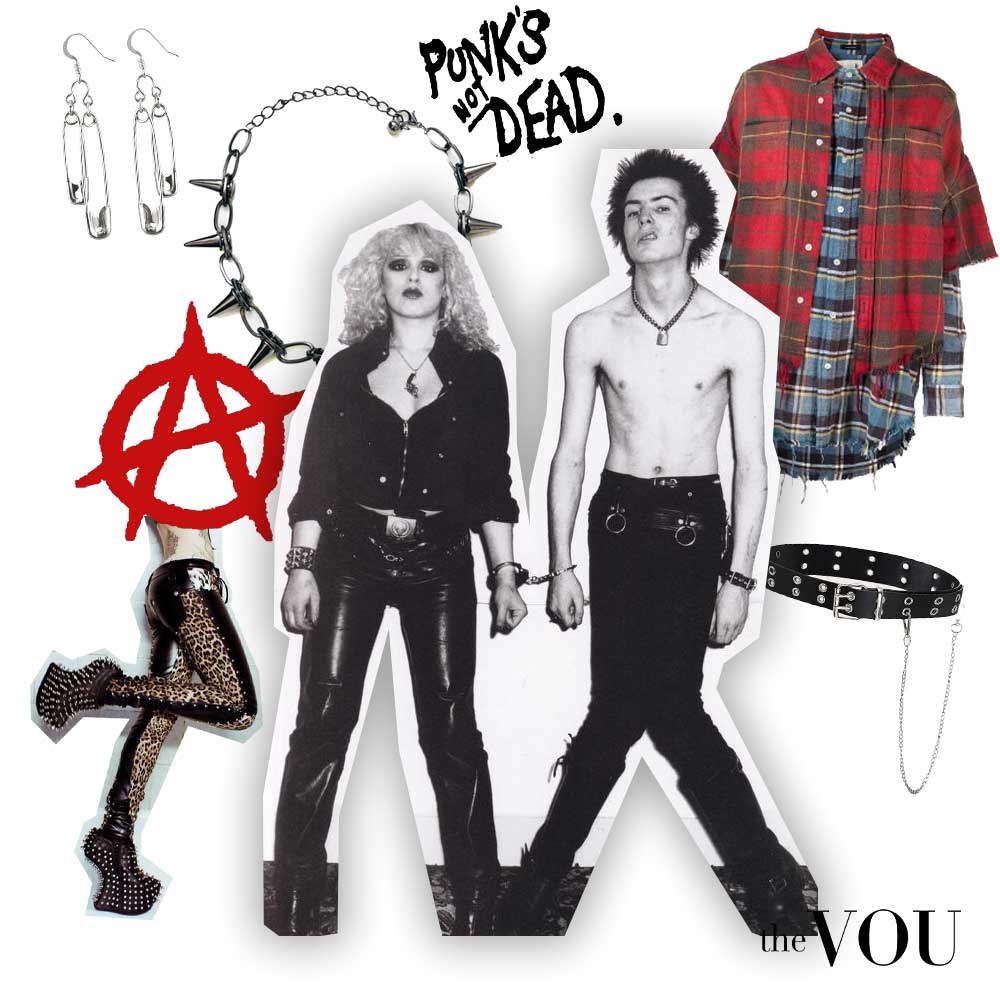
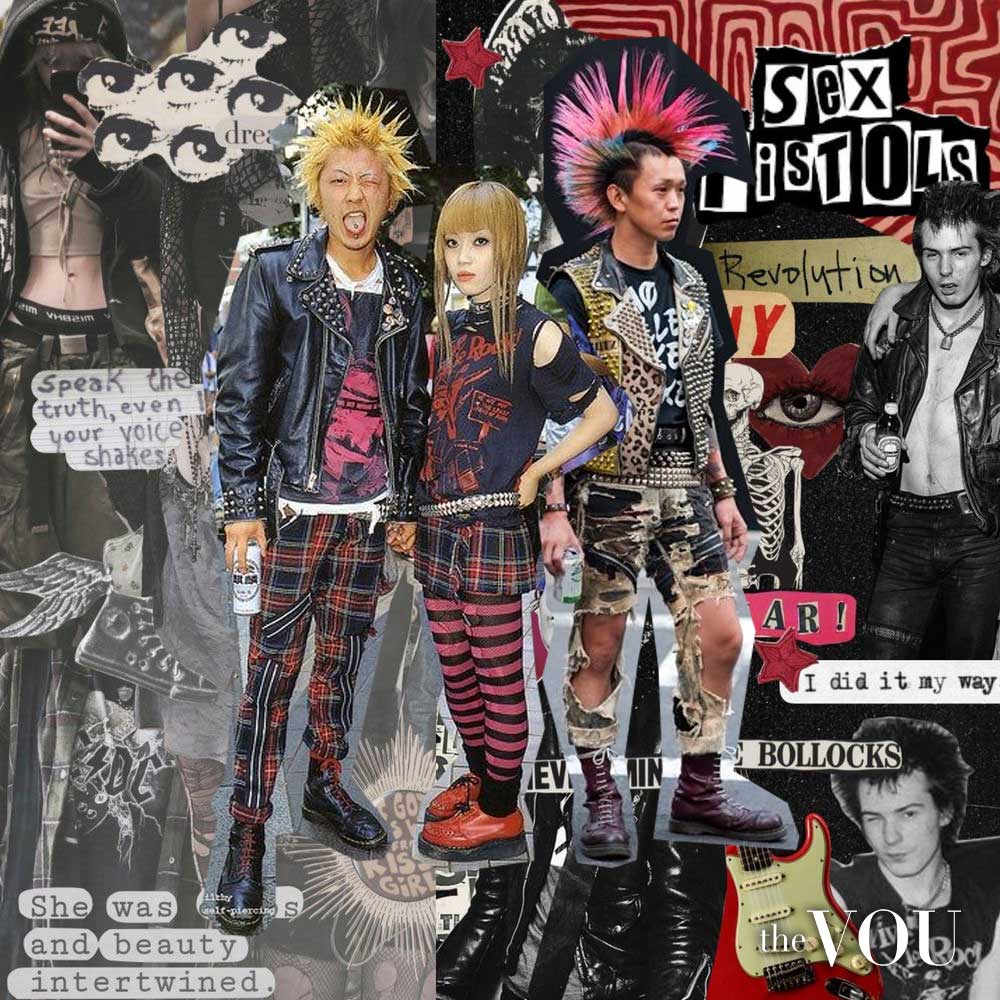
Its visual vocabulary includes skull motifs, the circled A for anarchy, tartan, animal prints, and materials such as leather and PVC.
Punk Patterns and Symbols
These patterns and symbols turn up across punk’s many substyles.
Tartan and Plaid
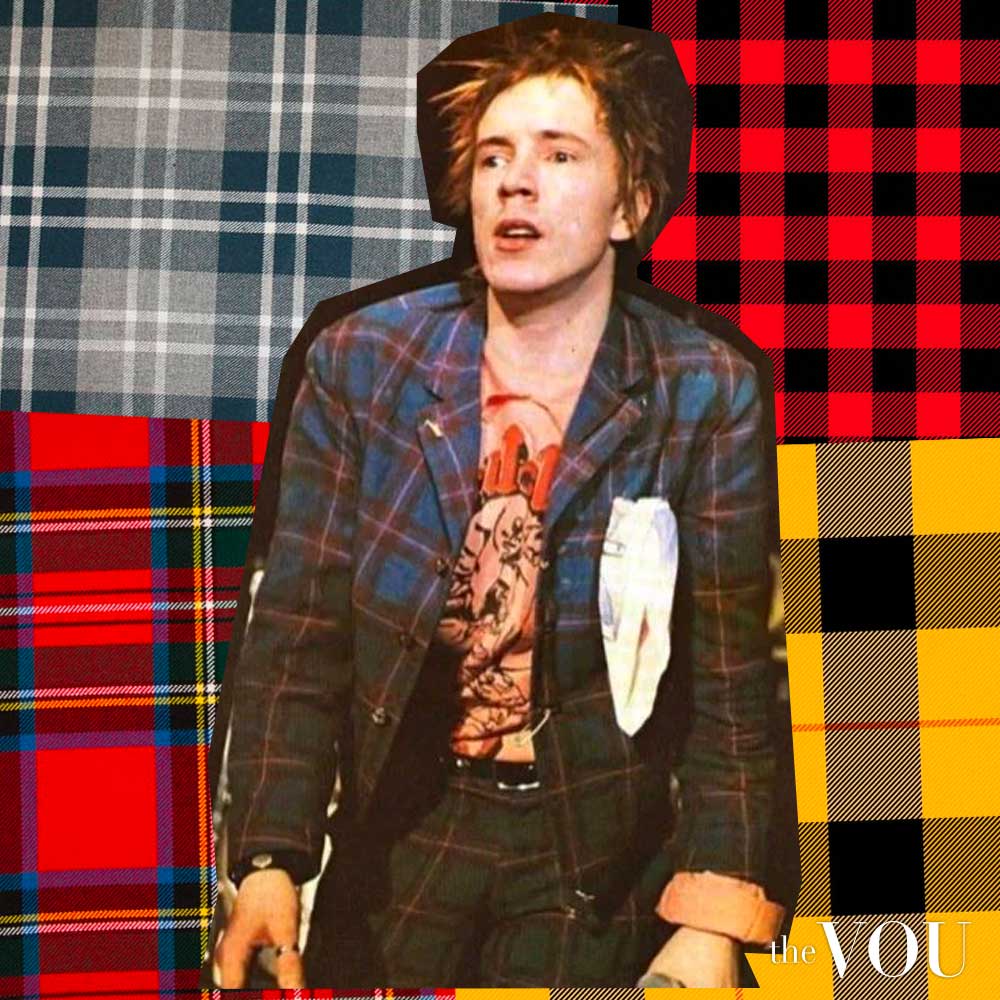
Tartan, a traditional Scottish woven pattern, became one of punk’s most recognised fabrics, often in red, cut into trousers and jackets and combined with straps, zips and safety pins.
Animal Prints
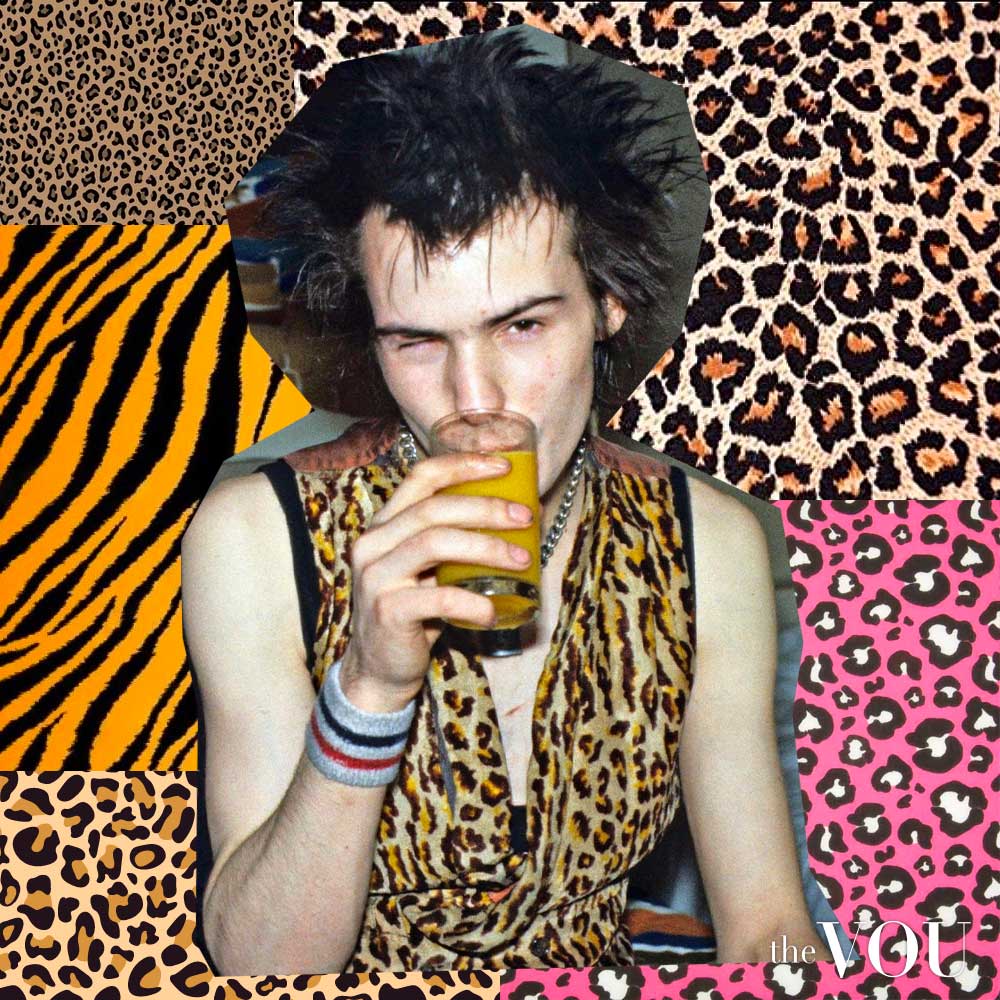
Bands such as The Cramps used leopard and zebra prints to give their stage clothes a raw, trashy energy.
Skulls and Crossbones
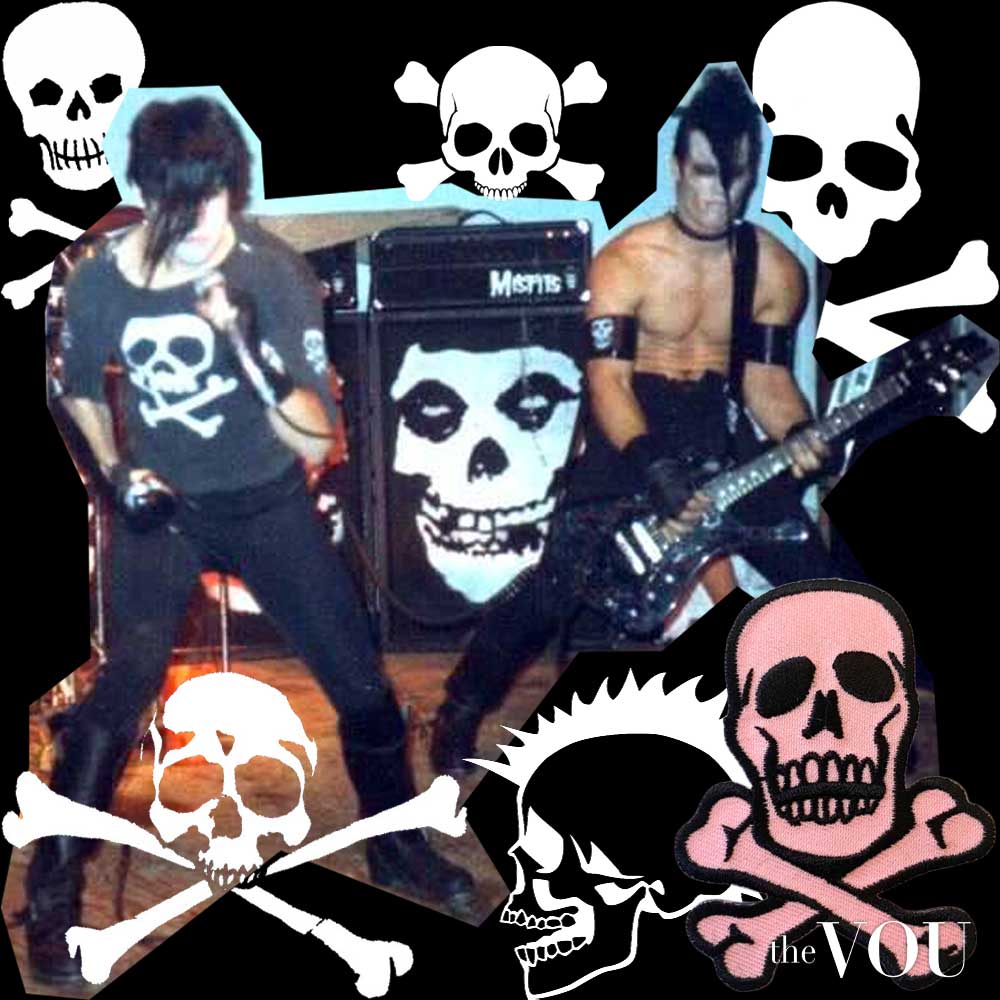
Skull motifs signal punk’s taste for shock and danger; the Misfits made their skull logo, the “Crimson Ghost”, one of the best-known punk images.
‘A’ for Anarchy
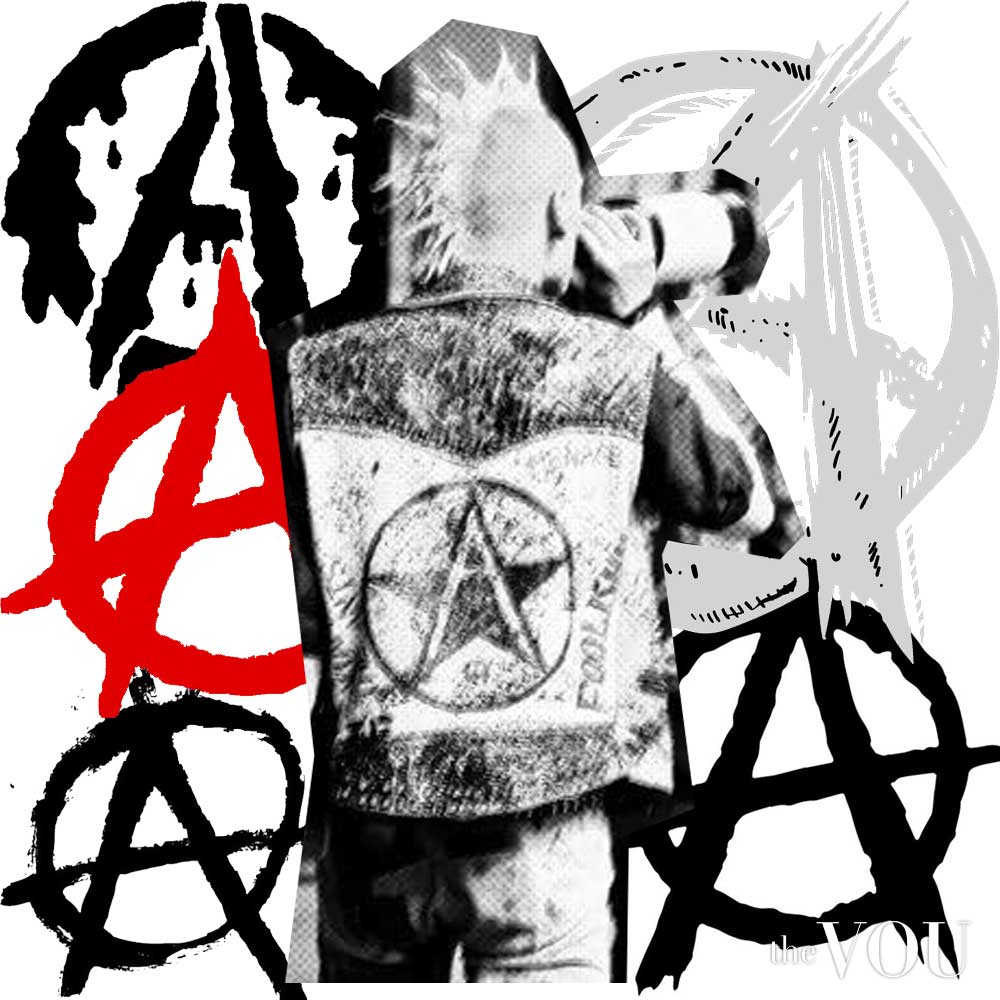
The circled A, the anarchy symbol, was painted and stitched onto jackets as a simple anti-establishment message.
Main Punk Colours
Black, Grey, Red, and Blue
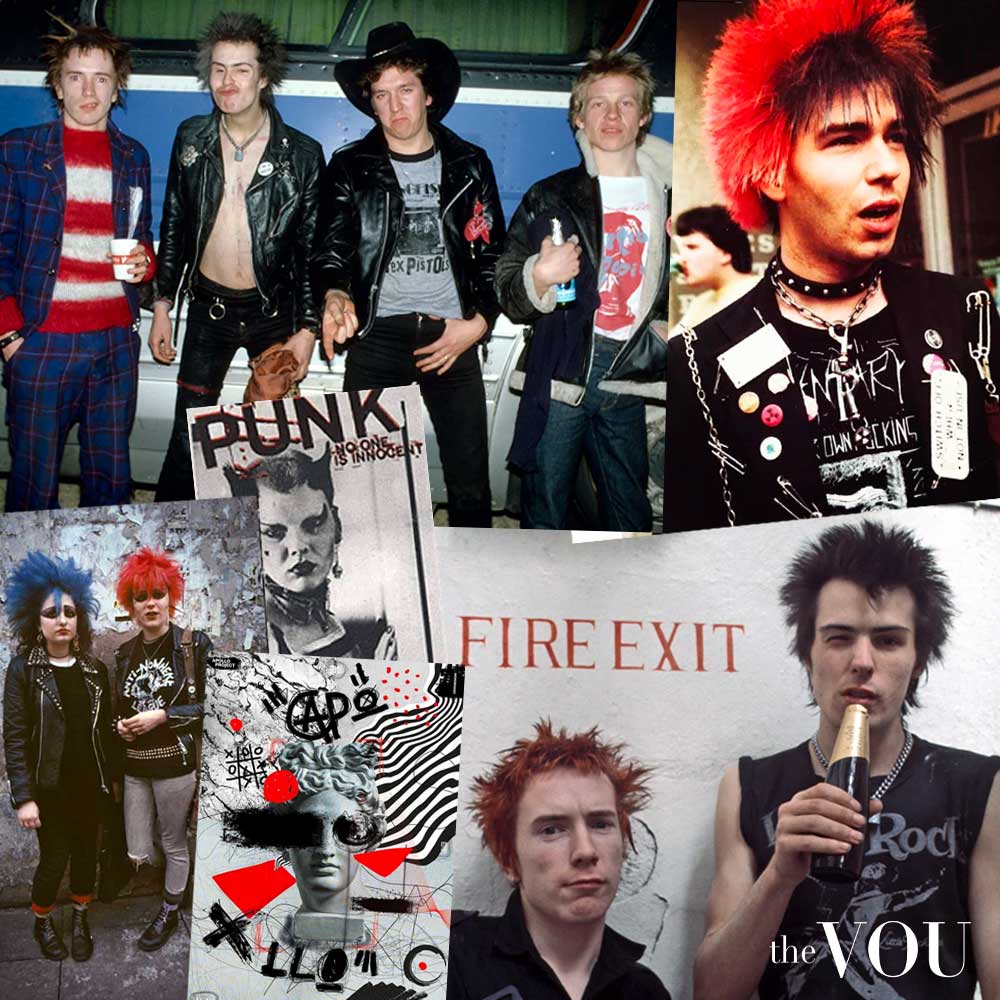
Black dominates punk dress, usually in leather and denim, with grey, red tartan and blue denim as the common supporting colours.
Sepia and Acid Green
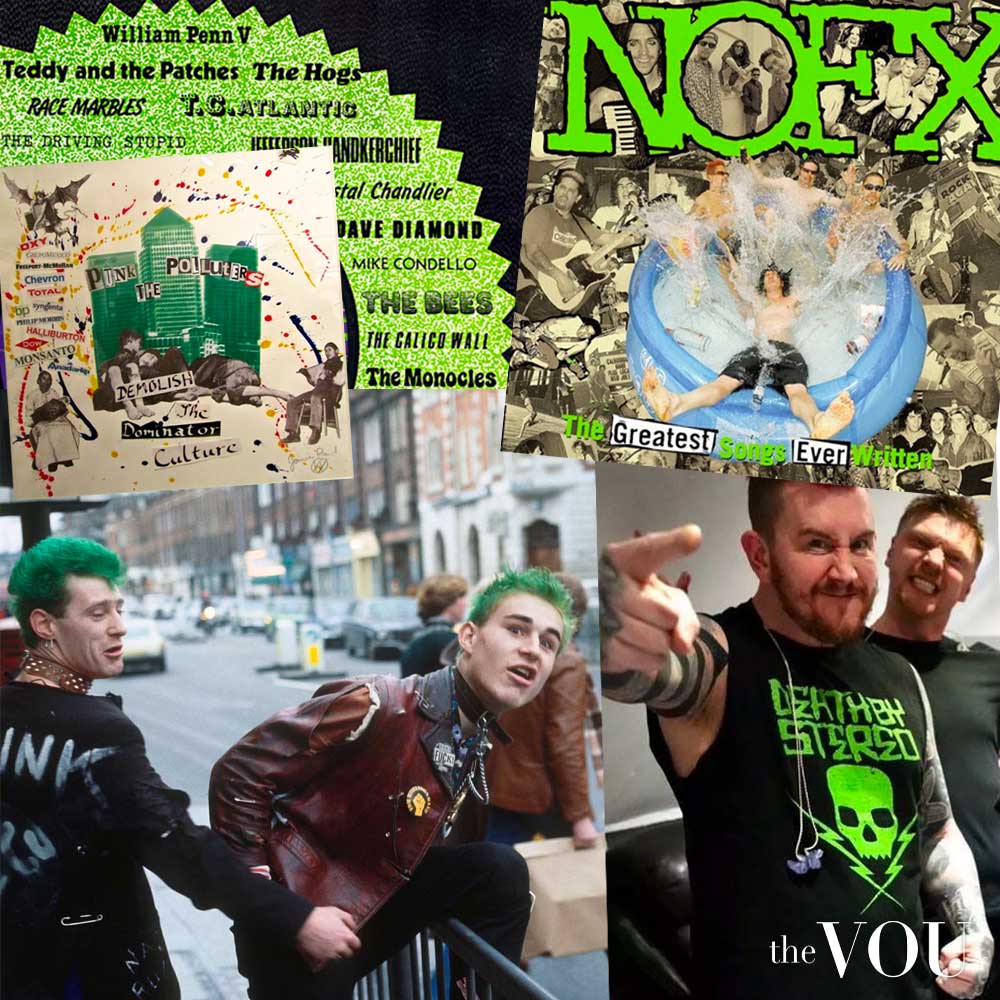
Faded, sepia-toned vintage garments and harsh accent colours such as acid green appear in punk graphics and dyed hair, adding a deliberately ugly or toxic note.
Magenta and Yellow
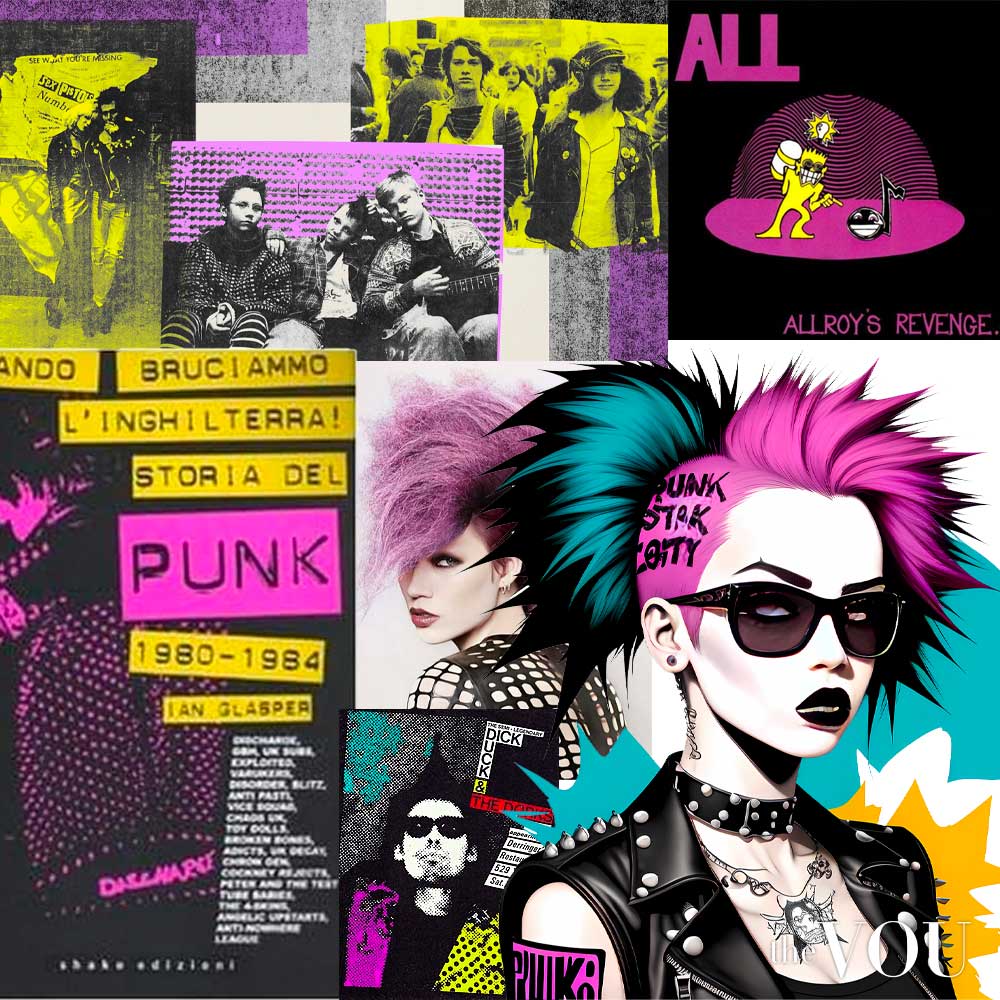
Bright magenta and yellow appear mainly in hair dye, posters and record sleeves, where they clash on purpose with the black of the clothes.
Dirty Orange, Green, and Blue
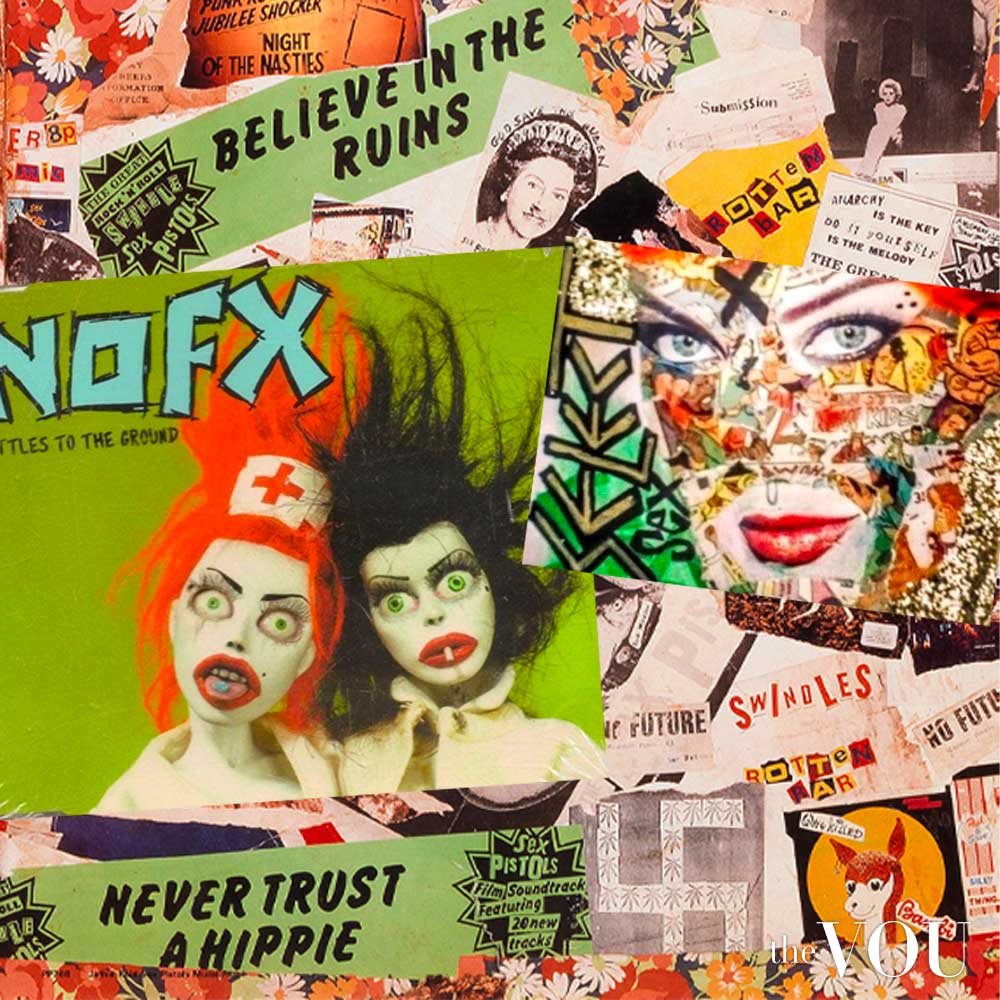
Faded or “dirty” brights, such as washed-out orange, green and blue, come from customised, worn and second-hand garments rather than new clothes.
The Bootlace Colour “Code”
Many guides list meanings for coloured bootlaces, especially in Dr. Martens boots.
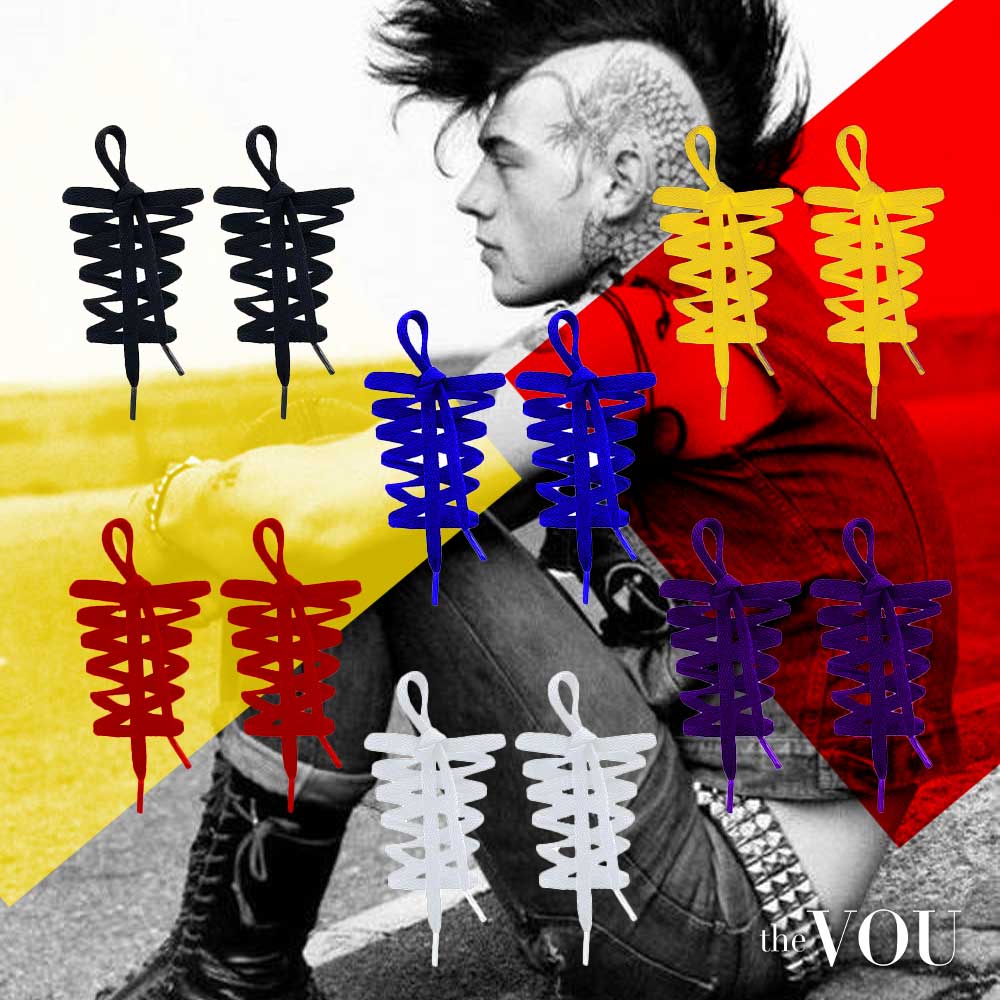
These codes are folklore from skinhead and punk scenes rather than a fixed system: the meanings varied by city, decade and group, and some colours have been linked to racist groups in some places and to anti-racist groups in others.
If you wear coloured laces, wear them because you like them, and avoid relying on any colour to send a message.
Punk Materials and Textiles
Leather
The black leather motorcycle jacket, worn by bands such as the Ramones, became punk’s defining garment.
PVC, Latex, and Rubberised Textiles
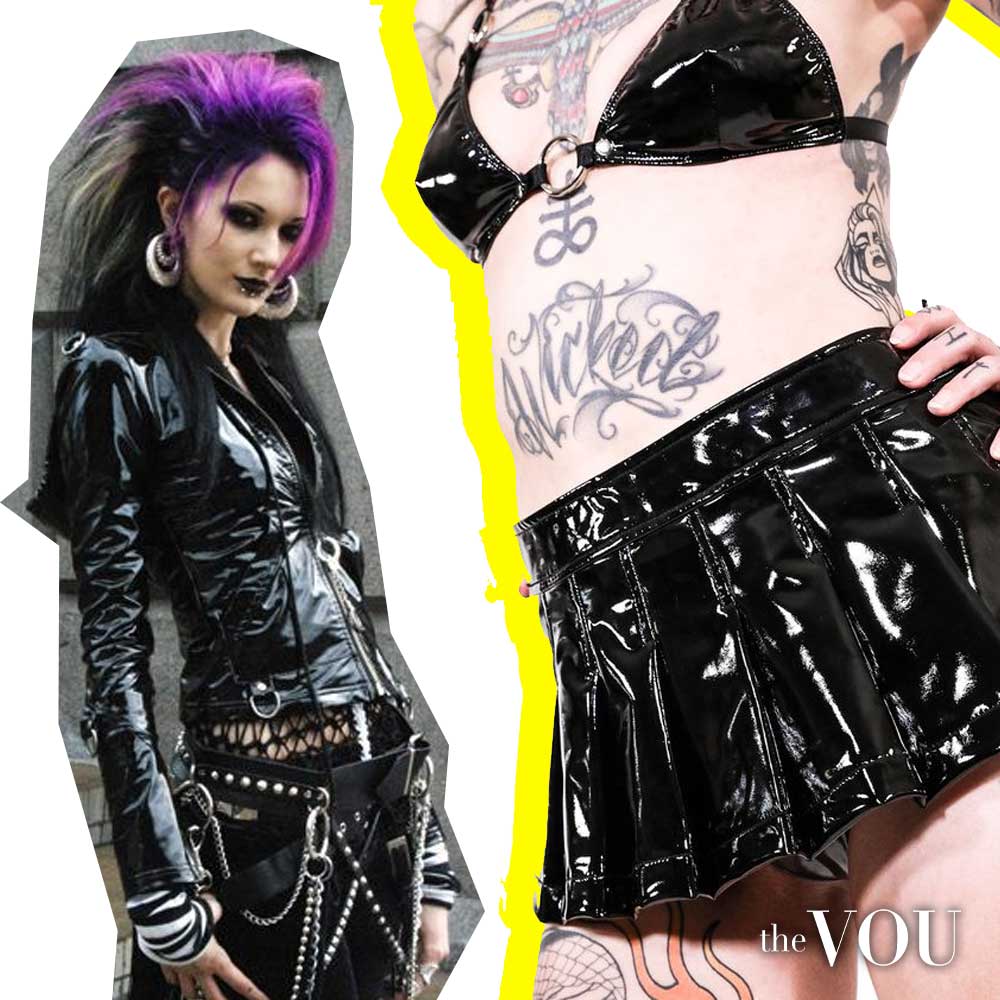
Shiny PVC and rubber, borrowed from fetish wear, were used to shock; Seditionaries clothes mixed fetish details with military and motorcycle references.
Main Punk Silhouettes and Shapes
Torn and Tight Shapes
Slim, tight trousers and deliberately torn T-shirts and jeans became punk staples; Iggy Pop and Richard Hell are often named as early examples.

Layering and Mismatching Clothes
The Clash mixed military, workwear and stencilled garments in unexpected combinations, which made mismatching part of the look.
Chains and Spikes
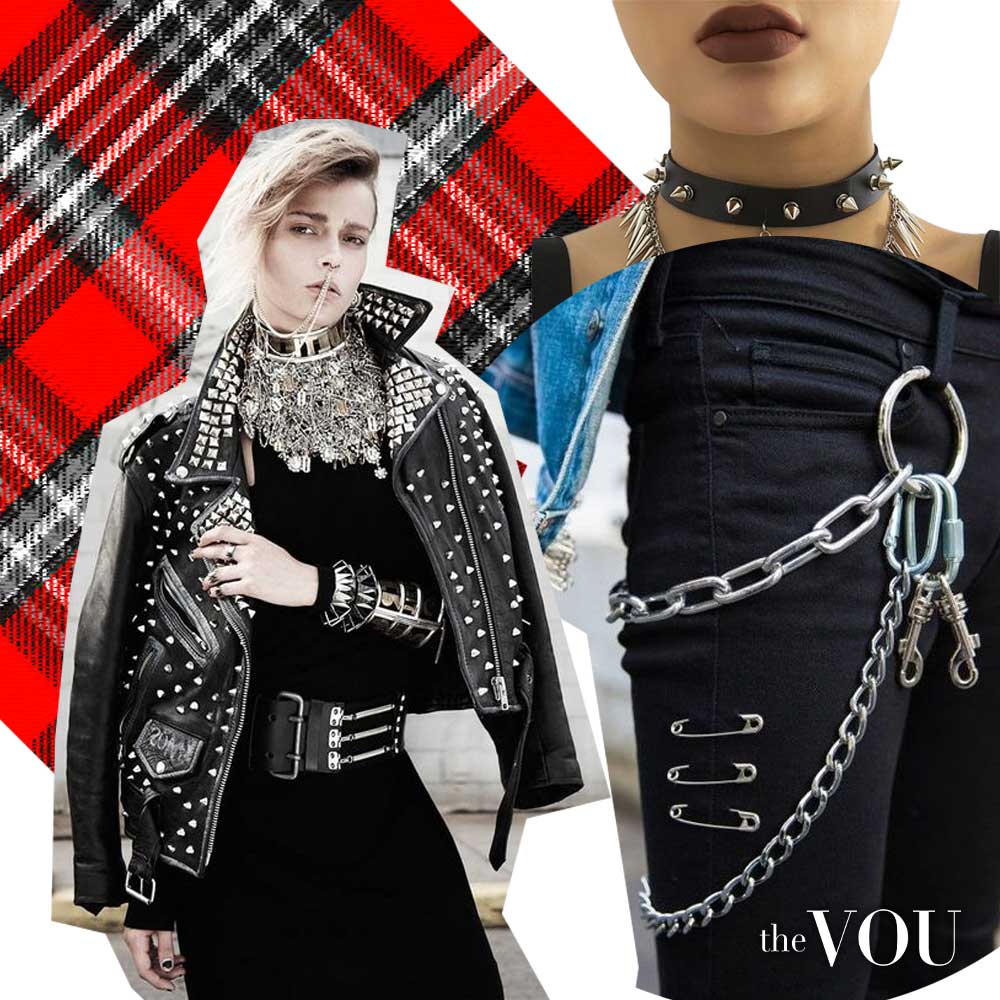
Chains, studs and spikes on belts, jackets and wristbands became emblems of punk’s aggressive attitude.
Safety Pins
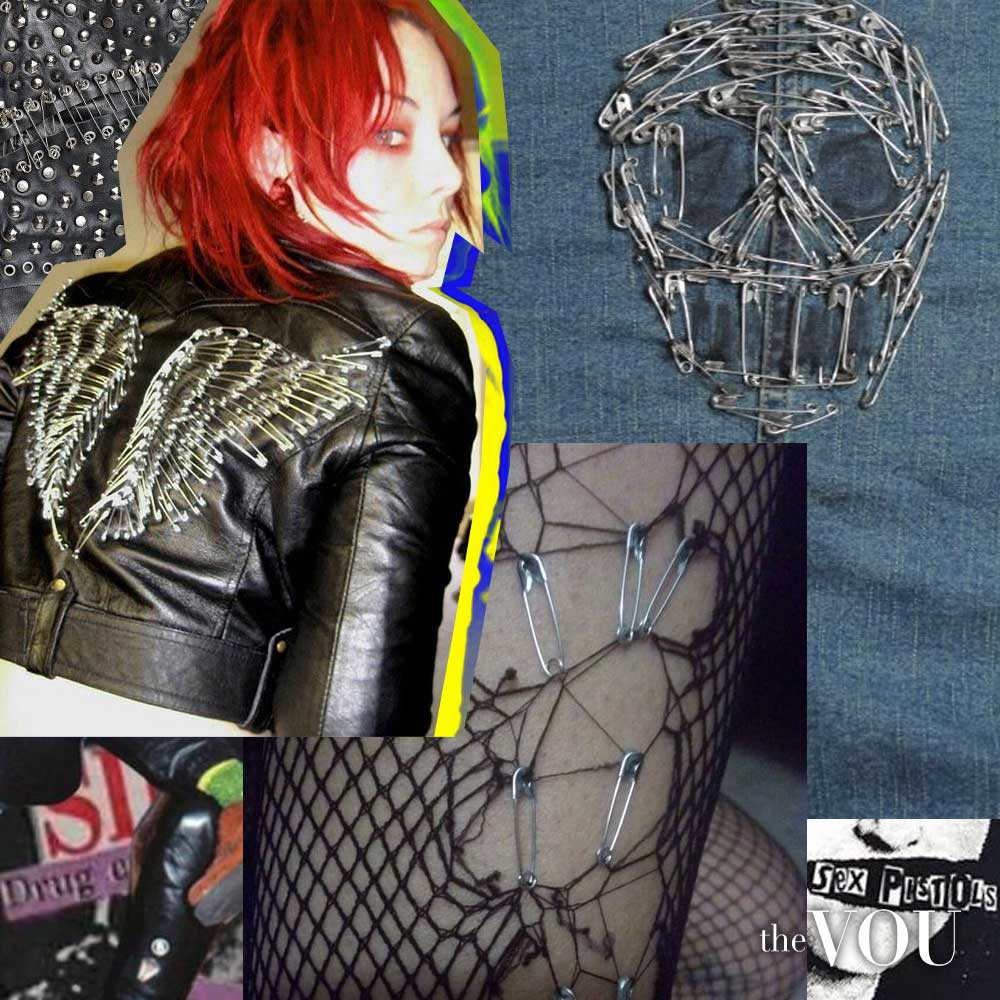
Safety pins, used to hold torn clothes together or worn as decoration, became one of punk’s best-known symbols; the Met’s 2013 exhibition PUNK: Chaos to Couture showed how designers later took safety pins, studs and other punk hardware into high fashion.
Punk Offshoots and Related Labels
Punk music and fashion split into many offshoots, and the word “punk” has also been borrowed by genres that have little to do with punk dress.
Punk Music and Fashion Offshoots
- Anarcho-punk
- Hardcore punk
- Street punk
- Crust punk
- Horror punk
- Pop punk
- Skate punk
- Ska punk
- Straight edge
- Glam punk
- Queercore
- Riot grrrl
- Taqwacore
- Cowpunk
Subcultures That Grew Out of Punk
Goth, deathrock, emo and psychobilly grew out of or alongside punk, but each has its own look; see our goth style guide for men.
“-Punk” Genres That Are Not Punk Dress
Cyberpunk, steampunk, dieselpunk, atompunk, clockpunk, biopunk and solarpunk are science-fiction and design genres that borrowed the word “punk”; their costumes follow their own fictional worlds rather than punk dress.
How Men Can Use the Punk Aesthetic Today
Start with one punk signal, such as a black leather jacket, a band T-shirt or a pair of tartan trousers, and keep the rest of the outfit simple.
Studs, chains and safety pins work best in small numbers on one garment.
For outfits, fit and what to wear where, read our punk fashion guide for men.