
Start here
What’s This About
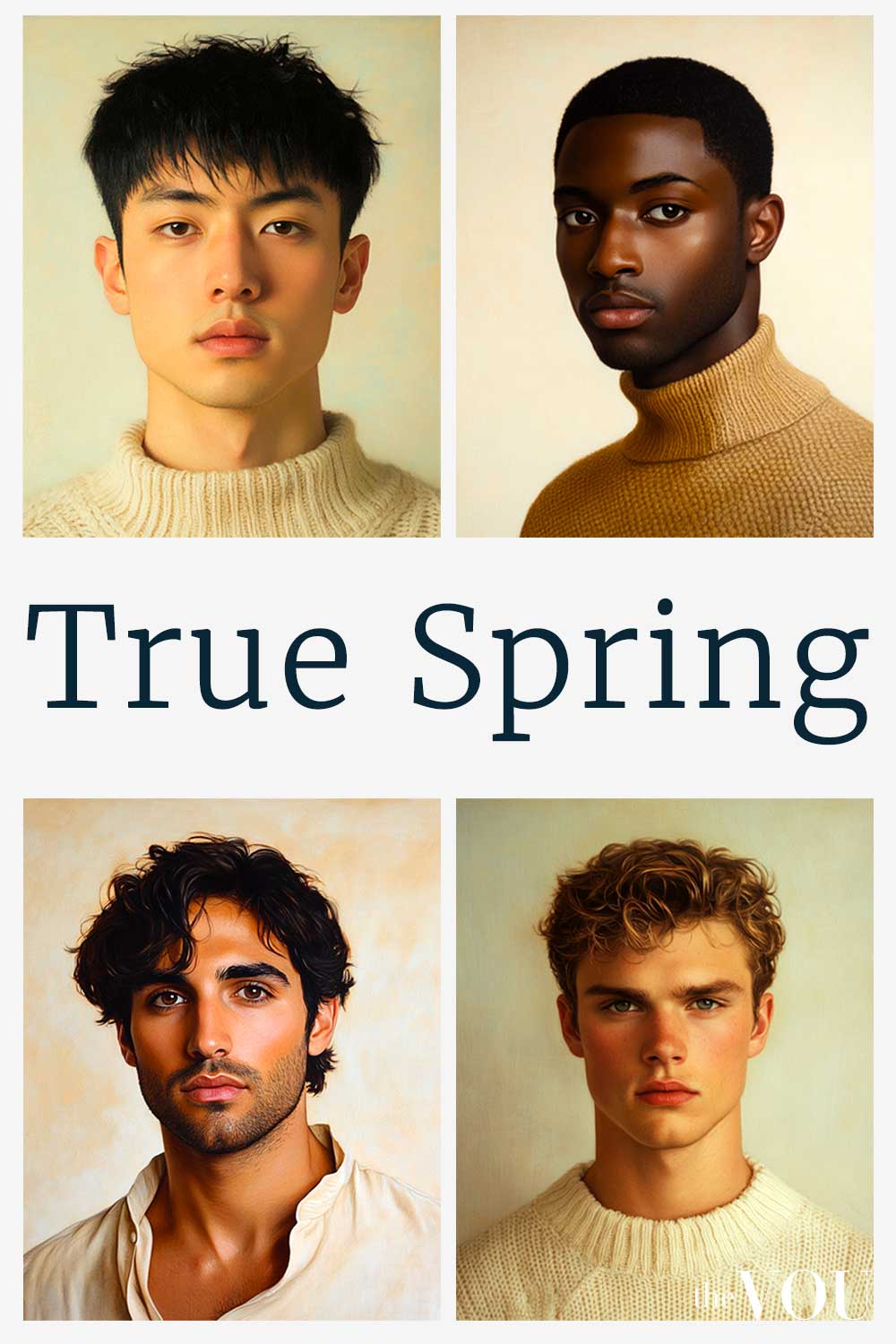
True/Warm Spring is a warm, clear palette of medium depth; men who suit it share no single required feature, so the season is best explored by comparing garments.
This guide covers the features often described for the palette, such as:
skin depth and visible cast, and why neither decides the season
hair and eye colours that point towards warm, clear comparisons
the medium, harmonious contrast often linked with the palette
why a photograph cannot confirm a celebrity’s season
and many more!
Treat every feature here as an observation to test against clothes, not a checklist you must pass.
Key Points
01True/Warm Spring is warm and clear, with True/Warm Autumn as its earthier comparison
02It is not tied to any ethnicity, skin depth or single hair or eye colour
03Warm-looking hair, eyes or skin suggest comparisons; they do not confirm the season
04Compare similar warm and cool, clear and muted garments next to your face
True/Warm Spring describes a warm, clear palette; the features below are ones often described among men who find it suits them, not a list everyone shares.
1. Skin Tone
Men who suit True/Warm Spring are often described as having a warm-looking, clear complexion, but skin depth and visible cast vary and neither decides the season.
A golden-looking cast is one observation; Autumn, Summer and Winter men can show warm or cool casts too, so compare garments rather than relying on skin alone.
If warm, clear colours repeatedly look best next to your face, True/Warm Spring is worth exploring.
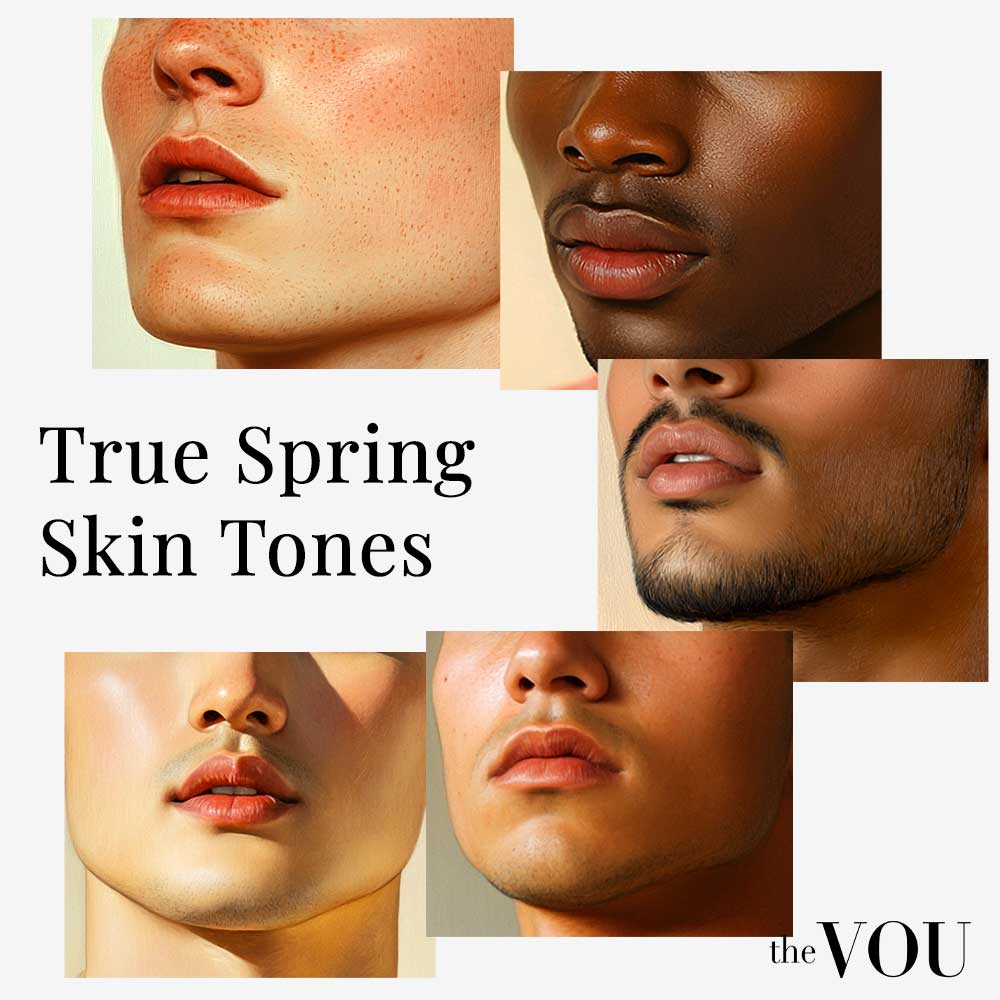
The palette’s clear colours can make a complexion look fresher when they suit the wearer.
How skin reacts to sun does not establish a season, and you should never expose skin to the sun to test colours.
A tan can temporarily change which colours look best, so repeat comparisons when your skin returns to its usual shade.
True/Warm Spring is not tied to any ethnicity, and skin of any depth can be compared against the palette.
A photograph cannot confirm anyone’s colour season, because lighting and processing change how colours look.
2. Hair Colour
Hair among men who suit True/Warm Spring is often described as warm and clear, with visible shine.
Natural hair colours vary widely among men who suit the palette.
Warm, clear tones in the hair can suggest warm comparisons, but they are not a test on their own.
For those with naturally lighter hair, this may present as golden blonde, resembling wheat fields in sunlight, or strawberry blonde with warm, coppery tones.
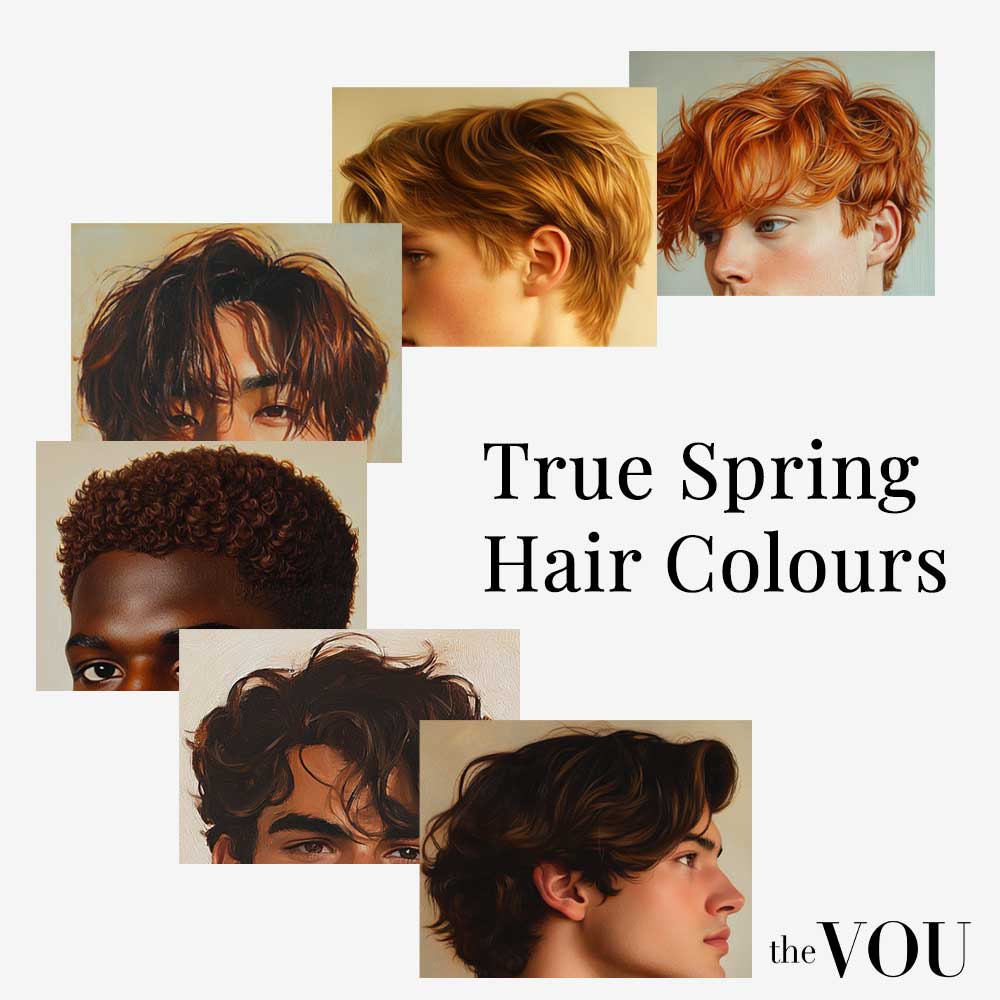
For those with medium to dark brown hair, golden or reddish tones may show in natural light.
In very dark hair, warm tones such as honey or copper may show where the hair catches the light, though dark hair of any kind can suit several palettes.
Some True/Warm Spring men may have auburn or reddish undertones in their hair, presenting as a clear, warm red-brown rather than the deeper, muted auburn associated with Autumn seasons.
Hair that looks warm and clear rather than ashy can point towards Spring comparisons, but it does not decide the season.
Hair often darkens or greys with age, and dye changes it further.
Greying can change visible contrast; the shade of grey alone does not establish or exclude True/Warm Spring, so compare clothes against your current hair.
3. Eye Colour
Eye colours vary widely among men who suit the palette, and many show several colours.
Blue eyes may look turquoise or aqua, though blue eyes appear in every season.
Green eyes sometimes show golden flecks.
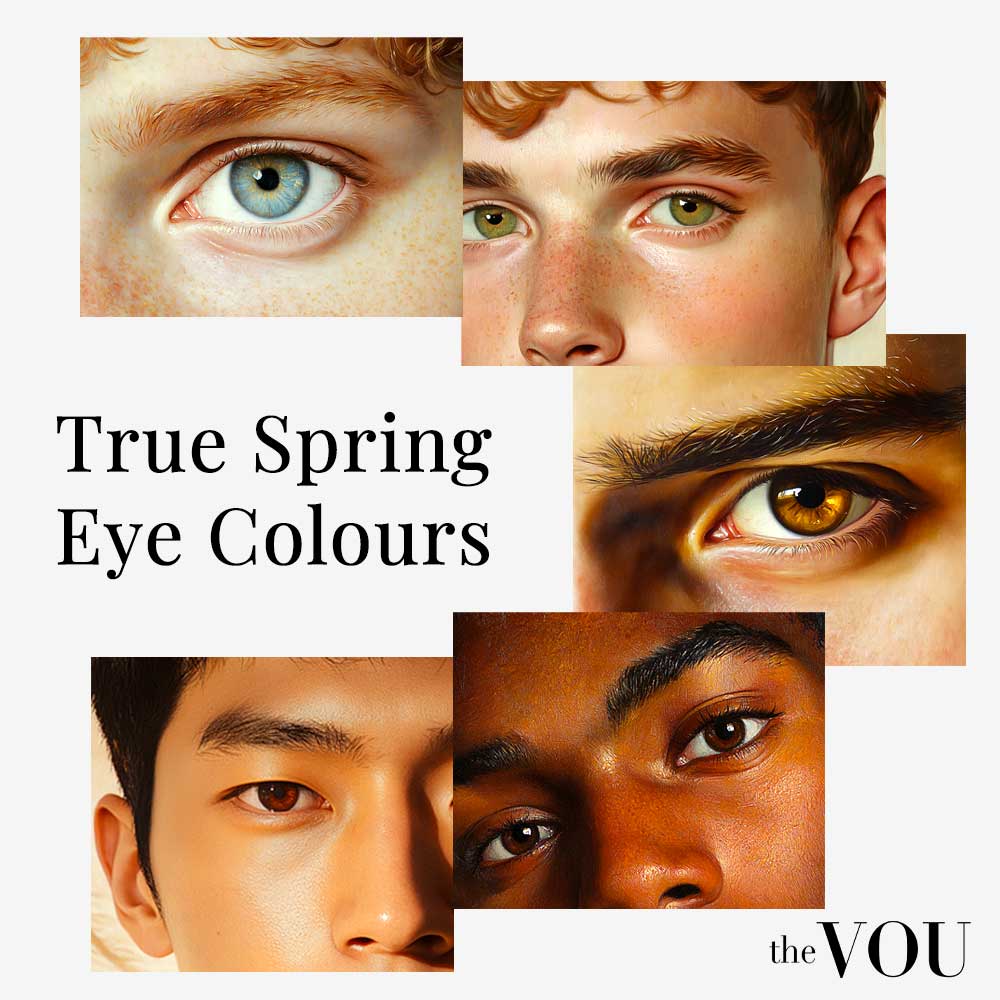
Green eyes may look yellow-green in some lights.
Hazel eyes mix green and brown, sometimes with golden tones.
Brown eyes may look amber or honey-toned rather than very dark.
Golden flecks around the pupil are sometimes described for the palette, but golden-looking flecks alone do not confirm it.
4. Contrast
True/Warm Spring is often described with low to medium contrast between skin, hair and eyes, though individuals vary.
Contrast often looks blended rather than sharp.
For instance, a True/Warm Spring man might have warm golden skin paired with light golden-brown hair and amber eyes, creating a harmonious, low-contrast appearance.
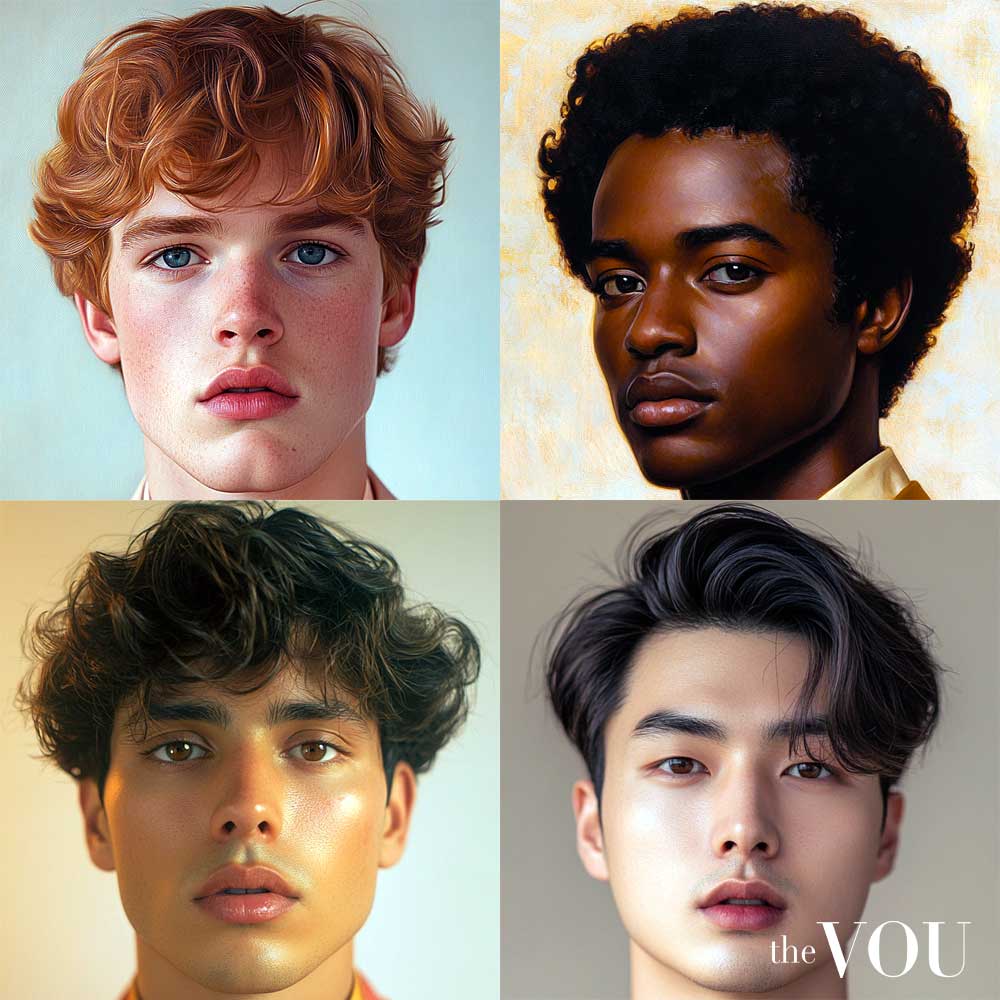
In the twelve-season convention, Bright/Clear Spring and the Winter palettes are usually described with higher contrast.
The overall effect is one of warmth and harmony rather than a sharp distinction between features.
Matching the contrast of an outfit to the contrast you see in your own colouring is a useful starting point.
Outfits with moderate contrast, such as camel with warm white, often work well for medium-contrast colouring.
Overall Appearance of True/Warm Spring Men
Taken together, these observations can point towards True/Warm Spring, but the most useful check is how warm, clear garments look on you compared with cooler or more muted ones.
Clear, warm colours often suit True/Warm Spring men.
The palette’s overall effect is warm and clear.
While they possess warmth, it’s not the rich golden warmth of an Autumn, but rather a clear, spring-like warmth that suggests vitality and freshness.
This unique combination of characteristics allows True/Warm Spring men to wear a diverse range of warm, clear colours, provided they maintain the freshness and clarity that defines the season.
Understanding the palette is the first step towards confident colour choices.
How to test it
Stand by a window in daylight, with plain surroundings and a neutral top or bare neck.
Hold pairs of garments of similar lightness that differ in one quality under your chin, such as coral against dusty rose, camel against cool grey, or aqua against icy blue.
Note which garment keeps attention on your face, with fewer shadows and a more even look, then repeat on another day; treat the result as provisional rather than final.
Celebrities and the True/Warm Spring Palette
A photograph cannot confirm a celebrity’s colour season, because lighting, make-up and processing change how colours look.
For inspiration, our True/Warm Spring celebrity style guide looks at documented outfits in the palette’s colours, such as coral, golden yellow and turquoise, worn by men The VOU places in True/Warm Spring.
Useful Facts About the True Spring Palette
Prevalence: No reliable data shows how common any season is, so be wary of percentages quoted online.
Seasonal Harmony: The palette’s colours share warmth and clarity, which is why they combine easily in outfits.
Colour Associations: Warm, clear colours are often associated with optimism and approachability, though such associations vary by culture and context.
Natural Indicators: In nature, True/Warm Spring colours are seen in fresh spring blooms, new leaf growth, and the warm glow of morning sunlight.
Colour Naming: Retailers give palette colours names that evoke warmth and freshness, like ‘Buttercup Yellow’, ‘Apple Green’ or ‘Coral Sunset’; a name is a shopping aid, not an exact specification.
Historical Context: The Spring season comes from the four-season system popularised by Carole Jackson’s 1980 book Color Me Beautiful; the twelve-season names, including True/Warm Spring, came later.
Visual Effect: When warm, clear colours suit you, they can make your complexion look fresher in photographs and in person.
Seasonal Adaptability: Many of the palette’s colours, such as camel, warm navy and warm white, can be worn all year.
Eye-Catching Quality: Clear, warm colours stand out, so they work well as accents for men who want a subtle but noticeable touch of colour.
Fabric Interaction: Texture and finish change how a colour looks; compare the same colour in matte and shinier cloth before buying.