
Start here
What’s This About
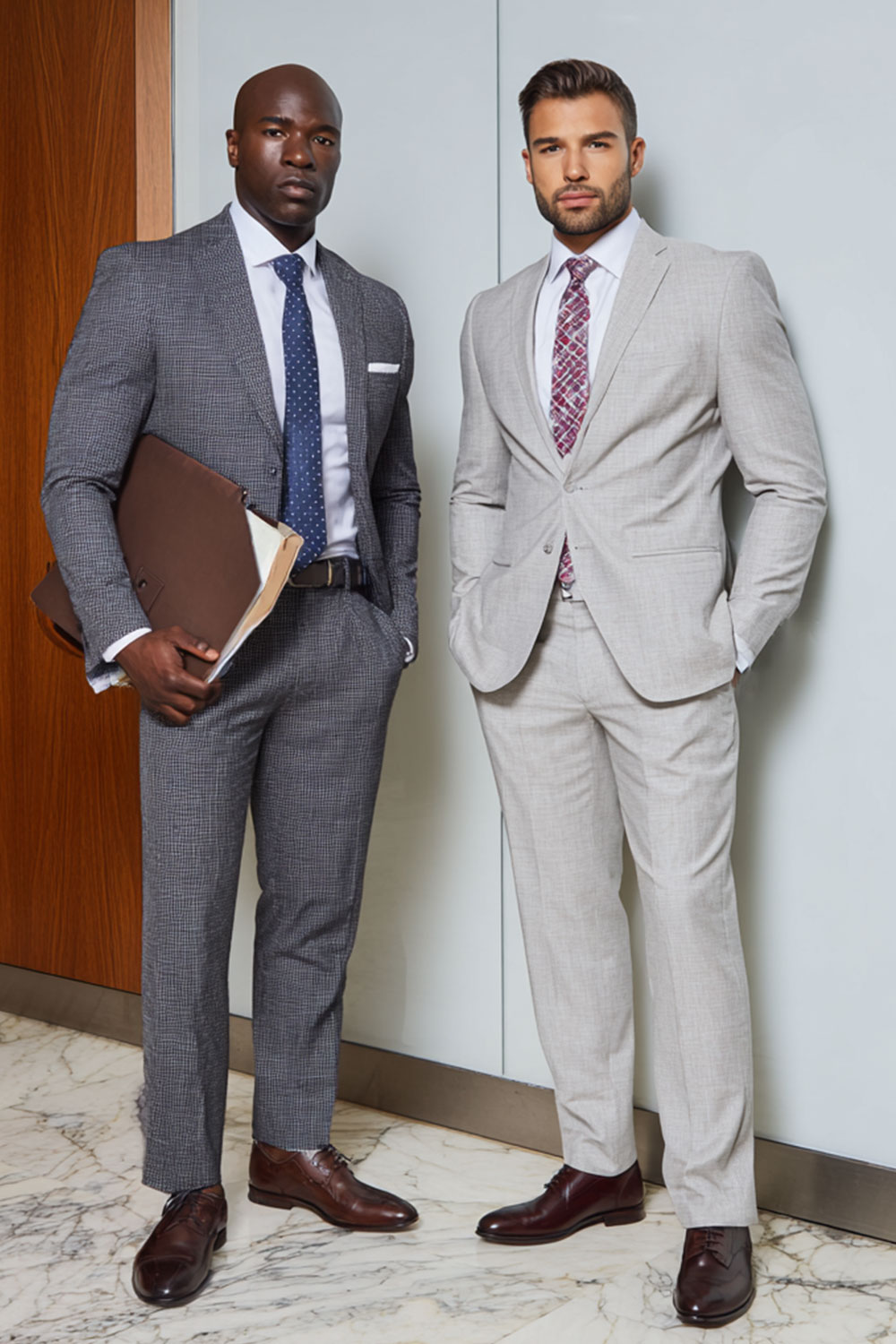
Many lawyers still wear conservative business dress, a dark suit, a collared shirt, a quiet tie and polished leather shoes, but firm policy, jurisdiction and the court you appear in decide the exact standard.
This guide covers the practical side of a legal wardrobe, such as:
how dress varies between firms, cities, countries and types of legal work
court dress, which in some jurisdictions is set by the court rather than by fashion
the core wardrobe of suits, shirts, ties, shoes and outerwear
outfit combinations for court, client meetings, office days and dress-down days
care, tailoring and building the wardrobe on a realistic budget
and many more!
Check your firm’s policy and the court’s own guidance first, and use these outfits within them.
Key Points
01Suits are still common in law, especially for court and client meetings, but many firms now allow business casual on office days.
02Court dress differs by jurisdiction: in England and Wales robes are worn in some courts and wigs only in certain hearings, while in the United States lawyers usually wear conservative suits.
03Navy and charcoal suits with white or light-blue shirts and quiet ties cover most legal settings.
04Fit, condition and neatness matter more than labels, and a tailor is more useful than an expensive brand.
In law, clothing shapes how clients, colleagues and courts read your preparation, so most legal dress stays conservative.
The aim is to look reliable, careful and appropriate for the setting.
This guide breaks down a practical legal wardrobe, gives outfit combinations for common settings and explains the unwritten conventions.
It focuses on men’s legal dress; the same principles of firm policy, court guidance and fit apply to everyone.
The Foundations of Legal Attire
Many law firms still expect business professional dress for court and client work, rooted in the profession’s traditions.
Practice now varies: some firms have moved to business casual for office days, and norms differ between countries, cities, practice areas and individual firms.
A large city firm may be stricter than a small local practice, and an in-house legal team often follows its company’s dress code.
Court and client-facing work usually leaves the least room for informality, so those settings set the standard for the wardrobe below.
Court Dress
Courts can have their own dress requirements, separate from your firm’s policy.
In England and Wales, court dress depends on the court and the type of hearing: since 2008 judges in civil and family proceedings have worn a simpler civil gown without wigs, wing collars or bands, while traditional robes remain in criminal courts, and advocates follow the practice for the court they appear in.
Barristers and solicitor-advocates should follow the current guidance for their court and ask their chambers or firm when unsure.
Where court dress is required, barristers in England and Wales traditionally wear a white collarless shirt with a detachable wing collar and bands under the gown, with a dark suit; check your court’s current practice.
In the United States, lawyers usually appear in conservative suits, and local court rules or a judge’s standing orders may set further expectations.
Your Essential Courtroom and Client-Facing Wardrobe for Lawyers
A legal wardrobe is built from a small number of conservative, well-fitting garments.
Two or three suits let you rotate them and allow each to rest between wears; start with what you can afford and add more as your working week requires.
Navy and charcoal grey are the most versatile colours, and black is also acceptable.
A two-button, single-breasted jacket in wool is a classic choice, and any cut that fits you comfortably and looks conservative meets most firms’ expectations.
Long-sleeved cotton shirts with a collar that holds a tie well are standard, and white and light blue are the colours to own first.
Fine stripes or subtle checks suit office days, and plain white is the most conservative choice for court.
A tie is usually expected with a suit in legal settings; silk is traditional, in quiet colours such as burgundy, navy or dark grey with small geometric patterns, pin dots or repp stripes.
Leather dress shoes are standard, and black cap-toe Oxfords are the most traditional choice for court and client meetings.
Dark-brown or oxblood Derbies or loafers are accepted in many firms on office days.
Keep shoes clean and polished, and choose dark socks, matching your trousers or a shade darker, long enough to cover your calves when you sit.
A plain leather belt in a colour that suits your shoes, or braces, completes the outfit.
For cold weather, a dark wool overcoat such as a Chesterfield, or a conservative trench coat, fits over a suit.
Accessories are optional: a simple watch if you wear one, plain cufflinks with double cuffs, a plain tie bar placed neatly.
A briefcase or document bag that keeps papers dry and organised is practical for court and client visits.
Key Outfit Combinations for Legal Professionals
The combinations below are hypothetical examples for common legal settings.
Court: a charcoal or navy suit, a plain white long-sleeved shirt, a silk tie in a solid burgundy or navy or a very subtle pattern (or, where robes are worn, the wing collar and bands they require instead of a tie), black leather Oxfords and dark over-the-calf socks, plus any court dress your jurisdiction requires.
Client meetings and formal office days: a navy or charcoal suit, perhaps with a subtle check or pinstripe where your firm allows, a light-blue or subtly patterned cotton shirt and a classic patterned tie, with black or dark-brown polished shoes.
Internal office days: where your firm is less formal, a suit with a more varied shirt and tie, or tailored separates, may be acceptable; follow your firm’s policy and what your team wears.
Many lawyers remove their jacket at their own desk and put it back on for meetings or when walking around the firm.
Dress-down days: where permitted, this usually means smart business casual, such as chinos or wool trousers with a collared shirt and possibly a blazer, rather than jeans and a T-shirt; see our guide to business casual for options.
Unspoken Attire Rules Lawyers Commonly Follow
A few conventions are widely followed in legal settings.
Fit matters: an off-the-peg suit usually benefits from a tailor’s adjustments to sleeves, trouser length and waist.
Clothes should be clean, pressed and in good repair, and shoes regularly polished.
Quiet colours, restrained patterns and understated accessories keep attention on your work.
Tidy grooming in whatever style you wear, clean nails and little or no fragrance suit shared offices and courtrooms.
Norms vary between regions and firms, so notice what colleagues wear, while treating your firm’s written policy and the court’s guidance as the deciding rules.
If religious dress, a disability or a health condition affects what you can wear, raise it with your firm; in the UK employers must make reasonable adjustments for disability and should be flexible about religious dress that does not interfere with the work, and in the US religious dress is generally accommodated unless it causes undue hardship.
Building and Maintaining Your Legal Wardrobe
Build the wardrobe gradually, starting with one or two versatile suits, a few white and light-blue shirts, two or three ties and a pair of black Oxfords.
Quality matters more than quantity, and good garments are available second-hand and at moderate prices as well as from expensive tailors.
A reliable tailor helps clothes fit well and last longer.
Hang suits on shaped hangers and let them rest between wears.
Follow each garment’s care label, have shirts laundered and pressed as needed, and clean and condition your leather shoes regularly.
Uphold Your Professional Standard with The VOU
Dressing with care is valued in the legal field.
Refine your understanding of professional presentation with our styling quizzes for men.
Explore our detailed men’s styling guides, including business attire by industry and business professional attire.
Our styling services for men are paid consultations; the shop page lists what each one includes.