
Start here
What’s This About
Comfortable men’s pyjamas come down to a breathable fabric for the temperature you sleep at, a relaxed fit and soft construction details such as a covered waistband and flat seams.
This guide explains how to choose sleepwear that feels good all night, such as:
What sleep research does and does not say about fabrics
How cotton, linen, wool, bamboo viscose and polyester compare
The waistband, seam and label details to check
How pyjamas should fit at the shoulders, sleeves and legs
How to wash sleepwear so it stays soft
and many more!
Choose for your bedroom temperature first, then for fit and style.
Key Points
01Your core temperature falls at night, so sleepwear that lets heat and moisture escape helps you stay comfortable.
02University of Sydney studies found wool sleepwear helped some adults fall asleep faster than cotton, but the research is small.
03Bamboo fabrics are usually rayon, viscose or lyocell, and the FTC says they do not keep the plant’s antimicrobial properties.
04Look for a fabric-covered waistband, flat seams, printed labels and a relaxed fit.
Many men choose their daytime shirts and suits with care, then go to bed in an old gym T-shirt and worn shorts.
Pyjamas deserve a little of the same attention, because you wear them for several hours every night and they affect how warm, cool or restless you feel.
If you are looking for comfortable men’s pyjamas, start with the fabric and the fit before the colour or pattern.
This guide explains what sleep research says about fabrics, which details make pyjamas comfortable, how they should fit and how to look after them.
Why Sleepwear Affects Your Comfort at Night
Your core body temperature falls in the evening and through the night; the Sleep Foundation notes that it fluctuates by about 2°F (around 1°C) over the night.
According to the Sleep Foundation, a bedroom of around 65°F (18°C) suits most people, with a little higher or lower depending on preference.
Sleepwear sits between your skin and your bedding, so it affects how easily heat and moisture can escape.
If your pyjamas trap heat or hold sweat against your skin, you are more likely to wake up feeling too hot, or damp and chilly later in the night.
What the Research Shows
Only a small number of studies have compared sleepwear fabrics, and several come from one research group at the University of Sydney.
A 2016 study in Nature and Science of Sleep found that 17 healthy young adults fell asleep faster in wool sleepwear than in cotton when the room was 17°C.
A 2019 study by the same group tested Merino wool, cotton and polyester sleepwear on adults aged 50 to 70 in a warm room of 30°C, and found small benefits for wool; participants aged 65 and over fell asleep fastest in wool.
A 2024 systematic review in the Journal of Sleep Research found only nine studies on sleepwear and bedding fibres and called the relationship complex; it also noted that linen sheets improved sleep in warm conditions for young adults.
In short, fabric can make a modest difference, but no fabric is proven best for everyone, so choose for the temperature you sleep at and how much you sweat.
A Routine Can Help You Wind Down
Changing into dedicated sleepwear can become a regular bedtime habit, which many people find helps them switch off.
Researchers use the term “enclothed cognition” for the idea that what we wear can affect how we think and feel; a 2025 meta-analysis raised doubts about some early studies but found support for the idea in later ones.
No study has shown that a particular pair of pyjamas treats sleep problems, so speak to a doctor if you sleep badly most nights.
Sleepwear Fabrics Compared
Cotton
Cotton is soft, breathable and easy to wash, which is why most pyjamas are made from it.
It absorbs moisture well but dries slowly, so heavy sweaters may find it feels damp by the early hours.
Choose lightweight poplin, lawn or jersey for warm nights and brushed cotton or flannel for cold ones.
Linen
Linen is airy and feels cool to the touch, and its stiffer fibres sit slightly away from the skin rather than clinging.
It creases easily and can feel crisp at first, but it softens with washing; it suits hot sleepers and summer nights.
Creases are normal in linen, so there is no need to iron linen pyjamas.
Lightweight Wool
Fine Merino wool sleepwear is the fabric with the most direct sleep research behind it, in both cool and warm rooms.
Wool can absorb moisture vapour, which may help explain these results, but wool sleepwear costs more than cotton and usually needs a gentle wash.
Bamboo Viscose and Lyocell
“Bamboo” sleepwear is usually rayon, viscose or lyocell made from bamboo pulp, and in the United States the FTC requires it to be labelled that way.
These fabrics feel smooth and drape softly, and many people find them comfortable on warm nights.
The FTC has stated that rayon made from bamboo does not keep the natural antimicrobial properties of the bamboo plant, so treat “antibacterial” claims with caution.
Polyester and Other Synthetics
Polyester and nylon absorb very little moisture, so some people find they feel clammy or hot in bed.
In the 2019 Sydney study, polyester sleepwear gave no measurable benefit over cotton or wool; in OutdoorGearLab’s testing, a cotton-polyester set felt sweatier than all-cotton pyjamas.
Satin-finish polyester can feel cool at first, so if you prefer it, choose a loose cut and a cooler room.
The Details That Make Pyjamas Comfortable
The Waistband
Look for elastic that is covered with fabric, ideally with a drawstring, so nothing rough presses on your skin and you can adjust the fit.
Try the bottoms sitting and bending as well as standing: the waistband should stay up without digging in, and as a quick check you should be able to slide two fingers inside it.
Labels
Printed care labels, or labels in a side seam, avoid the scratchy tag at the back of the neck.
Seams
Check the inside of the garment: flat, neatly finished seams are more comfortable to lie on than thick, bulky ones.
Fit
Sleepwear should be relaxed without being baggy, so you can turn over freely without the fabric twisting or pulling.
As a guide, the shoulder seam should sit at or just past your shoulder, sleeves should end around the wrist bone, and trousers should reach your ankle without dragging under your heel.
Our guide to how clothes should fit explains these fit points in more detail.
Pockets and Fly
Side pockets and a button or open fly are practical if you wear your pyjamas around the house in the morning.
Styles to Choose From
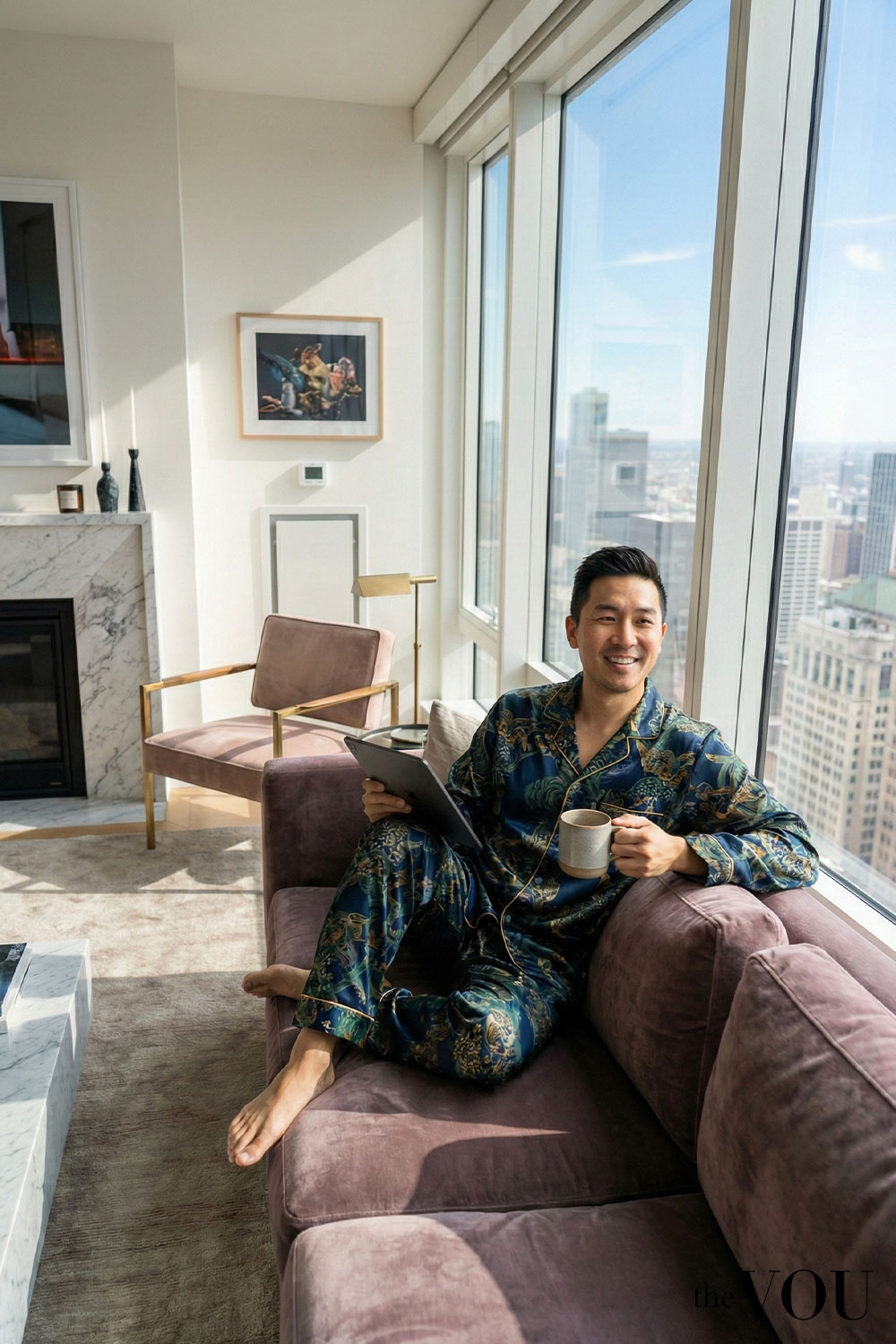
A classic button-front set with a collar and long trousers, in navy, grey or a fine stripe, looks neat enough to answer the door to a delivery.
A crew-neck or henley top with drawstring trousers is simpler and more relaxed.
A short-sleeved top with shorts suits summer and hot sleepers.
Pick the style you will actually wear, and keep two or three sets so one is always clean.
If a set has become too sheer, too tight or too worn to answer the door in, it is time to replace it.
How to Care for Your Pyjamas
Follow the care label first; it is the most reliable guide for each fabric.
Many linen, lyocell and viscose garments do best in a cool wash of 30°C (86°F) or below, which also helps prevent shrinking.
Skip fabric softener if the label advises against it, because it can leave a coating that makes fibres less absorbent.
Line dry where you can, or tumble dry on a low heat, since high heat can shrink natural fibres.
The Verdict
Comfortable pyjamas are not about price or brand: they are about a fabric that suits how warm you sleep, a relaxed fit and soft, flat construction.
Cotton is the reliable all-rounder, linen and bamboo viscose suit warm nights, and lightweight wool has the most sleep research behind it.
Replace worn-out T-shirts and shorts with one good set, and judge it by how you feel after a week of nights.
Sources
Sleep Foundation, “Best Temperature for Sleep”, updated 11 July 2025.
Shin and others, “The effects of fabric for sleepwear and bedding on sleep at ambient temperatures of 17°C and 22°C”, Nature and Science of Sleep, 2016.
Chow and others, “The impact of sleepwear fiber type on sleep quality under warm ambient conditions”, Nature and Science of Sleep, 2019.
Li, Halaki and Chow, “How do sleepwear and bedding fibre types affect sleep quality: A systematic review”, Journal of Sleep Research, 2024.
Horton, Adam and Galinsky, “Evaluating the Evidence for Enclothed Cognition: Z-Curve and Meta-Analyses”, Personality and Social Psychology Bulletin, 2025.
SGS SafeGuards, “US FTC fines companies for false labeling on so-called bamboo textiles”, 18 May 2022.
The Foundation, “How should pyjamas fit?”, retailer guide, checked 7 October 2026.
OutdoorGearLab, men’s pyjama reviews, updated 19 May 2023.