

Start here
What’s This About:
The Y2K aesthetic is the shiny, techno-optimistic look of the late 1990s and early 2000s, named after the Year 2000 computer bug, and this guide explains where it came from and how men can wear it now.
It covers the practical side of Y2K, such as:
• what the Y2K bug actually was, and why the era felt both excited and anxious
• the visual signals: chrome, translucent plastics, logos, neon and cyber black
• the people, brands and films most linked with the look
• how men can wear Y2K today without dressing in fancy dress
and many more!
Treat Y2K as a set of signals to borrow, from a tracksuit to wraparound sunglasses.
Key Points:
01Programmer David Eddy is credited with the abbreviation Y2K in a June 1995 email. The date problem arose from systems storing years as two digits. After extensive preparations, the United States avoided major national system failures at the rollover.
02The aesthetic covers roughly the late 1990s to the early 2000s, and its name as an aesthetic was popularised online from the mid-2010s, notably by the Consumer Aesthetics Research Institute (CARI).
03Its signals include metallics, translucent and candy-coloured plastics, big logos, sportswear, cargo trousers and a darker, Matrix-inspired cyber look.
04For men, the easiest routes are a retro tracksuit, wide or cargo trousers, a logo or graphic top, denim-on-denim, or tinted wraparound sunglasses with an otherwise simple outfit.
What is the Y2K Aesthetic?
The Y2K aesthetic is the sum of patterns, motifs, colours, textures, visuals, and graphics that emerged during the Y2K era.
The label itself is a later one: online archivists popularised it from the mid-2010s, notably Evan Collins, whose Y2K Aesthetic Institute grew into the Consumer Aesthetics Research Institute (CARI).
A sub-genre of Retro-futurism, the Y2K aesthetic emerged in the late ’90s and has roots in the tech optimism that marked the approach of a new millennium.
Inspired by Blobitecture (architecture style) and candy-coloured Apple’s iMac G3s, hailed as symbolic creations of the Y2K era, the Y2K aesthetic has a futuristic look.

The decade’s low-bandwidth internet connection, low-fidelity images (pixelated), and rudimentary forms of animation contribute to the uniqueness of the Y2K aesthetic.
The Y2K aesthetic comprises edgeless shapes, iconography prints, CGI details, iridescent and translucent materials that emulate the CD’s rainbow sheen, and colours like ‘Bondi Blue‘ used by Apple and ‘Atomic Purple’ as used in Nintendo consoles.

The Y2K aesthetic includes bling accessories and striking colours from the hip-hop subculture, candy-coloured imagery from rave culture, and graphics from Japanese anime.
Used in fashion, music, furnishings, and hardware design, the Y2K aesthetic gained mainstream attention with the boom of the internet, the advent of gaming consoles, films like “Hackers” and “Trainspotting,” and MTV clips like “Scream” by Michael and Janet Jackson.

Metallic, silver, holographic, and iridescence were extensively used, symbolising the fascination with the digital world and cyberspace.
The period following the end of the Cold War brought wider adoption of digital technology alongside concern about the Y2K date problem.
For a darker interpretation of Y2K, use black outerwear, cargo trousers, utility vests or a long coat rather than the chrome and candy colours of its brighter side.

Pokémon, Limp Bizkit and The Matrix are cultural references from the late 1990s and early 2000s. The period also saw the Dot-com bubble burst and 9/11.
Popularised in the 80s, neon green, pink, and orange came back in the Y2K era in hats, shoes, and jewellery, adding an unreal pop of colour to the overall aesthetic.
In terms of patterns, binary code of 0s and 1s turned up on clothes and accessories.

The logo-centric trend was dominant, part of the consumer culture of the time, where the logo acted as a status symbol.
Brands like Tommy Hilfiger, Calvin Klein, and Fubu ruled the roost, with logos on everything from t-shirts and sweatshirts to caps and bags.
From the late ’90s, rave and cyberculture introduced alien motifs in UV reactive colours, psychedelic patterns, and references to extraterrestrial life, reflecting the millennial fascination with the unknown future and space exploration.

Nowadays, the Consumer Aesthetics Research Institute also catalogues a later revival style it calls Neo-Y2K.
What is Y2K Fashion?
Y2K fashion is a fusion of millennium futuristic patterns that mimic the shimmering surface of CD ROMs and colours concentrated around metallic paints and iridescent shades.
Fuelled by the widespread emergence of digital technology and the internet, the primary theme of Y2K fashion was futurism, hence the large computer graphics, logos, and technological motifs.
A blend of streetwear, high fashion, rave culture, and boy band fandom shaped Y2K style.
Y2K-style clothes feature Rave culture and pop music aesthetics, such as neon colours, PVC, metallic fabrics and low-rise trousers.
Movies like The Matrix and musicians such as Justin Timberlake, Nelly and Big Boi popularised the Y2K style for men.
However, the cyclical nature of fashion and a sense of nostalgia have seen Y2K fashion making a resounding comeback in recent years.
The recent Y2K revival includes bucket hats, bandanas, trucker caps, flared and baggy jeans, small shoulder bags and chunky trainers.
Sean John’s velour tracksuits are one reference for the period’s sportswear. In 2016, i-D reported that the label was planning a comeback.
TikTok, Instagram and Pinterest have helped the revival, as users post their own modern versions of Y2K outfits.
Y2K Origin and History
The Y2K era, roughly the late 1990s to the early 2000s, was marked by techno-optimism and a distinct look in fashion, music, design and art.
An abbreviation for “year 2000” (“Y” = “year,” “K” = “kilo” = “thousand”), Y2K describes the excitement and anticipation of a new technologically advanced millennium.
The term first described a computer problem with storing calendar dates from 2000 onwards, known as the “Year 2000 problem.”
The retrospective Y2K label groups design and clothing references from a period of expanding internet use and the dot-com boom.
As the millennium approached, concern about the Y2K date problem sat alongside that technological optimism. Some accounts of the time included extreme predictions, but the practical concern was disruption to computer-dependent services.
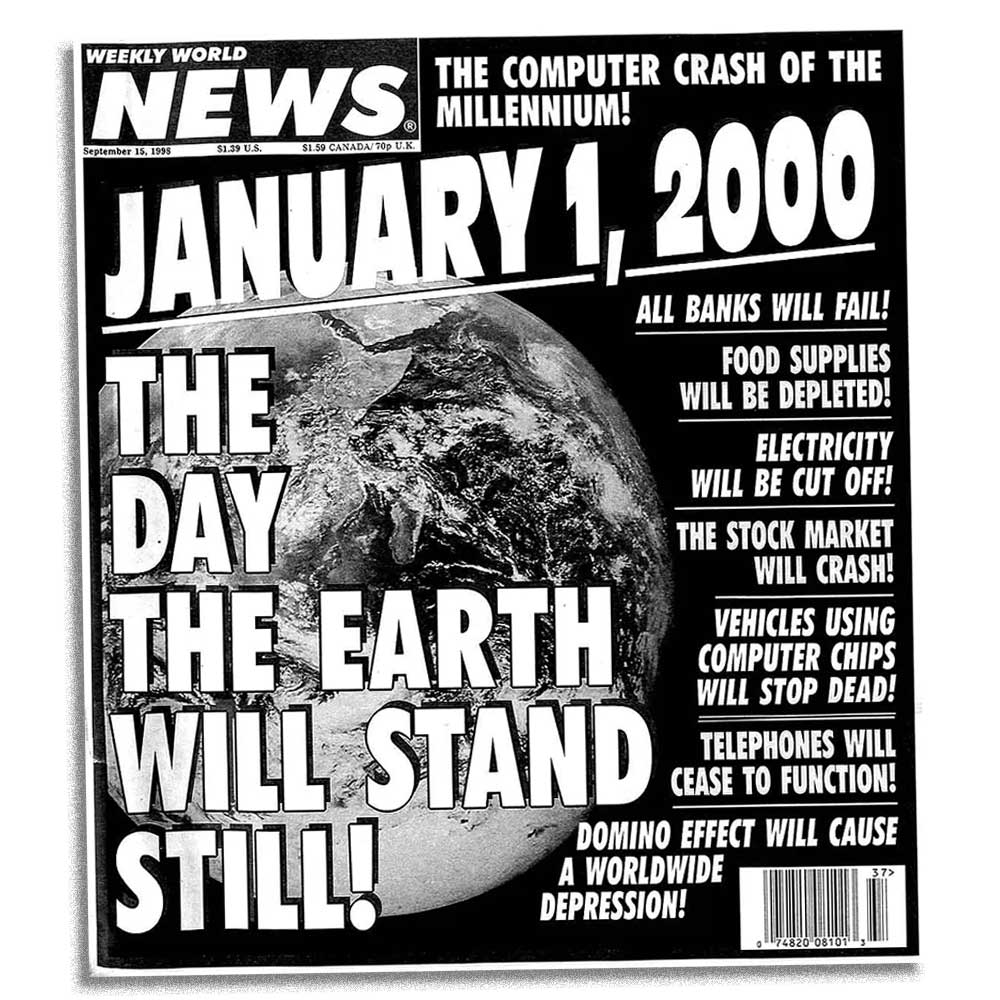
The bug came from a programming shortcut: from the 1960s and 1970s, many systems stored years as two digits, such as 99 for 1999, to save expensive memory.
Massachusetts-based programmer David Eddy is credited with introducing “Y2K” in an email on 12 June 1995. In a 1999 Baltimore Sun interview, he recalled several competing names for the date problem.
“Y2K just came off my fingertips.”
The Y2K Problem Explained
The Y2K problem, also called the Millennium Bug, concerned systems that represented years with two digits. Without a way to distinguish centuries, 00 could be interpreted as 1900 rather than 2000, causing incorrect date calculations.

The fear was that, at the turn of 2000, computers would read 00 as 1900 and fail, with predictions of power cuts, frozen banking systems and even planes falling from the sky.
After extensive preparations, the United States avoided major national system failures at the rollover. GAO reported that most errors reported by the federal government were minor, and that significant problems were addressed through repairs or contingency plans.
What was the Y2K Fear (Y2K Scare)?
The Y2K scare was concern that date-handling errors could disrupt computer-dependent services, including banking and electricity supplies.
The public became aware of the Y2K problem in the years before the turn of the century (millennium).
Although companies and governments spent years fixing their systems, the Millennium Bug fascinated the public, and survivalists and other fringe groups pointed to it as evidence for their own predictions.

The perceived danger of a computer-induced apocalypse led some people to stock up on food, water and firearms and to buy backup generators.
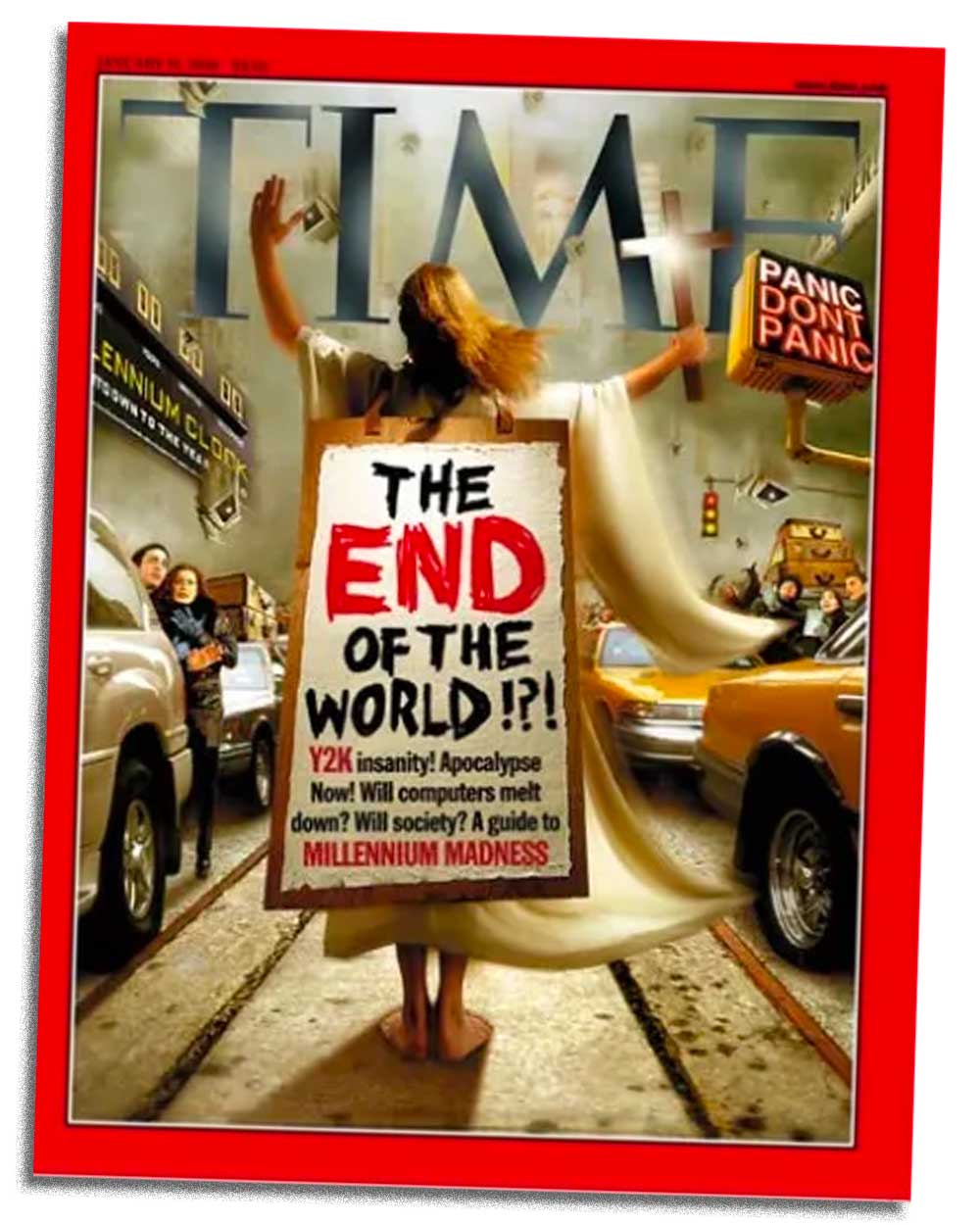
The months leading up to the 31st of December, 1999, were filled with speculation, preparation, fear, and even paranoia.
Apple joked about the bug in a January 1999 Super Bowl advert featuring HAL 9000, the computer from 2001: A Space Odyssey.
Alongside the technical fear ran older anxieties about machines taking control, which The Matrix (1999) put on screen, and religious end-of-the-world predictions tied to the new millennium.
Influential Y2K Celebrities
- Nelly: Nelly’s 2002 hit Air Force Ones put the white Nike Air Force 1 at the centre of the era’s style, and he has since argued that the song pushed up the shoe’s popularity and price.
- Big Boi and André 3000: Complex singles out Big Boi’s Houston Astros jersey in a 1998 Goodie Mob video as a turning point for hip-hop’s throwback jersey craze, with André 3000, Jay-Z and Kanye West among the trendsetters who followed. Our guide to 90s men’s fashion styles covers where the look began.
- Keanu Reeves: As Neo in The Matrix (1999), Reeves wore the long black coat designed by Kym Barrett and the narrow sunglasses made by Richard Walker, the clearest picture of the darker, cyber side of Y2K style.
- Justin Timberlake and ‘N Sync: ‘N Sync was one of the biggest boy bands of the era, with Justin Timberlake as lead singer, and his all-denim outfit at the 2001 American Music Awards is still one of its best-known looks.
- Hedi Slimane: Britannica credits Slimane with introducing an androgynous skinny silhouette in menswear at the turn of the 21st century, first at Yves Saint Laurent and then at Dior Homme. Karl Lagerfeld lost 42 kilograms (about 93 pounds) in 2001 and said he did it to wear Slimane’s clothes.
Famous Y2K Brands
- Sean John: The label made its New York Fashion Week debut in 2000 and became known for its velour tracksuits, as i-D recalled when the brand announced its return.
- Von Dutch: Its trucker caps, worn by Ashton Kutcher and Justin Timberlake, became a signature accessory of the early 2000s.
- Mitchell & Ness: Founded in Philadelphia in 1904, the sporting goods maker became a household name once hip-hop adopted its throwback jerseys, with the peak in the early 2000s.
- Apple: Released in 1998, the iMac G3 put translucent, candy-coloured plastic on home desks, and its colours became shorthand for the era’s futuristic design.
Important Y2K Movies
- Zoolander (2001): Ben Stiller’s fashion satire, with Owen Wilson as fellow model Hansel, sent up the menswear world of the time, including Derelicte, a parody of a John Galliano collection of 2000.
- Fight Club (1999): Directed by David Fincher, the film offers a contrasting wardrobe reference in Tyler Durden’s leather jacket, printed shirts and tinted glasses. Borrow one of those pieces rather than copying the whole character.
- The Matrix (1999): Directed by the Wachowskis, the film is a visual reference for the darker, cyber side of Y2K styling. Its long black coats and narrow sunglasses offer two recognisable details to borrow.
How Men Can Wear Y2K Today
Start with one Y2K signal and keep the rest of the outfit current and simple.
A retro tracksuit top in a bright or metallic colour over a plain tee and straight jeans is the easiest route.
Wide or cargo trousers with a fitted tee or a graphic top bring in the utility side of the era.
Denim on denim, made famous by Justin Timberlake’s head-to-toe look at the 2001 American Music Awards, works today in two different washes rather than a perfect match.
Tinted or wraparound sunglasses, a trucker cap or a chunky trainer add the period feel to a plain outfit.
For the darker cyber side, an all-black outfit with a long coat and slim sunglasses nods to The Matrix (1999) without looking like costume.
For a night out, a black nylon track jacket, white tee, black cargo trousers and silver trainers read clearly Y2K but stay wearable.
Mandy Meyer’s focus at The VOU is men’s body-shape styling, garment fit and outfit proportions. Her coverage addresses the practical questions behind a wardrobe choice: how a jacket sits across the shoulders, how trousers fall and how different cuts change the silhouette a wearer wants to create.
Her subject areas include the triangle, inverted triangle, rectangle, oval, trapezoid, hourglass and diamond labels used in body-shape styling. These provide starting references for comparing visible proportions; they do not capture every body or prescribe one correct way to dress. The focus connects those observations with garment shape, construction, length and the relationship between the upper and lower parts of an outfit.
Mandy’s editorial coverage combines visual comparisons with fit checks for comfort and movement. Readers can consider whether a cut gives them the room they need, where clothing pulls or gathers and which changes might support their preferred look. The aim is to make menswear choices more understandable while keeping personal preferences and the wearer’s own styling goals central.