
Start here
What’s This About
Berluti shoes are expensive because the price pays for Italian-made shoes in the brand’s own Venezia leather, hand-applied patina, a Paris luxury house’s shops and LVMH’s pricing, and only some of that goes into the shoe.
This guide explains what a Berluti price covers and how to decide whether a pair is worth it to you, such as:
Four criteria for judging any shoemaker
Berluti’s history from 1895 Paris to LVMH ownership
How Venezia leather and patina colouring work
Blake stitching compared with Goodyear welting
Outfits for the Alessandro Oxford and the Andy loafer
and many more!
Buy Berluti because you like the shoe and will wear it often, not because the price promises quality or resale value.
Key Points
01Berluti dates its history to 1895 in Paris and has belonged to LVMH since 1993.
02The Alessandro Démesure Oxford is a wholecut, cut from one section of leather with no visible seam, according to Berluti.
03Many Berluti shoes are Blake-stitched, which gives a slim sole but makes resoling more specialised than on Goodyear-welted shoes.
04Venezia leather takes patina well; some owners find it thin and prone to creasing with wear.
Berluti shoes are expensive because the price covers Italian-made shoes in the brand’s own Venezia leather, hand-applied patina colouring, a Paris luxury house with its own shops, and the pricing power of its owner, LVMH.
Some of that money goes into the shoe, and some goes into the name and the shop.
This guide explains each cost in plain terms, shows how Berluti’s construction differs from English shoemakers, and gives practical outfits for the Berluti designs men wear most, so you can decide whether a pair is worth it to you.
How We Judge Whether Shoes Are Worth Their Price
We use four criteria that apply to any shoemaker, so you can compare Berluti with a cheaper pair on the same terms.
Scroll horizontally to see all columns →
| Criterion | What to check | Berluti |
|---|---|---|
| Leather and finish | Type and thickness of the upper leather, and how the colour is applied. | Many models use the brand’s patinable Venezia calf leather, with hand-applied patina colouring. |
| Construction | How the sole is attached, and whether the shoe can be resoled easily. | Several classic models are Blake-stitched; check the product page for each model. |
| Fit and service | How the last suits your foot, and what repair, patina and bespoke services are offered. | Patina services and repairs through the brand; bespoke is offered. |
| Price and where it is sold | Where the price sits against similar shoes, and whether pre-owned is an option. | Prices vary by leather and country; check the brand site; widely sold pre-owned. |
A high price is not proof of higher quality, so the name is only the starting point.
A Short History of Berluti
Berluti traces its history to 1895, when Alessandro Berluti, a shoemaker from Italy’s Marche region, began making shoes in Paris.
The luxury group LVMH bought Berluti in 1993.
Berluti launched its first ready-to-wear clothing collection in 2012, so the brand now sells tailoring, knitwear and leather goods as well as shoes.
Its shoes and leather goods are made in Italy, near Ferrara, and Berluti’s product pages give Italy as the country where its shoes are assembled and finished.
What a Berluti Price Pays For
1. Venezia leather and hand-applied patina
Berluti’s best-known feature is the colour of its shoes.
Many models are made in the brand’s own Venezia calf leather, which Berluti describes as patinable: the colour is built up by hand in layers, which gives the deep, uneven shading the brand is known for.
New shoes come with a free first patina, and the brand offers further patina and recolouring services.
A Berluti customer quoted by Permanent Style in 2008 found Venezia leather quite thin and prone to visible creasing after some wear, which is worth knowing before you choose a pale colour.
2. Construction
Many Berluti shoes are Blake-stitched, which means the upper is folded under and stitched directly through to the sole.
English and American makers more often use Goodyear welting, which adds a strip of leather, the welt, between upper and sole.
Blake stitching gives a slimmer, closer-cut sole edge and a flexible shoe, but it lets in water more easily and usually needs the original maker or a specialist to resole it.
A Goodyear-welted shoe looks a little heavier at the edge but is easier for most cobblers to resole.
3. Distinctive designs
The Alessandro Démesure Oxford is a wholecut, made from one cut of leather without a visible seam, according to Berluti, and is described as inspired by the first design Alessandro Berluti created in 1895.
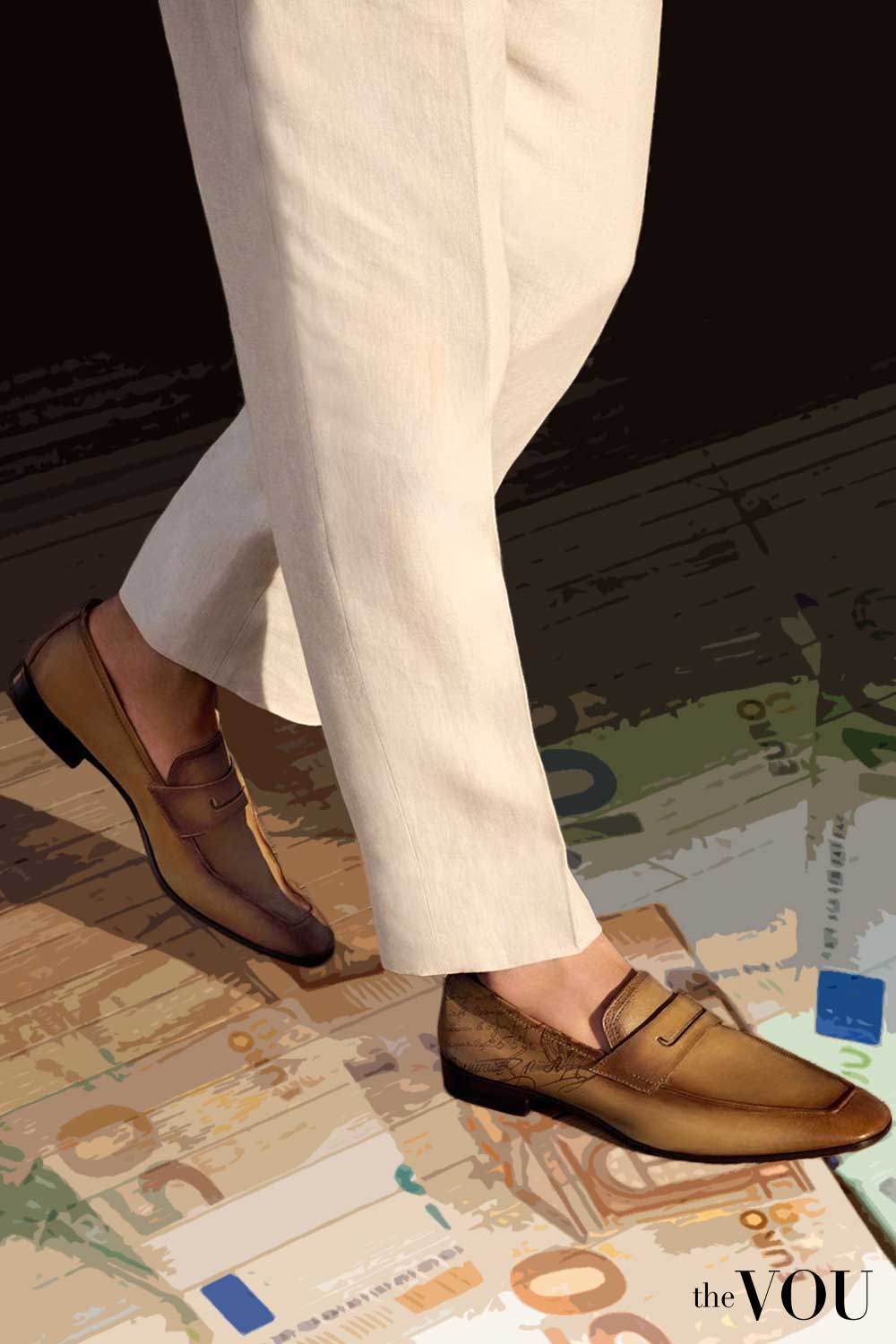
The Andy Démesure loafer, whose upper is cut in one with a hand-stitched apron, takes its name from Andy Warhol, whose 1962 meeting with the house inspired it, the brand says.
Cutting a whole upper from one hide section uses a large, flawless hide and skilled cutting and lasting, which adds cost.
4. Shops, service and the group behind the brand
Berluti sells mainly through its own boutiques, its website and selected department stores.
Rents, staff, patina services and advertising are all paid for out of the price on the box.
As an LVMH brand, Berluti sets its prices as a luxury house, not by adding a margin to the cost of materials, and it does not publish a breakdown of what its prices pay for.
What Berluti Costs
Berluti prices change often and differ by country and by leather, so check the brand’s own website for the price where you live before deciding.
Exotic leathers such as alligator cost much more than calf for the same model.
What the Price Does Not Tell You
A high price includes the name, the shop and the advertising, and none of those make a sole last longer.
Berluti shoes are not a financial investment: some special editions resell well, but most worn shoes sell for far less than their new price.
How long a pair lasts depends on how often you wear it, whether you rotate it with other shoes, and whether you use shoe trees and resole it in time.
Patina colours can be renewed, but a thin leather that has creased deeply cannot be made new again.
Four Berluti Designs and How to Wear Them
1. Alessandro Démesure Oxford
A wholecut Oxford is the most formal Berluti design, and its clean surface sits well with plain tailoring.
Dark brown or black is the easiest to wear often.
Wear: a charcoal or navy worsted suit, a white poplin shirt, a dark silk tie and black Alessandro Oxfords with black socks.
Wear (smart casual): a navy hopsack blazer, grey flannel trousers, a pale blue Oxford-cloth shirt and dark brown Alessandro Oxfords.
2. Andy Démesure loafer
The Andy loafer works from tailoring to weekend clothes.
A deep brown or burgundy patina adds colour without looking loud.
Wear: a mid-grey unstructured jacket, a white knitted polo shirt, navy wool trousers with no break, and burgundy Andy loafers.
Wear (summer): a pale blue linen shirt, stone cotton trousers and tan Andy loafers without visible socks.
3. Leather boots
Berluti also makes ankle boots in patinated leather.
A mid or dark brown boot is the most versatile, from flannel trousers to dark denim.
Wear: a navy crew-neck jumper over a white Oxford-cloth shirt, dark straight jeans, brown leather ankle boots and a waxed cotton or tweed jacket.
4. Playtime trainers
Berluti’s Playtime is a leather trainer, often in Venezia leather with the brand’s script detail.
Plain colours sit more easily with tailored trousers than bold patinas.
Wear: a grey cashmere crew-neck jumper, navy tailored trousers with a slim leg, dark brown Playtime trainers and a navy overcoat or a suede bomber jacket.
Berluti Compared With Other Top Shoemakers
Compare makers by construction, last shape and service first, then by price.
English makers such as John Lobb, Edward Green and Gaziano & Girling are best known for Goodyear-welted shoes with a more traditional English shape.
Our guide to why John Lobb shoes are so expensive applies the same questions to an English maker.
Paris and Florence also have makers known for hand-finished shoes, such as Corthay and Stefano Bemer.
Choose Berluti if you want its colouring and slim Italian construction; choose a Goodyear-welted English shoe if easy resoling and wet-weather wear matter more to you.
Buying and Caring for Berluti Shoes
Try shoes on late in the day, when feet are slightly larger, and with the socks you plan to wear.
Ask whether the model is Blake-stitched or Goodyear-welted, and how resoling is handled where you live.
If you buy pre-owned, buy from a seller who authenticates goods, shows the soles and insoles clearly and accepts returns.
Use cedar shoe trees, rest each pair for a day between wears, and polish with a neutral or matching cream so you do not cover the patina with the wrong colour.
Are Berluti Shoes Worth It?
Berluti shoes are worth considering if you love the colouring and the slim Italian shape, the fit suits your foot, and the price is affordable for you without stretching your budget.
They are harder to justify if you mainly want a hard-wearing shoe that any good cobbler can resole, because a Goodyear-welted shoe from a specialist maker can cost less and resole more easily.
Buy a pair because you like it and will wear it often, not because the price promises quality or resale value.
Common Questions About Berluti
Q. When was Berluti founded?
Berluti dates its history to 1895, when Alessandro Berluti began making shoes in Paris.
Q. Who owns Berluti?
Berluti has belonged to the luxury group LVMH since 1993.
Q. Where are Berluti shoes made?
Berluti’s shoes are made in Italy, near Ferrara.
Q. What is Venezia leather?
Venezia is Berluti’s own calf leather, made to take the hand-applied patina colouring that the brand is known for.
Sources
Berluti, Alessandro Démesure Oxford and Andy Démesure loafer product pages, read 7 October 2026.
Harry Rosen, Berluti Alessandro Démesure Oxford (retailer listing giving Blake construction), read 7 October 2026.
Permanent Style, Make Berluti your fifth pair, part 1: construction, 16 July 2008.
Wikipedia, Berluti (founding, LVMH purchase, ready-to-wear and factory, with cited press sources), read 7 October 2026.