
Start here
What’s This About
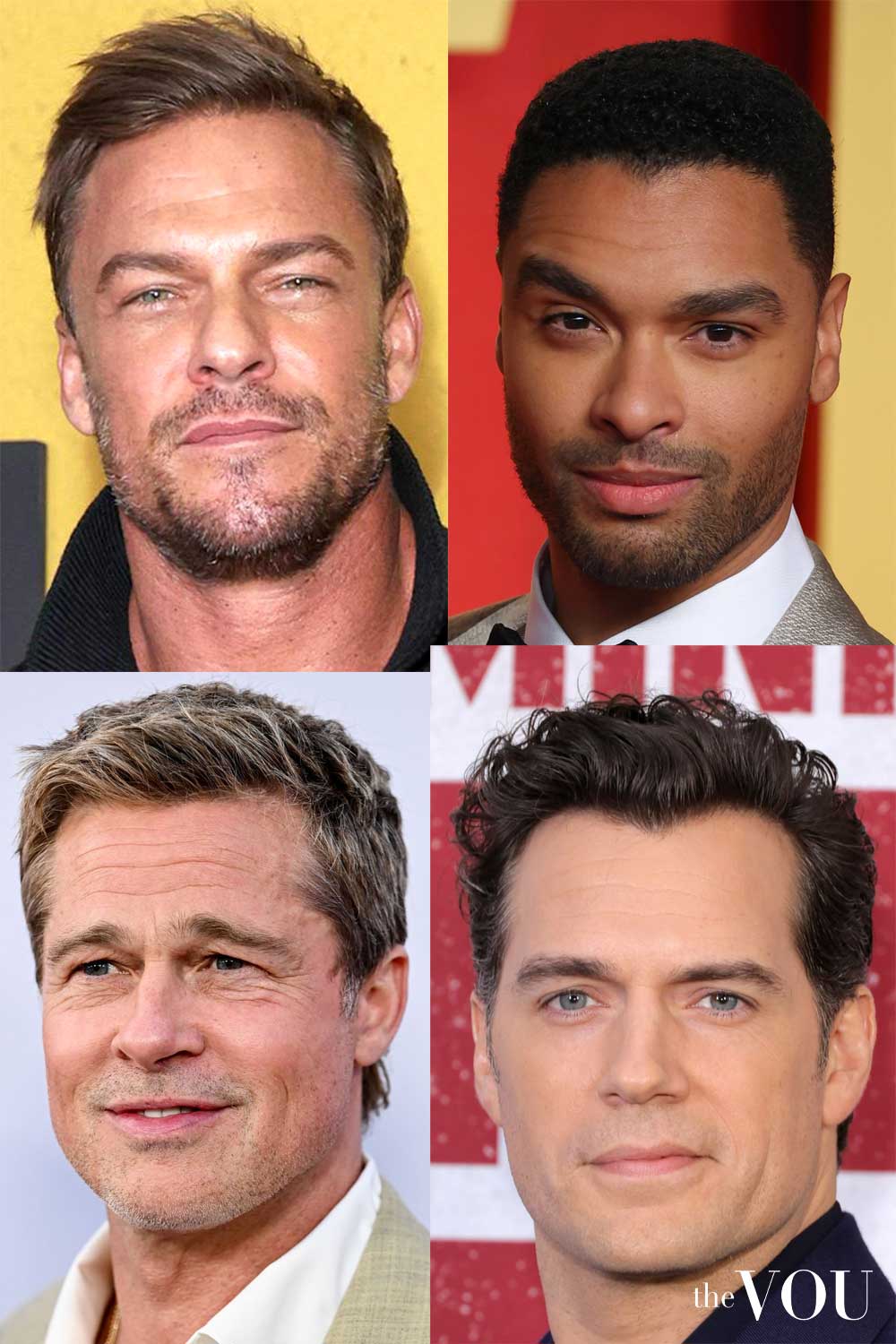
This gallery uses ten celebrities often cited as examples of a rectangle face shape, which The VOU describes as clearly longer than it is wide with angular jaw corners, to show hair, beard and accessory choices you can adapt.
The guide covers styling ideas such as:
Fullness at the sides rather than height on top
Where layers sit, from the cheekbones down to the jaw
Beard side fullness versus chin length
Collars, ties, frames and hats that add horizontal emphasis
and many more!
We also explain how The VOU separates rectangle from oblong.
Key Points
01Rectangle and oblong share a long outline; The VOU separates them by angular versus softer corners, while other systems combine them.
02If you want to reduce the impression of length, put fullness at the sides rather than height on top.
03Temple width comes from leaving the upper sides longer; closely cropped sides give a narrower, sharper outline.
04Echoing the length, or simply wearing a cut you like, is just as valid.
Understanding your face shape can help you make style choices, from a haircut to eyewear and facial hair.
The rectangle face shape is The VOU’s name for an outline that is clearly longer than it is wide, with broadly similar widths from forehead to jaw and angular jaw corners; we use oblong for a similarly long outline with softer corners.
Below are ten men often cited as examples of this outline.
A photograph cannot confirm anyone’s face shape, because camera angle, hair and beard all change how an outline reads, so treat each profile as a styling idea to try rather than a record of that person’s routine.
Reducing the impression of length is one goal you might choose; echoing it, or simply wearing a cut you like, is just as valid.
Before we start, if you’re still not sure about your face shape, take our quick face shape quiz for men to check your face shape; treat the result as a starting point for the styling ideas below rather than a measurement.
1. Brad Pitt
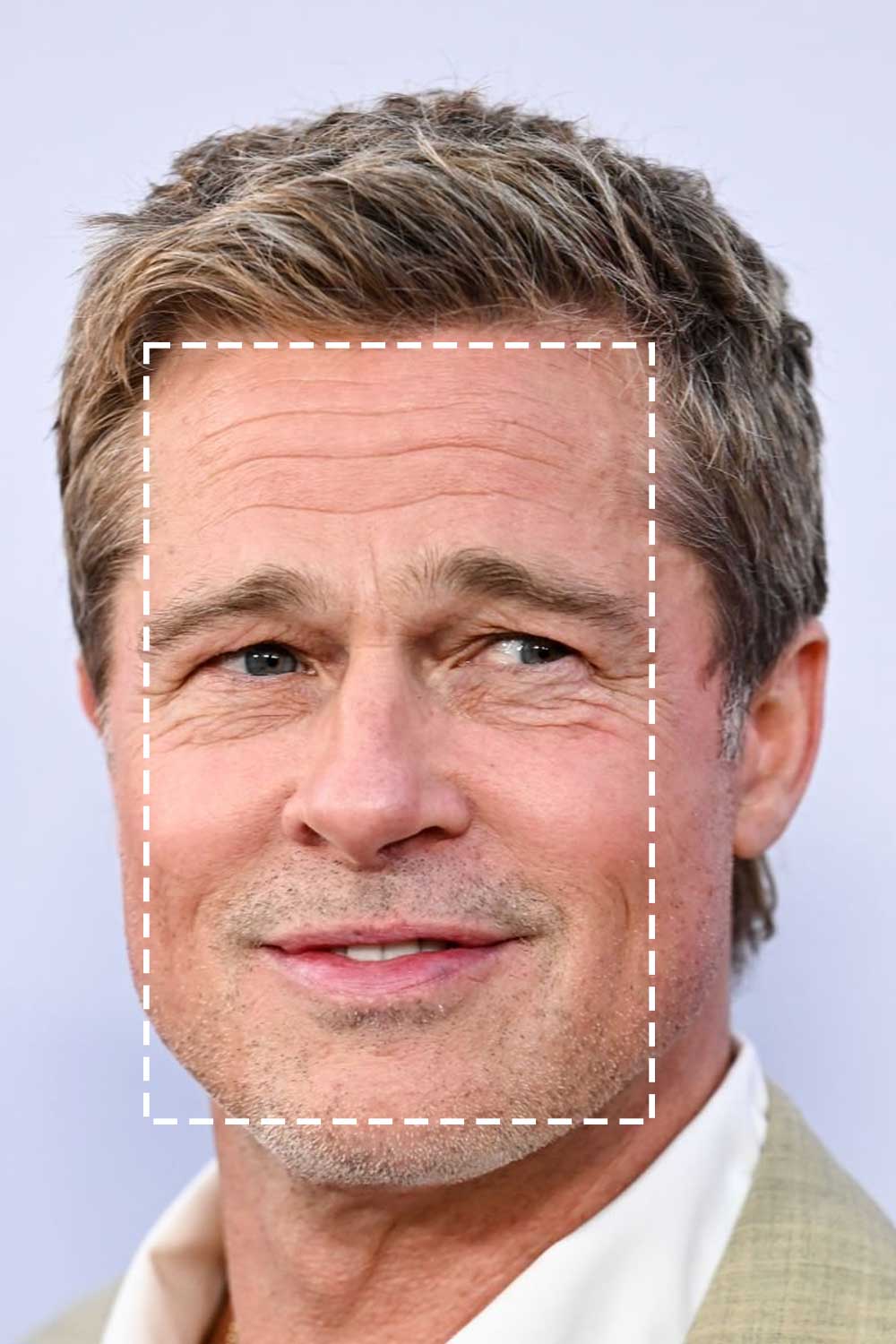
Brad Pitt, pictured above, is often cited as an example of a rectangle face shape.
The look this profile focuses on is a medium-length cut.
Fullness at the sides rather than height on top keeps a medium-length outline from reading taller, if that is the effect you want.
Where the layers sit decides where the fullness sits: layers beginning around the cheekbones put width there, while longer layers that end at the jaw put it lower, so tell your barber which level you want.
Sweeping the hair to one side adds horizontal movement across the forehead, a simple home styling option for any medium-length cut.
2. Henry Cavill
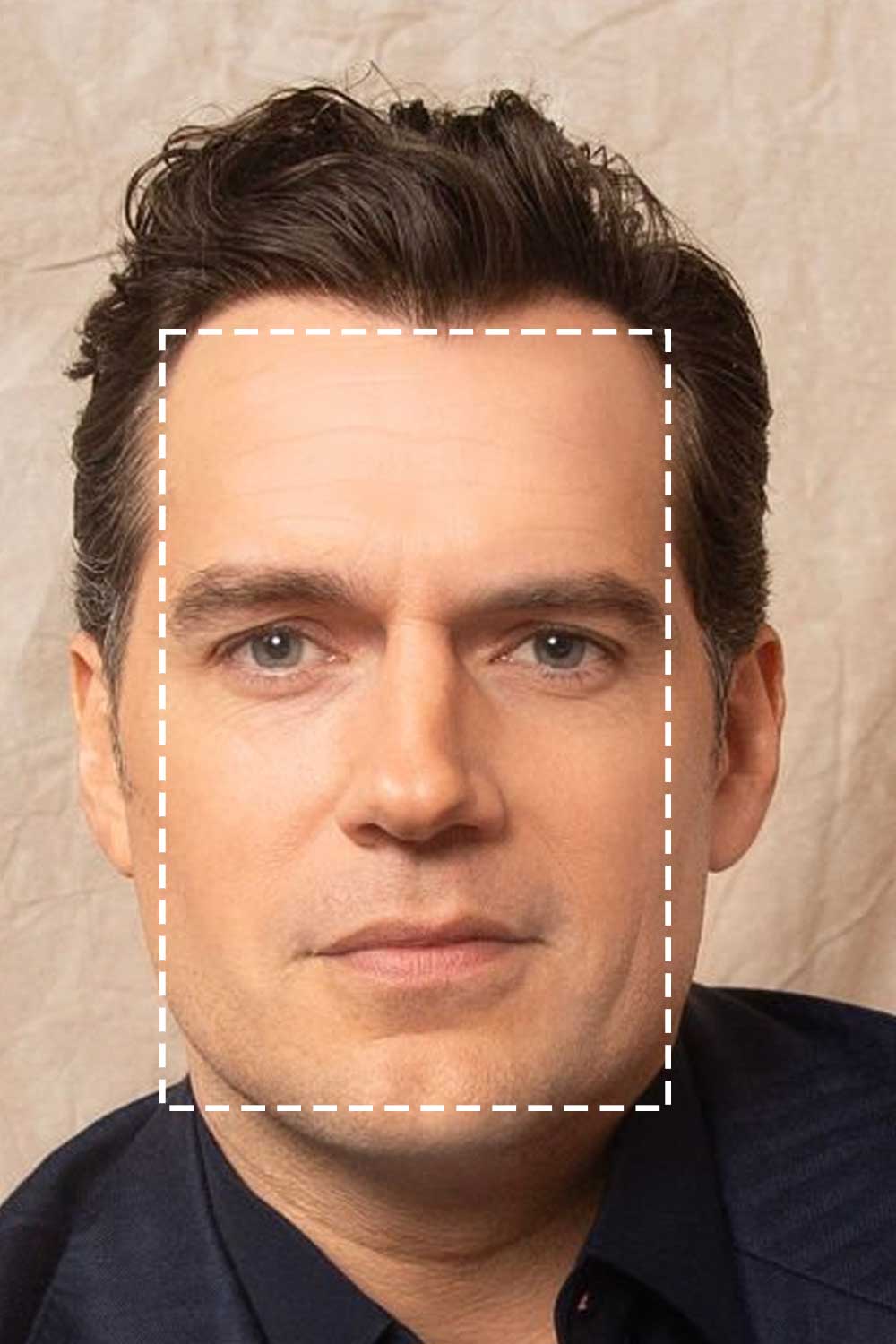
Henry Cavill, pictured above, is often cited as an example of a rectangle face shape.
The look this profile focuses on is a classic short cut with a side parting.
Asking for the sides to be graduated gently, rather than taken very close, keeps a little width at the temples, and keeping the top moderate avoids adding height.
With a beard, this profile shows fuller sides kept neat at the chin: side fullness adds width at the cheeks and jaw, while a short chin avoids adding length, if that is the effect you want.
3. Regé-Jean Page
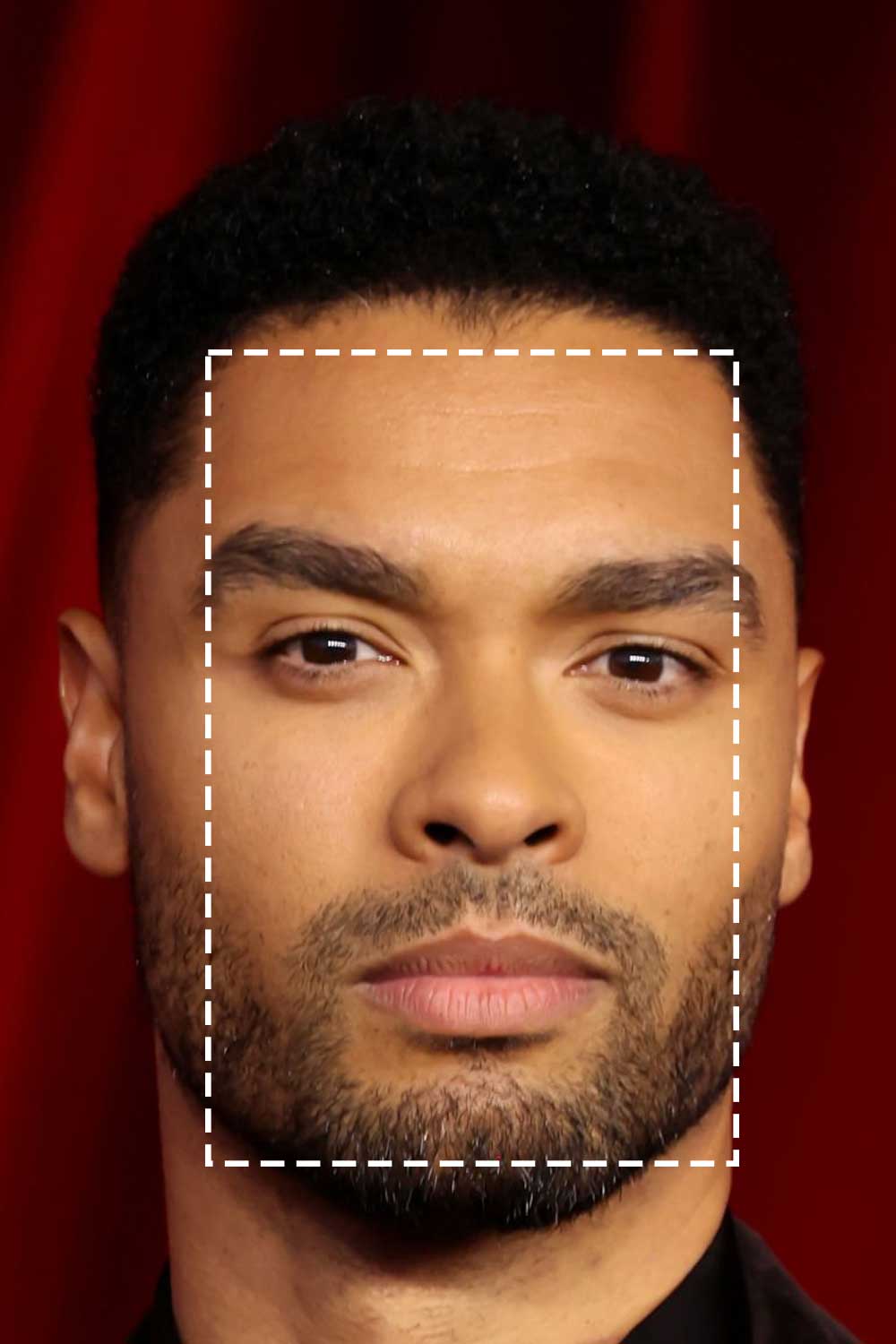
Regé-Jean Page, pictured above, is often cited as an example of a rectangle face shape; no length-to-width ratio can be read reliably from a photograph.
The look this profile focuses on is a short, textured cut with moderate height.
For tightly curled or coily hair, keeping the top short and even, with the sides tapered only gently, is one way to limit added height; how short is right depends on your curl pattern and shrinkage, so judge it on dry hair.
The facial-hair option paired with this look is a short, even beard or stubble; keeping the chin no longer than the sides avoids extending the lower face, and a defined cheek line keeps it neat.
4. LeBron James
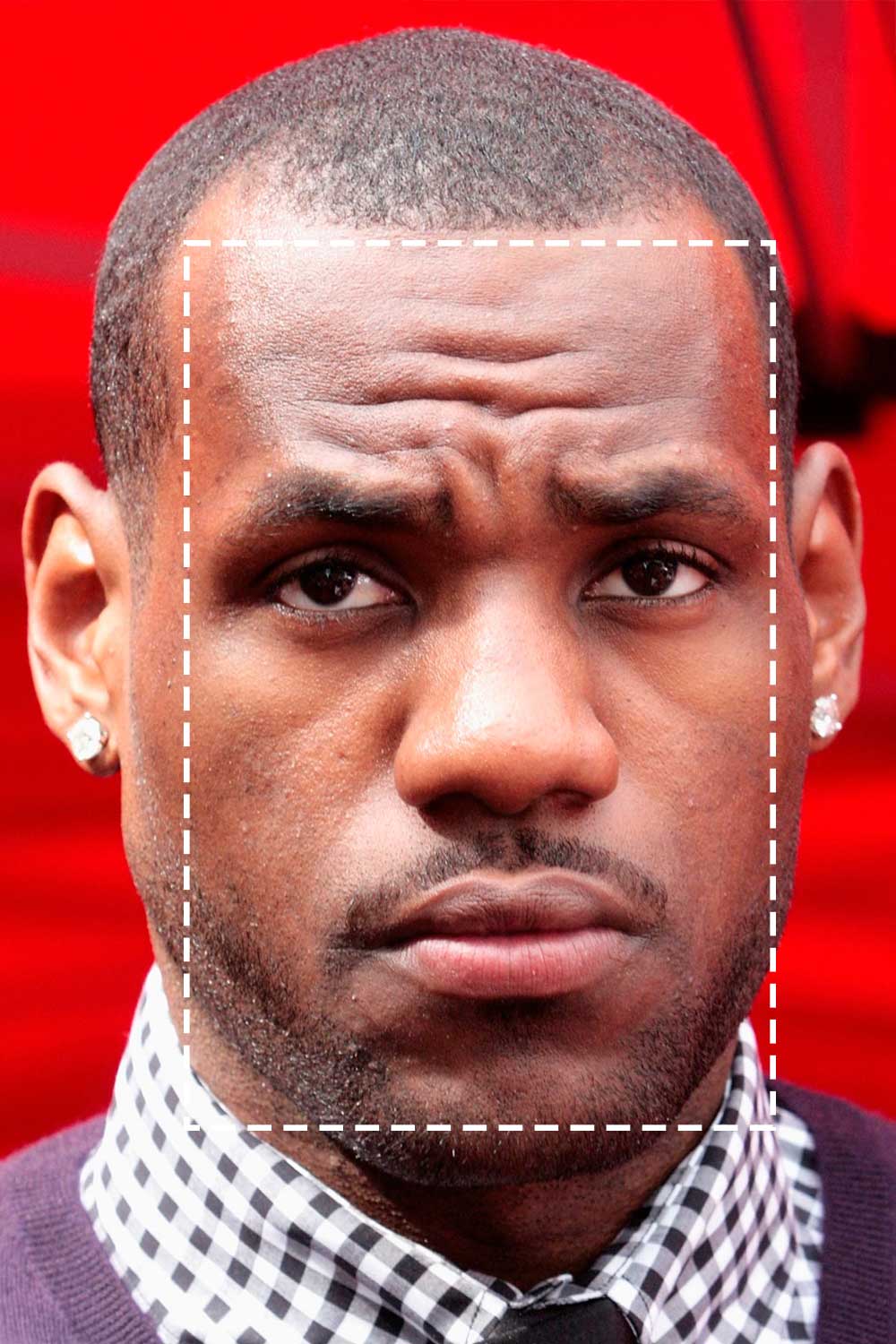
LeBron James, pictured above, is often cited as an example of a rectangle face shape, although a full beard covers the jaw, so the outline underneath cannot be read from a photograph.
The look this profile focuses on is a full beard with a sharply defined outline.
A beard’s effect depends on how you distribute it: fullness through the sides adds width, length at the chin adds length, and keeping the two similar gives an even, squared outline.
A lineup, the sharp edging of the hairline and beard outline, makes those borders crisp; ask your barber where the cheek line and neckline will sit before they cut, since both depend on your beard length and growth.
5. Alan Ritchson
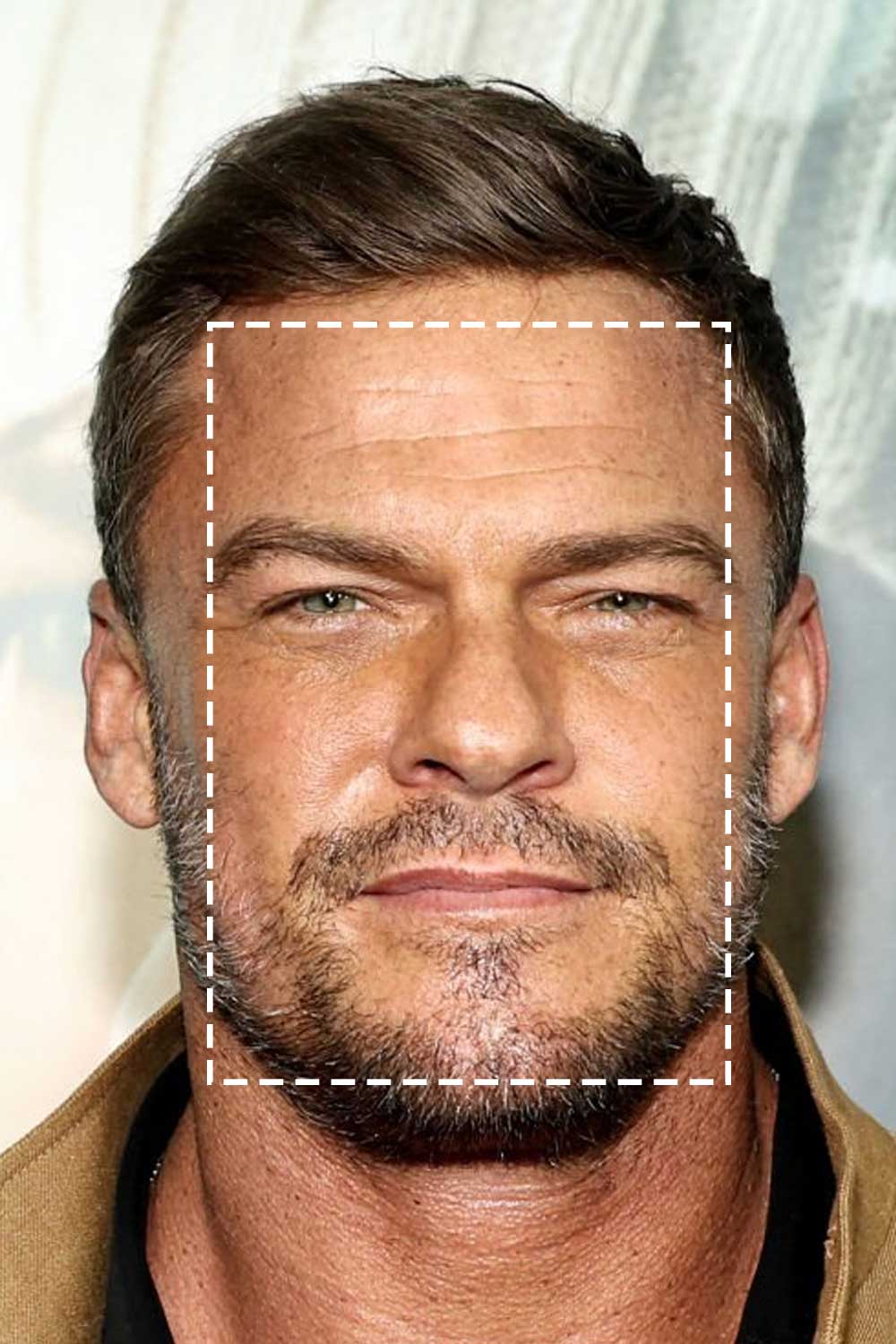
Alan Ritchson, pictured above, is often cited as an example of a rectangle face shape.
The look this profile focuses on is a short, practical cut.
Even with a short cut, asking for the sides to be left slightly longer than a skin fade keeps a little width; a high, tight fade gives a narrower, taller outline, which is a valid preference too.
With stubble or a short beard, keeping the length even from the sideburns to the chin adds side fullness without extra chin length.
6. David Gandy
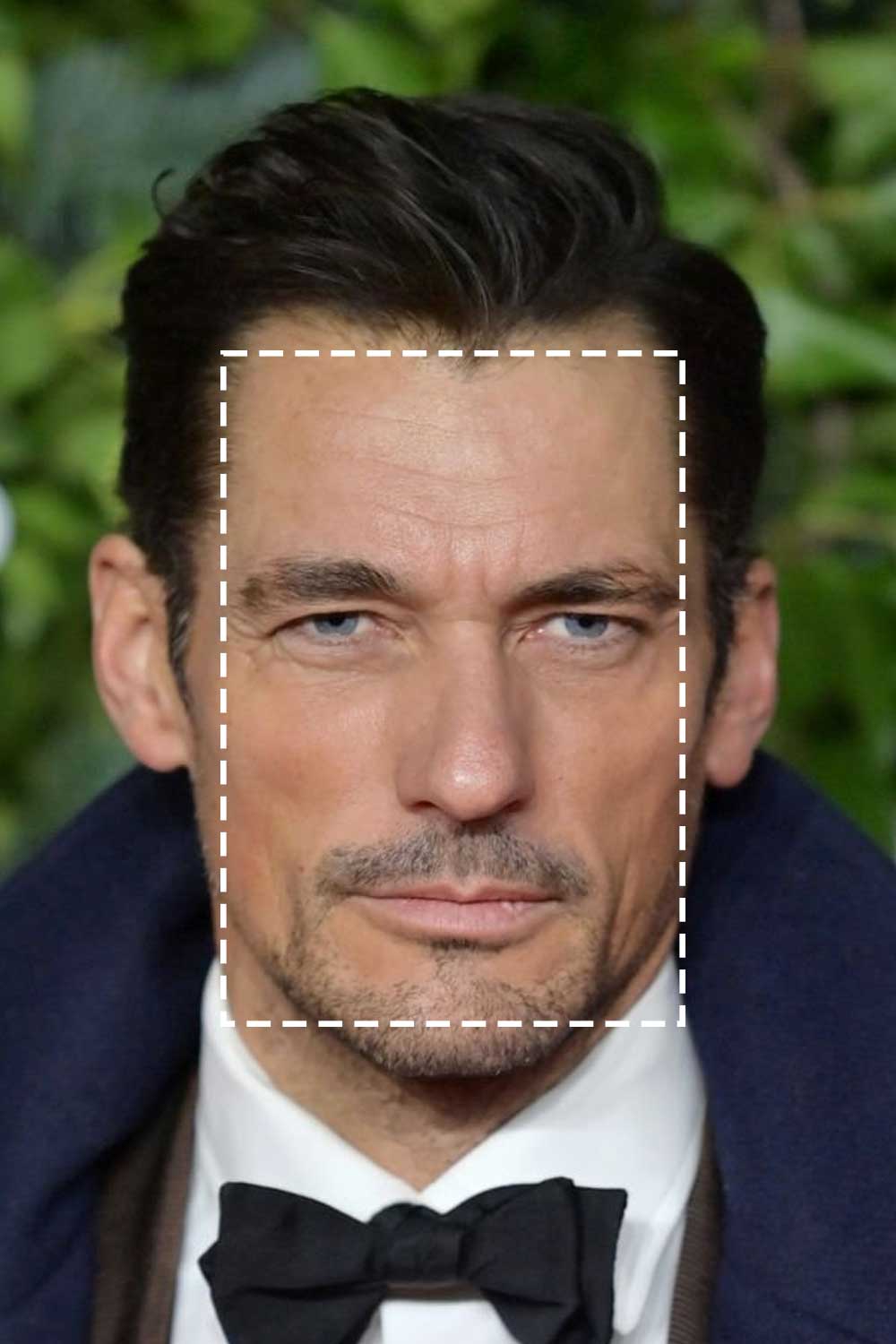
David Gandy, pictured above, is often cited as an example of a rectangle face shape.
The look this profile focuses on is a classic side-parted cut with fullness at the sides rather than height.
Hair combed to the side and lying close to the head adds less height than an upright quiff, and leaving some length above the ears keeps width at the sides.
With facial hair, this profile pairs the cut with stubble or a short beard kept fuller at the sides than at the chin, one option if you want width rather than length.
7. Ben Affleck
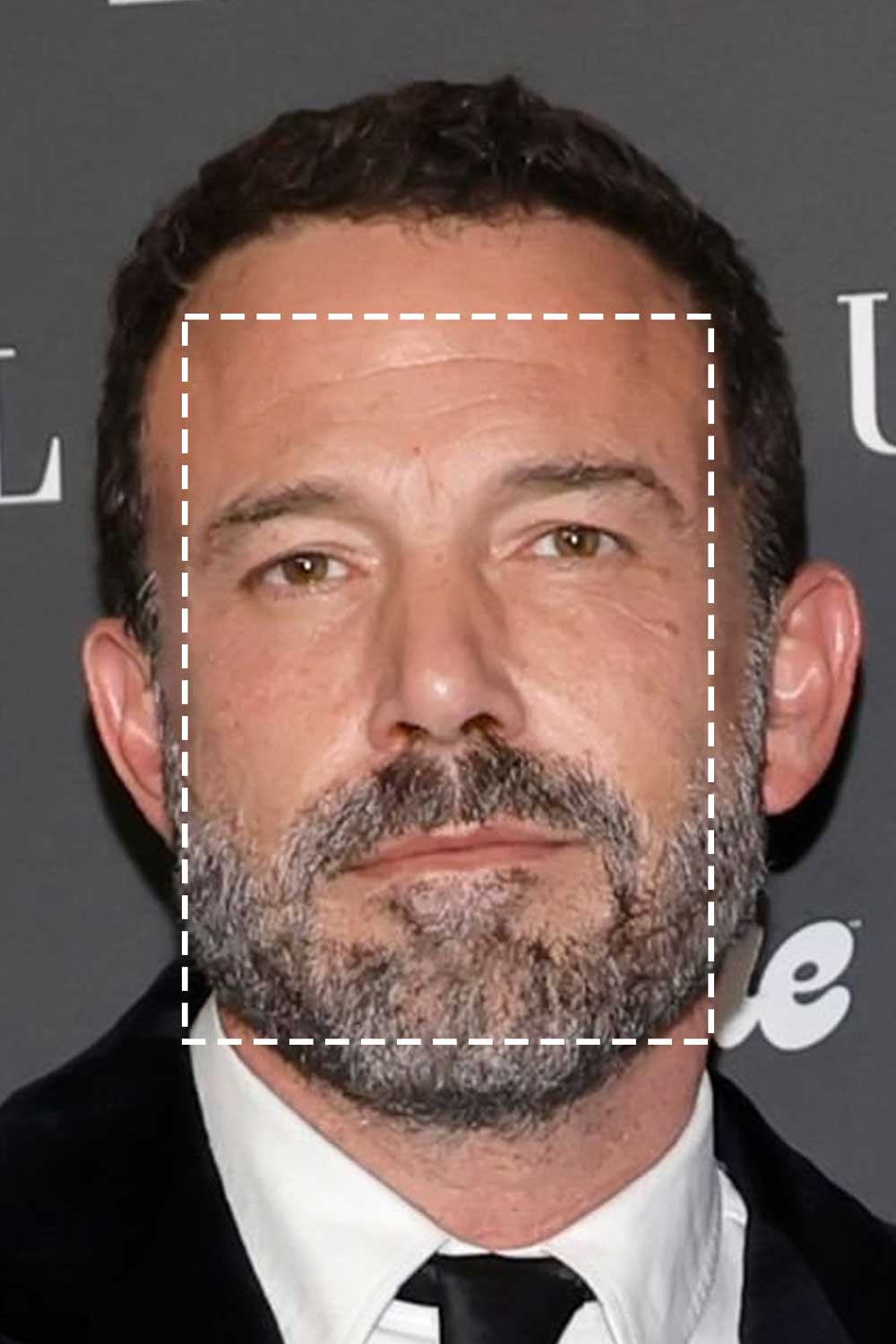
Ben Affleck, pictured above, is often cited as an example of a rectangle face shape.
The look this profile focuses on is a short, conventional cut paired with a beard.
A gentle graduation at the sides, rather than a very close fade, keeps some width beside the temples.
A beard kept fuller at the sides than at the chin adds width rather than length; if you would rather emphasise length, let the chin grow longer than the sides instead.
8. Russell Crowe
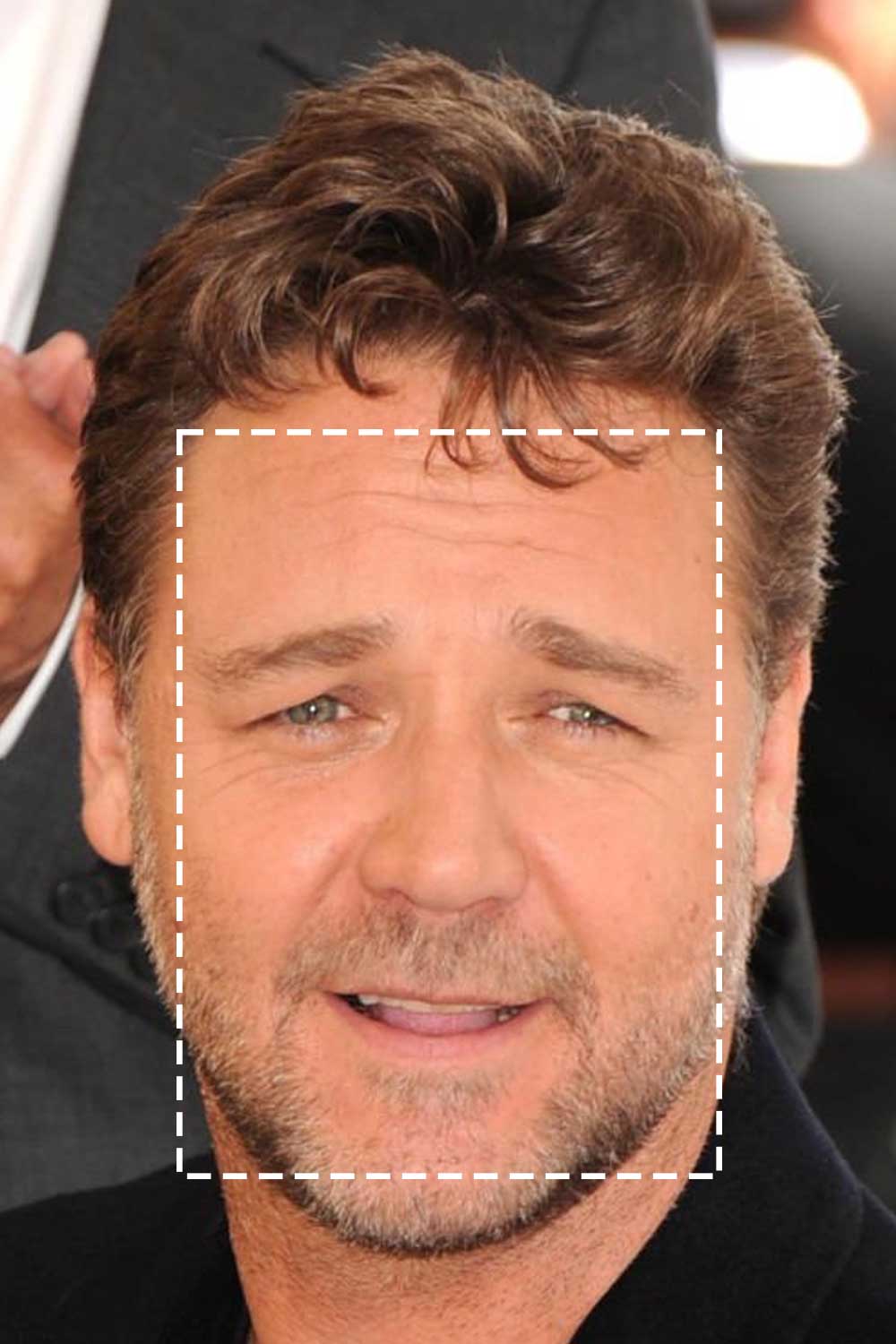
Russell Crowe, pictured above, is often cited as an example of a rectangle face shape.
The look this profile focuses on is a layered cut worn with a beard.
Layers placed at temple level put fullness beside the forehead, which adds width high up if that is your goal.
With a fuller beard, keeping the chin from growing much longer than the sides avoids extending the lower face; how full the sides can go depends on your growth coverage.
9. Hugh Jackman
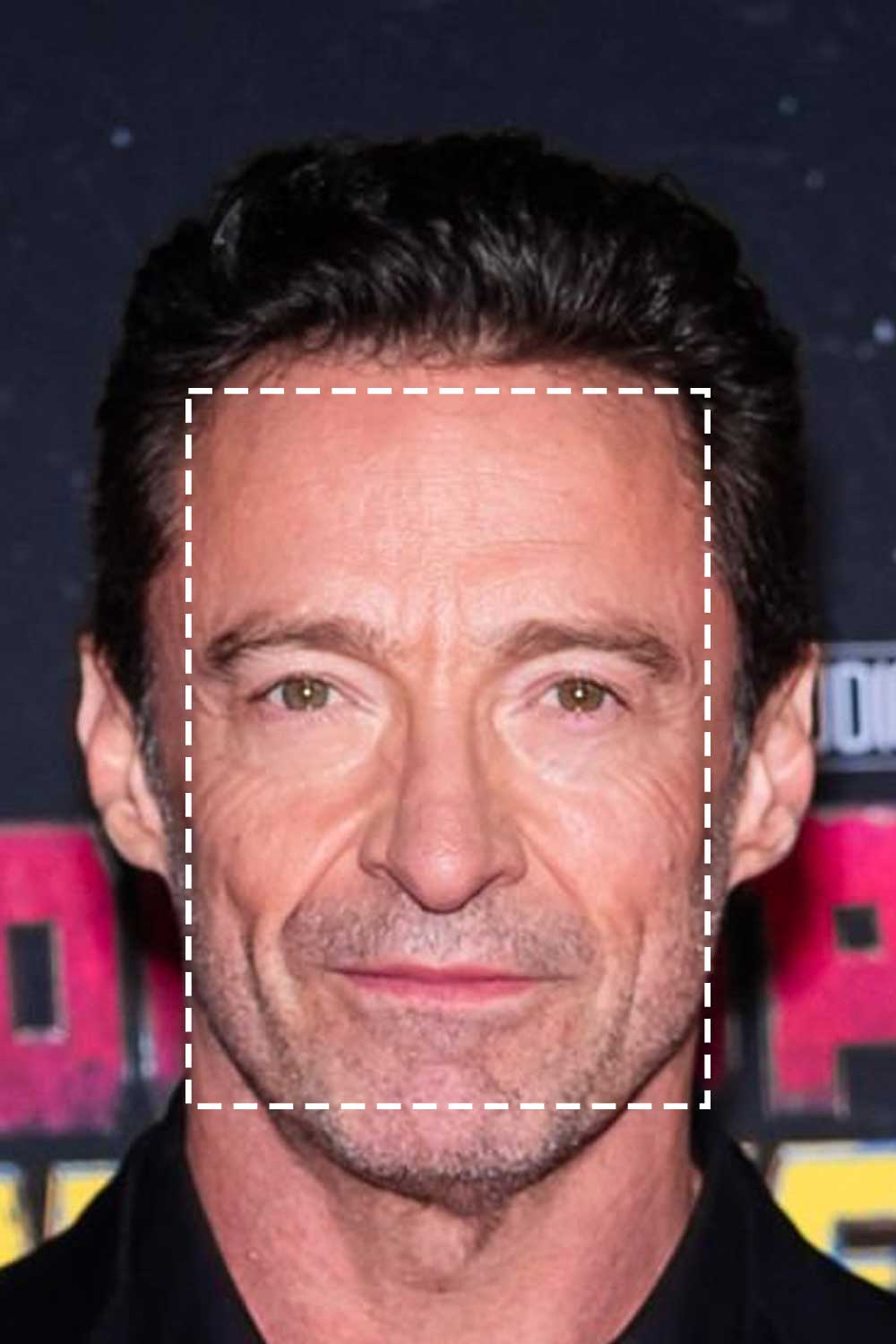
Hugh Jackman, pictured above, is often cited as an example of a rectangle face shape.
The look this profile focuses on is a short to medium cut with fullness at the sides, paired with stubble or a short beard.
Keeping the top moderate and the sides less closely cut gives a broader, lower outline than a tall quiff with tight sides.
Stubble or a short beard with even sides adds a little breadth at the jaw; trimming the chin to match the sides stops it adding length.
10. Arnold Schwarzenegger
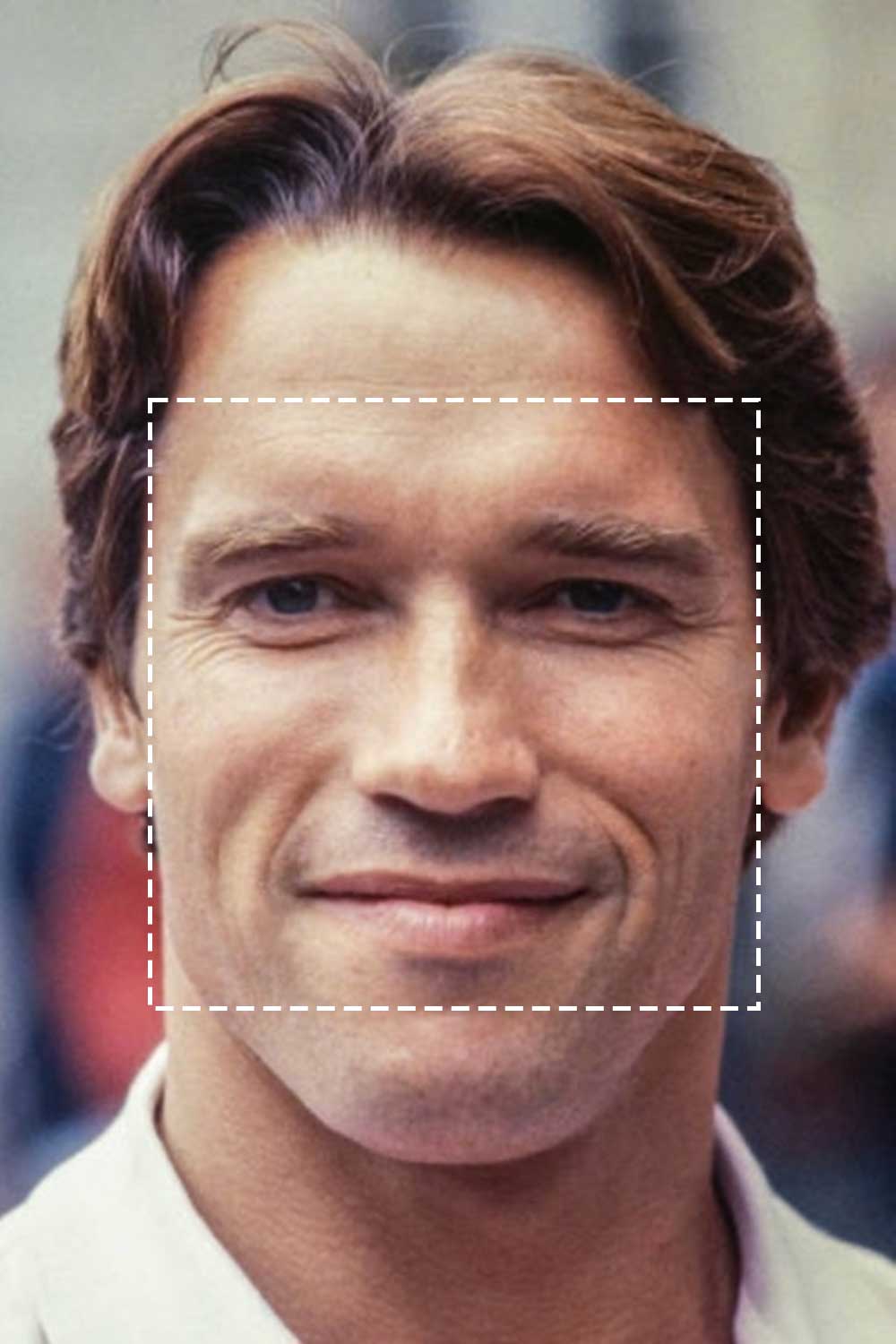
Arnold Schwarzenegger, pictured above, is often cited as an example of a rectangle face shape.
The look this profile focuses on is a short, classic cut that needs little styling.
Short, tidy sides with some length left above the ears keep a little width without making the cut look full.
Clean-shaven or light stubble keeps the jaw outline visible; whether that is the look you want is a matter of preference rather than face shape.
Styling for Rectangle Faces
The principles below apply if you want to reduce the impression of length; if you would rather echo it, the opposite choices work just as well.
The guidelines below cover haircuts, facial hair and accessories, building on the celebrity examples above.
Haircut Principles
To reduce the impression of length, the main lever is where your hair carries height and width.
Height at the crown adds length above the forehead, while fullness at the temples and sides adds breadth, so ask for the second rather than the first if that is your aim.
Length on top does not have to stay short: longer hair worn swept to the side, forward or down adds little height, while even short hair adds height if it is styled straight up; curl, shrinkage and growth direction change how much lift a given length gives, so judge it dry-styled in the mirror rather than by a fixed measurement.
For short styles, if you want width, keep the sides fuller rather than severely tapered and keep the crown from standing tall; a skin fade with height on top does the opposite, which suits you if you like a taller outline.
The top is styled daily, while the side length and any taper or fade at the neckline are set at the barber, so describe both when you book.
For medium lengths, layers placed at temple level and hair styled slightly outward or to the side add width, while hair blow-dried upward adds height.
For longer styles, waves or layers that create fullness at the sides add width, and hair that falls straight and flat along the face emphasises length, which is a fine choice if you like it.
Facial Hair Guidelines
Facial hair can add width, length or neither, depending on where you keep the growth.
A short beard or stubble kept even from sideburns to chin adds a little breadth and definition along the jaw.
With a medium beard, side fullness and chin length are separate decisions: fuller sides with a shorter chin add width, while a longer chin adds length.
With a fuller beard, a gradual transition from the sideburns into the beard avoids a hard vertical edge, and where you set the neckline depends on the beard’s length and your own anatomy; your growth coverage at the cheeks and jaw limits how full the sides can be.
Ideal Accessories
Accessories sit near the face rather than on it, so they change what the eye notices, not your proportions.
Spread and cutaway collars set a broad, level line at the throat, which frames the neck and upper chest, if you want horizontal emphasis below the face.
Button-down collars with moderate spread sit between the two; narrow point, pin and tab collars give a longer, vertical line, which suits you if you prefer to echo length. Collar choice also depends on your neck size, tie knot, jacket and occasion.
For ties and bow ties, the right width depends mainly on your jacket lapels, shirt collar and build rather than on face shape; a wider tie gives a little more horizontal emphasis at the chest.
Horizontal patterns and square-ended knit ties add a horizontal note at the chest, while very slim ties and vertical stripes add a vertical one; neither changes your face.
For eyewear, frames wider than they are deep, wider aviators and frames with a strong horizontal top line add horizontal emphasis across the eyes.
Any frame still has to fit, meaning suitable overall width, a comfortable bridge, temples of the right length and enough clearance, which an optician can check; deeper or round frames are fine if you prefer them.
A hat with a moderate crown and a wider brim adds less height than a tall crown, though the hat must first fit your head circumference; watch size depends on your wrist and preference rather than your face, and pocket-square folds are a matter of taste.
Final Considerations
A rectangle face shape is a description for navigation, not a verdict on how you should look.
Choose your goal first, whether that is reducing the impression of length, echoing it or simply wearing a style you like, and then choose the cut and grooming that achieve it.
How often you need a trim depends on the cut: close sides and sharp beard lines lose their outline sooner than longer, softer styles, so ask your barber how long your chosen style holds its shape.
If your outline seems to sit between rectangle and oblong, or a beard hides your jaw corners, read both guides; The VOU separates them by angular versus softer corners, and many faces show some of each.
Take the First Step With The VOU’s Styling Quizzes
Start your style journey with our resources. First, take our Face Shape Quiz for a starting point on your face shape and initial styling guidance.
Then, check your colours with our Seasonal Colour Analysis Quiz.
Check your body shape with our Body Shape Quiz, and your personal style with our Fashion Style Quiz.
Styling Consultations
Before you go, a note on where this guide fits in a wider styling plan.
Face shape is one input among several. At The VOU, we look at it alongside your colouring, body shape and personal style.
Our Professional Face Shape Analysis package is a paid consultation; its product page lists what it includes.
Our Complete Image Transformation Package combines the face shape, seasonal colour, body shape and fashion style analyses.
If you would like personal help, you can book a paid consultation.
Our styling services for men are paid consultations; the shop page lists what each one includes.