
Start here
What’s This About:
Modern men’s pyjamas do not have to mean a full matching button-front set. You can choose a traditional set, a tee with lounge trousers, a short set or separate layers that suit how you spend time at home.
- Four pyjama combinations, including sets and separates
- Waistband, sleeve, coverage and movement checks
- Colour, removable layers and the garment’s care instructions
and many more!
This guide concentrates on cut, colour and putting those pieces together. For fabric choice and sleep-related comfort, use our separate men’s pyjama comfort guide. Clothing style is not a treatment for poor sleep or a promise about hormones, circulation or recovery.
Choose the shape you will actually wear
Think about the activity before choosing a set. Sleeping, having breakfast, working at a desk and stepping outside to receive a delivery place different demands on coverage, layers and pockets. You may prefer to change rather than use one outfit for every part of the day.
A button-front shirt and trousers give the appearance of a complete set. A tee with separate lounge trousers is simpler if you dislike collars and cuffs. Shorts can suit your preference for less coverage; long trousers provide a different outline and more coverage when sitting.
These are styling choices. The finished garment’s feel, fit and care requirements still need checking in person.
Four modern pyjama combinations for men
1. A plain matching set
Wear: a navy or charcoal button-front pyjama shirt with its matching trousers and suitable indoor footwear when needed.
The uninterrupted colour gives the set a quiet appearance. Contrast piping outlines the collar and cuffs; plain edges keep those details less visible. Fasten the buttons you will actually use and check that the shirt does not pull through the chest when you sit.
2. A tee and separate lounge trousers
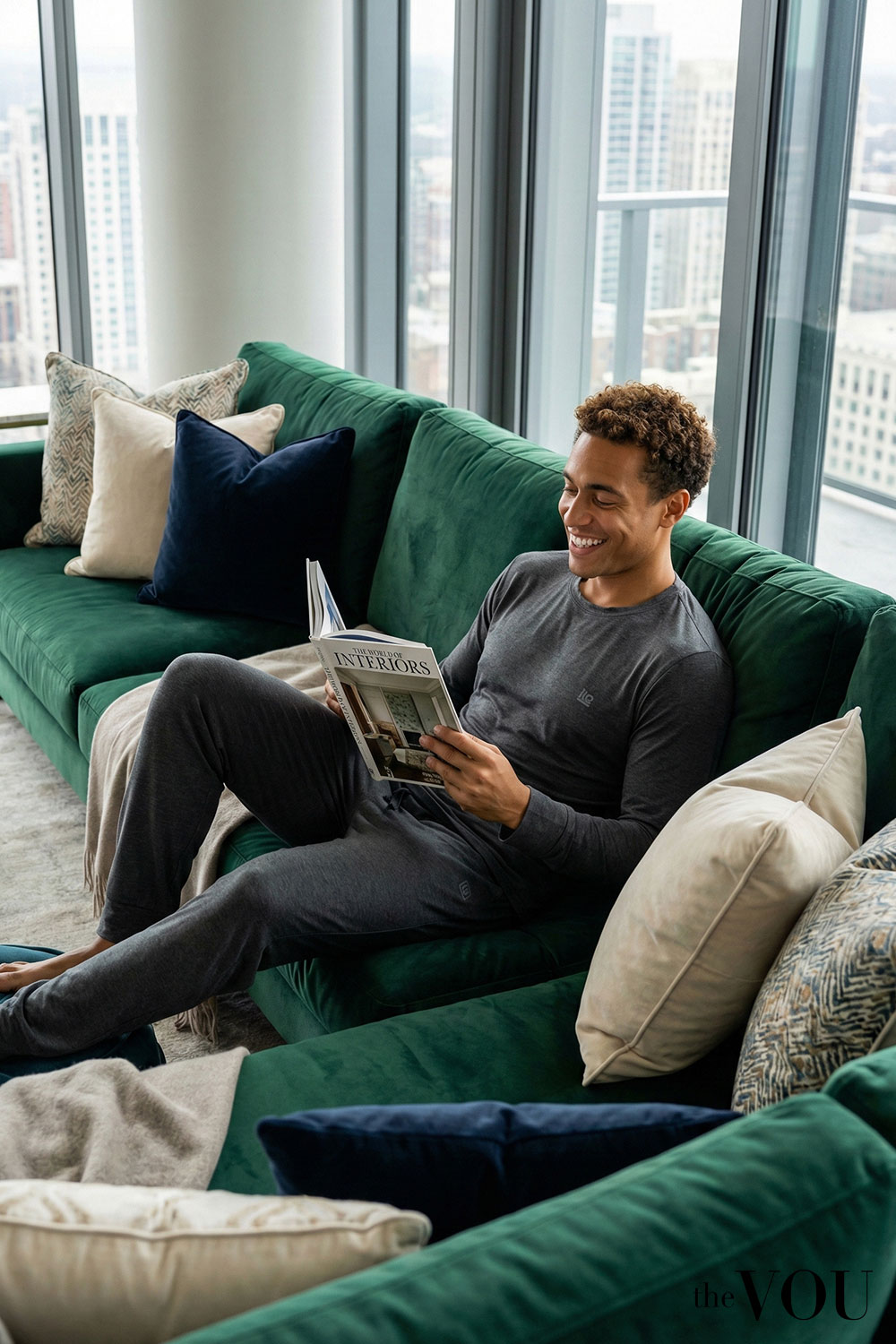
Wear: a plain grey tee with navy lounge trousers, adding a cardigan or robe when you want another layer.
The tee can be a familiar shape from your ordinary wardrobe, but check its comfort as sleepwear rather than assuming every everyday tee is suitable. Compare the hem over the trouser waistband: a very long one may bunch when seated, while a short one may not give the coverage you want.
3. A short set
Wear: a short-sleeved pyjama shirt and matching shorts, or a plain tee with shorts in a related colour.
Check the shorts while sitting and bending, including the leg opening and waistband. Leave enough room for movement instead of choosing a close cut solely because it photographs neatly. Keep an optional removable layer nearby if the temperature changes.
4. A striped shirt with plain trousers
Wear: a blue-and-white striped pyjama shirt, plain blue lounge trousers and a simple outer layer if needed.
The stripe supplies the pattern while the trousers connect with one of its colours. You can make the contrast stronger with darker trousers or quieter with a similar blue. Avoid treating exact matching as a requirement when comfortable separates already work together.
Check fit while moving and sitting
Judge a pyjama waistband by how it feels when seated, not only by how it looks standing. Try the drawstring at a comfortable adjustment. If the elastic rolls, the knot presses or the seat pulls, compare another cut rather than relying on stretching the garment over time.
Reach forward and raise your arms in the shirt. Check underarm seams, cuffs and buttons for pressure or scratching. Long sleeves should stay clear of food preparation and other tasks without needing constant adjustment.
Look at the trouser hem with whatever you wear on your feet at home. A dragging hem is a practical problem, not a necessary relaxed styling detail. Check coverage in normal daylight if the fabric is thin or the garment stretches across the body.
Compare fabric and finishing details
The Derek Rose men’s pyjama collection provides examples of different materials and cuts, including classic sets. Use product descriptions to identify what you are comparing, rather than treating a brand name or luxury price as evidence of better comfort.
Read the exact fibre composition and care label. Cotton, linen, silk, regenerated cellulose fibres and blends can produce quite different garments depending on weight, weave and finishing. A smooth-looking photograph does not tell you how the seams or waistband feel.
For bamboo-labelled fabric, check the fibre description. The US Federal Trade Commission explains that many such textiles are rayon made from bamboo and that processing does not justify assuming the plant’s antibacterial properties remain in the fabric. Judge specific, substantiated product information rather than broad wellness claims.
Colour and pattern without a new wardrobe
Start with a colour you already enjoy wearing. Navy with grey, cream with brown, and blue stripes with plain blue are suggested combinations to compare, not colours every man must find flattering.
If you want a brighter set, let it be the main pattern or colour and keep the removable layer simple. If you prefer a quieter outfit, compare the same shape in a plain fabric. Choose the amount of contrast you enjoy instead of adding trim and accessories to imitate a product photograph.
Use layers for a purpose
A robe, cardigan or light sweatshirt can add coverage or warmth when you leave the bedroom. Check that it does not make the waistband or collar uncomfortable beneath it. Remove the layer when you no longer need it.
Choose indoor footwear that suits your floor, fit and routine. A slipper is not automatically supportive or secure because it is expensive. Keep outdoor clothing and shoes separate when you need different protection or appearance outside.
Buy and care for the pieces thoughtfully
Before buying a set, check whether both halves fit: the right shirt size does not guarantee the right trousers. Separates may be more useful if you need different sizes. Compare garment measurements and returns conditions before ordering.
Follow each garment’s washing and drying instructions. Mixed fabrics, piping and waistbands may need different treatment from a plain cotton tee. Do not assume all sleepwear belongs in the same wash or dryer cycle.
Keep the pieces you reach for comfortably. Replace or repair worn elastic and loose fastenings rather than buying a full set merely to restore one usable item.