Start here
What’s This About:
This gallery uses ten celebrities often cited as examples of an oblong face shape, which The VOU describes as clearly longer than it is wide with softer corners, to show hair, beard and accessory choices you can adapt.
Each profile illustrates one styling idea, such as:
– Layers at the temples and sides that add width
– Longer hair worn loose versus tucked or tied back
– Beard side fullness versus chin length
– Collars, ties and frames that add horizontal emphasis
and many more!
We also explain how The VOU separates oblong from rectangle.
Key Points:
01Oblong and rectangle share a long outline; The VOU separates them only by softer versus angular corners, and many faces show some of each.
02If you want width, place layers at the temples and sides; a sharp fade gives a narrower, taller outline.
03With a beard, side fullness, chin length and how crisp you keep the edges are separate choices.
04Rounded frames echo soft corners and angular frames contrast with them; either works if the frame fits.
Understanding your face shape can help you make style choices, from a haircut to eyewear and facial hair.
The oblong face shape is The VOU’s name for an outline that is clearly longer than it is wide, with softer, rounded corners; we use rectangle for a similarly long outline with angular corners.
Below are ten men often cited as examples of this outline.
A photograph cannot confirm anyone’s face shape, since camera angle, hair and beard all change how an outline reads, so treat each profile as a styling idea to try rather than a record of that person’s routine.
Reducing the impression of length is one goal you might choose; echoing it, or simply wearing a cut you like, is just as valid.
Before we start, if you’re still not sure about your face shape, take our quick and free face shape quiz for men to check your face shape; treat the result as a starting point for the styling ideas below rather than a measurement.
1. Shawn Mendes

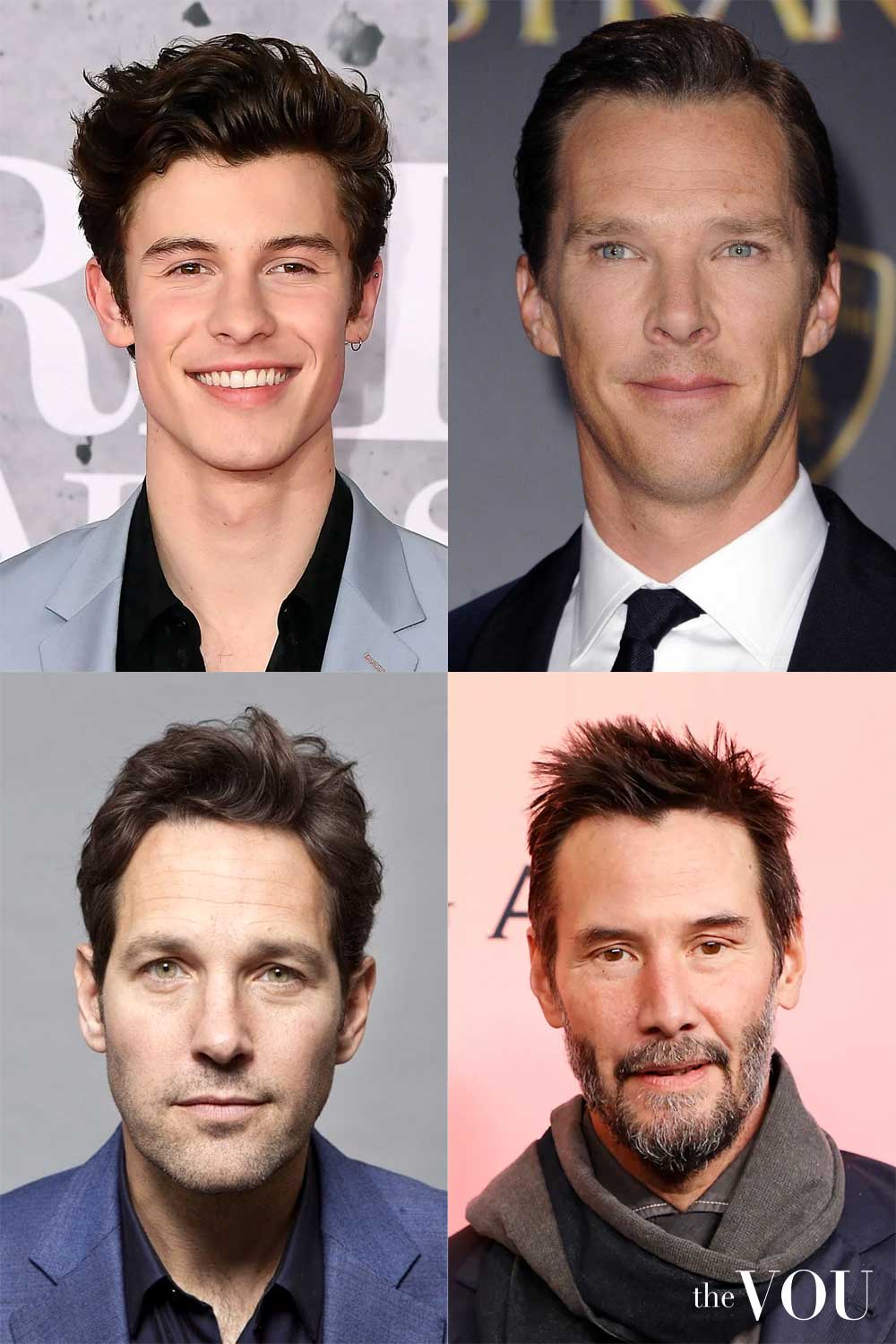
Shawn Mendes, pictured above, is often cited as an example of an oblong face shape.
The look this profile focuses on is a textured cut with natural wave or curl on top.
Letting the texture spread outward at the temples rather than lifting it straight up adds width without much extra height.
If your hair waves, ask for layers that let it move sideways and check the result dry, because wave and shrinkage change how much length you need.
2. Paul Rudd

Paul Rudd, pictured above, is often cited as an example of an oblong face shape.
The look this profile focuses on is a short, classic cut.
Layers left slightly longer at the temples keep some width there, and a soft rather than razor-sharp outline suits a relaxed look.
When a beard or stubble goes with this cut, keeping it fuller at the sides than at the chin adds width rather than length.
3. Adam Levine

Adam Levine, pictured above, is often cited as an example of an oblong face shape.
The look this profile focuses on is a short, textured cut with a short beard.
Keeping the volume even across the top and sides, rather than concentrated at the crown, keeps the outline from reading taller.
A short beard kept fuller at the sides, blending gradually into the sideburns, adds width; growing the chin longer would add length instead.
4. Eric Balfour

Eric Balfour, pictured above, is often cited as an example of an oblong face shape.
The look this profile focuses on is a medium to longer layered cut.
Longer hair does not have to add height: layers that create fullness at the sides add width, while hair that hangs flat and straight emphasises length.
With facial hair, a softly shaped cheek line looks more relaxed and a sharp one more groomed; that is a preference, not a rule for oblong faces.
5. Keanu Reeves

Keanu Reeves, pictured above, is often cited as an example of an oblong face shape.
The look this profile focuses on is longer hair worn loose with a fuller beard.
Long, layered hair worn loose adds fullness at the sides; tucking it behind the ears or tying it back shows more of the face’s length, so both are options depending on the effect you want.
A fuller, less shaped beard softens the jaw outline, and longer growth at the chin adds length, so keep the chin shorter than the sides if you want width instead.
6. Eddie Redmayne

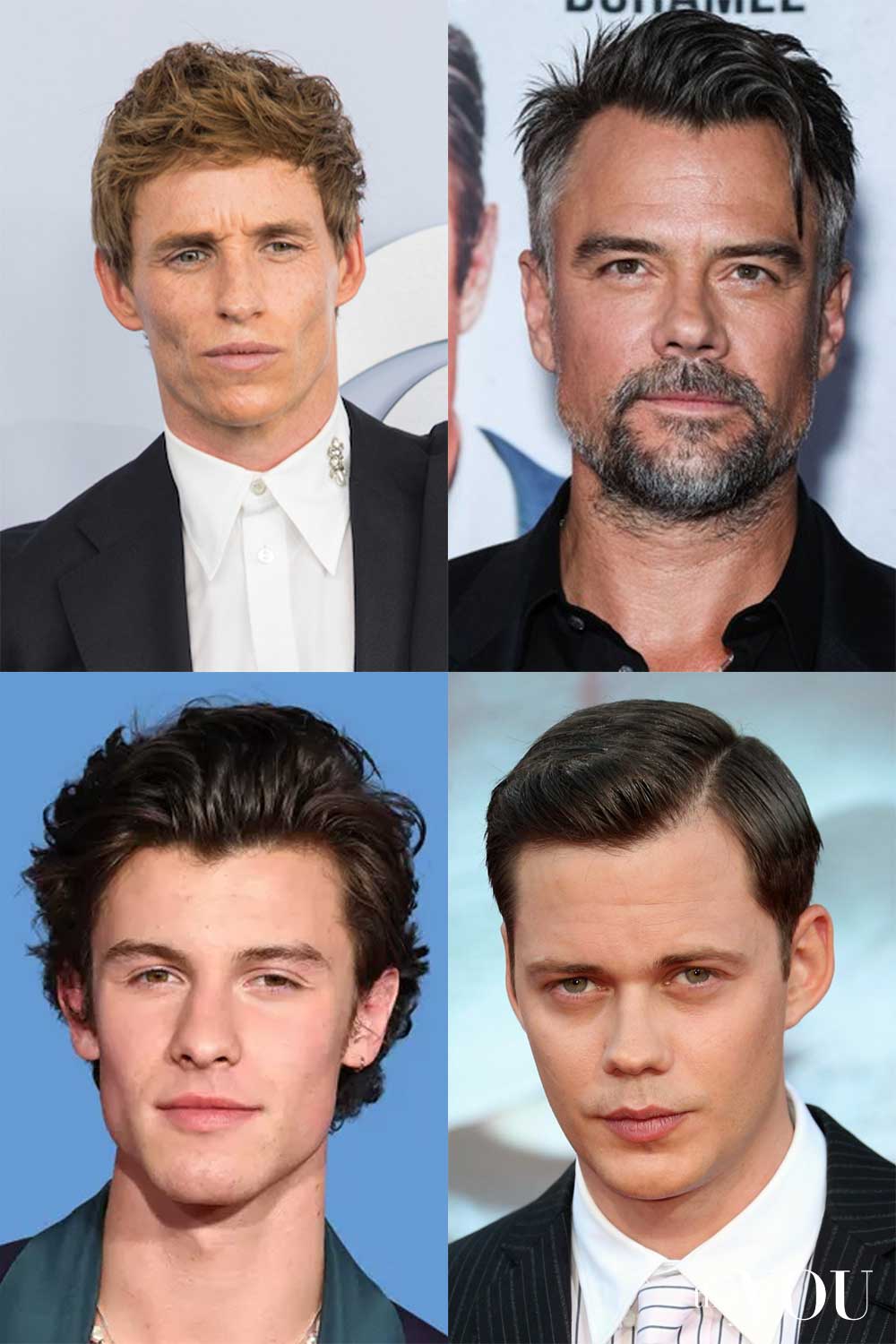
Eddie Redmayne, pictured above, is often cited as an example of an oblong face shape.
The look this profile focuses on is a neat, short cut worn clean-shaven.
Subtle graduation at the sides, rather than a close fade, keeps a little width beside the temples.
Clean-shaven keeps the whole face outline visible, with no added length or width from a beard.
7. Bill Skarsgård

Bill Skarsgård, pictured above, is often cited as an example of an oblong face shape.
The look this profile focuses on is a layered cut with texture.
Layers that let the hair sit out at the sides add width, and a fringe or hair brushed forward shows less forehead, which also reduces the impression of length.
Light stubble kept even is a low-commitment facial-hair option with this look.
8. Benedict Cumberbatch

Benedict Cumberbatch, pictured above, is often cited as an example of an oblong face shape.
The look this profile focuses on is a short, formal cut.
Subtle layering at temple level adds a little width while keeping the cut neat enough for formal dress.
If you add facial hair to a formal cut, keeping it short and evenly trimmed is the tidiest option.
9. Josh Duhamel

Josh Duhamel, pictured above, is often cited as an example of an oblong face shape.
The look this profile focuses on is a short, layered cut with neatly kept facial hair.
Layering that keeps fullness at the sides as well as on top gives a broader outline than height alone.
Keeping stubble or a short beard at an even length, with the edges blended rather than sharply cut, gives a relaxed finish.
10. Matthew McConaughey
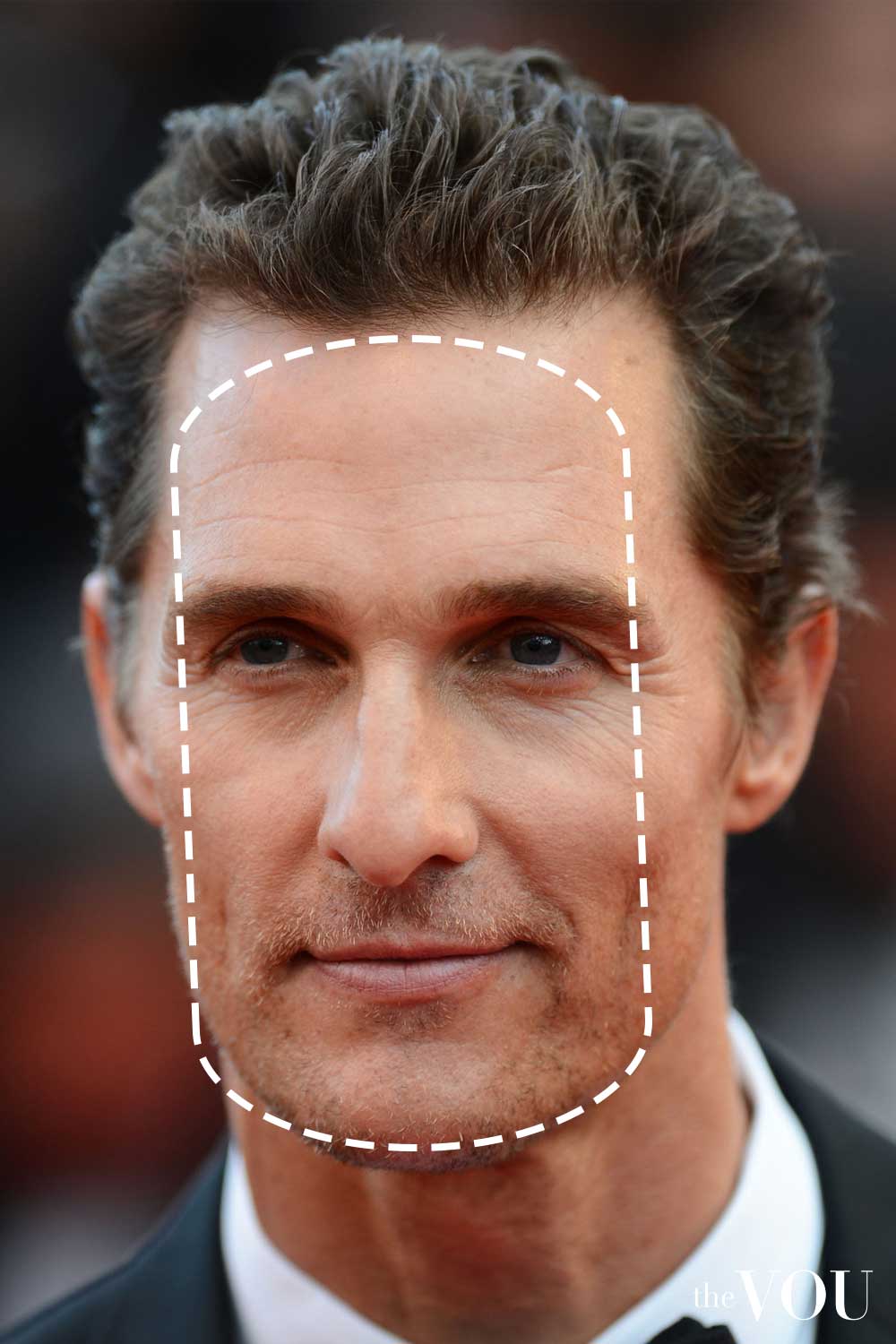
Matthew McConaughey, pictured above, is often cited as an example of an oblong face shape.
The look this profile focuses on is a cut with movement and texture, worn with stubble or a fuller beard.
Hair that lies close to the head on top adds little height, while tousled texture at the sides adds width.
Both stubble and a fuller beard can work with this look; keep the chin shorter than the sides if you want width rather than length.
Styling for Oblong Faces
The principles below apply if you want to reduce the impression of length; if you would rather echo it, the opposite choices work just as well.
The guidelines below cover haircuts, facial hair and accessories, building on the celebrity examples above.
Haircut Principles
The key to successful hairstyling for oblong faces, if you want to reduce the impression of length, is where your hair carries height and width.
Height at the crown adds length above the forehead, while fullness at the temples and sides adds breadth, so these are different requests to make of your barber.
Length on top does not have to stay short: longer hair worn forward, to the side or loose at the sides adds little height, which is why the profiles above include longer styles; curl, shrinkage and growth direction change how much lift a given length gives, so judge it dry-styled in the mirror.
For short styles, if you want width, ask for fuller sides with gentle graduation and texture on top that sits rather than stands; the top is styled daily, while the side length and any taper at the neckline are set at the barber.
For medium lengths, layers at temple level and hair styled slightly outward or to the side add width, while hair blow-dried upward adds height.
For longer styles, layers or waves that build fullness at the sides add width, and hair that falls straight and flat emphasises length, which is fine if you like it.
Facial Hair Guidelines
Facial hair can add width, length or neither, depending on where you keep the growth.
Stubble or a short beard kept even from sideburns to chin adds a little breadth along the jaw; rounded or sharp edges are a matter of taste.
With a medium beard, side fullness and chin length are separate decisions: fuller sides with a shorter chin add width, while a longer chin adds length.
With a fuller beard, how full the sides can go depends on your growth coverage, and where the neckline sits depends on the beard’s length and your own anatomy, so agree both with your barber.
Ideal Accessories
Accessories sit near the face rather than on it, so they change what the eye notices, not your proportions.
Spread and cutaway collars set a broad, level line at the throat, framing the neck and upper chest if you want horizontal emphasis below the face.
Button-down collars with moderate spread are a relaxed middle option; collar choice also depends on your neck size, tie knot, jacket and occasion.
Tie and bow tie width depends mainly on your jacket lapels, shirt collar and build rather than on face shape; a wider tie gives a little more horizontal emphasis at the chest.
For eyewear, frames wider than they are deep or with a strong top line add horizontal emphasis across the eyes, and rounded frames echo soft corners while angular frames contrast with them.
Any frame still has to fit, meaning suitable overall width, a comfortable bridge, temples of the right length and enough clearance, which an optician can check.
Final Considerations
An oblong face shape is a description for navigation; it does not make anyone more or less sophisticated, and how elegant a look reads comes from the cut, grooming and clothes you choose.
Choose your goal first, whether that is reducing the impression of length, echoing it or simply wearing a style you like, and then choose the cut and grooming that achieve it.
How often you need a trim depends on the cut: close sides and crisp beard lines lose their outline sooner than longer, softer styles, so ask your barber how long your chosen style holds its shape.
If your outline seems to sit between oblong and rectangle, or a beard hides your jaw corners, read both guides; The VOU separates them only by softer versus angular corners, and many faces show some of each.
Take the First Step With The VOU’s Styling Quizzes
Start your style journey with our free resources. First, take our Face Shape Quiz for a starting point on your face shape and initial styling guidance.
Then, check your colours with our Seasonal Colour Analysis Quiz.
Check your body shape with our Body Shape Quiz, and your personal style with our Fashion Style Quiz.
Styling Consultations
Before you go, a note on where this guide fits in a wider styling plan.
Face shape is one input among several. At The VOU, we look at it alongside your colouring, body shape and personal style.
Our Professional Face Shape Analysis package is a paid consultation; its product page lists what it includes.
Our Complete Image Transformation Package combines the face shape, seasonal colour, body shape and fashion style analyses.
If you would like personal help, you can book a paid consultation.
Our styling services for men are paid consultations; the shop page lists what each one includes.
Mandy Meyer’s focus at The VOU is men’s body-shape styling, garment fit and outfit proportions. Her coverage addresses the practical questions behind a wardrobe choice: how a jacket sits across the shoulders, how trousers fall and how different cuts change the silhouette a wearer wants to create.
Her subject areas include the triangle, inverted triangle, rectangle, oval, trapezoid, hourglass and diamond labels used in body-shape styling. These provide starting references for comparing visible proportions; they do not capture every body or prescribe one correct way to dress. The focus connects those observations with garment shape, construction, length and the relationship between the upper and lower parts of an outfit.
Mandy’s editorial coverage combines visual comparisons with fit checks for comfort and movement. Readers can consider whether a cut gives them the room they need, where clothing pulls or gathers and which changes might support their preferred look. The aim is to make menswear choices more understandable while keeping personal preferences and the wearer’s own styling goals central.