
Start here
What’s This About
If you want more visual presence at the top of a pear outline, hats with width and structure add it, and narrower hats remain open to you.
This guide covers the choices that shape the result, such as:
How a fedora’s brim and crown change the upper outline
What a Panama hat with a substantial brim adds in summer
Why a structured flat cap or boater is about front-view fullness rather than projection
Measuring your head against the maker’s own size chart
and many more!
We also cover positioning, and where face shape gives way to comfort and personal taste.
Key Points
01If you want to offset a broader jaw, wider brims and structured crowns add visual width at the top of the head.
02Narrow, minimal brims tend to do less for this balance, though they are not off limits if that is what you prefer.
03Hat size is set by your head’s actual circumference, not your face shape; check the maker’s sizing chart and try a hat on before ruling a style out.
04Facial hair is a separate styling choice from your hat; there is no fixed formula linking beard length to jawline width.
If you want to offset a broader jaw, hats that add width towards the top of the head provide it, and a narrower hat is equally open to you.
Pear facial features tend to have a narrower forehead that widens progressively to a broader jaw.
If you are not sure this is your face shape, our face shape quiz is a useful starting point, though it is a guide rather than a measurement, so treat the result as a suggestion to try rather than a confirmed diagnosis.
Understanding your specific facial structure is useful background, but fit, weather and how a hat actually feels on your head matter just as much as any face-shape rule.
In this guide we look at four hat styles that tend to work well for a pear-shaped face, why each one works, and how to think about fit and positioning.
Fedora
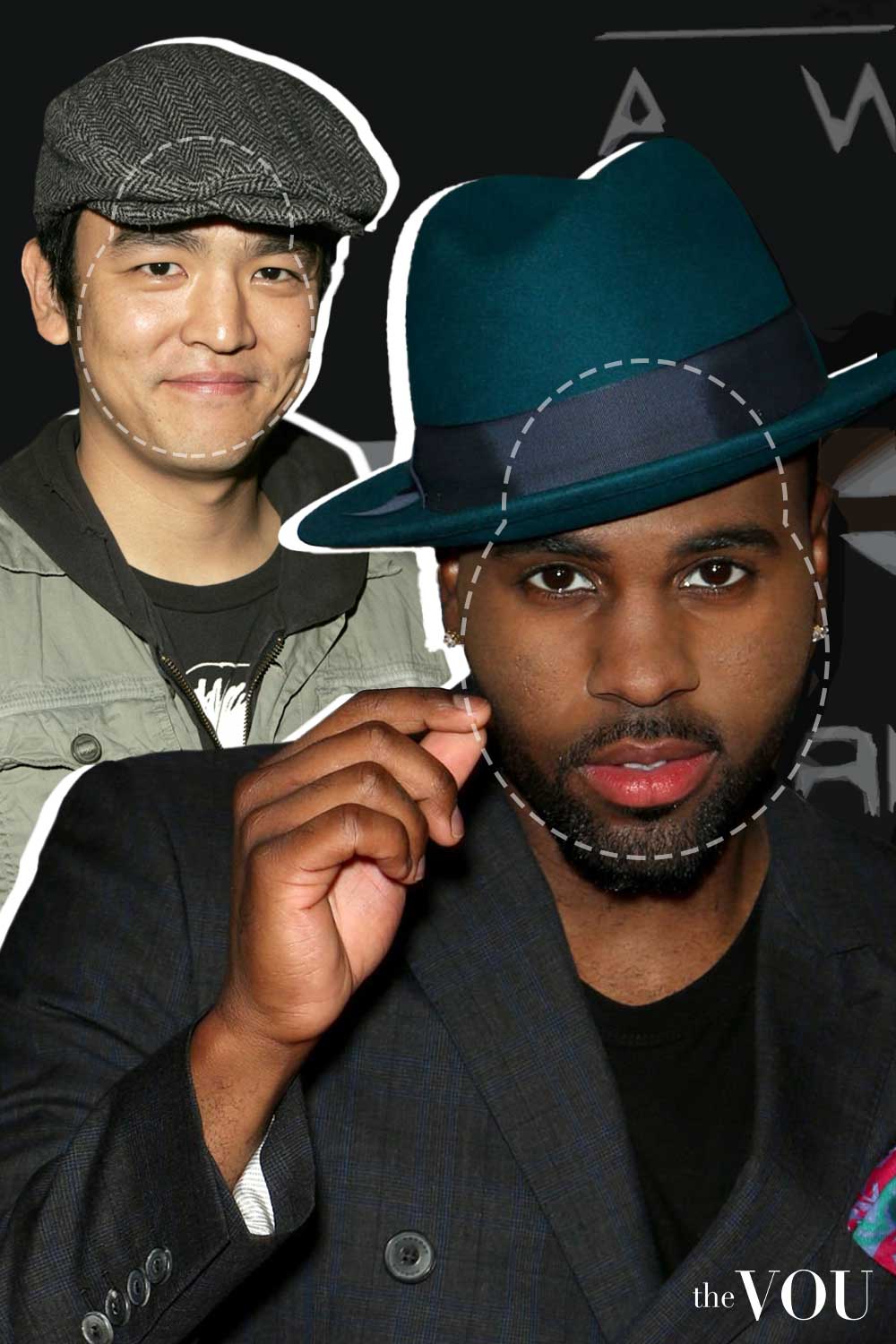
A fedora is a versatile choice for a pear-shaped face, and there is room to adjust within the style itself.
Why it works: A wider brim and a substantial crown can add fullness at the forehead that balances a stronger jawline; a cleaner, narrower brim with a well-defined crown gives a more restrained option that still adds some structure up top. Which reads as more width is worth checking in the mirror rather than assuming from the brim alone.
Styling advice: Try a wider brim against a narrower, cleaner one and compare the effect on your face. Either way, look for a substantial rather than soft, crushable crown, and position the hat wherever it stays clear of your vision and feels secure, with minimal tilt.
Panama Hat with Substantial Brim
A Panama hat with a generous brim is a natural warm-weather option that adds upper-face width.
Why it works: The substantial brim adds width that balances a narrower forehead. Sun protection comes from the weave and coverage rather than the Panama name, so check that the straw is tightly woven and the brim wide enough to actually shade your face, ears and the back of your neck.
Styling advice: Try a wider brim against a narrower one, in a clearly defined rather than soft crown. A straight or minimally angled front tends to maximise the width effect.
Structured Flat Cap
A structured flat cap can add fullness to the upper face.
Why it works: Real structure and volume across the front can add fullness that balances a stronger jawline; forward projection changes depth more than front-view width, so compare a couple in the mirror rather than assuming projection alone widens the look.
Styling advice: Look for substantial structure rather than a minimal design, with enough volume across the forehead and temples. Compare a brim angled slightly upward against one worn flatter to see which adds more width on you.
Boater Hat with Structured Appearance
A boater hat with real structure offers distinctive summer styling with a clear horizontal brim.
Why it works: The horizontal brim adds width that balances a narrower forehead, and the flat, structured crown adds real presence in the upper face.
Styling advice: Try a moderate brim with substantial construction against a narrower one. Keep it fairly level across the forehead for clean lines without excessive tilt.
Related Questions
Q. How do I know if I have a pear face shape?
Look for a jawline that is the widest point of your face, with a notably narrower forehead and fairly gradual, smooth transitions between features rather than sharp angles. Our face shape quiz can help, but the clearest check is a visible width difference between jaw and forehead.
Q. Which hat features should I be cautious with on a pear face?
Narrow brims, very small crowns and hats worn with a steep downward angle all tend to add less width to the upper face. None of this is off limits; more structure and width up top are simply the more reliable route if that is the balance you are after.
Q. How should I position a hat with a pear face?
Start with size rather than position: measure your head circumference against the maker’s own chart (the hub guide covers the full method), so the hat grips without pinching or slipping. From there, fairly level, sitting securely with your vision clear, is a common starting point for fedoras and structured hats. Flat caps tend to sit better angled slightly upward, while Panama and boater hats generally work well close to parallel with the ground. Comfort and secure fit still come first.
Q. Can a pear face wear winter hats?
Yes. Beanies with horizontal knit patterns or a folded brim add width at the forehead. With the flaps worn up, a trapper or aviator hat adds width at the top of the head; worn down, the flaps sit beside the jaw. Structured wool fedoras with wider brims and baker boy or newsboy caps with a full crown are also good cold-weather options.
Q. Does facial hair make a difference here?
It is a separate choice from your hat, based on what grows in and what you like, rather than something to balance against your hat by a fixed formula. If you want less emphasis at the jaw, a shorter, neatly trimmed beard or stubble is one option; a fuller beard is just as valid if that is your preference.
Take the First Step With The VOU’s Styling Quizzes
Start your style journey with our resources. First, take our Face Shape Quiz for a starting point on your face shape and initial styling guidance.
Then, check your colours with our Seasonal Colour Analysis Quiz.
Check your body shape with our Body Shape Quiz, and your personal style with our Fashion Style Quiz.
Styling Consultations
If you would like personal help, you can book a paid consultation.
Hat choice is one part of a bigger styling picture. At The VOU, we treat face shape as one useful input among several, not a formula with a single right answer.
Our Professional Face Shape Analysis package is a paid consultation; its product page lists what it includes.
Our Complete Image Transformation Package combines the face shape, seasonal colour, body shape and fashion style analyses.
Our styling services for men are paid consultations; the shop page lists what each one includes.
Mandy Meyer’s focus at The VOU is men’s body-shape styling, garment fit and outfit proportions. Her coverage addresses the practical questions behind a wardrobe choice: how a jacket sits across the shoulders, how trousers fall and how different cuts change the silhouette a wearer wants to create.
Her subject areas include the triangle, inverted triangle, rectangle, oval, trapezoid, hourglass and diamond labels used in body-shape styling. These provide starting references for comparing visible proportions; they do not capture every body or prescribe one correct way to dress. The focus connects those observations with garment shape, construction, length and the relationship between the upper and lower parts of an outfit.
Mandy’s editorial coverage combines visual comparisons with fit checks for comfort and movement. Readers can consider whether a cut gives them the room they need, where clothing pulls or gathers and which changes might support their preferred look. The aim is to make menswear choices more understandable while keeping personal preferences and the wearer’s own styling goals central.