
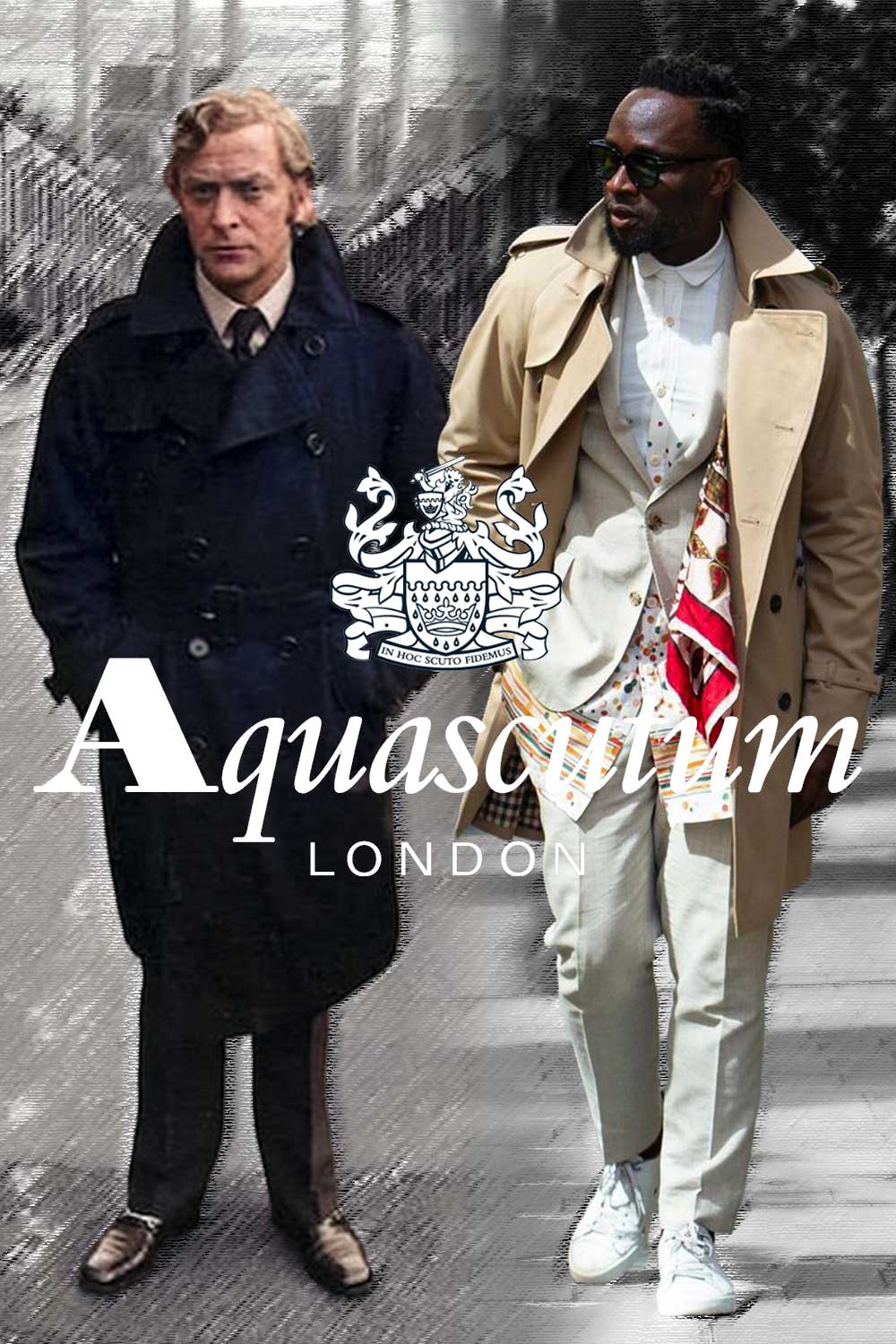
Start here
What’s This About
Aquascutum is still a respected heritage name for trench coats, but since 2012 it has changed owners and moved largely to licensed ranges, so judge each garment rather than the label.
This guide explains what has changed at Aquascutum and how to decide whether a coat or suit is worth buying, such as:
Four criteria for judging a heritage brand: materials, construction and origin, price band and distribution
The brand’s history from John Emary’s 1851 Regent Street shop
The 2012 administration, the 2012 and 2017 sales and today’s licensees
The features of a classic trench coat and what each one was for
Three outfits with a trench coat or Club Check scarf
and many more!
A long history does not prove that a garment made today is well made, so check fabric, construction, fit and price.
Key Points
01Aquascutum went into administration in April 2012, was bought by YGM Trading that year and was sold to Shandong Ruyi’s holding company in 2017.
02Much current Aquascutum clothing is made under licence, so ask which company made the range you are looking at.
03Most Aquascutum Active trench coats cost €229 to €430 on the licensee’s site on 6 October 2026, in technical rather than gabardine fabrics.
04A well-kept older Aquascutum coat bought second-hand is an option if you want traditional cotton gabardine.
Aquascutum is still a well-known British heritage name for trench coats and raincoats, but whether it is a good buy today depends on which Aquascutum garment you are looking at.
The company went into administration in 2012, has changed owners since, and today much of what carries the name is made and sold under licence, with different ranges in different markets.
That means the label alone tells you less than it once did, so judge each coat or suit on its fabric, construction, fit and price.
This guide gives the brand’s history in brief, explains what changed, and sets out what to check before you buy.
How we judge whether a brand is good value
We use four criteria that a buyer can check for any heritage brand.
Scroll horizontally to see all columns →
| Criterion | What to check | Aquascutum today |
|---|---|---|
| Materials | Fibre content of the outer fabric and lining. | Varies by range; the Aquascutum Active range uses technical nylon and nylon-cotton fabrics rather than traditional cotton gabardine. |
| Construction and origin | Who makes the garment, where, and how tailored garments are built. | Depends on the licensee and range, so read the label and ask the retailer. |
| Price band | Where the price sits against similar coats and suits. | On 6 October 2026, most Aquascutum Active trench coats were €229 to €430 on that licensee’s site. |
| Distribution | Where the brand is sold, and whether returns are possible. | Sold through licensees and retailers that differ by country. |
A long history is a reason to be interested in a brand, but it does not prove that a garment made today is well made.
How Aquascutum started
Aquascutum traces its history to 1851, when tailor John Emary opened a menswear shop on Regent Street in London.
A couple of years later, Emary patented a method of making water-repellent wool cloth, and the business took the name Aquascutum, from the Latin for “water” and “shield”.
The brand says its first Royal Warrant came in 1897 from the Prince of Wales, later King Edward VII.
Aquascutum and Burberry both claim a role in developing the trench coat for British officers, and Smithsonian Magazine noted in 2015 that it is unclear which firm came first.
The Club Check, in vicuña, navy and ecru, was first used as a trench coat lining and was introduced under that name in 1976, according to Aquascutum’s licensee, which marked its fiftieth anniversary in 2026.
What has changed since 2012
Aquascutum went into administration in April 2012, and its factory in Corby, England, closed with the loss of 115 jobs, as FashionUnited reported at the time.
YGM Trading of Hong Kong bought the business for £15 million in 2012.
In March 2017, YGM sold it to Jining Ruyi Investment Co, a holding company owned by China’s Shandong Ruyi group, for $117 million (about £95 million).
Since then the brand has been run largely through licences, so the company that designs and makes the coat you are looking at may differ from country to country.
For example, Icons Srl of Rome is the official licensee behind Aquascutum Active, a range of technical outerwear and casual clothing sold through its own website.
We could not reach aquascutum.com when we checked on 6 October 2026, so ask the retailer which company makes the range it sells.
Older Aquascutum coats made before these changes appear on the second-hand market, and our guide to buying vintage menswear explains how to check age, fit and condition.
What makes a good trench coat
Whichever brand you buy, the classic trench coat has a recognisable set of features, and each one has a practical origin.
Fabric: traditionally a tightly woven cotton gabardine that sheds light rain; newer coats may use nylon or blends, which are lighter and often more water-resistant but feel different.
Double-breasted front and belt: the front overlaps for warmth and the belt lets you close the coat against wind.
Storm flap: a flap at the shoulder that helps keep rain out at the front.
Back cape: a short layer across the upper back that helps water run off.
Epaulettes and D-rings: shoulder straps once showed military rank, and the rings on the belt were used to attach equipment; today they are decorative.
Raglan sleeves: sleeves whose seams run diagonally from the underarm to the collar, which give easy movement over a jacket.
Check that the shoulders fit over the jacket you plan to wear underneath, and that the sleeves cover your shirt cuffs.
For outfit ideas, see our guide to trench coat styling for men.
What to check before you buy Aquascutum
Licensee and range: find out which company makes the garment and which range it belongs to.
Fabric: read the fibre content for the outer fabric and the lining, and decide whether you want traditional cotton gabardine or a technical fabric.
Construction: for a tailored jacket or suit, ask whether the chest is canvassed or fused, because a canvassed jacket usually holds its shape better over time.
Fit: try it on over the clothes you will wear underneath, or check the size guide and returns policy if you buy online.
Price: compare the full price with similar coats from other heritage brands and with second-hand examples.
Aquascutum compared with similar brands
Burberry is the other British name most linked with the trench coat, and it is usually priced higher, as our article on why Burberry is so expensive explains.
Brooks Brothers blazers and the brand’s B by Brooks Brothers line are useful comparisons if you want classic tailoring from an American heritage brand.
If you want a suit or coat made to your measurements, Savile Row bespoke tailoring is a different and more expensive service, with fittings and hand work.
In every case, compare the specific garments rather than the brand names.
How to wear an Aquascutum trench coat or check scarf
Wear: a stone or navy trench coat over a navy suit, a white shirt, a dark tie and black Oxford shoes, for a rainy workday.
Wear: a stone trench coat over a grey crew-neck jumper, dark jeans and brown suede chukka boots, for a weekend in spring or autumn.
Wear: a Club Check scarf with a navy wool overcoat, a mid-grey jumper, charcoal trousers and brown leather shoes, for a cold day.
A coat in a neutral colour such as stone, navy or olive will go with more of your wardrobe than a bold pattern.
Verdict: is Aquascutum still a good brand?
Aquascutum has a genuine history in weatherproof coats, and the name still appears on well-designed outerwear.
Since 2012, however, the business has changed hands and moved largely to licensed ranges, so quality and style depend on who made the garment rather than on the label.
It can be a good buy if the specific coat or suit meets your needs on fabric, construction, fit and price after you have compared it with similar brands.
If you want the traditional cotton gabardine trench, check the fabric carefully, or consider a well-kept older Aquascutum coat bought second-hand.
Common questions about Aquascutum
Q. Is Aquascutum still British?
It is a British-founded brand, but it was bought by Hong Kong’s YGM Trading in 2012 and sold to China’s Shandong Ruyi group in 2017, and many current ranges are made under licence.
Q. Is Aquascutum a luxury brand?
It has heritage and was long sold as a premium British label, but current prices and ranges vary by licensee, so judge each garment on its own merits.
Q. Is Aquascutum better than Burberry?
Neither name guarantees a better coat; compare fabric, construction, fit and price for the specific garments you are considering.
Q. When was Aquascutum founded?
The brand dates its founding to 1851, when John Emary opened a shop on Regent Street in London.
Sources
Aquascutum Active (Icons Srl, official licensee), brand history and Club Check pages, read 6 October 2026.
FashionUnited, Aquascutum factory to close, 20 April 2012.
FashionUnited, Aquascutum sold for 97 million pounds, 29 December 2016.
FashionUnited, YGM confirms Aquascutum sale to Shandong Ruyi Group, 3 March 2017.
Smithsonian Magazine, The classy rise of the trench coat, 27 May 2015.
Mandy Meyer’s focus at The VOU is men’s body-shape styling, garment fit and outfit proportions. Her coverage addresses the practical questions behind a wardrobe choice: how a jacket sits across the shoulders, how trousers fall and how different cuts change the silhouette a wearer wants to create.
Her subject areas include the triangle, inverted triangle, rectangle, oval, trapezoid, hourglass and diamond labels used in body-shape styling. These provide starting references for comparing visible proportions; they do not capture every body or prescribe one correct way to dress. The focus connects those observations with garment shape, construction, length and the relationship between the upper and lower parts of an outfit.
Mandy’s editorial coverage combines visual comparisons with fit checks for comfort and movement. Readers can consider whether a cut gives them the room they need, where clothing pulls or gathers and which changes might support their preferred look. The aim is to make menswear choices more understandable while keeping personal preferences and the wearer’s own styling goals central.