
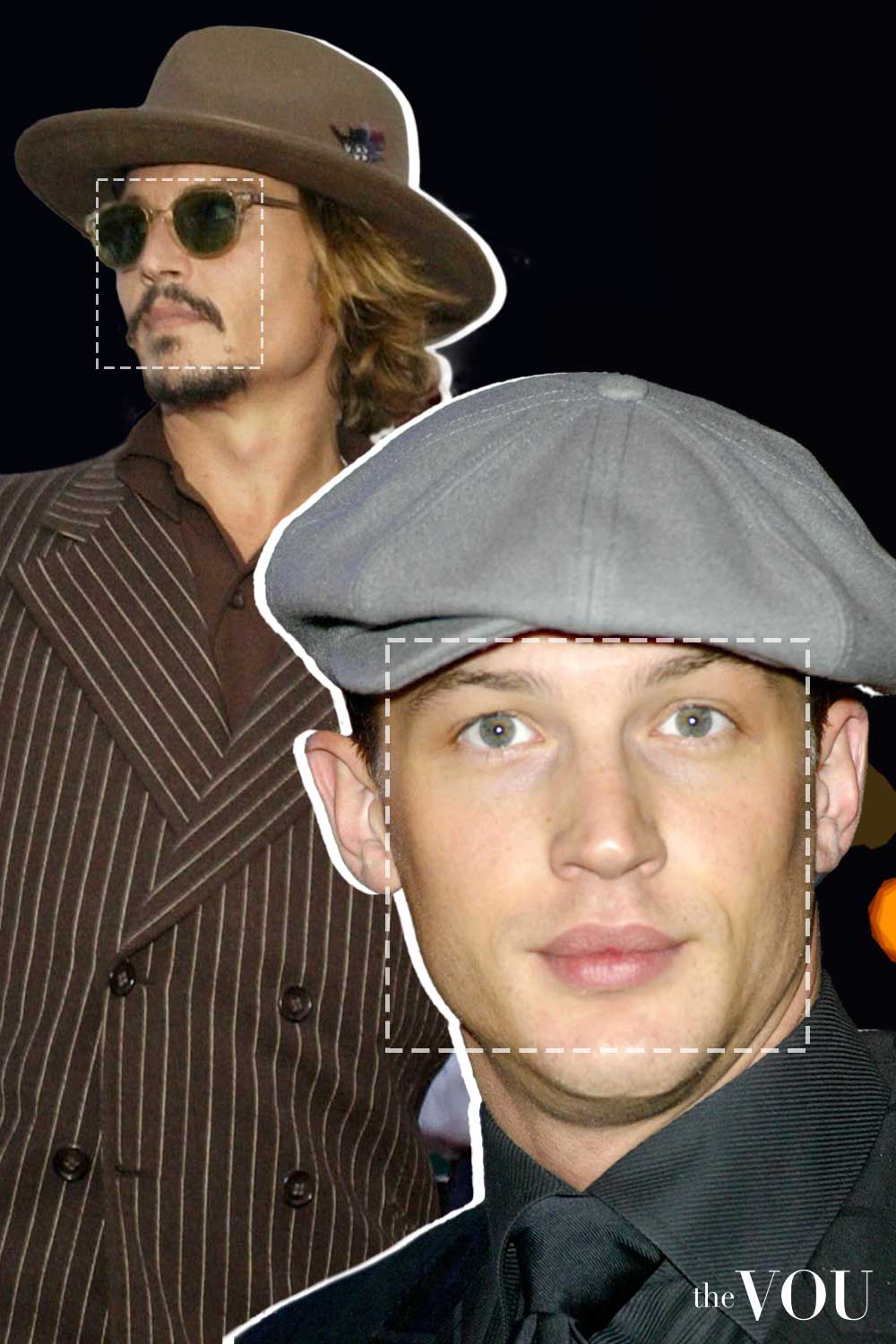
Start here
What’s This About
If you want contrast with a square outline, curved brims and softer crowns provide it, and crisp shapes that echo your angles are equally open to you.
This guide covers the choices that shape the result, such as:
How a curved fedora brim or a gently curved wide brim contrasts with an angular jaw
Pork pie, flat cap and cadet cap options with softer lines
Why construction matters more than a style’s name
Measuring your head against the maker’s own size chart
and many more!
We also cover positioning, and why a crisp hat that echoes your angles is equally valid.
Key Points
01If you want contrast, curved brims and softer crown shapes soften the look of strong angles without losing a structured, put-together look.
02Within any style category, construction matters more than the name; a soft cadet cap and a rigid military-style one can look very different despite sharing a name.
03Hat size is set by your head’s actual circumference, not your face shape; check the maker’s sizing chart and try a hat on before ruling a style out.
04A slight tilt versus a level brim is a styling choice, not a rule; both work on a square face.
If you want contrast with an angular jaw, hats with some curve provide it; if you prefer to echo the angles, crisper shapes are just as open to you.
Square facial features tend to have strong angles and similar width measurements across the forehead, cheekbones and jawline.
If you are not sure this is your face shape, our face shape quiz is a useful starting point, though it is a guide rather than a measurement, so treat the result as a suggestion to try rather than a confirmed diagnosis.
Understanding your specific facial structure is useful background, but fit, weather and how a hat actually feels on your head matter just as much as any face-shape rule.
In this guide we look at five hat styles that tend to work well for a square face, why each one works, and how to think about fit and positioning.
Fedora with Curved Brim
A fedora with a softly curved brim introduces gentle contours that contrast with angular structure.
Why it works: Curved brim lines contrast with angular features while keeping the overall look structured.
Styling advice: Look for a moderately curved brim rather than a sharply angled one, in a material with enough structure to hold the curve; try one on next to a flatter brim to see the difference. Whether you wear it level or with a slight tilt is really a matter of preference.
Wide-Brimmed Hat with Gentle Curves
A wide-brimmed hat with soft curves offers a bolder way to contrast with angular features.
Why it works: A generous, gently curved brim adds softness that complements a strong jawline rather than competing with it.
Styling advice: Look for subtle curvature rather than a rigid, flat brim, and moderate rather than stiff structure. Clean, minimal designs in neutral colours tend to read as more contemporary than heavily decorated versions.
Pork Pie Hat with Curved Brim
A pork pie hat with a curved rather than flat brim adds character while still softening a square jawline.
Why it works: The curved brim creates flowing lines that soften angular features, while the distinctive crown still adds personality.
Styling advice: The pork pie keeps its flat, telescope crown; a brim with a slight curve rather than a flat snap brim is where the softer line comes from. Whether you wear it level or tilted is down to preference rather than a rule.
Flat Cap with Curved Silhouette
A flat cap, or its fuller multi-panel cousin the newsboy cap, with a rounded crown introduces softness through its shape rather than a flat, geometric construction.
Why it works: The rounded crown creates curves that contrast with angular facial features, softening a strong jawline while keeping a defined, structured look.
Styling advice: Look for pronounced curved panels rather than a rigid, geometric build, in a softer material that drapes naturally. A level brim keeps the look clean, though a slight tilt works too.
Cadet Cap
A cadet cap with a softly curved brim can work well on a square face, though this is a style where construction matters more than the name.
Why it works: A rigid, military-style cadet cap tends to add more angularity, which repeats rather than softens a square jawline. A softer-constructed cadet cap with a curved brim does the opposite, introducing rounded elements that contrast with strong angles without losing a clean, structured look.
Styling advice: Look for a slightly relaxed rather than stiff build, with a subtle curve rather than sharp, geometric lines. A level brim with a touch of height is a common way to wear this style.
Related Questions
Q. How do I know if I have a square face shape?
Look for a relatively compact outline, with strong angles rather than soft curves, a prominent jawline with defined corners, and straight rather than curved sides. Our face shape quiz can help, but the clearest check is simply that your jaw, cheekbones and forehead line up at similar widths with clear angles between them.
Q. Which hat features should I be cautious with on a square face?
Sharply angular brims, flat-topped crowns with sharp, squared edges, and rigid, geometric military-style caps all tend to repeat a square jaw’s angles, which is a legitimate look if you want to echo them. If you want contrast instead, curved, rounded elements are the ones that provide it.
Q. How should I position a hat with a square face?
Start with size rather than position: measure your head circumference against the maker’s own chart (the hub guide covers the full method), so the hat grips without pinching or slipping. From there, keeping the brim close to level maintains clean lines, and a slight tilt is a style choice rather than a rule. Panama hats generally sit well horizontal or with a very subtle angle; pork pie hats work best with minimal tilt to keep their distinctive shape. Comfort and fit still come first.
Q. Can a square face wear a baseball cap?
Yes. A curved brim and a softer crown read gentler than a flat brim and rigid panels, if you want contrast; vintage-style caps with pre-curved brims are an easy way to get this look.
Q. Does the season change what I should wear?
Weather and warmth should generally come first, and face shape is a secondary layer on top. In summer, a Panama hat with a rounded crown or a flowing bucket hat is one option if you want more softness; a rigid straw hat works fine too if that is what you prefer. In spring and autumn, fedoras and pork pies with curved brims are versatile. In winter, a wool fedora with a curved brim or a thick-knit beanie with some texture are both reasonable choices, though warmth should decide it in the end.
Take the First Step With The VOU’s Styling Quizzes
Start your style journey with our resources. First, take our Face Shape Quiz for a starting point on your face shape and initial styling guidance.
Then, check your colours with our Seasonal Colour Analysis Quiz.
Check your body shape with our Body Shape Quiz, and your personal style with our Fashion Style Quiz.
Styling Consultations
If you would like personal help, you can book a paid consultation.
Hat choice is one part of a bigger styling picture. At The VOU, we treat face shape as one useful input among several, not a formula with a single right answer.
Our Professional Face Shape Analysis package is a paid consultation; its product page lists what it includes.
Our Complete Image Transformation Package combines the face shape, seasonal colour, body shape and fashion style analyses.
Our styling services for men are paid consultations; the shop page lists what each one includes.
Mandy Meyer’s focus at The VOU is men’s body-shape styling, garment fit and outfit proportions. Her coverage addresses the practical questions behind a wardrobe choice: how a jacket sits across the shoulders, how trousers fall and how different cuts change the silhouette a wearer wants to create.
Her subject areas include the triangle, inverted triangle, rectangle, oval, trapezoid, hourglass and diamond labels used in body-shape styling. These provide starting references for comparing visible proportions; they do not capture every body or prescribe one correct way to dress. The focus connects those observations with garment shape, construction, length and the relationship between the upper and lower parts of an outfit.
Mandy’s editorial coverage combines visual comparisons with fit checks for comfort and movement. Readers can consider whether a cut gives them the room they need, where clothing pulls or gathers and which changes might support their preferred look. The aim is to make menswear choices more understandable while keeping personal preferences and the wearer’s own styling goals central.