Start here
What’s This About
On longevity, purpose, versatility and recognition, the Beaufort, designed in 1983, is the most classic Barbour jacket, with the shorter Bedale a close second for town wear.
This guide compares five Barbour waxed jackets and helps you choose one, such as
The Beaufort and its full-width rear game pocket
The Bedale, designed in 1980 for riding
The longer Border for long country walks
The International and its motorcycling history from 1936
How to size a waxed jacket for layering
and many more!
Choose the model whose length and fit suit the way you will wear it most.
Key Points
01Barbour was founded in 1894 in South Shields and is still run by the Barbour family.
02The Bedale (1980) is shorter with rear vents; the Beaufort (1983) is longer with a rear game pocket.
03Waxed cotton resists rain but is not fully waterproof, and Barbour recommends re-waxing about once a year.
04Try a waxed jacket on over the thickest layer you plan to wear under it.
Barbour was founded in 1894 by John Barbour in South Shields, in north-east England, and is still run by the Barbour family.
It is best known for waxed cotton jackets, and several of its models have been made for decades, so it is fair to ask which one is the most classic and which one suits you.
This guide compares the five best-known Barbour waxed jackets by length, fit, pockets and purpose, gives a verdict with the reasons for it, and shows how to wear and size each one.
Barbour jackets are often linked with old money style, a contemporary label for classic, understated dressing; a waxed jacket is practical clothing for wet weather, and it says nothing about who wears it.
What Makes a Barbour Jacket ‘Classic’?
We judged each model against four criteria.
Longevity is how long the design has been made with few changes.
Purpose asks whether its features still do a practical job, such as pockets for the country or a cut for riding.
Versatility covers whether it works in the country and in town, over knitwear and over a jacket.
Recognition is how closely people associate the design with Barbour.
All five models below are made in waxed cotton, which resists rain but is not fully waterproof, according to Barbour, and which darkens and creases with wear.
The Most Iconic Barbour Jacket Contenders
1. Barbour Beaufort Wax Jacket
Barbour says the Beaufort was designed by Dame Margaret Barbour, the company’s chairman, in 1983 and was inspired by traditional French shooting jackets.
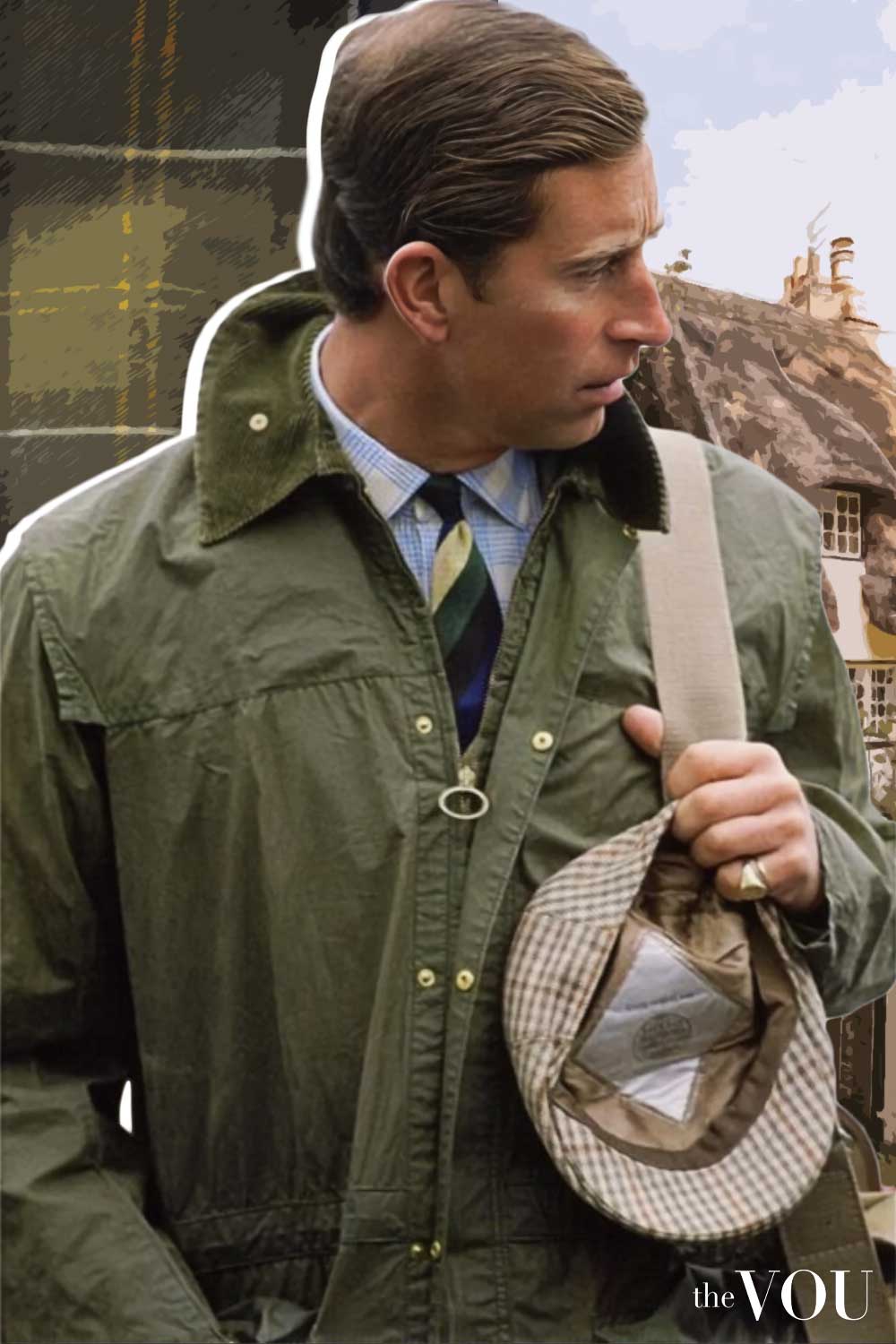
It has a corduroy collar, two large bellows pockets, two moleskin-lined hand-warmer pockets and a full-width rear pocket that was designed for game.
Its tartan lining, relaxed fit and storm cuffs make it easy to wear over a jumper in cold, wet weather.
The rear pocket is the clearest way to tell a Beaufort from a Bedale.
Wear an olive Beaufort over a navy crew-neck jumper and a checked shirt, with brown cord trousers and brown leather boots.
2. Barbour Bedale Wax Jacket
The Bedale came first, in 1980, also designed by Dame Margaret Barbour, with the practical needs of horse riding in mind.
Barbour says it is just over 8 cm shorter than the Beaufort, with rear vents instead of a game pocket so that it sits comfortably in a saddle.
It also has a corduroy collar, bellows pockets and moleskin-lined hand-warmer pockets.
Its shorter length makes it the easiest Barbour to wear with jeans and chinos in town.
Wear a navy or sage Bedale over a grey crew-neck jumper and a blue Oxford shirt, with dark straight jeans and brown suede desert boots.
If you want to wear it over a suit or blazer, try it on over that jacket in the shop, because the sleeves and shoulders need extra room and the jacket hem may show below.
3. Barbour Ashby Wax Jacket
Barbour describes the Ashby as a modernised version of the Bedale, with longer sleeves, a slightly longer body and a more tailored fit.
It keeps the corduroy collar and tartan lining, and it has angled hand-warmer pockets.
Choose it if a classic Bedale feels too boxy on you.
Wear a navy Ashby over a white T-shirt and a grey zip-neck jumper, with stone chinos and white leather trainers.
4. Barbour Border Wax Jacket
The Border was designed in the early 1980s and is the longest of these models, cut long-line for extra coverage.
Barbour lists six pockets, made up of two bellows pockets, two moleskin-lined hand-warmer pockets and two internal pockets with detachable pocket bags.
The extra length keeps the top of your trousers drier on long walks in rain, which makes it a practical choice for long country walks.
Wear an olive Border over a tweed jacket or a thick green jumper, with moleskin or cord trousers and wellington or leather country boots.
5. Barbour International Original Wax Jacket
The International comes from Barbour’s motorcycling history rather than from country sports.
Barbour dates it to 1936, when Duncan Barbour made a jacket for riders and gave one to his friend Billy Tiffen, who won the Scottish Six Days Trial in it.
According to Barbour’s history, its slanted left chest pocket, for maps or a trials time card, was added in 1951.
Barbour also records that by 1957 more than 97% of riders in the International Six Days Trial wore Barbour International suits, and that in 1964 the American ISDT team, which included Steve McQueen and Bud Ekins, wore them.
Its closer shape, usually in black, suits city wear and denim more than the country.
Wear a black International over a grey marl T-shirt, with dark jeans and black or brown leather boots.
Barbour Models Compared
Scroll horizontally to see all columns →
| Model | Introduced | Length | Key feature | Best for |
|---|---|---|---|---|
| Bedale | 1980 | Short | Rear vents for riding | Town, riding, everyday wear |
| Beaufort | 1983 | Hip | Full-width rear game pocket | Country and town |
| Border | Early 1980s | Long | Six pockets, extra coverage | Long walks and rain |
| Ashby | Later, as a modern Bedale | Short to hip | Slimmer, more tailored fit | Men who want a closer cut |
| International | 1936 | Hip | Slanted chest pocket | City wear and motorcycling style |
The Verdict on the Most Classic Barbour Jacket
On our four criteria, the Beaufort is the most classic Barbour jacket.
It has been made since 1983 with few changes, its game pocket and hand-warmer pockets still do a practical job, it works in the country and in town, and it is widely seen as the model most associated with the brand.
The Bedale runs it very close, and it is the better choice if you will mostly wear your jacket in town or want a shorter cut.
The International is the classic choice if you prefer its motorcycling history to country clothing.
Barbour received royal warrants from the Duke of Edinburgh in 1974, Queen Elizabeth II in 1982 and the then Prince of Wales in 1987, and in May 2024 King Charles III granted it a warrant as a maker of outerwear, clothing, footwear and accessories, a sign of the brand’s long association with British country life.
How to Choose Your Size
Waxed jackets are meant to be worn over other layers, so try one on over the thickest jumper or jacket you plan to wear under it.
Check that you can cross your arms without the back pulling and that the sleeves still cover your shirt cuffs when your arms are bent.
A relaxed model such as the Beaufort or Bedale suits layering, while the Ashby is better if you mostly wear it over a T-shirt or light jumper.
How to Care for a Waxed Jacket
Barbour recommends re-waxing its waxed jackets about once a year to keep them water-resistant.
Clean the outside with cold water and a sponge, and avoid hot water, soap, detergent and dry cleaning, which strip the wax.
Hang the jacket to dry naturally away from direct heat.
Looked after this way, a waxed jacket can last many years, and many wearers like the creases and colour changes it develops.
Wearing a Barbour With Classic Style
A waxed jacket has no visible logo beyond a small badge, so it sits comfortably with quiet luxury and the wider old money aesthetic.
Keep the colours earthy and the cloths textured, since tweed, cord, flannel, moleskin and wool knitwear all pair well with waxed cotton.
For the history of the clothes it is usually worn with, see our guide to British aristocracy style.