
Start here
What’s This About
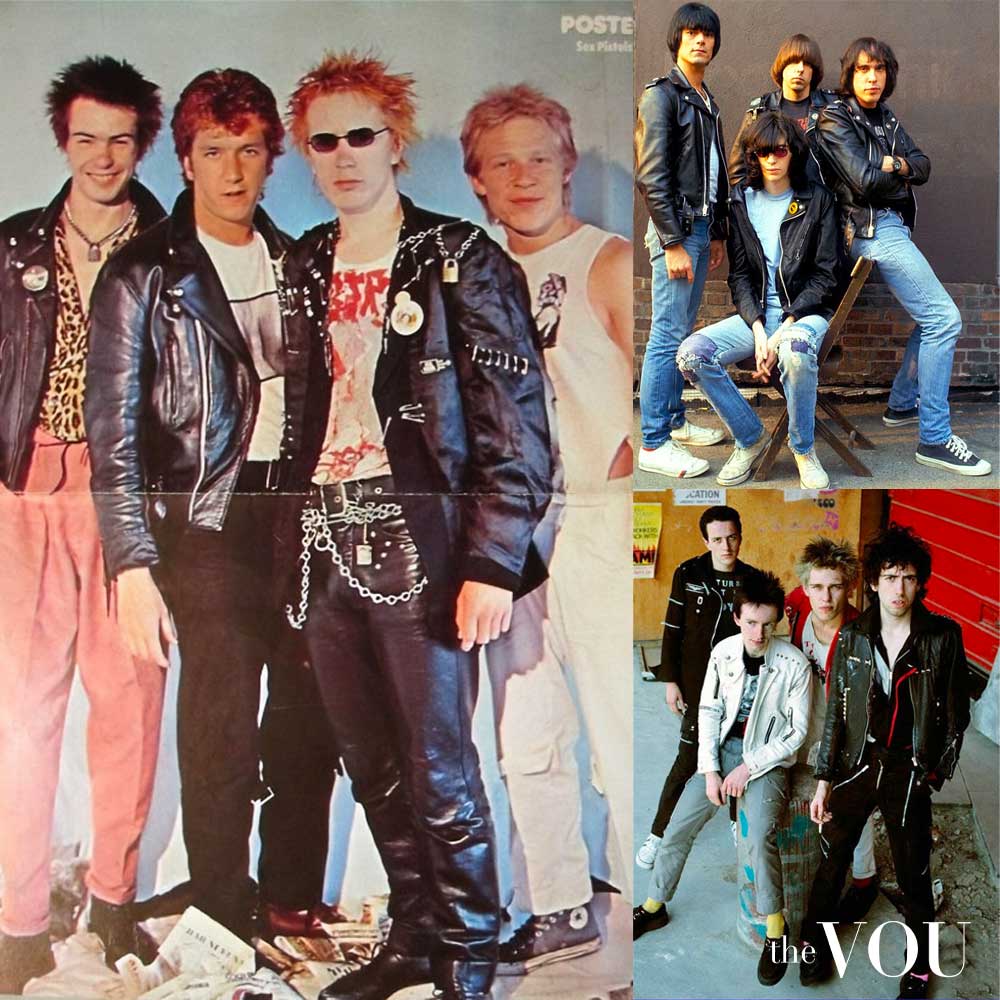
Punk fashion is clothing connected with punk music and its visual culture, including altered garments, band graphics, patched surfaces, bold checks and visible hardware.
This guide covers where punk’s clothing language came from and how to wear it, such as:
The 1970s New York and London scenes, including the CBGB venue and Westwood and McLaren’s London shop
Six recognisable details, from band tees to altered denim and hardware
Fit, fabric and colour choices for jackets, trousers and footwear
Four complete outfits, including DIY denim and a lighter option for a warm gig
Customising clothes in small, reversible steps
and many more!
Wearing punk-inspired clothes does not establish one political position, and you never need to damage a sound garment or buy a designer version to explore the look.
Key Points
01Punk’s clothing history spans several scenes, including a designed London contribution from Vivienne Westwood and Malcolm McLaren, rather than one shop or band.
02A leather jacket, tartan or studded belt also appears in other styles, so the combination and its reference matter more than any single garment.
03Customise a garment you already wear, one patch, repair or badge at a time, and check the placement while you move before sewing.
04Understand a symbol or message before wearing it, and check venue and workplace rules for hardware, graphics and distressed clothing.
Punk fashion is clothing connected with punk music and its visual culture: altered garments, band graphics, torn or patched surfaces, contrasting patterns and conspicuous hardware are familiar examples.
A leather jacket and jeans is one route; a customised denim jacket, checked trousers or a plain tee with a meaningful badge offers others.
The clothes are part of a wider history of music, art and self-publishing.
They do not establish that everyone wearing them shares one political position, personality or lifestyle.
When building your own outfit, choose the references you understand and the garments you actually want to wear.
How punk’s clothing language developed
The 1970s scenes in New York and London provide important starting points.
The Museum of the City of New York’s CBGB archive entry records a venue opened in 1973 where Patti Smith, the Ramones, Blondie, Television and Talking Heads performed.
Punk’s history was not confined to a single British shop or one band’s wardrobe.
In London, Vivienne Westwood and Malcolm McLaren made a particularly influential contribution.
The V&A’s account distinguishes their shop’s SEX identity in 1974 from Seditionaries in 1976.
It describes bondage trousers combining military, motorcycling and fetish references, alongside torn-looking tops, loose knits, chains and safety pins.
These were designed combinations, not simply clothes worn out through neglect.
The Met’s record of a Westwood and McLaren ensemble also identifies McLaren’s contribution to bondage straps.
Credit belongs to their collaboration; the garments’ different references should not be reduced to one universal symbol of rebellion.
Punk’s visual history extended beyond fashion retail.
Yale’s British Punk Archive finding aid documents clothing, Jamie Reid’s graphics, fanzines, stencils and record covers.
It also distinguishes more explicitly political groups such as Crass within the broader scene.
This is a useful context for DIY practice without assuming every punk participant held identical beliefs.
For a present-day wardrobe, the useful lesson is that familiar clothes can be altered, recombined and given specific meaning.
You do not need to recreate a museum object, copy a provocative symbol you do not understand or buy a designer version of something you could repair yourself.
Recognise the details without turning them into a uniform
Scroll horizontally to see all columns →
| Garment or detail | What to notice | A practical way to use it |
|---|---|---|
| Band or graphic tee | The subject of the graphic, its scale and its relationship to the other garments. | Use a shirt you like with simple jeans before adding further patterns. |
| Altered denim | Patches, visible repairs, contrast stitching or a changed hem. | Repair or customise a garment you already wear; test where the detail sits when moving. |
| Leather or coated outerwear | Shape, surface and fastenings, rather than price or label. | Try a shorter jacket with straight trousers, leaving enough room for a tee or light knit. |
| Tartan or other checks | Pattern size and colour contrast. | Make checked trousers or a checked shirt the main pattern, with simpler supporting garments. |
| Hardware | Studs, buckles, zips and chains as visible details. | Start with one belt or small accessory that does not catch or restrict movement. |
| Boots or canvas trainers | The weight and shape of the shoe beneath the trouser hem. | Choose a comfortable pair for the day; heavy boots are not a membership requirement. |
These garments and details appear in other styles too.
A leather jacket does not make every outfit punk, and a checked trouser does not carry one settled political meaning.
The combination, reference and context matter.
Choose the fit, fabric and colour for your version
Jackets and tops
A biker-style jacket creates a compact upper outline; a roomy denim jacket gives you more space for layers and patches.
Try either with the tee or knit you intend to wear beneath it.
Check the sleeves and upper back when you reach forward, rather than judging the fit while standing still.
For tees, decide whether you want a close, straight or loose shape.
A large print becomes harder to see when another layer covers most of it.
An open shirt or jacket can frame the graphic, while a plain tee lets a patched outer layer take the focus.
Open knits, mesh and fishnet can add another texture.
Decide how much coverage you want and test a plain layer underneath.
There is no need to use every material at once.
A plain tee and a worn denim surface already provide a useful contrast.
Trousers and footwear
Black jeans are an easy starting point, but blue denim, checks and plain work trousers offer different results.
Choose a rise and leg shape that let you sit comfortably.
Skinny trousers should not be a compulsory choice; a straight or wider cut can give you the room you need without losing the other details.
Try the hem with your intended shoes.
A shorter hem exposes more of a boot, while a longer leg can cover it.
Avoid fabric caught under the heel, and check whether torn sections pull further apart when you sit or climb stairs.
Choose boots or trainers for walking and standing first.
A substantial sole changes the outline but does not automatically prove better grip or comfort.
Use familiar footwear for a gig, and assess new boots before a long day in them.
Colour and accessories
Black, white and denim make a straightforward base for a red check, a bright print or a coloured patch.
You can also build a quieter outfit with one small contrast.
Colour does not have a universal punk personality meaning, and shoe-lace colour alone is not a reliable way to identify someone’s beliefs.
A studded belt, a few badges or a short chain can be enough detail.
Check how metal studs, pins and chains sit against your skin, chair and bag strap.
Long or sharp accessories may be unsuitable for a crowded venue or particular workplace; choose the accessory for the setting as well as the photograph.
Four complete punk-inspired outfits
1. A band tee, jeans and a useful jacket
Wear: a band or graphic tee, straight black or blue jeans, a leather or denim jacket, canvas trainers or lace-up boots, a plain belt and a small zipped bag.
The tee supplies the reference; the rest provides a wearable frame.
Keep the jacket open if you want the print visible.
Try the jeans with both footwear options before choosing the hem length, and make sure the bag strap sits comfortably over the jacket.
This is a practical starting point for a casual day or an informal evening.
You can introduce patches or badges later rather than buying a completely embellished jacket at the outset.
A tee connected to music you enjoy will give you a more personal starting point than a random slogan.
2. Checked trousers as the main feature
Wear: red-and-black or muted checked trousers, a plain black tee, a short dark jacket, comfortable black boots, a simple belt and a compact shoulder bag.
The trousers already provide a strong pattern, so keeping the upper half simple lets you see the shape and colours.
Compare a closer trouser cut with a straighter one; choose by comfort and the outline you prefer.
The shorter jacket leaves the waistband and upper trouser shape visible.
For a warmer day, leave the jacket off.
For a quieter version, replace the checked trousers with plain ones and move the check to an open shirt.
Neither combination requires you to treat tartan as a badge of a particular class or belief.
3. DIY denim without a new shopping list
Wear: a plain white or dark tee, an existing denim jacket with a repair or a few sewn-on patches, plain work trousers, low-top trainers and a canvas bag.
Keep the jacket’s detail visible by using a simple base.
One contrasting repair can be enough; an entire back panel does not need to be filled immediately.
Choose a patch position that remains comfortable beneath a backpack or when you sit.
The work trousers and trainers make this an easy casual outfit.
If you want to carry the visual idea through, use one repeated colour in the jacket’s stitching, tee or bag.
The connection can be small rather than another large graphic.
4. A lighter outfit for a warm gig
Wear: a lightweight tee, comfortable shorts or loose dark trousers, familiar trainers, socks and a zipped crossbody bag. Bring an open checked shirt or light jacket for the journey home if needed.
The graphic or checked layer supplies the reference without a heavy leather jacket.
Check pocket closures and the bag’s capacity before leaving; carrying less can be easier than wearing several large pockets filled with objects.
Review the venue’s clothing and bag rules.
If you expect to stand or move for a long time, use shoes you know and remove accessories that catch.
A practical outfit with a few chosen details is more useful than one that prevents you enjoying the event.
Customise clothes in small, reversible steps
Begin with a garment you already wear.
Put it on and decide where you want the detail before making a permanent change.
Lay a patch in position, check it with the rest of the outfit, and use a temporary placement method suitable for the fabric before sewing.
Repair can be part of the design.
Back a worn area with suitable fabric and use stitching you want to see, or ask a repairer to reinforce it.
A hole close to a stressed seam may need support rather than further distressing.
You do not need to damage a sound garment to explore a DIY approach.
Keep closures usable.
Before adding hardware, consider its weight and what it will touch when you move.
On leather, coated fabrics or a lined jacket, ask someone with the relevant repair skills before making holes; a placement that looks simple from outside may affect the lining or finish.
A patch or badge can express your taste, a band connection or a specific message.
Read the wording and understand the symbol before using it.
You can choose your own graphic or visible repair instead of copying imagery solely for shock value.
Do not assume a specialist brand is required.
Put the money towards a fit adjustment, repair or shoes you will use if that solves a real wardrobe problem.
For secondhand purchases, inspect seams, linings, fastenings and worn areas, and check the seller’s measurements and return terms.
Adapt the outfit to weather, work and maintenance
For warm days, reduce the weight and number of layers rather than assuming leather and black denim are compulsory.
A tee, shorts and trainers can carry the graphic or DIY detail.
In cold weather, leave room beneath the outer jacket for insulation; if it is too close to accommodate a knit, use another coat.
For wet conditions, choose clothing and footwear with the protection appropriate to your route.
A coated-looking surface or thick boot is not, by itself, evidence of waterproof construction.
Keep hems clear of the ground and follow the drying instructions for each garment and pair of shoes after use.
Read care labels before washing, especially when a garment combines prints, patches, metal details and different fabrics.
Remove detachable badges and chains where appropriate, check loose stitching and fastenings, and get advice before applying a treatment to an unfamiliar finish.
Worn-looking clothes still benefit from cleaning and repair.
At work, start with the actual dress code.
In a setting that allows it, a plain shirt, ordinary trousers and work shoes might leave room for a small badge or patterned accessory.
More visible hardware, band graphics and distressed garments may need to stay for personal time.
Punk, goth and the limits of style labels
Punk and goth have historical connections, but their labels are not interchangeable.
FIT’s account of goth’s development places it within the post-punk context.
Shared black clothing, leather and mesh do not erase the differences between the music scenes or their visual references.
You will also encounter terms such as hardcore, anarcho-punk, pop-punk and skate punk when exploring music and clothing.
They should not be reduced to fixed shopping lists or a single attitude.
To understand a particular reference, look at a named band, scene and period rather than treating every image tagged “punk” as equivalent.
For a wardrobe, you can take a smaller step: identify the graphic, alteration, silhouette or combination you want to try.
Try it with familiar clothes and see whether you enjoy wearing the result.
Common questions about punk fashion
Q. Do I need a leather jacket or heavy boots?
No. Denim, a plain tee, work trousers and canvas trainers can provide a useful base.
Choose the footwear and layers that suit your day, then add the detail or reference you want.
Q. Can punk-inspired clothing be tidy?
Yes.
A clear graphic, a deliberate contrast or a visible alteration does not require dirt or disrepair.
Keep garments comfortable and usable, including garments designed to look distressed.
Q. Does every punk outfit have to be political?
Political expression is important in some periods and scenes of punk history, but it is not one uniform position shared by everyone.
Choose a message because you understand and mean it.
Do not infer a stranger’s beliefs from their clothes.
Q. How much should I customise?
Start with a single patch, repair or small accessory and wear the outfit before adding more.
The useful limit is whether the garment remains comfortable, functional and recognisably yours.
Q. How can I compare punk with other styles?
Our goth fashion guide explores dark, romantic and music-related clothing from a different context.
The broader men’s fashion style guide can help you compare silhouettes, textures and combinations across your existing wardrobe.
Mandy Meyer’s focus at The VOU is men’s body-shape styling, garment fit and outfit proportions. Her coverage addresses the practical questions behind a wardrobe choice: how a jacket sits across the shoulders, how trousers fall and how different cuts change the silhouette a wearer wants to create.
Her subject areas include the triangle, inverted triangle, rectangle, oval, trapezoid, hourglass and diamond labels used in body-shape styling. These provide starting references for comparing visible proportions; they do not capture every body or prescribe one correct way to dress. The focus connects those observations with garment shape, construction, length and the relationship between the upper and lower parts of an outfit.
Mandy’s editorial coverage combines visual comparisons with fit checks for comfort and movement. Readers can consider whether a cut gives them the room they need, where clothing pulls or gathers and which changes might support their preferred look. The aim is to make menswear choices more understandable while keeping personal preferences and the wearer’s own styling goals central.