Start here
What’s This About
A new graduate’s budget wardrobe starts with a well-fitting blazer, white and light blue shirts, two pairs of trousers and one pair of leather shoes, bought in order of need.
This guide sets out what to buy first and how to make it last, such as
Checking what your industry and employer expect before spending
Finding a blazer second-hand and having it altered
Choosing shirt collars for interviews and for everyday work
When a suit is worth buying early
Three outfits for an interview, a business casual day and after-work drinks
and many more!
Start with what you own, fill the gaps one at a time and look after what you buy.
Key Points
01Business professional dress suits interviews and career fairs; business casual suits networking and presentations.
02Shoulder fit is the hardest to alter, so check it first on any jacket.
03One pair of leather shoes that you look after is more useful than several you do not.
04Around ten garments that all combine will cover most weeks.
Graduating usually means new kinds of days, such as interviews, a first job, networking events and dinners with colleagues.
Your student wardrobe may not cover them, and your first salary has plenty of other jobs to do.
This guide shows men how to build a small, practical wardrobe for life after college without spending more than necessary, in a sensible order of priority.
If you are still at college, our college wardrobe checklist for men covers student life first.
Before you buy, check what your field expects
Dress norms differ widely between industries and employers, so look at the company’s website, its social media and what people wear in your interviews before spending money.
The career centre at the University of North Carolina at Chapel Hill, in guidance published in August 2025, suggests business professional dress for interviews and career fairs, business casual for networking and presentations, and going slightly more formal when in doubt.
Start with the clothes you already own and buy only what fills a gap.
1. A blazer that fits
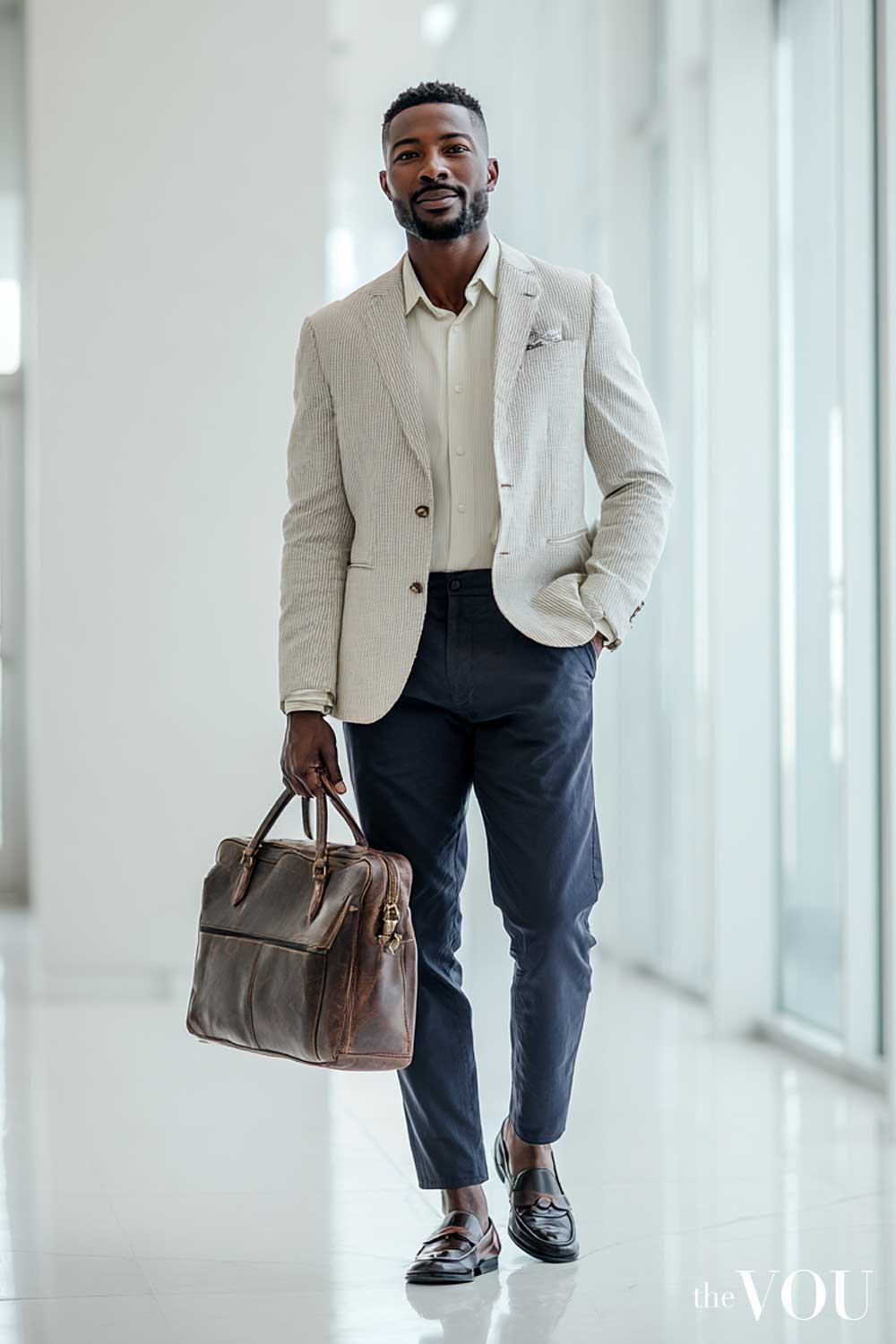
A blazer is the most useful single garment for a new graduate because it works for interviews, meetings and dinners.
Navy or mid-grey pair with the most trousers and shirts.
Fit matters most at the shoulders, because they are the hardest and most expensive area for a tailor to change; sleeves and waist are easier to adjust.
Second-hand and charity shops can be a good source of well-made blazers at low prices, so check the shoulders, the lining and the buttons before you buy.
A small alteration, such as shortening the sleeves, often makes an inexpensive jacket look as if it was made for you.
If you later add a second jacket, an unlined one in cotton or linen is useful in warm months.
2. Shirts that last a long day
Collared shirts cover interviews, presentations and business casual days.
Start with white, then add light blue.
Cotton or cotton-blend shirts crease less than linen and are easy to wash and iron.
A button-down collar is more casual than a point or spread collar, so keep at least one point or spread collar shirt for interviews and for wearing with a tie.
If you want variety, add one shirt in a fine check or thin stripe, which works under a blazer without looking loud.
On warm days, roll the sleeves neatly to just below the elbow.
3. Trousers that actually fit
Choose the leg shape you like, whether slim, straight or relaxed, and check the fit at the waist and seat.
The hem should rest on your shoes with little or no fold, rather than dragging on the ground or bunching heavily.
Navy and charcoal grey are the most versatile colours.
On a tight budget, start with one pair of smart wool or wool-blend trousers and one pair of chinos.
A little stretch in the fabric makes long commutes and interviews more comfortable.
4. One good pair of leather shoes
One pair of leather shoes that you look after is more useful than several pairs you do not.
Choose lace-ups, such as Oxford or Derby shoes, or loafers, in black or dark brown leather.
Clean them after wet days, polish them regularly and use shoe trees if you can, and they will last for years.
For weekends and casual offices, add one casual pair, such as plain white leather trainers, loafers or boots.
5. A suit, if your field expects one
If you are entering law, finance, consulting or another field where suits are normal, a plain navy or charcoal suit is worth buying early.
The jacket and trousers can also be worn separately, the jacket with chinos and the trousers with a jumper, so the suit earns its place on ordinary days.
If suits are rare in your field, the blazer and trousers above are enough to start.
6. Knitwear for layering
A jumper over a collared shirt is an easy middle ground between casual and formal.
Medium-weight knits hold their shape better than very thin ones.
Grey, navy, camel and olive go with most shirts and trousers, and a jumper is useful in cold offices and on early commutes.
7. A coat for work
A trench coat or a wool-blend overcoat in navy, grey, camel or beige goes over a suit or a blazer and covers most of the year.
Choose a simple design without large buckles or decoration.
If it rains a lot where you live, make sure the coat is water-resistant.
Vintage and second-hand shops often stock good wool coats; check the zips, lining, pockets and seams before buying.
8. A few useful accessories
A simple watch, a leather belt in the same colour family as your shoes and a bag that holds a laptop cover most needs.
A structured shoulder bag or briefcase looks smarter than a backpack for interviews, although a plain backpack is common in many offices.
One or two ties in plain colours or small patterns, and a scarf for winter, add variety at little cost.
Simple sunglasses in black or tortoiseshell frames finish a casual outfit.
9. Look after what you own
Good care saves money, because clothes last longer.
Wash shirts at the temperature on the label, hang them to dry and iron or steam them while slightly damp.
Hang blazers and trousers on shaped hangers and brush wool rather than washing it often.
Keep a lint roller and a small sewing kit for loose buttons and fallen hems.
Deal with stains quickly, before they set.
10. Mix, match and repeat
You do not need 30 outfits; around ten garments that all combine will cover most weeks.
For example, two shirts, a jumper, a blazer, two pairs of trousers and two pairs of shoes already give many combinations.
For an interview, wear a navy blazer or suit jacket, charcoal trousers, a white point-collar shirt, a plain tie, a black leather belt and black Oxford shoes.
On a business casual day, wear a light blue button-down shirt, a grey jumper, navy chinos and dark brown loafers.
For after-work drinks, wear a white shirt with the sleeves rolled, dark trousers, the navy blazer and brown leather shoes or white leather trainers.
Final thoughts
Buy in order of need, first what your interviews require, then what your first job requires, then the rest.
Start small, choose clothes that fit and combine, and add to the wardrobe as your work and budget allow.
Related guides
How to style a blazer for the old money look
What is the 7 rule for outfits?
Sources
University of North Carolina at Chapel Hill, University Career Services, Interview and Career Fair Attire, 16 August 2025.