
Start here
What’s This About
A softly structured blazer or sports coat with dark, well-fitting jeans makes a smart casual outfit for dinners, relaxed offices and weekends.
This guide shows you how to put the combination together, such as:
Which jackets work with denim and which look like half of a suit
How to choose the wash, fit and length of the jeans
Outfit ideas for galleries, brunch, relaxed offices and summer parties
When a dress code rules jeans out
Collars, knitwear, belts and pocket squares
and many more!
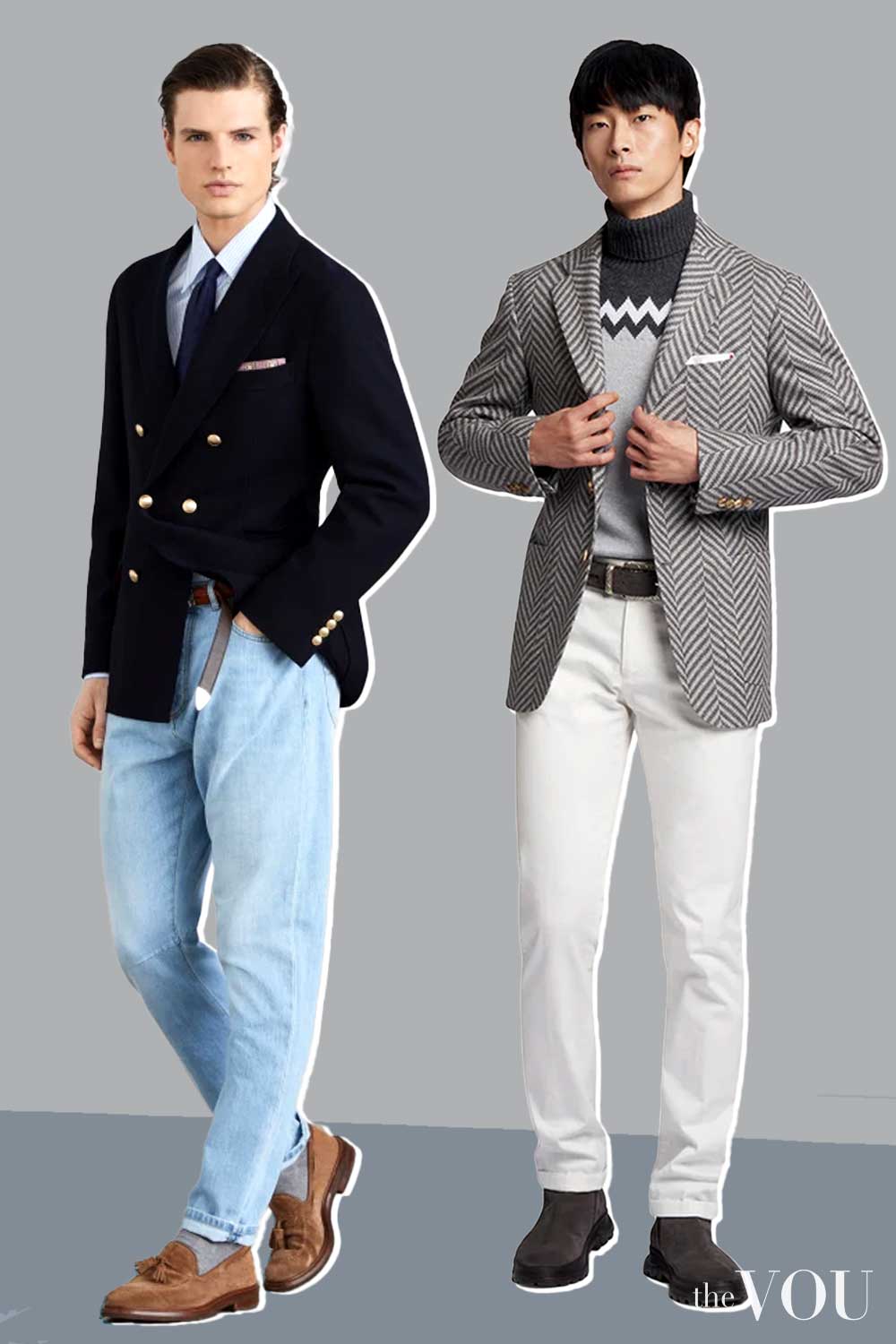
Start with a navy blazer and dark jeans, then add texture and colour as you go.
Key Points
01Blazers and sports coats work with jeans; most structured suit jackets do not.
02Dark or mid-blue jeans in a straight or slightly tapered fit, without rips, are the most versatile.
03Jeans limit how formal an outfit can be, so follow any written dress code instead.
04Fit the jacket and the jeans first, then choose the silhouette you prefer.
A blazer or sports coat with jeans is one of the most useful smart casual outfits a man can own.
It works for relaxed offices, dinners out, gallery openings, weekend lunches and many parties, and it uses clothes most men already have.
This guide explains which jackets and jeans work together, gives complete outfit ideas for different settings, and covers the fit and finishing details that make the combination look deliberate.
Blazer, sports coat or suit jacket: which works with jeans?
Start by knowing the difference between blazers, sports coats and suit jackets.
Most blazers are a solid colour, the most popular being the navy blazer, often with metal buttons.
Sports coats come in textured cloths and patterns, such as tweed, herringbone, houndstooth, linen and corduroy, and they look naturally relaxed with denim.
Most suit jackets, with structured shoulders and smooth worsted cloth, look like half of a suit when worn with jeans, so a soft, textured suit jacket is the exception rather than the rule.
Softly structured jackets with natural shoulders usually work best.
Choosing the jeans
Wash: dark or mid-blue is the most versatile; black or charcoal jeans suit evening outfits, and white or ecru jeans suit summer.
Fit: straight or slightly tapered, close to the leg without clinging.
Condition: no rips, heavy fading or embellishment.
Length: hemmed to sit neatly on your shoes with little or no stacking.
Raw or selvedge denim has a dense, even colour that sits well with tailored jackets, but any well-fitting dark jeans work.
Casual outfit ideas
The outfits below are suggestions you can adapt with clothes you already own.
Gallery opening or evening exhibition
Wear: a midnight blue velvet jacket, charcoal or black jeans, a crisp white double-cuff shirt with no tie, and black leather loafers or polished black Oxfords.
Add simple cufflinks, new or vintage, and a white linen pocket square in a loose puff fold.
Any well-polished plain black shoe works here; our John Lobb page covers one English shoemaker’s dress shoe styles if you want ideas.
Weekend brunch
Wear: a light grey herringbone or linen-blend sports coat, mid-blue slim straight jeans, a soft pink or white knitted polo shirt and tobacco suede loafers.
Finish with a simple watch on a leather strap and a burgundy or navy silk pocket square in a single-point fold.
City casual
Wear: a brown and cream houndstooth sports coat, raw indigo jeans, a cream wool or cashmere roll-neck and burgundy penny loafers.
Choose a brown suede belt and keep accessories to a watch and an ecru linen pocket square.
Relaxed office day
Wear: a navy blazer, a white Oxford button-down shirt, dark straight-leg jeans and brown leather loafers or chukka boots.
Check your workplace’s written dress policy first, since many business casual codes still exclude jeans.
Dressier outfits with jeans
Jeans set a limit on how formal an outfit can be, so these looks suit smart social events rather than occasions with a written dress code.
Summer garden party or outdoor lunch
Wear: a cream linen sports coat, white or ecru jeans, a sky blue Oxford button-down shirt and brown suede loafers or driving shoes.
Add a straw Panama hat for sun and a pale yellow silk pocket square.
Linen creases naturally, which suits a relaxed daytime outfit.
Evening at a jazz club or cocktail bar
Wear: a dark green velvet sports coat, black slim straight jeans, a charcoal fine-gauge merino roll-neck and black suede Chelsea boots.
Add a slim watch on a black leather strap and a burgundy silk pocket square.
When jeans are not the right choice
Events with a written dress code often rule jeans out even with a blazer.
For example, the Stewards’ Enclosure at Henley Royal Regatta requires gentlemen to wear a jacket and tie, and organisers publish their rules each year, so check the current rules before you go.
If an invitation asks for a lounge suit, cocktail attire or black tie, follow that code rather than wearing jeans; our dress code guide explains each one.
Do’s and don’ts
Do
Choose jacket cloths that suit the season and time of day, such as linen or cotton in summer and flannel, tweed or velvet in cold weather and in the evening.
Let linen crease naturally in a relaxed daytime outfit.
Pair velvet jackets with dark jeans.
Choose white or ecru jeans for summer daytime outfits.
Use black jeans for a sleek evening outfit.
Keep the jeans plain, well fitting and clean.
Don’t
Wear heavy tweed or flannel to a hot summer daytime event.
Combine a light summer jacket with heavy, dark winter denim.
Wear ripped or heavily distressed jeans with a tailored jacket.
Ignore the fit of either the jacket or the jeans.
Pair a sharp, structured business jacket with casual denim; a soft double-breasted blazer can work with dark jeans, but a structured double-breasted suit jacket is harder to carry off.
Forget how the colours of the jacket and jeans work together.
Fit, proportion and finishing details
Fit
The jacket should sit comfortably on your shoulders, with sleeves ending near your wrist bone so a little shirt cuff shows.
A traditional guideline is that the jacket hem reaches about where your cupped hands fall with your arms at your sides; shorter cuts are a style choice.
The jeans should skim your legs without clinging and sit neatly on your shoes.
Proportion
Fit and silhouette are separate decisions: fit is whether each garment sits correctly, and silhouette is the shape you prefer.
A strongly structured or boldly patterned jacket looks balanced with plain, dark, straight jeans.
A soft, unstructured jacket can take jeans with more character, such as a gentle fade or a slightly roomier cut.
Shirt collars and knitwear
A spread collar sits well under wider peak lapels, and a button-down collar suits notch lapels and casual outfits.
For a more relaxed look, try a grandad-collar shirt, a knitted polo or a fine-gauge roll-neck.
Accessories
A pocket square adds colour: linen or raw silk suits daytime, and finer silk suits the evening.
Match your belt to your shoes in colour and finish; if your jeans fit well at the waist, you can also leave the belt off for a cleaner look.
Keep the rest simple, such as one watch and one pocket square.
Mandy Meyer’s focus at The VOU is men’s body-shape styling, garment fit and outfit proportions. Her coverage addresses the practical questions behind a wardrobe choice: how a jacket sits across the shoulders, how trousers fall and how different cuts change the silhouette a wearer wants to create.
Her subject areas include the triangle, inverted triangle, rectangle, oval, trapezoid, hourglass and diamond labels used in body-shape styling. These provide starting references for comparing visible proportions; they do not capture every body or prescribe one correct way to dress. The focus connects those observations with garment shape, construction, length and the relationship between the upper and lower parts of an outfit.
Mandy’s editorial coverage combines visual comparisons with fit checks for comfort and movement. Readers can consider whether a cut gives them the room they need, where clothing pulls or gathers and which changes might support their preferred look. The aim is to make menswear choices more understandable while keeping personal preferences and the wearer’s own styling goals central.