
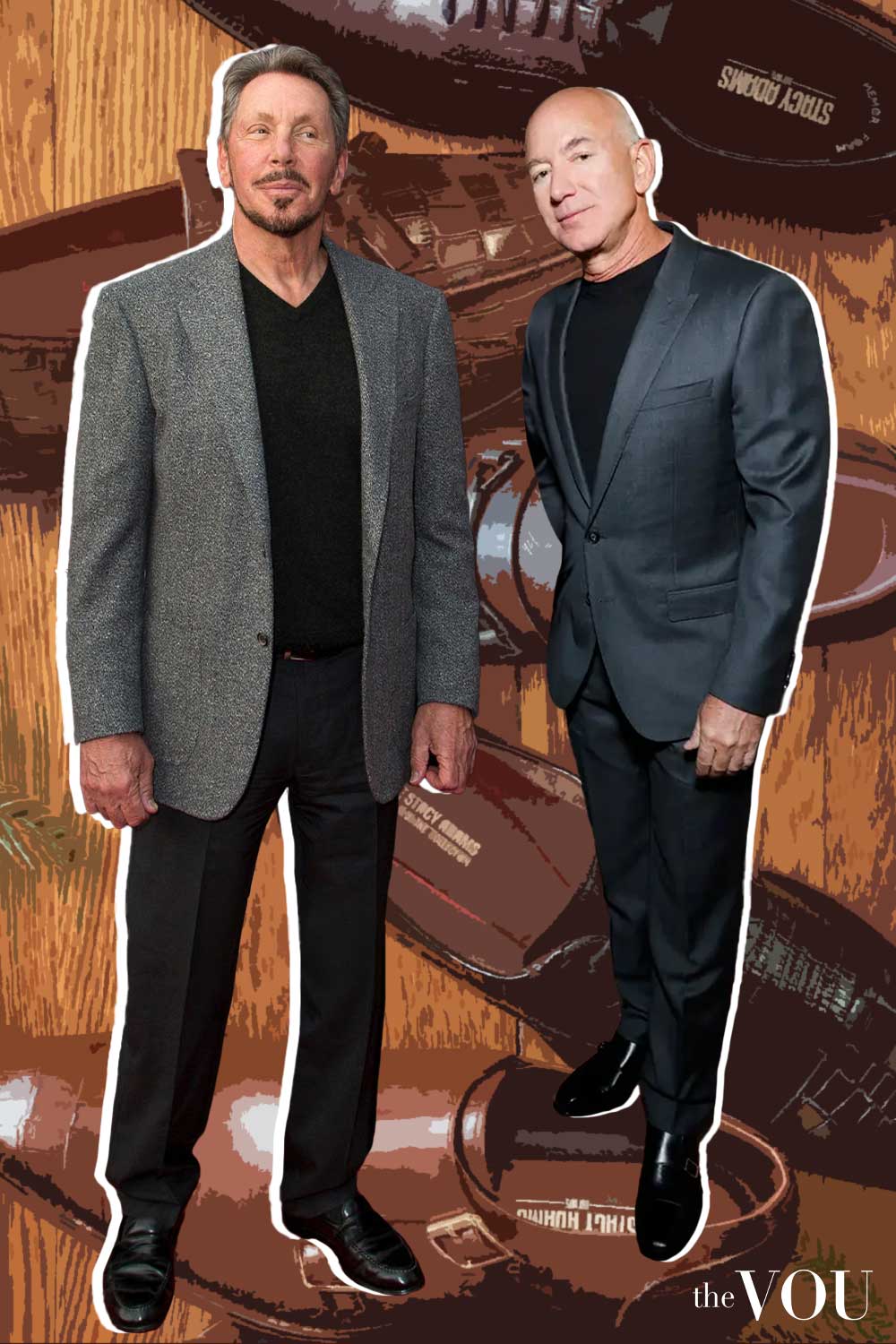
Start here
What’s This About
Business-casual shoes sit between formal dress shoes and weekend footwear, and the most dependable choices are leather or suede Derbies, loafers, monk straps, plainer Oxfords and smart boots.
This guide helps you choose and wear them, such as
the main shoe styles and how formal each one usually reads
colours and leathers, from brown and burgundy to black and white
three outfit ideas built around the shoes
texture, seasonal and occasion choices
belts, socks and other accessories
and many more!
Your office’s dress policy decides which styles are acceptable, so use this guide within it.
Key Points
01Oxfords have closed lacing and Derbies open lacing; Oxfords are conventionally the more formal, and broguing can appear on either.
02Brown, burgundy and oxblood, in smooth leather or suede, are the easiest colours for business casual; black works too, especially in more conservative offices.
03Plain white leather trainers are accepted in some relaxed offices and not others, so check your policy.
04Comfort and fit matter as much as style, because you will walk, stand and commute in these shoes.
Business-casual shoes link formal and relaxed dressing, and choosing the right pair makes the rest of an office outfit easier.
This guide covers the shoe styles that suit the business casual dress code and how to choose them.
It explains the differences between Oxfords and Derbies, and how colour, texture and detailing change how formal a shoe looks.
Main Styles of Business Casual Shoes
Scroll horizontally to see all columns →
| Style | Characteristics | Usual formality |
|---|---|---|
| Oxford | Closed lacing; plain, cap-toe or brogued | Formal to moderate, depending on leather and detailing |
| Derby | Open lacing; plain or brogued | Moderate to casual |
| Monk strap | Fastened with one or two buckles, no laces | Moderate to casual |
| Loafer | Slip-on, often with a penny strap or tassels | Moderate to casual |
| Chelsea boot | Ankle boot with elastic side panels, no laces | Moderate to casual |
| Chukka boot | Ankle boot with two or three pairs of eyelets, often in suede | Casual |
Oxford Shoe
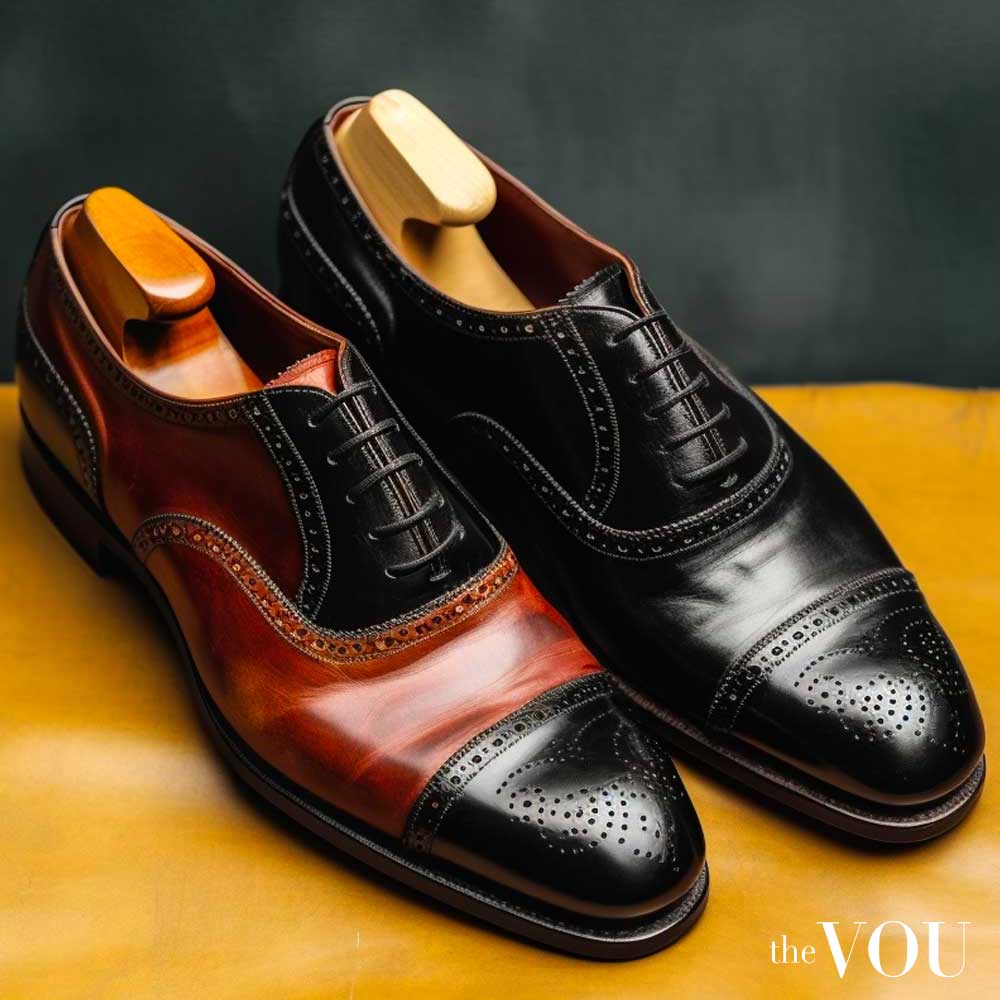
The Oxford is a formal dress shoe by construction, with closed lacing, but it can work in business casual.
Leather and detailing change how formal it looks. Suede or pebble grain looks more relaxed than polished calf, and wingtips, medallions and broguing soften a plain shape.
A brown or burgundy brogued Oxford sits comfortably with chinos or flannel trousers.
Derby Shoe
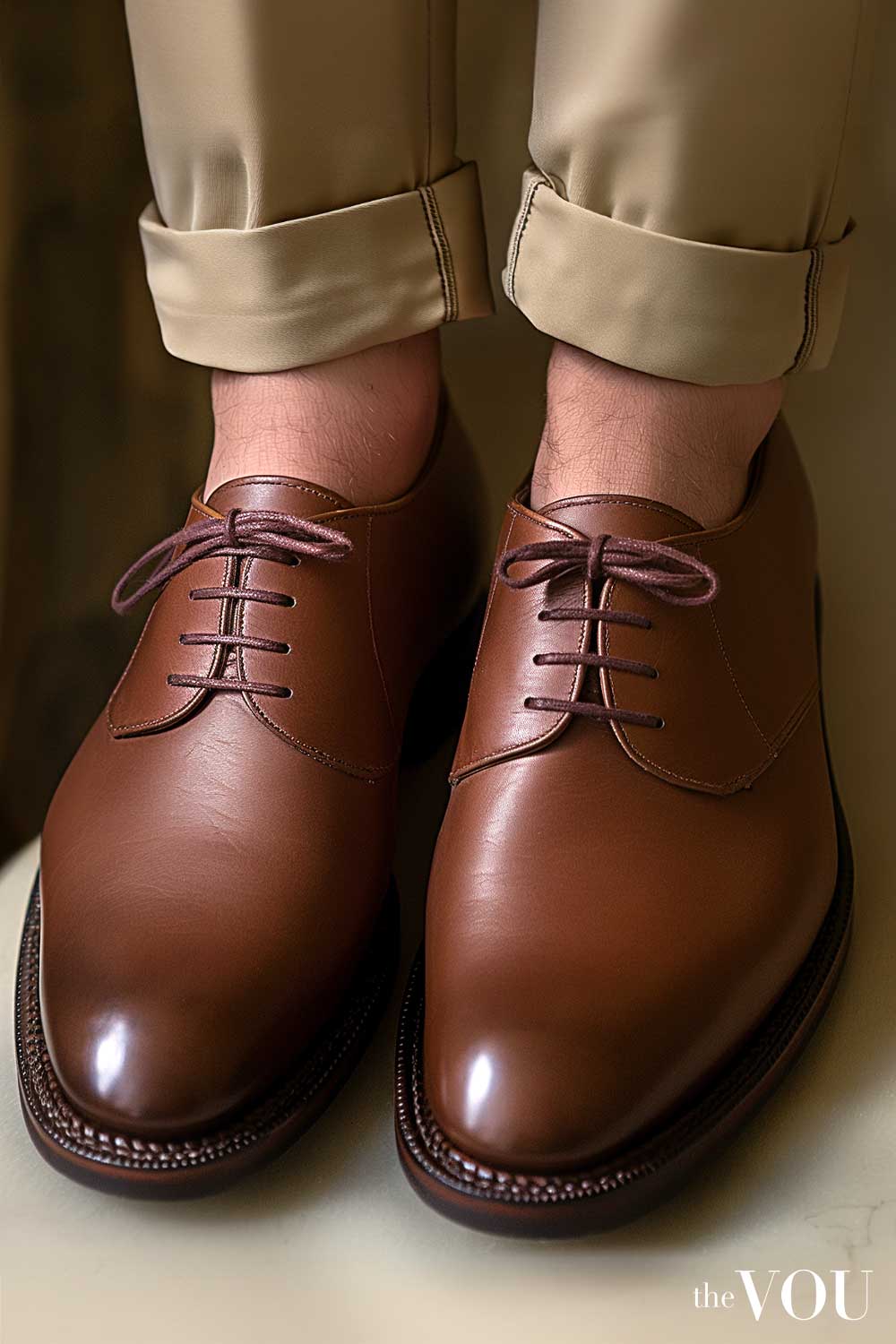
With its open lacing, the Derby is a natural choice for business casual, and it is often easier to fit if you have a high instep.
Derbies range from plain and streamlined to heavily brogued, so choose the level of detail that suits your office.
Monk Strap Shoe
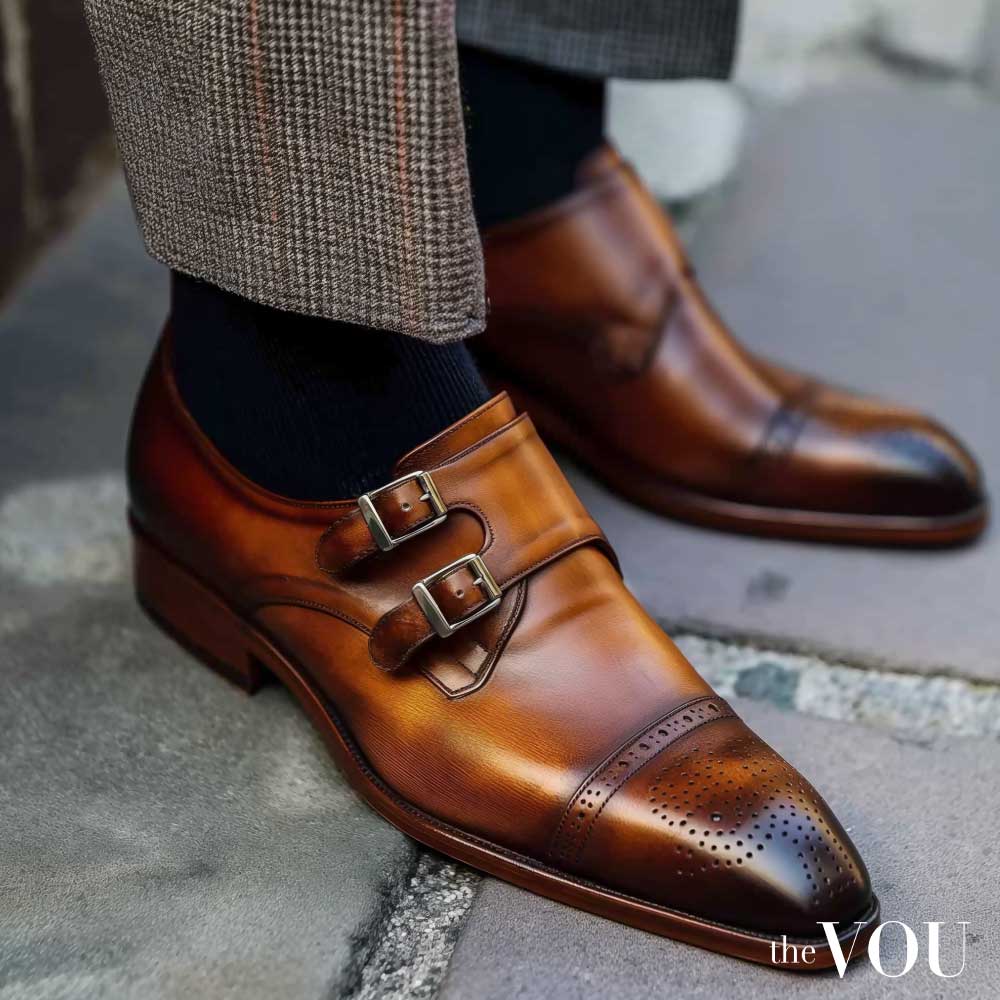
The monk strap replaces laces with one or two buckles, giving a smart alternative to a lace-up.
Single and double monks both suit business casual; plainer designs read smarter, and more detailed ones more relaxed.
Loafer
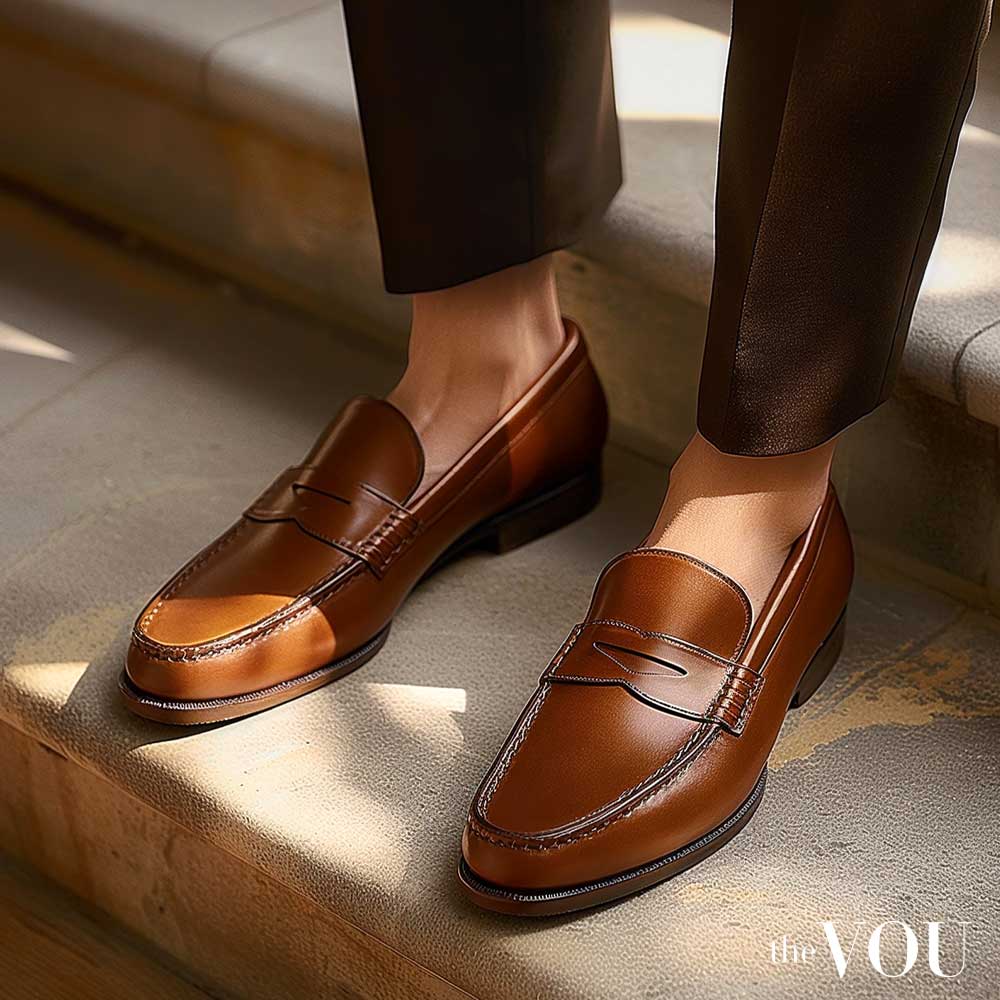
The loafer is one of the most common business-casual shoes.
Penny and tassel loafers are easy to slip on and off and look relaxed but polished with chinos and wool trousers.
Loafers built like dress shoes, with a firm sole, look smarter than soft driving moccasins.
Chelsea Boot
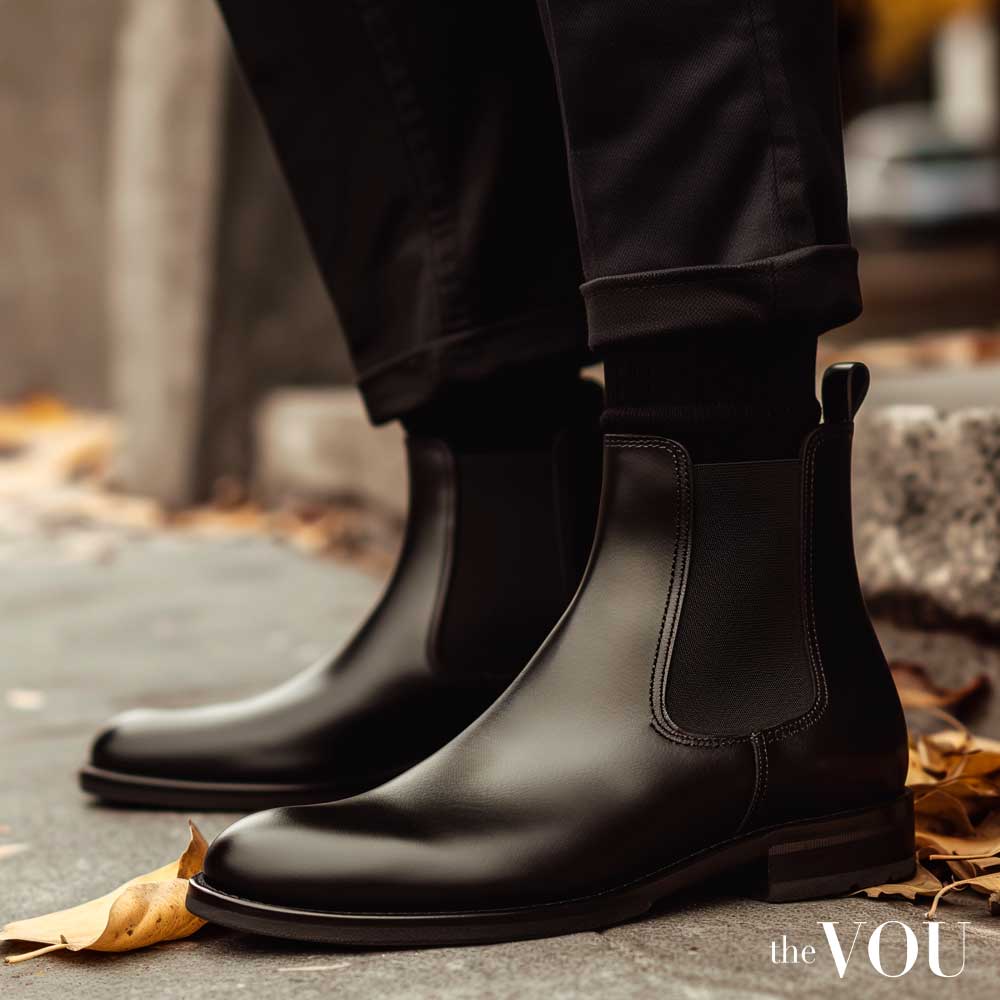
The Chelsea boot has a clean, laceless shape that can look almost as streamlined as a plain shoe.
Depending on the leather and sole, these business casual boots bridge smart and casual dressing well, especially in cold or wet weather.
Chukka Boot
The chukka is a simple, low ankle boot, usually with two or three pairs of eyelets, at the relaxed end of business casual.
It is built like a Derby with a higher ankle, and suede chukkas suit chinos and casual Fridays; desert boots are a crepe-soled variety.
Colour and Texture for Business Casual Shoes
Colour and texture change how formal a shoe looks, so they are worth considering as carefully as the style.
Black
Black is the most formal shoe colour, and many business-casual outfits look more relaxed with brown or burgundy.
Black still works, especially in conservative offices, with grey or charcoal trousers, and black loafers and suede are less formal than polished black Oxfords.
Oxblood and Burgundy
Dark reds such as oxblood and burgundy are versatile business-casual colours that sit between formal and casual.
Shell cordovan, a leather made from horsehide that is often finished in a burgundy shade, has a natural depth of shine.
Green
Dark, earthy green, for example in a suede Oxford or a chukka boot, is a less common choice that adds quiet contrast for those who want it.
Brown
Brown is the most versatile business-casual shoe colour, from dark chocolate to medium chestnut and lighter tan, and it pairs with navy, grey, olive and stone trousers.
Bright White
White leather trainers are accepted in some relaxed offices and seen as too casual in others.
If your office allows them, choose plain, clean leather trainers; if you are unsure, a brown suede shoe is a safer choice.
Business Casual Shoes Dos and Don’ts
Scroll horizontally to see all columns →
| Do | Don’t |
|---|---|
| Buy the best-made leather or suede shoes your budget allows, new or second-hand | Rely on shoes that fall apart quickly or hurt to walk in |
| Use broguing, wingtips or other decoration to make a shoe less formal | Choose very trendy or flashy designs for the office |
| Try muted colours such as browns, greens and burgundies | Wear athletic trainers unless your office allows them |
| Choose shoes that fit comfortably for a full day | Sacrifice comfort for style |
| Pair business-casual shoes with tailored trousers, blazers and knitwear | Pair them with sportswear |
3 Versatile Business Casual Outfit Ideas
The three outfits below are editorial examples to adapt to your office’s dress policy.
The Morning Meeting Outfit
For a more formal meeting in a business-casual office, pair grey wool trousers and a navy blazer with a crisp white cotton shirt.
Add a burgundy knit tie and a leather belt, and finish with oxblood wingtip Oxfords.
If the meeting has asked for a suit, wear a navy suit with the same shirt, tie and shoes.
The End-of-Week Outfit
For a relaxed Friday, combine straight-leg tan chinos, a light-blue Oxford button-down shirt and a soft olive cotton-linen sports coat.
Brown suede Chelsea boots finish the outfit, and the same outfit works for after-work drinks.
The Minimal Client Outfit
For an important client meeting where a suit is expected, wear a charcoal wool suit in a cut you find comfortable, a white spread-collar shirt and black or dark-brown monk-strap shoes.
Add a plain leather belt and, if you like, a simple watch.
Business Casual Shoe Styling Tips
A few styling ideas help your shoes work across many outfits.
Texture
Different leather finishes, from smooth calf to suede and pebble grain, add depth and contrast.
For example, wear polished leather Oxfords one day and soft suede Derbies the next.
Seasonal Shades
In warmer months, lighter tones such as tan, light brown and taupe suede feel seasonal.
As the weather cools, richer colours such as burgundy, dark green and dark brown suit heavier fabrics.
Building From the Shoes
Shoes can be a useful starting point for an outfit, so choose them first and let them guide your trousers, jacket and belt.
Choosing and Styling by Occasion and Season
Different days call for different shoes, from client meetings to team sessions and Friday socials.
Seasonal Considerations
In warm weather, suede Derbies and unlined or perforated loafers feel lighter.
In cold or wet weather, leather Oxfords, Derbies with thicker soles and weather-resistant Chelsea boots are more practical; check the sole’s grip and the maker’s water-resistance information, and save suede for dry days unless it has been treated.
Workplace Versatility
For client meetings or presentations, a slightly more formal shoe, such as brogued Oxfords or plain monk straps, suits the occasion.
For relaxed internal meetings or end-of-week socials, suede chukkas or loafers work well.
If you visit a site with safety rules, follow its footwear requirements instead.
Occasion-Specific Styling
For a meeting where a suit is expected, polished Oxfords suit a tailored suit and crisp shirt.
For an after-work social, chinos and a sports coat with Chelsea boots or penny loafers strike a relaxed balance.
Accessories for Business Casual Shoes
Belts and socks complete the look of your shoes.
Belts and Shoes
A belt in the same colour family as your shoes, and a similar finish, pulls an outfit together; for example, a dark-brown belt with dark-brown suede Derbies.
Exact matching is a convention rather than a rule, and it matters less with a jumper or untucked layer covering the belt.
Socks
Socks can add personality. Wool or cotton socks in colours or patterns that complement your trousers and shoes work well in business casual.
Plain dark socks that match your trousers are always a safe choice, while white athletic socks are best kept for sport.
Accessory Styling Tips
Match your belt to your shoes in colour family and finish for a polished look.
Try patterned or textured socks where your office allows.
Use seasonal shades in socks and belts to reflect the weather.
Keep accessories simple so the outfit looks considered rather than busy.
Business-casual shoes are a small investment that affects many outfits.
Start with versatile styles such as brown Derbies, loafers and Chelsea boots, choose them for comfort and fit, and add colours and textures over time.
Style with The VOU
Knowing the main business-casual shoe styles is the first step, and some readers like to go further with personal styling.
The VOU offers optional tools you can use at your own pace.
Find Your Body Shape
Our body shape quiz for men describes the proportions you see in the mirror, which some readers find helpful when comparing cuts.
Find Your Seasonal Colours
Our seasonal colour quiz for men is one way to compare colours, if you find a colour system useful.
Personal Styling
Our styling services for men are paid consultations; the shop page lists what each one includes.
You can also read about The VOU’s image consultants and stylists.
Our Old Money capsule wardrobe guide shows one example of a work wardrobe.
None of these steps is required to choose good business-casual shoes; comfort, fit and your office’s dress code matter most.