
Start here
What’s This About
Follow the dress code on the invitation; for most weddings that means a well-fitted suit, and a dinner suit only when the couple asks for black tie.
This guide explains each wedding dress code and what men usually wear, such as:
White tie, black tie and black tie optional
Morning dress for formal daytime weddings
Cocktail, semi-formal and dressy casual
Beach and tropical weddings, including the guayabera
How time of day, season and venue change the outfit
and many more!
The couple’s wording comes first, so ask them or the wedding party whenever the invitation leaves you unsure.
Key Points
01White tie means a tailcoat worn open with a white waistcoat and bow tie, and black tie means a dinner suit with a black bow tie.
02Dinner suits are evening wear; a daytime formal wedding usually calls for a dark suit or, in Britain, morning dress.
03Navy and grey suits are the easiest choices for most weddings.
04Avoid white or cream outfits and the wedding party’s colours unless the couple asks for them.
Your role as a wedding guest
As a wedding guest, your aim is simple: follow the couple’s dress code, look like you made an effort for their day, and be comfortable enough to enjoy it.
The couple should stand out, so choose clothes that are smart and festive without competing with the wedding party.
This guide is written for men and covers what to wear under each of the usual wedding dress codes.
Wedding dress codes and what they mean for men
The invitation or the couple’s wedding website is your first guide; if no dress code is given, it is fine to ask the couple or a member of the wedding party.
The definitions below follow the usual readings in etiquette guides and in our guide to men’s dress codes, but the couple’s own wording comes first.
Scroll horizontally to see all columns →
| Dress code | Usual outfit for men |
|---|---|
| White tie | Black tailcoat worn open, white waistcoat, wing-collar shirt, white bow tie, black patent or highly polished shoes |
| Black tie | Dinner suit (tuxedo), white dress shirt, black bow tie, cummerbund or waistcoat |
| Black tie optional | Dinner suit, or a dark suit with a white shirt and a conservative tie |
| Formal | Dark suit and tie |
| Morning dress (daytime, mainly British) | Morning coat, waistcoat, striped or grey trousers, tie |
| Cocktail | Suit, usually with a tie |
| Semi-formal | Suit, or a jacket with smart trousers, plus a tie |
| Dressy casual | Blazer, chinos or smart trousers, collared shirt |
| Casual | Chinos or smart trousers with a collared shirt, jacket optional |
| Beach or tropical | Linen or light cotton suit or separates, light shirt, loafers |
White tie
White tie is the most formal dress code a wedding can have, and it is rare.
Men wear a black evening tailcoat worn open, matching high-waisted trousers with a stripe on the outer seams, a low-cut white waistcoat, a white shirt with a stiff front and wing collar, a white bow tie and black patent or highly polished black lace-up shoes, with patent opera pumps as the traditional alternative.
Brown or casual shoes do not suit white tie.
Black tie
Black tie means a formal evening event.
Men wear a dinner suit (tuxedo) in black or midnight blue, a white dress shirt, a black bow tie, a black cummerbund or waistcoat and black patent or highly polished shoes.
For summer, tropical or cruise weddings, a white dinner jacket with black dinner-suit trousers is a traditional alternative, as the Emily Post Institute notes.
Black tie optional and formal
Black tie optional means a dinner suit is welcome but not required: a dark suit with a white shirt and a conservative tie is also correct, according to the Emily Post Institute.
Our black tie optional guide covers that choice in more detail.
“Formal” on a wedding invitation usually means a dark suit and tie, with some room for seasonal colour.
If the invitation says creative black tie, keep the dinner suit but add a personal touch, such as a velvet jacket or a coloured bow tie.
Morning dress for formal daytime weddings
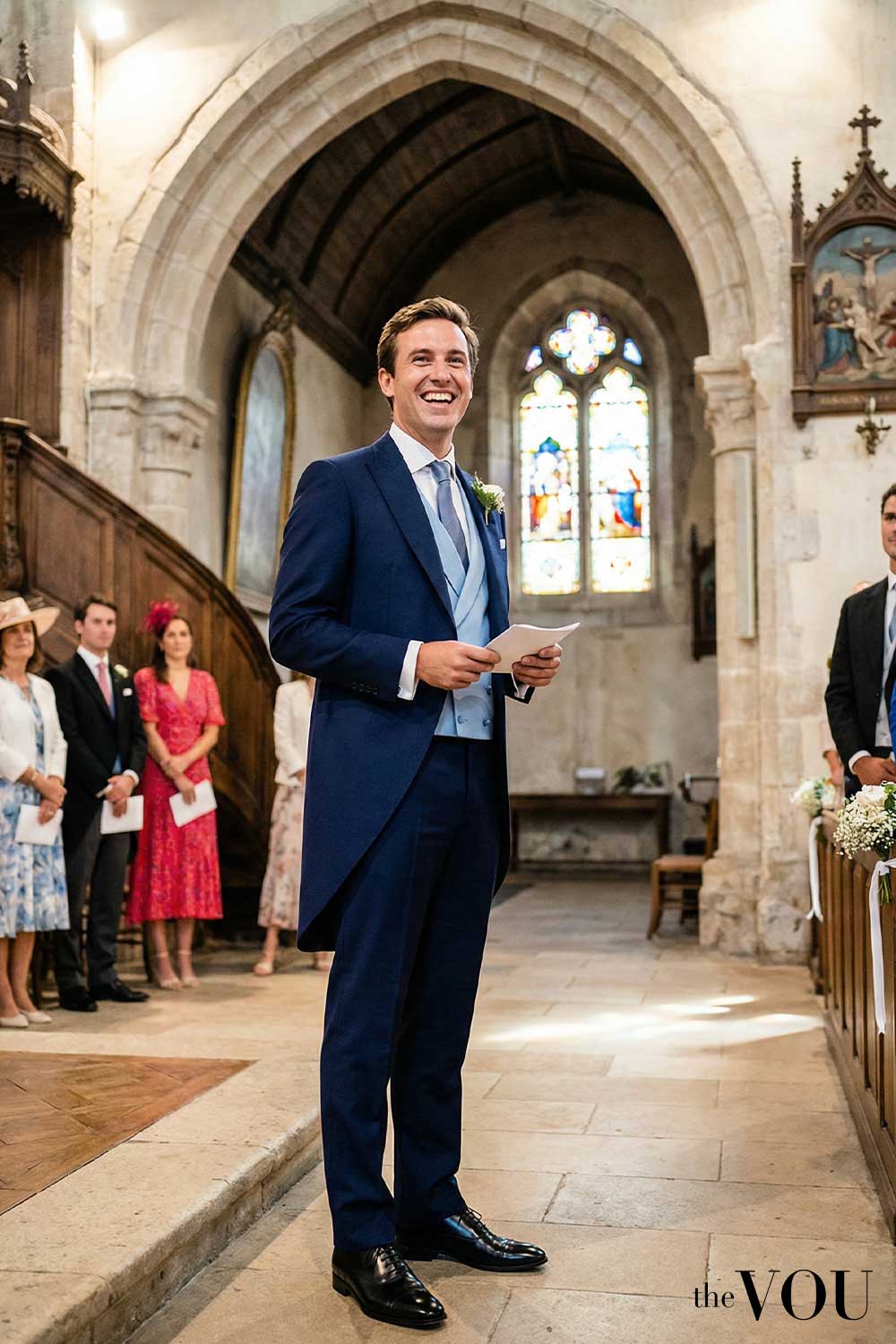
In Britain, formal daytime weddings often call for morning dress: a black or grey morning coat, a waistcoat, grey or striped trousers and a tie.
Debrett’s notes that morning dress should not be specified for an event starting after 6 pm, which is when evening dress takes over.
Cocktail
Cocktail attire balances smart and relaxed.
Men usually wear a suit and tie, and some couples welcome more colour, texture or a patterned jacket, so the invitation and the venue are useful clues.
Semi-formal or dressy casual
Semi-formal means a suit, or a jacket with smart trousers, usually with a tie; dressy casual relaxes this to a blazer, chinos and a button-down or other collared shirt.
Hosts often use semi-formal and cocktail interchangeably, so the invitation wording and the venue are the best guide.
The aim is to look polished without the full formality of a dark suit.
Casual
Casual weddings are often outdoors and relaxed, but jeans, shorts, vests, T-shirts, flip-flops and gym trainers are still best avoided unless the couple says otherwise.
Men can wear chinos or smart trousers with a collared shirt, adding a tie or a sports coat if they like.
Beach, tropical or destination
Hot, humid weddings call for light fabrics and breathable shapes.
A linen or cotton suit, or a light jacket with linen trousers, a light shirt and loafers suits most beach weddings, and for a beach formal wedding The Knot advises assuming a tie unless the invitation says otherwise.
A guayabera, the pleated summer shirt worn outside the trousers across Latin America and the Caribbean, is traditional formal wear in places such as Cuba, Mexico and Puerto Rico and suits many destination weddings there.
Linen creases easily and can be hard to press at remote destinations, so pack it carefully or choose a linen blend.
Festive or themed weddings
Festive dress codes invite colour and personality while keeping the outfit polished.
Men might wear a patterned or textured suit with a bright tie or a colourful pocket square.
Themed weddings ask for clothes that match the couple’s idea, whether that is all-white formal, 1920s-inspired or something else, so follow their brief.
Time of day and season
Evening weddings are usually more formal than daytime ones and suit darker colours and heavier cloths.
Dinner suits are traditionally evening wear, so a daytime formal wedding usually calls for a dark suit or, in Britain, morning dress, unless the couple asks for black tie.
Season affects colour and fabric too.
Spring and summer suit lighter colours such as pale blue, stone and light grey, and light cloths such as tropical-weight wool, linen and seersucker.
Autumn and winter suit deeper colours such as navy, charcoal, brown, burgundy and dark green, and heavier cloths such as flannel and tweed.
Venue and location
The venue gives useful clues: parks, farms, barns and community halls usually suggest a more relaxed wedding, while museums, galleries, ballrooms and smart restaurants suggest something more formal.
For a ceremony in a place of worship, check whether covered shoulders, covered legs or a head covering are expected.
Local traditions vary too, such as cowboy boots at some Texas weddings or preppy blazers in New England, and you can dress in your own style, borrow a local touch or choose a classic outfit that works anywhere.
Wedding outfits for men
For a formal (not black tie) wedding, a well-fitted dark suit is the reliable choice.
Navy and grey are the easiest suit colours for weddings.
Pinstripes read as office wear, and some guests avoid a black lounge suit at a daytime wedding because it can look sombre, so navy or grey is a safer default.
Wear: navy wool suit, white or light blue shirt with a point or semi-spread collar, a silk tie with texture or a small pattern, dark brown or black cap-toe Oxfords and a matching belt.
A white linen pocket square in a simple straight fold is optional; many men prefer a square that complements the tie rather than a matching set.
If you do not own a suit, check the invitation first. A formal wedding still calls for a dark suit, so borrow or hire one. Where the dress code allows separates, such as semi-formal, dressy casual or a daytime beach wedding, a navy blazer with grey or stone trousers, a white or light blue shirt and brown or black leather shoes works well, and brogues or loafers are both acceptable.
For a casual wedding, smart trousers or chinos with a button-down shirt or a smart polo shirt are enough.
Whatever the code, make sure every garment is clean, pressed and comfortable to sit, stand and dance in for several hours.
Dress code dos
Follow the stated dress code, even if it seems unusual.
If you are unsure how formal to go, dress slightly up rather than down; a jacket and tie are easy to remove.
Choose clothes that fit well, allow you to move, and suit the season and venue.
Respect cultural and religious customs, such as covering shoulders, knees or your head where that is expected.
Dress code don’ts
By long-standing convention, guests avoid white, ivory and cream outfits unless the couple asks for them, so the wedding couple stand out; for men this mainly means skipping a white or cream suit.
Do not match the wedding party: if you know the colours the groomsmen or bridesmaids will wear, choose something different.
Avoid very casual clothes such as jeans, T-shirts and flip-flops unless the couple has approved them.
Very loud patterns and attention-seeking outfits can pull focus from the couple, so keep bold choices to one detail, such as a tie or pocket square.
Black is widely accepted at modern weddings, especially in the evening, as long as the outfit looks celebratory rather than sombre.
Layers and weather
Layers help at any wedding: air conditioning can make indoor venues cool, and outdoor receptions often turn chilly in the evening.
A jacket you can take off, a light knit or a packable coat covers most situations.
Check the forecast and plan for rain, wind or heat, and bring a spare shirt if the day is long and warm.
Accessories and finishing touches
Keep accessories simple: a watch, a tie or bow tie that suits the dress code, a pocket square and, if you like, cufflinks.
Choose shoes you can stand and dance in for hours, and break in new shoes before the day.
Matching your belt to your shoes in colour and finish keeps the outfit tidy.
Personal style
Within the dress code, there is room for your own taste: a textured tie, an unusual pocket square or a suit in a colour you love.
Modern weddings vary widely, so read the invitation and the venue and dress accordingly, without feeling you have to follow every convention.
Practical tips
Ask friends who are also attending what they plan to wear; it helps you pitch the level and avoid a clash.
If you already own suitable clothes, wear them rather than buying something new; guests rarely remember what anyone else wore.
Make sure everything is clean, pressed and fits well before the day, because fit and condition make more difference than price.
When in doubt, choose a classic outfit that you can dress up or down with a tie and jacket.
Key takeaway
Dressing for a wedding is a way of showing respect for the couple and their day.
Follow the dress code, avoid white and very casual clothes, and dress for the time, season and venue, and you will be well dressed for almost any wedding.
Sources
The Emily Post Institute, attire guide from casual to white tie and black tie dress code, for white tie, black tie, white dinner jackets and black tie optional.
Debrett’s, events and dress codes (accessed 7 October 2026), for black tie as evening wear, morning dress and lounge suits at weddings.
The Knot, wedding guest attire cheat sheet (updated 8 July 2026) and what to wear to a beach formal wedding (updated 9 February 2026), for formal, cocktail, semi-formal, dressy casual and beach codes.
Wikipedia, Guayabera (accessed 7 October 2026), for the shirt and where it is worn as formal wear.