
Start here
What’s This About
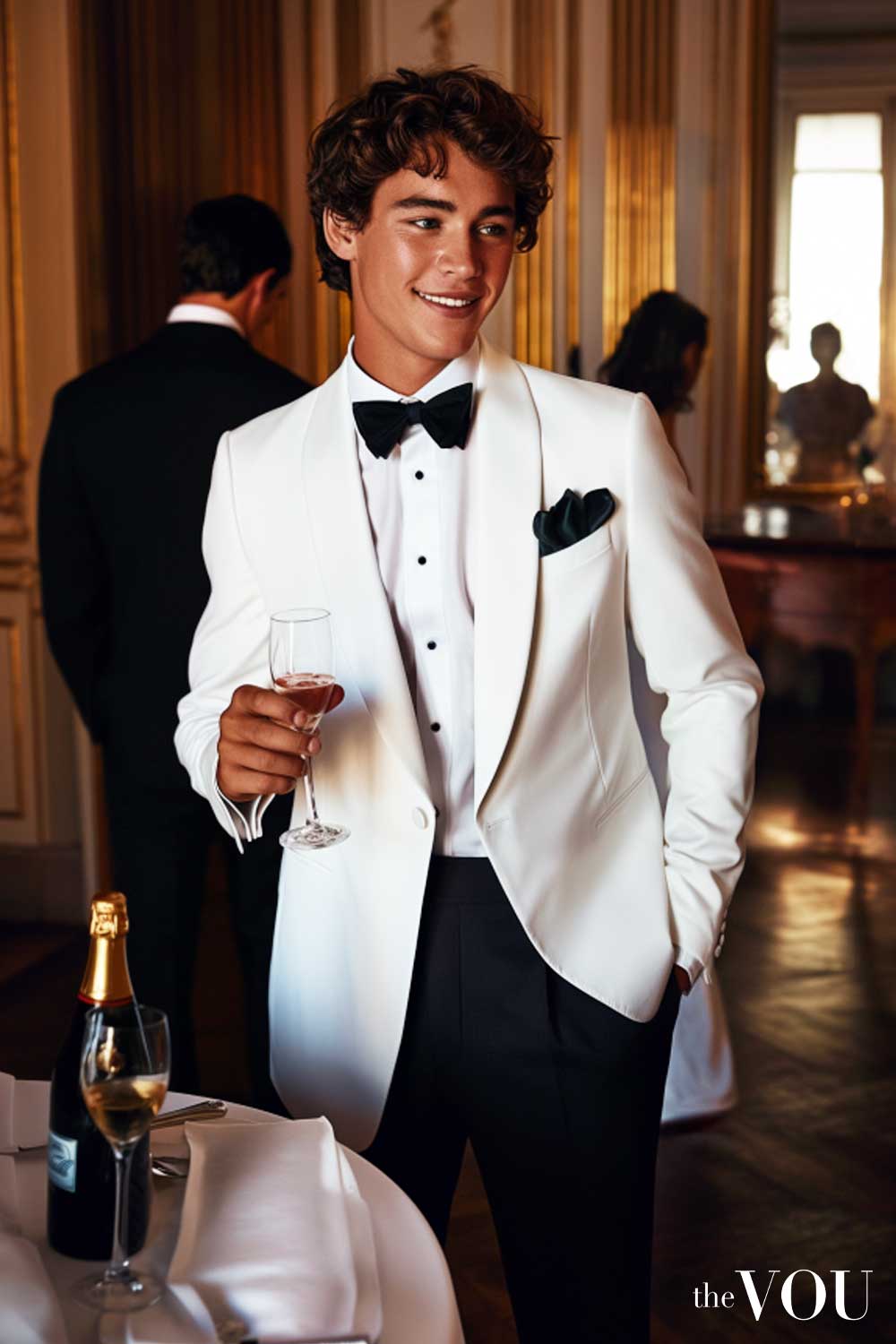
Cocktail attire for men usually means a well-fitting dark suit with a dress shirt and, in most cases, a tie, with a little more room for colour and texture than business dress.
This guide explains what to wear when an invitation says cocktail, such as:
where cocktail attire sits between business dress and black tie
the suit, shirt, tie and shoes that suit the code
fabrics and colours for day and evening events
accessories that add polish without overdoing it
outfit ideas for spring, summer, autumn and winter
and many more!
The invitation and the host decide the level, so check them first and ask if you are unsure.
Key Points
01Cocktail attire sits between business or smart casual dress and black tie; a dark suit is the dependable choice.
02A tie is usual, though some hosts and venues are happy for guests to go without; Debrett’s notes that guests can drop the dinner jacket and bow tie in favour of smart lounge suits or velvet jackets.
03Navy, charcoal and other dark colours are safest in the evening, while lighter greys and blues work for daytime events.
04Polished leather shoes, a simple watch and a pocket square that complements the tie complete the look.
Cocktail attire is one of the most common dress codes on invitations to evening receptions, parties, weddings and corporate events.
It asks for more polish than smart casual but less formality than black tie, which leaves room for personal choices in colour and texture.
Where Cocktail Attire Sits
The code takes its name from the cocktail party; a RISD Museum exhibition guide on American cocktail culture dates the cocktail party to around 1920, when it created a demand for fashion distinct from both formal evening attire and day wear.
Today it usually means a suit for men, and modern guides treat it as close to semi-formal.
Scroll horizontally to see all columns →
| Dress code | What it usually means for men |
|---|---|
| Smart casual | Jacket or knitwear, collared shirt, chinos or tailored trousers |
| Business formal | Dark business suit, dress shirt, conservative tie |
| Cocktail | Dark suit, dress shirt, usually a tie; more room for colour, texture or a velvet jacket in the evening |
| Black tie optional | Dinner jacket preferred, dark suit and tie acceptable |
| Black tie | Dinner jacket, dress shirt, black bow tie |
Debrett’s describes cocktail dress as a code where men can discard dinner jackets and bow ties and choose smart lounge suits, velvet jackets or Nehru jackets instead.
For neighbouring codes, see our guides to semi-formal attire, black tie optional and black tie.
Cocktail Attire Essentials
Scroll horizontally to see all columns →
| Garment | What to choose |
|---|---|
| Suit | Single-breasted two-button suit in navy or charcoal; a velvet or textured jacket with dark trousers for some evening parties |
| Shirt | White or light blue dress shirt with a collar that sits well under a tie |
| Tie | Silk tie in a solid colour, grenadine or quiet pattern; optional if the host says so |
| Shoes | Black Oxfords for evening, dark brown leather Oxfords, Derbies or loafers for daytime |
| Accessories | Pocket square, simple watch, cufflinks if your shirt has French cuffs, belt matching your shoes |
The suit sets the level, so choose one that fits well through the shoulders and chest and has trousers that sit neatly on your shoes.
A tie is the easiest way to show you have made an effort; if you leave it off, keep the shirt collar crisp and the rest of the outfit sharp.
Polished leather shoes are expected, and our dress shoes styling guide explains the main styles.
Fabrics
Wool suits hold their shape and suit most cocktail events; a wool and mohair or wool and silk blend has a little sheen that looks good in the evening.
For hot weather, lighter wool, cotton or linen blends keep you cooler, though linen creases more and reads as more relaxed.
Cotton poplin and twill shirts look crisp under a tie, and silk ties, including grenadines and fine knits, suit the code throughout the year.
Colours
Scroll horizontally to see all columns →
| Garment | Classic choices | More personal choices |
|---|---|---|
| Suit | Navy, charcoal, black | Deep green, burgundy or brown, especially in velvet or textured cloth for evening |
| Shirt | White, light blue | Pale pink, ecru |
| Tie | Burgundy, navy, dark green | Warmer or brighter colours that suit the suit and occasion |
| Pocket square | White, cream | Muted patterns that complement the tie |
Dark suits with a light shirt are the most dependable combination, and one stronger colour, usually in the tie or pocket square, adds interest without overwhelming the outfit.
Accessories
Pocket square: silk for evening, linen or cotton for daytime, complementing rather than matching the tie; see our guide on when to wear a pocket square
Watch: a simple watch on a leather strap or metal bracelet
Cufflinks: plain metal, mother-of-pearl or onyx for French cuffs; avoid novelty designs at formal parties
Tie bar: optional; keep it narrower than the tie
Belt: leather, matching your shoes, with a plain buckle
Cocktail Attire Ideas by Season
Spring
A light grey wool suit with a white poplin shirt, a soft green or blue silk tie, brown suede loafers and a cream linen pocket square suits garden parties and daytime weddings.
Summer
A navy suit in a lightweight wool or cotton and linen blend, a pale blue shirt, a knitted silk tie and brown leather loafers keep you cool at summer evening events.
Autumn
An olive or brown flannel suit with an ecru shirt, a burgundy grenadine tie and dark brown brogues suits harvest-season parties and evening receptions.
Winter
A charcoal suit, a white shirt, a deep purple or burgundy silk tie and black cap-toe Oxfords suit holiday parties; for a festive evening, a dark velvet jacket with charcoal trousers is an alternative if the host is relaxed about it.
Fit
Whatever your build, fit matters more than any particular cut.
The jacket should sit cleanly on your shoulders and close without pulling, the sleeves should let a little shirt cuff show, and the trousers should fall neatly onto your shoes.
A tailor can shorten sleeves and hems or adjust the waist if needed.
Cocktail Attire Dos and Don’ts
Scroll horizontally to see all columns →
| Do | Don’t |
|---|---|
| Check the invitation, venue and time | Ignore a dress code the host has given |
| Wear a well-fitting suit in a dark or mid-tone colour | Wear baggy, tight or creased clothes |
| Wear polished leather shoes | Wear trainers or sandals unless the host says the event is casual |
| Choose accessories that complement the outfit | Pile on several bold accessories at once |
| Adjust for daytime or outdoor events with lighter colours and cloths | Wear a dinner jacket unless the invitation suggests black tie |
Mandy Meyer’s focus at The VOU is men’s body-shape styling, garment fit and outfit proportions. Her coverage addresses the practical questions behind a wardrobe choice: how a jacket sits across the shoulders, how trousers fall and how different cuts change the silhouette a wearer wants to create.
Her subject areas include the triangle, inverted triangle, rectangle, oval, trapezoid, hourglass and diamond labels used in body-shape styling. These provide starting references for comparing visible proportions; they do not capture every body or prescribe one correct way to dress. The focus connects those observations with garment shape, construction, length and the relationship between the upper and lower parts of an outfit.
Mandy’s editorial coverage combines visual comparisons with fit checks for comfort and movement. Readers can consider whether a cut gives them the room they need, where clothing pulls or gathers and which changes might support their preferred look. The aim is to make menswear choices more understandable while keeping personal preferences and the wearer’s own styling goals central.