
Start here
What’s This About
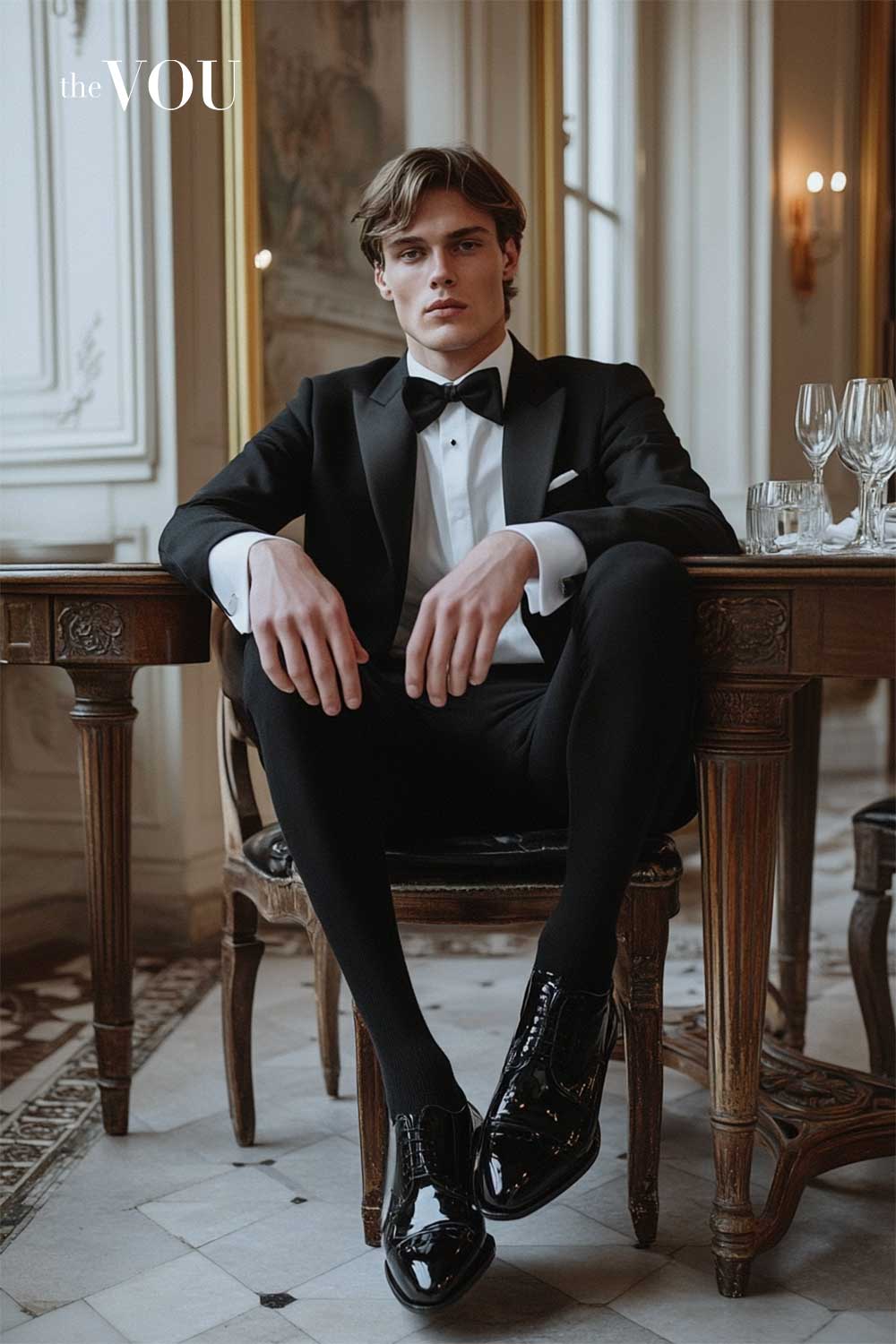
Black tie means a dinner jacket (tuxedo) with matching trousers, a white dress shirt, a black bow tie and black formal shoes, worn to evening events.
This guide explains every garment in plain terms, such as:
when black tie is worn and how it differs from white tie and black tie optional
the dinner jacket, trousers and shirt
the waistcoat or cummerbund and the bow tie
shoes, socks, studs, cufflinks and coats
summer, winter and creative variations, and whether to buy or hire
and many more!
Follow the invitation, and if it says black tie, plan on a dinner jacket rather than a business suit.
Key Points
01Black tie is evening dress, traditionally for events starting after 6 pm, and is one step less formal than white tie.
02The core outfit is a black or midnight blue dinner jacket with silk-faced lapels, matching trousers with a single stripe, a white dress shirt and a black bow tie.
03Black remains the traditional dinner jacket colour and is always correct for black tie.
04A low-cut waistcoat or a cummerbund covers the waist, and black patent or highly polished plain black shoes finish the outfit.
05A well-fitting hired or ready-to-wear dinner suit is entirely acceptable; fit matters more than price.
Black tie is the most common formal dress code for evening events, yet many men are unsure exactly what it requires.
This guide sets out each garment simply, so you can buy, hire or check your outfit with confidence.
Where Black Tie Comes From
The dinner jacket developed in the late 19th century as a less formal alternative to the evening tailcoat, and the American name “tuxedo” comes from Tuxedo Park in New York, where the style became popular around 1886, according to the history of black tie.
In Britain it is called a dinner jacket or DJ; in the United States, a tuxedo or tux.
Black tie sits below white tie, which remains the most formal evening dress code and is now worn mainly at state, royal and a few traditional occasions; see our white tie guide.
When to Wear Black Tie
Black tie is traditionally worn only for events in the evening, usually after 6 pm.
Typical occasions include:
Formal evening weddings, when the invitation says so
Gala dinners and charity balls
Opening nights at the opera or theatre
Awards ceremonies
Formal club, corporate and holiday dinners
When an invitation says “black tie”, the host expects a dinner jacket; if you cannot buy or hire one, ask the host rather than assuming a business suit will pass.
When it says “black tie optional”, a dark suit with a white shirt and conservative tie is also acceptable; see our guide to black tie optional.
The Dinner Jacket
Scroll horizontally to see all columns →
| Detail | What to look for |
|---|---|
| Colour | Black or midnight blue; ivory or white in hot weather |
| Lapels | Peak lapels or a shawl collar are traditional; notch lapels are common but less formal |
| Facings | Satin or grosgrain silk on the lapels, often also on the buttons and pocket trim |
| Fastening | Single-breasted with one button, or double-breasted |
| Pockets | Jetted pockets without flaps |
| Vents | No vents is traditional; side vents are common in modern tailoring |
Black remains the traditional dinner jacket colour and is always correct for black tie.
Debrett’s describes a black wool single-breasted dinner jacket with no vents, silk peaked lapels or a shawl collar, and covered buttons.
Midnight blue, a very dark blue often credited to the Duke of Windsor’s influence, is a long-established alternative to black and is worn with the same black accessories.
The Trousers
Cloth and colour matching the jacket
A single silk or satin stripe down each outer seam
No turn-ups
Braces rather than a belt, with no belt loops
A rise high enough that the waistband stays hidden under the waistcoat or cummerbund
If the trousers sit too low, the shirt can show between the waistband and the waist covering, so check this in a mirror before the event.
The Shirt
Choose a white dress shirt with a pleated or marcella (piqué) bib front, double cuffs for cufflinks and, ideally, a front made for shirt studs.
A turndown collar is the standard for black tie; the wing collar is traditionally worn with white tie.
Debrett’s also allows a cream shirt, but white is the most common and safest choice.
Waistcoat or Cummerbund
The Cummerbund
A pleated black silk sash that matches the bow tie and lapel facings, worn with the pleats facing up.
It suits single-breasted jackets and is cooler than a waistcoat in warm rooms.
The Evening Waistcoat
A low-cut, U-shaped black waistcoat with a silk or matching back, which looks smart with single-breasted jackets and is not needed under a buttoned double-breasted jacket.
Wear a waistcoat or a cummerbund, never both.
The Bow Tie
Wear a black silk bow tie in satin or grosgrain, ideally matching your lapel facings.
A self-tied bow tie is traditional, and Debrett’s advises learning to tie your own; a good pre-tied one is a common compromise if you cannot, so practise before the day if you want to learn.
Butterfly and batwing shapes are both correct, so choose the one that suits the width of your collar.
Shoes and Socks
Black patent leather Oxfords, the classic choice
Plain, highly polished black calf Oxford shoes without broguing; see the difference between Derby and Oxford shoes
Patent opera pumps with grosgrain bows for the most traditional events
Velvet slippers only at private or relaxed events where the host is happy with them
Shoes should be black, and socks should be fine black dress socks long enough to cover your shins when you sit; our men’s hosiery guide explains sock lengths and fabrics.
Accessories
Shirt Studs and Cufflinks
Matching studs and cufflinks in mother-of-pearl, onyx, gold or silver look the most considered; simple silk knots are an alternative for cufflinks.
Pocket Square
A white linen or silk pocket square in a straight or single-point fold is the traditional choice.
Watch
Strict etiquette avoids a wristwatch with evening dress, but a slim, simple dress watch on a black strap is widely accepted today; leave large sports watches at home.
Outerwear
A dark wool or cashmere overcoat long enough to cover the dinner jacket, such as a Chesterfield, is the classic choice, with a white silk scarf, dark leather gloves and a full-length black umbrella in bad weather.
The top hat belongs to white tie, so most men wear no hat with black tie today.
Black Tie by Season
Summer
In hot weather, in the tropics or on a cruise, Emily Post notes that a white dinner jacket with black dinner-suit trousers is accepted; ivory or cream jackets in a lightweight wool or mohair blend are common, and a cummerbund is cooler than a waistcoat.
Winter
In cold weather, a heavier wool dinner suit and an evening waistcoat add warmth, and a black or midnight blue velvet dinner jacket is a traditional choice for winter evenings indoors.
Creative Black Tie
When an invitation says “creative black tie”, Emily Post describes a tuxedo combined with more personal touches, such as a coloured or patterned bow tie.
A velvet jacket in burgundy or bottle green, a subtly patterned waistcoat or more colourful studs all work, provided the dinner jacket structure stays intact.
Buying or Hiring
Scroll horizontally to see all columns →
| Option | When it makes sense | What to check |
|---|---|---|
| Hire | You attend black tie rarely | Book early, try it on and ask for sleeve and hem adjustments |
| Ready-to-wear | You attend a few events a year | Pure wool or a wool blend, with alterations for a clean fit |
| Made-to-measure or bespoke | You wear black tie often or have a hard-to-fit build | Allow several weeks and more than one fitting |
Whichever route you choose, the jacket should sit cleanly on your shoulders, the sleeves should show a little shirt cuff, and the trousers should fall neatly onto your shoes.
Take the First Step With The VOU’s Styling Quizzes
If you would like to go further with your own style, start with our quizzes.
Check your face shape with our face shape quiz, find your colours with our seasonal colour quiz, check your proportions with our body shape quiz and find your style with our fashion style quiz.
Personal Styling With The VOU
Our styling services for men are paid consultations; the shop page lists what each one includes.
You can also read about The VOU’s image consultants and stylists.