
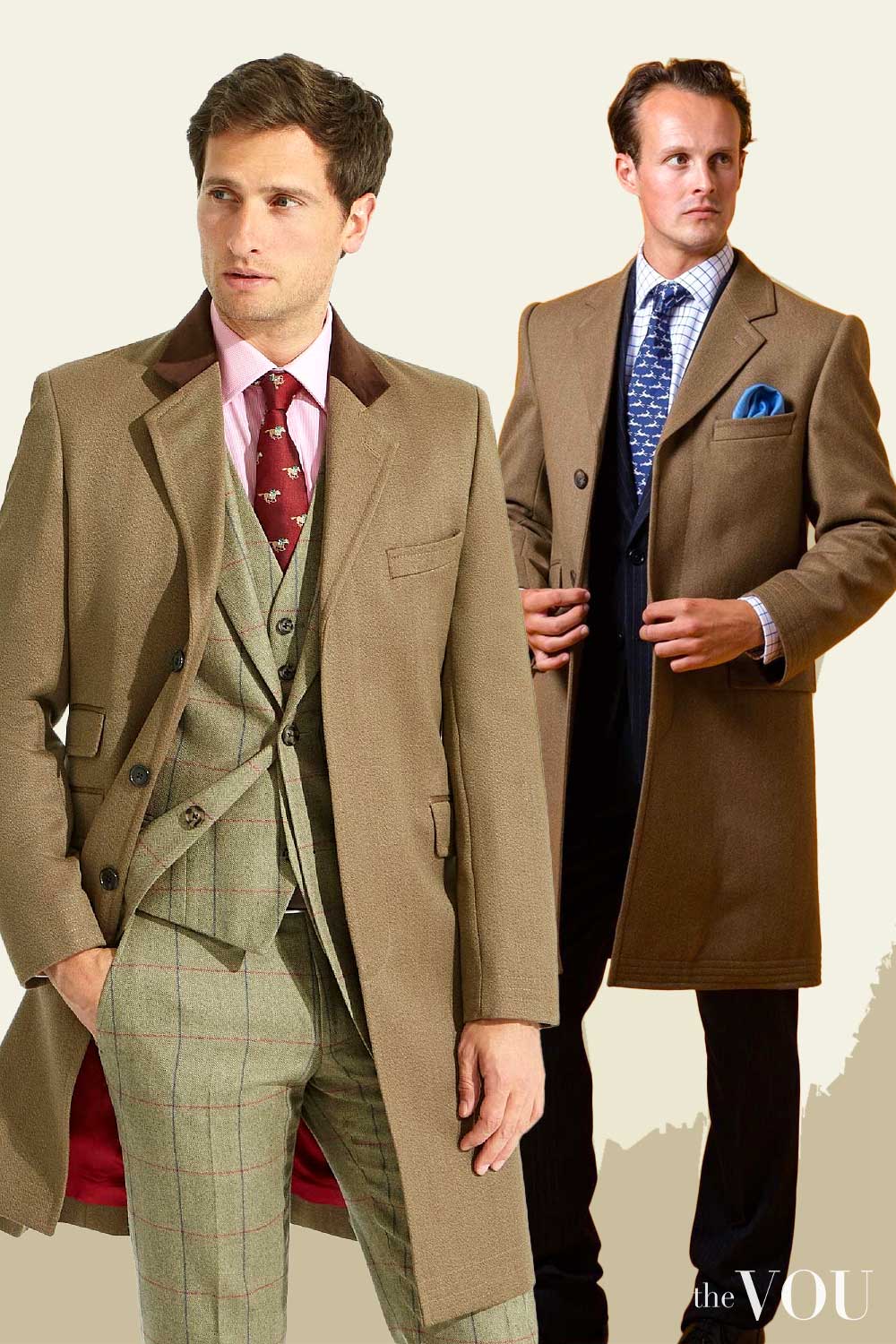
The Covert coat – or Crombie coat – originated during 19th-century horseback hunting activities to become a versatile topcoat that has transcended its sporting origins to become a symbol of understated British elegance.
Mastering the Covert coat is essential to projecting an image of sartorial knowledge, appreciation for heritage, and a subtle air of adventure.
The Covert coat’s unique position in menswear lies in its ability to bridge the gap between formal and casual, urban and rural.
The coat’s distinctive features – from the signature four rows of stitching to the enigmatic poacher’s pocket – speak to a rich history while remaining remarkably relevant in today’s diverse fashion landscape.
Covert Coat History and Rich Heritage
The Covert Coat’s story begins in the late 19th century, and it is rooted firmly in the British tradition of equestrian sports and country pursuits.
Originally designed for horseback riding and hunting, the coat comes from ‘covert’ – a thicket providing cover for game, which served as a typical starting point for hunts.
Covert Coat’s key milestones:
1890s: Featuring a length of about 34 inches – much shorter than other overcoats of the era – the Covert Coat gained widespread popularity among gentlemen as a staple in every elegant wardrobe.
1893: The coat evolved to a more fitted cut – just 3 inches longer than the lounge coat worn beneath – and a single-breasted, fly-front design with four pockets.
1897: A variation with Raglan sleeves appeared in London, though the style didn’t gain lasting popularity.
Early 20th century: The Covert Coat’s popularity waned as more functional post-WW 2 fashion styles emerged.
1950s: A resurgence in popularity sees the addition of a flapped chest pocket, cementing the coat’s modern design.
Throughout its history, the Covert Coat has maintained its core characteristics: a single-breasted, fly-front design, notched lapels, and the signature four lines of stitching at the cuffs and hem.
These features, born of practical necessity for withstanding the rigours of hunting, have become defining elements of the coat’s aesthetic appeal.
The Covert Coat’s journey from specialised sporting wear to urban fashion staples mirrors broader trends in menswear, where rugged, functional designs are adapted and refined for city life.
Nowadays, the Covert Coat stands as a testament to the enduring appeal of clothing that balances form and function, heritage, tradition and modernity.
Covert Coat Features
The Covert Coat is instantly recognisable thanks to several unique features that set it apart from other topcoats:
Signature Stitching
Perhaps the most distinctive feature of the Covert Coat is the four (sometimes five) rows of stitching at the cuffs and hem.
The stitching, often in a contrasting colour, is not merely decorative.
Legend has it that this reinforcement was designed to prevent the cloth from fraying when riding through brambles or jumping over hedges.
Covert Cloth
The coat is traditionally made from Covert cloth, a tightly woven twill fabric.
Originally quite heavy (up to 30 ounces per yard), modern versions typically weigh around 14 ounces per yard.
The cloth’s durability and weather resistance stem from its equestrian origins.
Covert Colour
The term “Covert” also refers to the coat’s distinctive colour palette, which ranges from light greenish-tan brown to a fawnish mix to deep tannish-green.
The colour range was chosen because it conceals dirt and wear, making it practical for country pursuits.
Coat Length
The Covert Coat is shorter than most overcoats, typically falling below the knee. The length is practical for horseback riding while providing adequate protection.
Poacher’s Pocket
A unique feature is the large “poacher’s pocket” located in the thigh area.
Initially designed for carrying game, the deep pocket has become a practical feature for modern urban life, easily accommodating newspapers or tablets.
Fly Front
The coat features a fly front, where the buttons are concealed beneath a placket, contributing to its clean, streamlined appearance.
Collars
The collar is typically constructed of either Covert cloth or velvet, adding a touch of luxury to the otherwise rugged coat.
Pockets
In addition to the poacher’s pocket, the coat features two flap pockets and often a ticket pocket. A flapped chest pocket was added in the 1950s revival.
Centre Vent
A centre vent at the back allows for ease of movement, particularly when sitting or riding.
These unique features combine to blend rugged practicality with refined elegance, creating a functional and stylish coat that is equally at home in the countryside or the city.
Covert vs. Chesterfield vs. Trench Coat
While the Covert Coat shares some characteristics with the Chesterfield overcoat and the trench coat, its unique combination of features sets it apart:
Scroll horizontally to see all columns →
| Feature | Covert Coat | Chesterfield | Trench Coat |
|---|---|---|---|
| Origin | Equestrian/Hunting | Urban Formal Wear | Military |
| Length | Mid-thigh to knee | Knee-length | Below knee to mid-calf |
| Fabric | Covert cloth (tightly woven twill) | Various wool fabrics | Gabardine or cotton drill |
| Colour | Fawn, tan, or greenish-brown | Often dark (black, navy, charcoal) | Mostly khaki or beige |
| Distinctive Features | Four rows of stitching on cuffs and hem | Velvet collar common | Belt, epaulettes, storm flaps |
Fabric and Colour
The Covert Coat’s distinctive cloth and colour palette are perhaps its most defining features.
Unlike the dark, formal tones of a Chesterfield or the light, military-inspired khaki of a trench coat, the Covert Coat’s fawn to greenish brown hues speak to its countryside origins.
The tightly woven twill fabric, known as Covert cloth, offers durability and weather resistance not typically found in city coats.
Length and Fit
The Covert Coat is shorter than the Chesterfield and the trench coat, reflecting its equestrian heritage.
This shorter length allows for ease of movement, whether on horseback or navigating busy city streets.
While not as fitted as a Chesterfield, it’s more structured than a trench coat.
Details
The signature four rows of stitching on the cuffs and hem are unique to the Covert Coat, serving both functional and aesthetic purposes.
The fly front (concealed buttons) is shared with the Chesterfield but differs from the trench coat’s visible button closure.
The Covert Coat’s velvet collar option bridges the gap between country and city styles.
Pockets
The Covert Coat’s unique “poacher’s pocket” – a large, deep inside pocket sets it apart from the Chesterfield and trench coat.
This feature and the flapped outer pockets speak to the coat’s practical, sporting origins.
Versatility
The Chesterfield is primarily a formal coat, and the trench coat spans casual to formal wear; the Covert Coat occupies a unique middle ground.
It’s equally at home in the countryside or the city over tweeds or business suits, offering a level of versatility that few other coats can match.
Heritage
Each coat has a unique heritage – the Chesterfield’s urban sophistication, the trench coat’s military background, and the Covert Coat’s sporting pedigree.
The Covert Coat’s ability to bring a touch of the British countryside to any ensemble is unmatched by its counterparts.
When to Wear the Covert Coat – Season Tips
Understanding when to wear the Covert Coat is key to maximising its potential in your wardrobe.
While traditionally associated with autumn and winter, the coat’s versatility allows for broader application across the changing seasons.
Scroll horizontally to see all columns →
| Season | Suitability | Styling Considerations |
|---|---|---|
| Autumn | Excellent | Prime season for the Covert Coat. Perfect for layering over suits or knitwear. |
| Winter | Very Good | Ideal for milder winter days. Layer with heavier knits for colder temperatures. |
| Spring | Good | Suitable for cool mornings and evenings. It can be worn open over lighter layers. |
| Summer | Limited | Generally too warm, but can be draped over shoulders on cool evenings in temperate climates. |
Autumn: Covert Coat’s Prime Season
Autumn is undoubtedly the Covert Coat’s time to shine.
The coat’s medium-weight and durable fabric provides excellent protection against brisk winds and occasional showers.
During this season, the coat can be fully buttoned for cooler days or worn open over a sports jacket or chunky sweater for a more relaxed look.
The coat’s traditional colours complement the autumnal palette beautifully, making it a natural choice for everything from country walks to city commutes.
Winter: Layered Warmth
While not as heavy as some winter coats, the Covert Coat performs admirably in milder winter conditions.
Its tightly woven fabric provides good insulation, especially when layered over a suit or heavy knitwear.
For colder days, consider pairing it with a scarf and gloves.
The coat’s shorter length compared to traditional overcoats makes it particularly suitable for urban environments, allowing for ease of movement in and out of cars or on public transport.
Spring: Ready for Changing Weather
The Covert Coat comes into its own during the unpredictable weather of spring. Its versatility shines as temperatures fluctuate.
You can wear it unbuttoned over a light sweater and shirt on warmer days or fully fastened for chillier mornings and evenings.
The coat’s water-resistant properties make it ideal for spring showers, and its weight will not overwhelm you as the day warms up.
Summer: For Strategic Use
Summer is generally too warm for the Covert Coat, but the coat can serve as a stylish layer in cooler regions or during unseasonably chilly summer evenings.
In such instances, the coat is best worn draped over the shoulders rather than fully on, adding a touch of sophisticated nonchalance to summer evening wear.
This approach works particularly well for outdoor events or al fresco dining in cooler coastal areas.
By adapting how you wear and style the coat according to the season, you can extend its use beyond the traditional autumn months, making it a year-round investment piece.
Remember, the key to mastering seasonal wear is to pay attention to layering techniques and local climate conditions to ensure you’re always appropriately and stylishly attired.
Covert Coat Buying Tips
Selecting the right Covert Coat is an investment in both style and practicality. Here are key factors to consider when choosing this timeless garment:
Fabric
The hallmark of a superior Covert Coat lies in its fabric.
Traditionally, these coats are crafted from Covert cloth, a tightly woven twill known for its durability and weather resistance. When examining the fabric, consider:
- Weight: Traditional Covert cloth was extremely heavy, up to 30 ounces per yard. Modern versions are typically lighter, around 14-18 ounces per yard, offering a balance of warmth and wearability.
- Composition: Look for 100% wool or high wool content blends. Some modern versions might include a small percentage of synthetic fibres for added durability.
- Texture: The fabric should have a smooth, dense hand feel with a slight sheen.
- Colour: Traditional Covert cloth comes in fawn, tan, or greenish-brown hues. While other colours are available, these classic shades offer the most versatility.
Construction
A well-made Covert Coat should exhibit impeccable construction. Pay attention to these details:
- Stitching: The signature four rows of stitching on cuffs and hems should be even and neat.
- Buttons: Opt for high-quality horn or corozo buttons that are securely fastened.
- Buttonholes: Look for neatly sewn, reinforced buttonholes that withstand frequent use.
- Lining: A smooth, well-attached lining in a complementary colour adds to the coat’s longevity and ease of wear.
- Pockets: Ensure all pockets, including the signature poacher’s pocket, are securely attached and properly lined.
Fit and Proportion
The Covert Coat should offer a comfortable, slightly roomy fit to accommodate layering:
Shoulders should allow for movement without restriction.
Sleeves should end at the base of your thumb when arms are at your sides.
The length typically falls between mid-thigh and just above the knee.
Ensure the coat closes comfortably when buttoned without pulling across the chest or at the buttons.
Recommended Brand
While not the sole indicator of quality, certain brands and regions are renowned for their Covert Coats:
- British Heritage Brands – Labels like Cordings, Lock & Co., and Crombie offer Covert Coats steeped in tradition.
- Savile Row Tailors – For bespoke Covert coats, approach renowned tailors like Huntsman or Henry Poole.
- Contemporary Luxury Brands – Burberry and Aquascutum offer modern interpretations of the classic Covert Coat.
Covert Coat Do’s and Don’ts
To truly excel in wearing the Covert Coat, consider these crucial do’s and don’ts:
Do
Embrace the coat’s versatility. Wear it over casual and formal attire in both country and city settings.
Pay attention to the fit. Ensure the coat allows for comfortable layering without appearing bulky.
Wear traditional colours. Fawn, tan, and greenish-brown hues offer timeless elegance and versatility.
Use the poacher’s pocket. This unique feature is perfect for storing gloves, newspapers, or tablets.
Coordinate with traditional British garments. Pair with tweeds, tattersall shirts, or fine woollens for an authentic countryside or Sloane Ranger look.
Consider the occasion. The Covert Coat bridges formal and casual, making it suitable for various events.
Don’t
Don’t wear it in extremely formal settings. While versatile, the Covert Coat is not a substitute for a formal overcoat at black-tie events.
Don’t ignore the seasonal appropriateness. The Covert Coat is best suited for autumn and mild winter days; it may be too warm for summer use.
Don’t forget to unfasten the vent when sitting. This will prevent creasing and ensure comfort.
Don’t pair it with casual or sporty attire. While versatile, the Covert Coat’s elegance can clash with trainers or sweatpants.
Don’t forget to accessorise. A carefully chosen scarf or leather gloves can beautifully complement the coat.
Conclusion
The Covert Coat is a testament to classic menswear’s enduring power.
From its origins in the British countryside to its current status as a versatile staple of the well-dressed gentleman’s wardrobe, this garment has proven its worth across more than a century of changing fashion trends.
Throughout this guide, we’ve explored the rich history of the Covert Coat, its distinguishing features, and how it compares to other classic overcoats.
We’ve delved into its seasonal suitability, providing you with the knowledge to wear this coat confidently throughout the year.
The styling ideas presented offer a glimpse into the coat’s versatility, showcasing how it can elevate your look across various occasions, from casual weekend outings to more formal events.
We’ve also equipped you with the essential knowledge to invest wisely in a Covert Coat, understanding the nuances of fabric, construction, and fit that separate a good coat from a great one.
The do’s and don’ts serve as a quick reference to ensure you’re always wearing your Covert Coat with confidence and style.
In an era of fast fashion and fleeting trends, the Covert Coat represents something more: a commitment to timeless style, quality craftsmanship, and sartorial knowledge.
By incorporating this classic piece into your wardrobe, you’re not just buying a coat; you’re investing in a legacy of British style that will serve you well for years to come.
Wearing a Covert Coat is about making a statement, showcasing your understanding of menswear history, and presenting yourself with a refined elegance that blends the metropolitan buzz with a relaxed countryside lifestyle.
Whether you’re striding through city streets, attending a countryside event, or simply enjoying a brisk autumn walk, the Covert Coat ensures you do so with unparalleled style.
Embrace the versatility, respect the history, and enjoy the timeless elegance of the Covert Coat.
In doing so, you’re not just following a fashion trend – you’re participating in a tradition of style that has stood the test of time and continues to define sophisticated menswear in the modern era.
Lawrence Anderson’s focus at The VOU is old-money style, British heritage menswear and the wider strategy behind a man’s wardrobe. His coverage addresses readers who want a composed, consistent style but need practical guidance on where to begin, what to keep and which pieces deserve a place in their wardrobe.
His subject areas connect classic tailoring, knitwear, footwear and accessories with the proportions and formality of a complete outfit. British countryside clothing, preppy dressing and Ivy-inspired references provide context for understanding different versions of the look. The emphasis is on recognising the relevant details and adapting them to the wearer’s life, rather than treating an aesthetic as a requirement to buy particular labels.
Lawrence’s editorial coverage brings wardrobe planning back to the reader’s needs: everyday clothing, professional presentation, occasion dressing and a workable budget. It considers existing pieces, outfit coordination and repeat use, giving men a basis for building personal style over time. A coherent wardrobe should reflect the person wearing it and the situations they actually need to dress for.
Raf Adams’s focus at The VOU is luxury menswear, brand analysis and quiet-luxury styling. His coverage addresses men who want to understand the difference between a recognisable label, a documented garment feature and a buying choice that makes sense for their wardrobe.
His subject areas include materials, construction details, brand positioning and the understated clothing references associated with quiet luxury. This focus examines what can be established from product information and what remains a matter of appearance or preference. Price and reputation provide context, but neither replaces attention to fit, intended use and the details of the item being considered.
Raf’s editorial coverage connects those comparisons with complete outfits and repeat wear. Readers exploring premium clothing can consider how a purchase works with existing pieces, which features matter to them and whether a less conspicuous look suits their needs. The aim is to make luxury menswear easier to assess without turning a brand name into a promise of quality or personal style.