
Start here
What’s This About
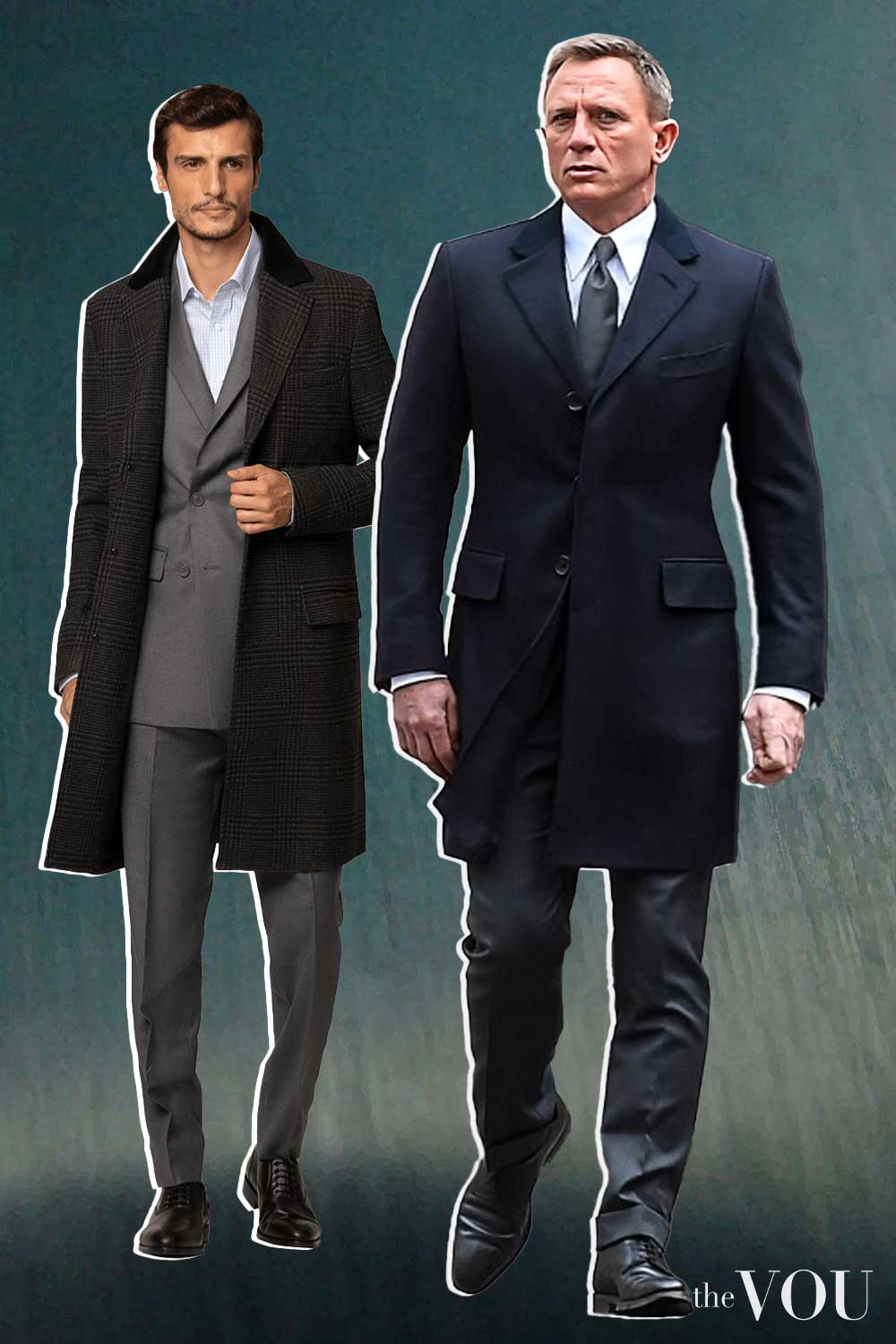
A Chesterfield is a knee-length tailored overcoat, usually single-breasted and often with a velvet collar, that sits neatly over a suit.
This guide covers how to choose and wear a Chesterfield overcoat, such as:
The features that define a Chesterfield, from the fly front to the velvet collar
How the shoulders, sleeves and length should fit over a suit jacket
Where the name comes from and which Earl of Chesterfield it honours
Outfits for a business meeting, a black tie evening and a weekend
Do’s and don’ts for shoes, gloves, scarves and care
and many more!
Choose the colour and length you like; the fit over your jacket matters more than the label.
Key Points
01Try a Chesterfield on over the thickest jacket you plan to wear under it.
02Charcoal, navy, grey and camel go with the most outfits.
03The coat is named after George Stanhope, 6th Earl of Chesterfield, and dates from the 1840s.
04Lace-ups suit a formal city Chesterfield, while tweed and camel versions also work with suede shoes and loafers.
A Chesterfield is a knee-length tailored overcoat, usually single-breasted with a straight, lightly shaped body and often a velvet collar.
It sits neatly over a suit or a jacket, so it is one of the easiest coats to wear for work, evening events and smart weekends.
This guide explains the features that define a Chesterfield, how it should fit, where the name comes from, and how to wear one for five different occasions.
Chesterfield overcoat key features
The basic shape of the Chesterfield has stayed recognisable since the 19th century, while details such as the pockets and the collar vary from maker to maker.
Many modern Chesterfields leave out the velvet collar, and some are double-breasted.
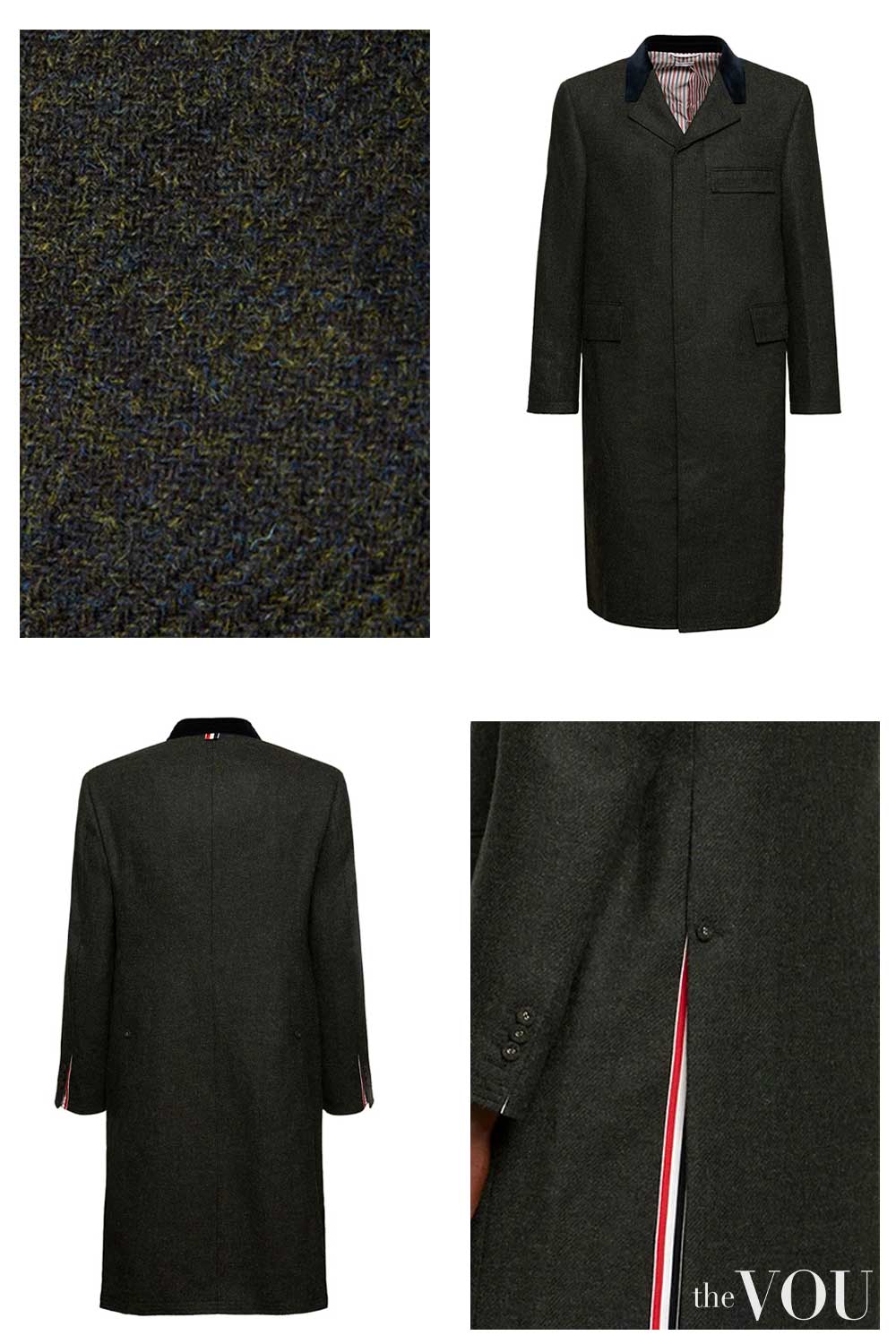
Cloth: wool, often blended with cashmere; heavier tweeds and herringbones are also traditional.
Colours and patterns: charcoal, navy, black, grey and camel are the most common, with herringbone, tweed and darker greens or browns as less formal options.
Length: traditionally around the knee, from just above it to a little below it.
Shape: a straight body with light shaping at the waist, cut without the waist seam of earlier body coats.
Shoulders: lightly structured, with enough room to wear a jacket underneath.
Lapels: usually notch lapels on single-breasted coats and peak lapels on double-breasted ones.
Collar: often faced in velvet, usually black or a darker shade of the coat colour.
Fastening: usually single-breasted with three or four buttons, often hidden behind a fly front.
Pockets: flap or jetted side pockets, sometimes with a ticket pocket and a breast pocket.
Back: a single vent.
How a Chesterfield should fit
Try the coat on over the thickest jacket or knitwear you plan to wear under it.
Shoulders: the shoulder seam should sit at or just beyond the edge of your shoulder, so the coat covers your jacket shoulders without collapsing.
Chest: you should be able to button the coat over a suit jacket without the fronts pulling into an X shape.
Sleeves: the coat sleeves should cover your jacket sleeves and shirt cuffs, ending about an inch longer than the jacket sleeve.
Length: long enough to cover your suit jacket completely; around the knee is the traditional length.
Collar: the collar should sit against your jacket collar without standing away from your neck.
A tailor can shorten sleeves and adjust the hem, but shoulders that are too narrow are hard to fix, so get the shoulders right when you buy.
Chesterfield overcoat origin
The Chesterfield appeared in London in the 1840s and became one of the most widely worn overcoats of the second half of the 19th century.
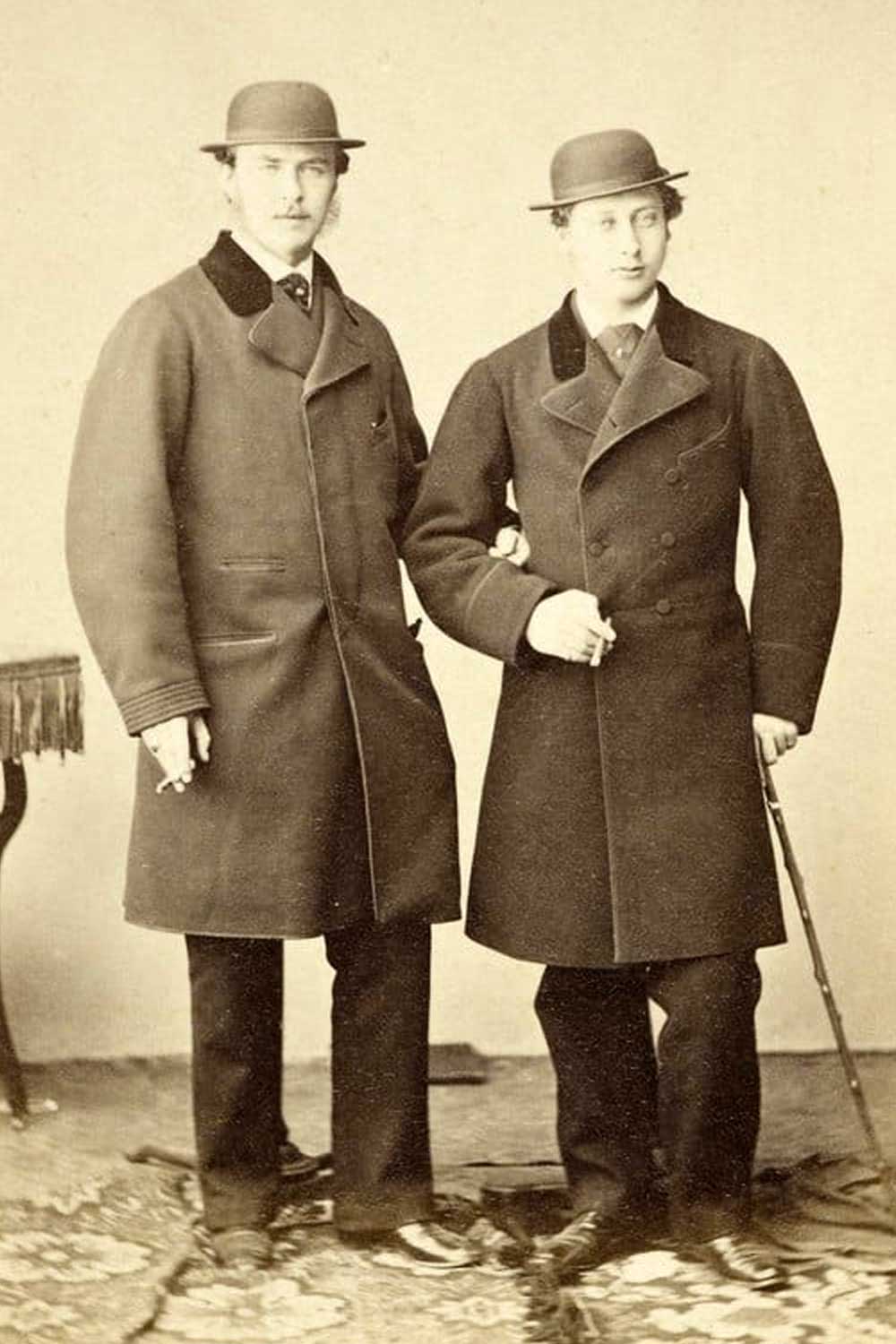
It is named after George Stanhope, the 6th Earl of Chesterfield (1805 to 1866), a leader of fashion in the 1830s, according to the Victoria and Albert Museum.
Some accounts credit Philip Dormer Stanhope, the 4th Earl, but he died in 1773, long before the coat was first recorded.
The 6th Earl was one of the London dandies of the 1830s, the decade in which the Regency years gave way to the early Victorian style.
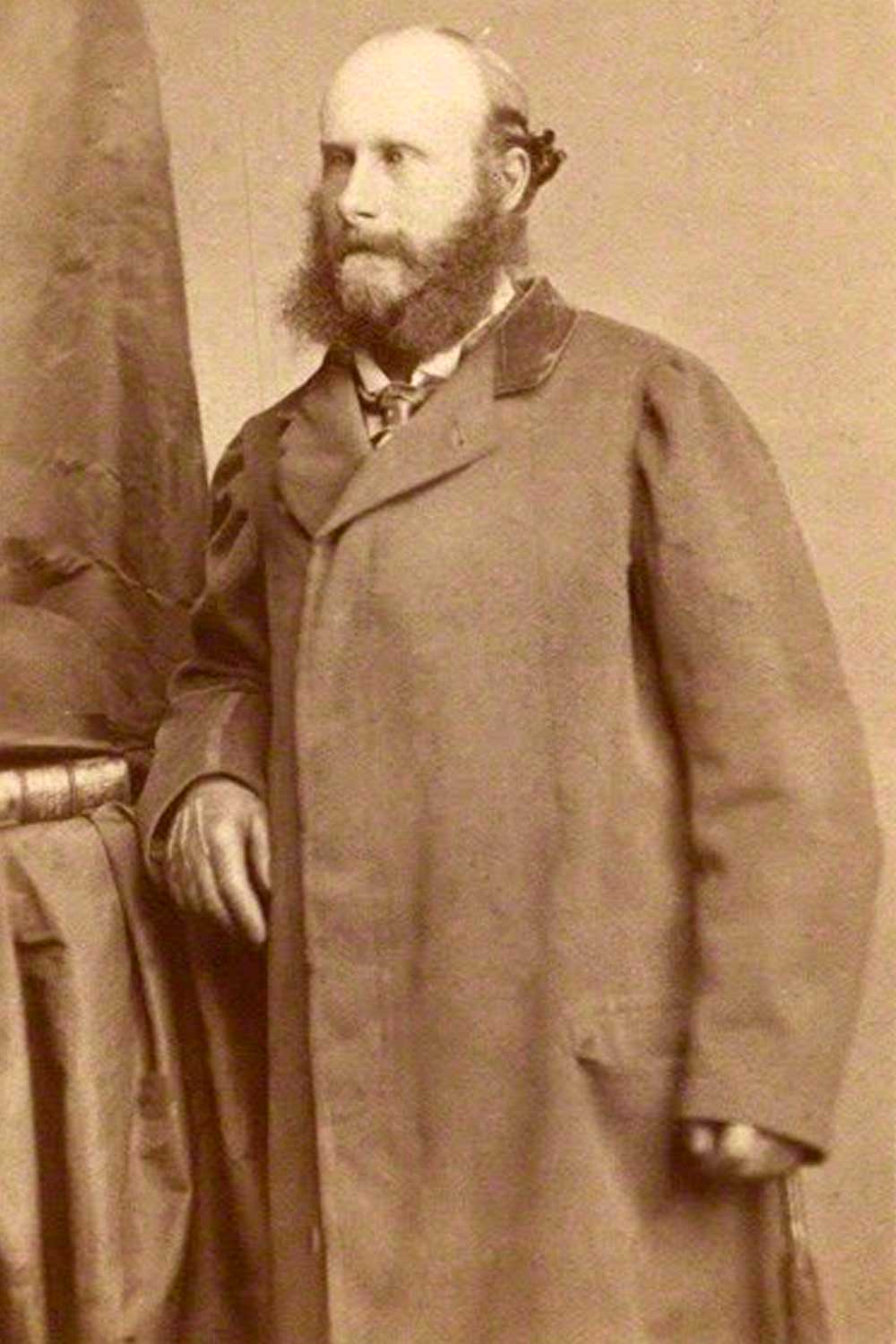
The photograph above shows a later holder of the title, the 7th Earl, rather than the 6th Earl the coat is named after.
What made the Chesterfield new was its cut: it had no waist seam, so it hung more loosely than the fitted frock overcoats of the time and could be worn comfortably over other clothes.
The velvet collar is often linked to a story about mourning for Louis XVI after 1793, but dress historians treat that story as unlikely.
Chesterfield overcoat outfit ideas by occasion
The outfits below are suggestions; swap in the colours and garments you already own.
Business meeting outfit idea
A charcoal wool Chesterfield worn over a suit is a straightforward choice for a formal business meeting.
Wear: a charcoal single-breasted Chesterfield, a navy double-breasted suit with peak lapels, a white shirt with double cuffs, a burgundy grenadine tie, a white linen pocket square and black cap-toe Oxfords.
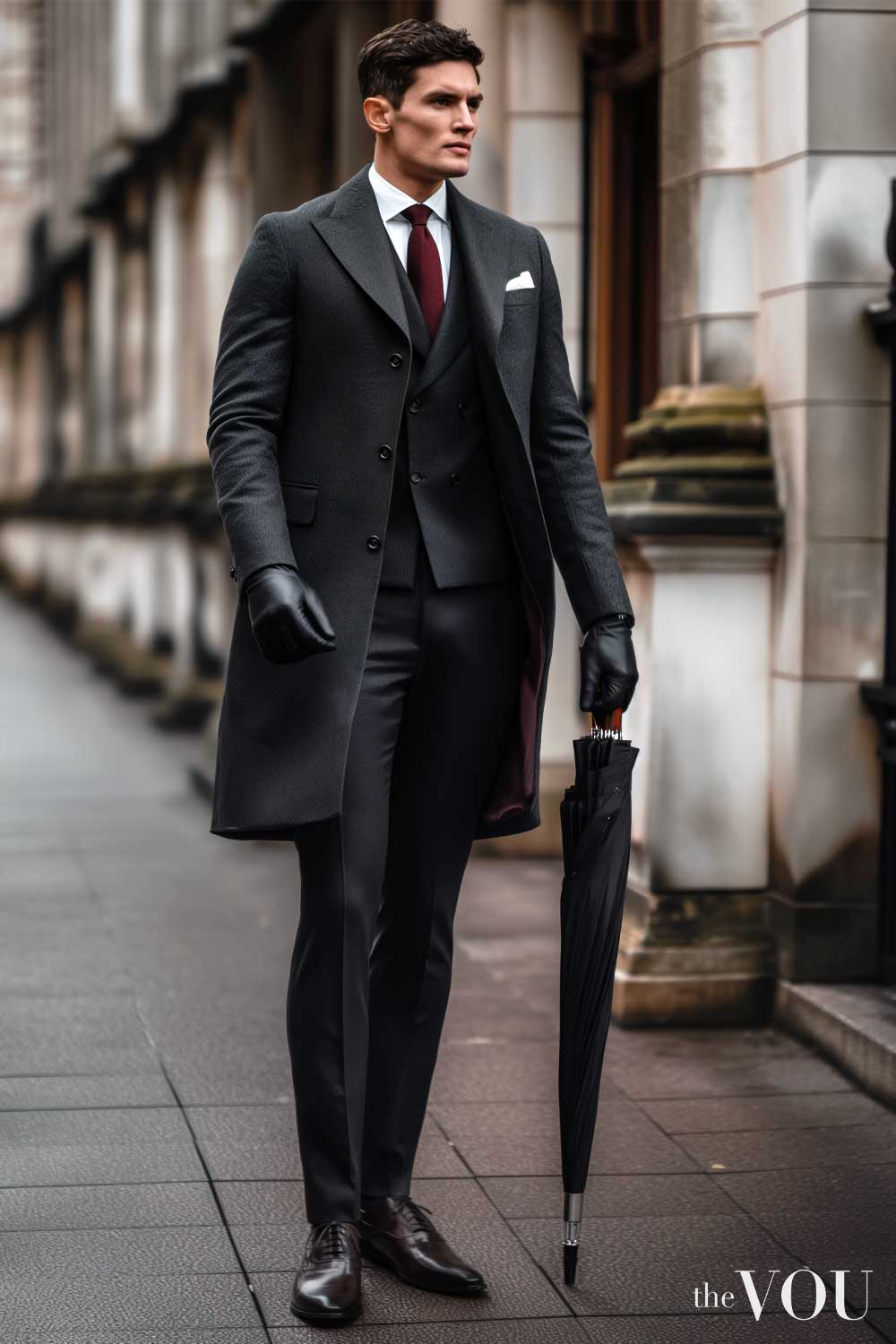
The photo shows a three-piece single-breasted suit, an alternative to the double-breasted suit described above.
Black cap-toe Oxfords from a traditional maker such as John Lobb fit this look, and so does any well-kept black lace-up that fits you.
Add black leather gloves, a plain dress watch and a black umbrella for wet days.
Opera night outfit idea
If the invitation says black tie, a black or midnight navy Chesterfield in wool or a wool and cashmere blend is the traditional coat to wear over a dinner suit.
Wear: a black Chesterfield, a black single-button dinner jacket with peak lapels and matching trousers, a white dress shirt with studs, a black silk bow tie, a low-cut black waistcoat or a cummerbund, and black patent Oxfords or patent pumps.
Finish with a white silk evening scarf in a simple knot, plain cufflinks and, if you own one, a vintage pocket watch.
Charity gala outfit idea
For an evening gala with a lounge suit dress code, a midnight blue Chesterfield over a grey suit is smart without needing a dinner suit.
Wear: a midnight blue Chesterfield, a mid-grey double-breasted suit with peak lapels, a pale blue spread-collar shirt, a silver and blue patterned tie, a sky blue silk pocket square and dark brown wholecut Oxfords.
Add a burgundy wool or cashmere scarf and a simple dress watch.
Weekend outfit idea
A camel Chesterfield works well for a weekend gallery visit or lunch, because it is easy to take off indoors and looks smart over casual tailoring.
Wear: a camel Chesterfield, a navy hopsack blazer, an ecru Oxford cloth button-down shirt, a burgundy V-neck jumper, grey flannel trousers and snuff suede chukka boots.
A silk scarf or a paisley neckerchief adds colour if you like it, and tortoiseshell glasses or a leather document case suit the same relaxed mood.
Business dinner outfit idea
A dark green or brown herringbone Chesterfield gives a softer, more autumnal look for a dinner with clients.
Wear: a forest green herringbone Chesterfield, a brown glen check single-breasted suit, a white twill shirt with a semi-spread collar, an olive silk tie, a cream pocket square and burgundy brogue Oxfords.
Dark brown leather gloves and tortoiseshell glasses complete the outfit.
Chesterfield overcoat styling do’s and don’ts
Do
Fasten the coat when you are standing outdoors in cold weather; on a coat with three visible buttons, many men leave the bottom one open so the coat falls cleanly.
Check the shoulders first when you buy, because they are the hardest fit to alter.
Choose gloves that sit well with the coat and shoes: dark brown with camel or brown coats, black or dark brown with charcoal and navy.
Pick a scarf that adds a little contrast, such as burgundy with a grey herringbone Chesterfield.
Buy the coat with enough room to wear a suit jacket underneath without the fronts pulling.
Choose the length you prefer around the knee, making sure the coat covers your jacket hem; slightly above the knee looks more modern and slightly below it looks more traditional.
Hang the coat on a broad, shaped wooden hanger to support the shoulders.
Don’t
Wear trainers with a formal city Chesterfield; lace-ups, smart boots or, for black tie, patent shoes suit it better, while suede shoes and loafers sit well with tweed or camel versions.
Fill the pockets with heavy objects, which pull the coat out of shape.
Expect a belt: the Chesterfield is designed to hang straight from the shoulders.
Assume texture is wrong: a smooth charcoal Chesterfield is the most formal, but tweed and herringbone Chesterfields are traditional and work well with flannel, corduroy and knitwear.
Button your suit jacket under the coat if it makes the coat pull; open it before you put the coat on.
Rule out colour entirely: dark green, brown and burgundy Chesterfields exist, but charcoal, navy, grey and camel go with the most outfits.
Dry clean the coat often; brush it after wear and clean it only when it needs it, often once at the end of the season.
Chesterfield vs similar overcoats
The Chesterfield helped shape the modern overcoat, because cutting a coat without a waist seam made it easier to wear over a jacket.
Compared with a covert coat, a Chesterfield is usually darker and smoother, while the covert coat is a country coat in a fawn twill with rows of stitching at the cuffs and hem.
Compared with a polo coat, which is usually camel, double-breasted and belted at the back, a Chesterfield is plainer and more formal.
Conclusion
A Chesterfield is a straight, knee-length overcoat that suits suits, dinner suits and smart casual outfits alike.
Choose a colour that works with most of your wardrobe, make sure the shoulders and chest fit over a jacket, and wear it with the shoes and accessories that match the occasion.
Sources
Victoria and Albert Museum, Chesterfield overcoat, S. Nelson, London, 1895 (named after the 6th Earl of Chesterfield; popular from about 1840).
Chesterfield coat, Wikipedia.
The Dreamstress, What is a Chesterfield? (2012).
Permanent Style, Tips on buying an overcoat (2015).