Start here
What’s This About
A Sloane Ranger is the upper-middle-class Londoner of Chelsea and Knightsbridge that Harpers & Queen named in 1975, and Sloane Ranger style for men is that world’s country-and-town wardrobe, which means a waxed jacket, cords, a striped or checked shirt, a tweed jacket, brogues, wellingtons and very little that is new.
This guide explains the look from its origin to the clothes, covering
where the name comes from and what the 1982 Handbook made of it
how the men’s version got its own nicknames, Rah and Hooray Henry
the country, riding and Army background of the wardrobe
the garments, shoes and small details, with the brands the original article named
how the same wardrobe changes across the seasons and for six occasions
and many more!
It is the background and wardrobe page. For six finished outfits to copy, with every garment labelled, go to Sloane Ranger outfit ideas.
Key Points
01The name is a pun on Sloane Square and the Lone Ranger. It was coined at Harpers & Queen in 1975 for Peter York’s article about well-off young women working in smart London; the magazine’s “Sloane Ranger Man” followed the next year, and Ann Barr and York’s Official Sloane Ranger Handbook (1982) made a name for a type, women and men, that was already established.
02The men’s wardrobe is country clothing worn in town, such as waxed and quilted jackets, tweed, corduroy, checked and striped shirts, brogues, loafers and green wellingtons, in colours that do not change from one decade to the next.
03It overlaps with what is now called British Old Money style, and the two share brands, but Sloane is a social type first and a look second; the Handbook’s own subject matter, as its catalogue entry lists it, runs from schools and jobs to shops and clothes.
04Nothing here needs to be new. This page’s own preference is for clothes that have been worn in rather than clothes that look new, and it is a preference, not a rule.
If you have searched for Sloane Ranger style you have probably seen the word attached to a waxed jacket, a pair of green wellingtons and someone who looks as though they have a house in Gloucestershire. That is roughly right, and this page explains why, where the name came from and what a man who wants the look actually buys.
The finished outfits, six of them with every garment named, are on the Sloane Ranger outfit ideas page; this one is the background and the wardrobe.
What it is
What a Sloane Ranger Is, and Where the Name Comes From
The term was born at Harpers & Queen in October 1975. Peter York, then the magazine’s style writer, had noticed a tribe of “uncannily similar upper-middle class girls working in smart London”, as he put it decades later, and wrote them up; the name itself, a pun on Sloane Square in Chelsea and the television cowboy the Lone Ranger, was supplied on the subs’ desk by Tina Margetts, replacing York’s working title “The Knightsbridge Knotted”, after the way the women tied their headscarves.
An early newspaper record, found by the author of the wordhistories.net entry, is from the same month. The Evening Standard of 1 October 1975 describes “a few Sloane Ranger types (Gucci shoes, Hermes scarves, velvet jackets and navy blue tights)”. So the first Sloanes were women, and the first Sloane uniform was theirs.
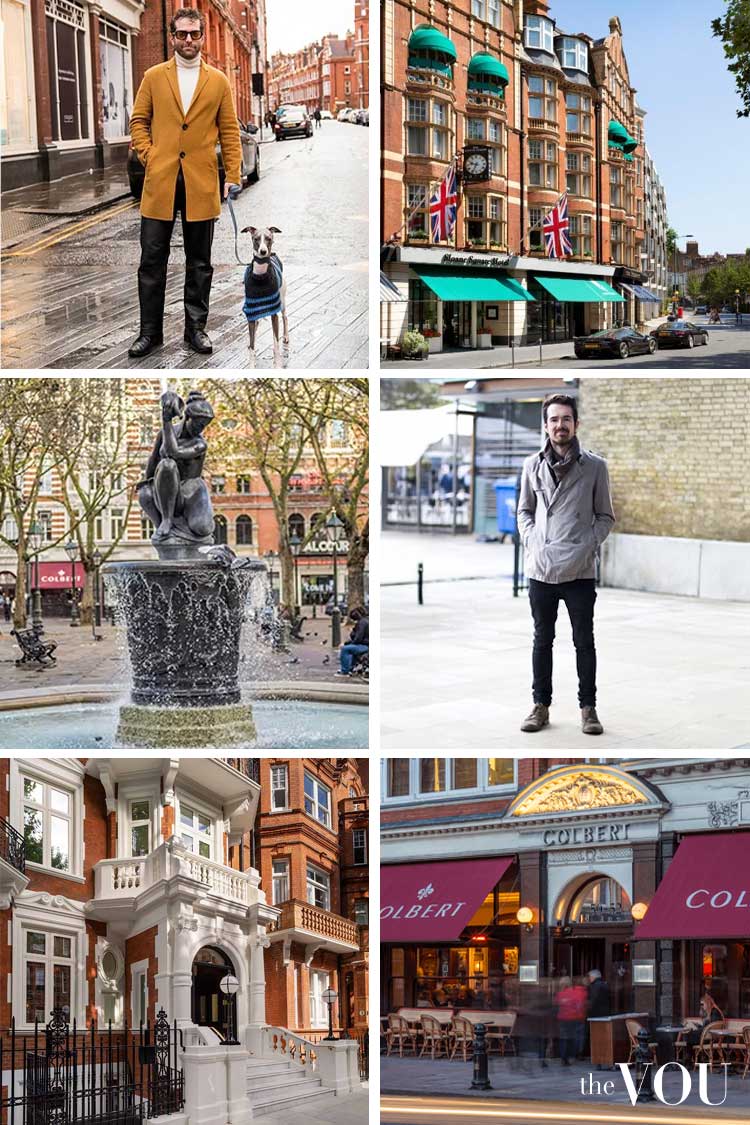
Landmarks of Sloane Square and Chelsea in the original article’s collage, with two street portraits; the image does not say where the two men were photographed.
Seven years later the idea became a book. The Official Sloane Ranger Handbook, by Ann Barr and Peter York (Ebury Press, 1982), catalogued the type’s pubs, jobs, schools, names and clothes, sold more than a million copies and put Lady Diana Spencer, the most famous Sloane of all, at the centre of its cover. The Critic’s Graham Stewart reports York reading those sales as evidence that the lifestyle appealed beyond the people born into it; in York’s own words there is “partly the social-determinism of being born a Sloane and partly the choice of wanting to be a Sloane”. That is why a guide like this one can exist at all.
Sloane is a social type before it is a look. In York’s own account the Sloanes are “a sub-set of the upper middles” who wanted “a place in London and a foot in the country”, and the terms the catalogue entry lists for the Handbook run from the Army, Eton and public schools to Jermyn Street, Savile Row, Harrods and Peter Jones. The clothes follow from that life, and the clothes for men follow from the country half of it.
The Men’s Version, Rah and Hooray Henry
The 1975 article was about women; Harpers & Queen ran “Sloane Ranger Man” the following year, York recalls, so the male Sloane was on the page six years before the Handbook, which covered both sexes. The male Sloane also picked up two nicknames of his own. “Hooray Henry” is the older term, defined by the Oxford Dictionary of Word Origins as a loud, well-off young man from a public-school background, and widely treated as the male equivalent of Sloane Ranger; “Rah” is the later word for the same person.
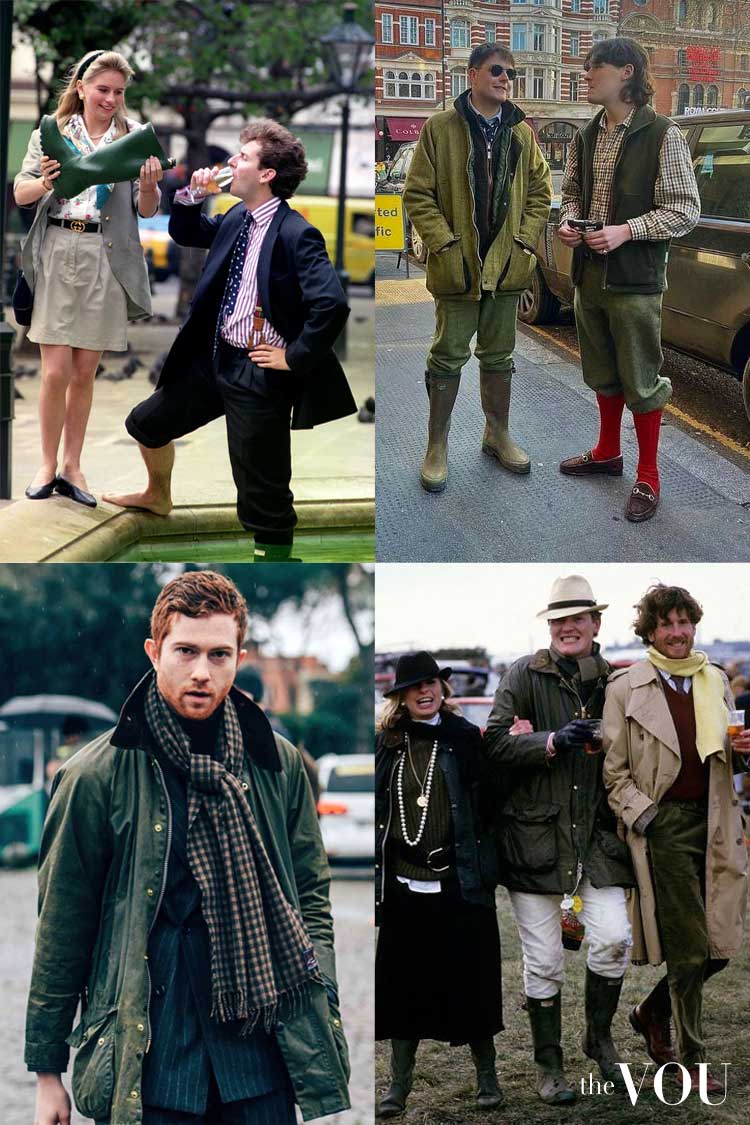
Striped shirt and tie, tweed and gilets with red socks and wellingtons, a waxed jacket and a scarf. Photographs used in the original version of this article; their dates and provenance are not recorded.
The clothes those names went with were not invented for London. Luxury London’s retrospective lists blazers, rugby shirts, gilets, cords in “eye-watering colours”, brogues, loud socks, pink and pale-yellow shirts and a crested signet ring on the little finger; the terms the catalogue entry lists for the Handbook include the Husky quilted jacket, tweed, striped shirts, socks, navy blue and regimental. Most of those are country garments or school ones, worn in a city.
Today the same wardrobe is usually filed under Old Money style, and in its British form the two overlap heavily for men, as the waxed jacket, tweed, cords and brogues are on both lists. The difference is that Sloane names a specific British type with a specific history, and this page keeps to that.
Where it comes from
The Country, the Horse and the Army
Three parts of the Sloane life explain most of the wardrobe. None of them is a rule; they are the places the clothes were made for.
The Country House
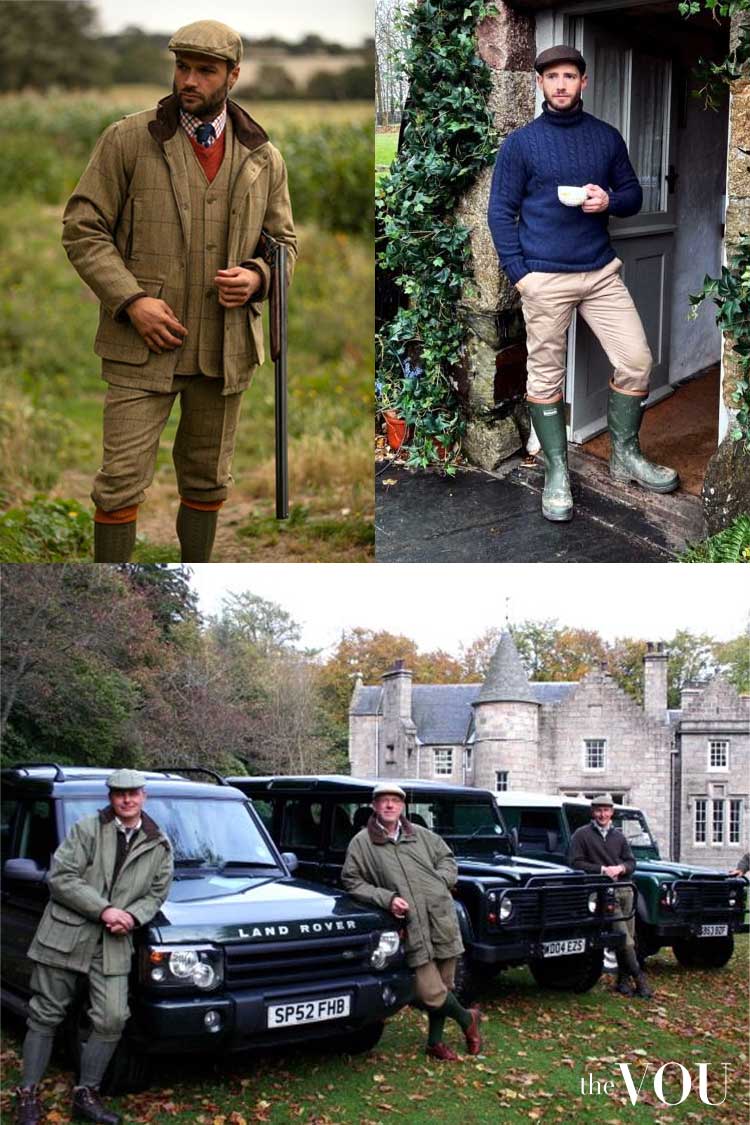
Shooting tweed, a navy jumper with wellingtons, and tweed beside the Land Rovers show country clothes as they are worn. Photographs used in the original version of this article.
York’s “foot in the country” is the reason tweed, corduroy, waxed cotton and rubber boots are in a Londoner’s wardrobe at all. They are what a weekend in a cold house with dogs requires, and the Sloane habit was to bring them back to town on Monday rather than keep a separate set of clothes. The VOU’s British countryside style guide covers that wardrobe on its own terms.
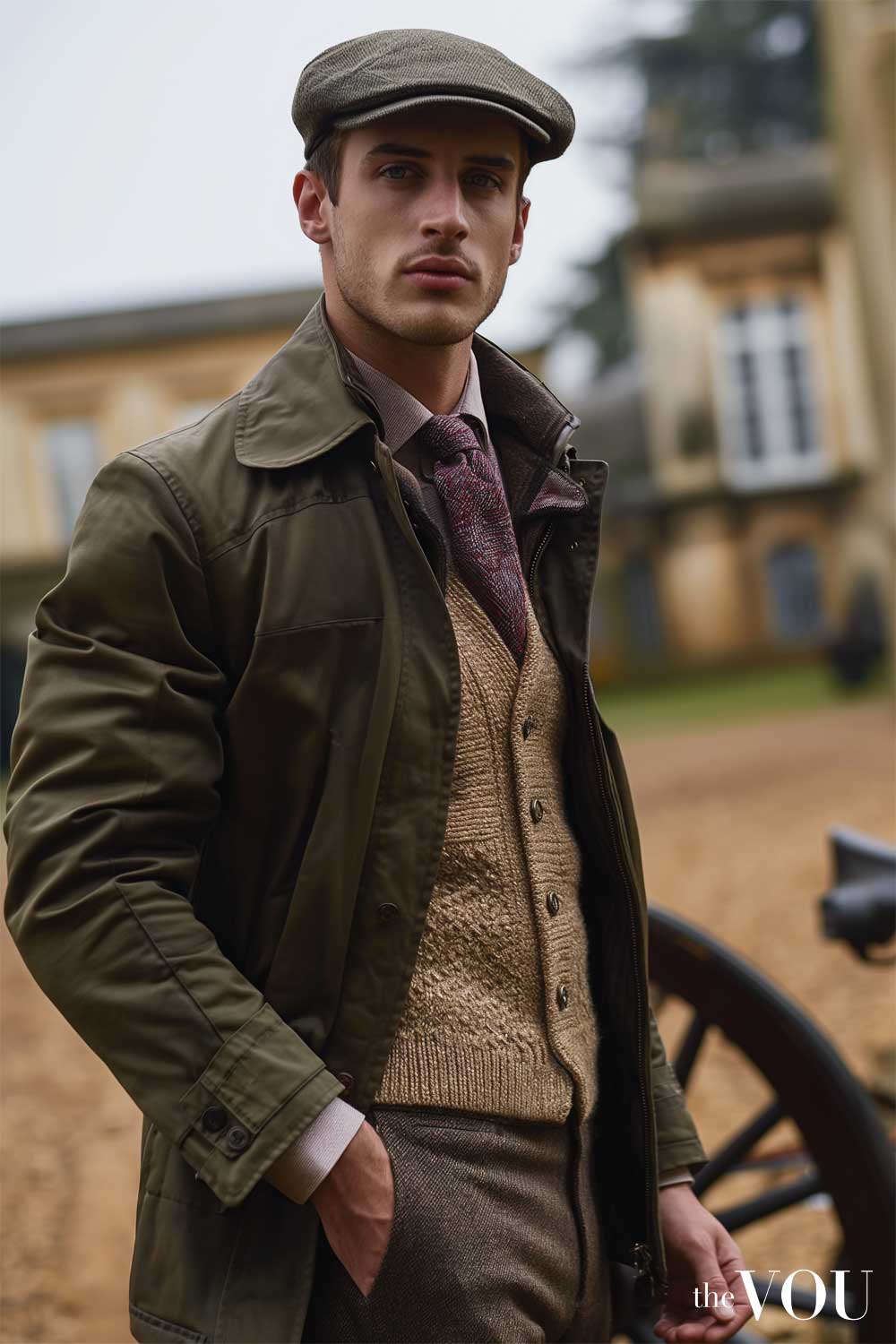
Field jacket, cardigan, tie and flat cap make up the layered country look the rest of this page is built from.
Riding
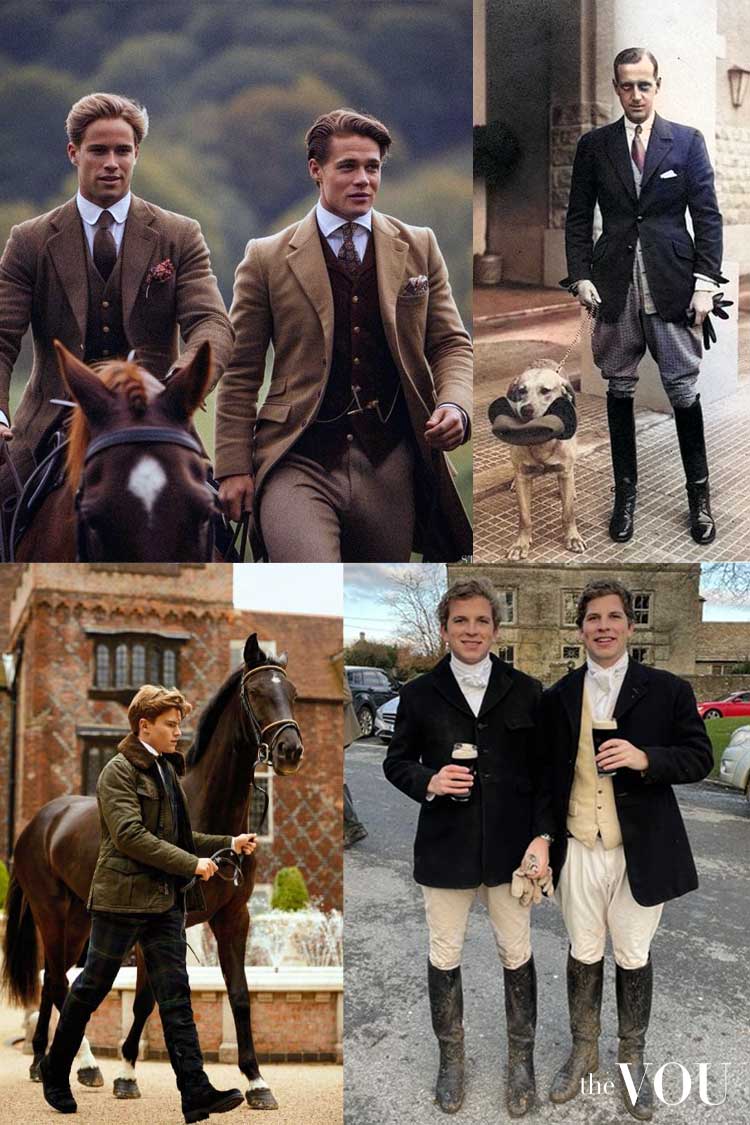
Riding clothes, from tweed hacking jackets to hunt coats and breeches. Images used in the original version of this article.
Horses run through the Sloane world, from pony club to hunting, and riding clothes gave the wardrobe its hacking jacket and its tall boots, and, on this page’s reading, its taste for a fitted jacket over a soft shirt. The VOU’s equestrian style guide goes into that wardrobe in detail; the outfit ideas page has a full equestrian look with every garment labelled.
The Army
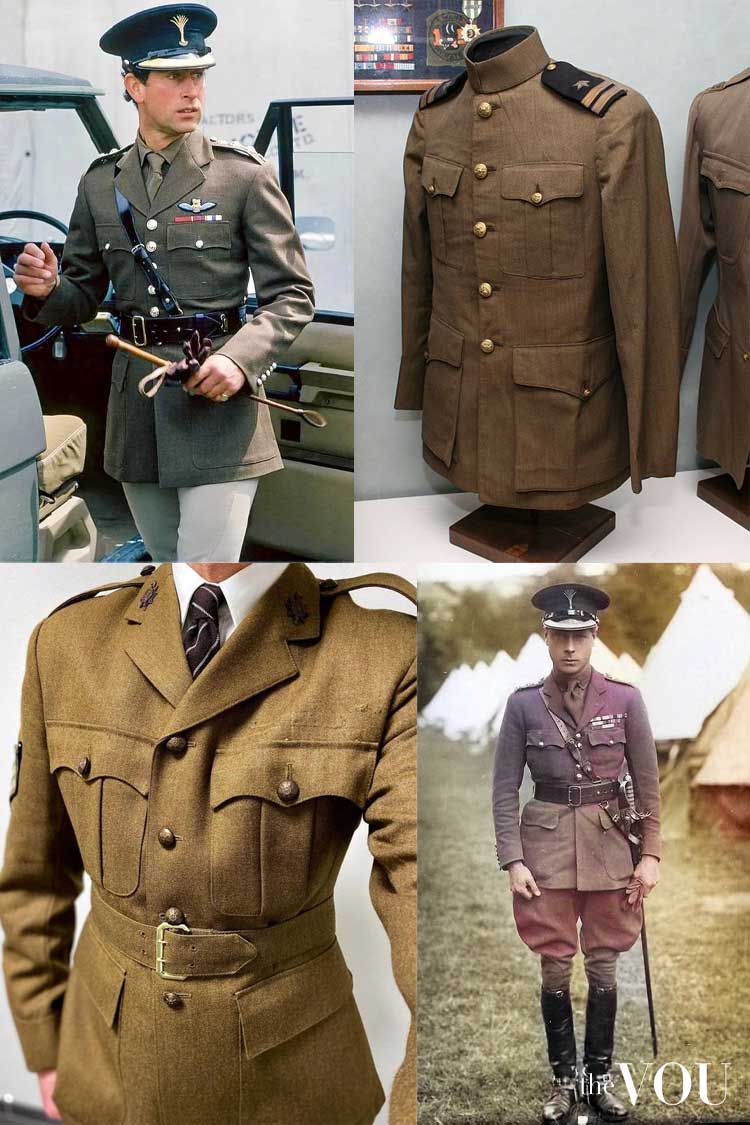
Service dress, khaki and the belted tunic. Images used in the original version of this article.
The Army was one of the Sloane man’s standard careers; York’s 1975 piece already had him heading for the Army or the City, and the Army sits among the Handbook’s common terms alongside Eton and public schools. Two garments on this page carry military names, the field jacket and the fatigue shirt, and their pocketed cut and their olive and khaki are what the names refer to; that is an association with military clothing in general, not a documented line of descent from the tunics pictured here. Olive and khaki are the colours those two garments share with the pictured uniforms; where the rest of the palette comes from is not something this page claims to know. Nobody is copying a uniform.
Where It Is Now
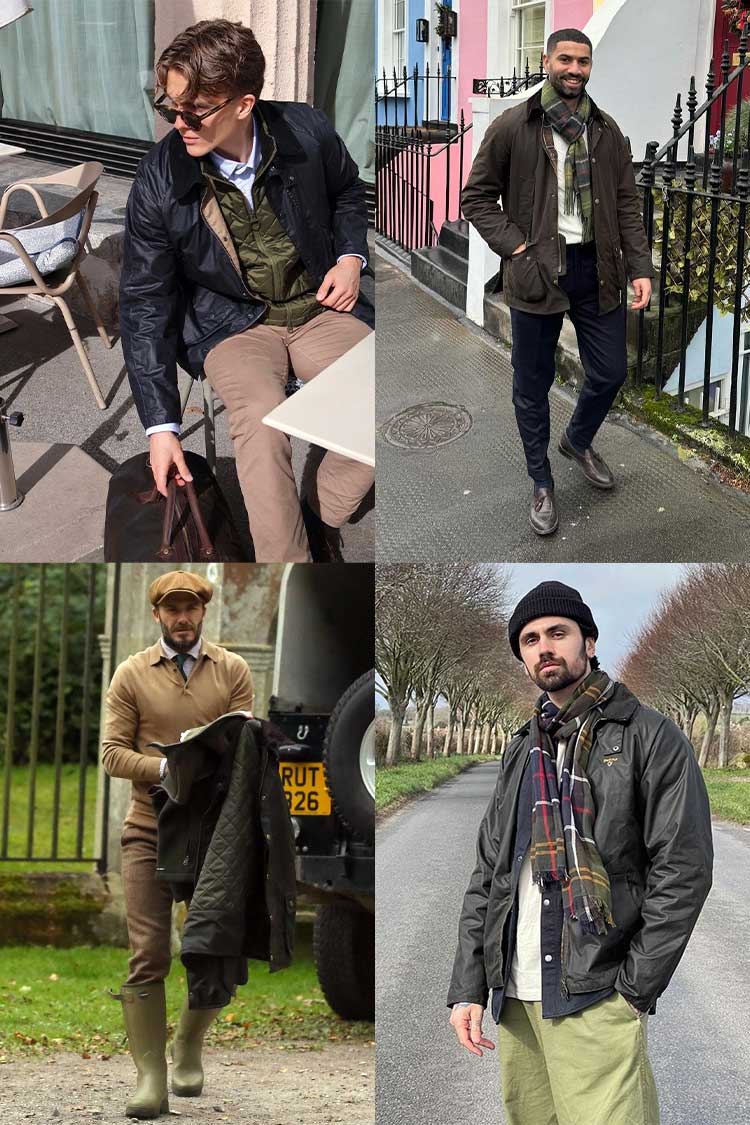
The wardrobe today, with the waxed jacket in navy and olive, the flat cap and the tartan scarf worn in the street. Photographs used in the original version of this article.
York revisited the type in Cooler, Faster, More Expensive: The Return of the Sloane Ranger (with Olivia Stewart-Liberty, Atlantic Books, 2007), and by 2022 was writing that the smartest parts of London had passed to international money and the Sloanes had “migrated south and north”, meaning south across the river to Battersea, Wandsworth and Balham, and north to Queen’s Park and Kensal Rise. The clothes travelled with them, and they are what the rest of this page is about.
The wardrobe
Sloane Ranger Wardrobe Essentials
What follows is the wardrobe as the original version of this article set it out, corrected where it overstated. Brand names are the ones the original article gave and are examples, not requirements; The VOU’s British heritage brands guide and Old Money wardrobe essentials cover the wider field.
Waxed Cotton Jackets
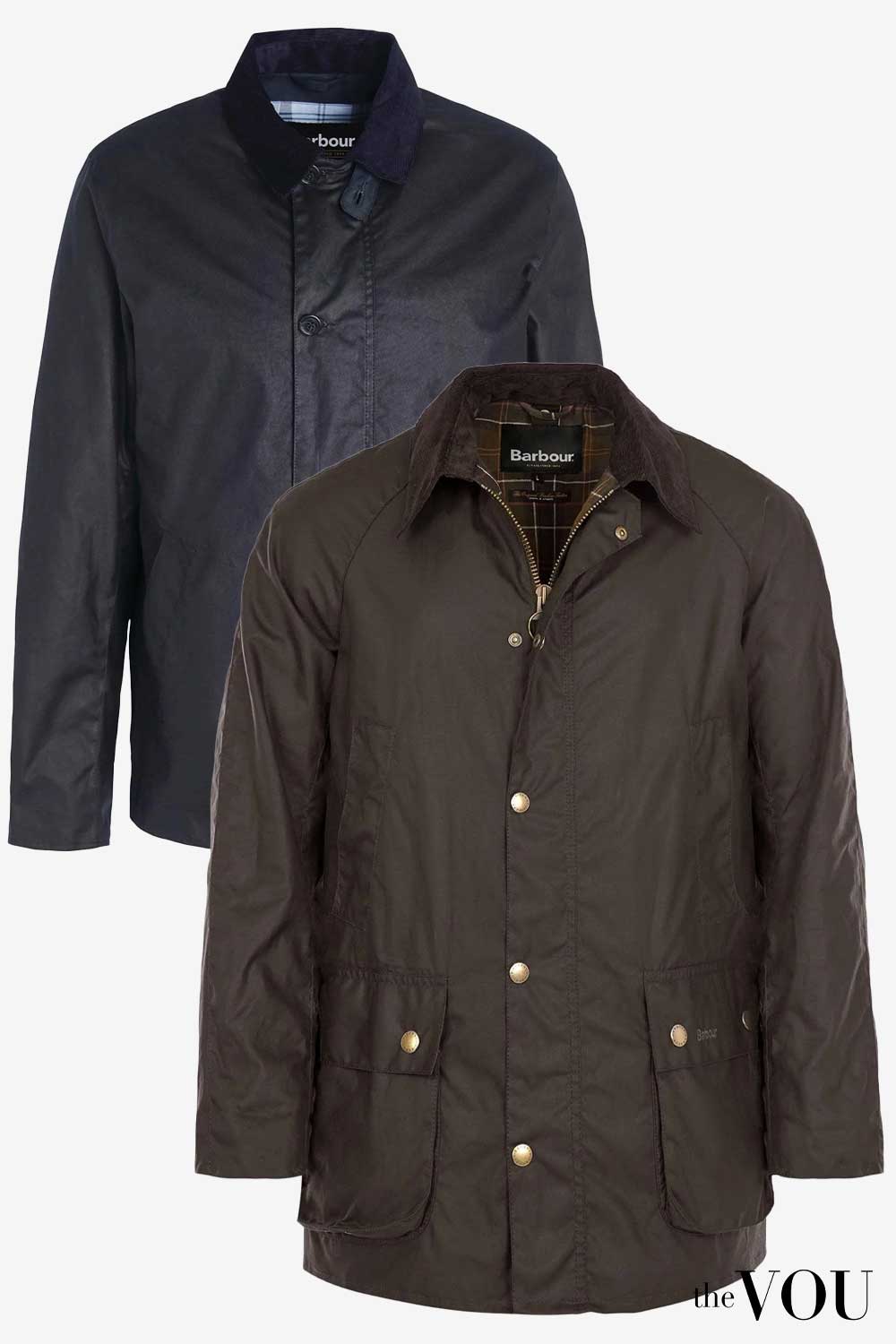
Waxed cotton jackets in navy and brown, the brown one with the tartan lining that shows at the collar.
If one garment stands for the whole style it is the waxed jacket. Barbour, founded in South Shields in 1894, is the name most people attach to it, and its Bedale and Beaufort are the two cuts most often meant; the corduroy collar and tartan lining are what people picture. The original article also named Belstaff and Musto as alternatives. The type wore them for years, but a new one is as much a waxed jacket as an old one. Barbour advises reproofing about once a year and says the wax can add a little sheen for a while, and that is care, not a fault. It is at its most Sloane over a jumper rather than a suit.
Field Jackets and Quilted Jackets
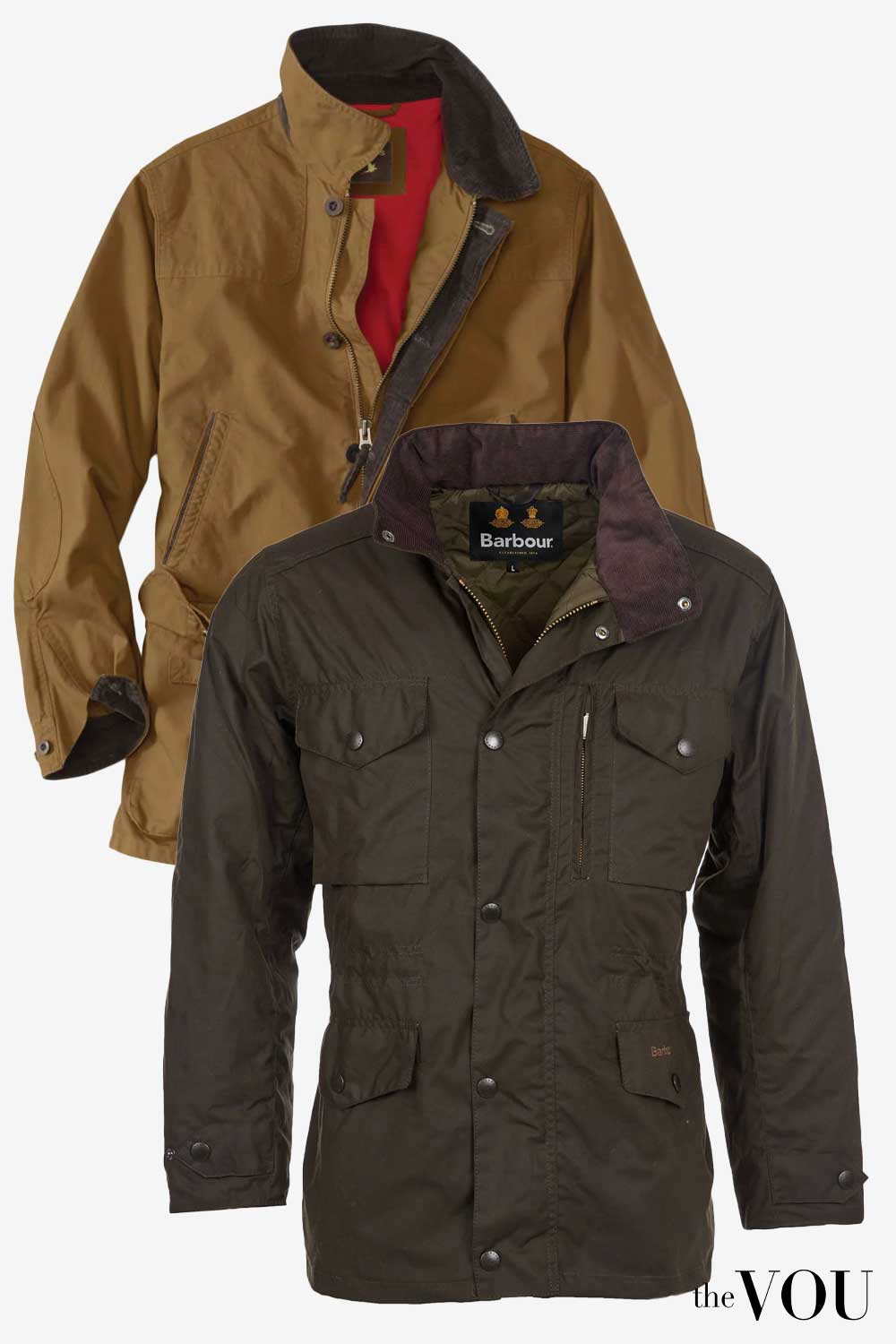
Field jackets in tan and olive, the four-pocket cut the name refers to.
The field jacket takes its name from military clothing, four pockets and a stand collar, in olive or tan; the quilted jacket, the “Husky” of the Handbook’s day, is the lighter alternative for spring and autumn. Both go over the same shirts and knitwear as the waxed jacket.
Tweed Jackets
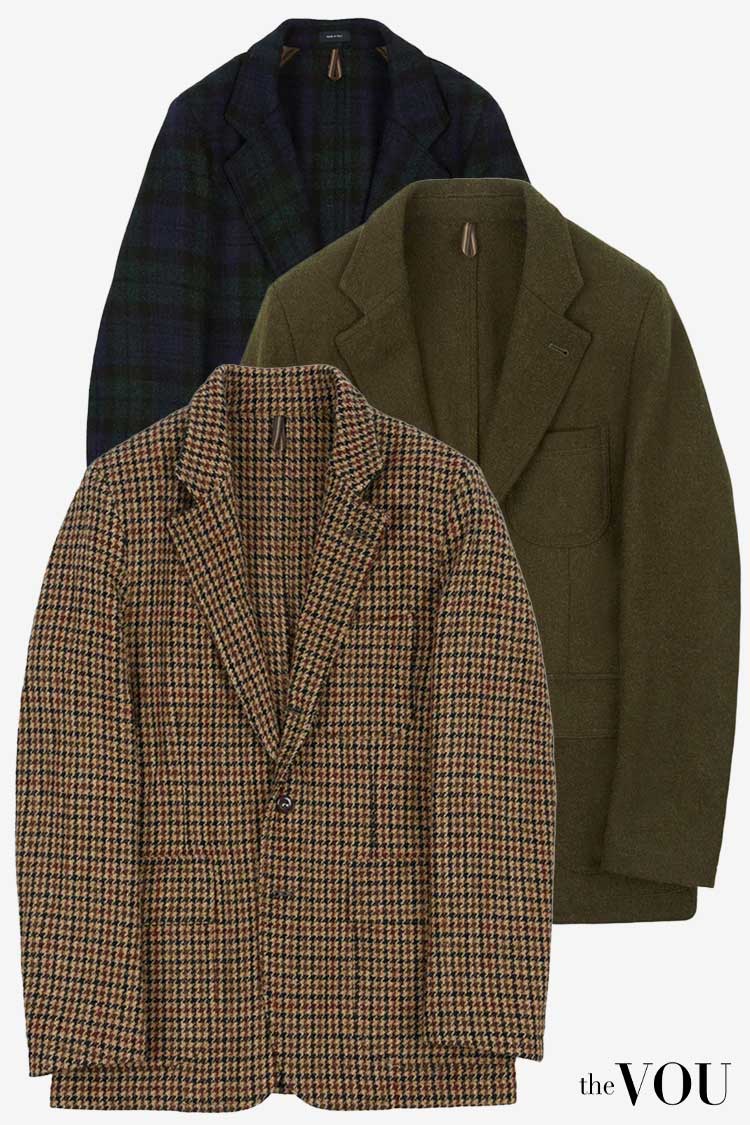
Tweed in three of its usual forms, as a navy check, a plain olive and a brown houndstooth. The original article credited these to Drake’s.
A tweed jacket is the Sloane man’s answer to the blazer. The texture does the work, the cut is soft, and it is worn with cords or chinos far more often than with matching trousers. Brown, green and grey checks are the safe centre; the outfit ideas page shows a tweed three-piece for the country-house version.
Oxford and Striped Shirts
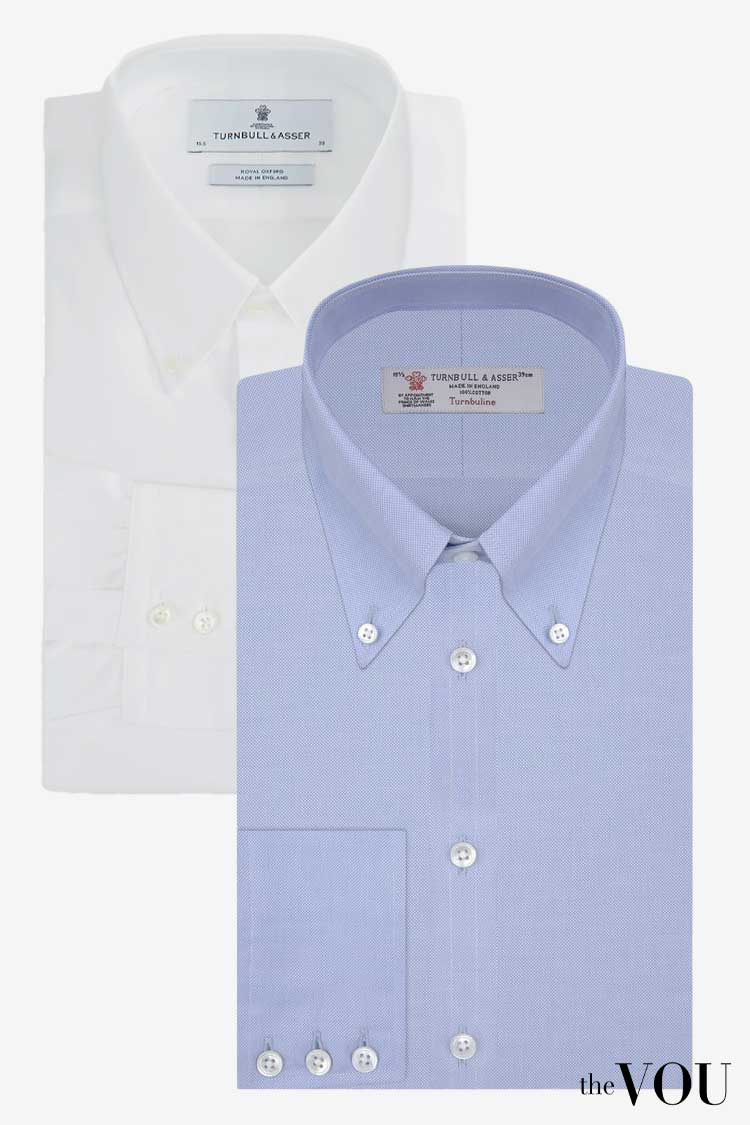
Turnbull & Asser shirts, white and a light blue button-down. The original article credited the photograph to the maker.
The Oxford cloth button-down in white, pale blue or pink is the everyday shirt, and the bold stripe with a white collar is its dressier cousin from the Handbook years. Jermyn Street, one of the Handbook’s own terms, is where the type’s shirts traditionally came from; the original article named Turnbull & Asser, and Hawes & Curtis for the more casual cuts.
Tattersall and Check Shirts
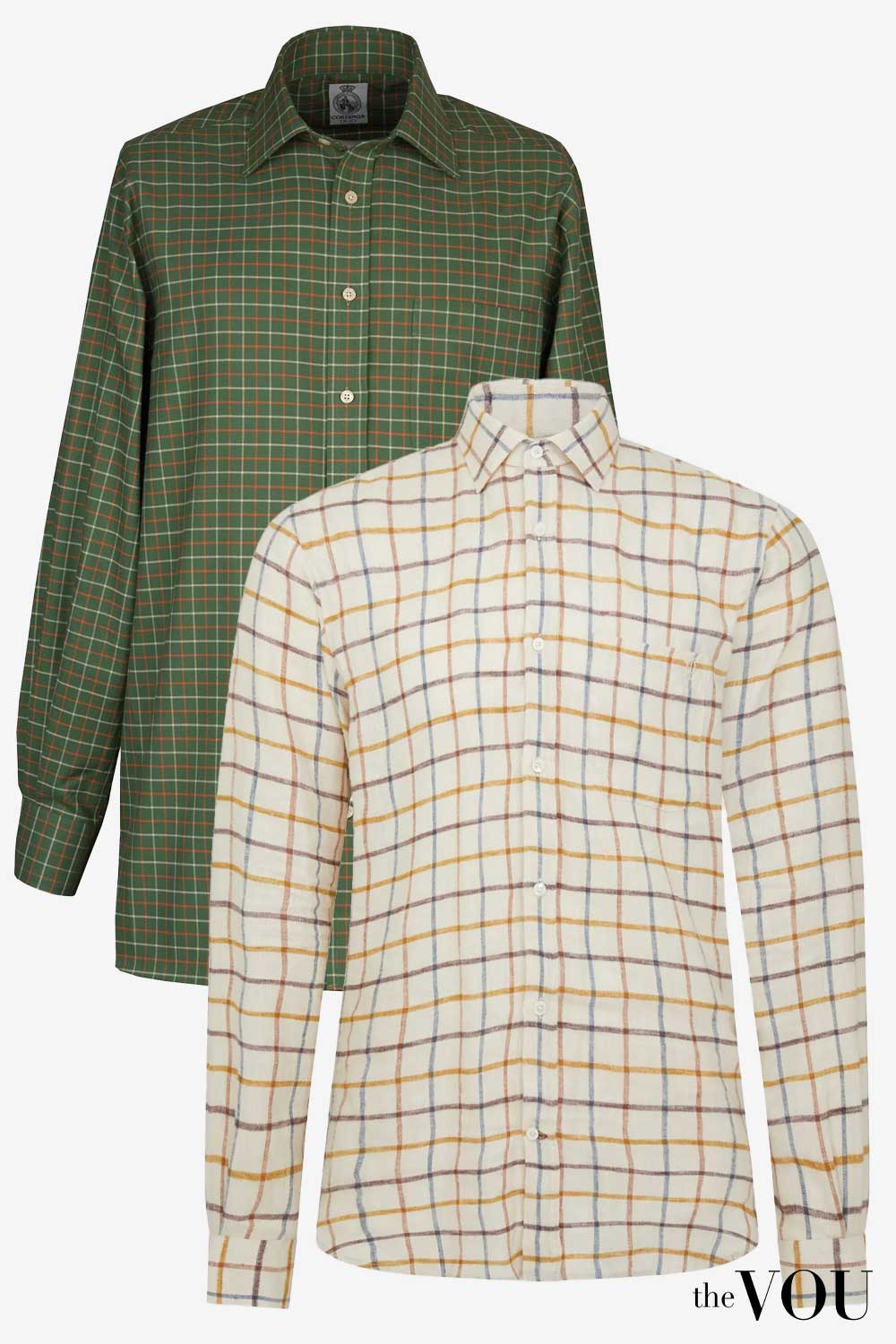
Tattersall checks in green and in cream with yellow and brown. The original article named Cordings and Purdey.
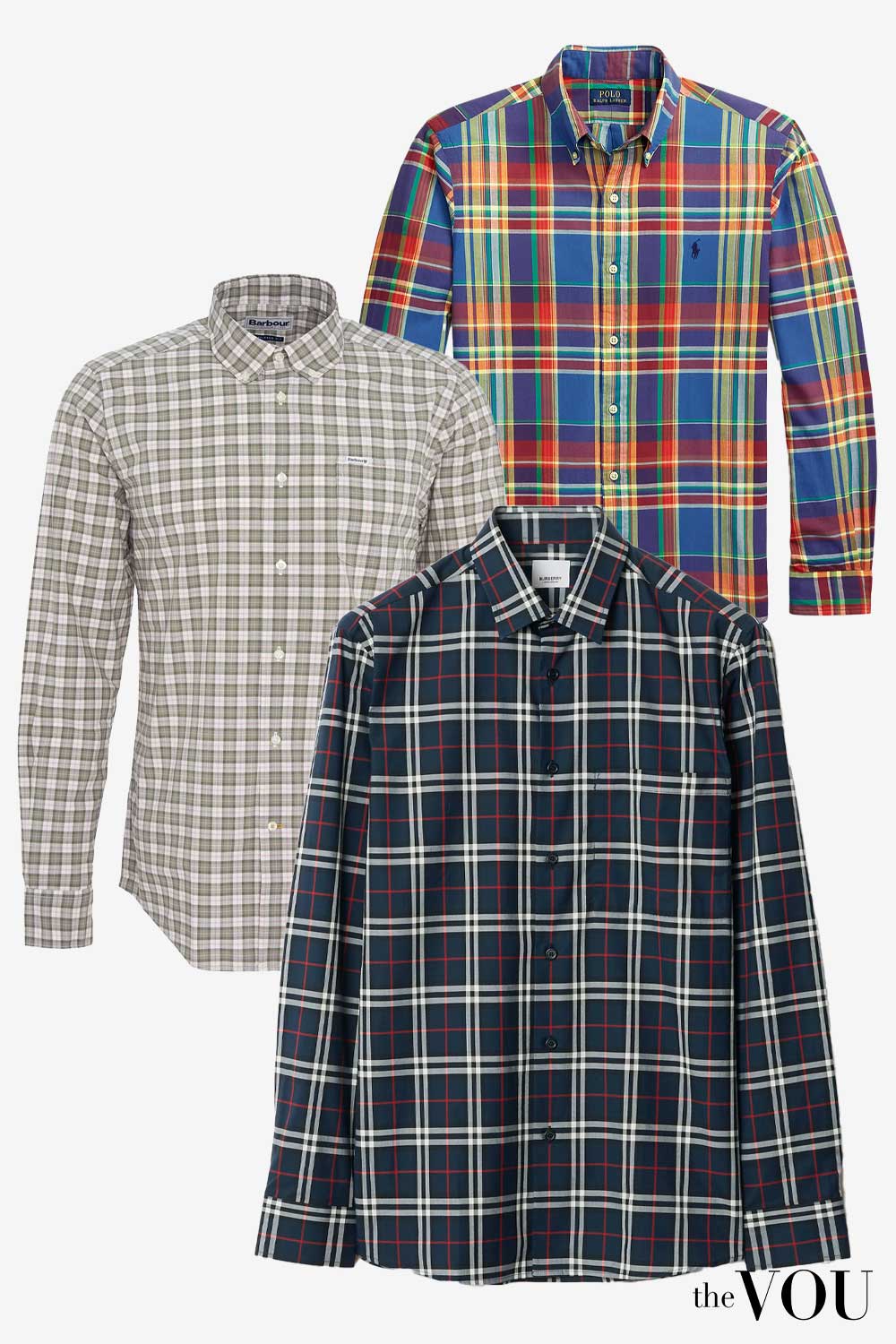
Larger checks in beige, a bright madras and navy. The original article named Barbour, Ralph Lauren and Burberry.
The tattersall, a small even check on a light ground, is the country shirt, worn under tweed and knitwear; larger checks and tartans are the weekend version. Cotton or brushed cotton; the type’s preference is for cloth without a sheen.
Fatigue Shirts
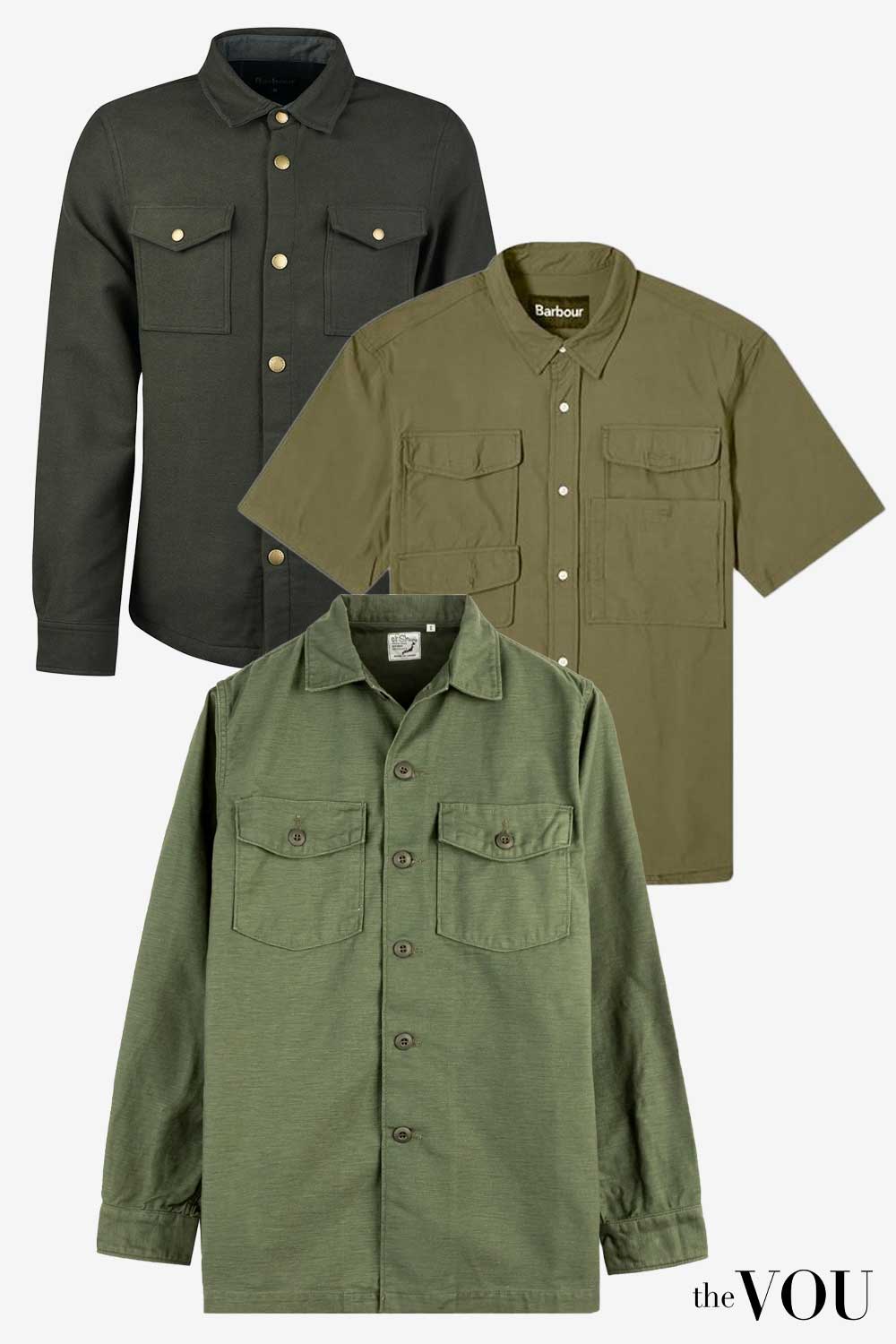
Fatigue shirts in olive, named after Army working dress.
A heavier cotton shirt with two patch pockets, in olive, khaki or light blue, worn open over a T-shirt or buttoned as a light jacket. The original article named Hawes & Curtis and Barbour.
Knitwear
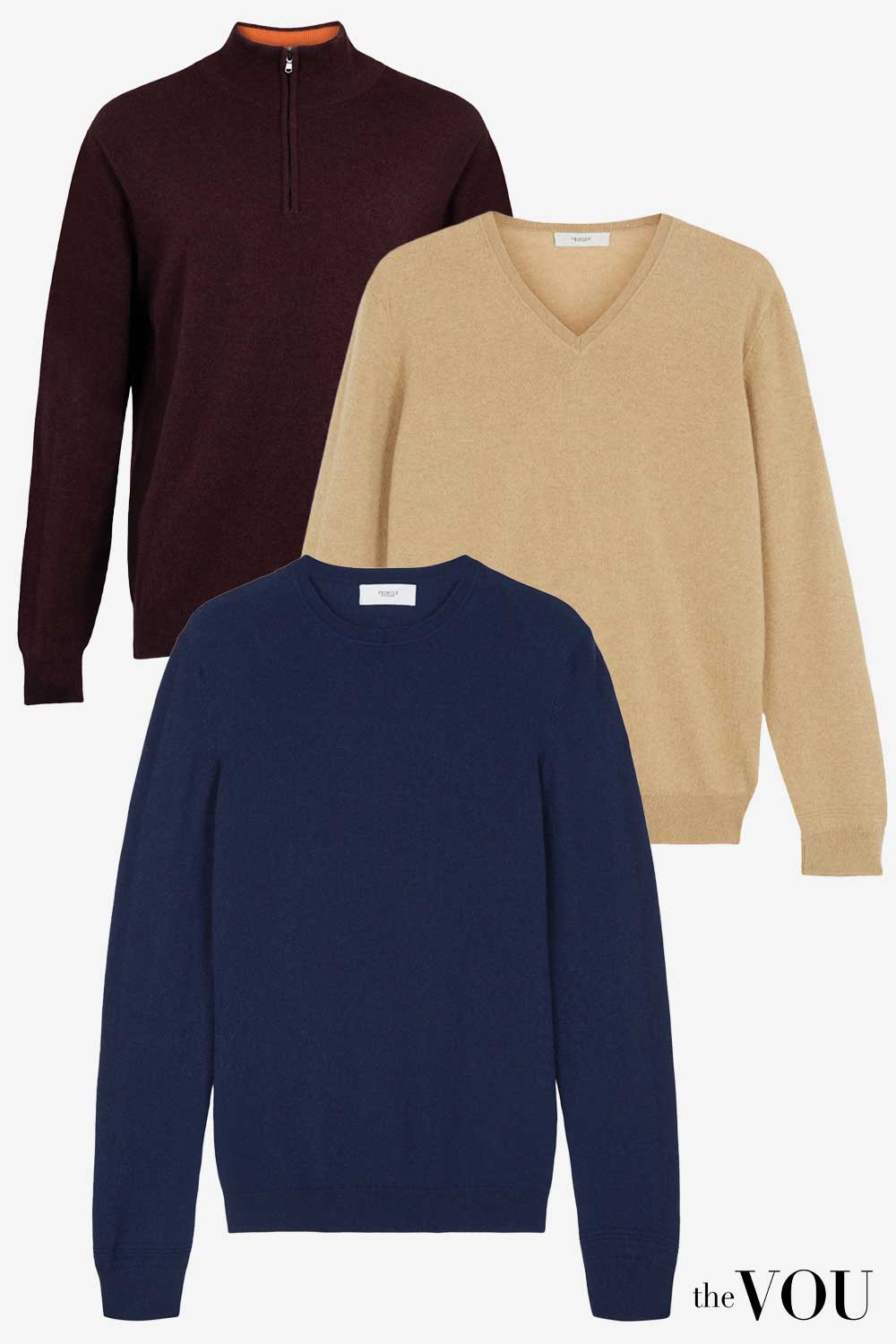
Burgundy, camel and navy are the three knitwear colours that do most of the work.
A V-neck or crew-neck in navy, burgundy, camel or bottle green, in lambswool, Shetland or cashmere, is the layer between shirt and jacket for most of the year; a Guernsey, the dense navy fisherman’s jumper, is the heavier option for the coldest days. The original article named Pringle of Scotland and Johnstons of Elgin.
Chinos and Corduroy Trousers
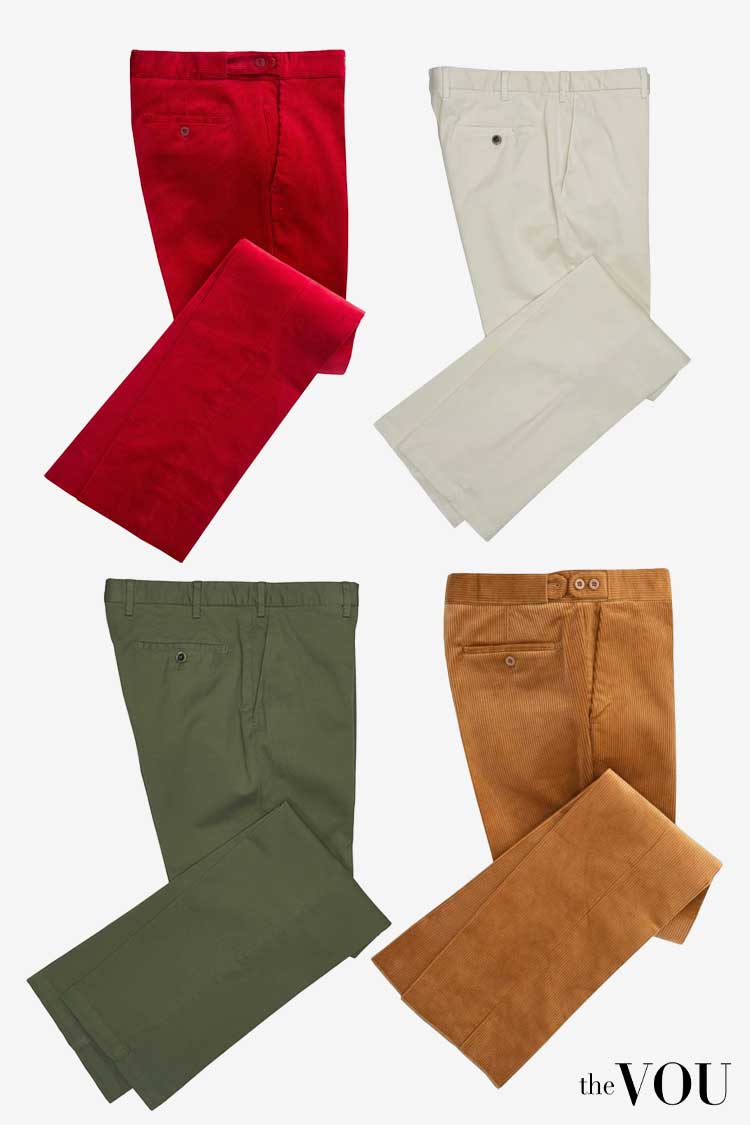
Cords in red and tan, chinos in cream and olive. The original article credited these to Cordings; no label is visible.
Corduroy is the Sloane trouser, and the colours are the tell. The mustard, brick-red and bottle-green cords that Luxury London calls “eye-watering” are as much part of the type as the Barbour. Chinos in stone, tan and olive are the plainer alternative. The type wore them cut straight, with a belt, and not tight; cut them to your own comfort.
Loafers and Brogues
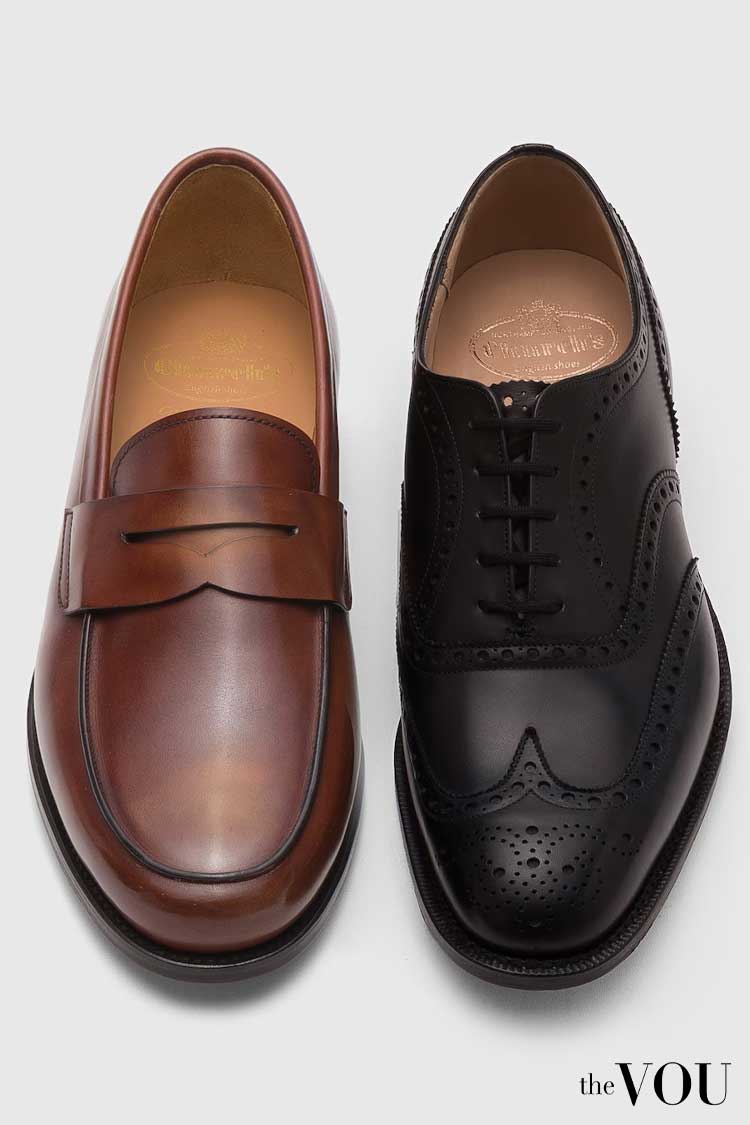
A brown penny loafer and a black brogue, the two shoes that cover most of the week.
Brogues, brown for the country and black for town, and a penny loafer for everything in between; keep the uppers polished whichever sole you choose; a leather sole is the traditional choice and a rubber sole the practical one for wet pavements, so let the weather and the pavement decide. The VOU’s dress shoes guide covers the makers and the care.
Chelsea Boots
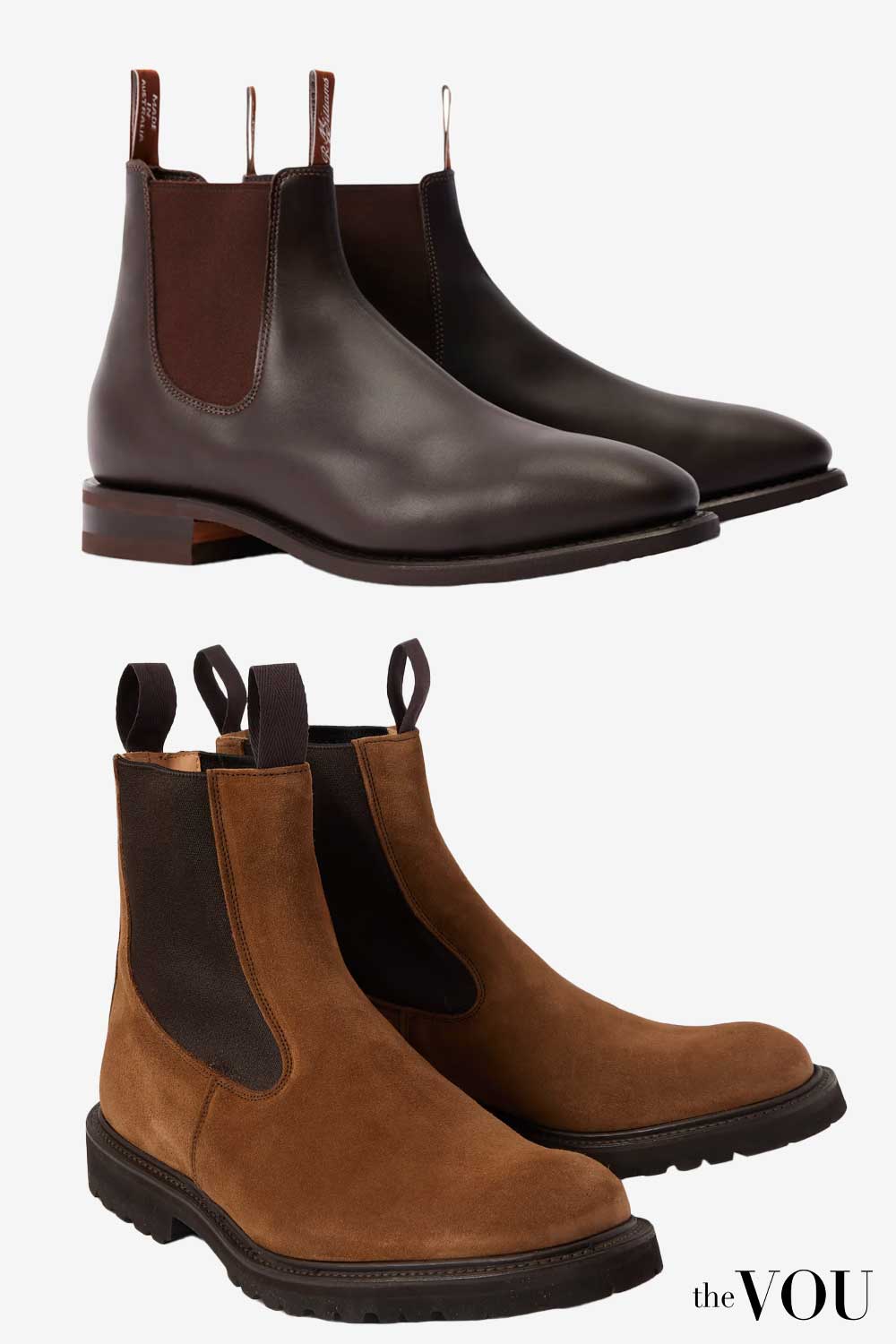
Chelsea boots in dark brown leather and tan suede.
The elastic-sided boot that takes cords and chinos equally well. The original article named R.M. Williams, which is Australian, and Tricker’s, which is English; the classic outfit on the ideas page is built on a brown pair.
Wellington Boots
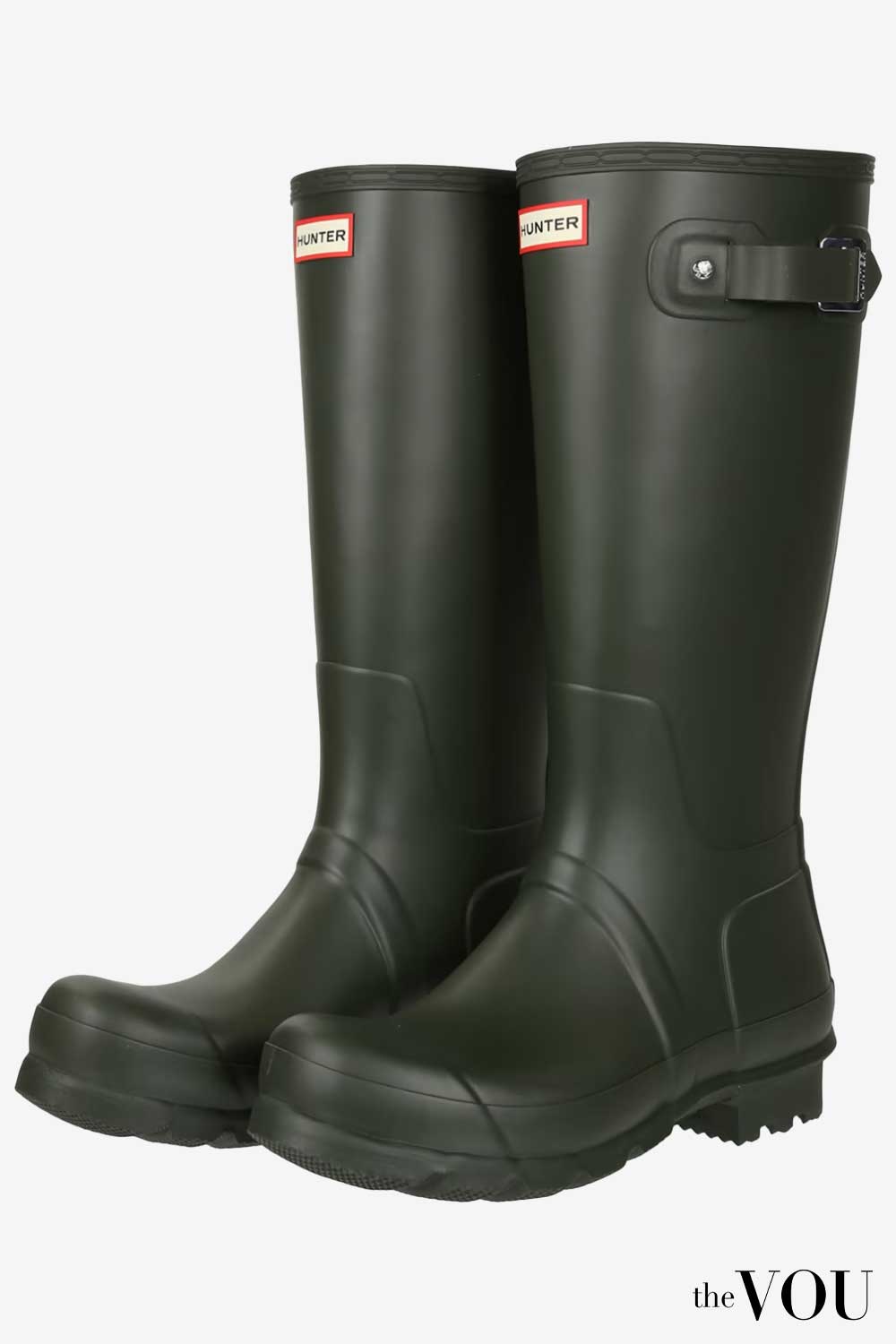
Green wellingtons.
Hunter’s Original boot, which the company dates to 1956, is the one the Wikipedia entry on the maker describes as synonymous with the Sloane Ranger by the end of the 1980s, and green rubber boots, from Hunter or from Le Chameau, Aigle or Dubarry, remain the one item most people would name first. The VOU’s Hunter boots styling guide has the outfits.
Duck Boots
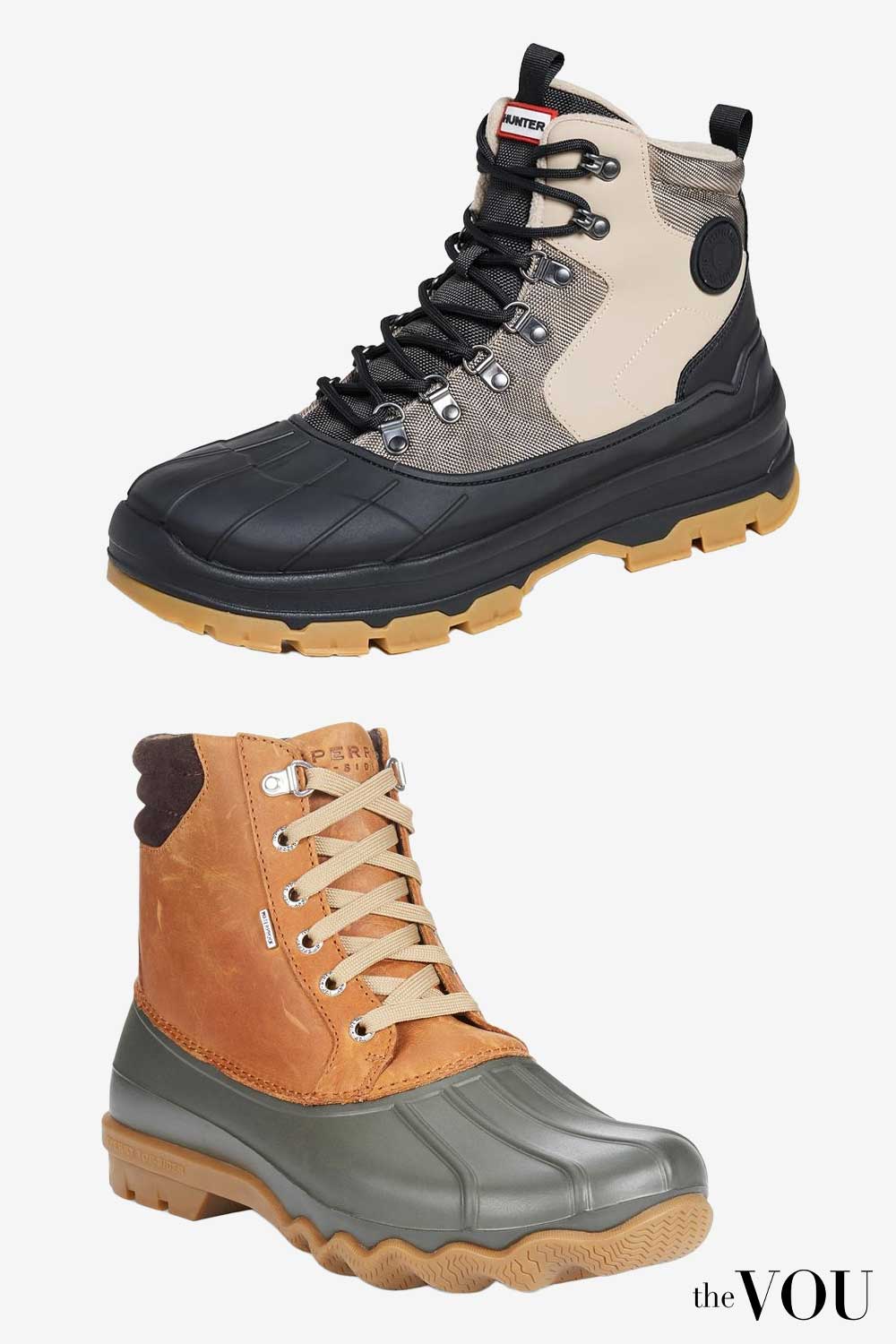
A rubber-footed lace-up boot and a tan duck boot.
The duck boot, a leather upper on a rubber foot, is an American design rather than a British one, and it belongs to the preppy side of the family; it appears here because the original article included it and because it does the same wet-weekend job as a wellington. The VOU’s British versus American preppy guide draws the line between the two wardrobes.
Ties, Pocket Squares and Scarves
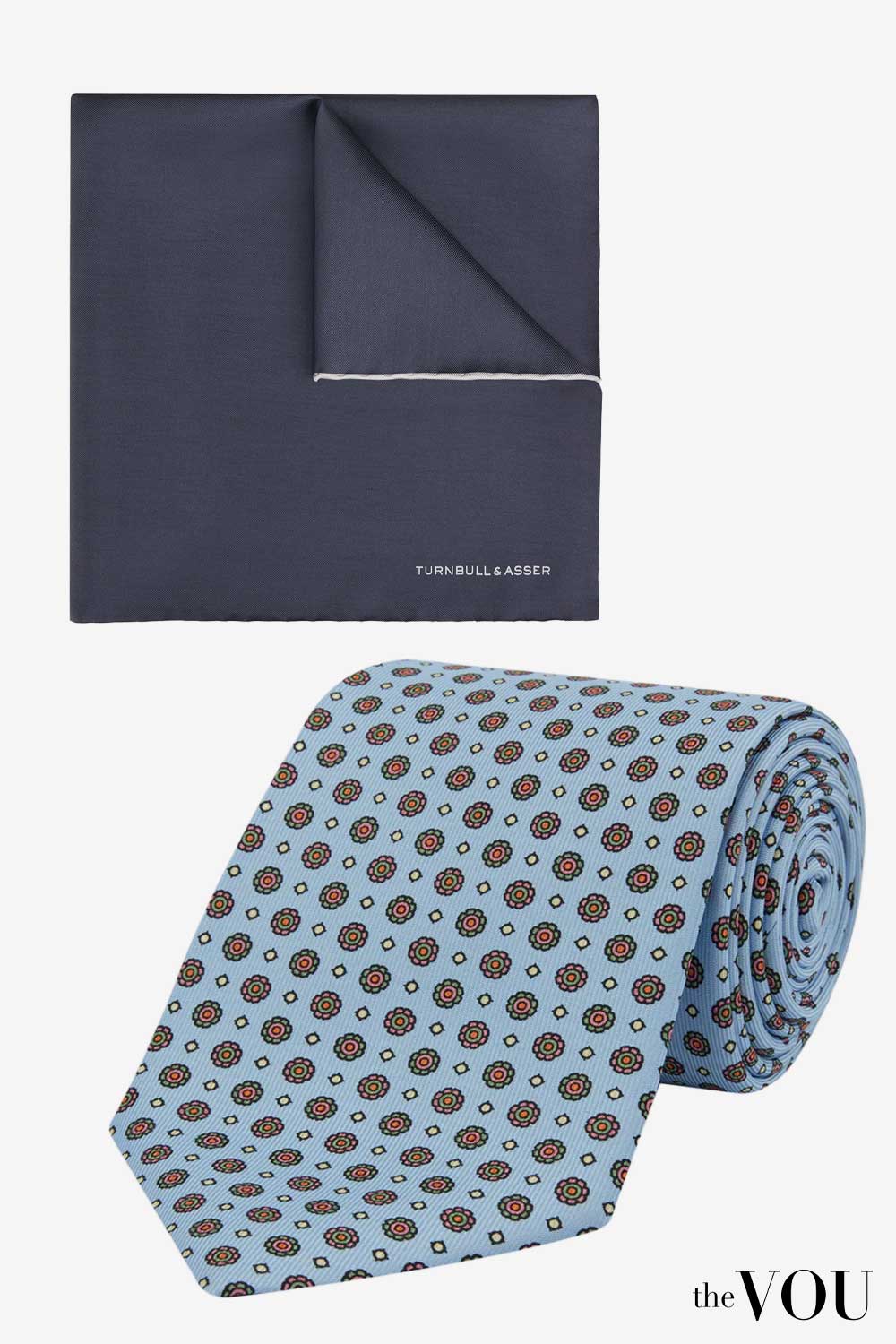
A navy pocket square and a light blue medallion tie, credited by the original article to Turnbull & Asser.
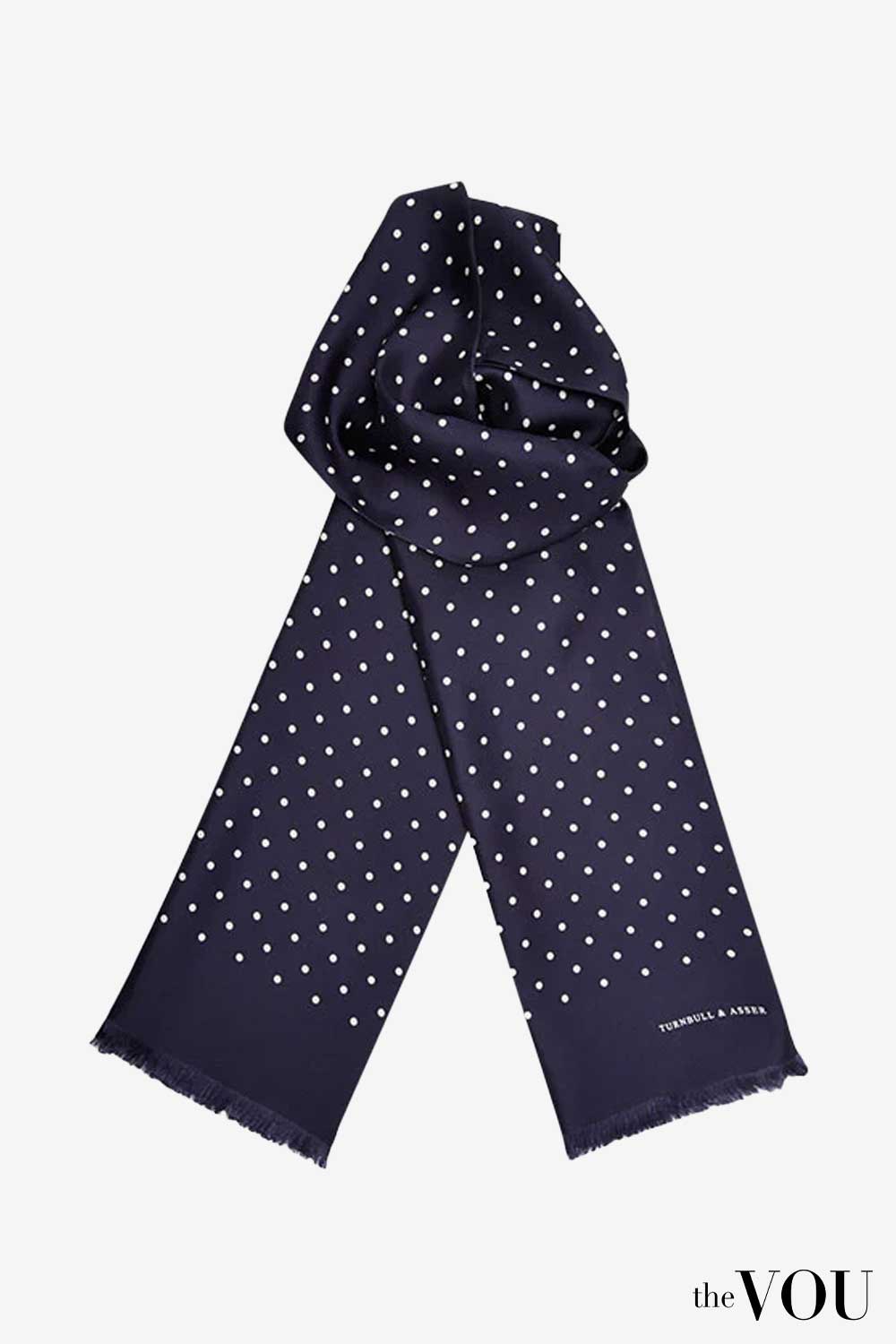
A navy polka-dot silk scarf.
Silk ties in repp stripes, small medallions and paisleys, a plain or spotted pocket square, and a silk or wool scarf make up the Sloane man’s accessories, which, on this page’s reading of the wardrobe, are few and traditional. The original article named Turnbull & Asser and Drake’s.
Gloves, Umbrellas and Flat Caps
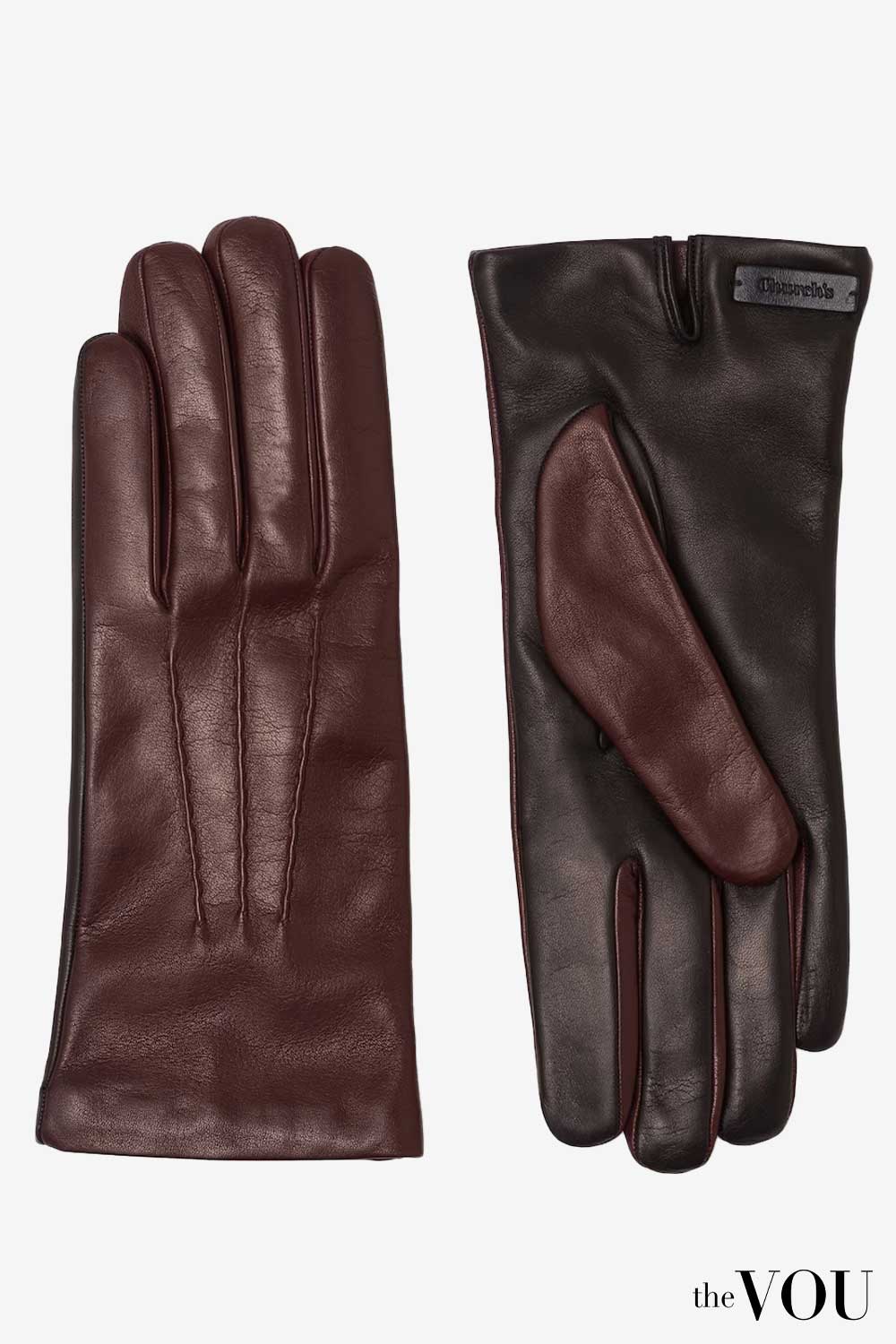
Leather gloves in burgundy and dark brown.
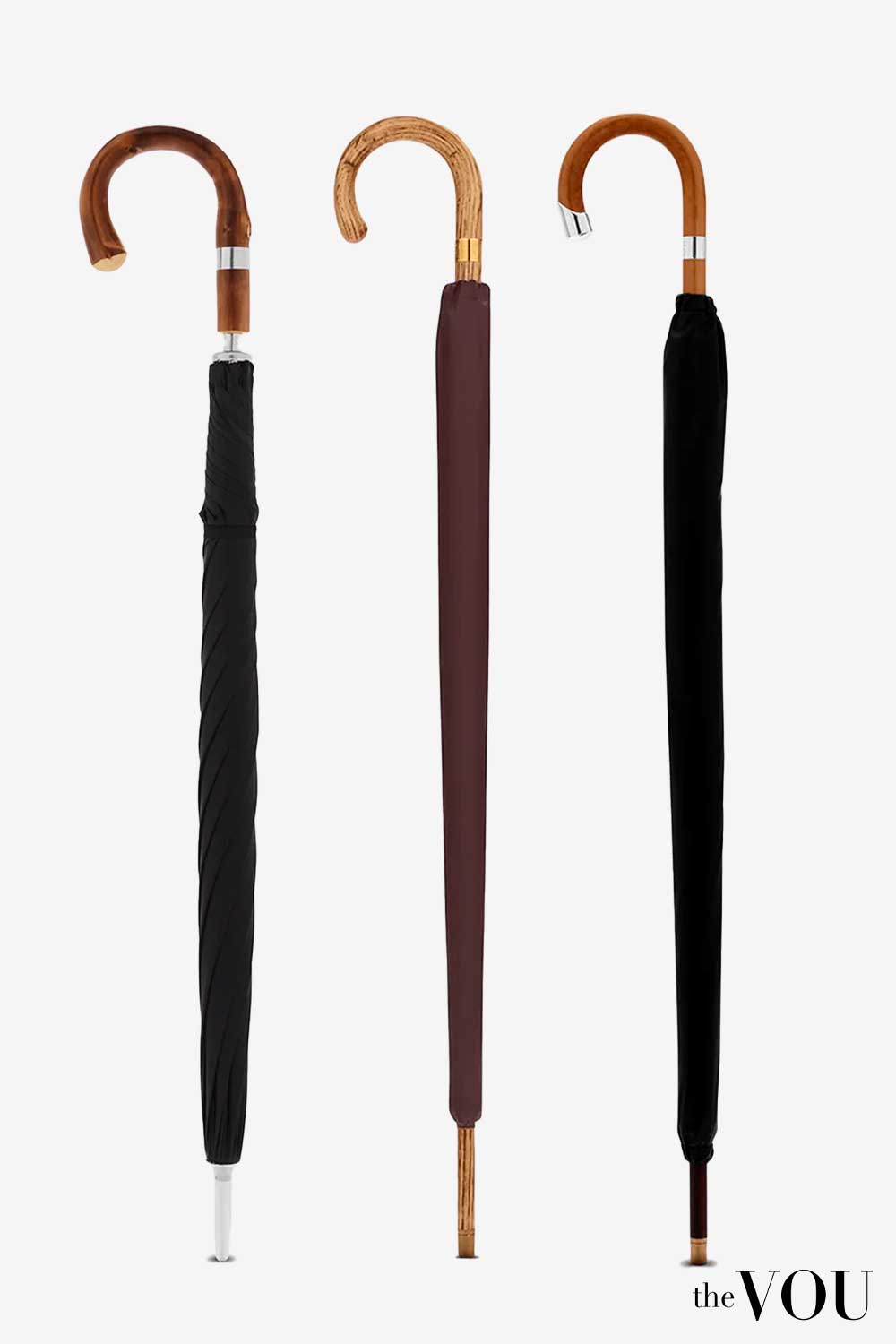
Umbrellas with wooden crook handles and plain canopies; the original article named Swaine London.
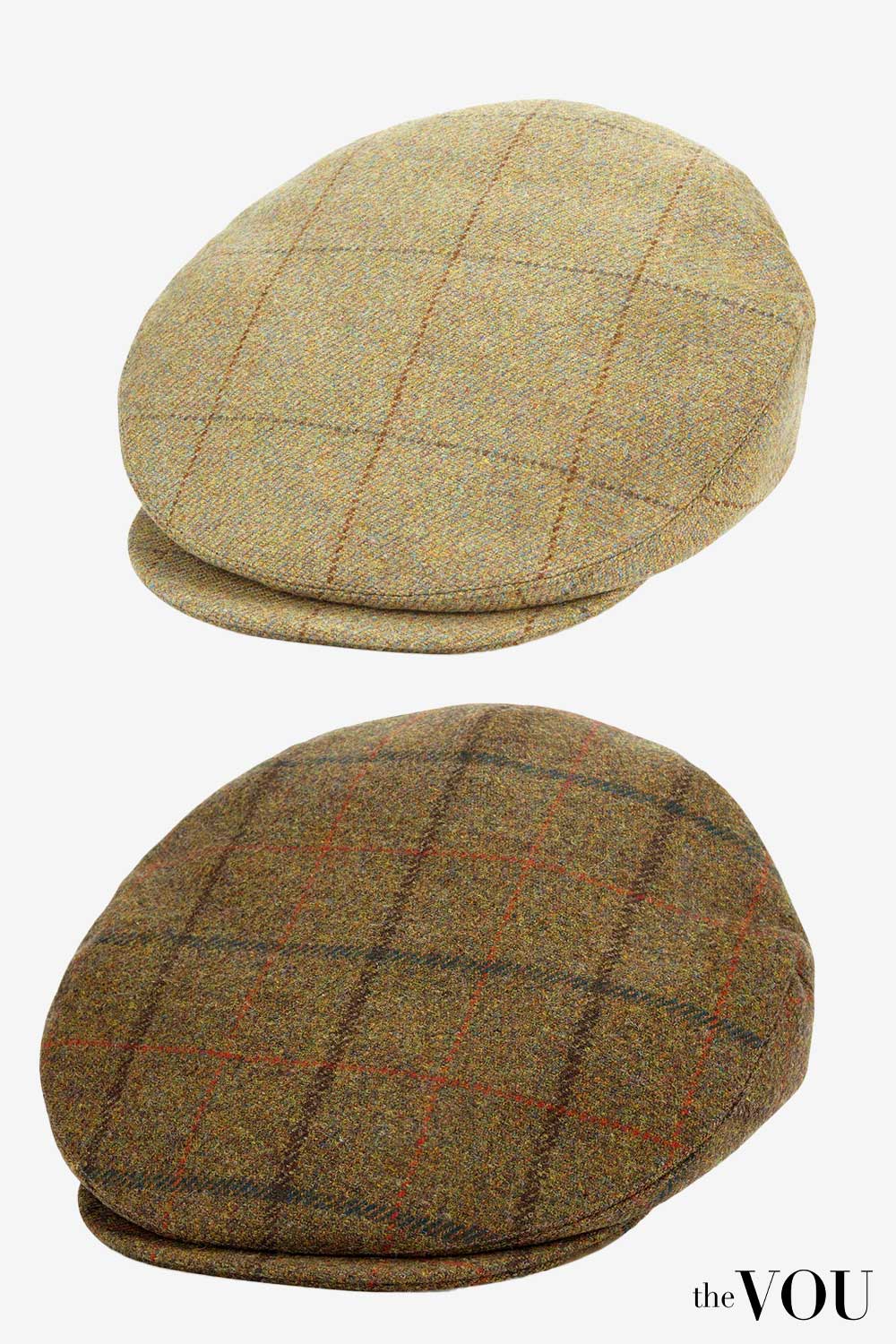
Tweed flat caps in two checks.
Leather gloves in brown or black for winter, an umbrella, shown here with a wooden crook handle as one option (a folding one does the same job), and a tweed flat cap for the country. The original article named Church’s for gloves and Swaine London for umbrellas. Luxury London’s list of the male Sloane’s clothes includes a crested signet ring on the little finger; whether you wear one, or any other jewellery, is your own choice.
By season
Sloane Ranger Style by Season
The wardrobe above does not change much with the calendar; the weight of the cloth and the number of layers do. Each season below keeps four of the original article’s photographs, described as they appear.
Spring
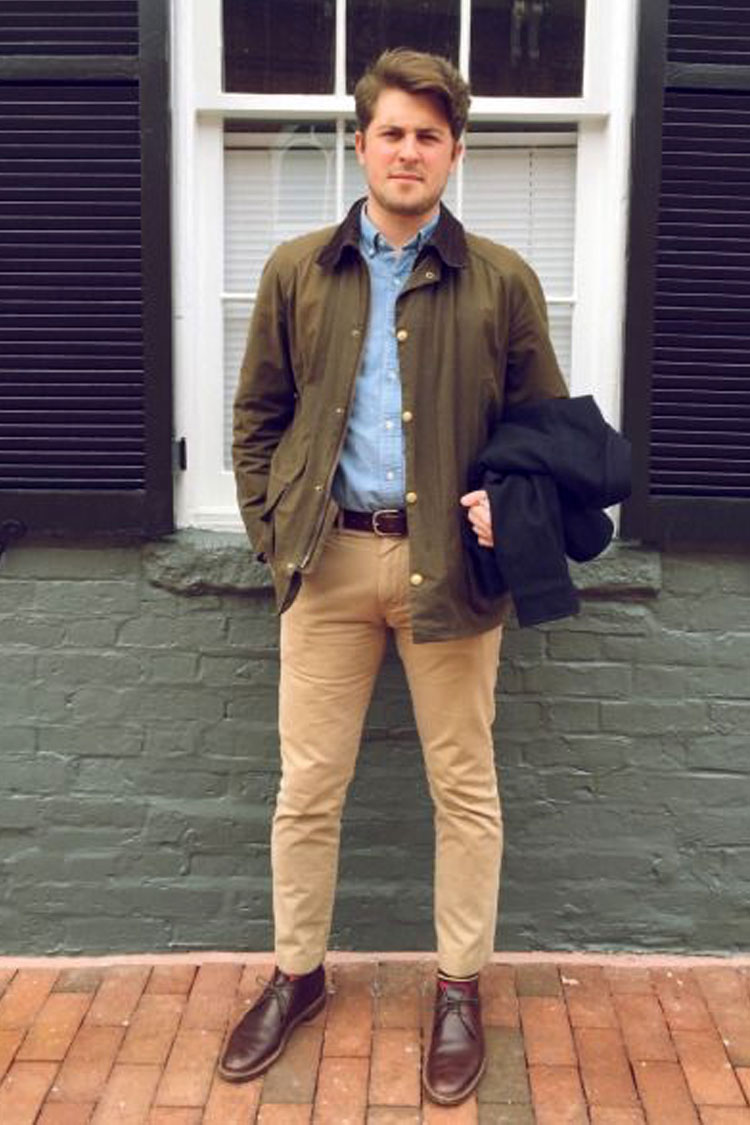
Olive waxed jacket, light blue shirt, tan chinos and brown boots.
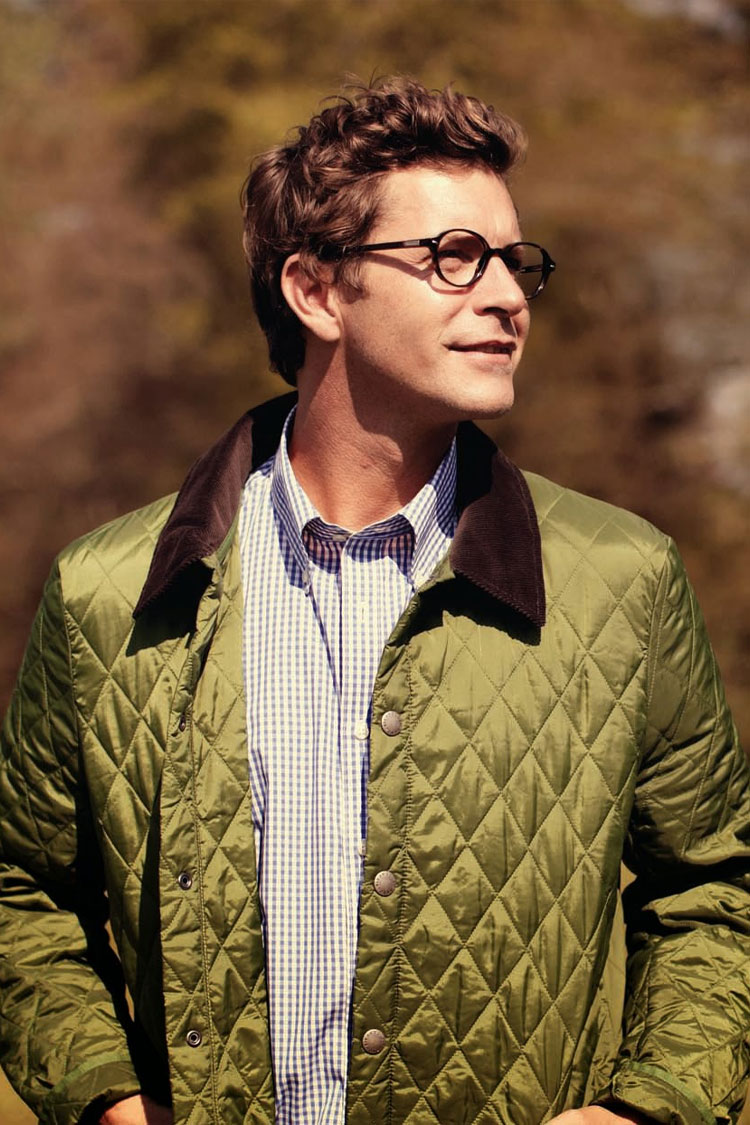
A green quilted jacket over a gingham check shirt.
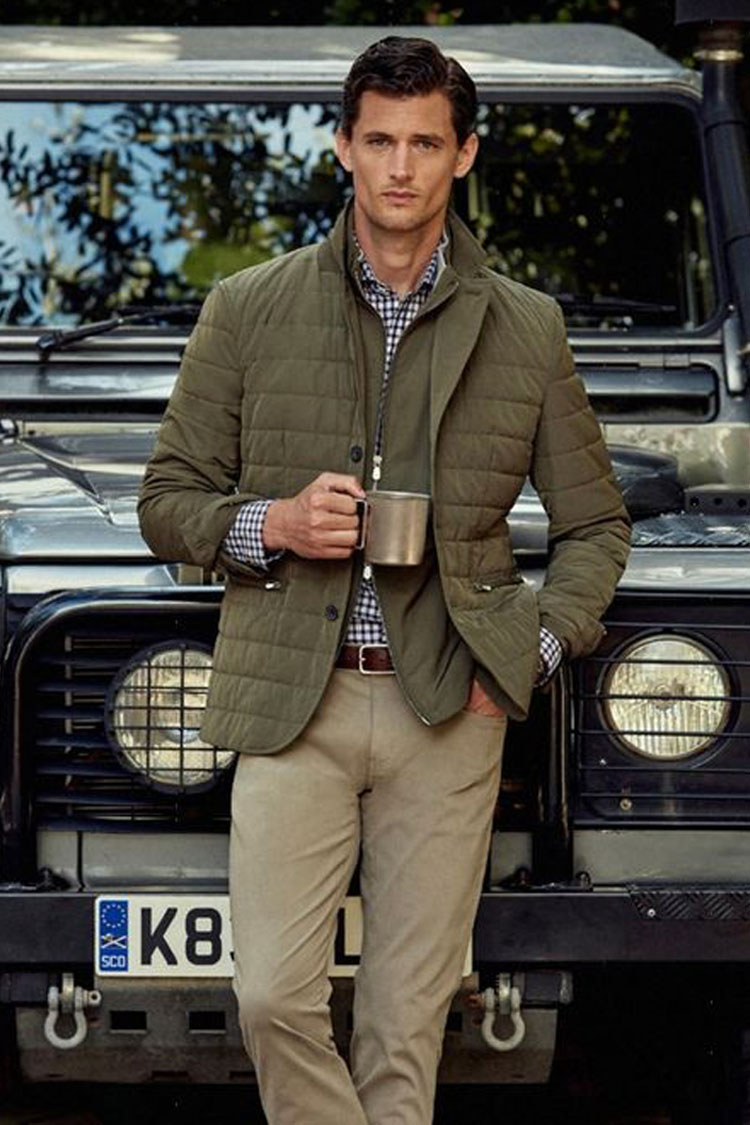
Olive quilted jacket, check shirt and stone chinos beside a Land Rover.
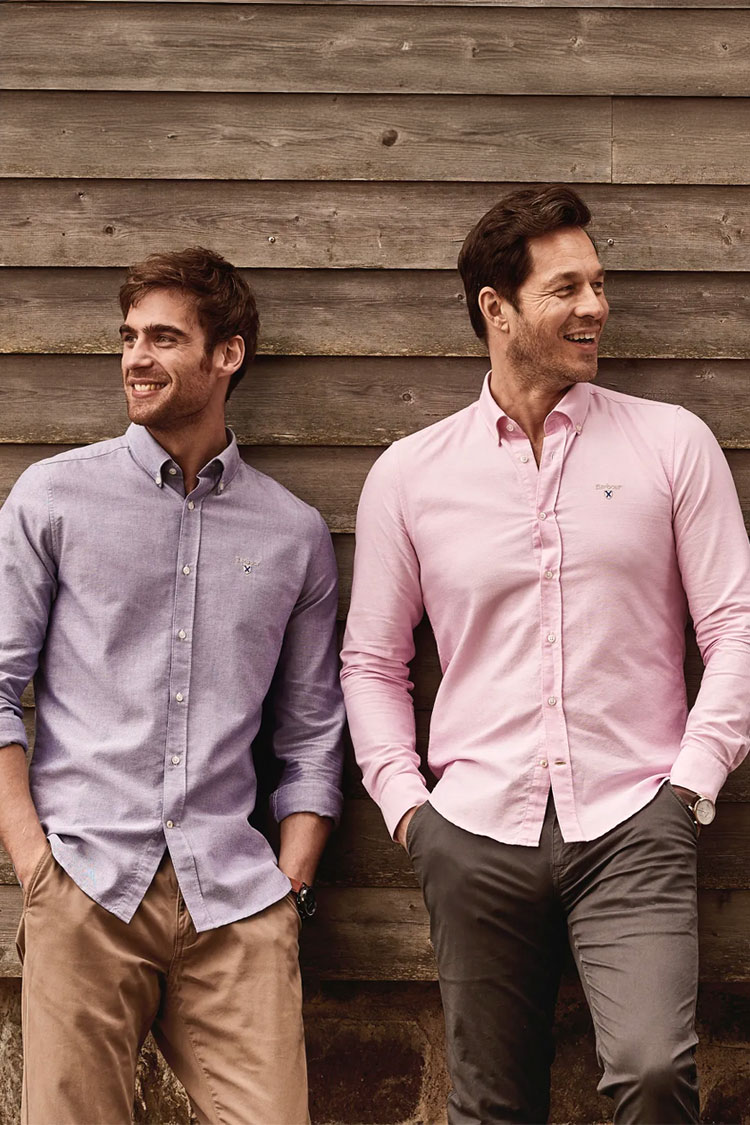
Oxford shirts in lilac and pink with chinos.
Spring is the quilted jacket’s season and the pastel Oxford shirt’s. Pale blue, pink or lilac over stone or tan chinos, brown loafers, and the waxed or quilted jacket over the top on cold mornings. A jumper under the jacket when the weather asks for it; the season decides the layers, not the style.
Summer
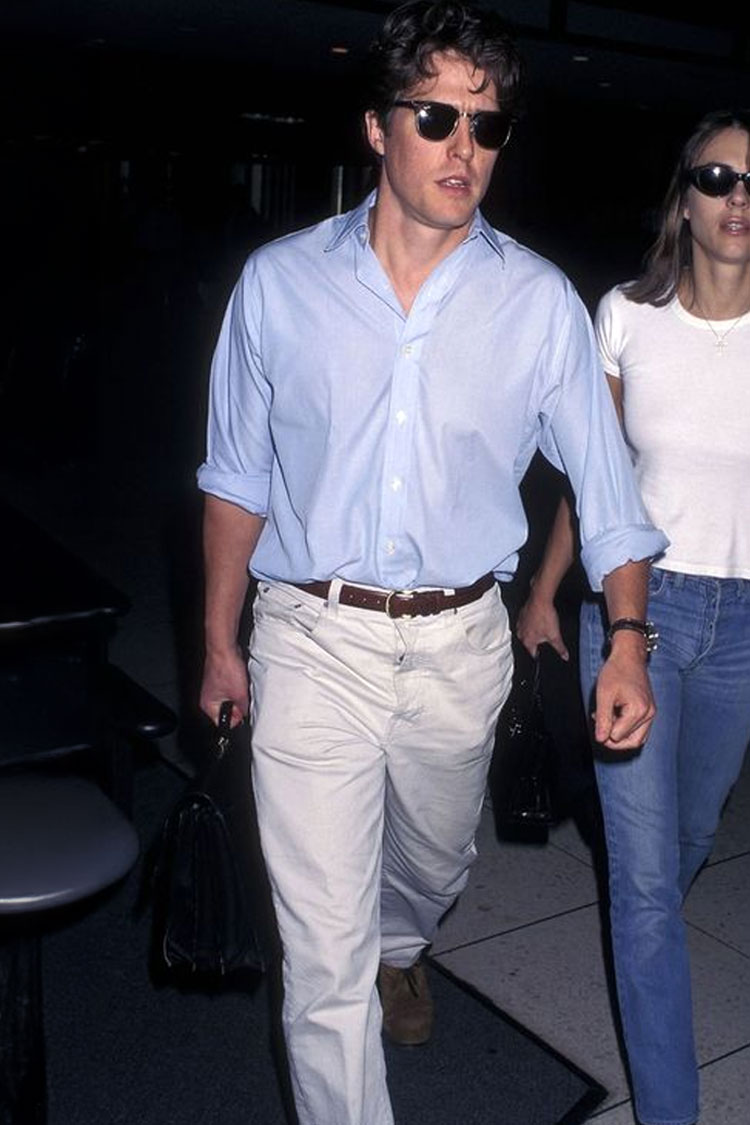
Pale blue shirt with rolled sleeves and cream chinos. Photograph used in the original version of this article.
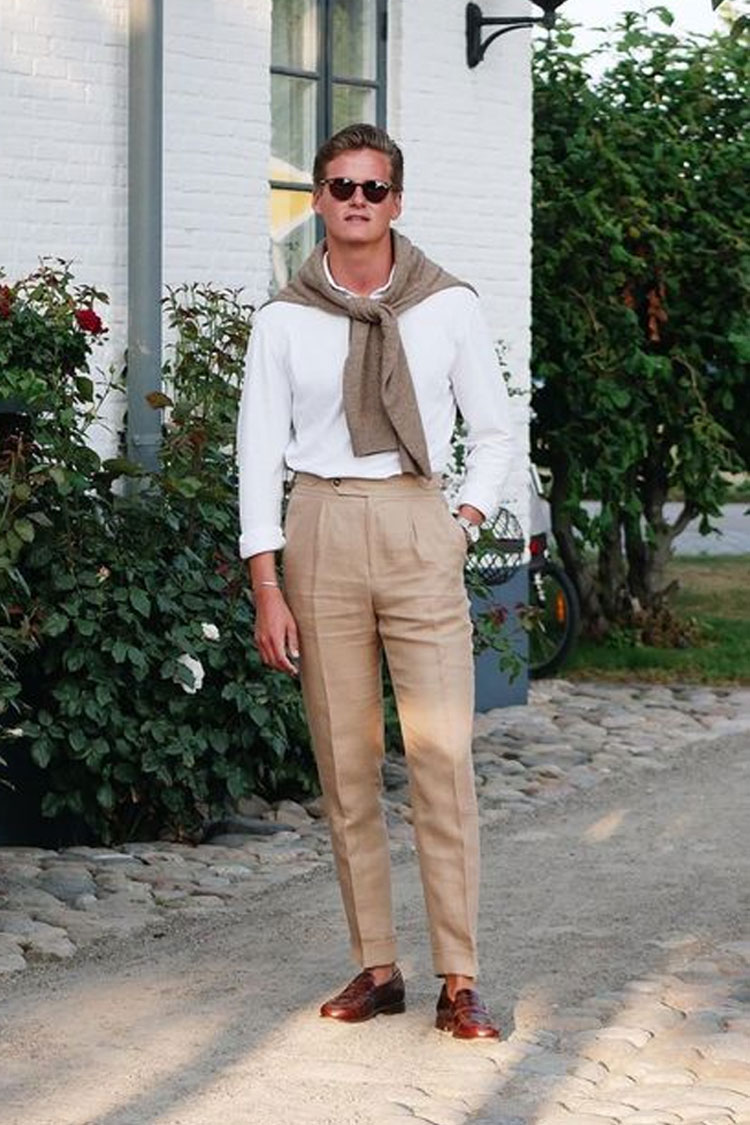
White shirt, a camel jumper over the shoulders, tan trousers and loafers.

A pale check blazer over a white polo by the sea.
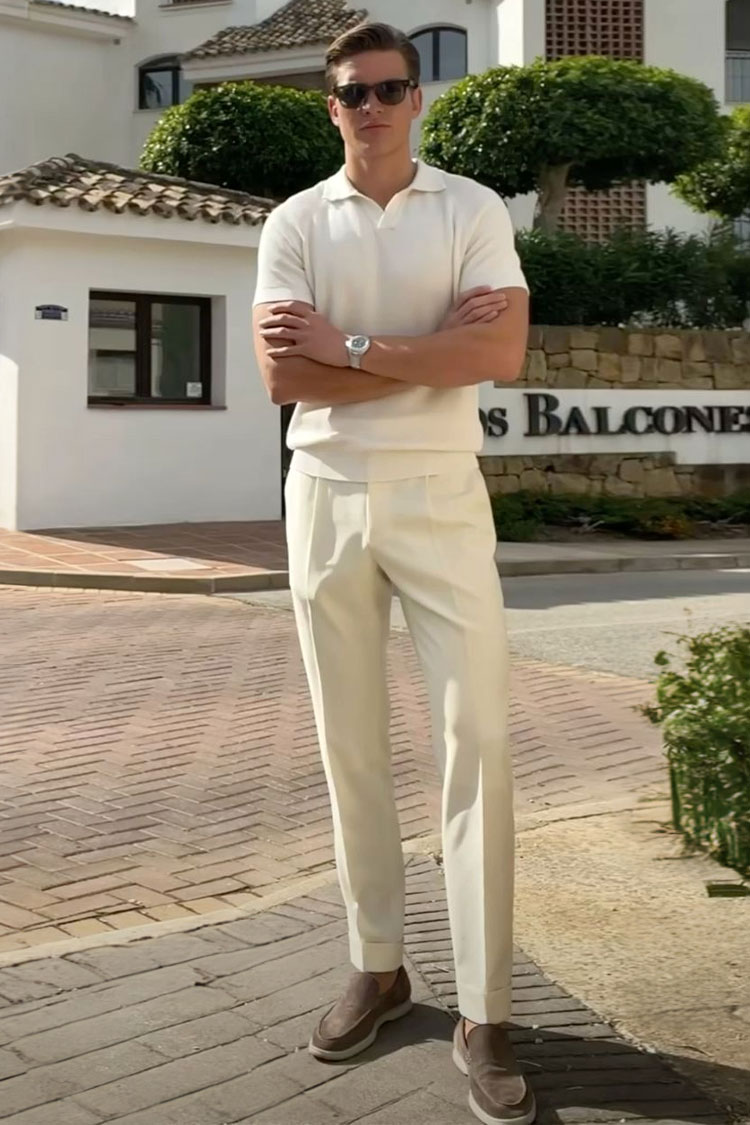
Cream knitted polo, cream trousers and suede loafers.
In summer the shirts lose their jackets and the trousers get lighter, which means cream or stone chinos, a linen or cotton shirt with the sleeves rolled, a knitted polo, loafers or boat shoes without socks, and a jumper over the shoulders for the evening. A pale linen or cotton blazer covers the garden party; the outfit ideas page has the regatta version with the piped navy blazer.
Autumn
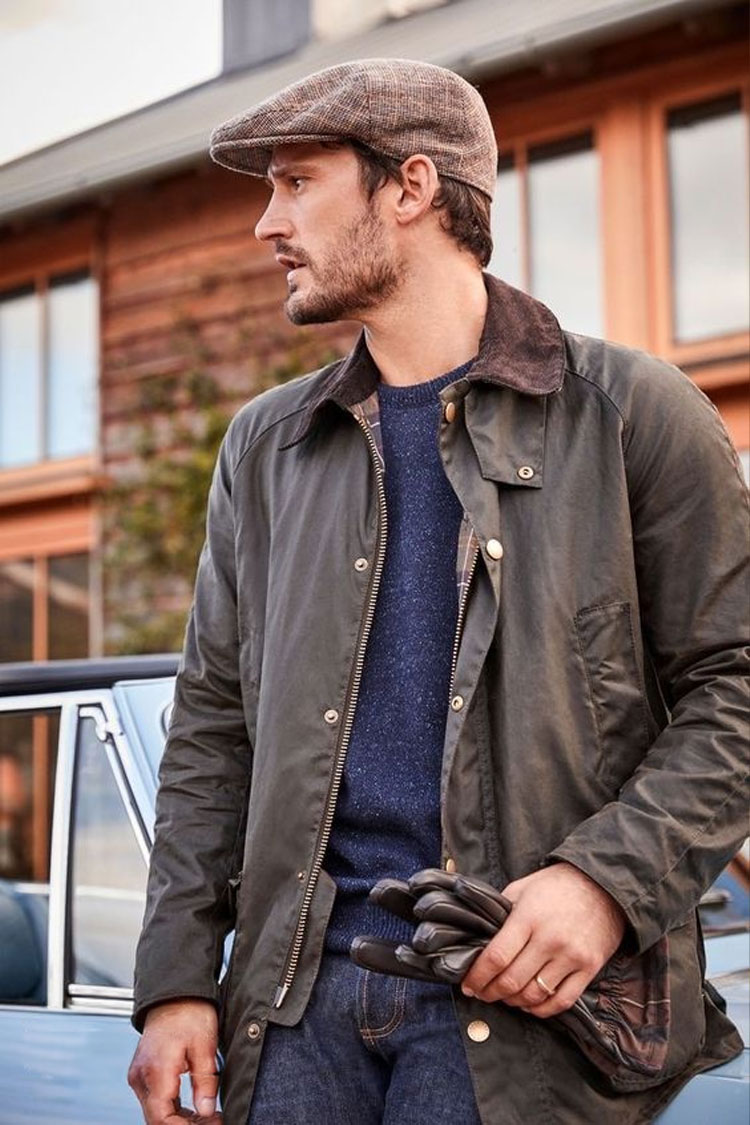
Waxed jacket, navy knit, tweed cap and gloves.
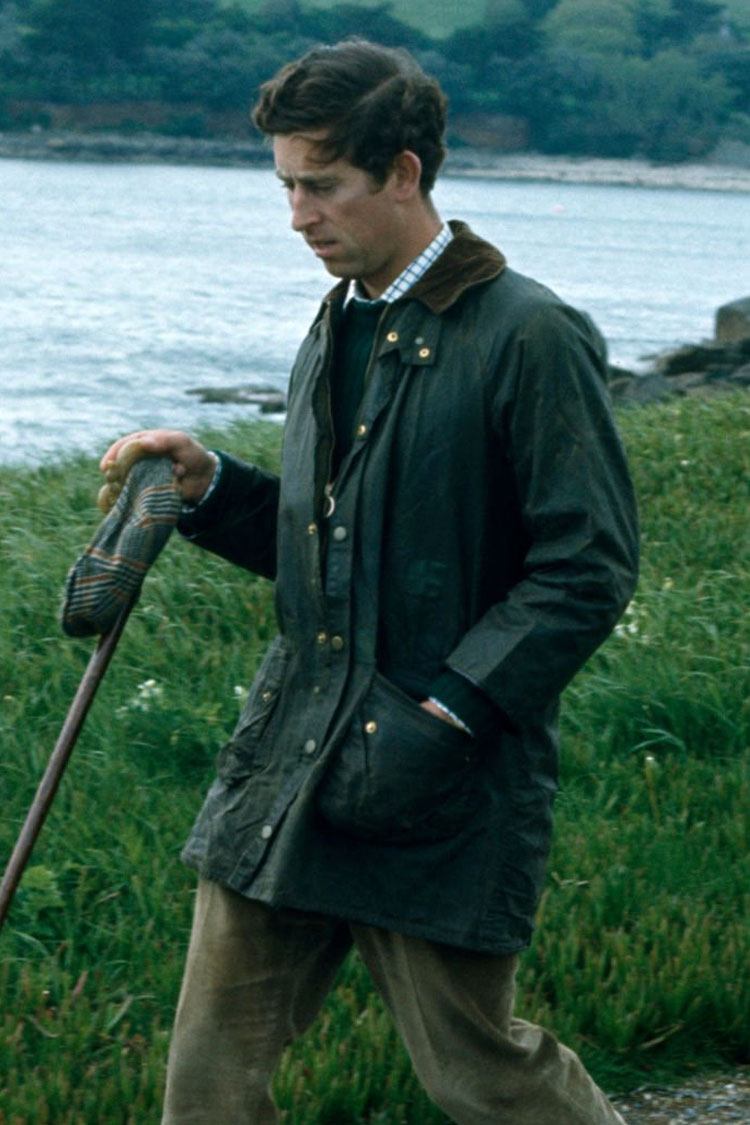
Waxed jacket, jumper, cords and a walking stick. Photograph used in the original version of this article.
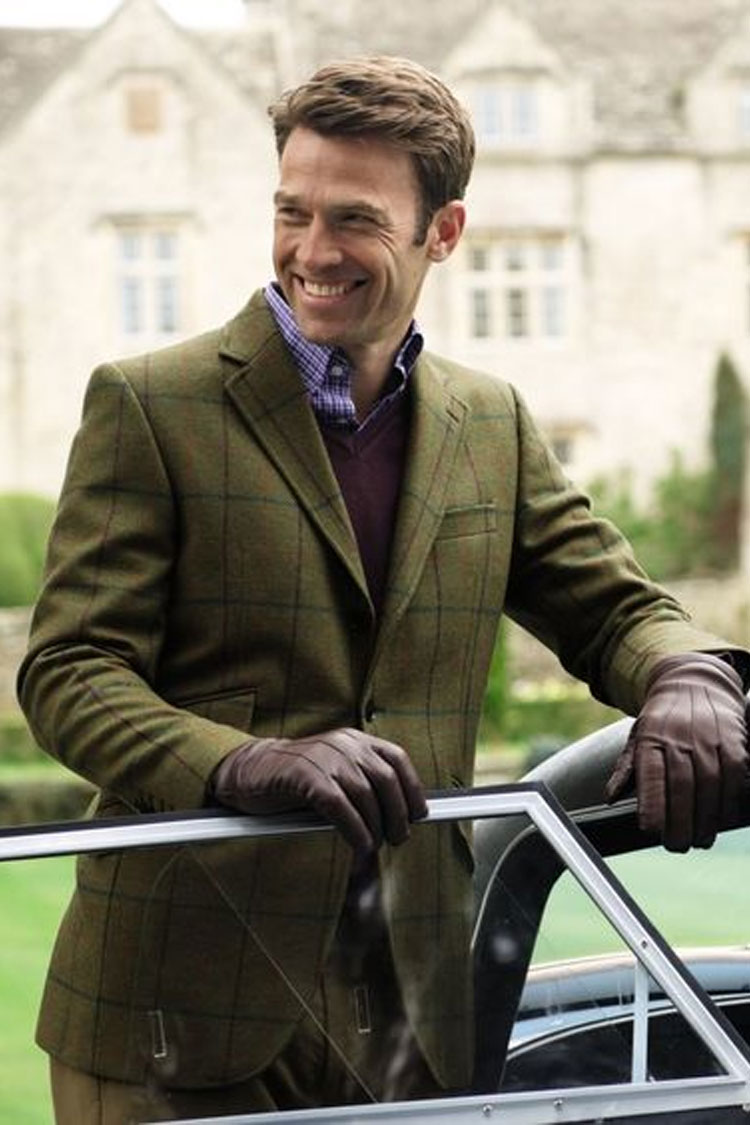
Green check tweed, a burgundy jumper and gloves.
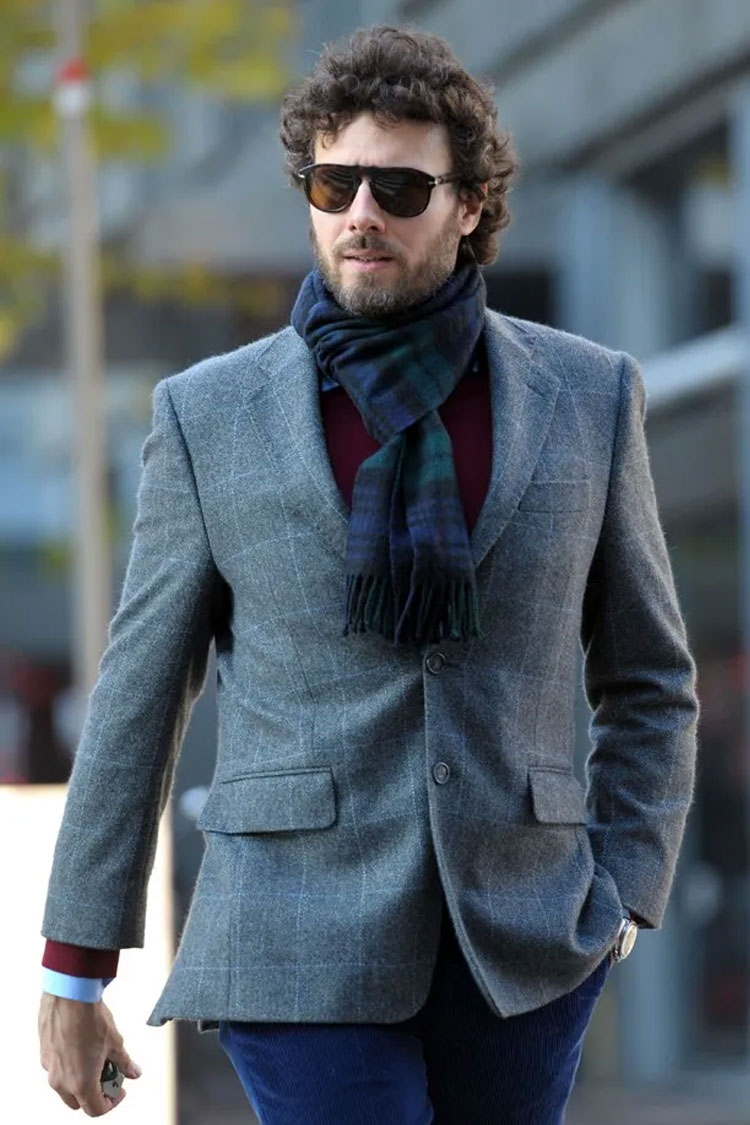
Grey check blazer with a tartan scarf.
Autumn is where the wardrobe lives most comfortably. Tweed comes back, the waxed jacket goes over knitwear rather than a shirt alone, cords replace chinos, and the tweed cap, the scarf and the gloves come out. Brogues or loafers on dry days, boots when it is wet.
Winter
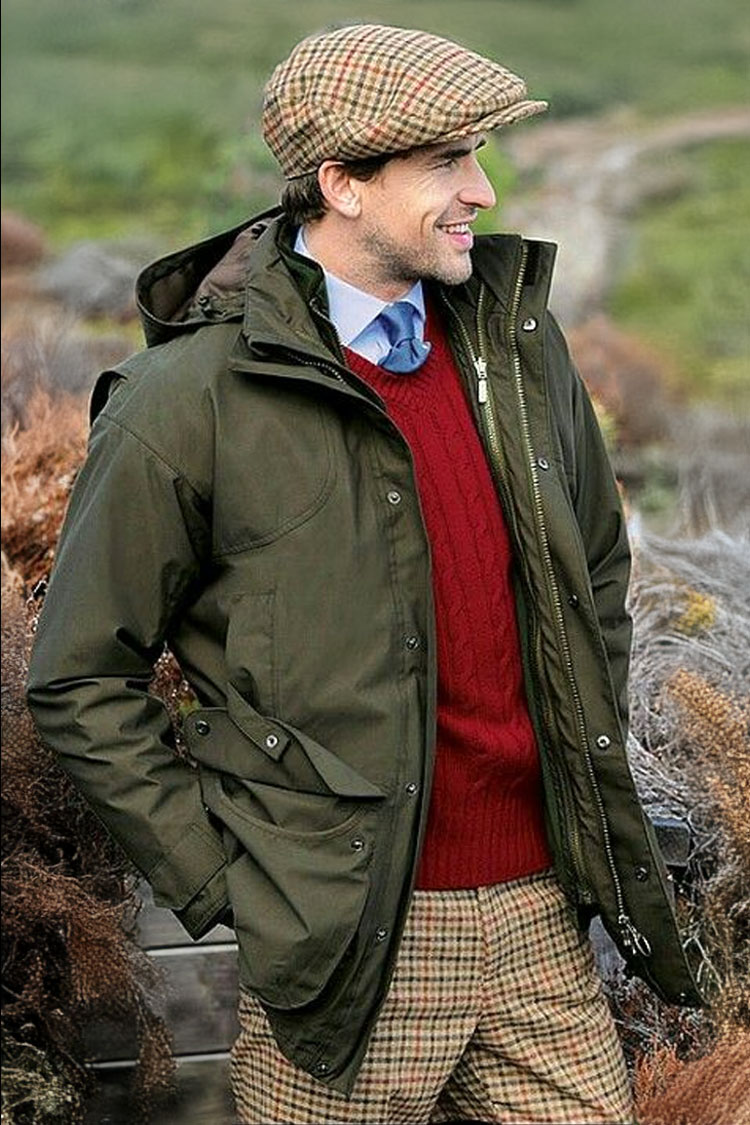
Green parka, red cable knit, tie, tweed cap and tweed trousers.
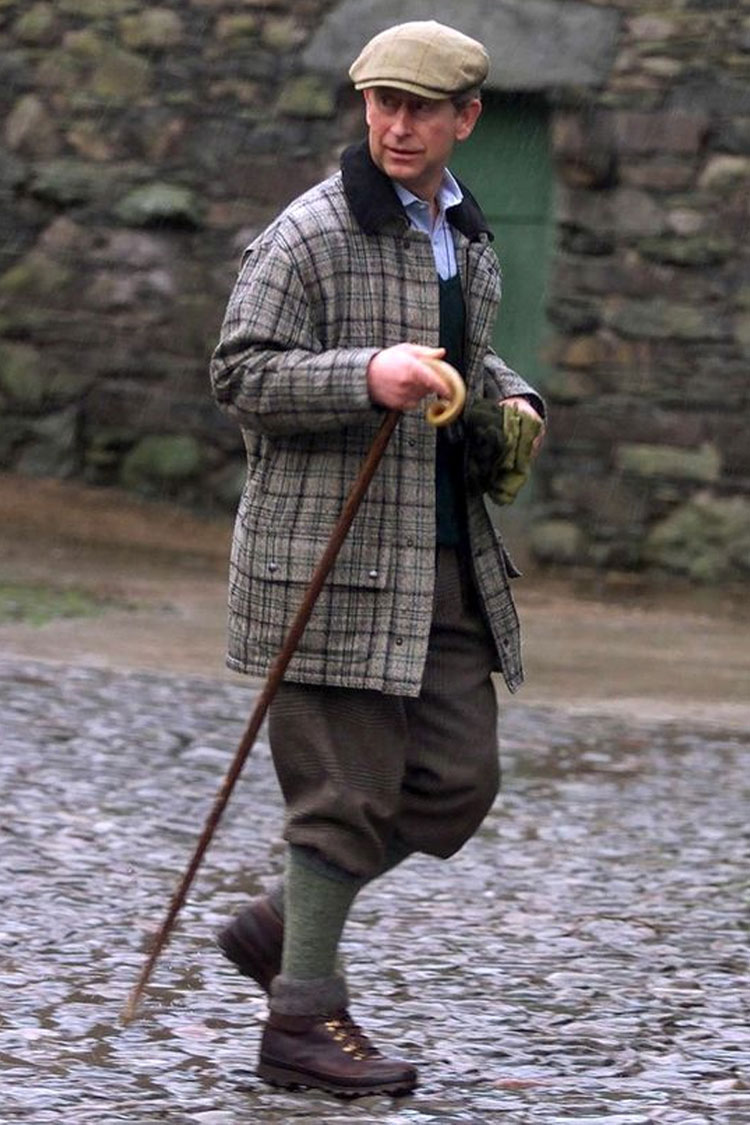
Tweed jacket, cap and plus-fours with a stick. Photograph used in the original version of this article.
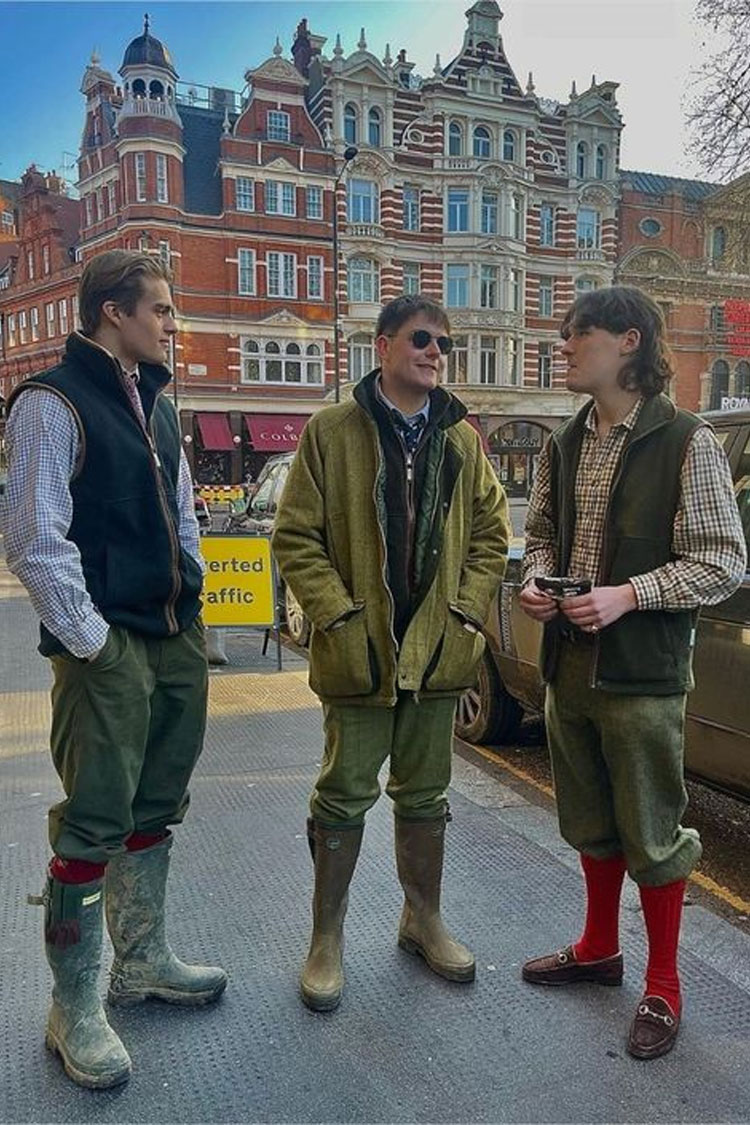
Three men in a town street in tweed breeks, gilets and wellingtons, one of them in red socks and loafers. This is the full country kit worn in town. Photograph used in the original version of this article; its date and setting are not recorded.
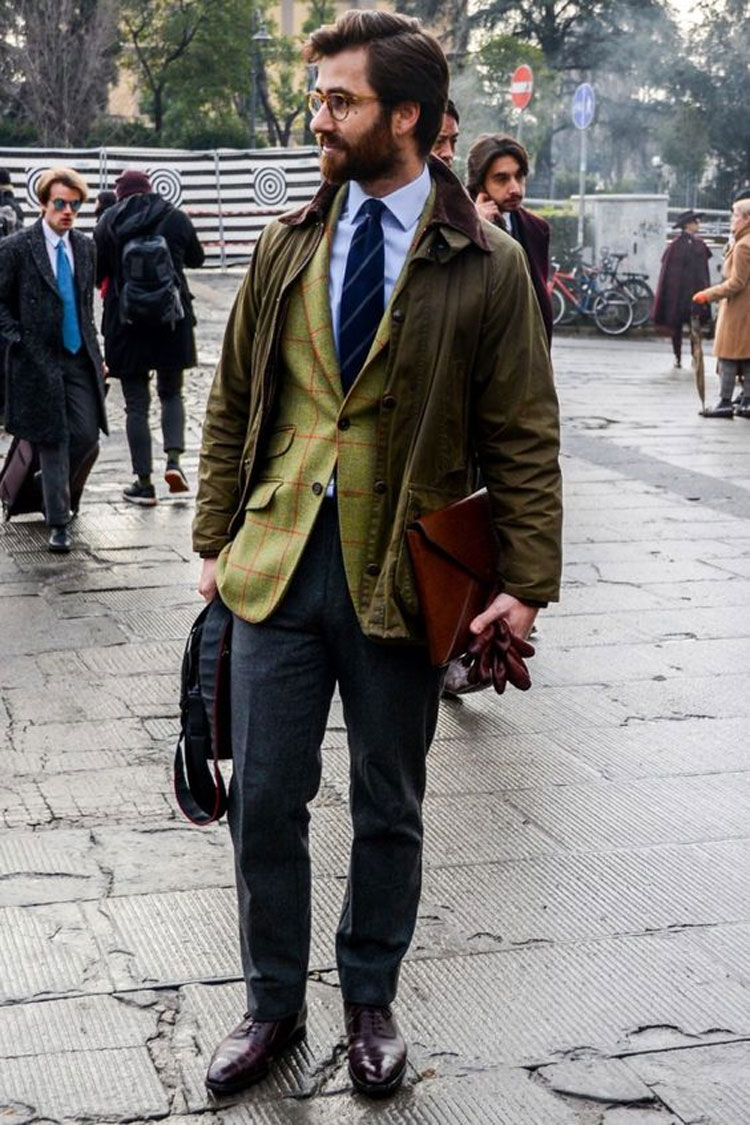
A tweed jacket under a waxed jacket, tie, grey trousers and a briefcase.
Winter is layers, with a rollneck or a heavy jumper, a tweed jacket, the waxed jacket or a parka over both, cords or tweed trousers, and boots. In the country it becomes the shooting wardrobe of breeks, gilet and wellingtons; in town the tweed jacket and the waxed jacket go over a shirt and tie, without the breeks.
By occasion
Sloane Ranger Style by Occasion
Six occasions, each with the outfit illustration from the original article described as it appears. For fuller outfits with every garment labelled, see the outfit ideas page.
A Weekend in the Country
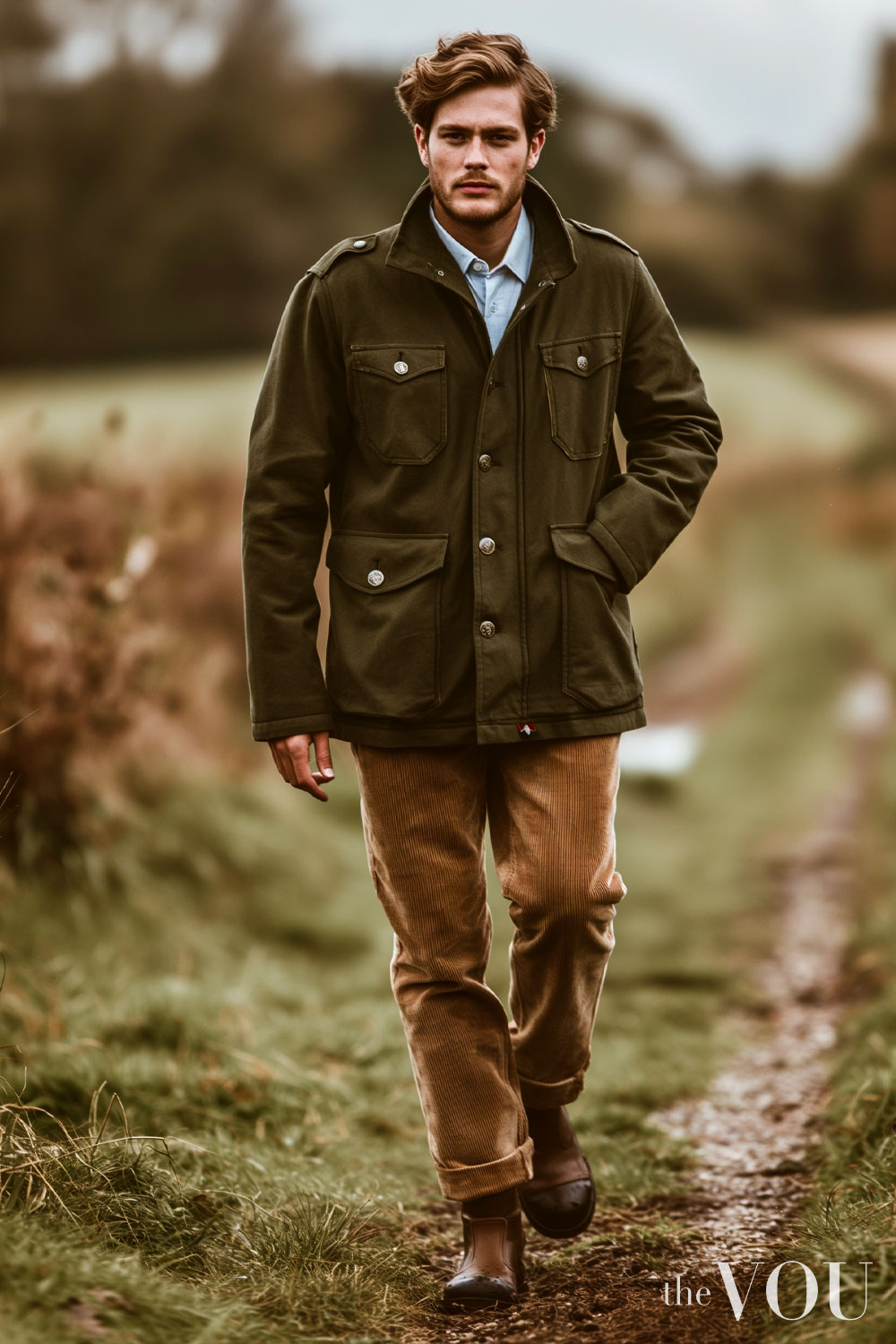
Olive field jacket, light blue shirt, tan cords and brown boots.
A waxed or field jacket in olive, a light blue Oxford shirt, tan or brown cords and boots that can take mud are the basic Sloane weekend, and the outfit most of the wardrobe above was bought for.
An Evening Out
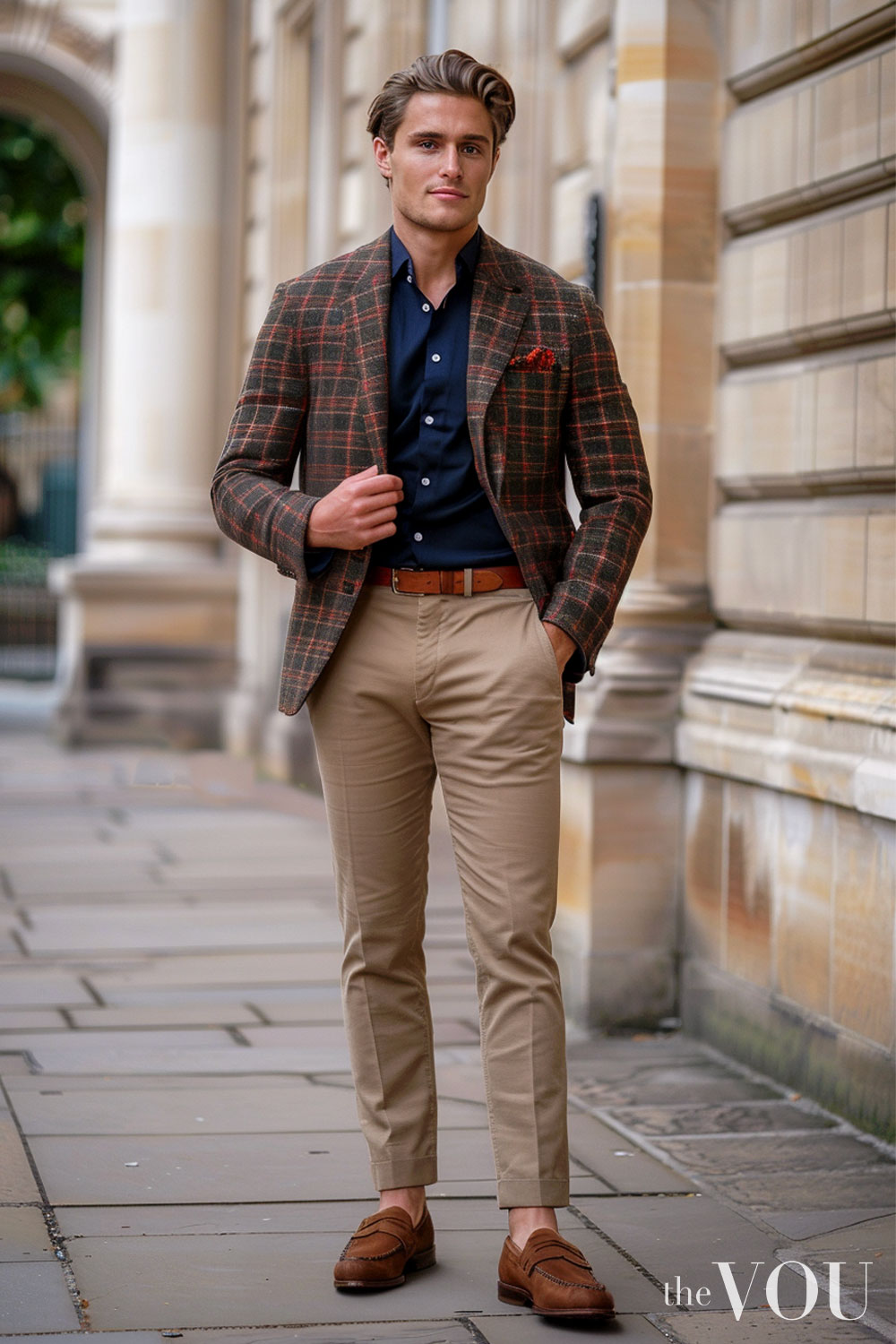
Brown check blazer, navy shirt, red pocket square, tan chinos and loafers.
A check tweed or wool blazer over a plain dark shirt, tan chinos and brown loafers, with a pocket square as the one flourish. It is the town version of the country jacket, and it works because everything but the pocket square is quiet.
A Garden Party
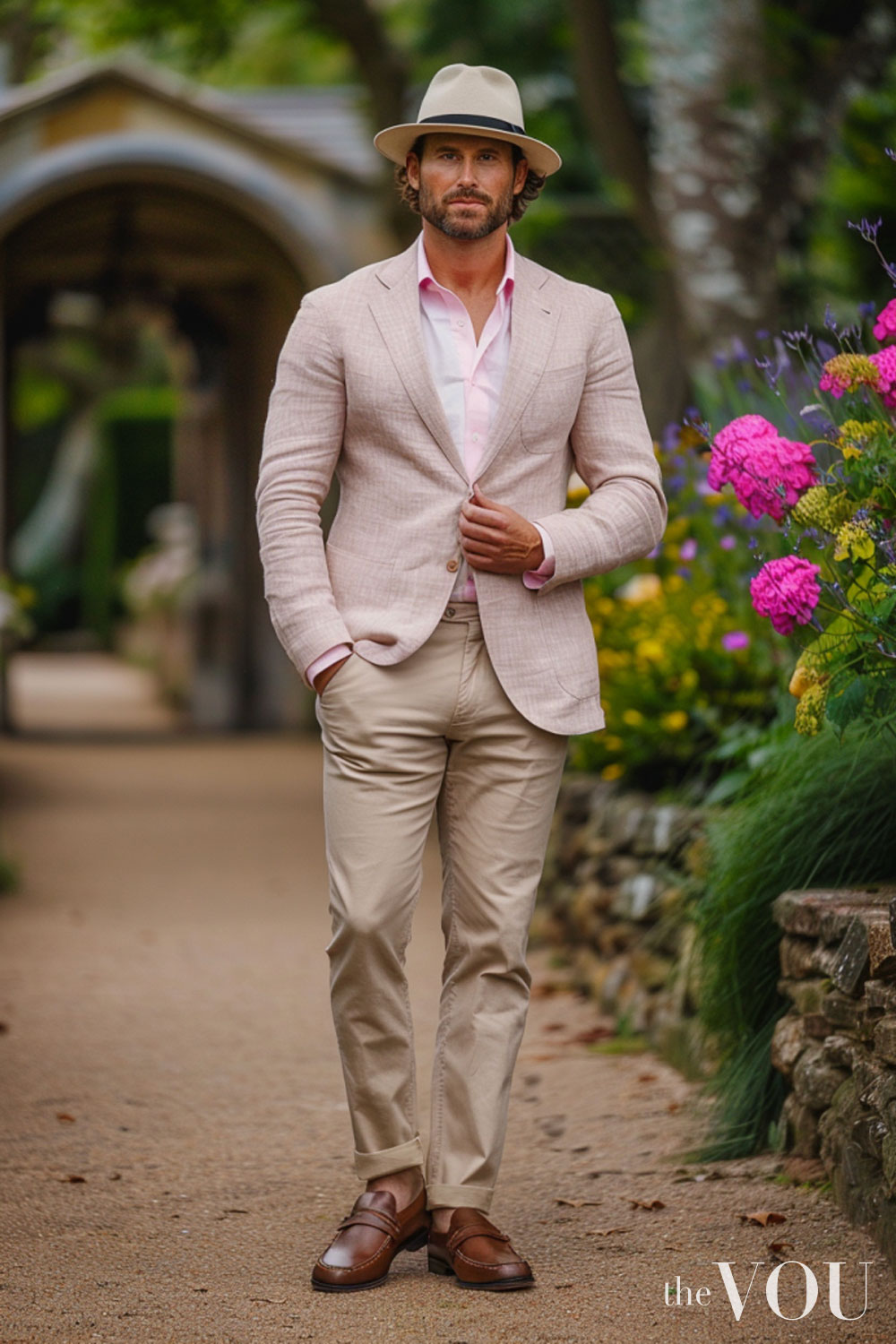
Pale pink blazer, pink shirt, cream chinos, loafers and a Panama.
A pale linen or cotton blazer, a pastel shirt, cream chinos and loafers, and a Panama if the sun is out. The Sloane version keeps the colours washed-out rather than bright.
A Day at the Races
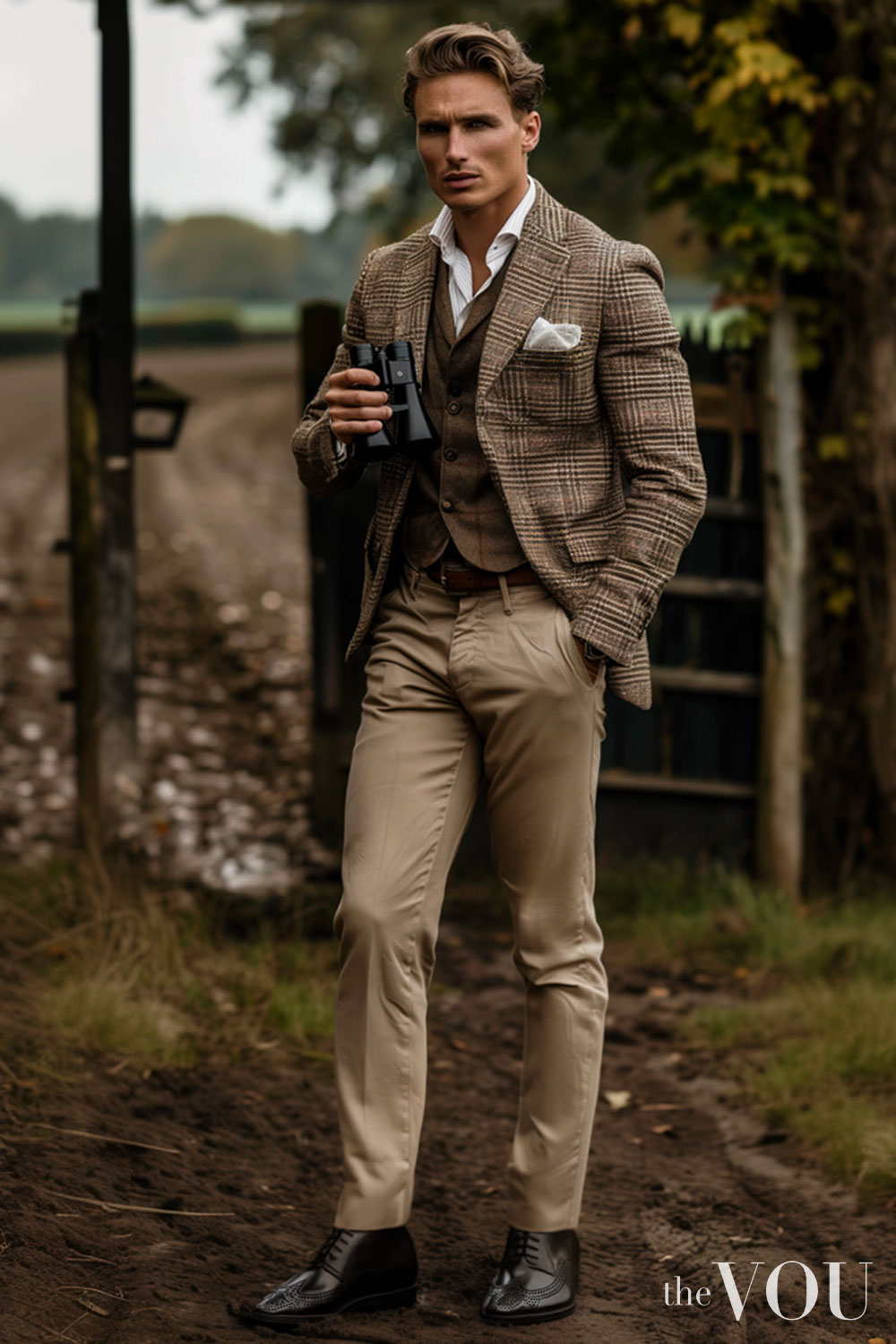
Brown check tweed, a waistcoat, white shirt, tan chinos and binoculars.
Tweed jacket, a waistcoat if you like, a white shirt, chinos and polished brown shoes or boots, and the binoculars are not a joke. Some enclosures publish a dress code and some do not; check the meeting’s own page before you go rather than relying on this one.
Dinner
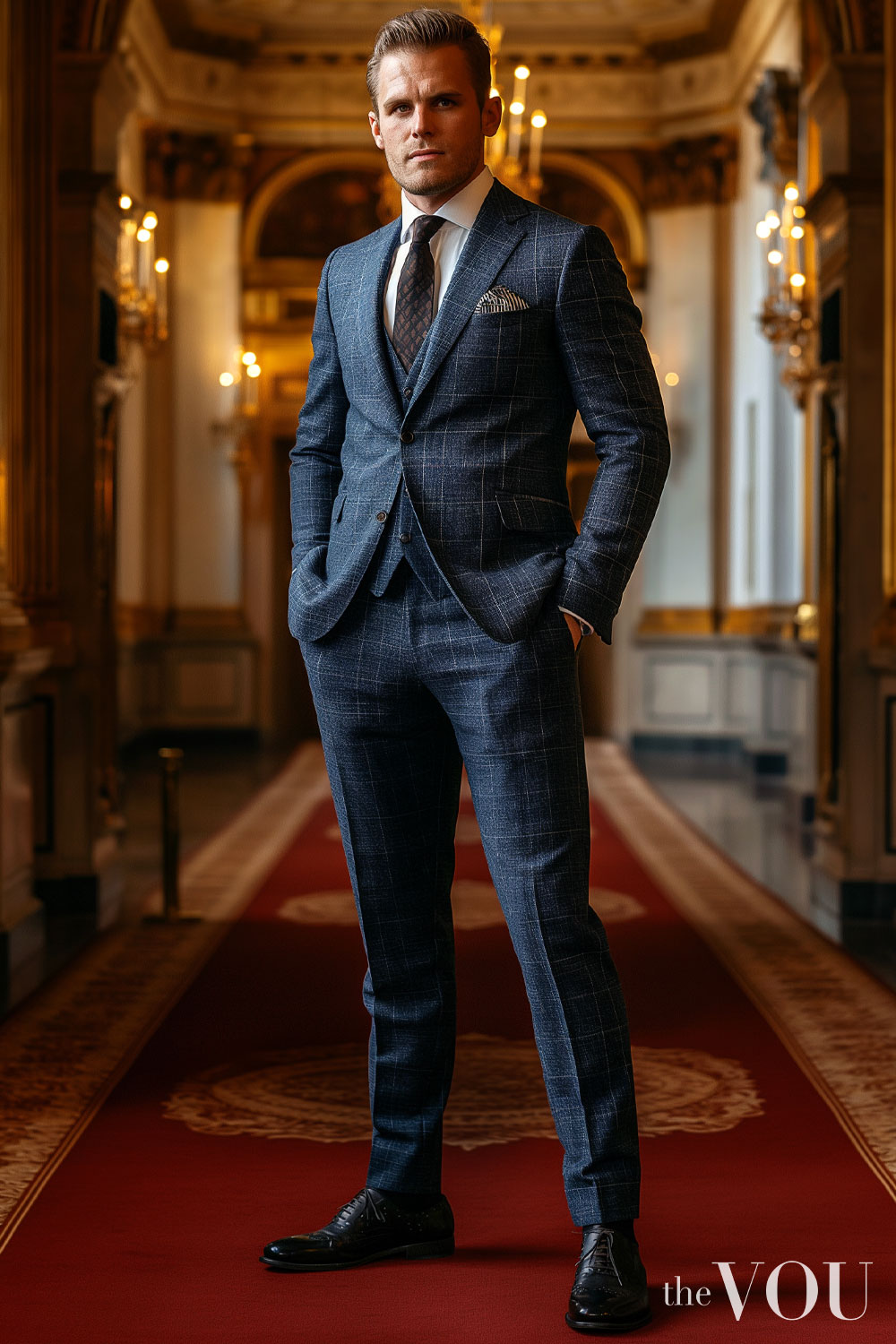
A navy check three-piece suit with a dark tie and pocket square. The cloth cannot be identified from an illustration.
Follow the dress code the host states, and read it as one of three cases. A country-house lunch or an informal supper takes the tweed three-piece on the outfit ideas page. An invitation that asks for a dark suit takes what the illustration shows, which is a navy or charcoal suit in a smooth cloth, a white shirt, a dark silk tie and black shoes (the illustration’s cloth is a navy check; a plain or windowpane worsted is the usual choice, though the picture cannot show the cloth). An invitation that says black tie is a different case again, because black tie means a dinner jacket with its own shirt, bow tie and shoes, not the dark suit pictured here, and this page does not cover that outfit. Where no code is stated, ask rather than infer one from the words “formal dinner”.
A Day in Town
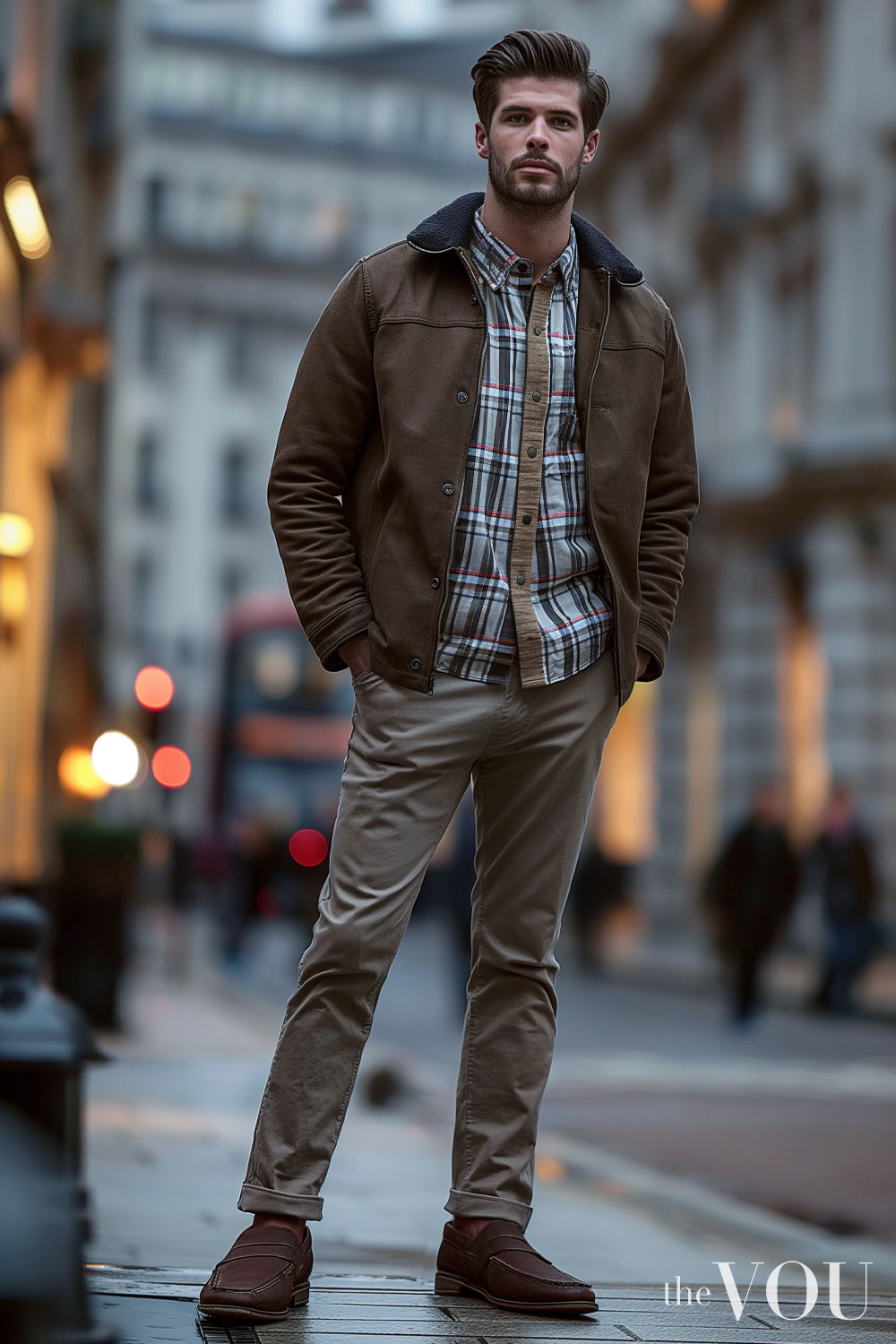
A brown jacket with a shearling-look collar, check shirt, stone chinos and loafers.
The country jacket in town means a waxed, field or shearling-collared jacket over a check shirt, stone chinos and loafers. It is the town version of the weekend outfit, and two or three of the country pieces at a time are enough; the full kit at once is the costume the section below warns about.
Who wears it
Sloane Ranger Style Icons
The original version of this article named five men and used the photographs below. They are kept here with what the photographs show; whether any of them would call himself a Sloane is not something a photograph can settle. The VOU’s Old Money style icons page has the wider list.
King Charles III
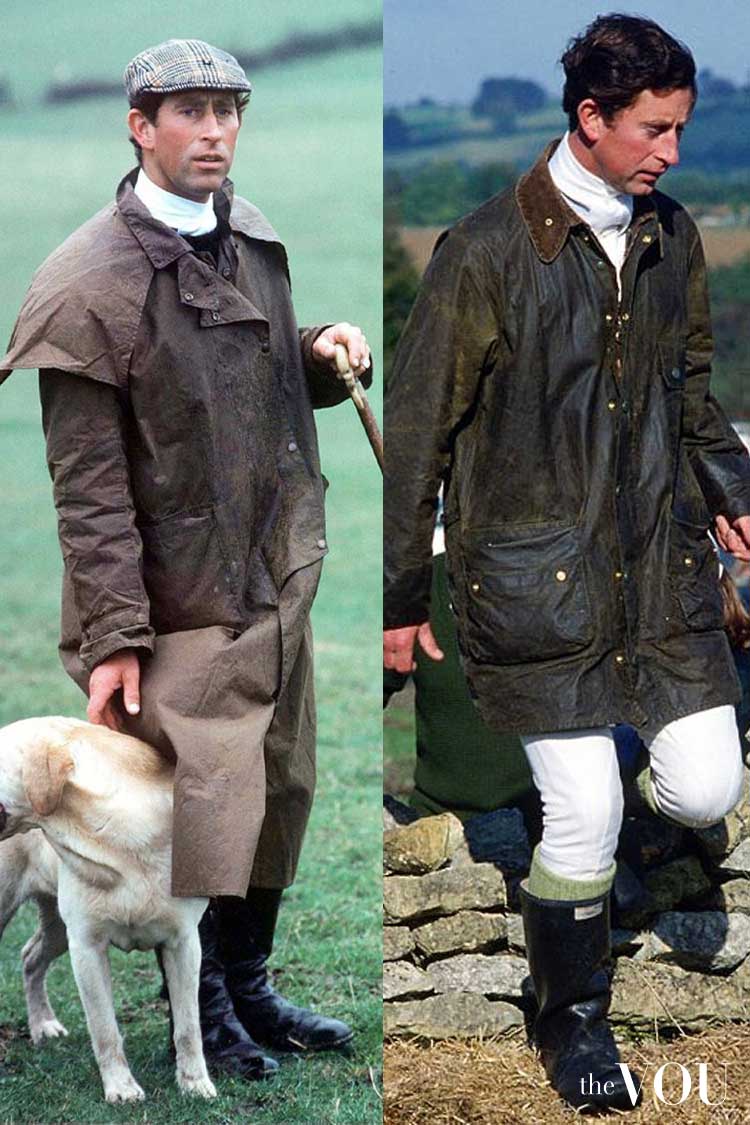
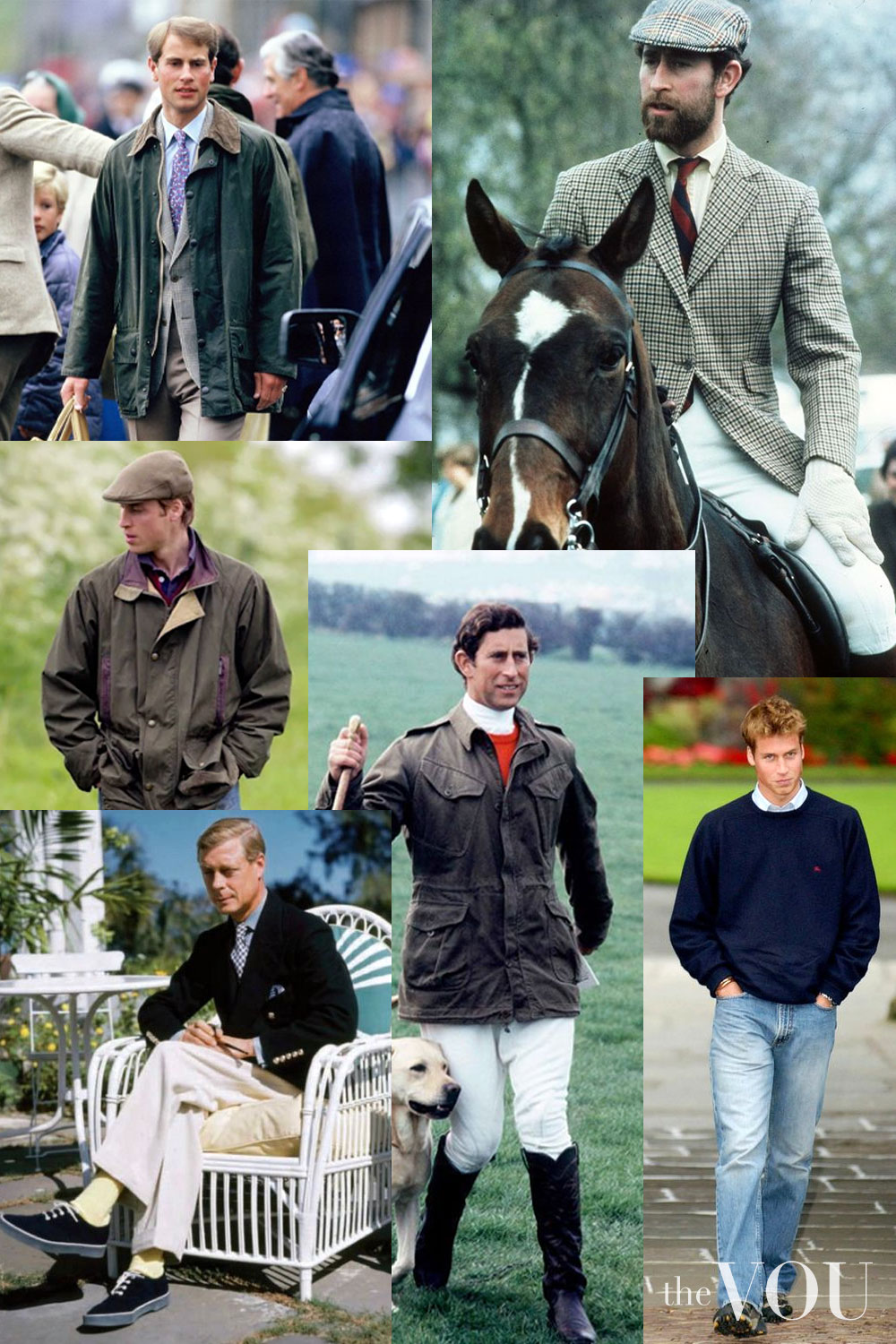
In a waxed coat with a labrador, and in a waxed jacket, white rollneck and green wellingtons. Photographs used in the original version of this article.
With the waxed jacket, the rollneck and the wellingtons, the King’s country wardrobe as Prince of Wales is the one most people picture when they picture the style, and Barbour’s royal warrant from him dates from 1987.
Eddie Redmayne
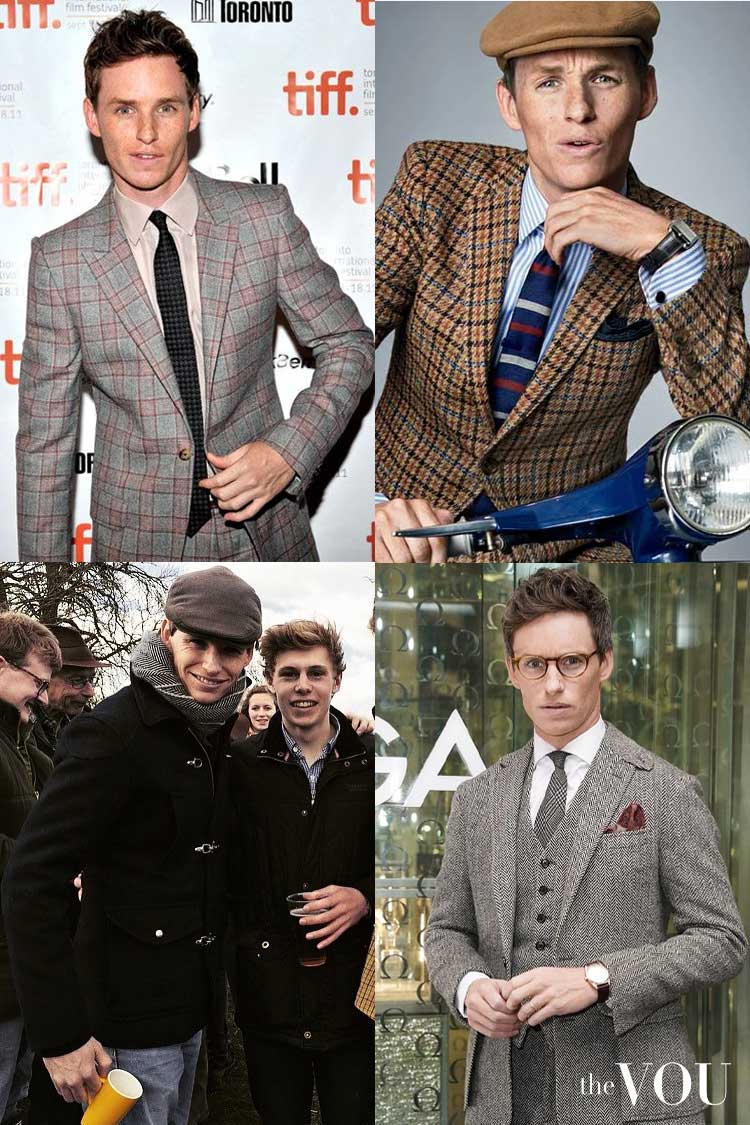
Check and tweed tailoring, a flat cap, a grey three-piece. Photographs used in the original version of this article.
The photographs show tweed and check tailoring with knitted ties, a flat cap and a grey three-piece, which make up the town end of the wardrobe.
James Middleton
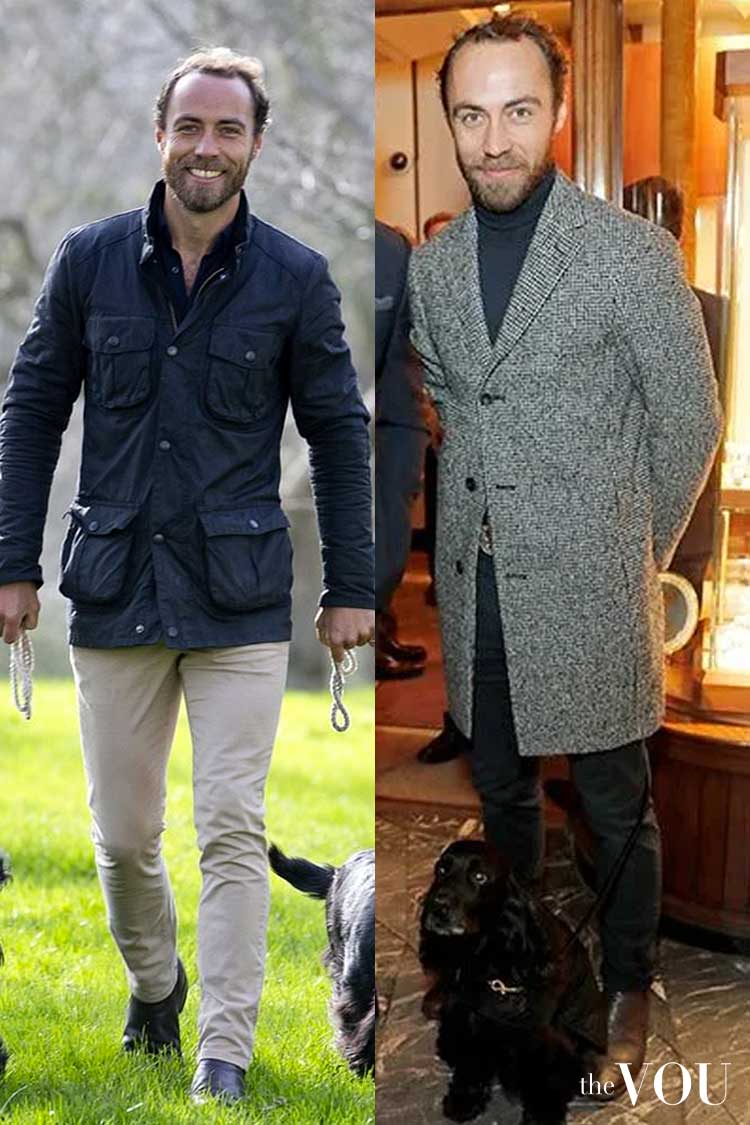
A navy waxed jacket with the dogs, and a grey overcoat and rollneck. Photographs used in the original version of this article.
A navy waxed jacket, chinos and a pack of dogs in one photograph; a grey overcoat and rollneck in the other. The country half and the town half.
Daniel Day-Lewis
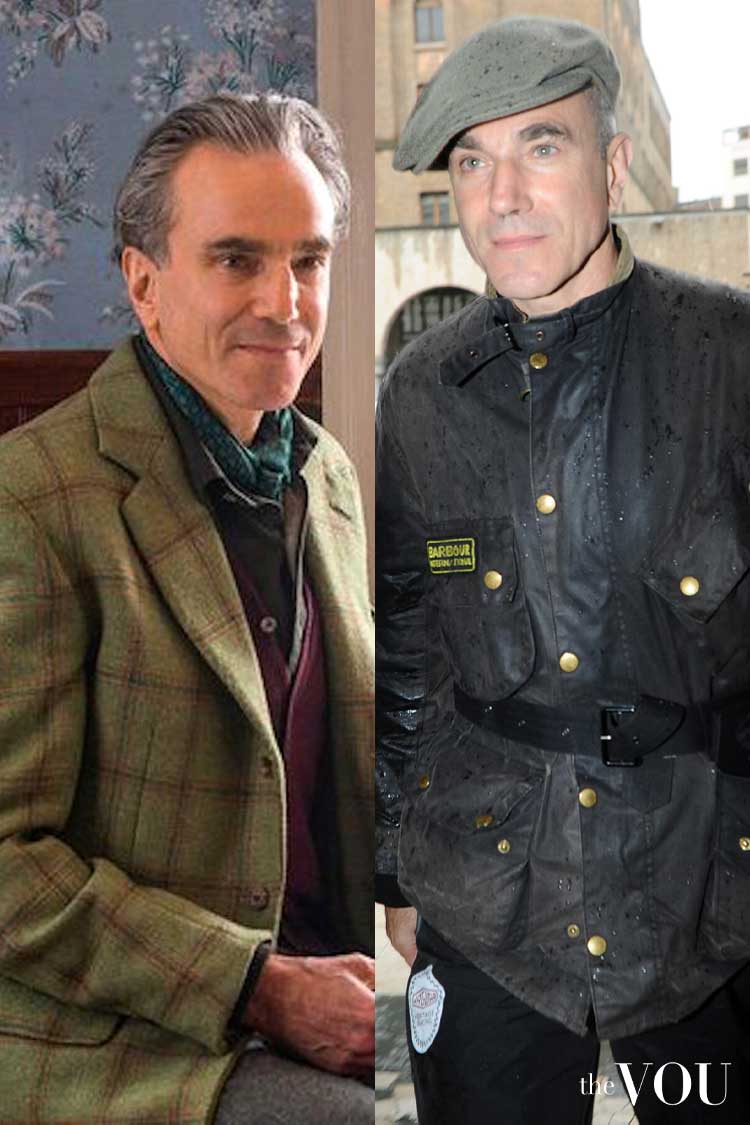
A green check jacket and scarf, and a black waxed jacket with a cap. Photographs used in the original version of this article.
Green check tweed with a scarf and a black waxed jacket under a flat cap are two of the wardrobe’s oldest pieces, worn without ceremony.
Hugh Grant
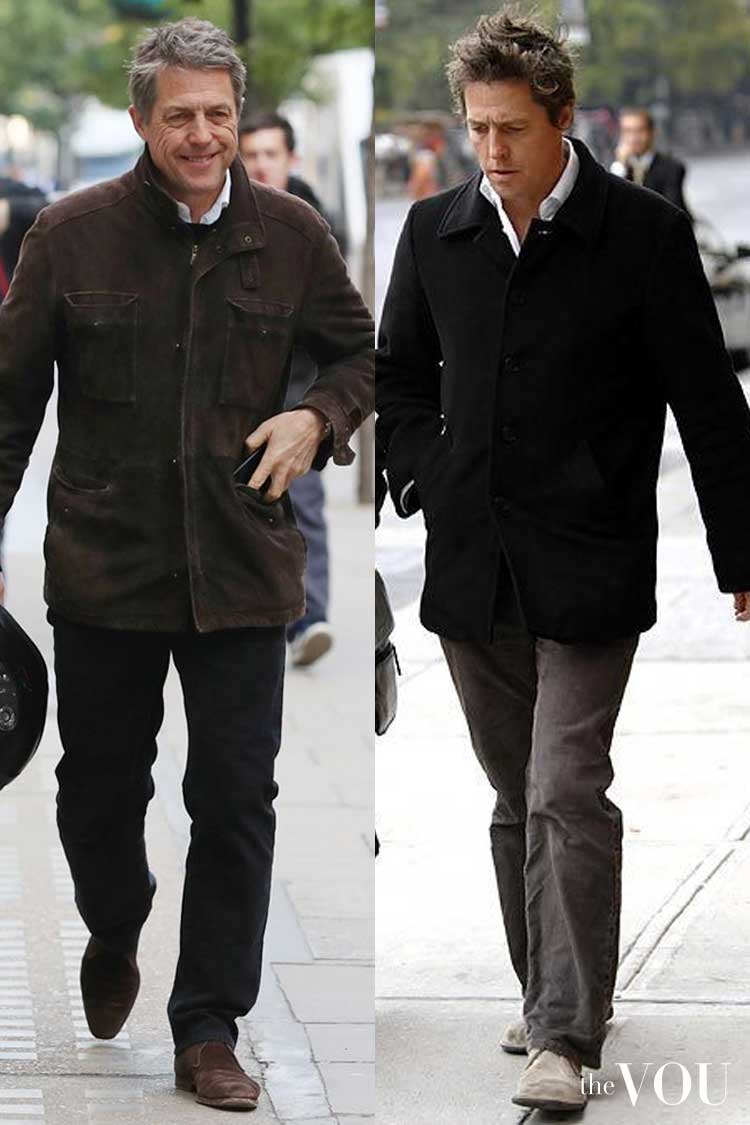
A brown jacket over a white shirt, and a black jacket. Photographs used in the original version of this article.
The photographs show a brown jacket over an open white shirt and a plain black jacket; the earlier summer photograph on this page, in a pale blue shirt and cream chinos, is closer to the Sloane wardrobe.
Choosing between them
Where to Start
Option one
You want the one garment that says it
A waxed jacket in olive or navy, worn over a jumper and a checked or striped shirt, with cords and brogues or boots. Everything else on this page can be added later; nothing on it replaces this.
Option two
You want the town version
A tweed or check jacket over an Oxford shirt, with chinos or cords and loafers. Add a knitted or repp tie for the office and a pocket square for the evening.
Option three
You want the country weekend
Waxed jacket, tattersall shirt, a lambswool or Guernsey jumper, cords and green wellingtons. The sporting outfit on the ideas page is this wardrobe taken to the shooting field.
Avoid
What Undoes the Look
Clothes that look like a costume rather than clothes. Jackets and brogues that have been worn for years are the look most people picture, and this page prefers it; that is a preference, not a rule, and a new waxed jacket or a freshly reproofed one is fine. Follow the garment’s own care instructions rather than trying to make it look old.
Logos. The brands on this page are recognisable by cut and cloth, and the Sloane man would rather you did not know which they are.
The full costume at once. Tweed jacket, tattersall, cords, cap, wellingtons and a Barbour together, in town, on a dry day, reads as fancy dress today; two or three of them is the look. The winter photograph above, three men in breeks, gilets and wellingtons in a town street, shows what the full kit looks like; this page prefers a few country pieces at a time, and keeps the photograph because it shows the pieces, not as a model for the street.
Bright colour anywhere but the cords, the socks and the odd shirt. The palette is navy, olive, brown, grey and stone, and the loud pieces are loud against that.
Treating any of this as a rulebook. The Handbook was written as a joke that turned out to be true; nobody in it was following a guide, and the preferences on this page are examples governed by the weather, the invitation and your own comfort.
Next step
Where to Go From Here
For six finished outfits with every garment labelled, from a Barbour and Chelsea boots to Henley whites, go to the Sloane Ranger outfit ideas page.
The colours that suit you within the palette above depend on your own colouring, and the cut depends on your build. The VOU’s seasonal colour quiz and body shape quiz are optional starting points for those two questions; neither replaces trying the clothes on.
The wider family of pages includes Old Money style, British aristocracy style, British countryside style, British Old Money brands and, for the whole wardrobe at once, how to build a capsule wardrobe. For a second opinion on your own wardrobe, The VOU’s directory of image consultants and stylists lists people who do this for a living.
Sources
Where This Comes From
The coinage at Harpers & Queen in 1975 (October, per wordhistories.net and Green’s Dictionary of Slang), Peter York’s authorship of the article, Tina Margetts’s supplying of the name and York’s “partly the social-determinism” sentence are from Graham Stewart’s “So long, Sloanes” in The Critic (July/August 2020); the 1 October 1975 Evening Standard quotation and the Sloane Square and Lone Ranger pun are from wordhistories.net. York’s own phrases, “uncannily similar upper-middle class girls”, “a sub-set of the upper middles”, “a place in London and a foot in the country” and “migrated south and north”, and his recollection that “Sloane Ranger Man” ran the following year, are from his “End of the Sloane age” in The Oldie (October 2022).
The Official Sloane Ranger Handbook is by Ann Barr and Peter York, Ebury Press, 1982 (catalogue entry). The book itself was not read for this page; the subjects this page attributes to it are taken from the catalogue entry’s list of the book’s common terms and phrases, which says nothing about what the book recommends. The sales figure, Diana’s place on the cover and York’s reading of the sales are from Graham Stewart’s article in The Critic. The 2007 follow-up is Cooler, Faster, More Expensive: The Return of the Sloane Ranger by York and Olivia Stewart-Liberty, Atlantic Books.
The list of the male Sloane’s clothes, blazers, rugby shirts, gilets, cords in “eye-watering colours”, brogues, loud socks, pink and pale-yellow shirts and the signet ring, is from Luxury London’s “The cult of the Sloane Ranger”. The definition of Hooray Henry follows the Oxford Dictionary of Word Origins as cited in the Wikipedia entry. Barbour’s founding (1894, South Shields) and its royal warrant from the then Prince of Wales (1987) are as given in the Barbour Wikipedia entry, and Barbour’s reproofing advice is from its own care page. Hunter’s Original boot is dated 1956 by the company’s own history page (introduction), while the Hunter Boot Wikipedia entry gives winter 1955 for first manufacture; this page uses the maker’s introduction date, and the late-1980s association is that entry’s wording. The Wikipedia entries are secondary sources and are used only for those points.
The wardrobe list, the seasonal and occasion outfits and the brand names are carried from the original version of this article, corrected where noted, and are this page’s own suggestions rather than anything the Handbook prescribes; where the page describes the type’s habits, the description is Luxury London’s or York’s, and the page’s own choices are examples, not requirements. The photographs and illustrations are those used in the original article, described as they appear; their dates and provenance were not verified. This page has not been reviewed by a stylist for your individual wardrobe.
Questions About Sloane Ranger Style
Q. What does Sloane Ranger mean?
A Sloane Ranger is a well-off, conventional young Londoner of the Chelsea and Knightsbridge sort, named after Sloane Square with a pun on the Lone Ranger. The term was coined at Harpers & Queen in 1975 for women, the magazine’s “Sloane Ranger Man” followed the next year, and the Handbook of 1982 made the whole type, men included, famous.
Q. Is Sloane Ranger style the same as Old Money style?
In Britain the two men’s wardrobes overlap heavily, and waxed jackets, tweed, cords, brogues and wellingtons appear on both lists. Sloane is the London-and-the-shires type with its own history; Old Money is the wider name, and outside Britain it covers wardrobes this page does not describe.
Q. What did the original Sloane Ranger men wear?
Blazers, rugby shirts, gilets, cords in strong colours, brogues, loud socks, striped and pastel shirts and a signet ring, according to Luxury London’s retrospective, plus the Husky quilted jacket, tweed, striped shirts and navy blue that appear among the Handbook’s common terms. The photographs in the Rah and Hooray Henry section show most of it.
Q. Which brands are Sloane Ranger brands?
Barbour and Hunter are the two most people would name first. The original version of this article named them and Turnbull & Asser, Cordings, Purdey, Drake’s, Church’s, Tricker’s, Pringle of Scotland, Johnstons of Elgin, Swaine London, Belstaff and Musto, among others; they are examples, and The VOU’s British heritage brands guide has the fuller list.
Q. Can I wear Sloane Ranger style without the country house?
Yes; York’s own account is that being a Sloane was “partly the social-determinism of being born a Sloane and partly the choice of wanting to be a Sloane”. Start with the waxed jacket, the shirt and the cords, and buy the rest as you need it rather than all at once.
Q. Is the style still current?
The type has moved out of central London and the clothes have been absorbed into what is now called British Old Money or countryside chic, but the garments themselves have not dated, which is the reason they were chosen in the first place.