
Start here
What’s This About
If you write for a living or for pleasure, you can use your writing voice as an optional starting point for how you dress at readings, events, author photos and video calls.
This guide shows how to turn a writing identity into clothing ideas, such as
Describing your tone, themes and the feelings your work aims for
Translating those words into colours, textures and garment shapes
Building a moodboard that mixes writing samples with clothing references
Choosing a few signature garments you are happy to repeat
Dialling formality up or down for book launches, panels and bookshop readings
and many more!
Every mapping in this guide is a suggestion, and you are free to dress in a way that contrasts with your writing, or to ignore the idea completely.
Key Points
01Your clothes do not need to match your prose; matching them is one creative exercise among many.
02Start from words that describe your writing, then test what those words suggest in actual garments.
03A small set of repeated garments or colours is often easier to manage than a whole new wardrobe.
04Comfort, the event’s dress code and your budget still come first.
If you are an author, readers may now see you as well as read you.
Profile pictures, author bios, festival panels, conference appearances and video calls all add to how people meet your work.
Some writers enjoy making their clothes a deliberate layer of that presentation, using personal style as another form of creative self-expression.
Aligning your clothes with your writing identity is not about vanity or trends; for writers who like the idea, it can bring a sense of clarity and consistency to public appearances.
Think of it as curating a visual story, much as a stylist assembles a cohesive look for an editorial shoot, that sits alongside your literary voice.
Understanding Yourself as a Writer
Before looking at your wardrobe, it helps to put your writing identity into words, in the same way designers begin with a concept or mood board.
Here are a few areas to consider.
- The subjects you write about, such as culture, business, fiction, academia or lifestyle
- Your tone or voice, such as formal, witty, conversational, edgy or poetic
- The feelings you want readers to have, such as comfort, excitement, rebellion, nostalgia or authority
- The values your work communicates, such as authenticity, innovation, tradition or creativity
Then ask yourself the questions below.
- If my writing were a person, what would it wear?
- Which words do readers or editors use to describe my voice?
- Who is my audience, and how would I like them to feel?
For example, a writer of funny pop-culture articles might enjoy expressing that light, energetic voice through bold colours, playful accessories or unexpected combinations.
A writer of academic or analytical work might feel most at home in classic, quieter clothing, perhaps borrowing from the clean lines of Scandinavian minimalism or the neat tailoring of the preppy look (see our guide to mastering the preppy look).
Neither pairing is a rule, since a writer of dark fiction who loves bright, playful clothes is dressing just as authentically as one who wears black.
Translating Writing Themes Into Clothing
Once you can describe your writing identity, the next step is turning those abstract qualities into visual cues you can try.
Finding a confident writing voice and finding a personal style can feel similar, because both take focus, experimentation and time.
When deadlines and creative pressure build up, staying aligned with your identity becomes more difficult.
Protecting some time and energy for both your writing and your self-presentation makes it easier to stay consistent.
Over time, clarity grows from making intentional choices and protecting your creative energy.
Tone Matching
One approach is to let the tone of your writing suggest the mood of your clothes, much as fashion houses develop signature aesthetics.
Imaginative, experimental writing might pair with mixed textures, layering, distinctive patterns and unusual accessories; think of the avant-garde collections of Comme des Garçons or the deconstructed tailoring of Maison Margiela.
Minimal, direct writing might pair with clean lines, neutral colours and simple shapes, such as a crisp white shirt, well-cut trousers and a plain knit.
Witty writing might pair with brighter colours, a patterned shirt, playful socks or one statement accessory.
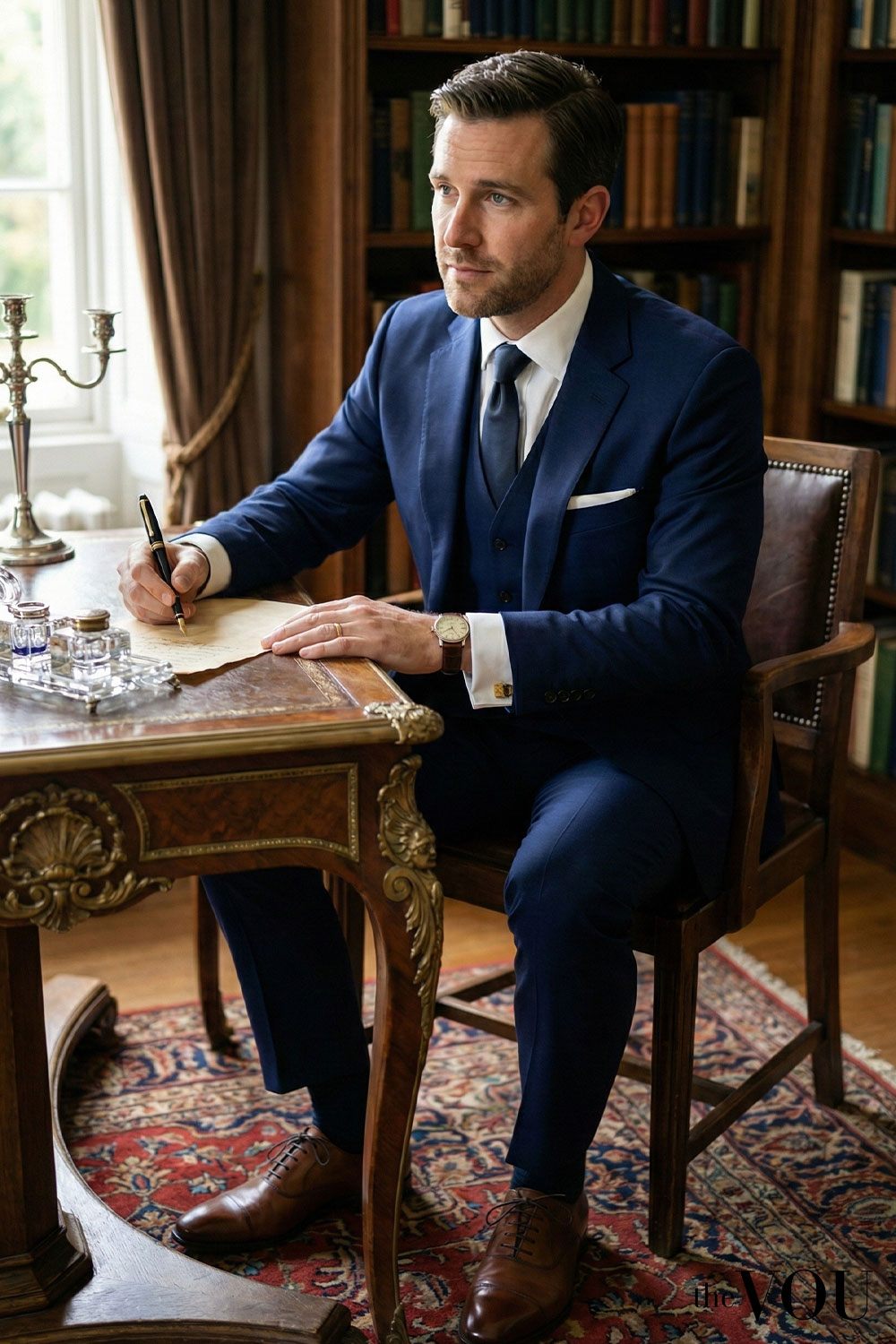
Authoritative or formal writing might pair with structured tailoring, such as a navy or charcoal jacket and polished shoes.
Treat each pairing as a starting point to test, not a requirement.
Themes and Motifs
Many authors return to particular themes, and some of those themes can become strong fashion signals, a visual language that complements your work.
- Nostalgia or history points to vintage and retro-inspired clothing, such as 1960s mod tailoring, 1970s knitwear or 1990s workwear, found in charity shops or from brands such as Polo Ralph Lauren that reinterpret vintage codes.
- Innovation or the future suggests technical fabrics, clean modern shapes and practical outerwear in the spirit of brands such as Acronym.
- Rebellion or counter-culture translates into leather, asymmetry and worn-in denim, in the spirit of punk or rock-and-roll dressing.
- Comfort or wellbeing leans towards soft fabrics, relaxed fits and natural colours, or a pared-back capsule wardrobe of easy garments that work at home and out.
Seen this way, your clothes can work a little like a book cover, as one optional layer of presentation alongside the story itself.
Emotional Resonance
Another approach is to choose clothes that carry the feeling your writing aims for.
If your writing is
- Comforting, try chunky knits, corduroy, brushed cotton and warm tones such as rust, camel and burnt orange.
- Bold, think of strong shapes, high-contrast black and white, or one statement jacket, including the kind of sharp tailoring that can enhance professional image.
- Elegant, look to fine fabrics such as merino and silk-blend knits, a good watch or a silk pocket square, and timeless garments from old money brands if you like that look.
- Quirky, consider playful prints, unexpected colour combinations, interesting proportions or deliberately clashing patterns.
Some readers may notice the link between how you look and how your work feels, and some will not; enjoy the exercise rather than expecting a particular reaction.
Practical Steps to Align Clothing and Writing
Turning the idea into action does not require a new wardrobe; small, deliberate decisions are enough.
Start by reviewing your current clothes with the same eye you would bring to editing a manuscript. What stays, what goes and what needs refinement?
Create a Moodboard
A moodboard helps you see your creative identity in one place.
Gather pictures of clothing, fabrics, colours and accessories from magazines, Pinterest, saved social posts and runway archives, along with photos of yourself in outfits you enjoyed wearing.
Add short extracts or descriptions of your writing style alongside the fashion references.
Look for repeated themes, tones and shapes, and notice whether certain silhouettes or particular colour combinations keep appearing.
When the clothing references and the writing samples feel as though they share a mood, you have a direction worth testing; our guide to creating a style moodboard explains the process in more detail.
Identify Signature Garments and Accessories
Signature garments and accessories are the ones you repeat until people associate them with you.
Well-known examples include Karl Lagerfeld’s high white collars, dark glasses and fingerless gloves, and Iris Apfel’s oversized round glasses.
Signature choices for a writer might include any of the following.
- A tailored blazer, perhaps in an unexpected colour or with distinctive buttons
- Statement glasses with a frame shape you love
- A leather jacket, vintage or contemporary
- Distinctive shoes, such as brogues, loafers or a favourite pair of trainers
- A consistent colour palette, such as earth tones, or navy and grey with flashes of red
Choose signatures that feel personal and work across your profile picture, events and everyday life.
Aim for Consistency, Not Perfection
For this approach, consistency is more useful than following trends, but it does not mean wearing the same outfit every day.
Think of your outfits as different versions of the same story, which also makes you easier to recognise in photos and at events.
Fashion is cyclical and trends are fleeting; rather than chasing the catwalks, you may find it easier to build a capsule wardrobe of garments that feel like you.
Developing a signature style takes time, experimentation and self-awareness, much like developing a writing voice.
Adapt to the Occasion, Not Your Identity
Your style can adapt to different events, such as book signings, conferences, interviews and festival panels, while still feeling like you.
Think of it as changing the volume, not the song.
For a formal literary event, you might wear a well-cut blazer, structured trousers and a crisp shirt.
For a casual bookshop reading, the same look can soften into a knit, relaxed trousers and suede shoes.
The colours and overall mood stay consistent while the formality changes, much as a writer adjusts tone for different audiences.
Writing Style and Clothing Style Examples
Scroll horizontally to see all columns →
| Writing style | Clothing direction | Example garments and accessories |
|---|---|---|
| Witty, playful | Bold, colourful and quirky | Colourful trainers, a bright patterned shirt, playful socks, a printed scarf |
| Serious, academic | Classic and minimal | Navy or charcoal blazer, beige and grey knitwear, Oxford shoes, a simple leather bag |
| Edgy, rebellious | Leather, dark colours and sharp shapes | Leather jacket, black jeans, chunky boots, a silver ring |
| Nostalgic, vintage | Retro and vintage-inspired | High-waisted tweed or corduroy trousers, a vintage band T-shirt, loafers, a canvas holdall |
Use this table as inspiration, not a rulebook; personal style should feel lived-in, not forced.
Plenty of well-dressed people follow few rules and simply know what they enjoy wearing.
Why Some Writers Enjoy This Approach
For authors who appear in public, on social media, at festivals and in author photos, clothing contributes to how they present themselves.
The possible benefits are listed below.
- A more intentional, recognisable look across photos and events
- Easier decisions when packing for a tour or choosing an outfit for a panel
- Feeling more at ease when their clothes reflect how they see themselves
- A presentation that feels connected across book covers, author photos and appearances
None of these outcomes is guaranteed, and plenty of successful authors give their clothes little thought; the approach is worth trying only if it appeals to you.
Final Thoughts
Fashion and writing are both forms of creative self-expression, and some writers enjoy letting them speak to each other.
You can translate your voice, themes and feelings into colours, textures and garments, test the results and keep what you enjoy.
Developing your style, like developing your writing voice, is gradual, so give yourself room to experiment, make mistakes and refine your look over time.
Browse fashion archives, notice how authors you admire dress and pay attention to the clothes that make you feel most like yourself.
Whether your wardrobe echoes your writing or contrasts with it, the choice is yours.