
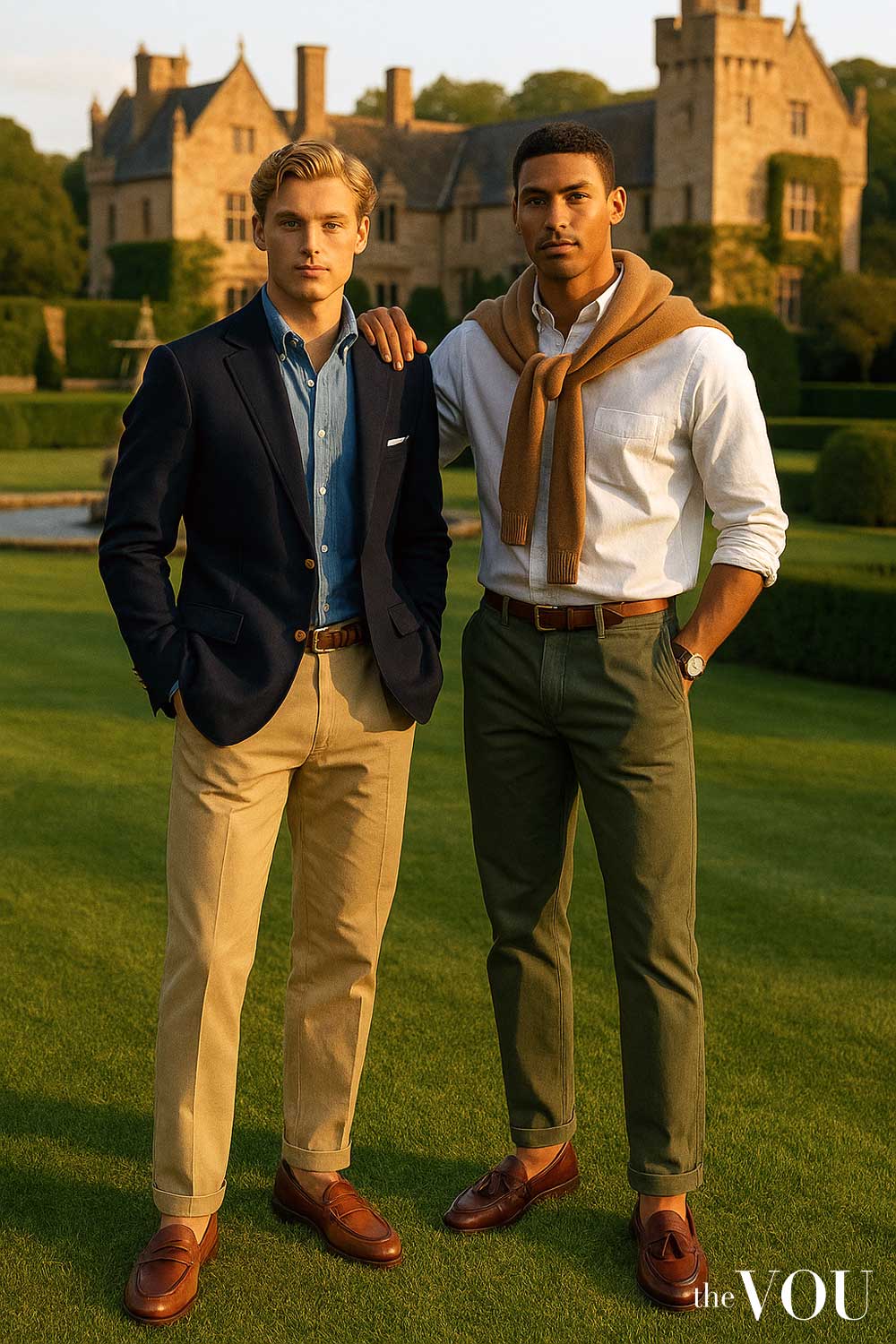
Quick Answer
To style chinos for an authentic old money look that projects status and sophistication, follow these essential guidelines:
-
- Choose straight or slim-straight fits based on your body type. Athletic builds need room in the thighs, slimmer frames benefit from slim fits, broader builds should wear straight-leg with mid-rise
- Create classic combinations. Pair khaki chinos with navy blazers, olive chinos with light blue Oxfords, navy chinos with grey blazers, and stone grey with navy knitwear
- For casual settings, combine chinos with Oxford button-downs in white or light blue and quality knitwear in neutral tones
- Style with penny loafers in burgundy or dark brown for most occasions, boat shoes for very casual settings
- For semi-formal events, add structured blazers, subtle patterned ties, and a simple white pocket square
Key Points to Remember
- Ensure proper length with either a slight break at the shoe or a clean finish just above it
- Avoid both overly skinny fits and baggy styles as they contradict the timeless aesthetic
- Always match your belt colour to your shoes for a coordinated appearance
- Keep colour combinations subdued and complementary rather than high-contrast
Want to learn more? Continue reading the full article below ↓
Chinos are essential for creating an old money look. They offer versatility while showing subtle sophistication without trying too hard.
This guide covers how to select, style, and maintain chinos to project status and timeless elegance for both casual and semi-formal settings.
1. Buy High-Quality Cotton Twill Chinos in Neutral Colours Only

Look for chinos made from dense, tightly woven cotton twill that feels substantial.
Check for reinforced stitching at stress points like the crotch and pockets.
Examine internal details like pocket linings and buttonholes for quality construction.
Choose only these classic colours: khaki, navy, olive, and stone grey.
Avoid bright colours, patterns, or trendy details that diminish the old money aesthetic.
Select 100% cotton for summer and cotton-wool blends for autumn and winter.
2. Choose Straight or Slim-Straight Fit Based on Your Body Type

Athletic builds need straight or slim-straight fits that provide room in the thighs without excess fabric.
Slimmer frames look best in slim fits that create structure without appearing trendy.
Broader builds should wear straight-leg chinos with a mid-rise for proper proportion.
Ensure the length allows for a slight break at the shoe or a clean finish just above the shoe.
The correct fit should feel comfortable at the waist without needing a belt to hold them up.
Avoid both skinny fits and baggy styles as they contradict the timeless old money aesthetic.
3. Pair Khaki Chinos with Navy Blazers and Brown Loafers for Classic Combinations

Combine khaki chinos with navy blazers for the most timeless old money pairing.
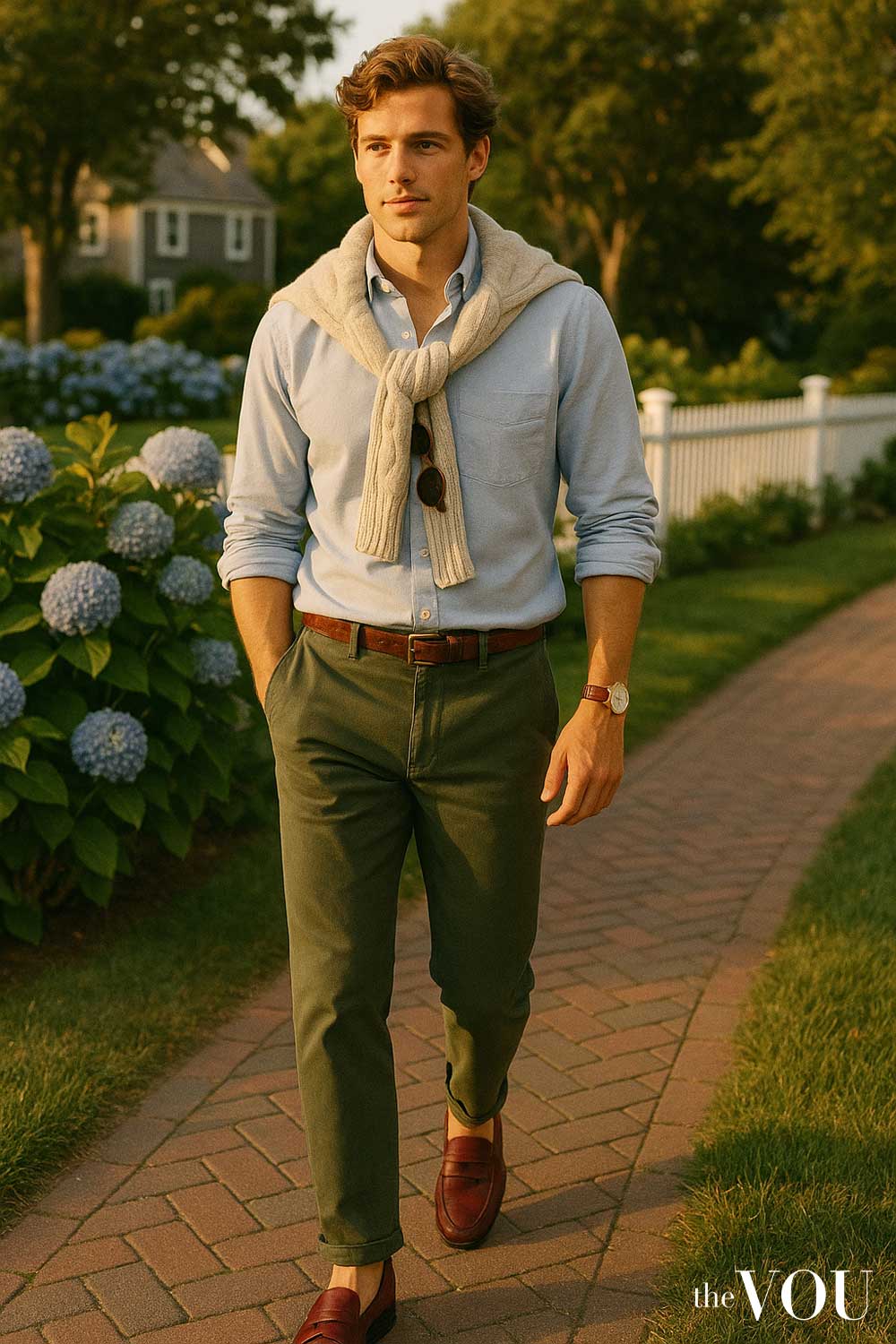
Wear olive chinos with cream or light blue Oxford shirts for casual sophistication.
Match navy chinos with grey blazers for business settings.
Pair stone grey chinos with navy knitwear for relaxed weekend looks.
Always match your belt colour to your shoes for a coordinated appearance.
Keep colour combinations subdued and complementary rather than high-contrast.
4. Wear Oxford Button-Downs and Quality Knitwear with Chinos for Casual Settings
Choose Oxford button-down shirts in white, light blue, or subtle stripes for casual looks.
Add cable-knit or merino wool jumpers in neutral tones for cooler weather.
Wear penny loafers in burgundy or dark brown as your primary footwear choice.
Use boat shoes in navy or tan for very casual occasions.
Add a simple analogue watch with a leather strap as your main accessory.
Wear tortoiseshell sunglasses rather than sporty or heavily branded styles.
5. Style Chinos with Structured Blazers and Classic Shoes for Semi-Formal Events
Pair chinos with structured wool or cotton blazers in navy, grey, or subtle patterns.
Wear white or light blue dress shirts with subtle texture beneath your blazer.
Add knitted ties or silk ties with small patterns for refined sophistication.
Choose polished penny loafers or Oxford shoes in dark brown or black.
Include a simple white linen pocket square for formal occasions.
Keep accessories minimal. A quality watch and perhaps a signet ring are sufficient.
Project Status Through Thoughtful Chino Styling
Creating an old money look with chinos requires attention to quality, fit, and thoughtful styling.
These guidelines help you project status and sophistication without relying on logos or trends.
For personalised recommendations based on your specific body shape and seasonal colour palette, consider The VOU’s professional styling services.
Take the First Step With The VOU’s Styling Quizzes
Start with our quizzes. First, take our Face Shape Quiz to see which face shape yours is closest to and get first styling suggestions.
Then, see which colours the seasonal colour approach suggests for you with our Seasonal Colour Analysis Quiz.
See which cuts are usually recommended for your build with our Body Shape Quiz, and explore the styles that suit your taste with our Fashion Style Quiz.
Transform Your Image with The VOU’s Professional Guidance
If you want help with styling chinos, The VOU’s stylists offer paid styling services, from single analyses to a complete package.
Our Professional Face Shape Analysis package provides you with a stylist’s assessment of your face shape from the photos and measurements you send, personalised hairstyle recommendations, customised facial hair styling guide, expert eyewear selection guidance, and detailed grooming recommendations tailored to your unique features.
For the most comprehensive transformation, consider our Complete Image Transformation Package.
The Complete Image Transformation Package includes our Fashion Style, Seasonal Colour, Body Shape and Face Shape analyses, a brand-specific shopping guide and two weeks of support.
The package brings the analyses together into one plan for your clothes, colours and grooming.
Mandy Meyer’s focus at The VOU is men’s body-shape styling, garment fit and outfit proportions. Her coverage addresses the practical questions behind a wardrobe choice: how a jacket sits across the shoulders, how trousers fall and how different cuts change the silhouette a wearer wants to create.
Her subject areas include the triangle, inverted triangle, rectangle, oval, trapezoid, hourglass and diamond labels used in body-shape styling. These provide starting references for comparing visible proportions; they do not capture every body or prescribe one correct way to dress. The focus connects those observations with garment shape, construction, length and the relationship between the upper and lower parts of an outfit.
Mandy’s editorial coverage combines visual comparisons with fit checks for comfort and movement. Readers can consider whether a cut gives them the room they need, where clothing pulls or gathers and which changes might support their preferred look. The aim is to make menswear choices more understandable while keeping personal preferences and the wearer’s own styling goals central.
Raf Adams’s focus at The VOU is luxury menswear, brand analysis and quiet-luxury styling. His coverage addresses men who want to understand the difference between a recognisable label, a documented garment feature and a buying choice that makes sense for their wardrobe.
His subject areas include materials, construction details, brand positioning and the understated clothing references associated with quiet luxury. This focus examines what can be established from product information and what remains a matter of appearance or preference. Price and reputation provide context, but neither replaces attention to fit, intended use and the details of the item being considered.
Raf’s editorial coverage connects those comparisons with complete outfits and repeat wear. Readers exploring premium clothing can consider how a purchase works with existing pieces, which features matter to them and whether a less conspicuous look suits their needs. The aim is to make luxury menswear easier to assess without turning a brand name into a promise of quality or personal style.
Lawrence Anderson’s focus at The VOU is old-money style, British heritage menswear and the wider strategy behind a man’s wardrobe. His coverage addresses readers who want a composed, consistent style but need practical guidance on where to begin, what to keep and which pieces deserve a place in their wardrobe.
His subject areas connect classic tailoring, knitwear, footwear and accessories with the proportions and formality of a complete outfit. British countryside clothing, preppy dressing and Ivy-inspired references provide context for understanding different versions of the look. The emphasis is on recognising the relevant details and adapting them to the wearer’s life, rather than treating an aesthetic as a requirement to buy particular labels.
Lawrence’s editorial coverage brings wardrobe planning back to the reader’s needs: everyday clothing, professional presentation, occasion dressing and a workable budget. It considers existing pieces, outfit coordination and repeat use, giving men a basis for building personal style over time. A coherent wardrobe should reflect the person wearing it and the situations they actually need to dress for.