

15 Old Money Hairstyles for Men – Classic Haircuts That Look Timeless
If you want an old-money wealthy look, your haircut matters as much as your clothes.
The right old money hairstyle for men should look intentional without looking over-styled: clean around the edges, proportionate to your face, compatible with your natural hair texture, and appropriate for your lifestyle.
This guide covers 15 old-money hairstyles for men, from the Classic Side Part, Slick Back and Ivy League to lower-maintenance options such as the Crew Cut and Buzz Cut.
For each style, you’ll find guidance on hair length, texture, styling, facial hair, maintenance and the type of image the haircut tends to create.
One important distinction: “old money” is an aesthetic, not a category of haircuts. What puts a cut in this guide is how it looks: restrained, well proportioned, clean at the edges, and not dependent on a trend to make sense.
This guide is about what each cut looks like and what wearing it involves: the length and texture it needs, how it is styled, which finish it takes and how often it wants a barber. It does not give the history of these haircuts, and it does not tell you what wearing one says about you. And no product is named with a hold or a finish attached to it, because the same brand will sell several formulations that behave nothing like each other; what each section gives instead is the kind of product the style needs, which you can check against the directions on the tub.
How to Choose an Old-money Hairstyle
Before choosing a haircut because it looks good on a celebrity, consider four things: face shape, hair texture and density, maintenance commitment, and the overall image you want to project.
A haircut that works brilliantly on one man can make another man’s face look longer, wider or less balanced. If your hair is thinning, the decision is also about the condition of your hair, not only about styling.
What’s This About:
Fifteen men’s haircuts that read as restrained and well proportioned rather than fashionable, each described so you can tell whether your own hair will do it.
Every one of the fifteen is covered the same way, such as:
– what the cut is and what length it needs
– which hair textures it suits
– how to style it and what facial hair sits well with it
– how often you will want the edges tidied, and how much daily work it asks for
– which finish it takes, matte or glossy, and what product category gets you there
and many more!
Of the fifteen, the Classic Side Part, the Ivy League and a controlled Slick Back are the safest places to start.
Key Points:
- Start from your own hair, not the photograph. Density, texture and growth pattern decide what any of these cuts does on your head, so use the men’s haircut descriptions rather than the pictures alone.
- Daily styling effort and barber visits are two separate commitments, and a cut can be light on one and heavy on the other. A buzz cut takes no styling and wants the barber often; a slick back is the other way round; a side part asks a moderate amount of both.
- Every interval given below is a worked example to take to a barber and adjust, not a schedule and not a claim about what other men do. Your growth rate and how crisp you want the edges decide it.
- No product is named here with a hold or finish attached to it. Each section says what kind of product the style needs, so you can check it against the directions on whatever you buy.
- Hair changes with age in density and texture, and that is worth planning around. Your age itself does not rule any of these cuts in or out.
Old Money Hairstyles at a Glance
Seven of the fifteen are in this table, chosen because they are the least demanding to ask for. Use it before reading the individual breakdowns. The upkeep column gives both commitments separately, since they do not move together, and the intervals in it are the worked examples used in the sections below rather than a schedule.
Scroll horizontally to see all columns →
| Hairstyle | Overall impression | Upkeep: daily styling / barber | Best starting point |
|---|---|---|---|
| Classic Side Part | Polished, traditional | Daily: medium. Barber: 3 to 4 weeks | Straight to wavy hair |
| Ivy League | Academic, refined | Daily: medium. Barber: 3 to 4 weeks | Fine to medium hair |
| Slick Back | Sleek, formal | Daily: high. Barber: 4 to 6 weeks | Medium to thick hair |
| Taper Fade | Modern, clean | Daily: medium. Barber: 2 to 4 weeks | Most hair types |
| Crew Cut | Crisp, practical | Daily: low. Barber: 2 to 4 weeks | Most hair types |
| French Crop | Textured, understated | Daily: low. Barber: 3 to 4 weeks | Straight to wavy hair |
| Buzz Cut | Minimal, confident | Daily: none. Barber: 2 to 3 weeks | Most hair types |
Want to learn more? Continue reading the full article below ↓
1. Classic Side Part Hairstyle for Men
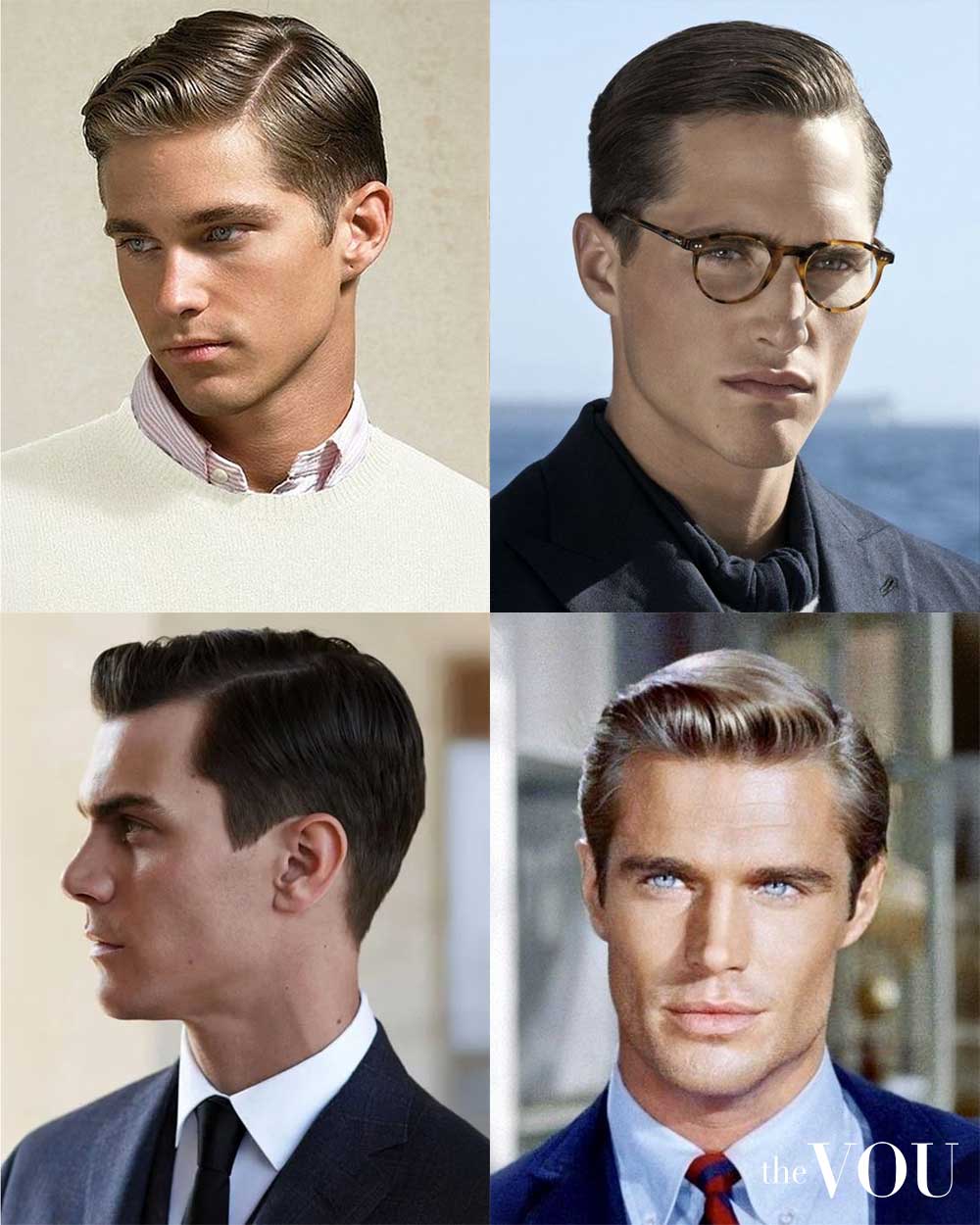
The classic side part is a timeless hairstyle for men characterised by a sharp, defined part that divides the hair laterally, usually from the crown to the temple.
The hair on the top is kept slightly longer than the sides, which are tapered or faded for a clean look.
Why the Classic Side Part Works for an Old Money Look
The Classic Side Part is the most literal reading of the look in this guide: a defined part, the top combed across it, the sides short enough to keep the line clean. Cary Grant and Fred Astaire both wear it in the photograph below, and it is the cut most classic-style reference photographs are showing.
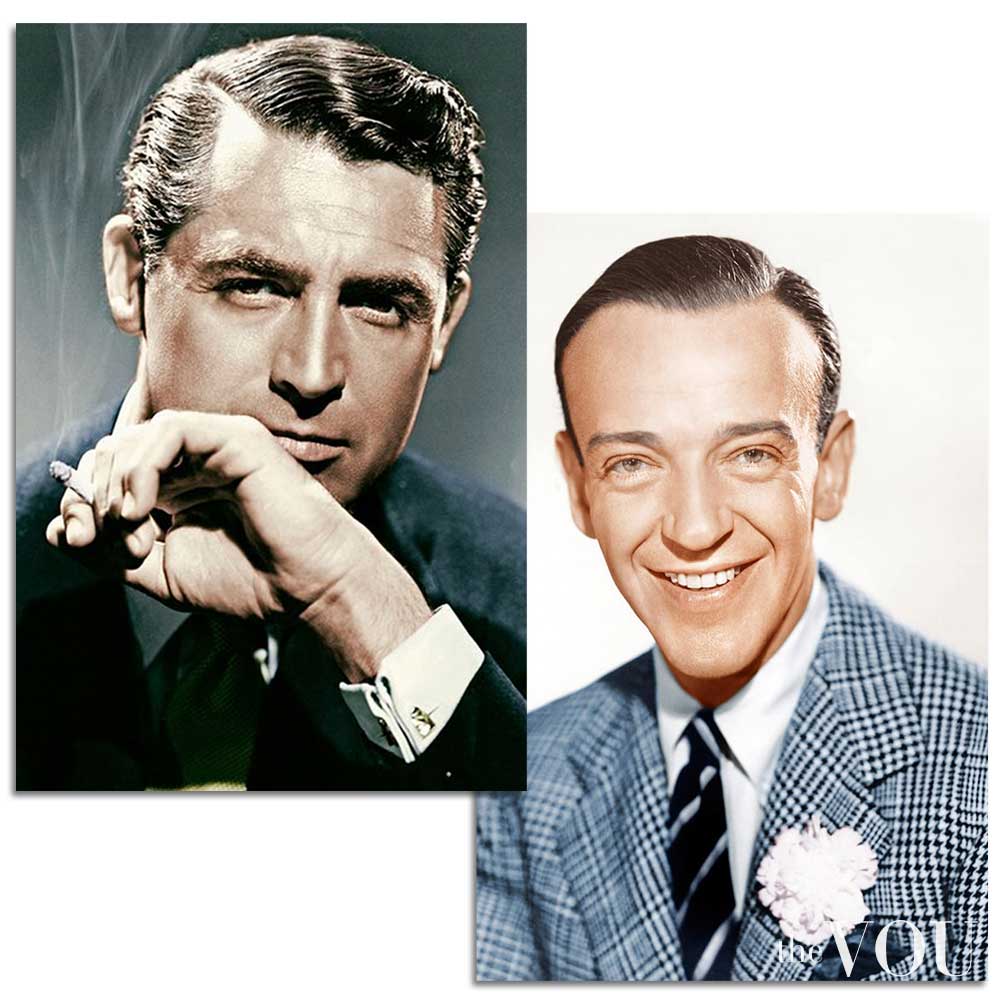
The clean line of the part and the short sides are what make it read as deliberate, which is the quality the old-money style is built on.
Ideal Hair Texture, Length, and Volume
The Classic Side Part works best with medium to fine hair with a slight natural wave.
The hair on the top should be long enough to comb over and maintain the part, generally around 2-4 inches.
The sides are kept shorter, usually between 0.5 and 1 inch. Aim for a balanced volume that maintains the style’s structure without appearing too stiff or heavy.
Celebrities with Classic Side Haircut
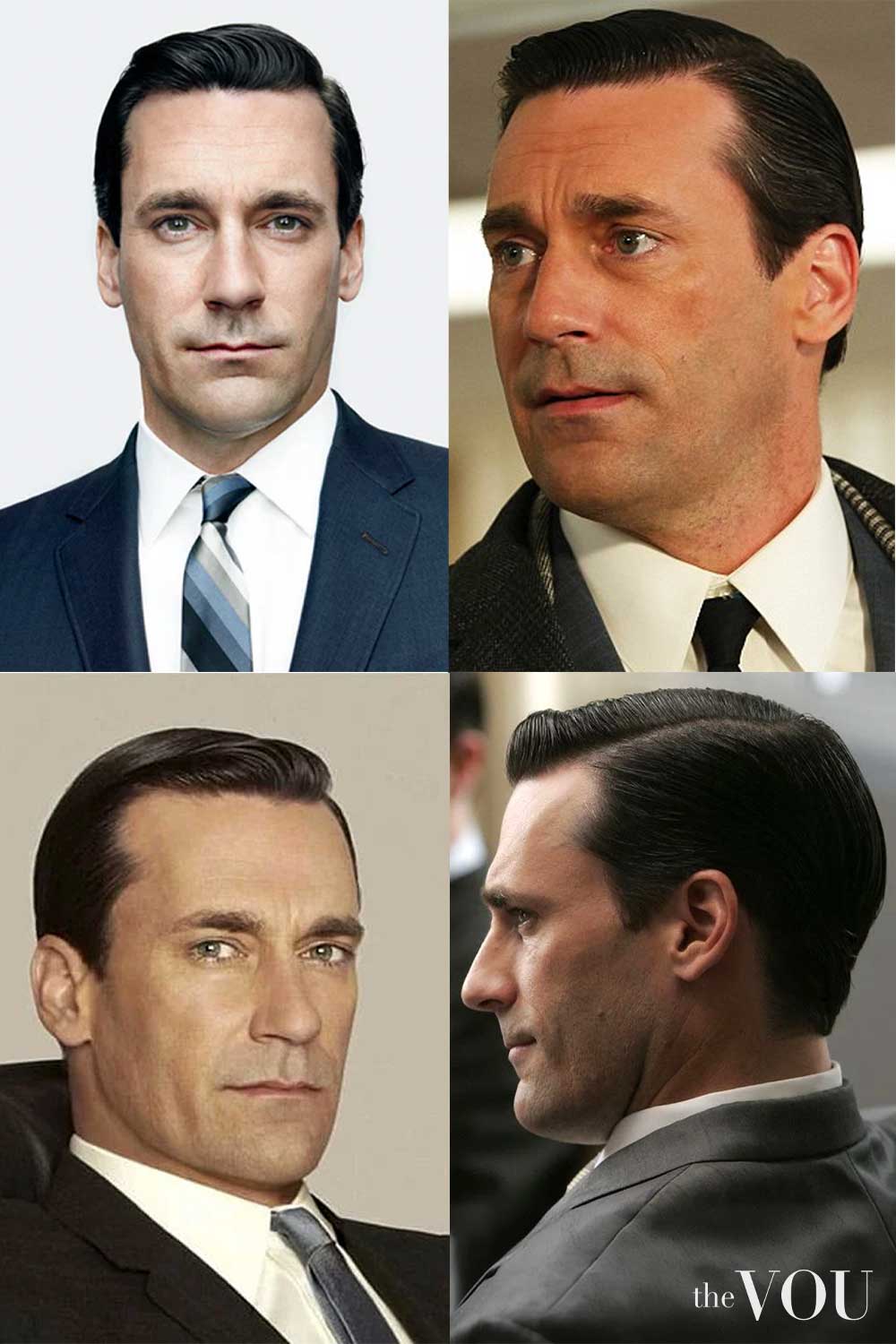
- Jon Hamm wears one as Don Draper in “Mad Men”: a sharp parting high on one side, the top combed flat across it, the sides cut very short.
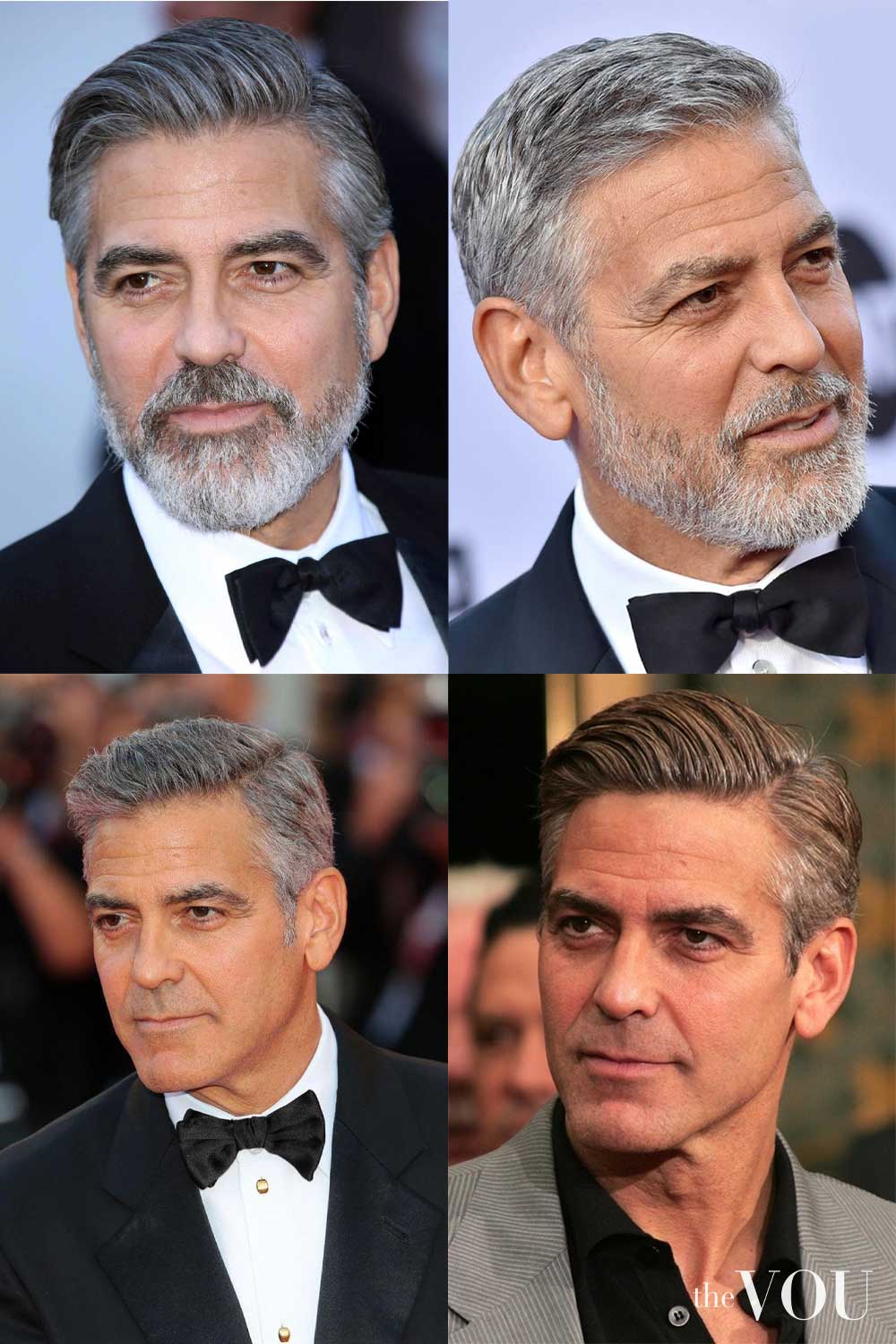
- George Clooney wears the same part on grey hair, with more length left on top and no product shine.
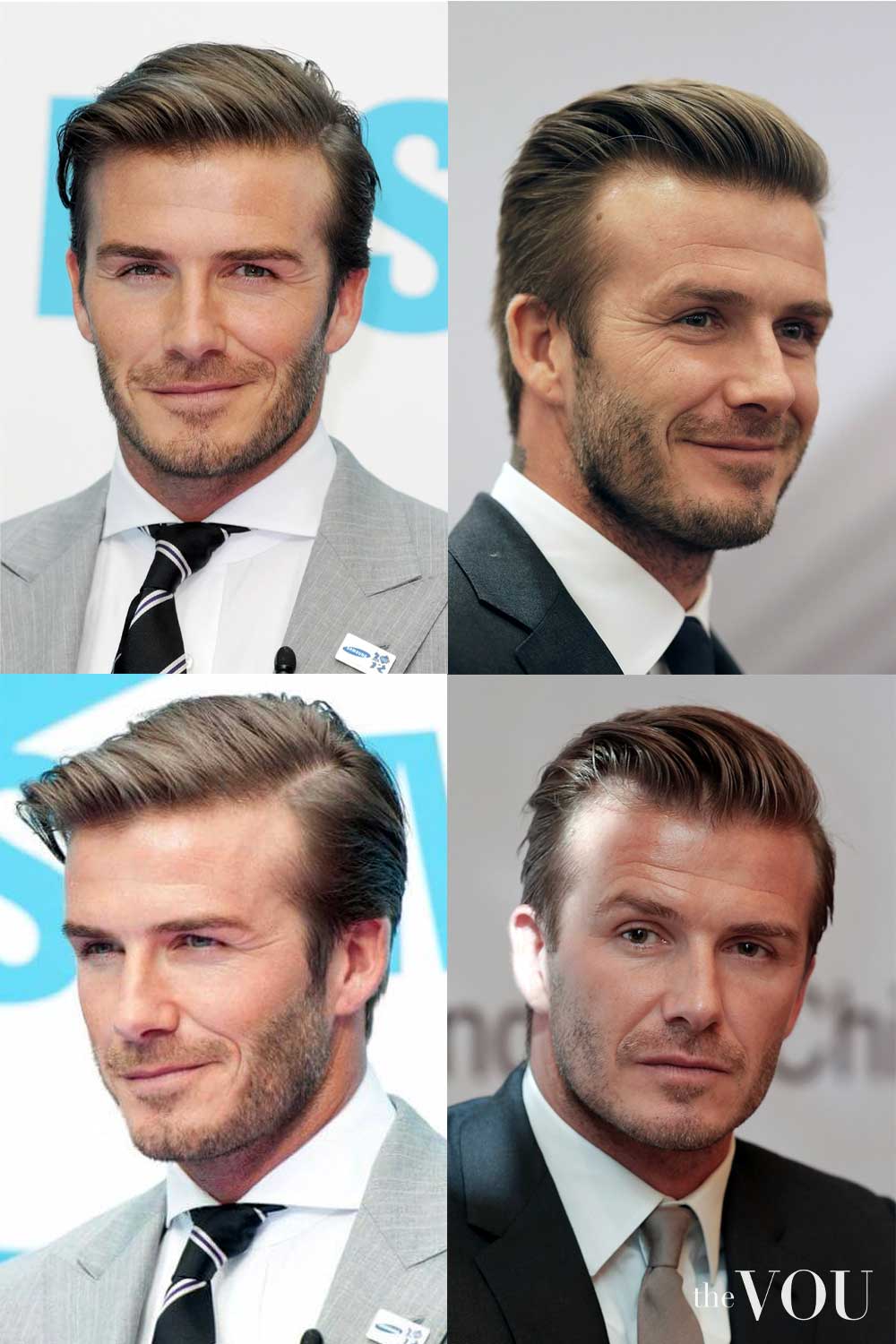
- David Beckham has worn several versions of it, from a sharply defined part to a softer one with more movement in the top.
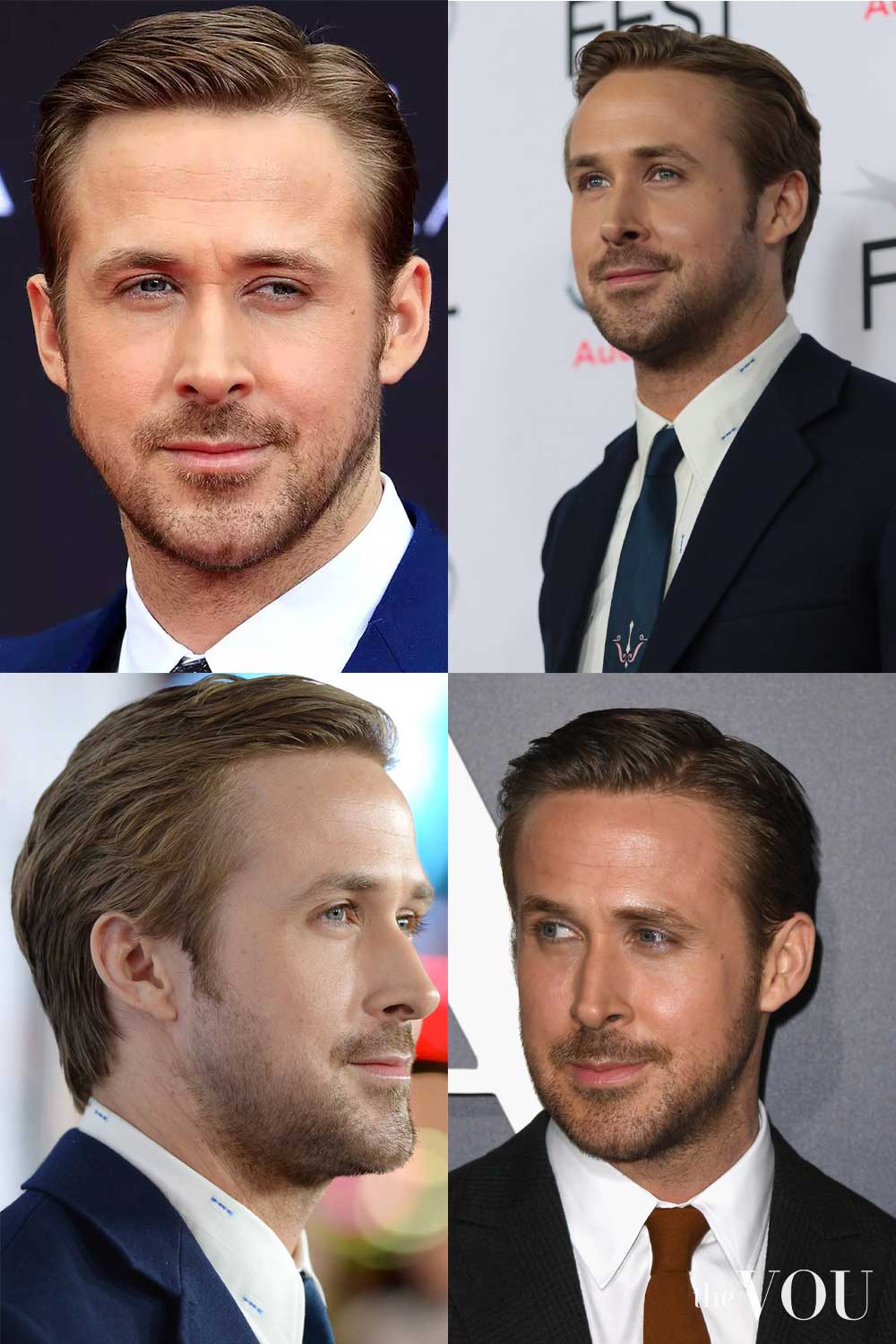
- Ryan Gosling’s take on the side part features a slightly longer top and a more relaxed, textured finish.
Styling Techniques
- Start with damp, towel-dried hair and apply a small amount of pomade or styling cream, focusing on the roots and working to the ends.
- Use a fine-toothed comb to create a clean, defined part, starting from the crown and working towards the temple.
- Blow-dry the hair on the top toward the part, using a round brush to add volume and smoothness.
- For a relaxed look, use your fingers to gently tousle the hair on the top, maintaining the part’s structure.
Facial Hairstyle Options
The Classic Side Part pairs well with a clean-shaven face, emphasising the sharp, polished appearance.
However, a well-groomed moustache or a neatly trimmed beard can also complement the look, adding a touch of vintage charm or modern sophistication.
Recommended Hair Products
What this style needs is a medium to firm hold with a slight sheen rather than a shine, in a cream or a pomade that still combs through once it is in.
A light, flexible hairspray is optional. It is most often reached for in humidity or on hair that drops out of a part quickly.
Maintenance and Barber Visits
The part and the perimeter look sharpest in the first few weeks after a cut, and three to four weeks is a reasonable example to take to a barber. It is a preference rather than a requirement, and a slow growth rate will stretch it.
Ensure that your barber understands the style you’re aiming for and can tailor the cut to your face shape and hair type.
Explore all face shapes and style ideas
Between visits, touch up the part daily and restyle as needed.
The Classic Side Part takes adjustment well: the length on top, the softness of the parting and the height of the taper can all be moved without losing the shape, which is why it sits alongside so many personal styles.
2. Slick Back Hairstyle for Men
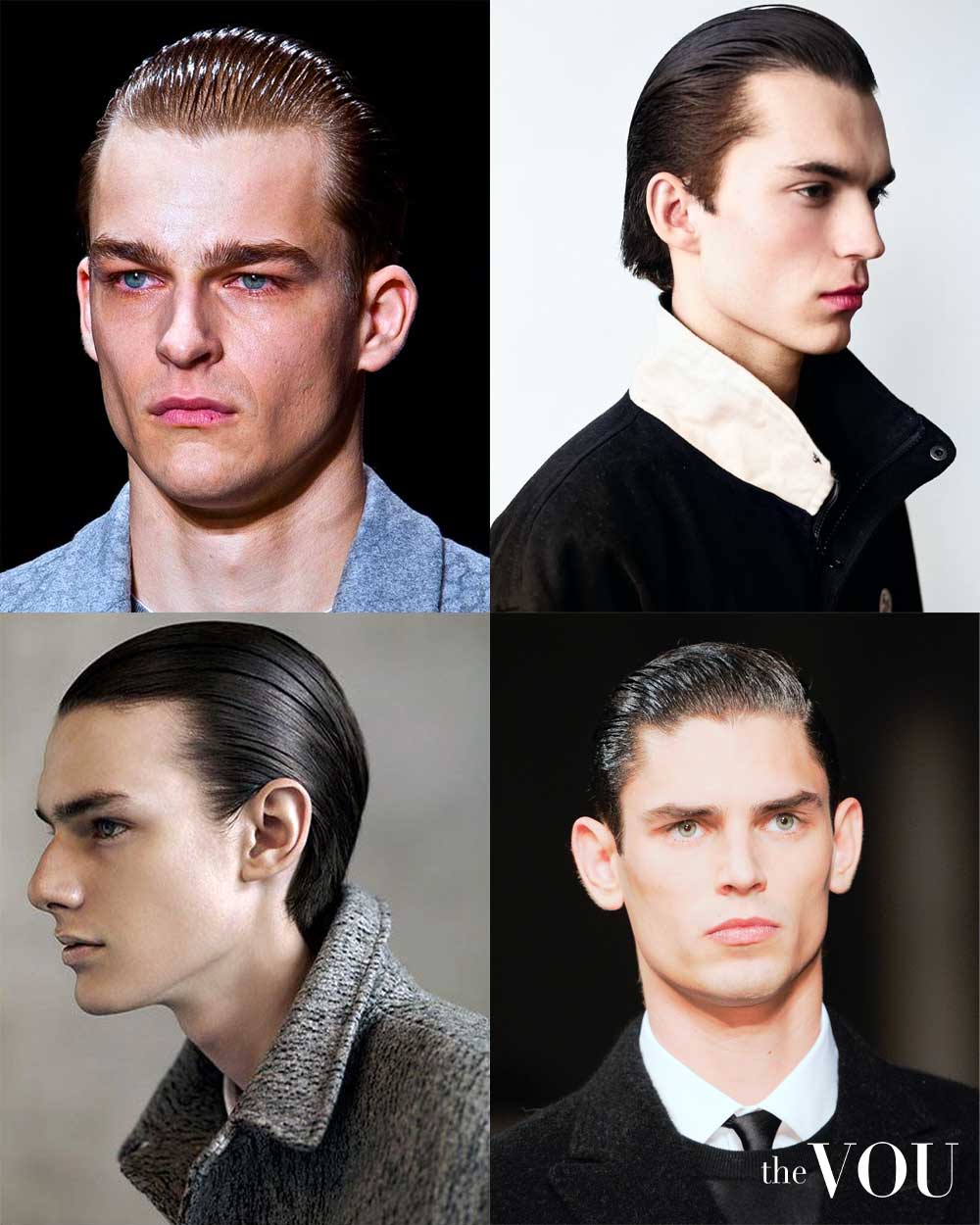
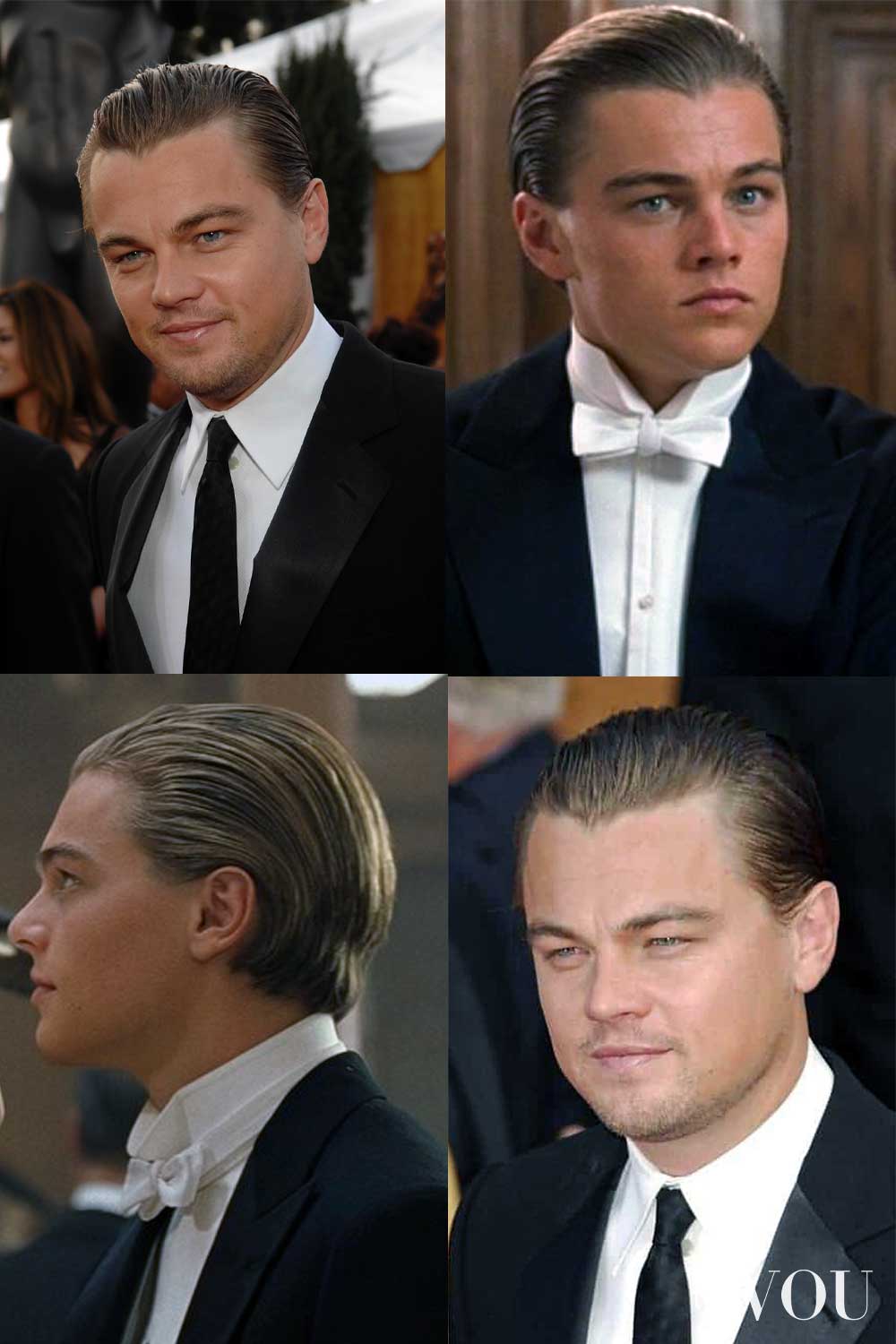
The Slick Back is one of the plainest shapes in this guide: the hair brushed back off the face and held flat to the head. Most versions have no parting at all; some keep one, and both are in the photographs below.
Why the Slick Back Works for an Old Money Look
What holds a Slick Back is the product rather than the cut: the hair all goes one way and stays where it is put. A wet look is the finish most associated with it, and it is an option rather than a requirement; a matt paste gives the same shape without the gloss.
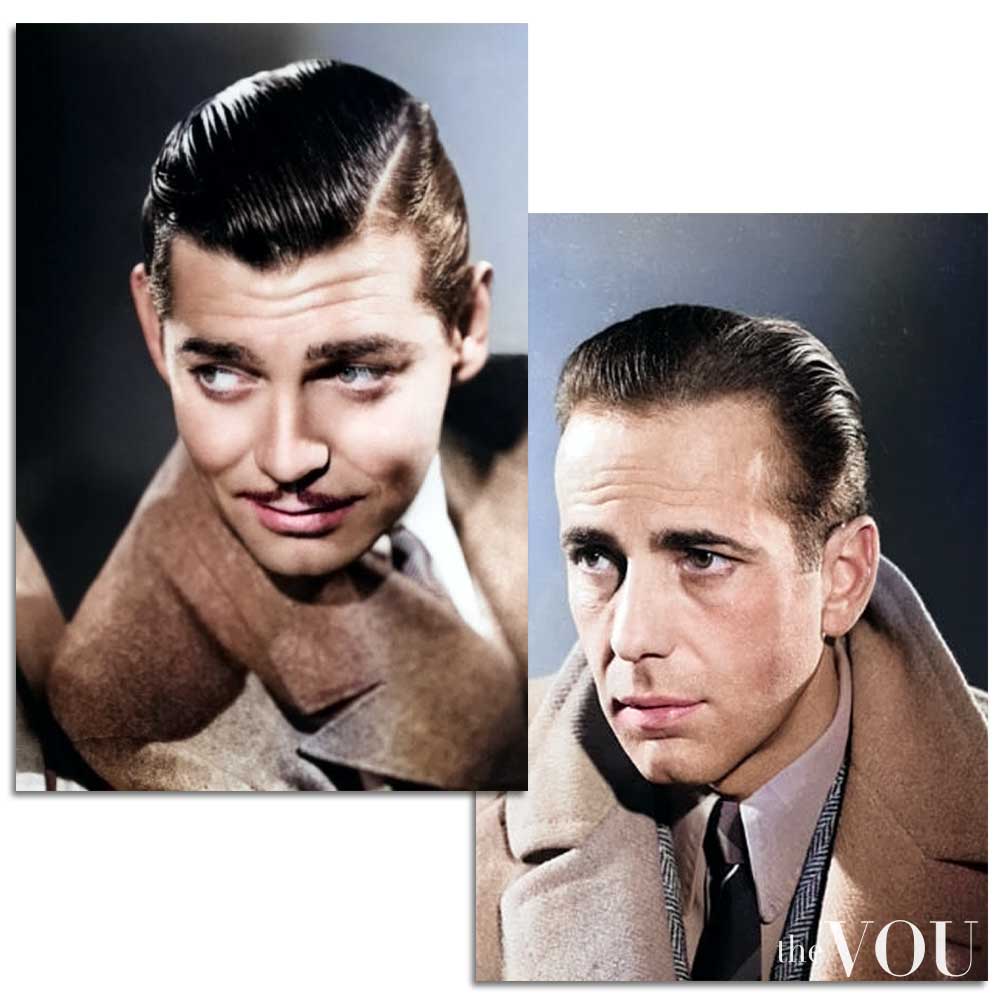
Clark Gable and Humphrey Bogart both wear it in the archive photograph below, each with a parting kept in, which is one of the two versions.
The Slick Back’s association with the old-money aesthetic lies in its ability to convey confidence, refinement, and a sense of effortless style.
Ideal Hair Texture, Length, and Volume
The Slick Back works best with medium to thick hair type with a slight natural wave or straight texture.
The hair should be long enough to comb back and maintain the style, typically around 3-5 inches on the top and 1-2 inches on the sides and back.
Aim for a balanced volume that creates a smooth, sleek appearance without looking too flat or lifeless.
Celebrities with Slick-Back Hairstyles
- Leonardo DiCaprio‘s Slick Back in “The Great Gatsby” captured the style’s old-money charm and sophistication to perfection.
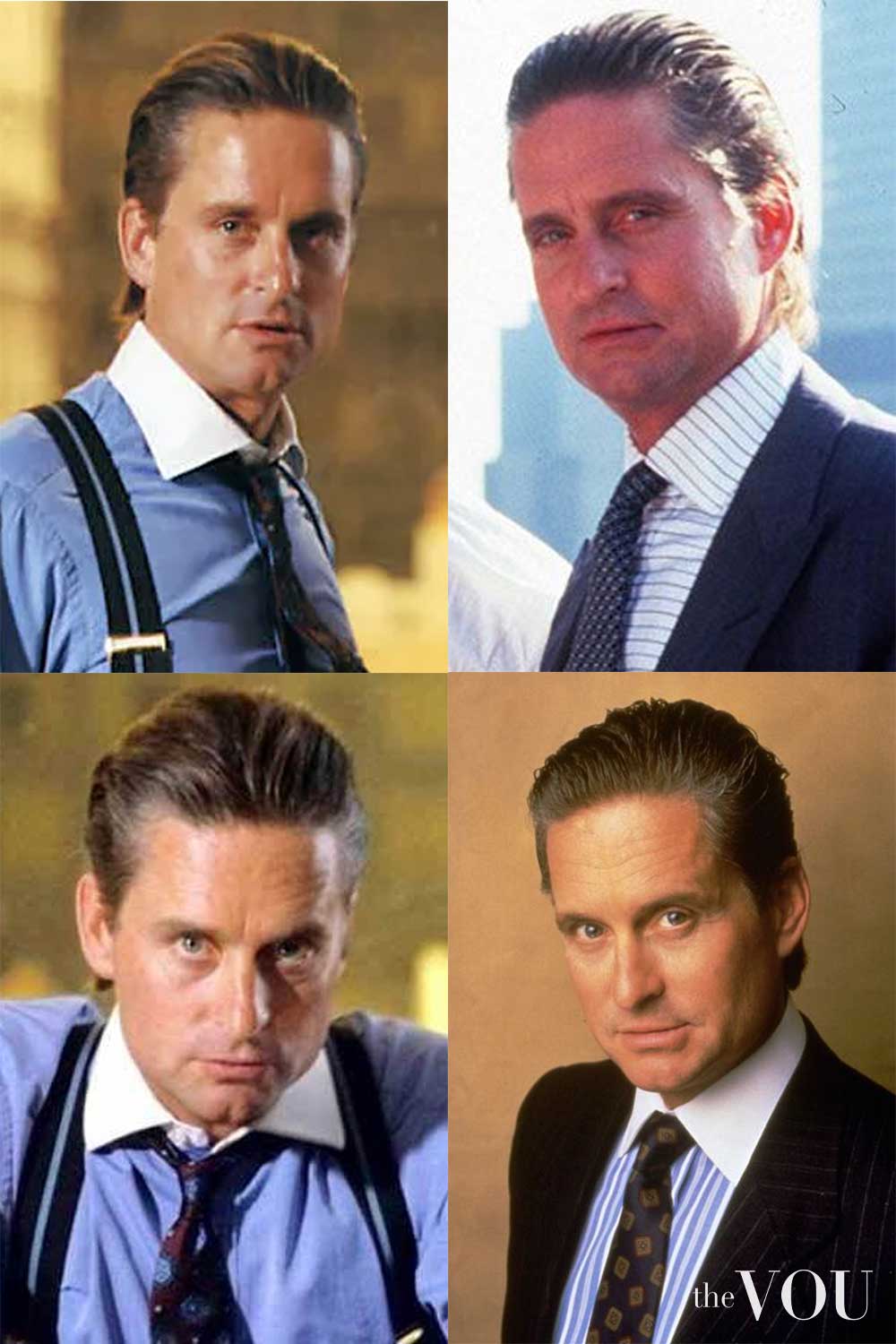
- Michael Douglas wears a parted Slick Back as Gordon Gekko in “Wall Street”, combed flat with a high shine and no movement left in it.
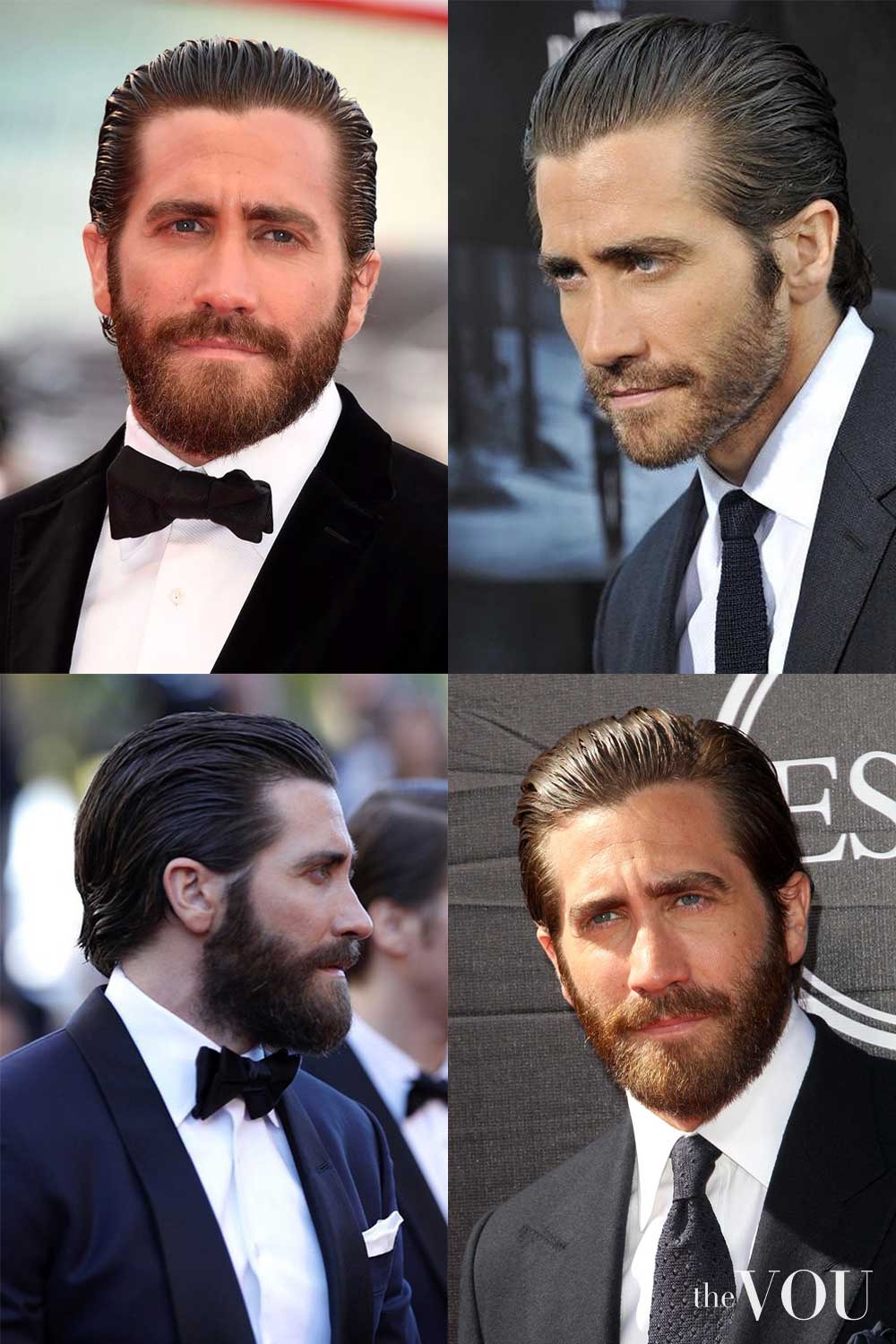
- Jake Gyllenhaal’s red-carpet appearances feature a modern take on the Slick Back, with a slightly textured finish and less severe hold.
Styling Techniques
- Start with damp, towel-dried hair and apply a small amount of pomade or hair gel, focusing on the roots and working through to the ends.
- Use a wide-toothed comb to slick the hair back, starting from the forehead and working towards the crown.
- For a glossy look, use a fine-toothed comb to create a smooth, even finish.
- Blow-dry the hair back, using a concentrator nozzle, for a sleeker appearance. Finish with pomade or hair spray for added hold and shine.
Facial Hairstyle Options
The Slick Back pairs well with a clean-shaven face, emphasising a sophisticated appearance.
However, a well-groomed beard or moustache can add a touch of masculinity and create a more modern, edgy look.
Recommended Hair Products
A Slick Back is the cut here most often worn with a high shine, and a full wet look is one of the finishes it takes. For that, a strong-hold pomade with a glossy finish, or a firm gel for the wet look outright. For the same shape without the gloss, a strong-hold matt paste.
The taper fade, the pompadour, the quiff and the comb-over all have a polished version and a matt one, and each section says which product category gets you to which. What decides it is the finish you want, not a rule about the cut, and that applies to the Slick Back above as much as to any of them.
Maintenance and Barber Visits
Four to six weeks is a reasonable example here, and it is the length on top that decides it rather than the sides, because the sides are not cut short enough to show growth quickly.
Ensure that your barber understands the style you’re aiming for and can tailor the cut to your hair type and face shape.
Between visits, restyle the Slick Back daily using the appropriate products and techniques.
The Slick Back is a quintessential old-money hairstyle, offering a timeless and sophisticated look that can be adapted to suit various face shapes and personal styles.
3. Ivy League Scholarly Chic Hairstyle for Men
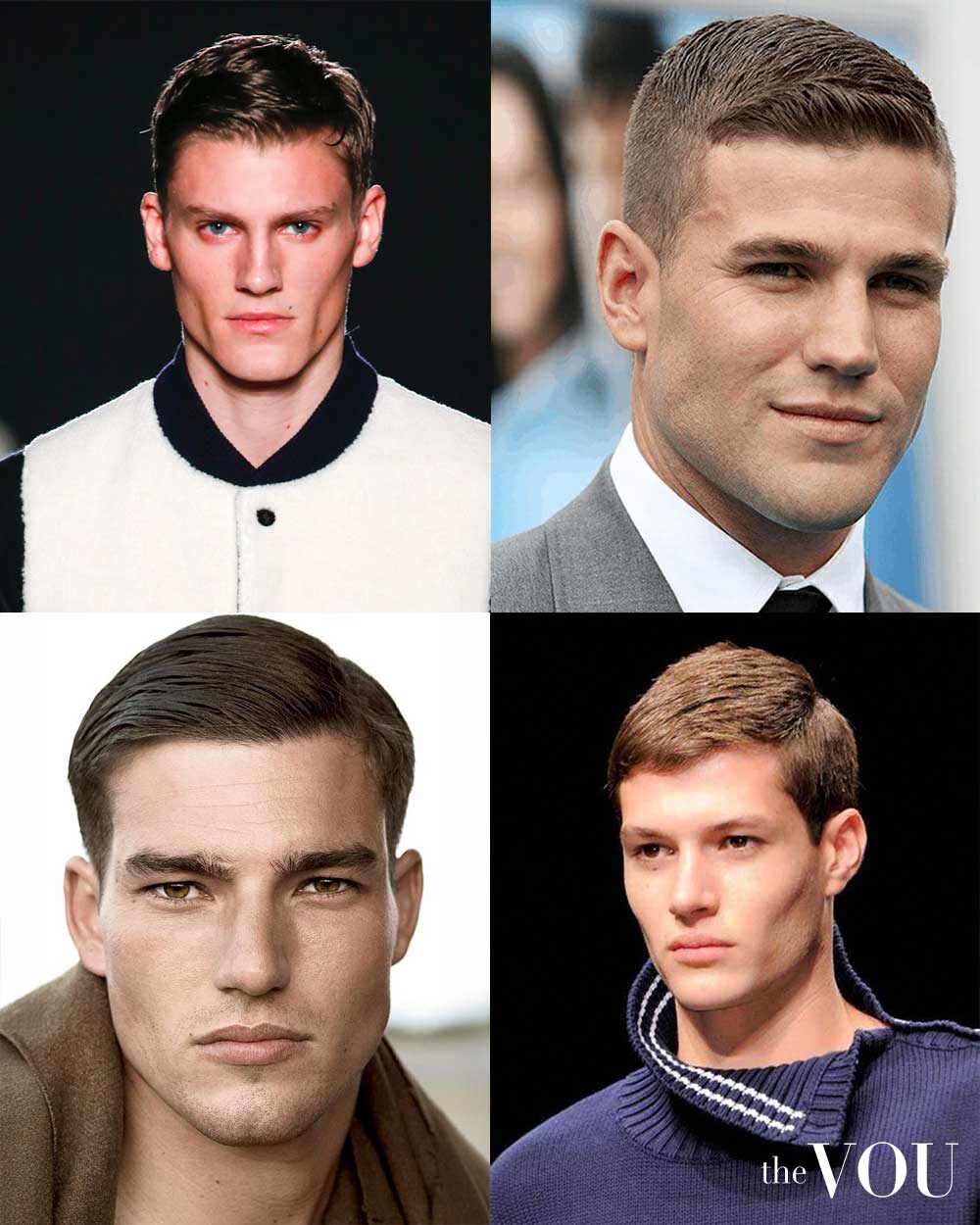
The Ivy League is a short back and sides with a little more length left at the front, and it is the haircut most often shown alongside a preppy wardrobe.
It is a timeless haircut featuring a short, neat appearance with a slight quiff at the front, precisely tapered sides, and a crisp side part.
Why Ivy League Scholarly Chic is an Old Money Look
The cut takes its name from the Ivy League universities in the United States. What it looks like is a short back and sides with just enough length left at the front to lift into a small quiff, and a part that is combed rather than cut in. The wider Ivy League look is the wardrobe it usually appears alongside.
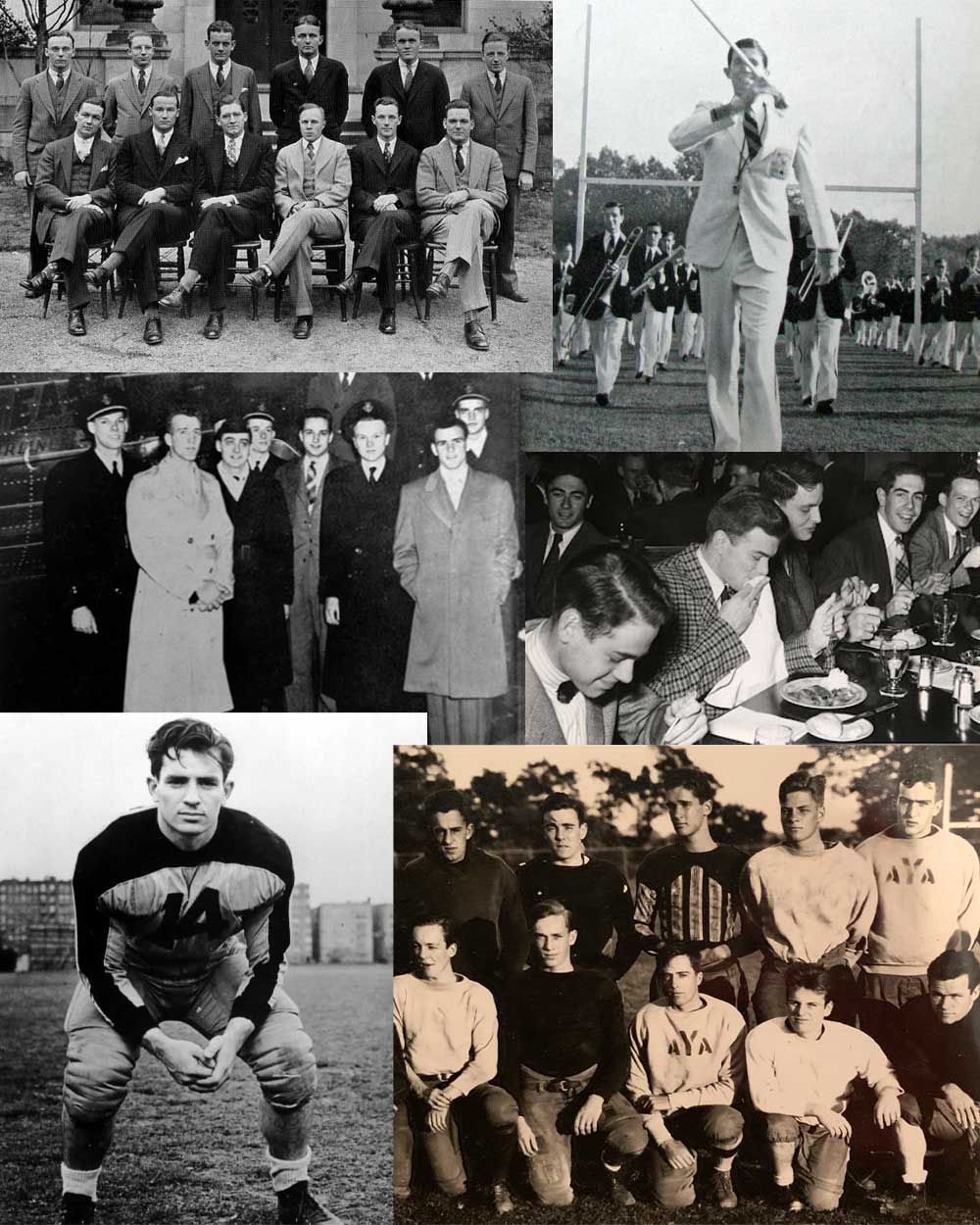
What makes it read as studied rather than fashionable is how little it does: no fade, no cut-in parting, and a quiff small enough that it holds without much product.
Ideal Hair Texture, Length, and Volume
Fine to medium hair with a slight natural wave is best for a flawless Ivy League haircut.
The texture allows for a neat, structured appearance while maintaining a touch of natural movement.
The hair on the top should be kept relatively short, with just enough length to create a small, subtle quiff at the front.
Aim for a top length of 1-2 inches, which will provide sufficient volume and height without appearing overly dramatic.
The sides and back should be tapered shorter, gradually fading from around 1 inch at the top to approximately 0.5 inches near the ears and neckline.
The precise tapering creates a clean, polished look, reinforcing the hairstyle’s crisp lines and refined silhouette in classic men’s haircut styles.
Celebrities with Ivy League Scholarly Chic Hairstyle
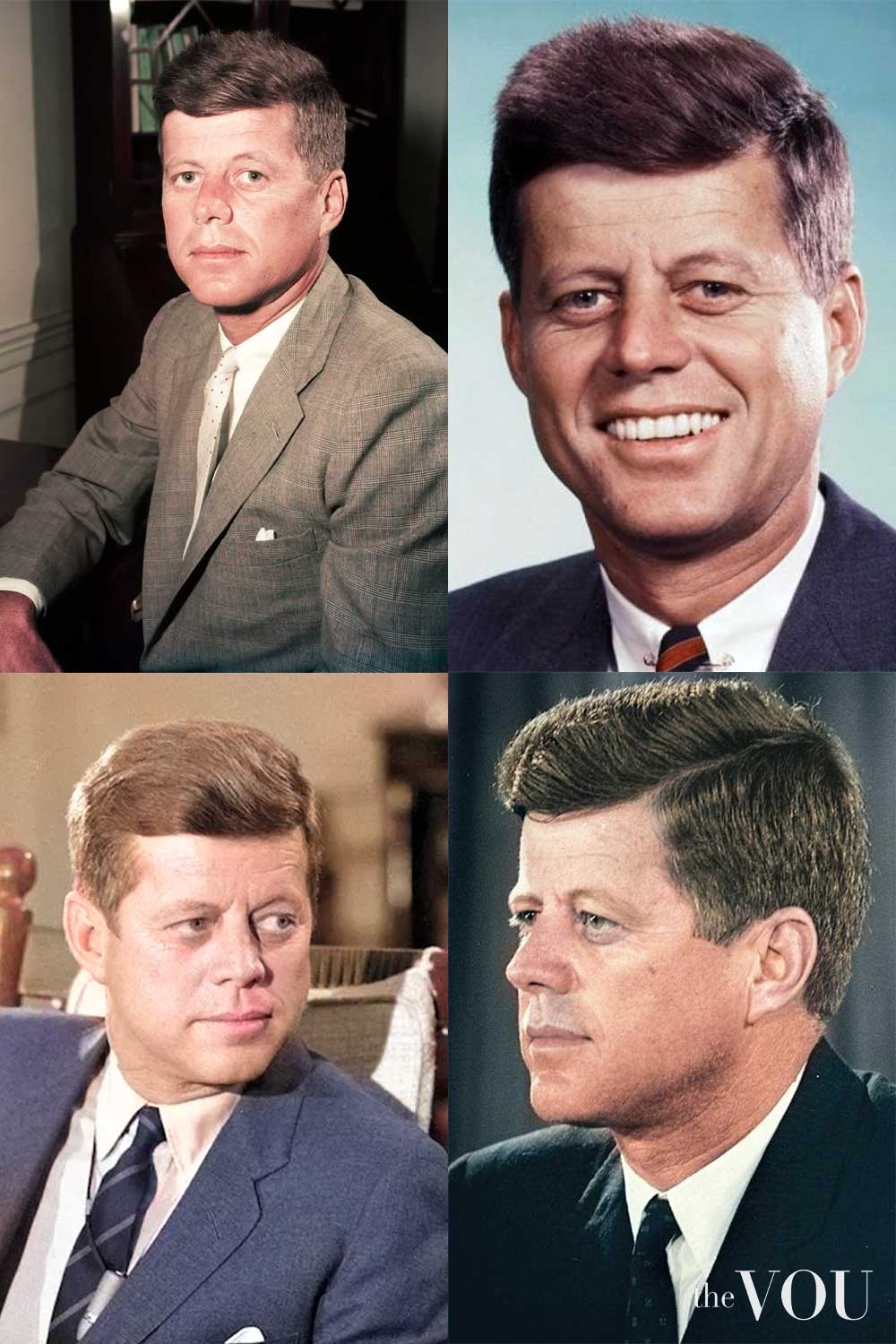
- John F. Kennedy wears the Ivy League in the photograph below, with the side kept short and enough weight at the front to hold a soft lift.
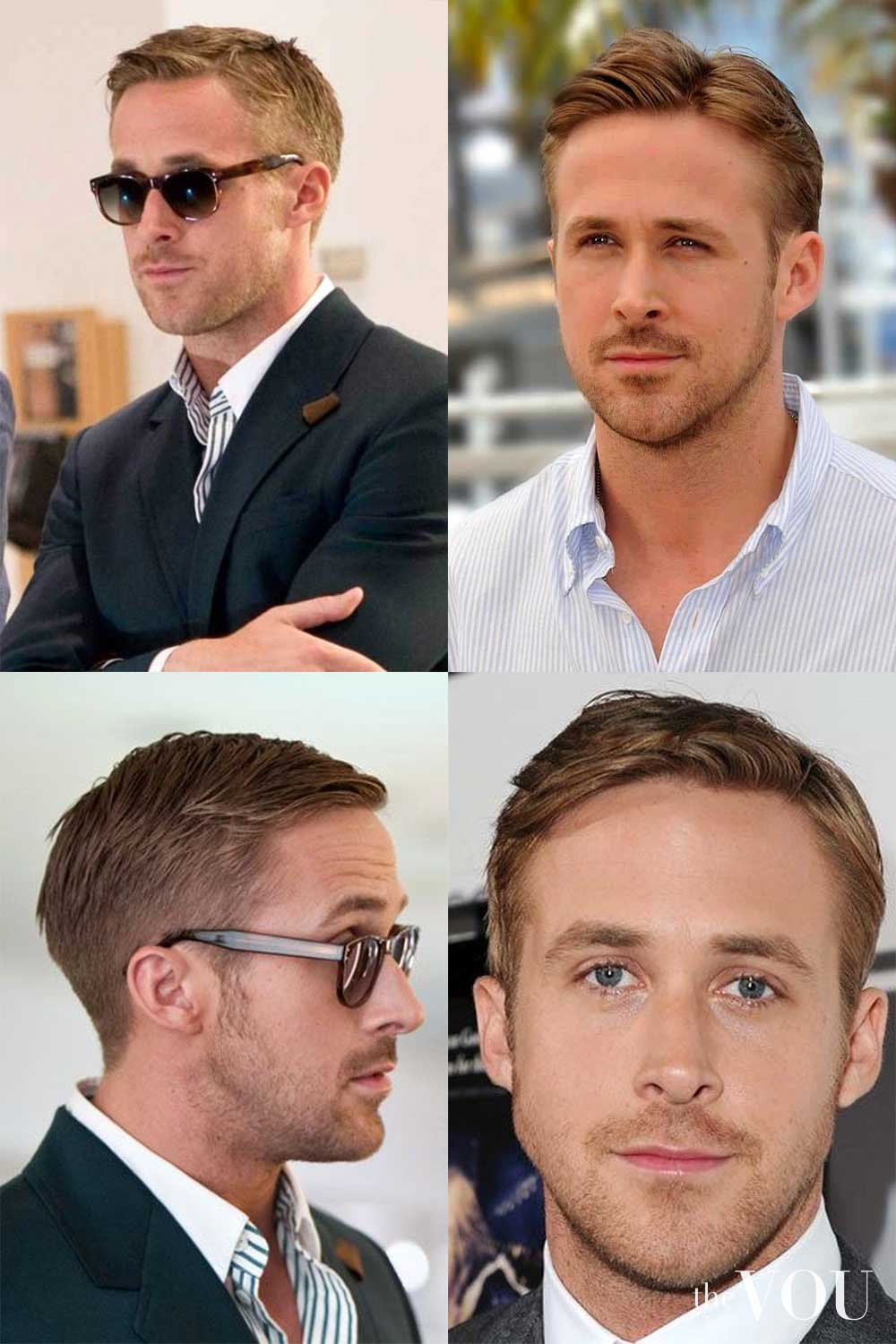
- Ryan Gosling wears a longer reading of it, with enough length at the front to fall forward rather than lift.
- Cary Grant wears a version of it in “North by Northwest” and “To Catch a Thief”, cut shorter at the sides than the side part he is better known for, and it is one of the reference looks this site collects.
Styling Techniques
- On a slightly damp hair, apply a small amount of pomade or styling cream, focusing on the roots and working the product through to the ends using your fingers.
- Using a fine-toothed comb, create a crisp side part, starting from the crown and working towards the temple.
- With a blow dryer set to medium heat and medium speed, dry the hair on the top of your head, using a small round brush to create volume and a slight quiff at the front.
- Once the hair on the top is dry and styled, gently use your fingers or a comb to refine the quiff, ensuring a neat, structured finish.
Facial Hairstyle Options
The Ivy League haircut is best complemented by a clean-shaven face, emphasising the style’s neat, polished appearance and drawing attention to the hair’s lines and refined silhouette.
A well-groomed moustache is the other common route, and it adds weight to the middle of the face where this cut deliberately keeps the hair short.
A neatly trimmed, classic moustache style, such as the chevron or the pyramidal, can enhance the Ivy League’s old-money aesthetic and provide a subtle nod to the style icons of a bygone era.
Recommended Hair Products
A medium hold with a matte or low-shine finish is what holds the small front quiff without making it look set.
A clay or a forming cream will both do that. Which of the two suits you depends on how thick your hair is, since clay is heavy work on fine hair.
A light hairspray is optional here too, for the same reasons.
Maintenance and Barber Visits
Three to four weeks keeps the front quiff at a workable length and the taper crisp, though nothing obliges you to hold to it.
If you do let it run longer, the taper is what shows first; the top simply becomes a slightly longer top.
The Ivy League haircut is a timeless old-money style that projects an air of intelligence, refinement, and understated elegance.
4. Taper Fade Hairstyle for Men
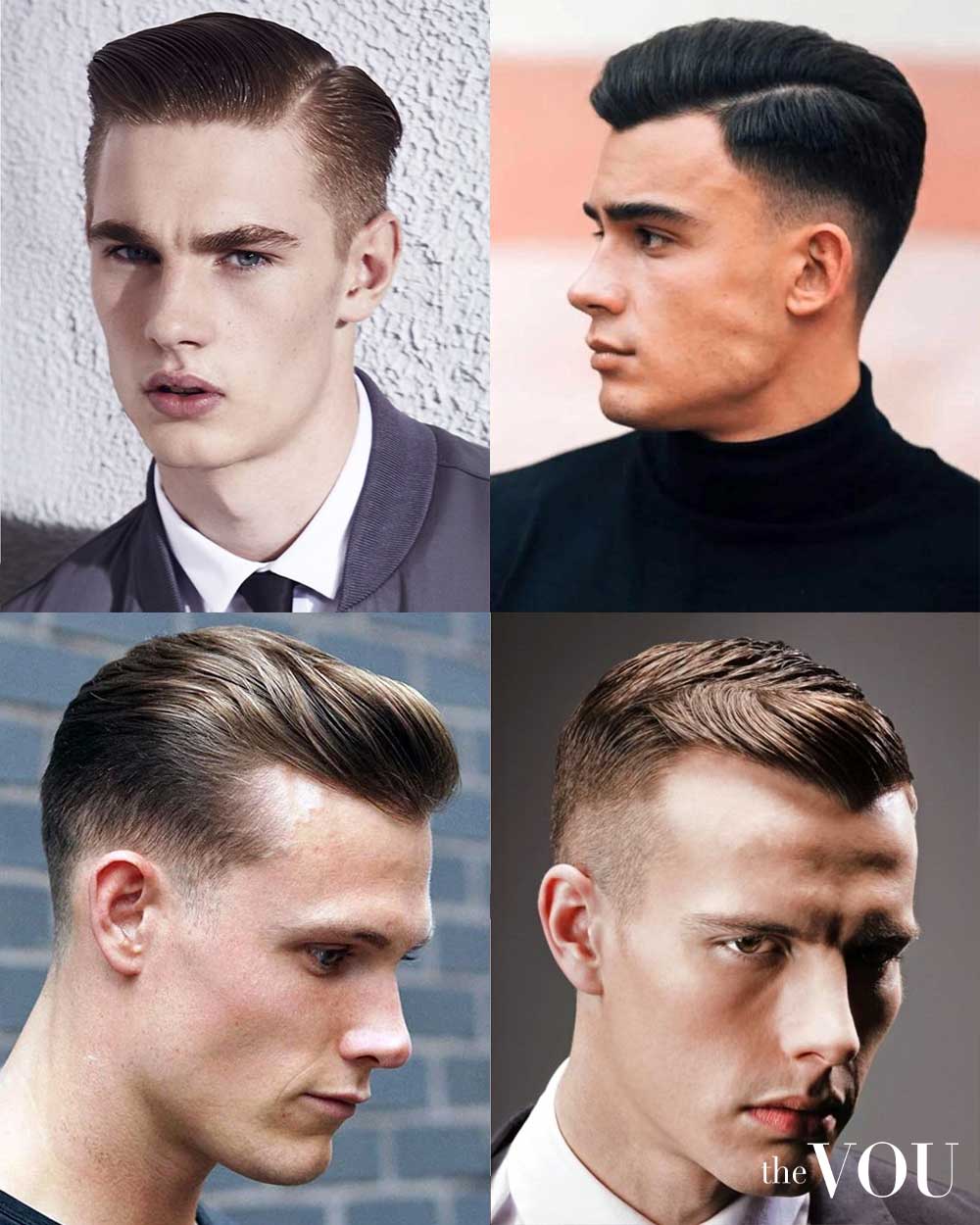
The taper fade is the most adjustable side in this guide: how high the taper starts and how short it finishes are both dials, and where you set them decides whether the cut reads quiet or sharp.
The haircut features a gradual tapering from longer lengths on the top to progressively shorter lengths on the sides and back, creating a smooth, blended transition.
Why the Taper Fade Works for an Old Money Look
What puts the taper fade in this guide is that the side gets shorter towards the ear and the neck gradually, with nothing in it that reads as a step. Taper and fade are both blended cuts and the words are used loosely, so asking for one or the other by name is not enough. What settles it is three things you can say out loud: how short the shortest part goes, how far up the head the change carries, and how much difference you want between that and the top.
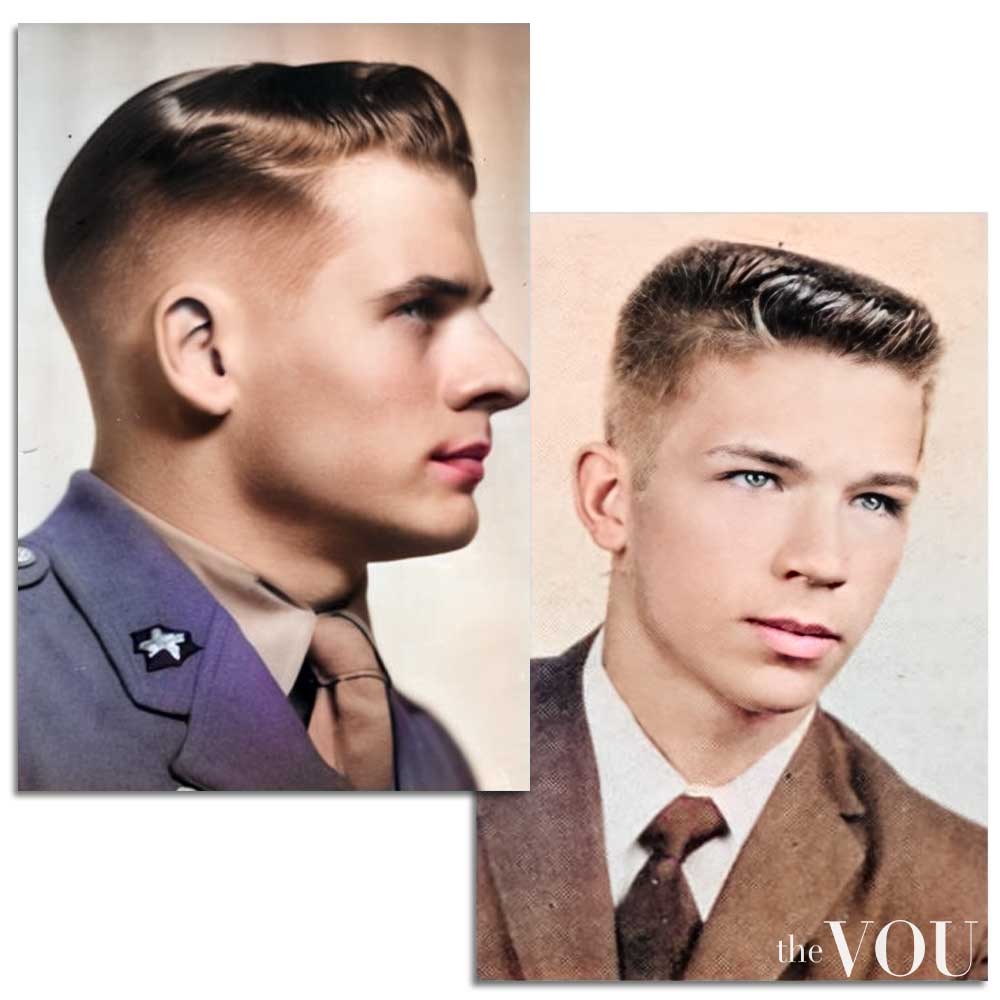
At the same time, its modern interpretation allows for greater flexibility and personal expression.
Because the side is a gradient rather than a step, the taper fade sits comfortably in a formal setting at a low setting and reads more contemporary at a high one. That single choice is most of what you are deciding.
Ideal Hair Texture, Length, and Volume
The taper fade is a remarkably versatile hairstyle that can be adapted to suit a wide range of hair types, textures, and lengths.
However, to achieve the most polished and refined results, it is best to start with hair that has a medium to fine texture and a moderate amount of natural volume.
The ideal length for the top portion of the hair will depend on your personal styling goals, but a 1-4 inches range is generally recommended.
This length allows for various styling options, from sleek and smooth to textured and tousled, while maintaining the taper fade’s signature blended appearance.
Regarding volume, the goal is to achieve a balanced, proportional look that complements your facial features and head shape.
Celebrities with Taper Fade Hairstyle
- Justin Timberlake’s sleek, polished looks showcase the hairstyle’s versatility and ability to complement various personal styles and occasions, from red-carpet events to laid-back, casual settings.
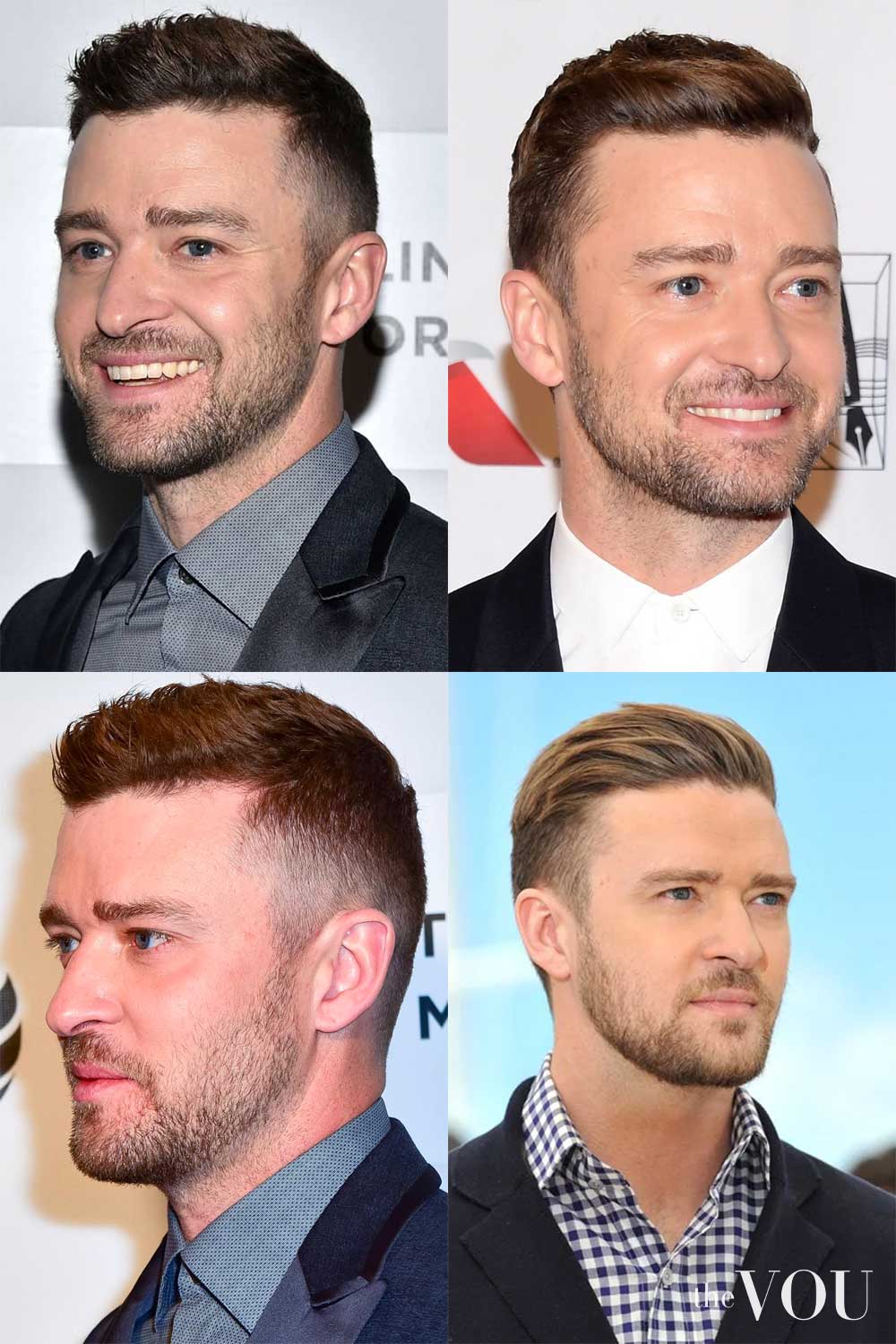
- Ryan Reynolds’ clean-cut, yet slightly textured, looks exemplify how the taper fades can be adapted to suit various personal styles and occasions, from red-carpet events to casual, everyday settings.
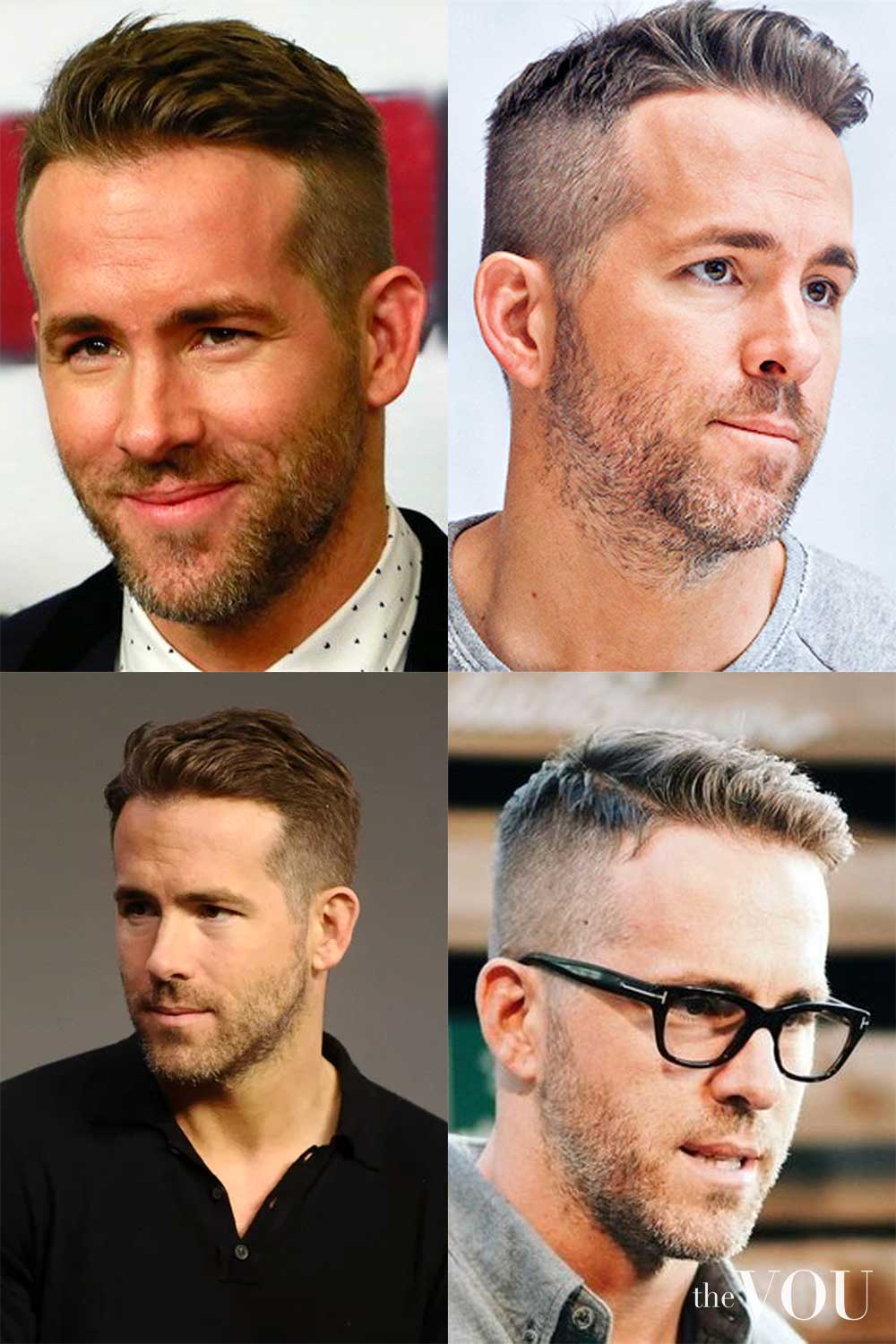
- Michael B. Jordan’s taper fades and precise, graduated cuts feature crisp lines and sharp fades that highlight his chiselled features, while the longer lengths on top allow for a range of stylish, textured looks that project an image of confidence and adaptability.
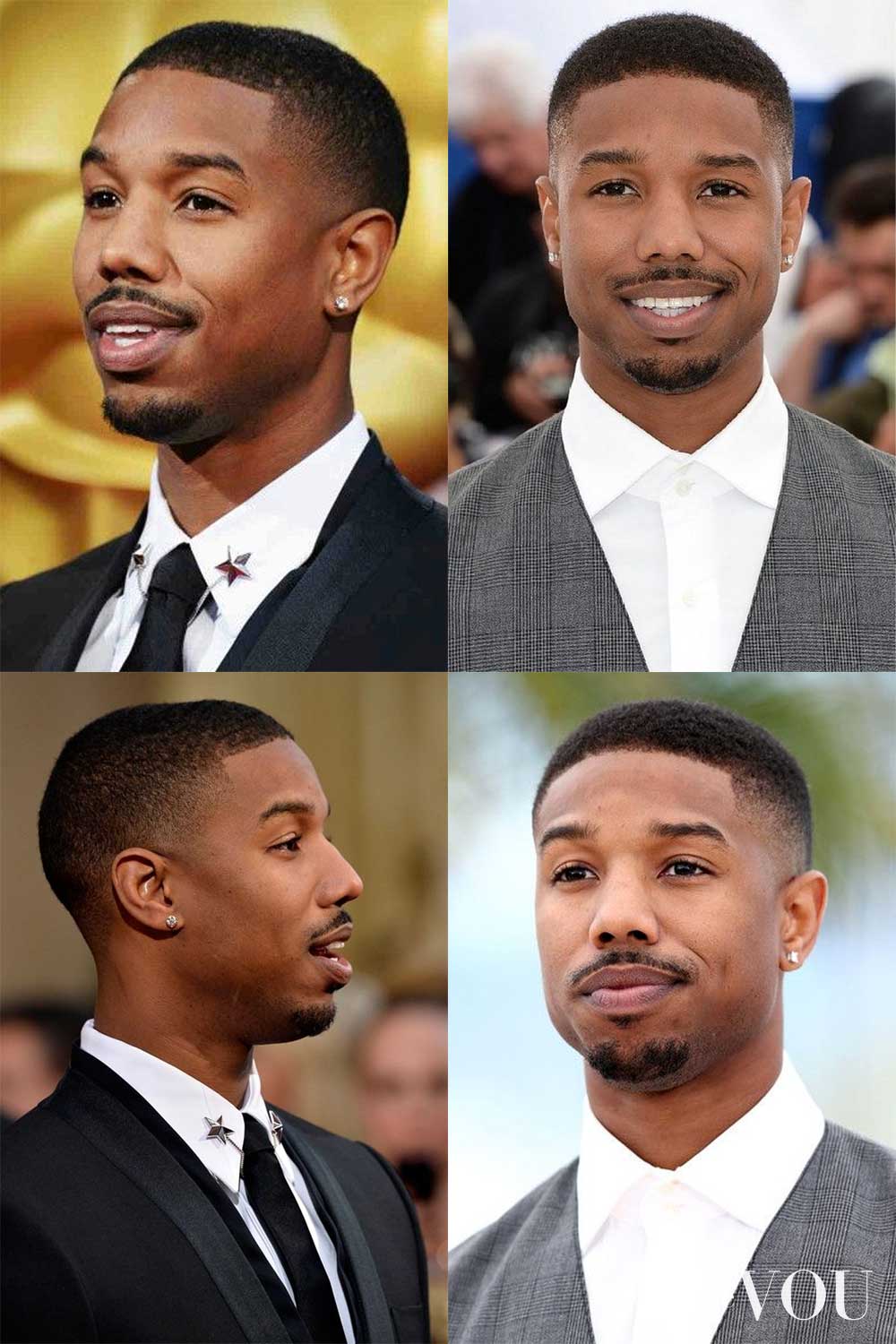
Styling Techniques
- Start with clean, towel-dried hair washed with high-quality shampoo and conditioner and apply a small amount of styling product, such as a pomade, clay, or cream, to the hair on top, working it through from roots to ends with your fingers or a comb.
- Using a blow dryer set to medium heat and medium speed, dry the hair on top while simultaneously using a round brush or your fingers to shape and style it in your preferred direction.
- Once the top portion of your hair is dry and styled to your liking, use a fine-toothed comb or a soft-bristled brush to gently blend the longer hair on top with the tapered sides and back.
- To finish the look and ensure long-lasting hold, apply a small amount of hair spray or a light-hold styling product, such as a grooming cream or a texture spray, to the hair on top.
Facial Hairstyle Options
The taper fade’s versatility extends to its compatibility with various facial hairstyles, allowing gentlemen to customise their looks to suit their personal preferences and face shapes.
A clean-shaven face is ideal for a clean cut, which creates a refined appearance that emphasises the taper fade’s structured silhouette.
Alternatively, a well-groomed moustache, carefully trimmed, shaped beard, or precisely styled moustache can enhance the taper fade’s old-money aesthetic while allowing for a greater degree of personal expression and individuality.
Recommended Hair Products
The fade itself needs no product at all, so what you buy follows the top rather than the sides.
For a textured finish, a matte clay or a clay-and-wax hybrid holds the shape without gloss. For a smoother finish, a medium-hold pomade with some shine. For lift with very little weight in it, a texturising spray on damp hair before either.
Maintenance and Barber Visits
Two to four weeks is a reasonable example, depending on your growth rate and how sharp you want the fade to stay. A fade shows growth sooner than a longer, softer cut does, which is the trade for how clean it looks when it is fresh.
5. Undercut Hairstyle for Men
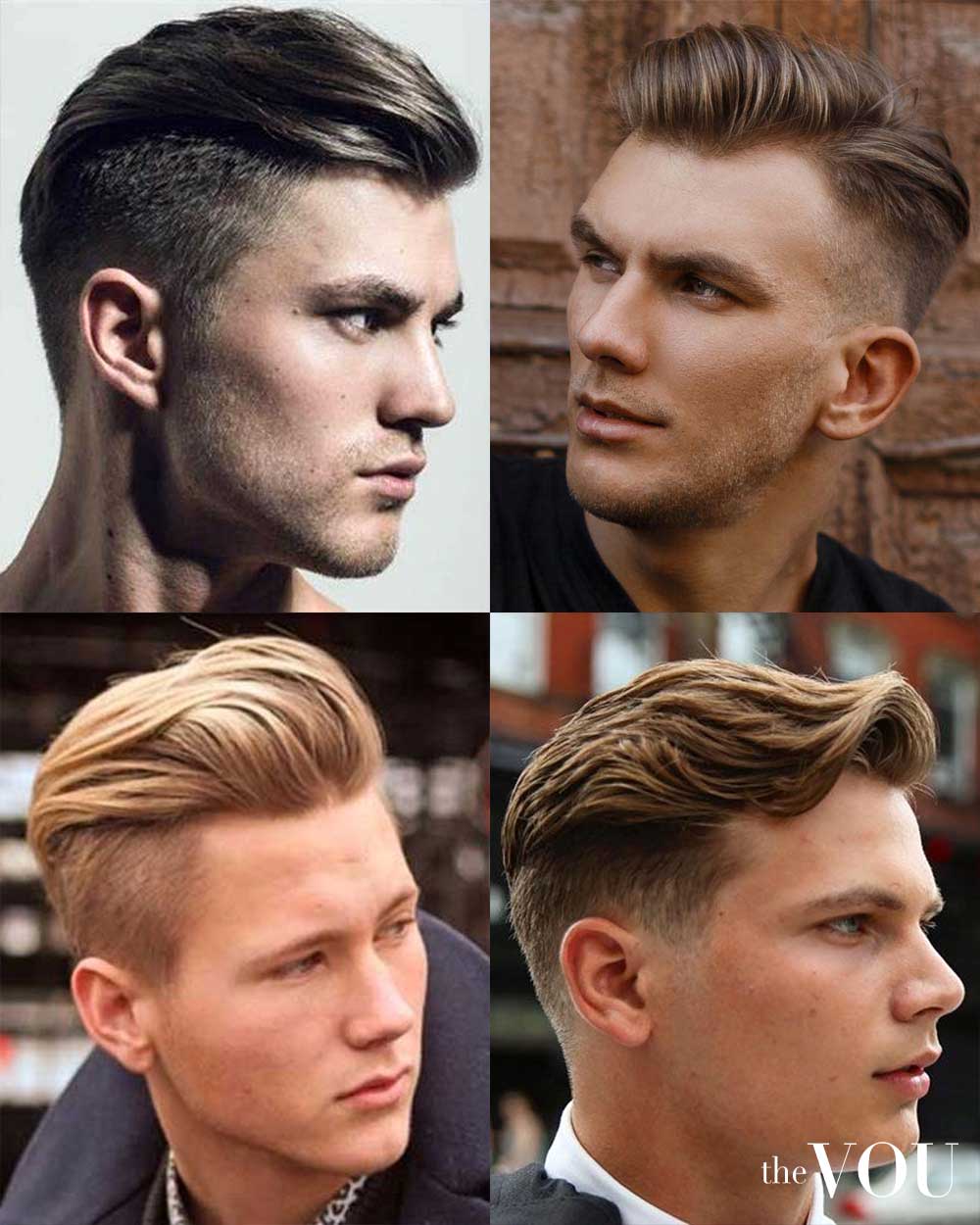
The undercut is a striking, modern hairstyle that combines the refined appeal of old-money aesthetics with a contemporary, daring twist.
The attention-grabbing look features short, buzzed sides and back, contrasting sharply with longer hair on top.
The undercut is a bold hairstyle for men who want to make a statement and stand out.
It is one of the sharper-looking cuts here, and the contrast that makes it work is also what makes growth obvious.
Why Undercut is an Old Money Look
The undercut is the cut here that is defined by having no blend: the top keeps its full length and the side drops to a short uniform length in one step, with a visible edge where they meet.
That edge is why it sits in this guide and also why it needs keeping up. Everything depends on the join being cut cleanly, because there is no graduation to hide behind.
Ideal Hair Texture, Length, and Volume
The undercut is best suited for men with straight or slightly wavy hair, relying on the stark contrast between the short sides and the longer top.
The ideal length for the top portion is 2-5 inches, allowing for various styling options and dramatic volume.
The sides and back are usually clipped very short, with a #1 or #2 guard, or even fully buzzed.
The sharp distinction between the top and sides creates a bold, eye-catching silhouette.
Celebrities with Undercut Hairstyles
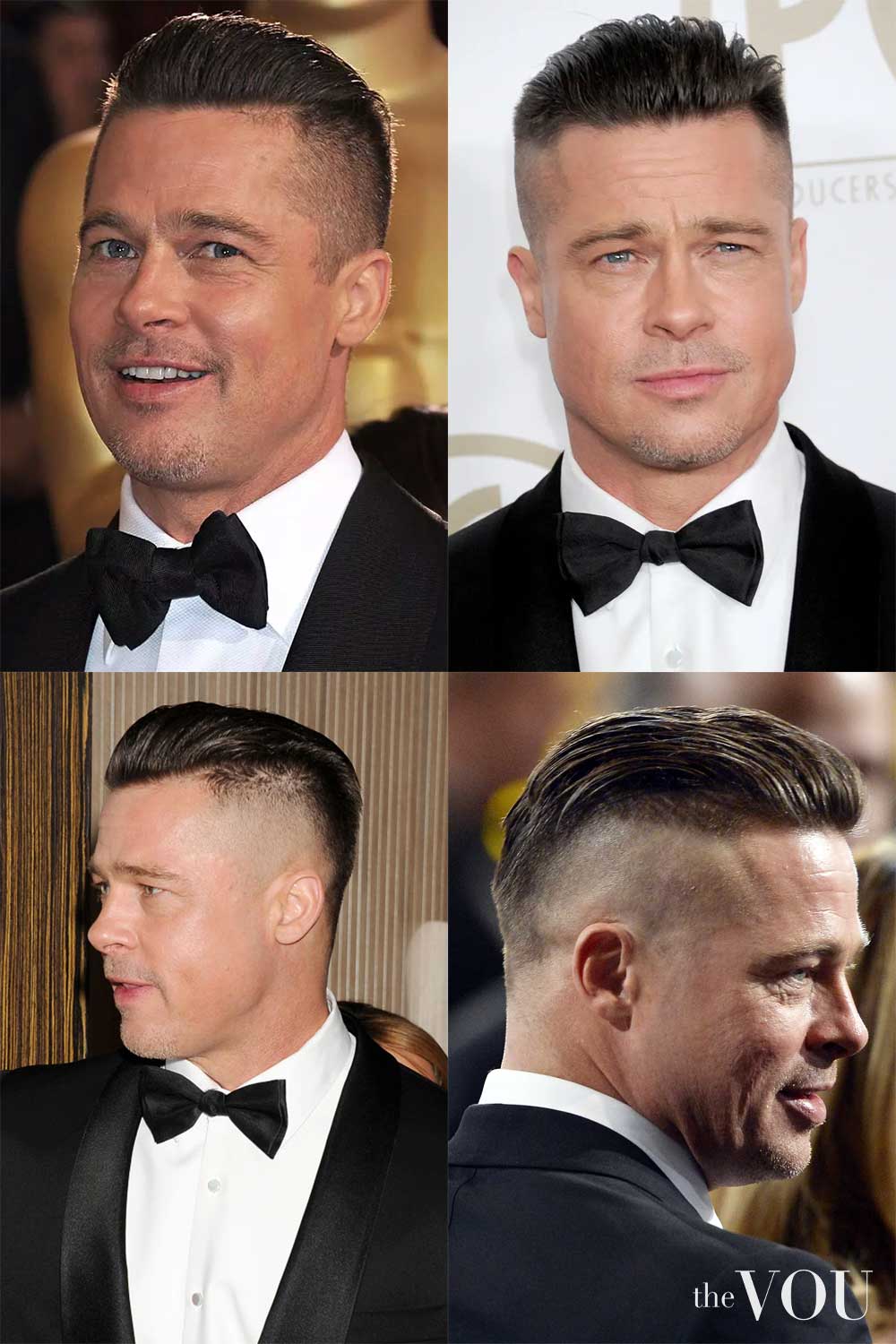
- Brad Pitt has sported various undercut styles, showcasing the hairstyle’s rugged, masculine appeal.
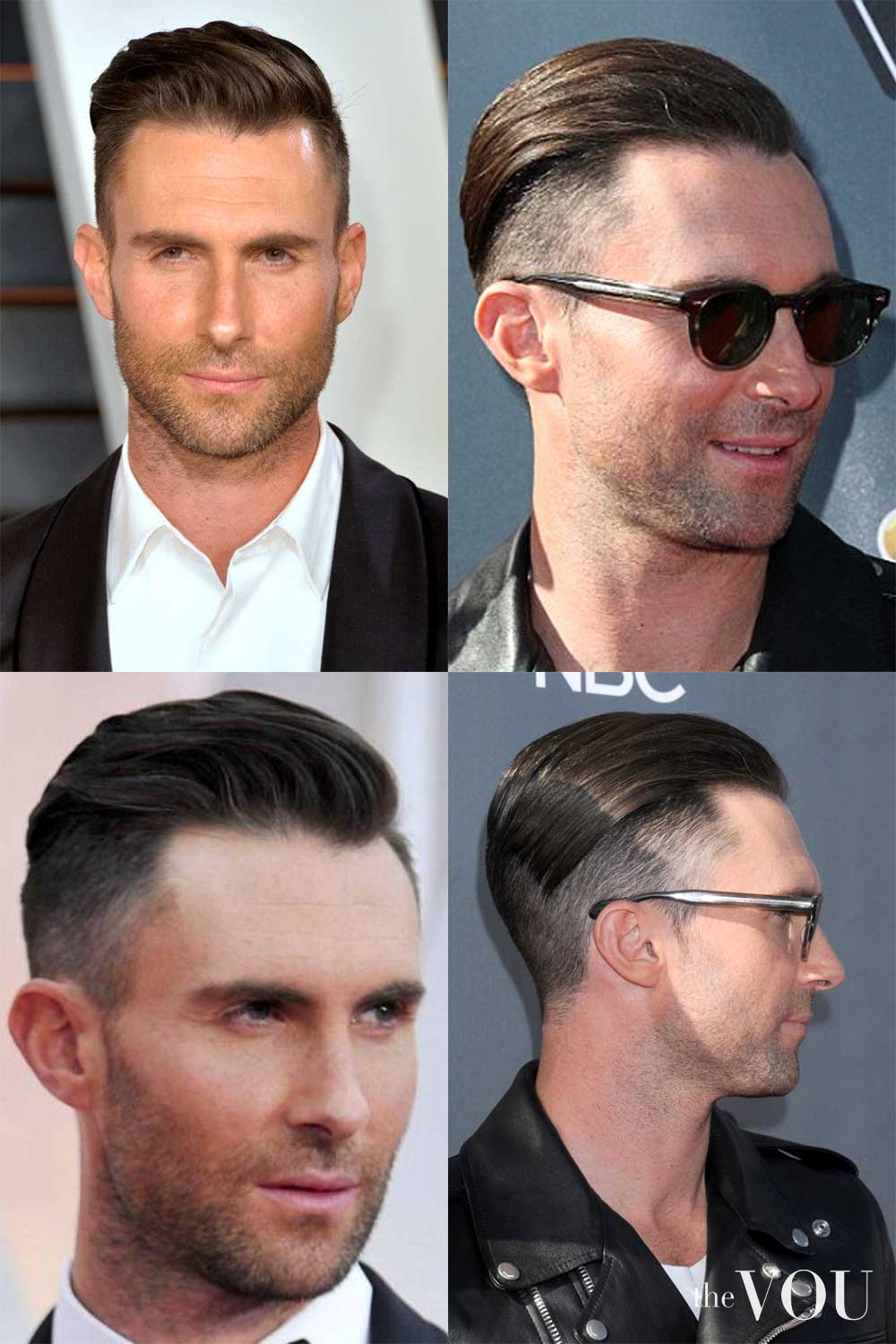
- Adam Levine’s iconic undercut features a longer, textured top and closely cropped sides, exemplifying the style’s rock-and-roll edge.
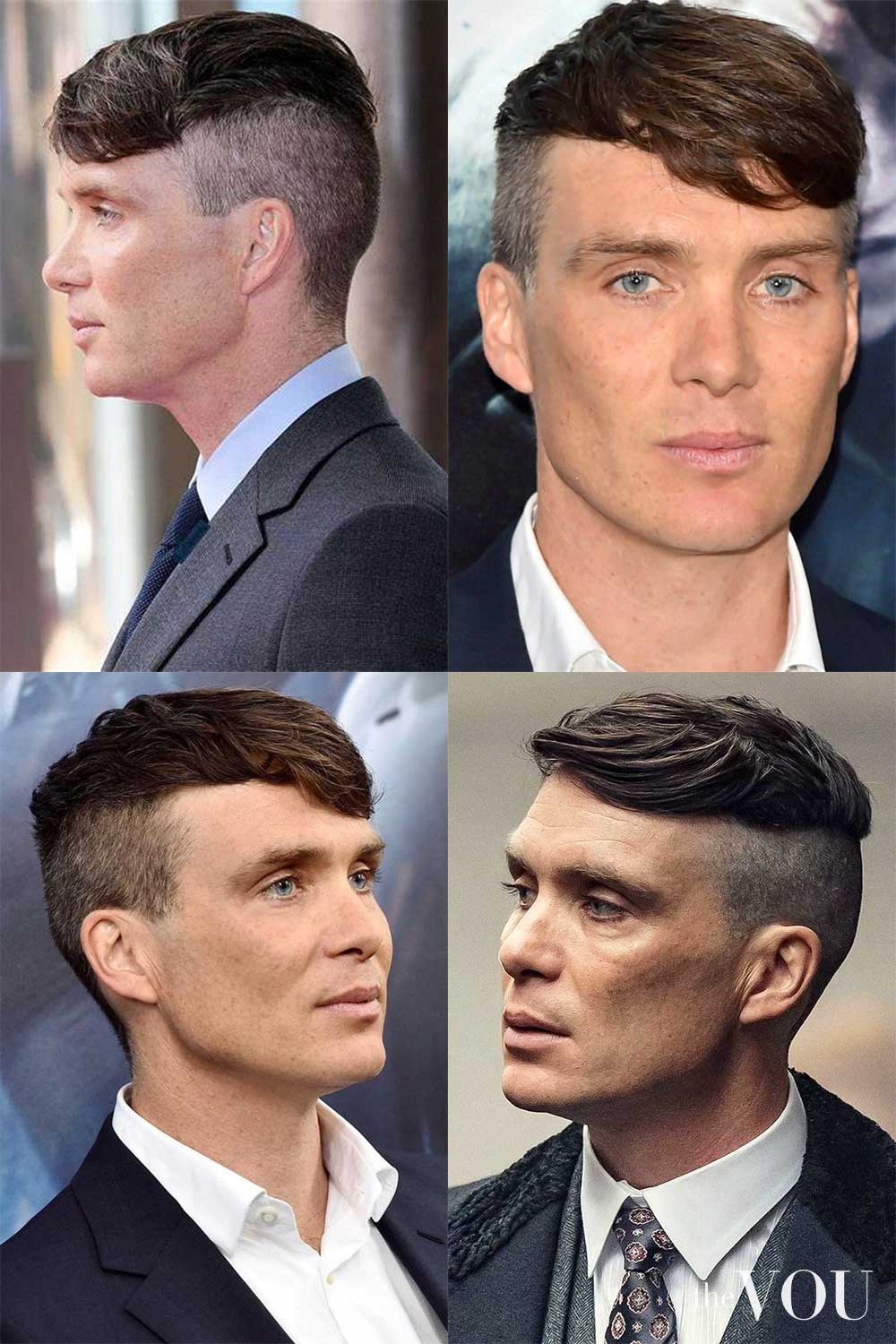
- Cillian Murphy’s portrayal of Tommy Shelby in “Peaky Blinders” popularised a vintage-inspired undercut, combining sharp contrast with old-world sophistication.
Styling Techniques
- Start with clean, dry hair and apply a small amount of high-hold pomade or styling clay to the longer hair on top.
- Style the hair on top in your desired direction, creating volume, texture, and movement using a wide-toothed comb or fingers.
- Use a blow dryer on medium heat and speed, directing airflow at the roots while styling for extra volume and lift.
- Apply a small amount of hairspray or texturising spray to hold the style in place and add definition.
Facial Hairstyle Options
The undercut’s edgy, masculine appeal makes it an ideal companion for various facial hairstyles. A well-groomed beard can add texture and visual interest, while a clean-shaven face highlights the undercut’s sharp lines and bold contrast.
Consider pairing your undercut with neatly trimmed stubble or a short, well-defined beard for a balanced, rugged, yet refined look.
Recommended Hair Products
How much hold a long top over short sides needs depends on your hair: fine or straight hair tends to drop out of the shape sooner than thick or wavy hair does, so start at the hold your own hair has needed before and adjust.
A firm, pliable clay with a matte finish gives the textured version. A strong pomade with shine gives the slicked version. Those are two completely different results from the same haircut, so decide which one you are after before you buy.
Maintenance and Barber Visits
The short sides are what date an undercut, so two to three weeks is a reasonable example for them. The long top will go further than that, which is why the two halves of this cut fall out of step with each other and why some men have the sides done between full cuts.
6. Classic Pompadour Hairstyle for Men
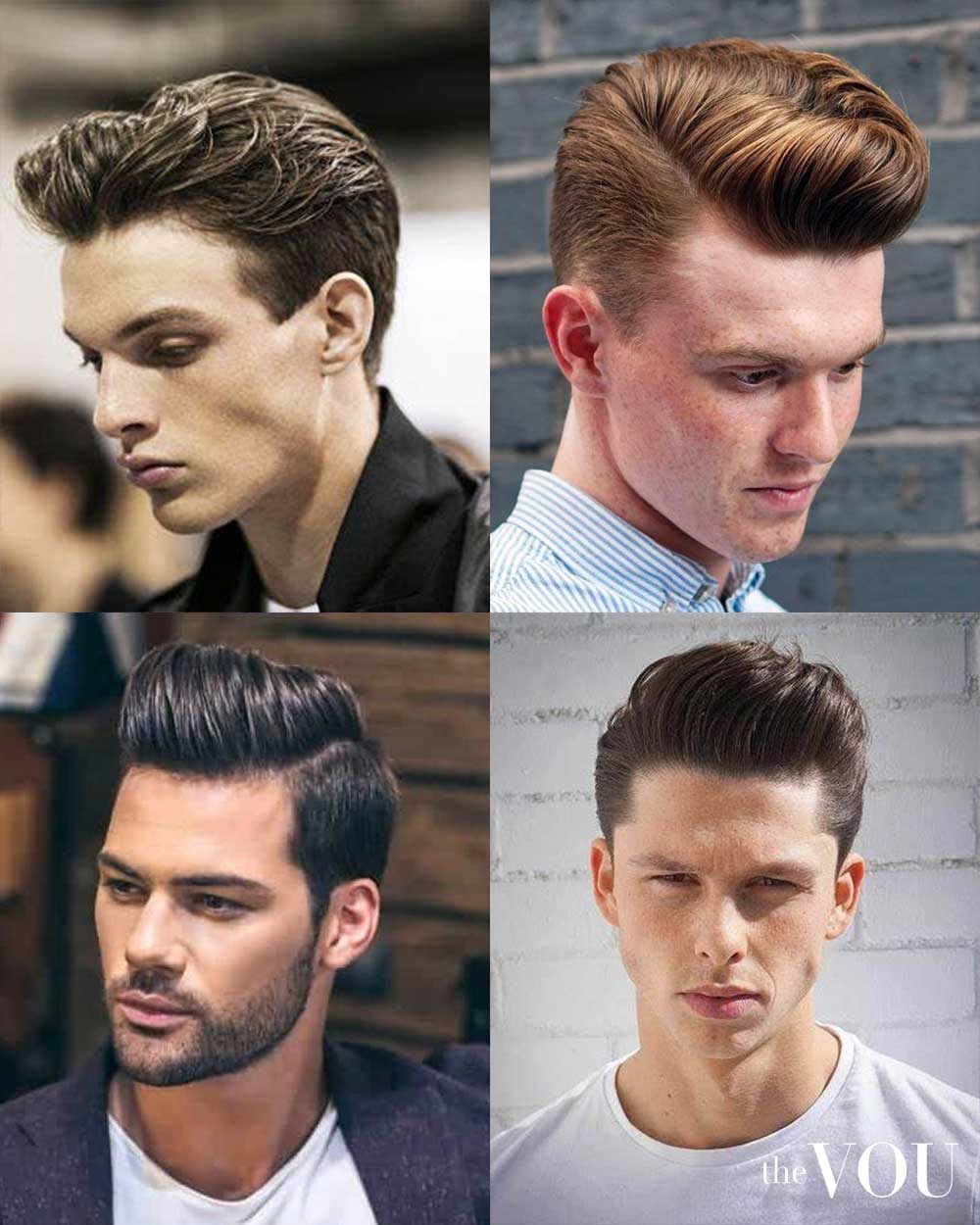
The classic pompadour is the tallest shape in this guide, and the only one where the height is the point rather than a side effect of the length.
The iconic look features hair swept upward and back, creating an impressive volume that commands attention.
The pompadour can work within an old-money-inspired wardrobe when the volume is controlled and the finish remains polished rather than theatrical.
Why the Pompadour Works for an Old Money Look
A pompadour is defined by where the volume sits: swept up and back off the forehead, highest at the front, with the sides kept tight so the height reads as deliberate. Elvis Presley and Johnny Cash both wear one in the photograph below.
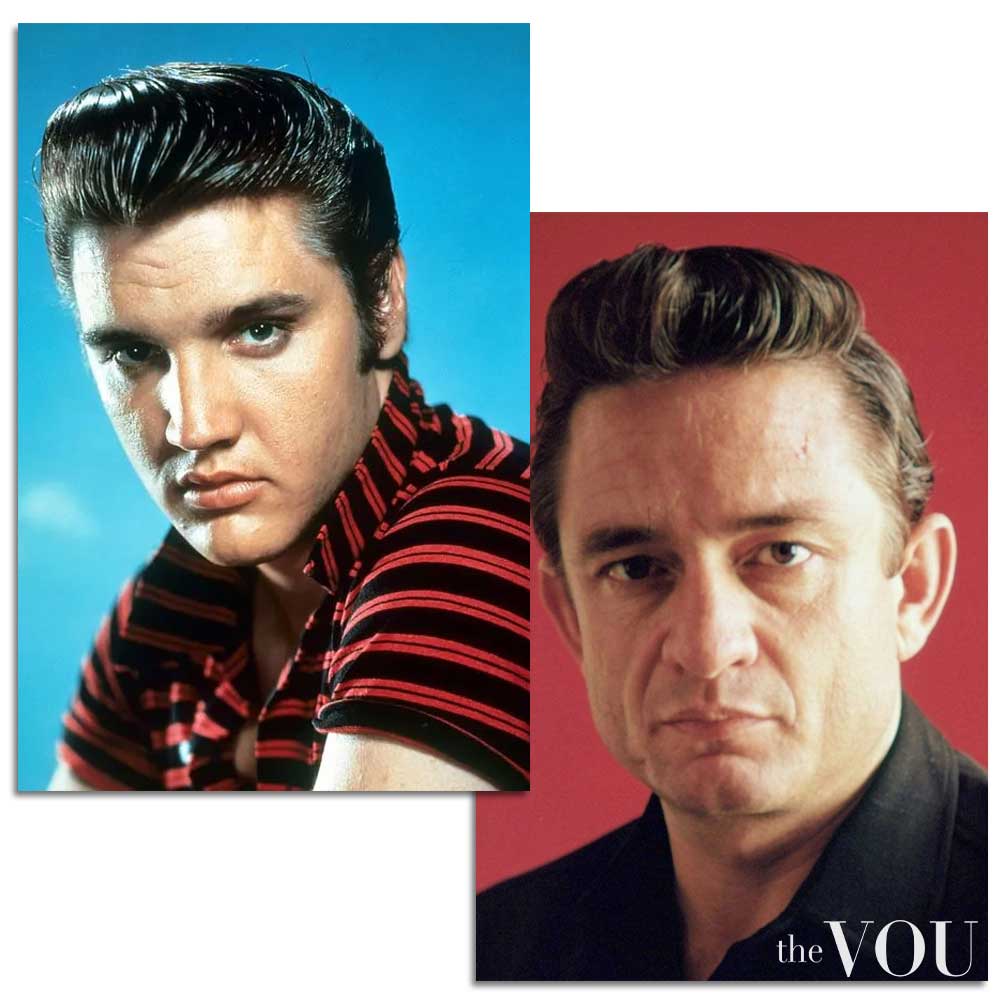
It is a demanding shape rather than a demanding haircut: the cut underneath is ordinary, and almost all of the work is in how you dry and dress it each morning.
Ideal Hair Texture, Length, and Volume
Medium to thick hair with a slight natural wave is ideal for a classic pompadour. The hair should be long enough on top to create the signature swept-up look, typically 3-5 inches.
The sides and back are kept shorter, usually tapered or faded, to emphasise the contrast and height of the pomp. The key to a successful pompadour is achieving a balance of volume and control, ensuring the style looks impressive but not overly stiff.
Celebrities with Pompadour Hairstyle
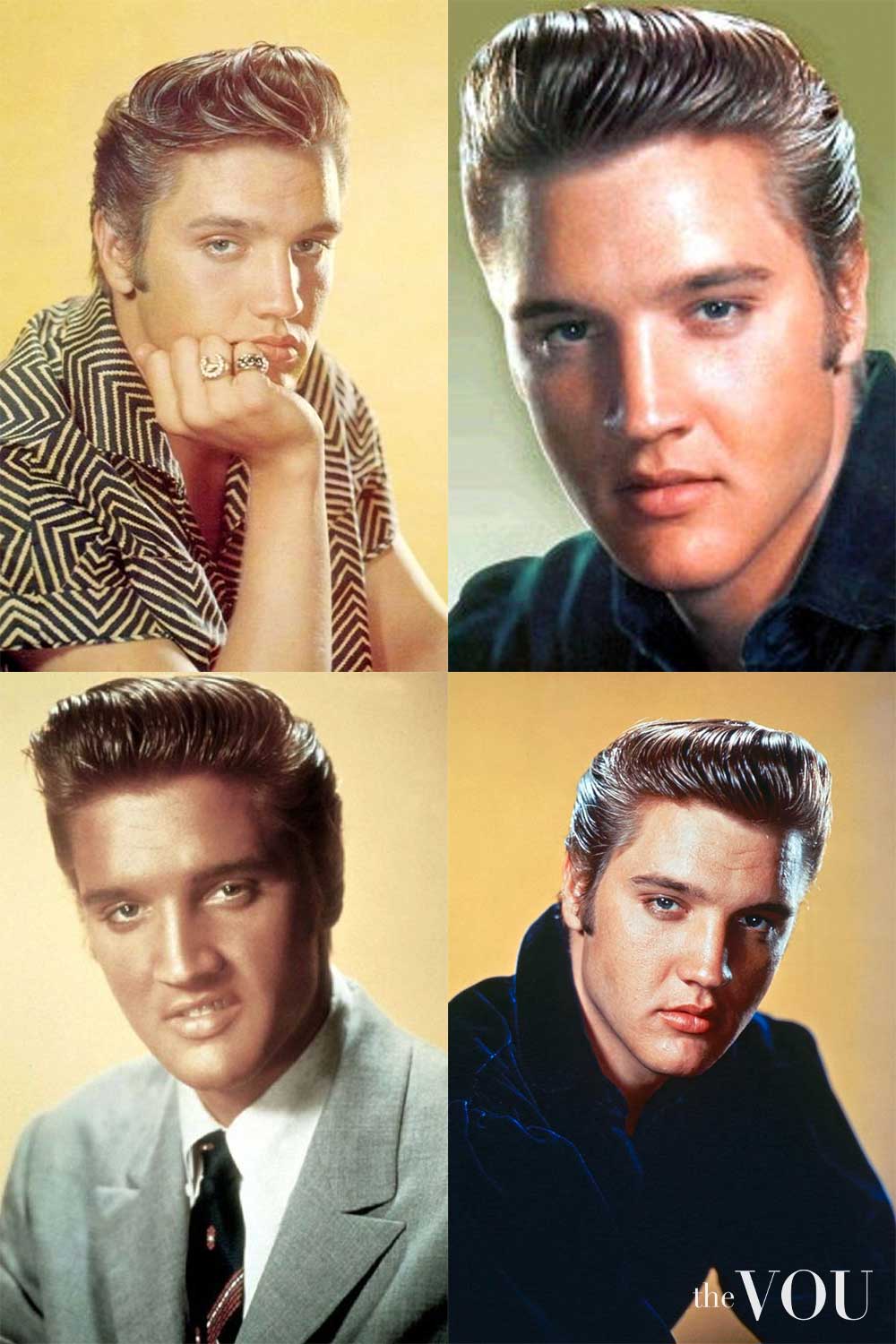
- Elvis Presley’s legendary pompadour became a defining feature of his iconic style, inspiring generations of fans to emulate his look.
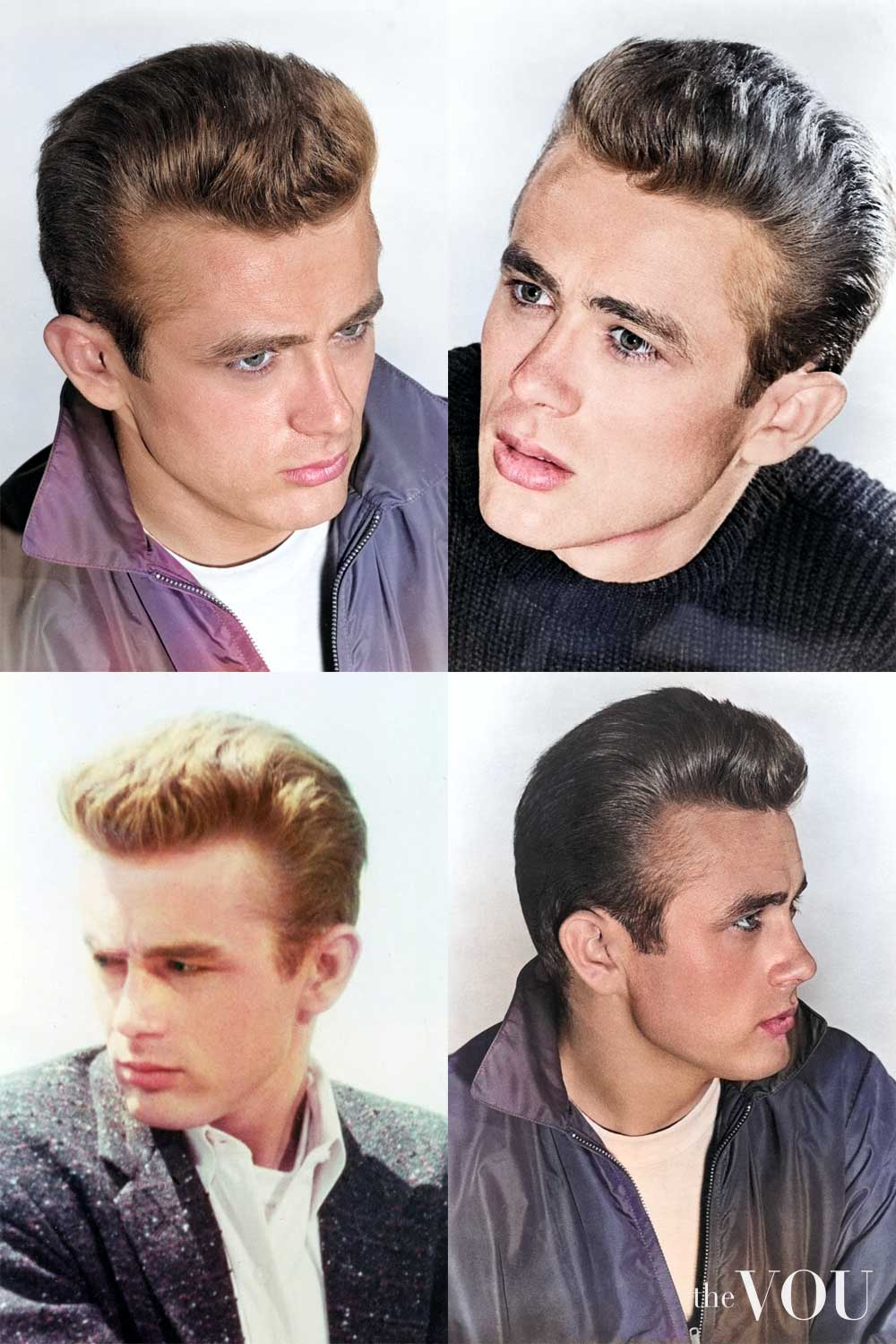
- James Dean’s effortlessly cool take on the pompadour helped cement the style’s association with rebellious, bad-boy charm.
- David Beckham has sported a modern version of the pompadour, showcasing the style’s versatility and ongoing relevance in contemporary fashion.
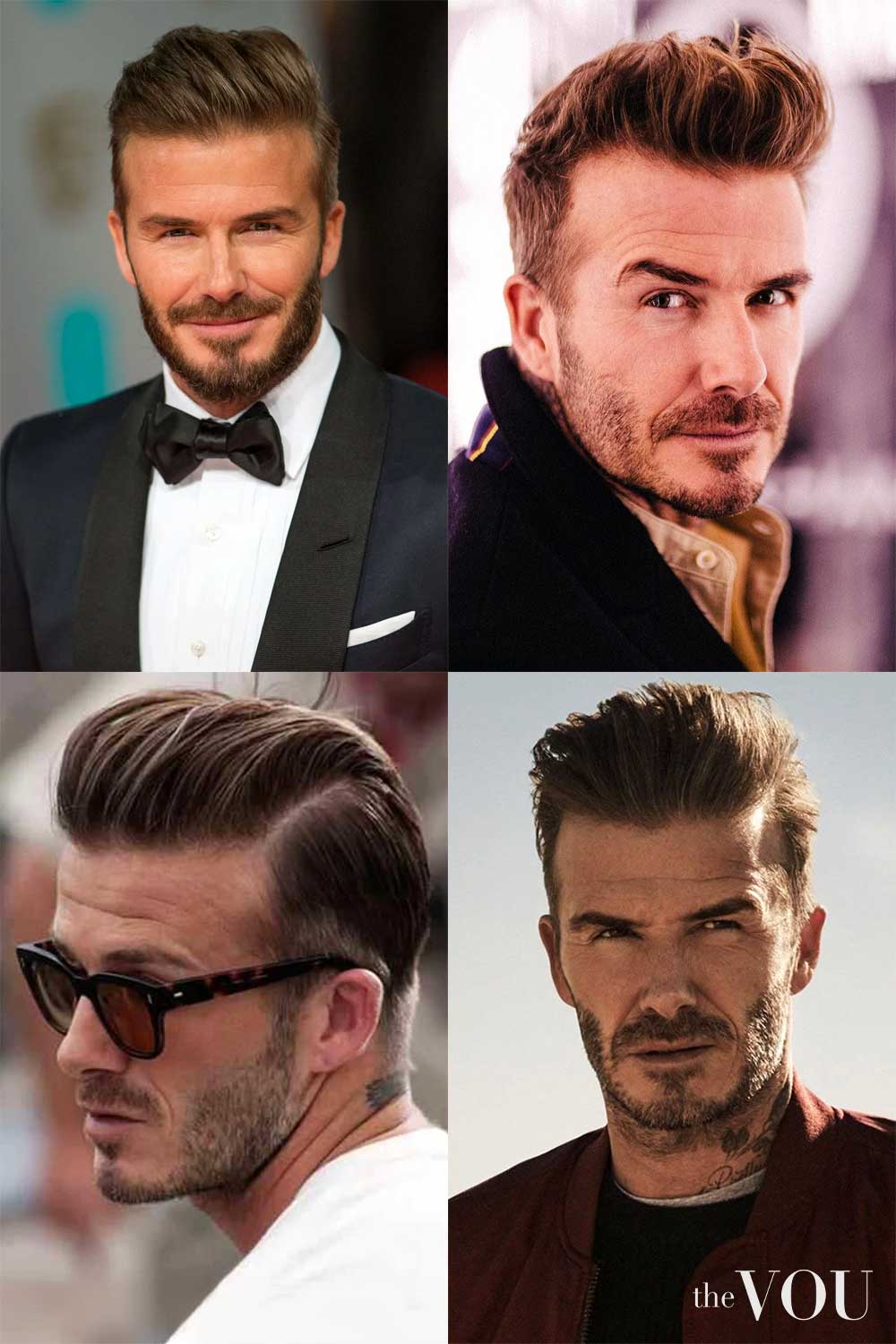
Styling Techniques
- Start with damp, towel-dried hair and work a high-hold pomade or styling cream evenly through it, using the quantity its own directions suggest for your hair length.
- Using a comb, create a side part if desired, then sweep the hair on top upward and back, starting from the forehead and working toward the crown.
- Use a blow dryer on a medium setting, directing airflow at the roots while combing the hair back to create volume and height. Height comes from drying the roots in the direction you want them to sit, not from turning the heat up.
- Once the desired shape is achieved, use your fingers or a comb to refine the final look, ensuring a smooth, polished finish.
Facial Hairstyle Options
A clean-shaven face is a traditional choice for the classic pompadour, highlighting the hairstyle’s crisp, polished appearance. However, a well-groomed moustache can add a touch of vintage flair and masculine charm.
For a more contemporary take on the pompadour, a neatly trimmed beard can provide balance and texture, softening the style’s boldness while maintaining its old-money roots.
Recommended Hair Products
A pompadour wants a hold firm enough to keep height in the hair for as long as you need it, which usually means one of the stronger products in a range. Shine is separate: a glossy pomade gives the polished version, a firmer cream with a sheen gives a quieter one.
Water-based and oil-based pomades behave differently and the difference is worth knowing before you buy, but how much hold and how many washes any given tub needs is on its own directions rather than settled by which family it belongs to. A firmer cream is the third option, with a sheen rather than a gloss.
Building height takes more drying than combing a shape flat does, so this is one of the longer routines in the guide. How much product it takes is a question for the directions on whatever you are using and for how much hair you have, not something this page can put a number on.
On the dryer itself, nothing in this guide calls for a high setting. The American Academy of Dermatology recommends limiting blow drying and using low or medium heat with a heat-protection product, and a pompadour can be built on a medium setting with a round brush and a little patience.
Maintenance and Barber Visits
Three to four weeks keeps the sides and back tight enough for the height on top to read as deliberate.
Separately from that, this is a style you restyle every morning. The barber interval and the daily effort are two different commitments, and the pompadour asks for both.
7. Quiff Hairstyle for Men
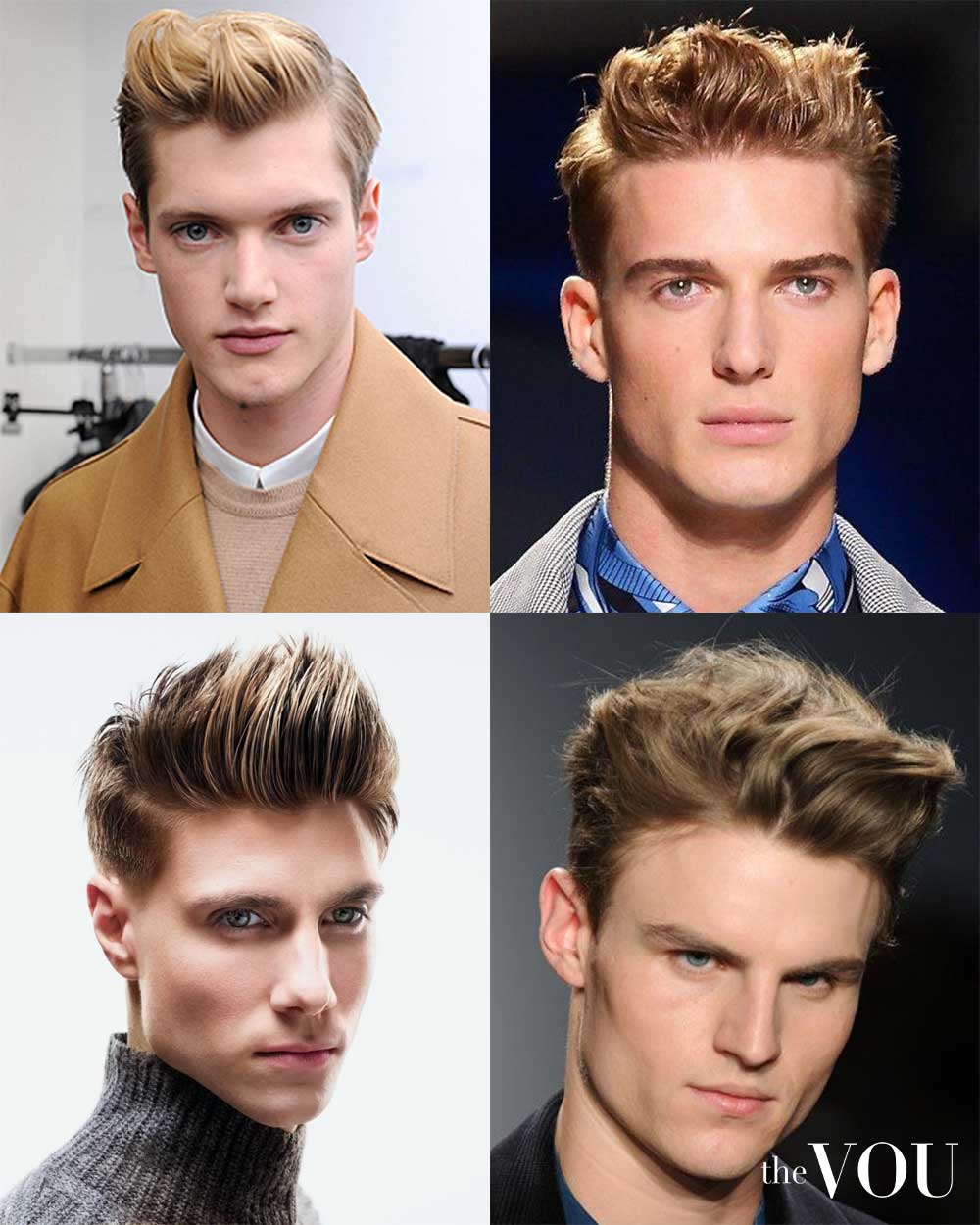
The quiff sits between the pompadour and the slick back: front volume like the first, hair going backwards like the second, and less of both than either.
The cut features longer hair on top, styled up and back to create volume and height, while the sides and back are kept shorter for a clean, contemporary look.
The quiff balances the structured elegance of old-money hairstyles and the relaxed, textured appeal of modern styling.
Why the Quiff Works for an Old Money Look
A quiff is a smaller, softer version of the same idea as the pompadour: volume at the front, but carried up and slightly forward rather than swept straight back, and left with some texture in it rather than combed smooth.
That is the practical difference between the two, and it is why a quiff takes less product and less drying than a pompadour does.
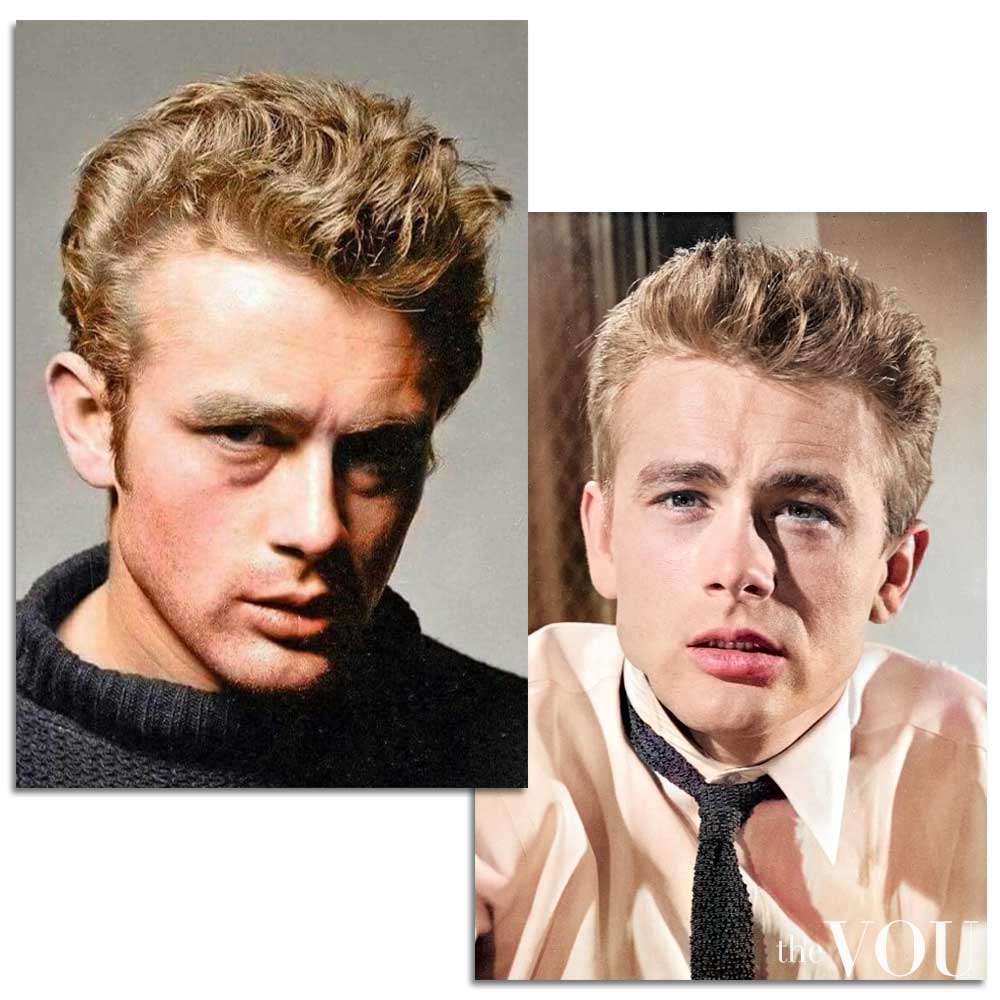
The quiff’s adaptability allows it to be styled more relaxed and tousled, reflecting the modern trend towards less structured, more natural-looking hair.
This flexibility makes the quiff an ideal choice for gentlemen who want to incorporate elements of old-money sophistication into a contemporary, easy-to-manage style.
Ideal Hair Texture, Length, and Volume
The quiff works best with medium to thick hair with a slight natural wave or straight texture.
The ideal length for the top portion is 2-4 inches, allowing for enough volume and height to create the signature quiff shape.
The sides and back should be shorter, usually between 0.5 and 2 inches, depending on the desired contrast level and personal preference.
The quiff’s volume can be customised to suit individual tastes, from a more understated, textured look to a bold, sky-high statement.
Celebrities with Quiff Hairstyle
- Zac Efron’s modern quiff features a textured, tousled top and shorter sides, showcasing the style’s youthful, effortless appeal.
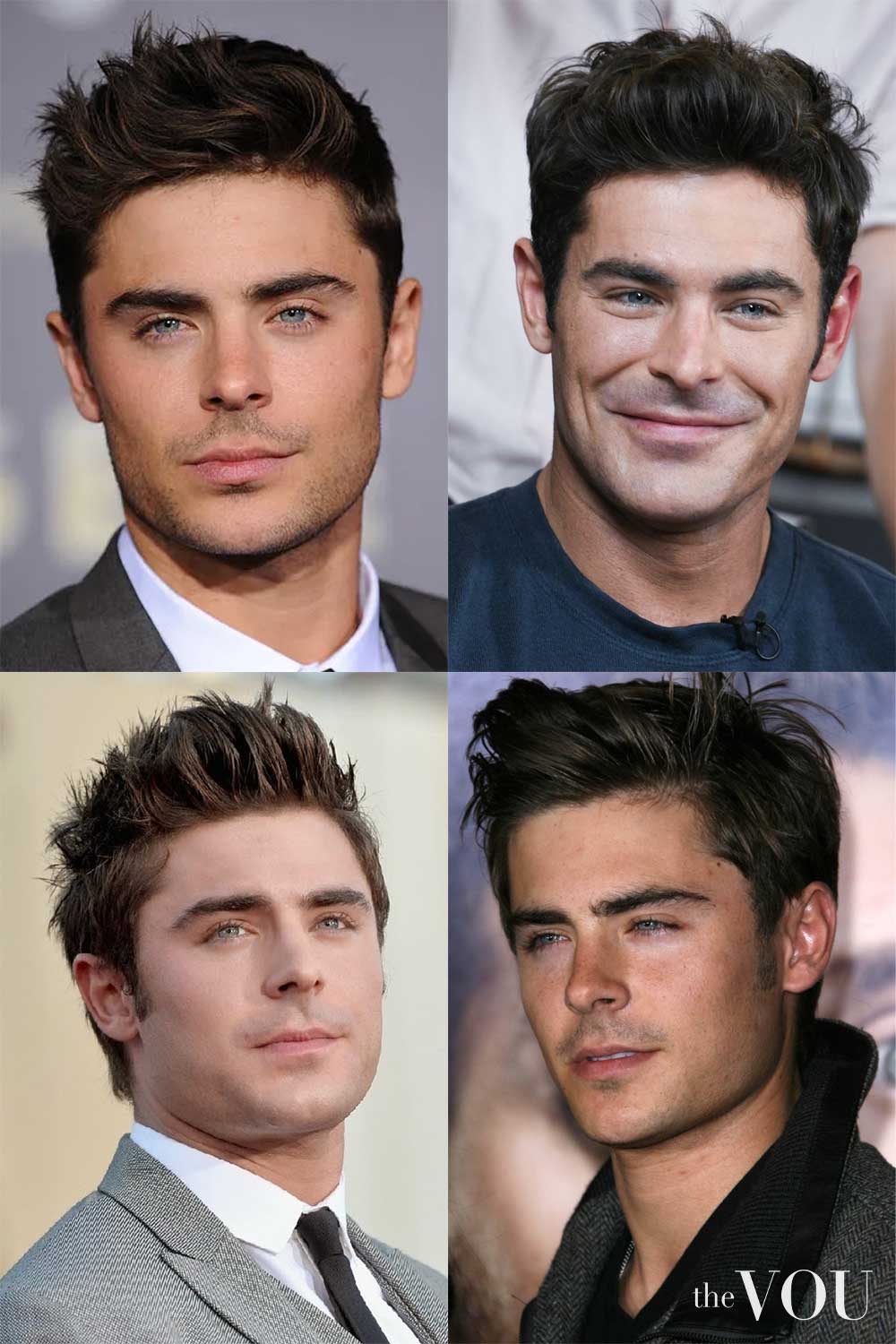
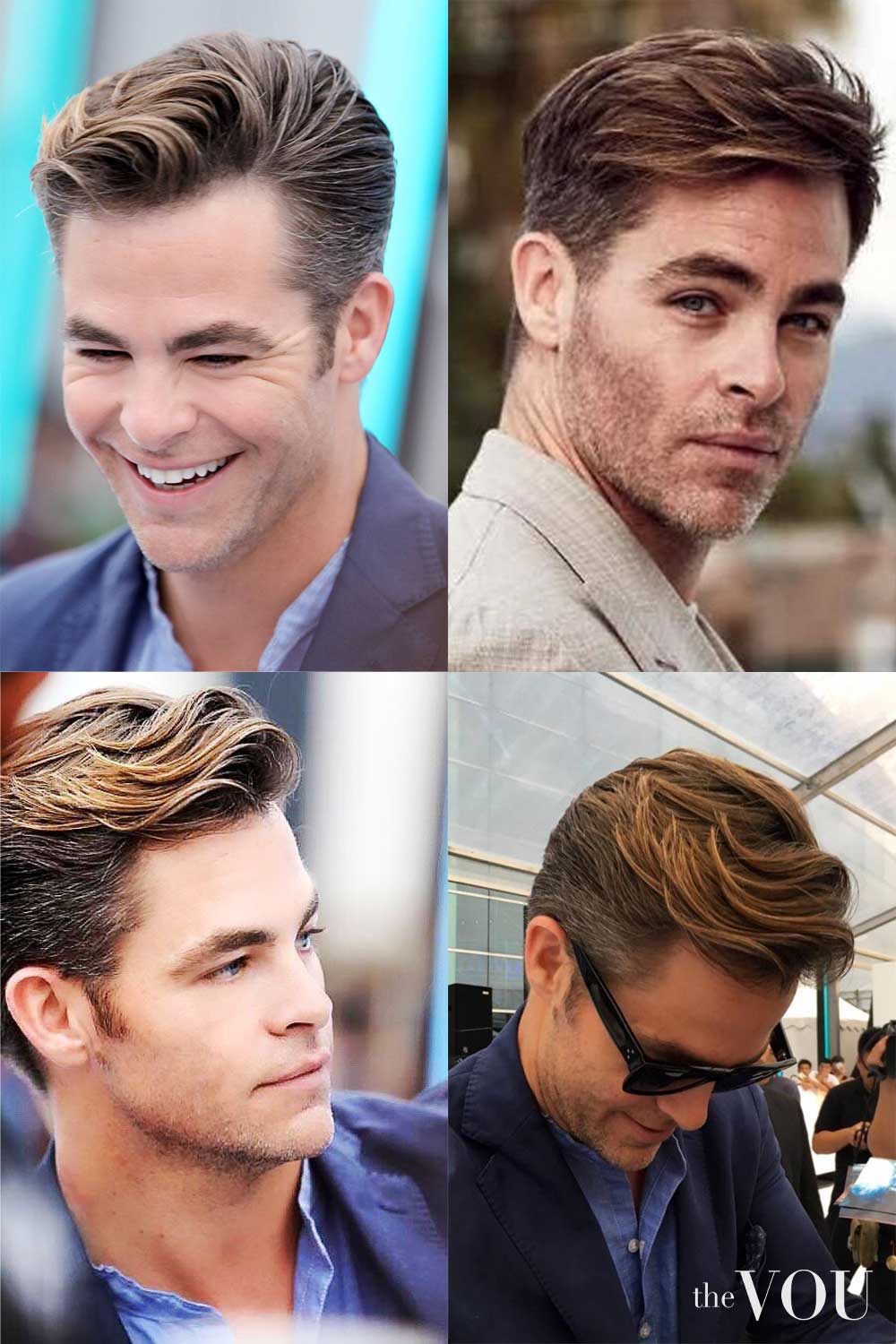
- Chris Pine wears a high, smooth quiff with the front combed rather than textured, which is the polished end of the range this section covers.
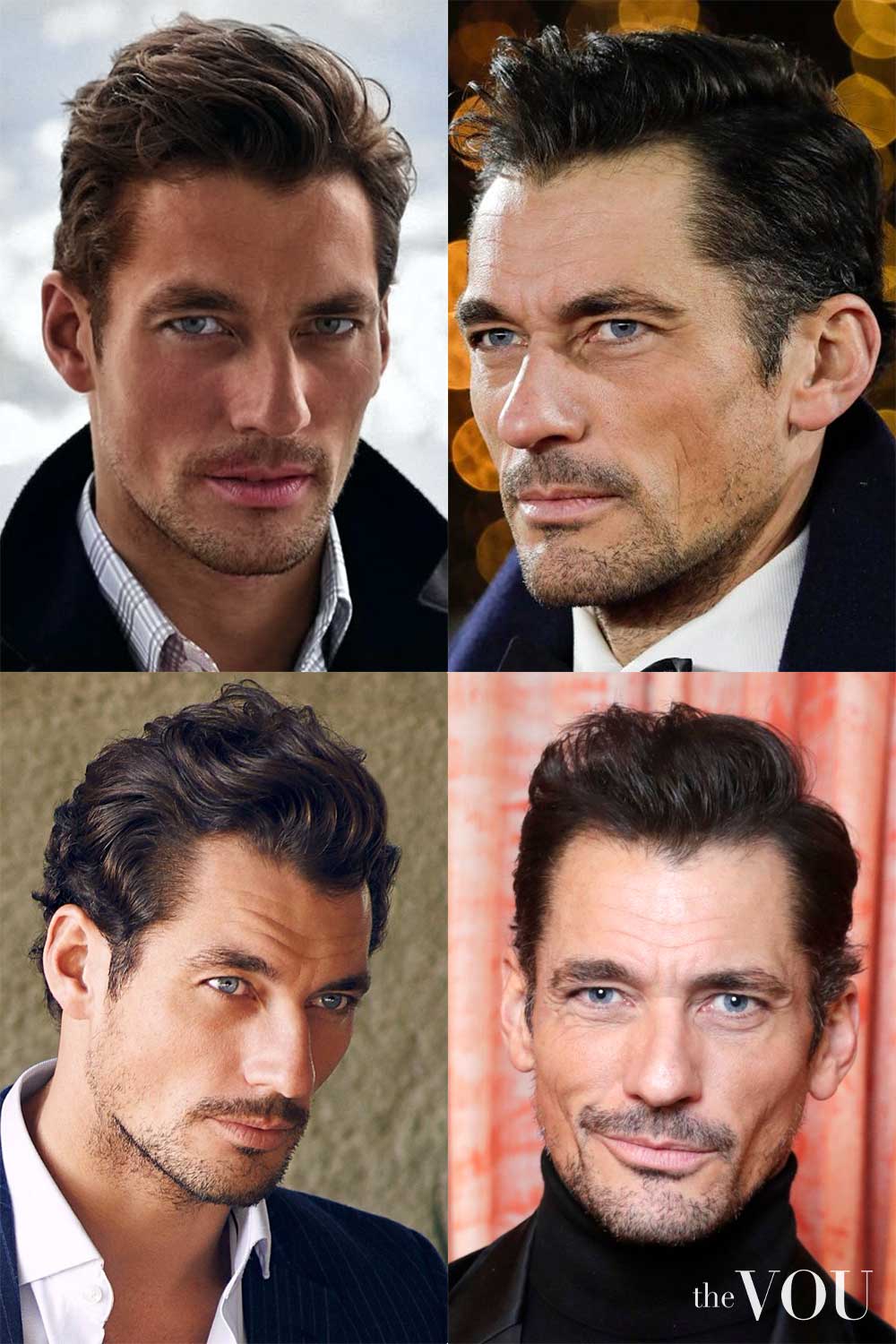
- David Gandy wears a quiff with a distinct parting at the side, which keeps a defined line there while the front holds its volume.
Styling Techniques
- Begin with damp, towel-dried hair by applying a small pre-styling mousse or volumising spray for added lift and hold.
- Using a blow dryer and a round brush, dry the hair on top up and back, focusing on creating volume at the roots and a smooth, curved shape.
- Apply a small amount of pomade, clay, or styling cream to the hair, working it through with your fingers to add texture, definition, and hold.
- For a more relaxed, tousled look, use your fingers to gently break up the quiff and create a natural, textured finish.
Facial Hairstyle Options
The quiff’s modern, versatile nature allows it to be paired with various facial hair styles.
A clean-shaven face can highlight the quiff’s polished, sophisticated appearance, while a well-groomed stubble or short beard can add a rugged, masculine edge.
For a more balanced look, consider pairing your quiff with a neatly trimmed moustache or goatee, which can complement the hairstyle’s classic and contemporary elements.
Recommended Hair Products
For the textured modern quiff, a pliable clay with a matte finish. For the polished version, a water-based pomade with shine.
Either way, a pre-styling mousse or volumising spray before drying is what gets height into the hair while it dries, which is a different job from the product you finish with. How much height you can hold depends on your hair’s length and density as much as on either product.
Maintenance and Barber Visits
Four to six weeks is a reasonable example for the shape, since a quiff carries growth better than a fade does.
Between appointments, wash and condition your hair regularly and restyle it as needed using your preferred products.
8. Crew Cut Hairstyle for Men

The crew cut is a classic, low-maintenance hairstyle featuring short hair all around the head and slightly longer hair on top that gradually tapers down to the sides and back.
The crew cut needs almost nothing doing to it once it is cut, which is the trade it offers against the longer shapes in this guide.
Why the Crew Cut Works for an Old Money Look
A crew cut is short all over with a little more length left at the front than at the crown, so the top has a slight rise to it rather than lying flat. The sides are tapered rather than stepped.
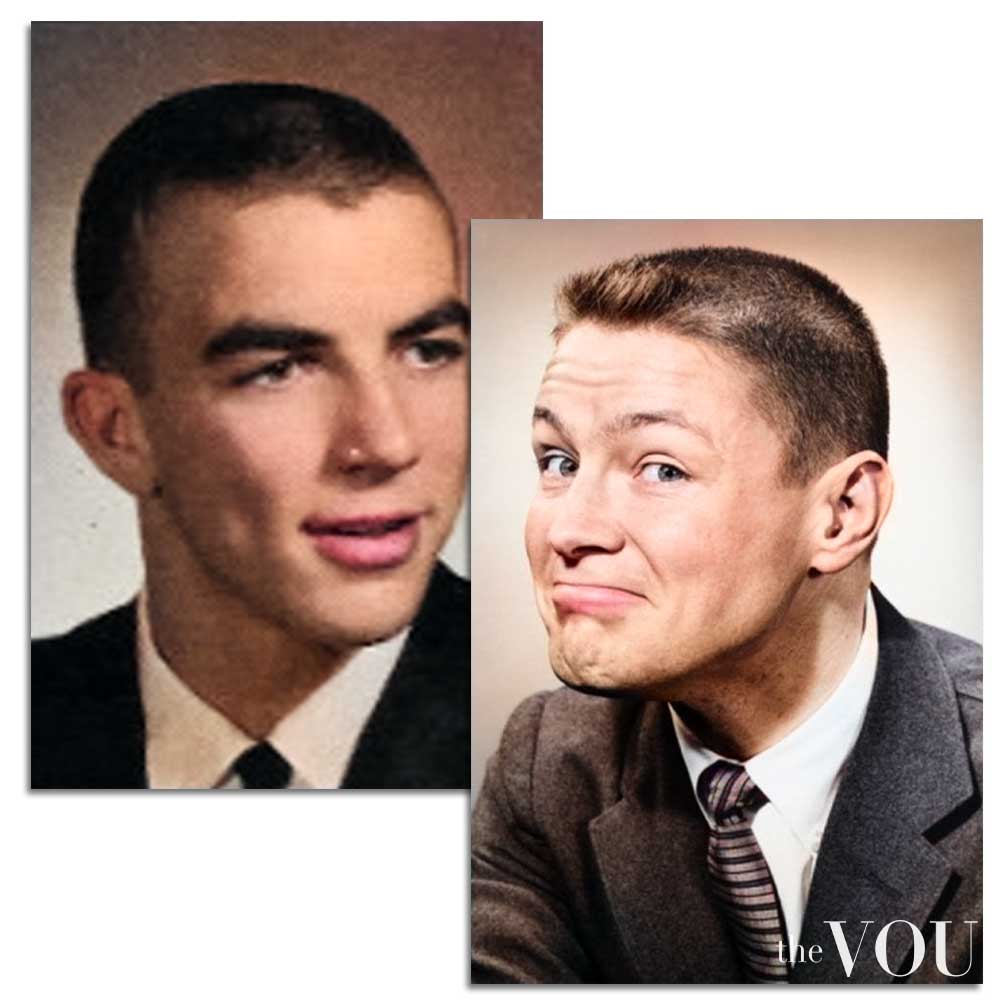
What puts it in this guide is that it asks almost nothing of you once it is cut, and still holds a defined shape as long as the perimeter is kept clean.
Ideal Hair Texture, Length, and Volume
The crew cut works well with most hair types and textures, from fine to thick and straight to wavy.
The ideal length for a crew cut is between 1/2 inch to 1 inch on top, with the sides and back gradually tapering down to 1/8 inch or less.
The crew cut’s volume is minimal, as the short length keeps the hair close to the scalp.
There is almost nothing to arrange in the morning, which is the main reason to choose it over anything longer.
Celebrities with Crew Cut Haircut
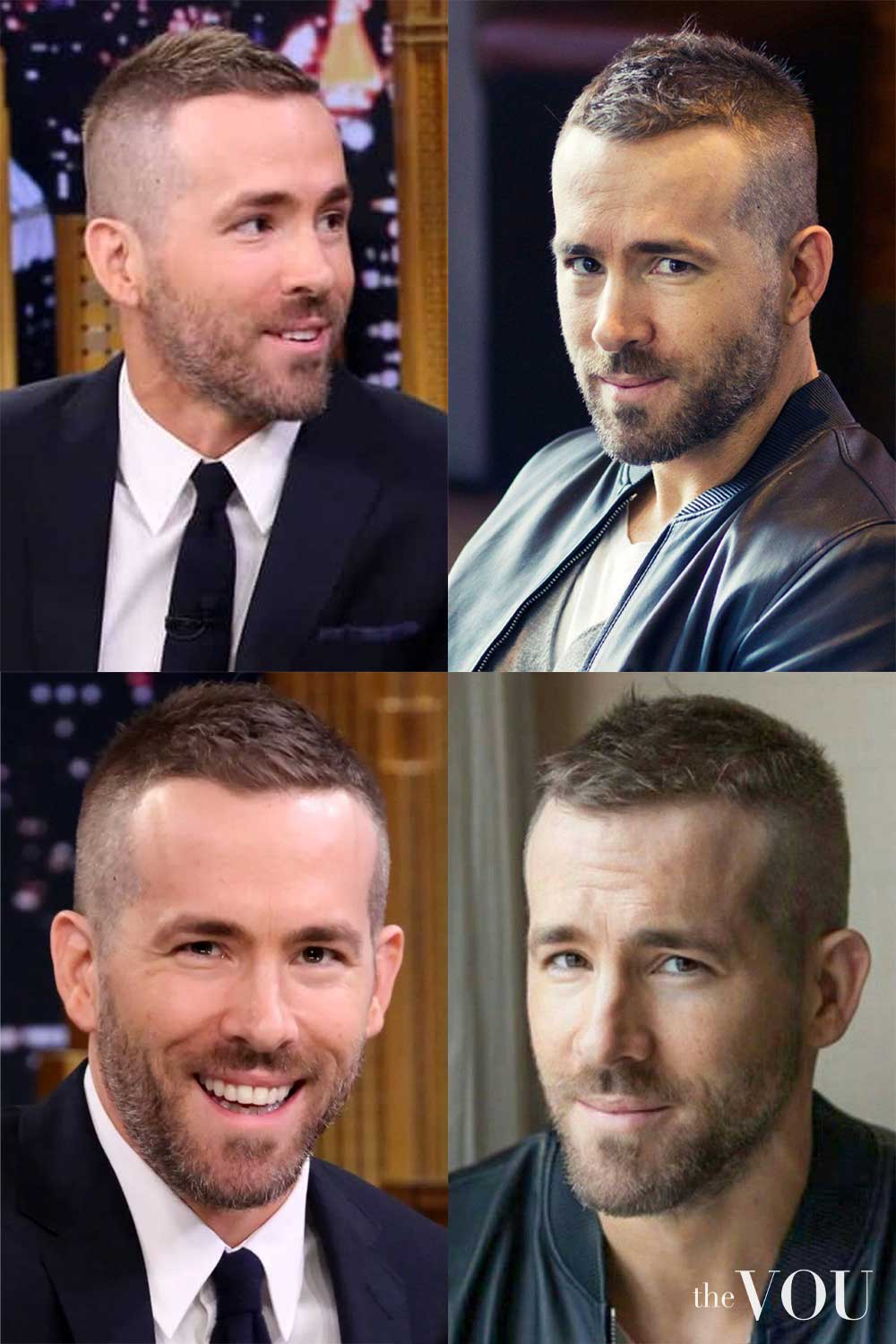
- Ryan Reynolds wears a crew cut with the top left long enough to stand slightly forward rather than lying flat.
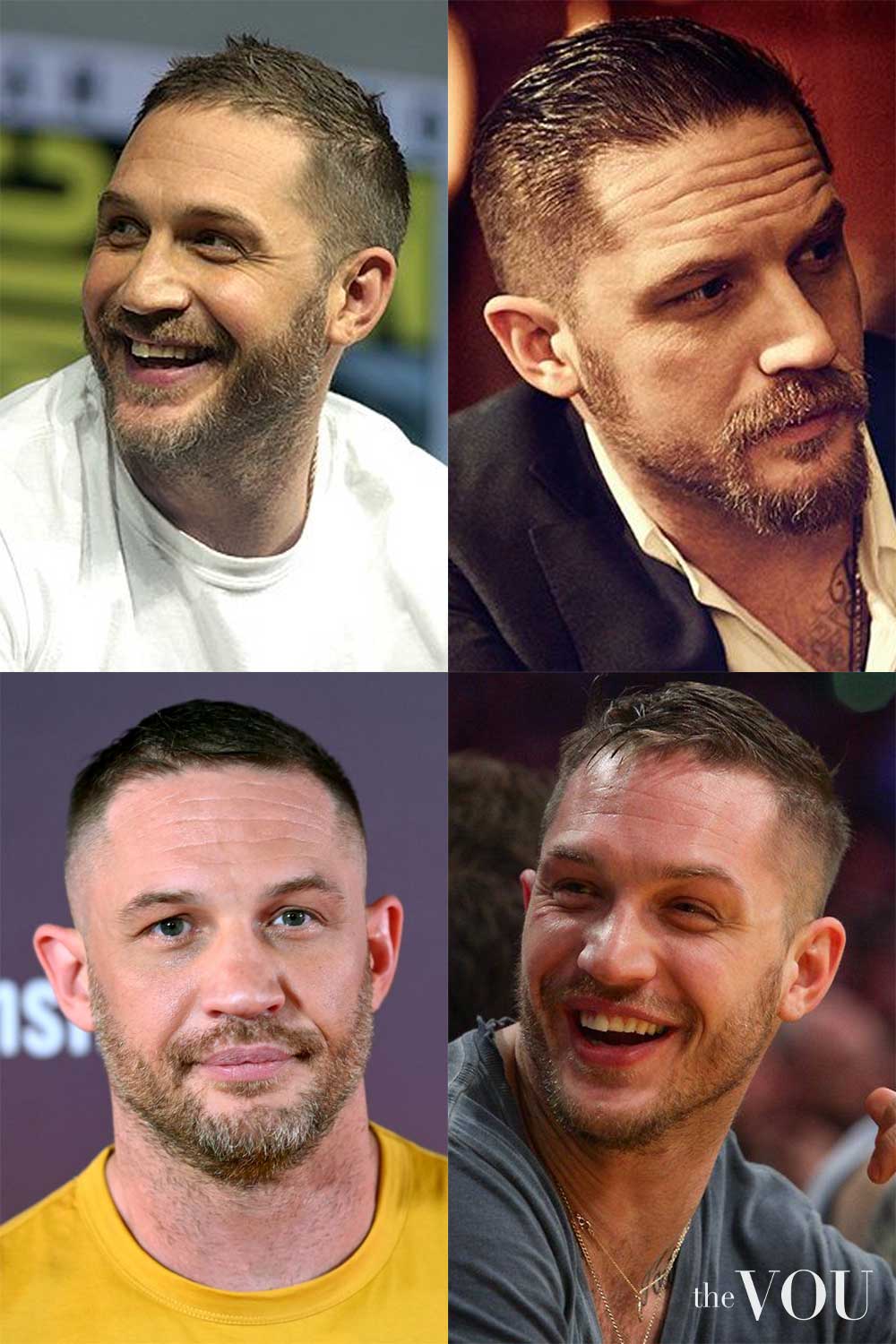
- Tom Hardy’s crew cut with slightly longer hair on top adds a modern, textured twist to the traditional style.
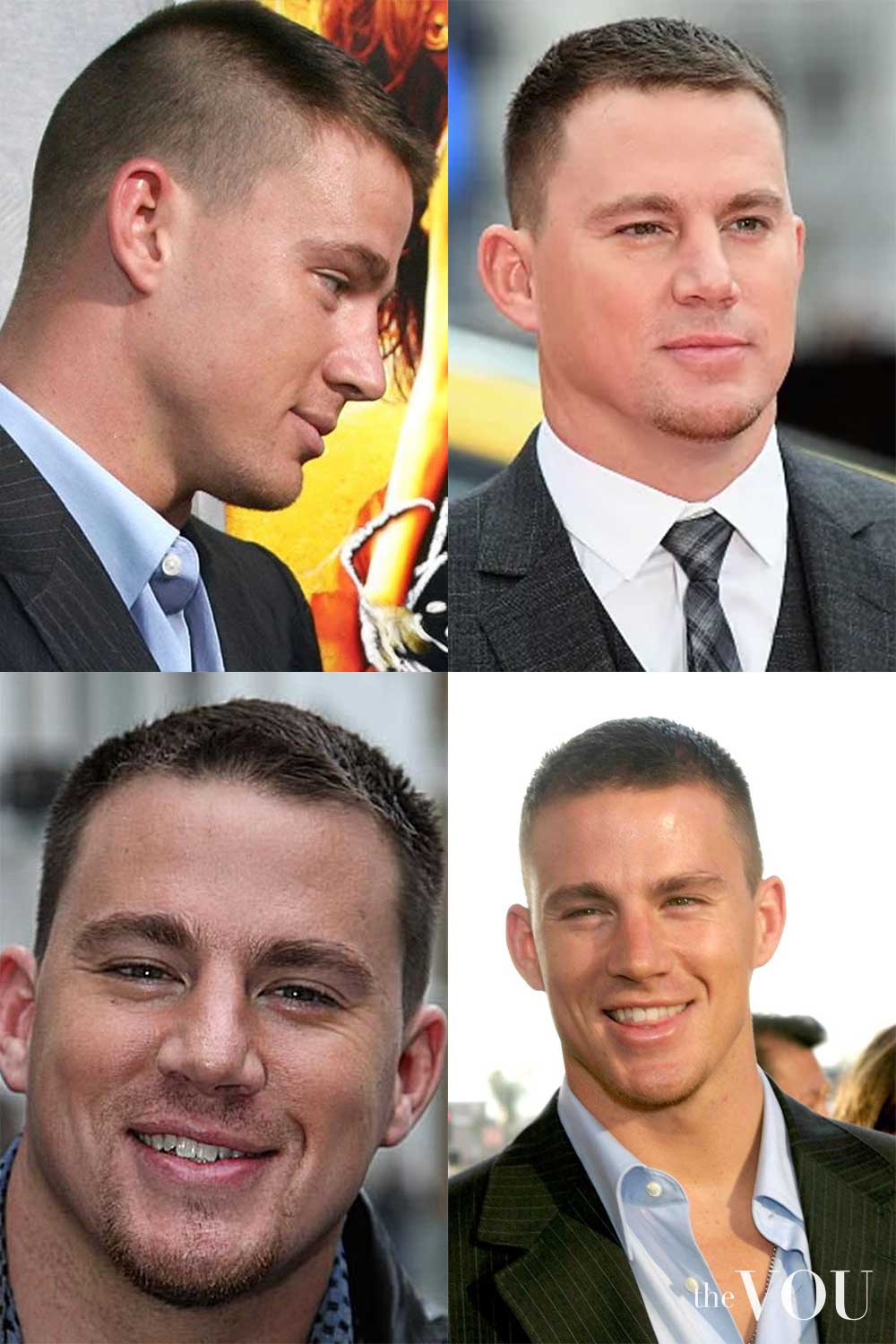
- Channing Tatum’s crew cut demonstrates the style’s versatility, as it effortlessly transitions from casual settings to more formal occasions.
Styling Techniques
- Start with a small amount of matte pomade or styling cream on clean, damp hair, and apply from the top down, distributing it evenly with your fingers.
- Using a comb or your fingers, style the hair on top forward, to the side, or in a slightly messy, textured manner, depending on your desired look.
- For a more polished appearance, brush or comb to smooth the hair on top and create a neat, uniform finish.
- If desired, apply a small amount of hair wax or clay to the hair on top for added texture and definition.
Facial Hairstyle Options
The crew cut’s clean, masculine appearance pairs well with various facial hairstyles.
A clean-shaven face can highlight the crew cut’s neat, polished look, while a well-groomed stubble or short beard can add a rugged, masculine touch.
For a balanced appearance, pair your crew cut with a neatly trimmed moustache or goatee, which can complement the hairstyle’s simple but refined nature.
Recommended Hair Products
Very little is needed here. A pliable cream is enough to tame short hair and give it a direction, and a matte clay does the same with more grip if your hair is coarse.
A matte or low-shine finish is the usual choice at this length, because there is not enough hair for gloss to read as deliberate rather than as damp. A little sheen from a cream is a different thing and is fine.
Maintenance and Barber Visits
Two to four weeks, depending on your growth rate and how short you keep it. This is the trade the crew cut makes: next to no daily styling, but a shorter run between visits than a longer cut needs.
Between appointments, wash your hair regularly and style as needed with minimal product.
The crew cut is a timeless, low-maintenance hairstyle that embodies the clean, masculine aesthetics of old-money grooming.
What you get for that is a shape that stays tidy on its own between cuts, as long as the perimeter is kept clean.
9. Buzz Cut for Men
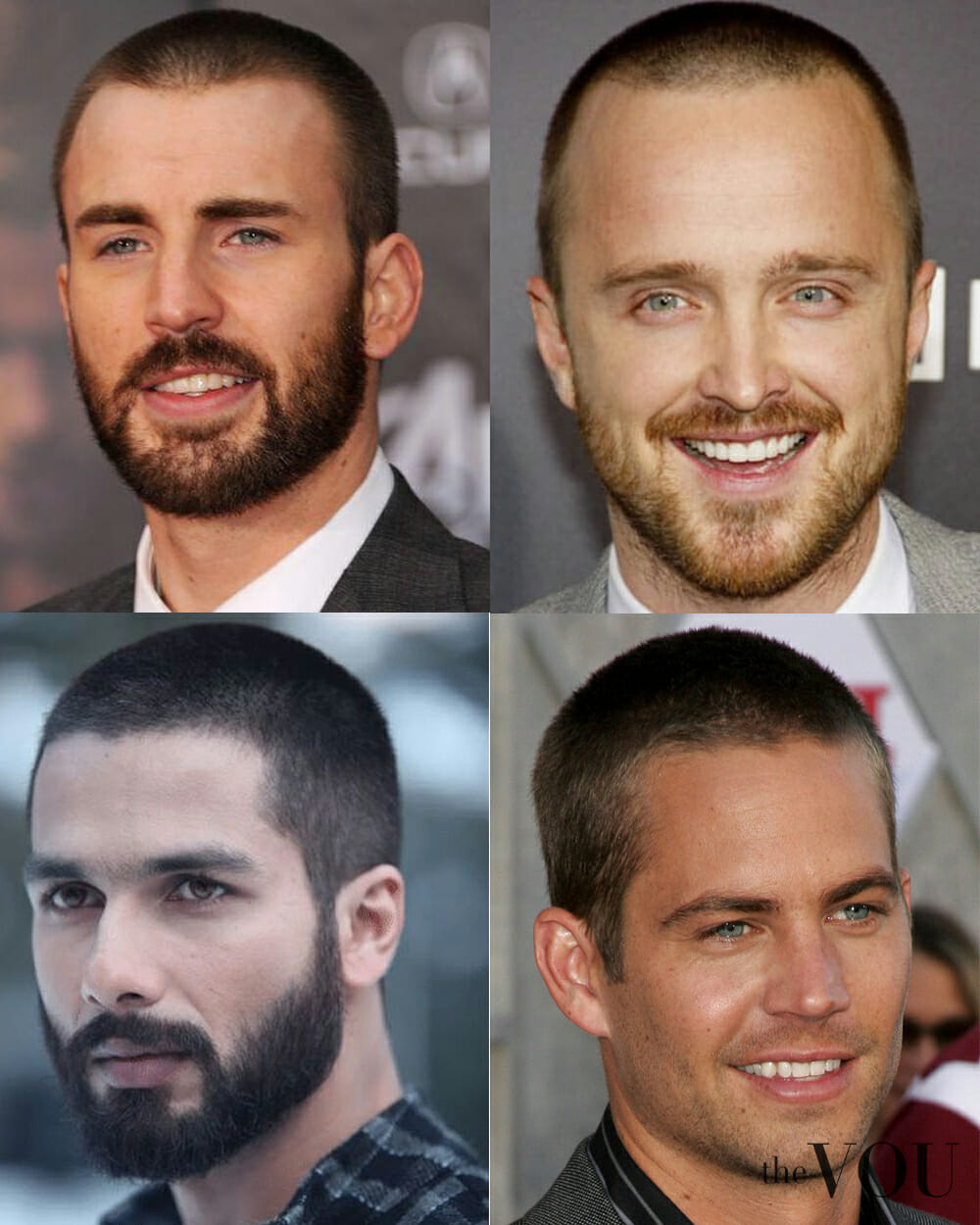
The buzz cut is a minimalist, low-maintenance hairstyle that exudes confidence and masculinity.
The simple yet assertive look involves cutting the hair very short all over the head, usually with electric clippers, resulting in a uniform length that typically ranges from 1/4 to 1/2 inch.
There is no styling step at all, which is either the whole appeal or the whole objection, depending on what you want from a haircut.
Why the Buzz Cut Can Work for an Old Money Look
A buzz cut is a single uniform length all over, cut with clippers and no scissor work. It is the plainest cut in this guide, and the one that depends least on styling and most on the shape of your head and the state of your hairline.
What it has in common with the rest of this guide is that nothing about it is trying to be noticed, which is the one quality every cut here shares.
Because there is nothing to arrange, the only decisions left are the guard length and whether the edges are squared off or left to grow naturally.
Ideal Hair Texture, Length, and Volume
The buzz cut works well with most hair types and textures, from fine to thick and straight to curly.
The uniform short length of the buzz cut minimises the appearance of volume and texture differences, making it a versatile choice for men with various hair types.
The ideal length for a buzz cut ranges from 1/4 inch to 1/2 inch, depending on personal preference and face shape.
Shorter lengths can create a more severe, masculine look, while slightly longer lengths offer more flexibility in styling.
Celebrities with Buzz Haircut
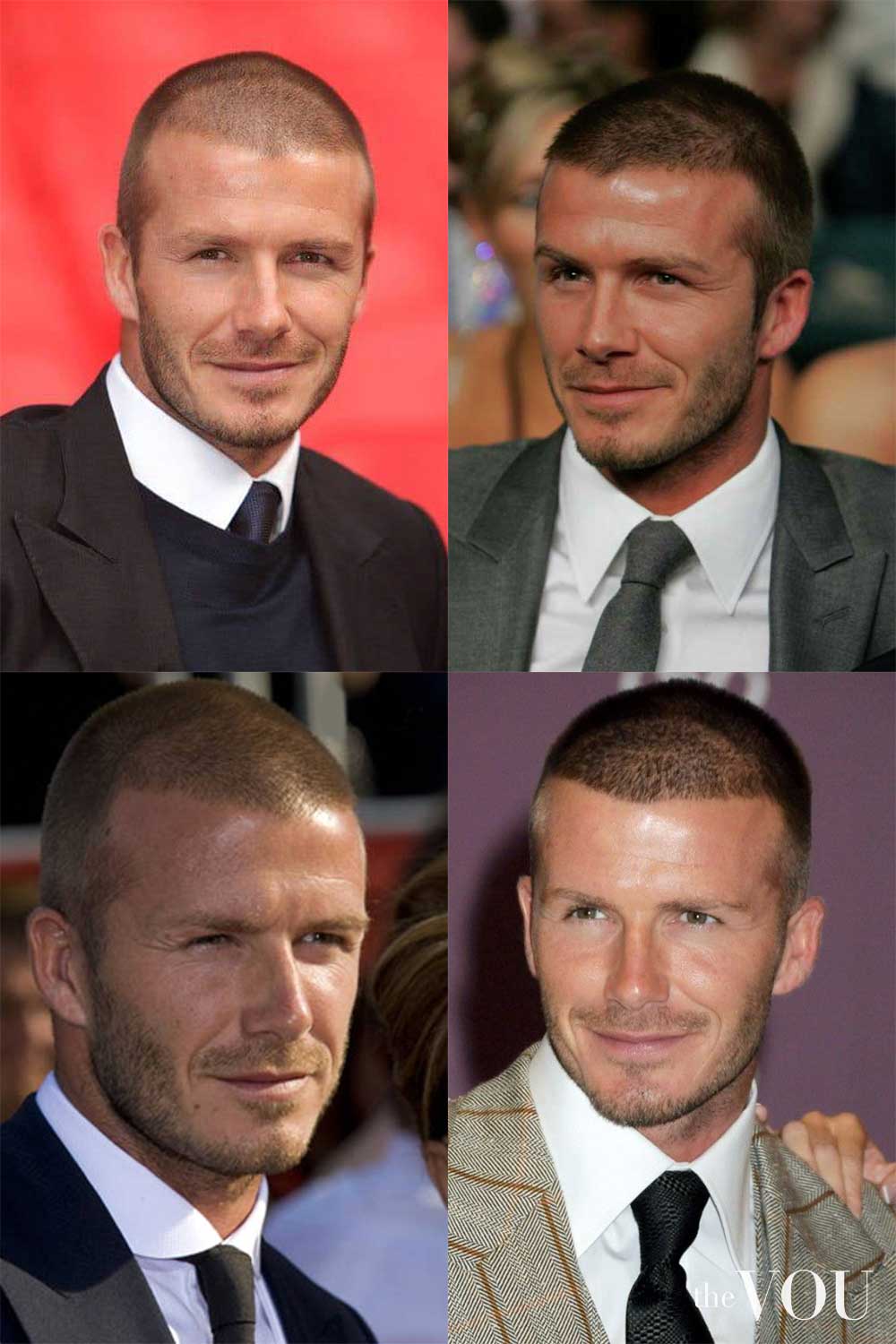
- David Beckham has sported various buzz cut styles throughout his career, showcasing the look’s versatility and its ability to complement different face shapes and personal styles.
- Zayn Malik’s buzz cut with a slightly longer top and faded sides demonstrates how the style can be adapted to create a more modern, edgy appearance.
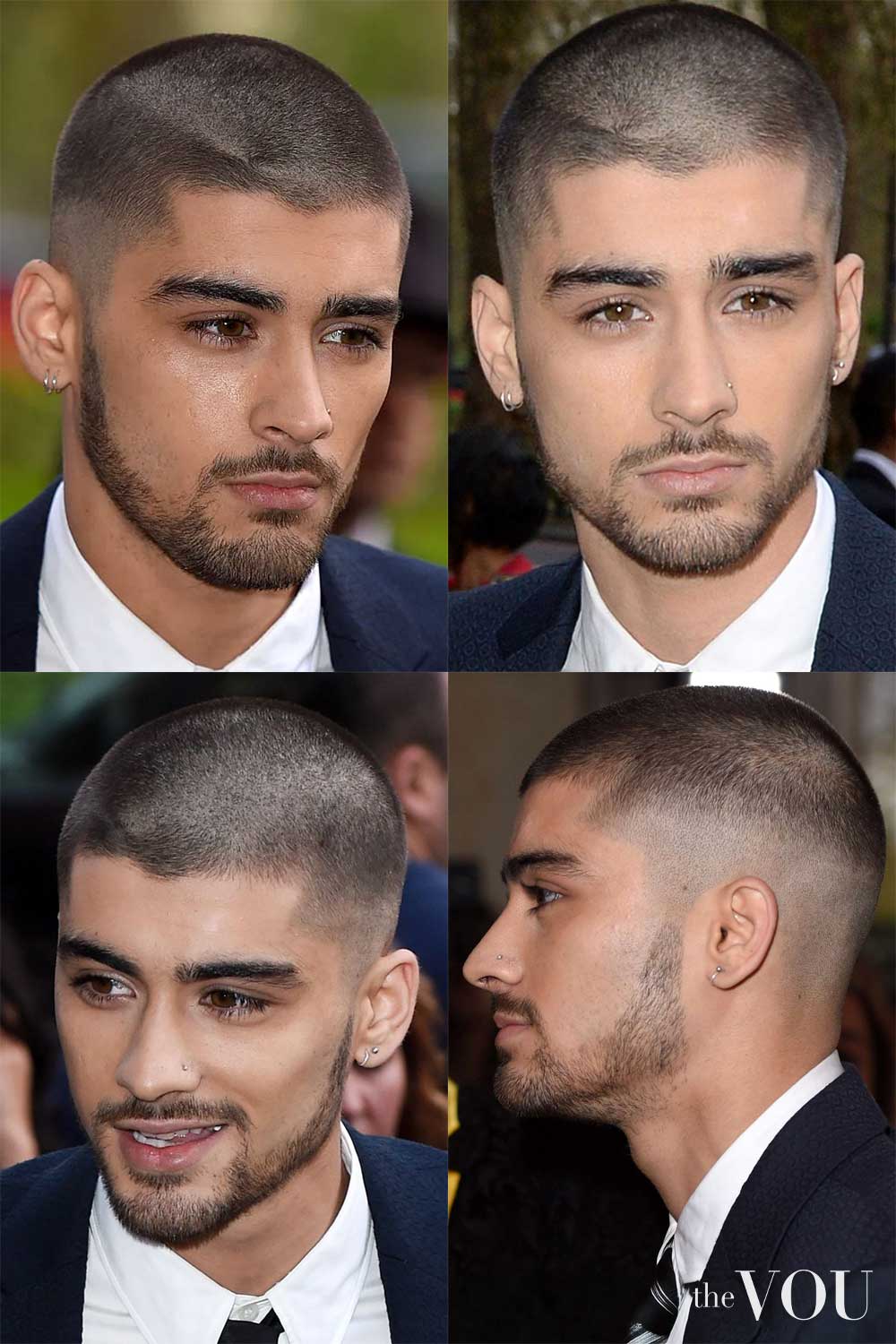
- Jason Statham’s iconic buzz cut has become a signature part of his tough, masculine image, illustrating the style’s ability to project confidence and strength.
Styling Techniques
- After showering, towel dry your hair or allow it to air dry.
- If desired, apply a small amount of matte pomade or wax to the hair to add a hint of texture and definition.
- For a more polished look, use a soft-bristled brush to smooth the hair and create a neat, uniform appearance.
Facial Hairstyle Options
The buzz cut’s minimalist, masculine appearance pairs well with various facial hairstyles.
A clean-shaven face can highlight the cut’s sleek, streamlined look, while a well-groomed stubble or short beard can add a rugged, masculine edge.
For a balanced and modern appearance, consider pairing your buzz cut with a neatly trimmed goatee or a short, well-defined beard.
These can complement the hairstyle’s simple yet confident nature.
Recommended Hair Products
Due to the buzz cut’s short length, minimal product is needed to maintain the style.
However, the following products can help to keep your hair looking healthy and add a touch of texture or definition:
At this length the hair does not need holding at all, so the products worth having are the ones aimed at the scalp: a light grooming cream or a moisturiser, and sunscreen on the scalp if you are outdoors.
A matte finish is the straightforward choice this short, since at a quarter of an inch there is nothing for a gloss to sit on.
Maintenance and Barber Visits
Two to three weeks, depending on your growth rate. A buzz cut takes no styling at all and still wants one of the shortest intervals in this guide, because at a quarter of an inch there is nothing for new growth to blend into.
Between appointments, wash your hair regularly with a gentle shampoo to keep the scalp clean and healthy.
The buzz cut is a minimalist, confident hairstyle that embodies simplicity and practicality.
The fuss-free nature and masculine appearance make this cut ideal for men who value a no-nonsense approach to grooming while still maintaining a stylish look.
10. Comb Over Hairstyle for Men
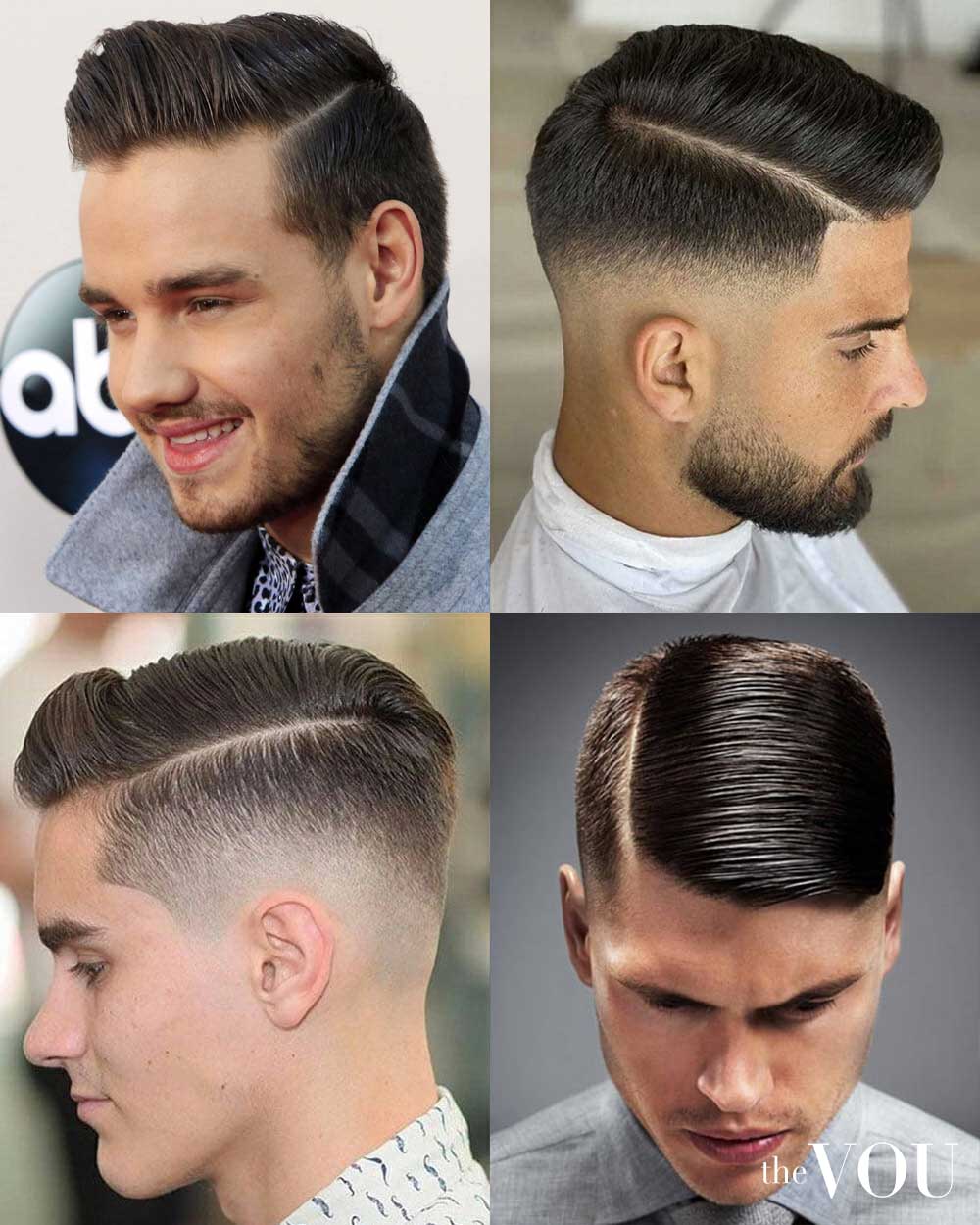
The comb-over is a refined hairstyle that has evolved from its traditional roots to become a modern, stylish choice for men.
The look has longer hair on top combed over to one side, while the sides and back are kept shorter and even tapered or faded.
The modern comb-over keeps the sweep of the traditional one but takes the sides shorter, which is the version most of the current reference photographs show.
Why the Comb Over Works for an Old Money Look
A comb-over is the side part’s less formal relation: the same sweep across the head, with the parting left where the hair naturally falls rather than combed to a set line. A side part does not need a line shaved into it either; that is an extra you have to ask for by name, and most of the cuts in this guide do not have one.
Its place here comes from the neatness of the shape, and from the fact that it hides a soft or uneven part line rather than depending on a sharp one.
The two versions differ in one place only: whether the sides are scissor-cut and left with weight, or tapered short with clippers. Everything on top is the same.
This adaptability has allowed the comb-over to remain a timeless choice for men who appreciate the old-money aesthetic but also want to embrace contemporary styling trends.
Ideal Hair Texture, Length, and Volume
The comb-over works best with medium to fine hair with a slight natural wave or straight texture.
The ideal length for the hair on top is between 2-4 inches, allowing for enough length to create a smooth, swept-over look.
The sides and back should be kept shorter, usually between 0.5-2 inches, depending on the desired contrast level and personal preference.
The comb-over’s volume can be customised to suit your unique face shape, from a sleek, flat look to a more voluminous, textured style.
Celebrities with Comb Over Haircuts
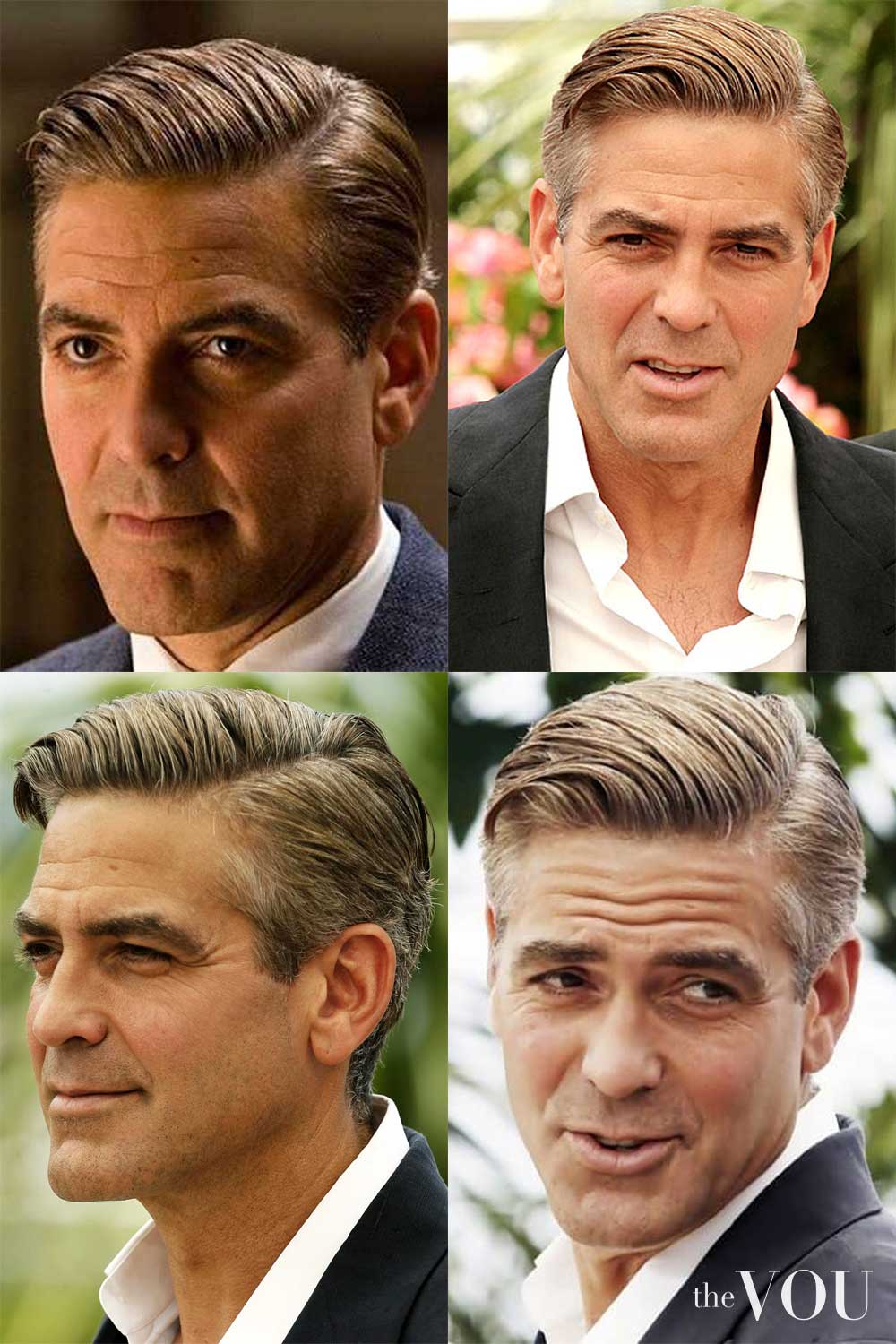
- George Clooney wears a comb-over with a soft side part, the top swept across with no product shine on it.
- Ryan Gosling’s modern comb-over features a shorter length on the sides and a textured, volumised top, showcasing the style’s adaptability to contemporary trends.
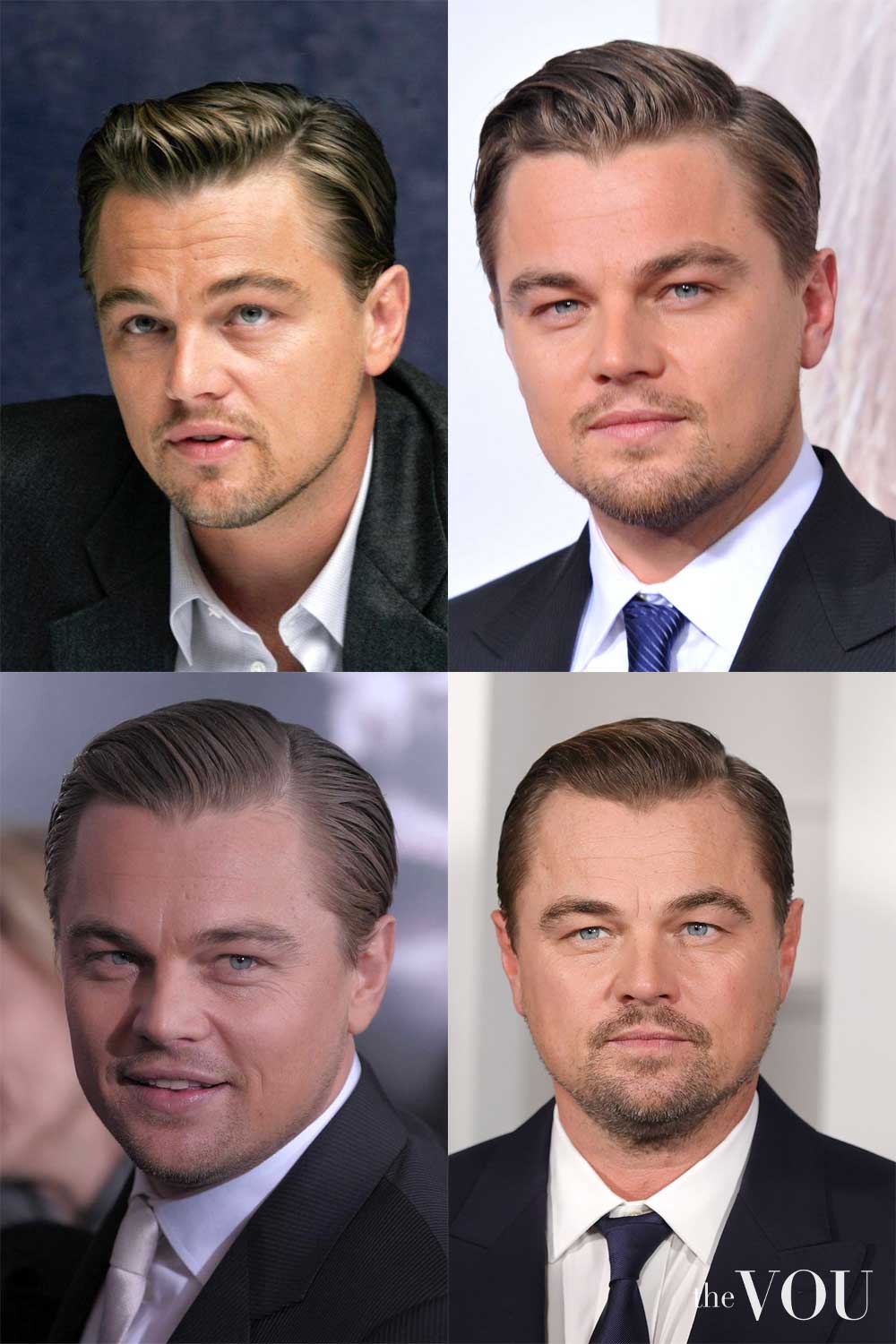
- Leonardo DiCaprio’s comb-over with a subtle taper and side part demonstrates the style’s versatility and its ability to complement various face shapes and personal styles.
Styling Techniques
- Start with clean, damp hair and apply a small amount of styling cream or pomade to the hair on top, distributing it evenly with a comb or your fingers.
- Using a blow dryer and a round brush, sweep the hair on top over to one side, creating volume and a smooth, polished finish.
- For a more textured, modern look, use a matte pomade or clay to add definition and movement to the hair on top.
- Use a fine-toothed comb to create a neat, defined side part, and finish with a light-hold hairspray to keep the style in place.
Facial Hairstyle Options
The comb-over’s sophisticated, polished appearance pairs well with various facial hairstyles. A clean-shaven face can highlight the comb over’s neat, refined look, while a well-groomed stubble or short beard can add a touch of masculinity and texture.
For a more contemporary, balanced appearance, consider pairing your comb over with a neatly trimmed goatee or a well-defined moustache, which can complement the hairstyle’s blend of classic and modern elements.
Recommended Hair Products
A comb-over needs a medium to strong hold, and the finish is what decides which version of it you get.
A pomade with some shine gives the sleek, traditional comb-over. A matte clay of similar strength gives the textured modern one. The haircut underneath is the same either way.
Maintenance and Barber Visits
To keep a comb-over sharp, three to four weeks is a reasonable example for trimming the sides and back and keeping the top at a length you can still sweep.
The comb-over haircut is ideal for men who want to project confidence while wearing modern old-money aesthetics infused with modern trends.
11. French Crop Hairstyle for Men
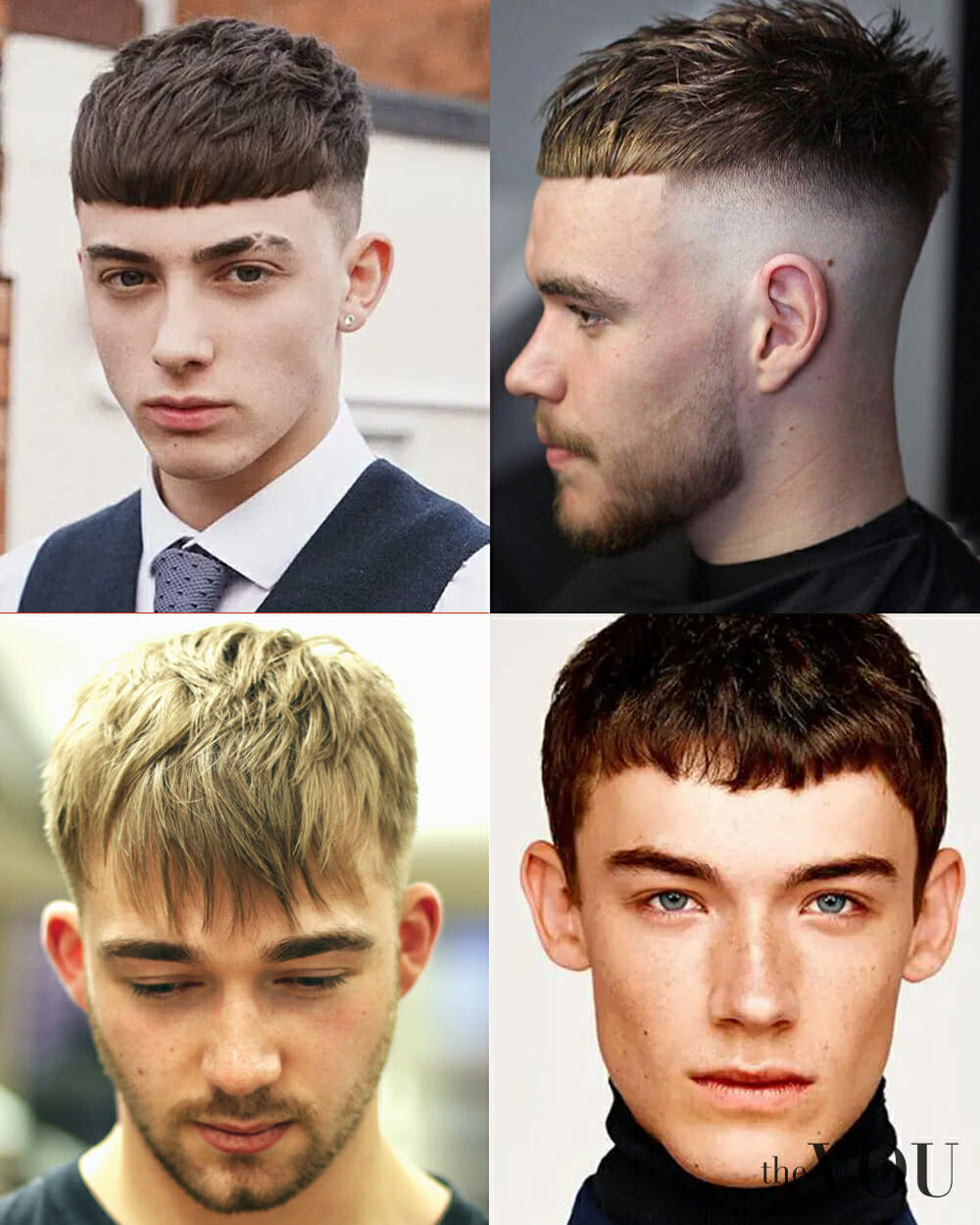
The French crop, also known as the crop top or textured crop, is a simple yet stylish hairstyle that combines elements of the classic Caesar cut with modern textures and finishes.
This versatile look features short hair on the back and sides, with a slightly longer, textured top styled forward or to the side.
The French crop is the shortest cut here that still has a fringe, which is what makes it an option when you want texture on top without length.
Why the French Crop Works for an Old Money Look
The French crop belongs here for the same reason the crew cut does: there is nothing decorative in it, and it holds its shape without being arranged.
A Caesar cut is the shape a French crop starts from: short all over, with the top cut to a blunt fringe brought forward onto the forehead rather than swept back.
What separates the French crop from a Caesar is the texture: the fringe is cut with movement in it rather than as one blunt edge, and the sides are tapered rather than left uniform.
This fusion of old and new makes the French crop appealing to men who appreciate the elegance and refinement of old-money aesthetics.
Ideal Hair Texture, Length, and Volume
The French crop works well with most hair types and textures, from fine to thick and straight to wavy.
The ideal length for the top is 1-2 inches, which allows enough hair to create a textured, slightly messy appearance.
The back and sides are usually kept shorter, between 0.5 and 1 inch, and can be tapered or faded for a clean, modern look.
The French crop’s volume is typically moderate, focusing on texture rather than height.
Celebrities with French Crop Haircut
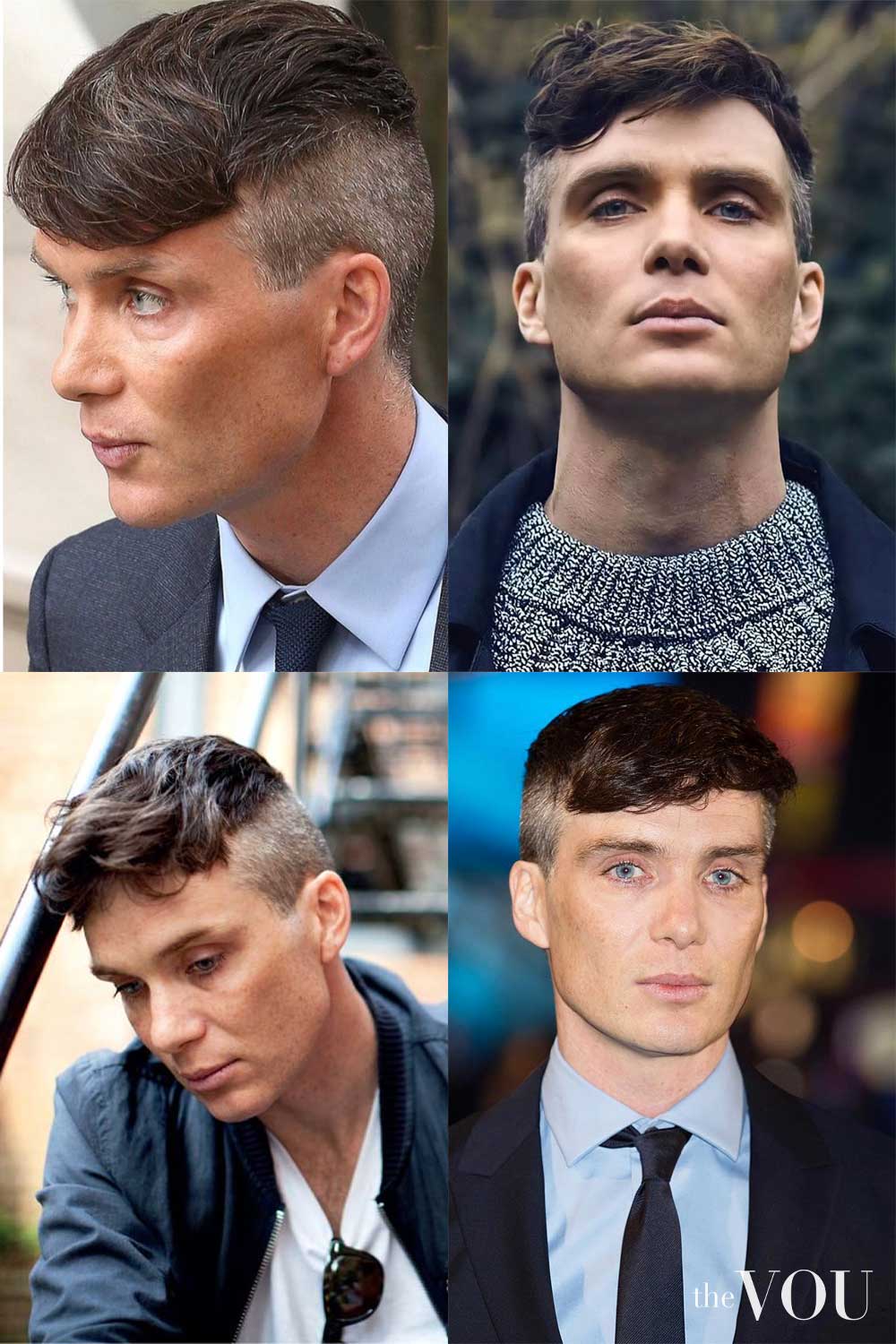
- Cillian Murphy’s French crop in “Peaky Blinders” features a longer, textured top with shaved sides, demonstrating the style’s adaptability to period dramas and modern fashion.
- Tom Hardy’s French crop features a slightly longer, textured top and tapered sides, showcasing the style’s rugged, masculine appeal.
- Daniel Craig’s interpretation of the French crop includes a shorter top and faded sides, creating a clean, minimalist look that complements his sharp features.
Styling Techniques
- Start with clean, damp hair and apply a small amount of sea salt spray or texturising spray to the hair on top, distributing it evenly with your fingers.
- Use a blow dryer on a low heat setting to dry the hair on top while simultaneously using your fingers to create a textured, tousled appearance.
- Apply a small amount of matte clay or putty to the hair on top, using your fingers to define the texture and create a slightly messy, lived-in look.
- For a more polished appearance, use a comb to style the hair on top forward or to the side, creating a neat, uniform finish.
Facial Hairstyle Options
The French crop’s simple, versatile nature allows it to pair well with various facial hairstyles.
A clean-shaven face can highlight the crop’s neat, refined appearance, while a well-groomed stubble or short beard can add a touch of ruggedness and masculinity.
For a balanced, contemporary look, consider pairing your French crop with a neatly trimmed goatee or a well-maintained 5 o’clock shadow, which can complement the hairstyle’s blend of classic simplicity and modern texture.
Recommended Hair Products
The French crop wants texture and a matte finish, nothing glossy.
A sea-salt or texturising spray on damp hair first, then a small amount of matte clay or putty worked through with the fingers, is the whole routine.
Maintenance and Barber Visits
Three to four weeks generally keeps the fringe at the length that makes the shape work, with the back and sides tidy behind it.
12. Side Fringe Hairstyle for Men

The side fringe is a youthful, textured hairstyle that combines elements of the classic side-swept look with modern, tousled finishes.
This trendy style features longer hair on top swept to one side, creating a fringe that falls across the forehead, while the sides and back are kept shorter, even textured or tapered.
The side fringe puts length across the forehead rather than off it, which softens a high or square hairline more than any other cut in this guide.
Why Side Fringe is an Old Money Look
The side fringe is the least formal cut in this guide, and it is here because the shape is soft rather than styled: the length falls where it falls and the work is in the cut, not in the morning.
The difference between a side fringe and a side part is where the weight is: a part divides the hair and holds a line, while a fringe carries the length forward over the forehead and leaves the line soft.
The side fringe’s contemporary interpretation of this timeless look, with its tousled texture and softer, more natural appearance, reflects a shift in men’s grooming preferences towards styles prioritising ease, individuality, and self-expression.
It is the furthest from the rest of this guide, and the one most dependent on your own hair: a fringe only falls well if the growth pattern at the front lets it.
Ideal Hair Texture, Length, and Volume
The side fringe works best with medium to thick hair with a slight natural wave or straight texture.
The ideal length for the top is between 2 and 4 inches, allowing enough hair to create a substantial fringe and enabling various styling options.
The sides and back are usually kept shorter, between 1 and 2 inches, and can be textured, tapered, or undercut for a more contemporary, edgy look.
The side fringe’s volume is typically moderate to high, emphasising the creation of a full, lush fringe that can be styled in various ways.
Celebrities with Side Fringe Hairstyles
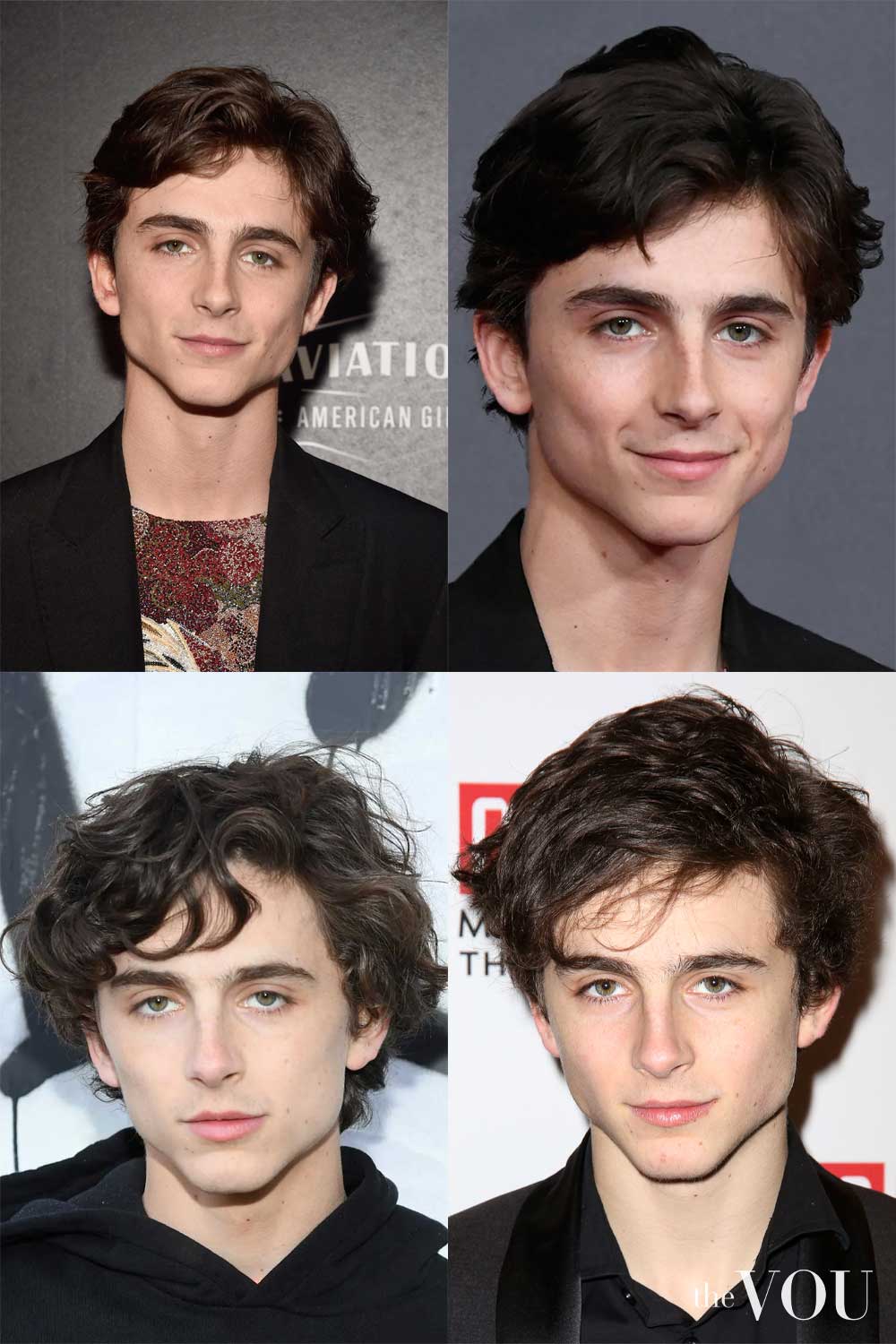
- Timothée Chalamet’s side fringe with a messy, textured finish showcases the style’s ability to appear effortlessly cool and modern.
- Harry Styles’ iconic side fringe features a longer, tousled top and textured sides, epitomising the style’s youthful, carefree charm.
- Cole Sprouse’s side fringe, with a shorter length and a more polished finish, demonstrates the style’s versatility and potential for a neater, more refined appearance.
Styling Techniques
- Start with clean, damp hair and apply a small amount of volumising mousse or sea salt spray to the hair on top, distributing it evenly with your fingers.
- Use a blow dryer to dry the hair on top while using a round brush to sweep the hair to the side and create volume.
- Apply a small amount of matte pomade or styling cream to the hair on top, using your fingers to define the fringe and create a textured, piece appearance.
- For a more relaxed, tousled look, use your fingers to gently mess up the fringe and add a carefree, lived-in vibe.
Facial Hairstyle Options
The side fringe’s youthful, laid-back appearance pairs well with various facial hairstyles, particularly those emphasising a fresh look.
A clean-shaven face can highlight the side fringe’s soft, textured appearance and keep the focus on the hair.
For a more balanced, contemporary look, consider pairing your side fringe with a light stubble or a short, well-groomed beard, which can add a touch of maturity and masculinity without overwhelming the hairstyle’s casual, effortless charm.
Recommended Hair Products
A saltwater or texturising spray gives the tousled version its grip and its matte finish.
For the smoother, defined fringe a light styling cream with a soft, pliable hold works better, since anything firmer makes the fringe sit in separated pieces.
Maintenance and Barber Visits
Four to six weeks is a reasonable example, and the fringe length is what you will notice going first.
The side fringe is a youthful, textured hairstyle that combines elements of the classic side-swept look with modern, tousled finishes.
It is the lowest-effort cut in this guide that still has length in it, which is the trade it offers: less styling than a quiff, less structure than a side part.
13. Regulation Cut Hairstyle for Men
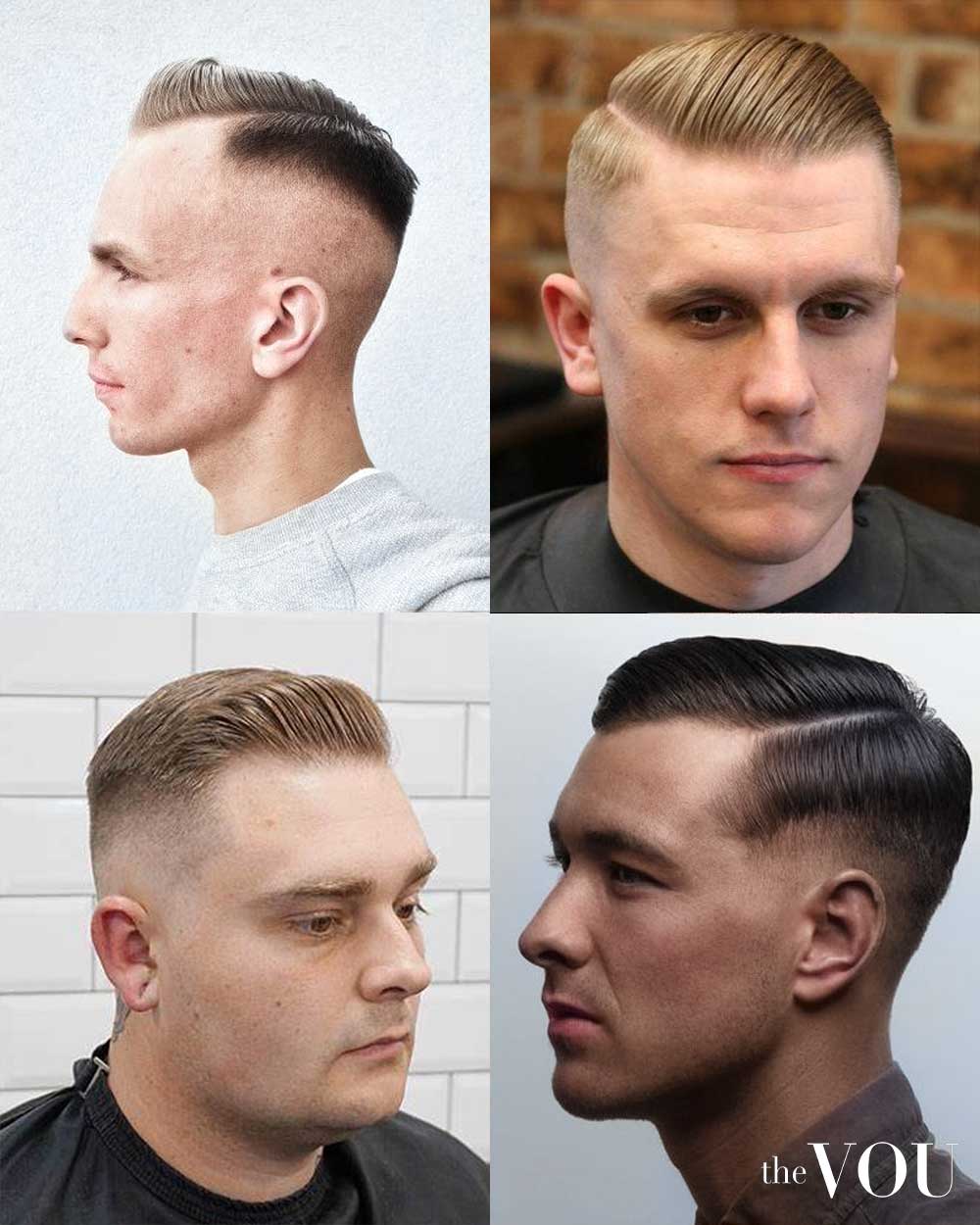
The regulation cut is a military-inspired short haircut. Actual service grooming standards vary between branches and between countries, so there is no single standard behind the name. What barbers mean by it is the shape in the photographs here: short and tapered at the sides, a little length left on top, and a defined line at the neck.
In the photographs here the sides and back are very short, in places down to the skin, with a little more length left on top. If you want a figure to propose, around an inch on top is a starting point to put to a barber.
For the short, tapered look shown here, agree the top length, side blend and neckline with your barber. How sharply you keep the edges is a preference, not a measurement set by the haircut’s name.
Why the Regulation Cut Can Work for an Old Money Look
Its short sides and defined outline are the features used for this example.
Show the reference photograph and discuss which details you want to keep or change. Use it to explain a style preference rather than assuming that the name identifies a particular military specification.
Ideal Hair Texture, Length, and Volume
The regulation cut works well with most hair types and textures, as the short length and high-and-tight style minimise the impact of individual hair characteristics.
As figures to propose rather than requirements, 0.5 to 1 inch on top and an eighth of an inch or shorter at the sides and back will give you the shape in these photographs. Agree the actual lengths with your barber.
Due to the extremely short length, the regulation cut has minimal volume and is characterised by a flat, close-to-the-head appearance.
The lack of volume contributes to the style’s neat, disciplined look and low-maintenance nature.
Celebrities with Regulation Cut
- Jake Gyllenhaal’s regulation cut in the movie “Jarhead” showcases the style’s association with military culture and its ability to project a tough, masculine appearance.
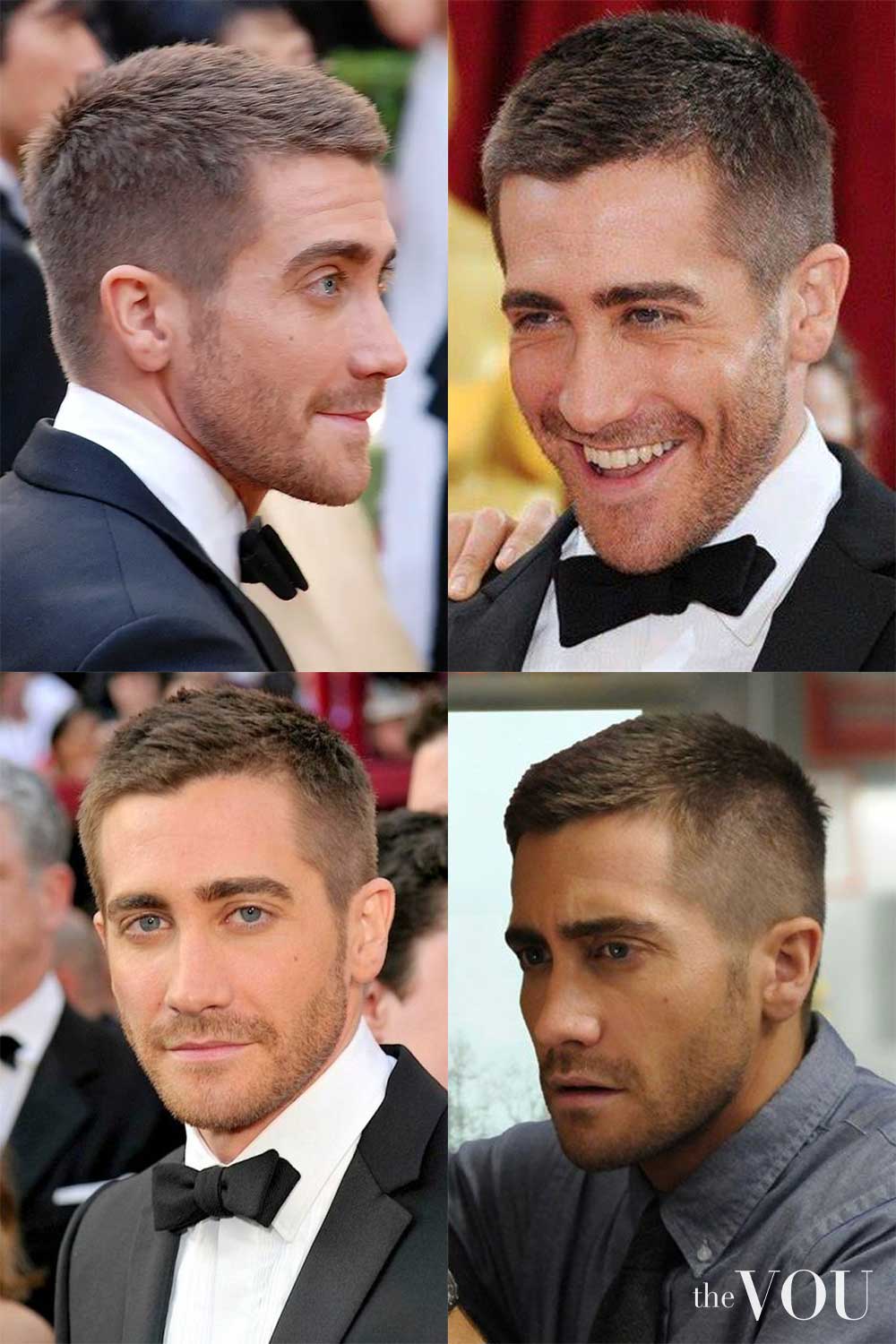
- Tom Hardy’s haircut in the film “Warrior” demonstrates the style’s versatility and potential to complement a muscular, athletic physique.
- Justin Timberlake’s regulation cut during his early solo career highlighted the style’s clean, sharp appearance and ability to convey a sense of discipline and focus.
Styling Techniques
- Due to the regulation cut’s extremely short length, styling is minimal and primarily focused on maintaining the hair’s neat, uniform appearance.
- For a polished look, apply a small amount of matte pomade or wax to the hair on top and use your fingers to distribute the product evenly and create a smooth, tidier appearance.
Facial Hairstyle Options
The regulation cut’s clean, disciplined appearance is best complemented by a clean-shaven face, reinforcing the style’s association with military precision and adherence to strict grooming standards.
However, for those who prefer facial hair, a well-maintained, short stubble can work with the regulation cut, provided that it is kept neat and tidy to avoid detracting from the hairstyle’s sharp, put-together look.
Recommended Hair Products
Very little product is needed at this length.
A matte, high-hold fibre will give the short top some definition if you want it. If your barber finishes the neck and the edges with a razor rather than clippers, a lubricating shave cream matters more than any styling product for keeping that line between visits; some barbers use clippers throughout, in which case it does not.
Maintenance and Barber Visits
This is the shortest interval in the guide, usually one to two weeks, because a cut defined by a precise uniform length stops being that as soon as it grows.
It asks for no daily styling in return, so what it wants from you is a standing appointment rather than a morning routine.
Between visits, wash the hair regularly with a gentle shampoo to keep the scalp clean and healthy, and use a moisturising conditioner to prevent dryness and irritation.
The regulation cut is the most exact shape in this guide, and the one that depends most on the barber and least on you.
The sharp, put-together appearance and low-maintenance nature make it an appealing choice for men who value neatness, practicality, and adherence to grooming standards.
14. Short Curtain Hairstyle for Men
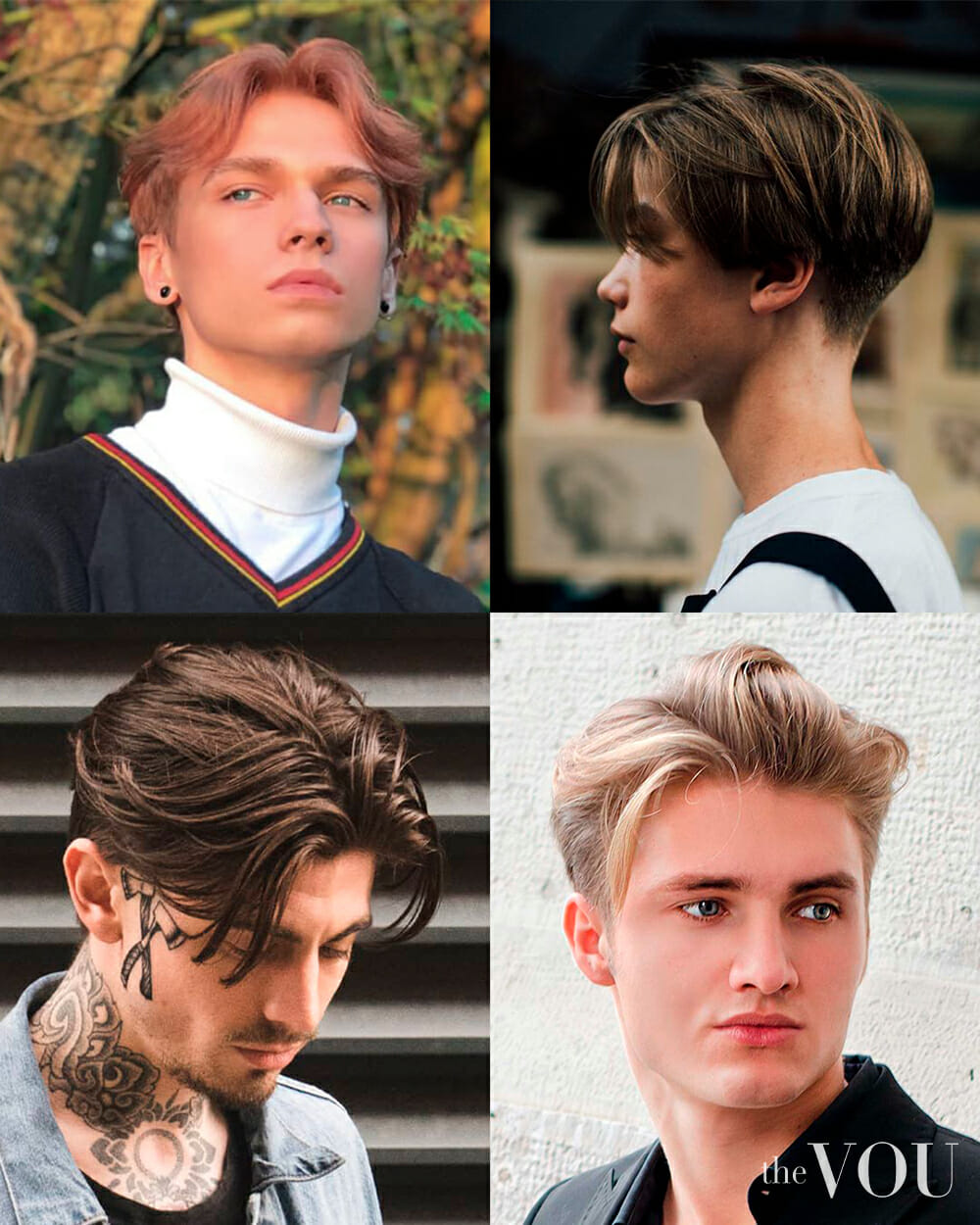
The short curtain hairstyle is a retro-inspired look that has recently returned to men’s fashion.
This stylish, low-maintenance cut features short hair on the sides and back, with slightly longer hair on top that is parted in the middle and allowed to fall naturally to either side, resembling a curtain.
The short curtain is the only cut in this guide built on a centre part, and the only one where the top is meant to fall rather than be placed.
Why the Short Curtain Can Work for an Old Money Look
A short curtain is a centre part cut so that the top falls to both sides on its own rather than being combed there, which is why it needs length at the front and very little product.
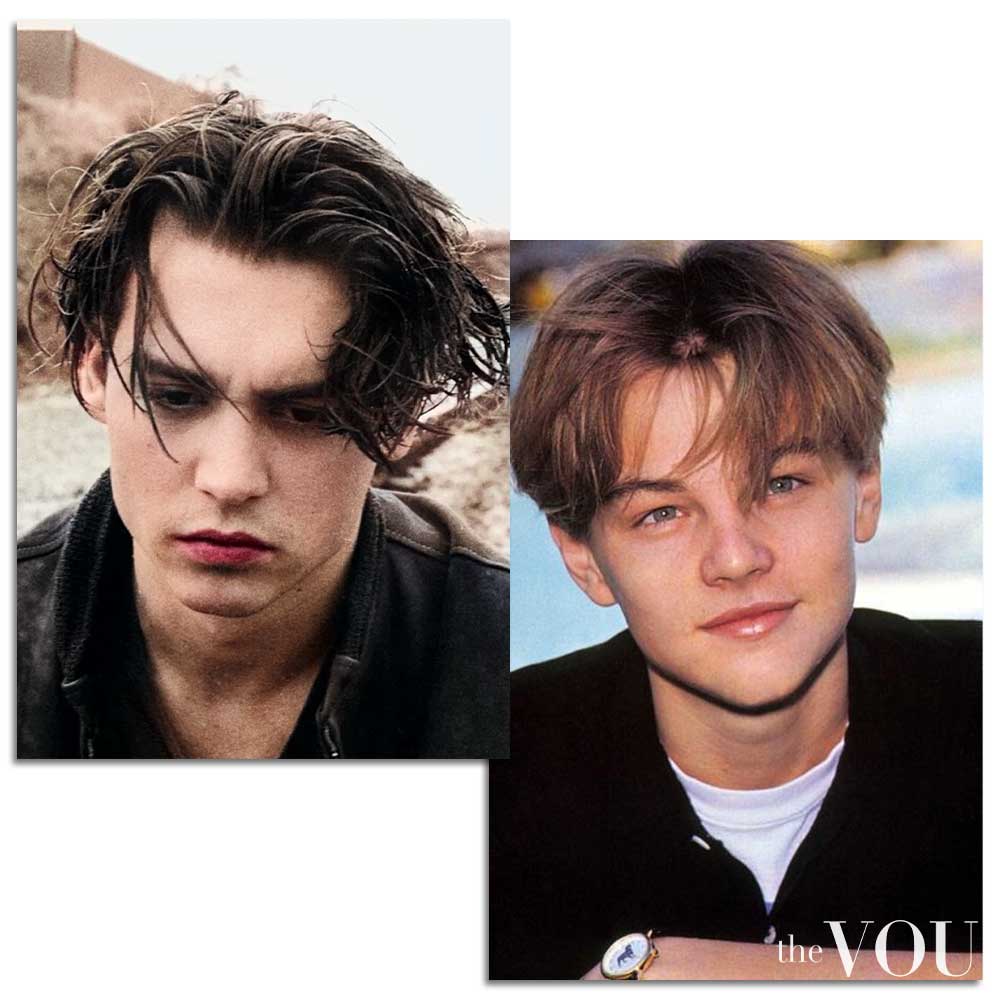
The look is not directly associated with old-money fashion. Still, the short curtain’s revival in recent years reflects a broader nostalgia trend and a renewed appreciation for vintage hairstyles.
It belongs here because it is unstyled rather than styled: no parting to hold and no hard edge to keep, so a few extra weeks show up as softness rather than as an untidy line. It still needs the shape trimmed back eventually, which the upkeep note below covers.
Ideal Hair Texture, Length, and Volume
The short curtain hairstyle works best with straight to slightly wavy hair with a medium to fine texture.
The ideal length for the top is between 2 and 4 inches, allowing enough hair to create the signature curtain-like part and fall naturally to either side.
The sides and back are usually kept shorter, between 1 and 2 inches, to create a slight contrast and emphasise the curtain effect on top.
The short curtain’s volume is typically moderate, focusing on maintaining a natural, effortless appearance rather than creating excessive height or fullness.
Celebrities with Short Curtain Haircut
- Timothée Chalamet’s short curtain hairstyle has become a signature look for the young actor, showcasing the style’s youthful, carefree charm and ability to complement various fashion choices.
- Charles Melton’s interpretation of the short curtain features a slightly longer top and a more tousled, textured finish, demonstrating the style’s versatility and potential for customisation.
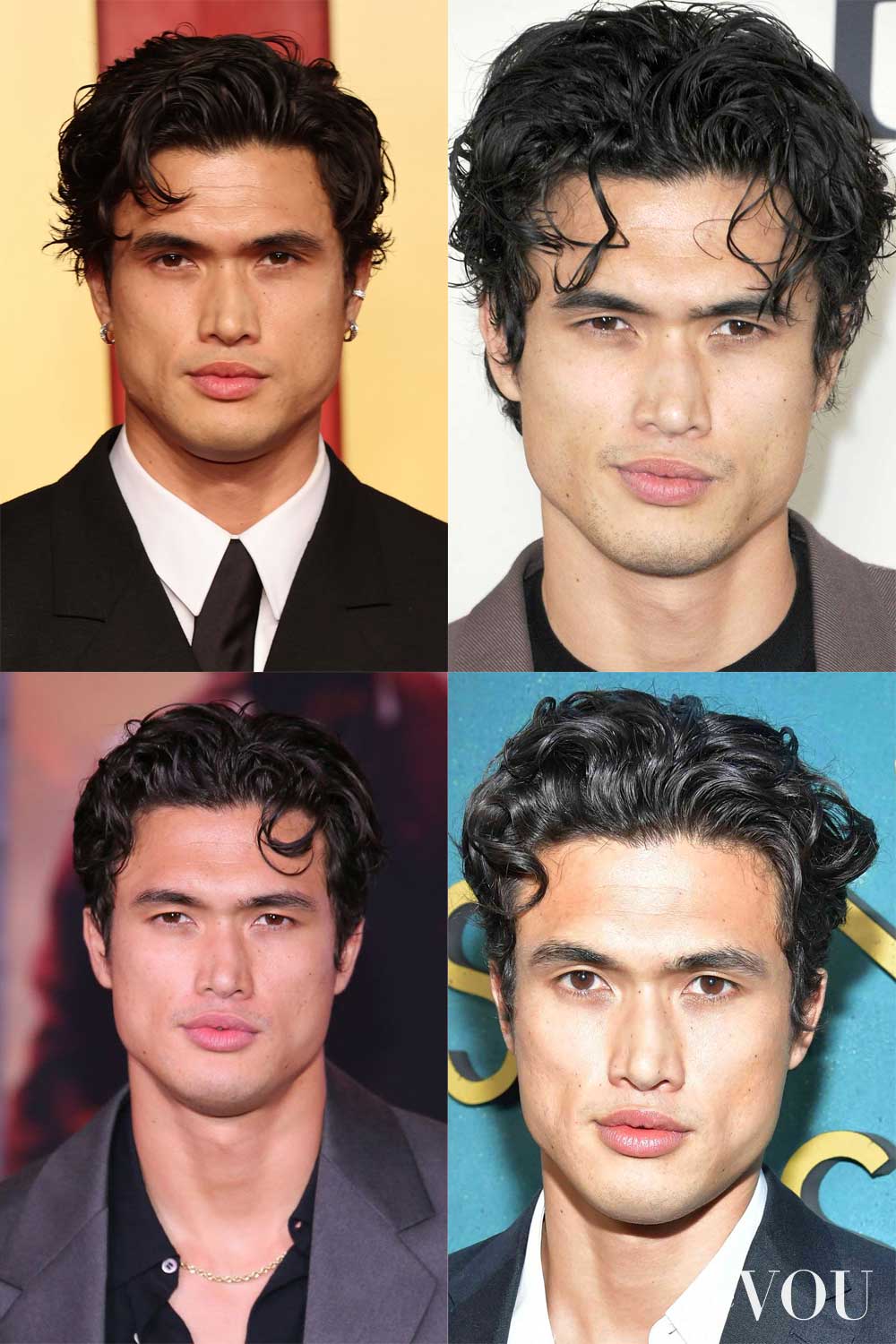
- Patrick Schwarzenegger’s short curtain with a side part and a polished finish highlights the style’s ability to appear laid-back and put-together, depending on the styling techniques used.
Styling Techniques
- Start with clean, damp hair and apply a small amount of lightweight, moisturising hair cream or serum to the hair on top, distributing it evenly with your fingers.
- Using a comb, create a middle part, ensuring that the hair falls naturally to either side of the part.
- Allow the hair to air dry for a natural, effortless look, or use a blow dryer in a low heat setting to encourage the hair to fall in the desired direction.
- For a more polished appearance, use a small amount of pomade or wax to define the part and add shine, not disrupting the hair’s natural fall.
Facial Hairstyle Options
The short curtain hairstyle’s laid-back, youthful appearance pairs well with clean-shaven faces, which helps to maintain the focus on the hair and its unique parted style.
However, for those who prefer facial hair, a light stubble or a short, well-groomed beard can work with the short curtain, adding a touch of maturity and masculinity to the overall look.
The key is to keep the facial hair neat and trimmed to avoid overwhelming the hairstyle’s effortless, natural vibe.
Recommended Hair Products
This style is about how the hair falls rather than how it is held, so the product has to be light: a moisturising styling cream or a non-greasy balm, enough to control frizz and define the ends without making the hair hang in strands.
Anything with a firm hold will stop the curtain moving, which is the point of it.
Maintenance and Barber Visits
Four to six weeks is a reasonable example for trimming the sides and back and keeping the top at a length that still falls to both sides. This cut grows out more gracefully than most here, because there is no hard edge in it to lose.
Between appointments, wash your hair with a gentle, sulfate-free shampoo and conditioner to maintain the hair’s natural moisture and prevent damage.
Style as needed using lightweight, non-greasy products that enhance the hair’s natural texture and fall.
The short curtain hairstyle is a retro-inspired look combining vintage charm, a contemporary cool factor, and a fresh appeal to fashion-forward men who appreciate a touch of nostalgia in their style while still embracing current trends.
15. Edgar Haircut for Men
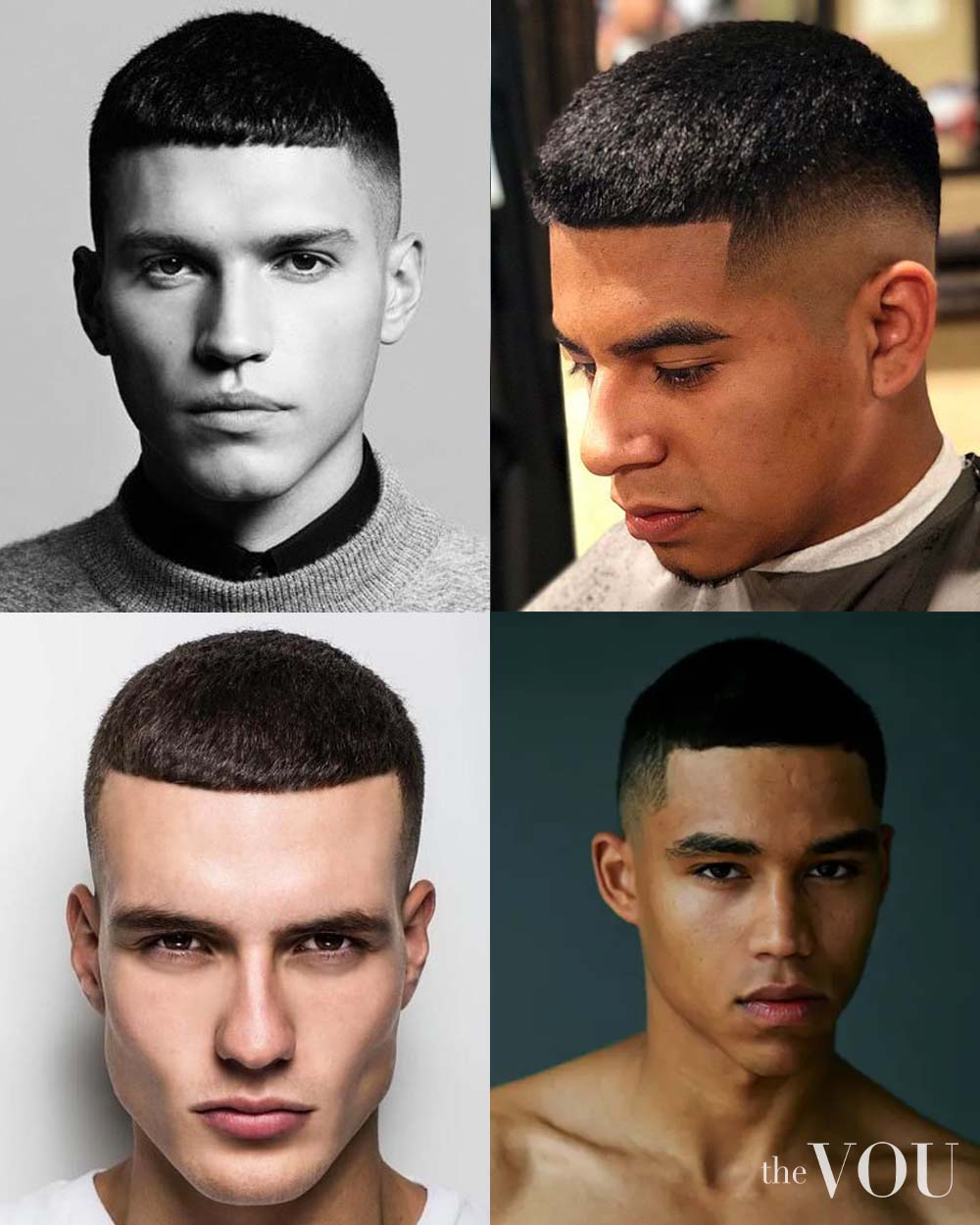
The Edgar is defined by one feature: a fringe cut straight across the forehead in a single blunt line, with the sides faded or undercut hard behind it. It is not a synonym for the South of France haircut, which is a separate taper-based style.
The sides and back are short and usually faded, and the top is left long enough to be combed forward into the fringe. It is the fringe that defines the cut, not height on top.
The Edgar is the most visible cut in this guide. The straight fringe line and the hard fade behind it are both deliberate edges, and neither of them is subtle.
Why the Edgar Is Not a Traditional Old Money Haircut
While the Edgar haircut does not directly relate to old-money fashion or historical contexts, its modern, edgy appearance represents a departure from traditional, conservative hairstyles often associated with old-money aesthetics.
What it does share with the rest of this guide is the demand for precision. A blunt fringe and a clean fade both depend on an exact line, so they show growth sooner than a softer cut does, which is why the interval below is one of the shortest here.
Ideal Hair Texture, Length, and Volume
The Edgar haircut works best with straight to slightly wavy hair with a medium to thick texture.
The top needs to be long enough to reach the forehead and no longer than that, because extra length makes the fringe break into separate pieces instead of sitting as one line. Your barber can judge that against your own hairline more accurately than a number can.
The sides and back are faded or undercut, with the length dropping away sharply so the fringe reads as a hard edge against them.
Volume is low. The effect comes from the straightness of the fringe line and the contrast behind it, not from height.
Men Named in Connection With the Edgar
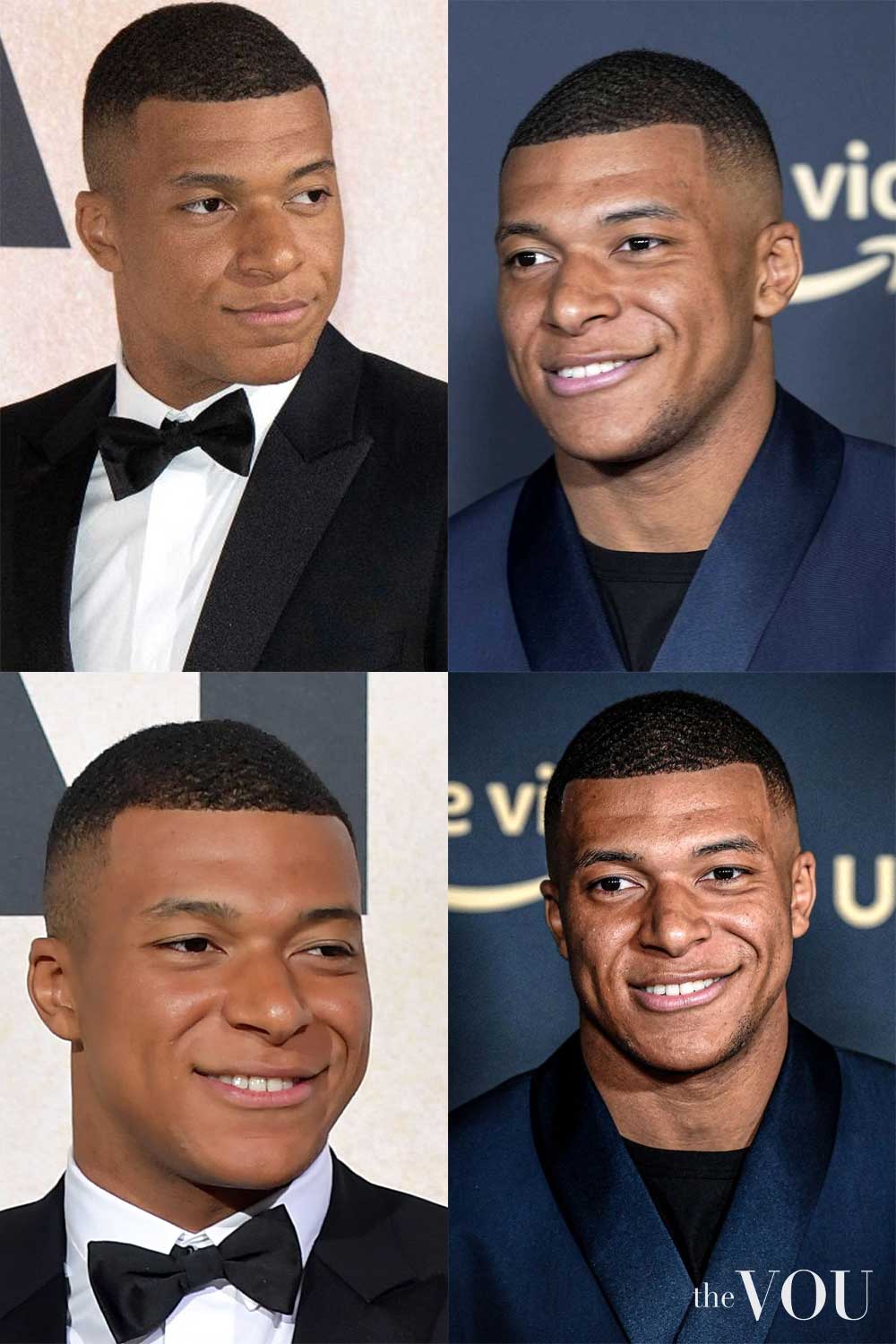
- Kylian Mbappé, the French professional footballer, is often named in connection with the style. The photographs below show something else: a very short tapered cut with a lined-up front hairline and no forward fringe at all. He is worth keeping here for that reason, because it shows how loosely the name gets applied.
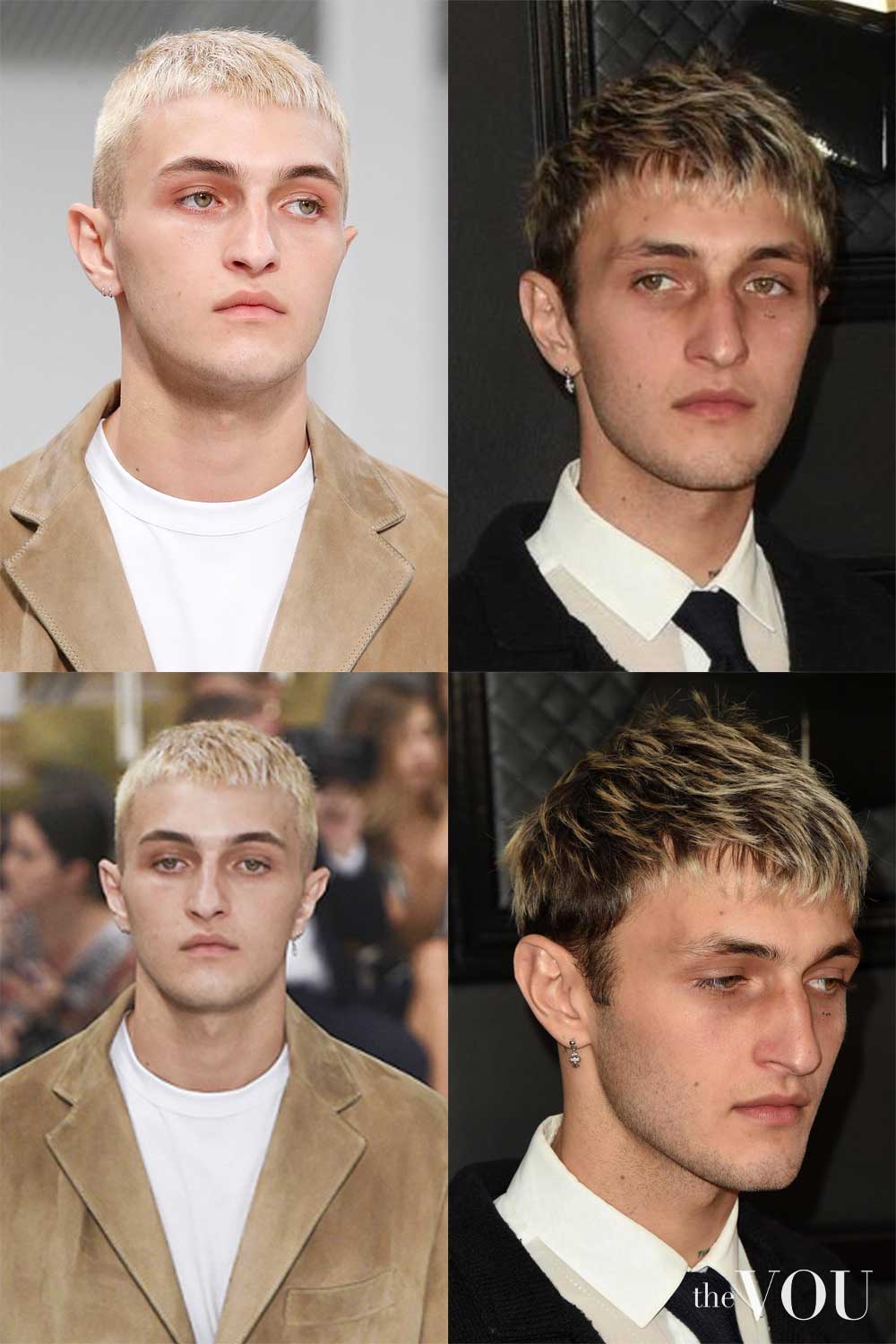
- Anwar Hadid, the model and younger brother of Gigi and Bella Hadid, has been seen with a tousled, textured Edgar cut that demonstrates the style’s edgy, fashion-forward vibe.
- Odell Beckham Jr., the American football player, has worn a boldly styled Edgar haircut with distinctive blonde highlights, exemplifying the style’s potential for creative customisation and self-expression.
Styling Techniques
- Start with clean, damp hair and apply a small amount of high-hold styling gel or pomade to the hair on top, distributing it evenly with your fingers.
- Using a comb or your fingers, bring the hair on top straight forward, so the fringe falls in one line across the forehead. Where that line sits is a choice: higher reads sharper, lower reads heavier.
- Use a blow dryer on a low or medium setting, directing the airflow forward and down so the fringe dries flat and lies in one line.
- If you want texture in the fringe rather than a solid block, work a small amount of matte clay or putty through it with your fingers before it dries.
Facial Hairstyle Options
The Edgar haircut’s bold, contemporary appearance is often paired with clean-shaven faces, which helps to maintain the focus on the hair’s sharp lines and angular styling.
However, for those who prefer facial hair, a well-groomed, shaped beard or goatee can work with the Edgar cut, adding an extra layer of dimension and personal style to the overall look.
The key is to ensure that the facial hair is precisely trimmed and complements the clean, defined lines of the haircut.
Recommended Hair Products
A blunt fringe has to stay in one line, so this is a strong-hold style.
A high-hold pomade gives the sharp, sleek version and a strong matte clay gives the textured one.
Read the directions on whichever you choose. Some strong pomades are made to go on dry hair and behave nothing like the same product applied to damp hair, which is what the styling steps above assume.
Maintenance and Barber Visits
The Edgar depends on a straight fringe line and a clean fade behind it, and both go soft quickly.
Two to three weeks is a reasonable example for keeping the sides faded or undercut and the fringe cut back to its line, and it is one of the shortest intervals in this guide because the fringe is a straight edge and a straight edge shows growth quickly.
Use lightweight, water-based styling products to restyle the hair as needed, ensuring that the angular fringe and textured finish remain intact.
Hair Loss and Old Money Hairstyles: What Changes?
Hair density can change which old-money hairstyles are most flattering. Receding temples, a widening part or thinning at the crown may make a high-volume style harder to maintain, while shorter cuts can sometimes create a cleaner and more deliberate appearance.
Do not assume that every type of hair loss is male pattern baldness. The American Academy of Dermatology notes that hair loss has many causes, and identifying the cause is an important first step. See the AAD’s overview of hair-loss causes.
Which hairstyles work well with thinning hair?
- Short Crew Cut: reduces the visual contrast between thicker and thinner areas.
- Buzz Cut: makes uneven density less obvious and requires little styling.
- Regulation Cut: keeps the silhouette controlled and avoids relying on a large amount of top volume.
- Textured French Crop: can create visual texture without requiring a long, slicked-over top.
- Short Ivy League: can work when density is still sufficient to maintain a defined top and controlled part.
Avoid using a comb-over simply to conceal progressive hair loss. If the hairline or crown is changing noticeably, a dermatologist can help establish what is happening and whether medical treatment is appropriate. Hair transplantation is another potential option for selected cases of permanent pattern hair loss, but it requires adequate donor hair and realistic expectations. The NHS also recommends researching the procedure carefully because a hair transplant is cosmetic surgery and results vary with the procedure and provider.
The American Academy of Dermatology’s hair-transplant guide explains candidacy, the procedure and the typical timeline for seeing results. The NHS also provides an independent overview of hair-transplant considerations and costs.
What’s the Right Hairstyle for Me?
Choosing an old-money hairstyle comes down to a few things: your facial features, your hair, your lifestyle and the rest of how you dress.
This section will explore these factors in detail and match hairstyles to various face shapes and age groups.
Face Shape
Looking at your own face is a useful step before choosing a hairstyle, though it is one input among several rather than a prerequisite. There is also an optional face-shape quiz if you would like one.
Five of the shapes come up most often, and they are described below by what you can see rather than by the label. The reference guide linked above covers nine:
Characterised by a slightly longer length than width, with a rounded jawline and a forehead that is slightly wider than the chin.
Most hairstyles work well with this versatile face shape, so focus on styles that maintain the face’s natural balance and proportion.
Nearly equal in length and width, with a soft, curved jawline and no prominent angles.
Opt for hairstyles that add height and volume on top while keeping the sides and back short to elongate the face and create a more angular appearance.
Defined by a strong, angular jawline and a forehead approximately the same width as the chin.
Choose styles that soften the strong angles of the jawline, such as those with shorter sides and a slightly longer, textured top.
Wider at the forehead and cheekbones, narrowing down to a pointed chin.
Select hairstyles that balance the wider forehead and narrower chin, such as those with side-swept fringes or a medium-length top with shorter sides.
Widest at the cheekbones, with a narrower forehead, chin, and pointed jawline.
Pick styles that add volume and width at the chin and forehead while keeping the hair close to the head at the cheekbones to minimise width.
A Practical Face-Shape Rule
Use your haircut to create balance rather than to “correct” your face shape. If your face is visually rounder, some height and tighter sides can add length. If your face is long, excessive height can exaggerate that length, so a little more fullness at the sides may be preferable. Strong square features can carry structured cuts particularly well, while heart and diamond shapes often benefit from controlled width around the forehead and jaw.
These are starting points, not rigid rules. Your hairline, forehead height, jaw width, ears, natural growth pattern and hair density can matter just as much as the broad face-shape category.
Hair Type and Texture
Your hair type and texture determine which old-money hairstyles work best. The main hair types include:
Straight
Naturally smooth and flat, with no discernible curl or wave.
Most old-money hairstyles work well with straight hair, making achieving a sleek, polished appearance easier.
Focus on styles that add volume and texture to prevent the hair from looking flat or lifeless.
Wavy
Falls in loose, S-shaped curves more defined than straight hair but less than curly.
Embrace your natural texture by choosing styles that enhance the waves, such as the classic side part or the short curtain.
Use lightweight, moisturising products to define and control the waves without weighing them down.
Curly
Forms tight, defined ringlets or coils from the scalp to the ends.
Opt for old-money hairstyles that work with your natural curl pattern, such as the French crop or the regulation cut.
Use products that provide moisture, definition, and frizz control, and consider using a diffuser when drying your hair to maintain the integrity of the curls.
Kinky/Coily
Characterised by very tight, densely packed curls or coils that may have a zig-zag or Z-shaped pattern.
Select hairstyles that embrace your natural texture, such as the buzz cut or a short, tapered afro.
Use moisturising, nourishing products to keep the hair healthy and defined, and consider protective styling techniques to minimise damage and maintain the hair’s natural pattern.
Lifestyle and Maintenance
When choosing an old-money hairstyle, consider your lifestyle and the level of maintenance you’re willing to commit to.
Some styles require frequent trims, daily styling, and specific products, while others are more low-maintenance and easily managed with minimal effort.
If you have a busy lifestyle or prefer a more low-key approach to grooming, opt for old-money hairstyles that are simple, versatile, and easy to maintain, such as:
- The Buzz Cut
- The Crew Cut
- The French Crop
- The Regulation Cut
These styles take very little time in the morning and very little product, which is what makes them easy to live with.
Easy does not mean infrequent, though. The shorter a cut is, the sooner growth shows against it, so a Buzz Cut or a Regulation Cut will want the barber more often than a Slick Back does, not less. What you save with these four is daily effort, not visits.
On the other hand, if you enjoy dedicating time to your grooming routine and appreciate the process of styling your hair, you may want to consider old-money hairstyles that offer more opportunities for customisation and experimentation, such as:
- The Classic Side Part
- The Slick Back
- The Quiff
- The Classic Pompadour
These styles ask for daily styling with specific products and more time to get right, and they generally hold their shape between visits for longer than the very short cuts do.
However, they also allow for greater self-expression and can be adapted to suit various occasions and personal preferences.
Choosing by Hair Density and How Much Fuss You Want
Nothing in this guide is ruled in or out by your age. What does change with age, for most people eventually, is hair density and texture, and that is worth planning around because it changes what a cut can hold. The groupings below are about that, not about what you are allowed to wear.
If your hair is at its thickest
Dense hair holds contrast well, so the cuts that depend on a sharp difference between top and sides are the ones with the most room to work.
Four that use that contrast:
- The Quiff
- The Undercut
- The French Crop
- The Short Curtain
All four depend on a visible difference between the length on top and the length at the sides, which needs enough density at the sides to hold a clean line.
If you want the least fuss for the most formality
These four give a finished, conventional shape without needing much done to them each morning, and none of them depends on a hard edge.
Four that fit that:
- The Classic Side Part
- The Taper Fade
- The Ivy League
- The Comb Over
All four sit comfortably in a formal setting and none of them reads as a statement, which is the whole point of them.
If your hair has thinned or changed texture
When density drops, a cut that relies on volume or on a heavy top has less to work with, and shorter, controlled shapes hold their outline better.
Four that work with less density:
- The Ivy League
- The Regulation Cut
- The Classic Side Part (with a slightly longer top)
- The Short Crew Cut
All four keep their shape without needing volume. They do not all grow out the same way: the Ivy League, the longer-topped Side Part and the Short Crew Cut soften gradually, while the Regulation Cut has a defined line at the neck that shows growth first, which is why its own section asks for the shortest interval of the four.
Frequently Asked Questions About Old Money Hairstyles for Men
What is the most classic old-money haircut for men?
The Classic Side Part and Ivy League are among the safest choices if you want a traditionally polished, understated result. Both can be adjusted for different face shapes, hair textures and levels of formality.
What is the best old-money hairstyle for thinning hair?
There is no single best haircut for thinning hair. Shorter, controlled styles such as a Crew Cut, Buzz Cut, Regulation Cut or textured French Crop can reduce the need to disguise thinning with excessive length. If hair loss is progressing, address the cause rather than relying on styling alone.
Can a fade look old money?
Yes, but the execution matters. A low or subtle taper generally fits the understated character of old-money grooming better than an extreme skin fade with a highly dramatic contrast. The goal is a clean transition rather than a haircut that dominates the overall look.
What haircut looks expensive without being flashy?
A well-executed Classic Side Part, Ivy League, controlled Slick Back or neat Taper Fade can create that impression. The “expensive” effect comes less from the haircut’s name and more from proportion, clean edges, healthy-looking hair and consistency with the rest of your grooming and clothing.
How often should I get an old-money haircut?
It depends on the cut, and not in the direction most people expect. Short fades and very precise styles show growth soonest and are usually refreshed every 2–3 weeks, while longer, softer styles can often go 4–6 weeks. Neither of those is a rule: your growth rate and how crisp you want the perimeter are what decide it. Daily styling effort runs the other way, with the shortest cuts asking the least.
Can a hair transplant help me wear more hairstyles?
For appropriately selected patients with permanent pattern hair loss, transplantation can restore hair to thinning or bald areas and may expand styling options. It is not suitable for every cause or stage of hair loss, and the amount of donor hair limits what can realistically be achieved. A qualified medical assessment should come before choosing a clinic or procedure.
Sources and Further Reading
For medical information about hair loss and hair transplantation, consult independent clinical sources rather than relying solely on clinic marketing. Useful references include the American Academy of Dermatology’s hair-transplant guidance, its hair-loss treatment overview, and the Cleveland Clinic’s overview of hair transplantation.
Final Thoughts
The old money aesthetic describes a look built on restraint, on traditional proportions and on not announcing itself.
In a world of fast fashion trends and new money statements, the old-money aesthetic remains a bastion of steadfast refinement that conveys excellence and self-assurance.
A haircut is one part of that look, and it is the part you can change soonest.
The key to choosing the right old-money hairstyle is to consider your features, lifestyle, and personal preferences and to select a style that makes you feel confident, comfortable, and true to yourself.
Work through the fifteen with your own hair in mind, take two or three to a barber, and let them tell you which of them your growth pattern will actually hold.
Where to Go Next
If one of the fifteen looks right, the next step is asking for it in words a barber can work from. The VOU’s guide to getting the old money haircut covers the five decisions that actually go into that brief: how much length to leave on top, a taper or a fade, scissors or clippers on the sides, where the neckline finishes, and whether the part is natural or cut in.
If you want to work out what your own outline and features are doing before you choose, see how to look at your own face.
A passionate advocate for inclusivity and diversity, Aidan is the driving force behind The VOU as its Editorial Manager. With a unique blend of editorial acumen and project management prowess, Aidan's insightful articles have graced the pages of The Verge, WWD, Forbes, and WTVOX, reflecting his deep interest in the dynamic intersection of styling with grooming for men and beyond.
Hailing from Miami Beach, Sean Flynn is a NY-based celebrity professional hairstylist specializing in classic haircuts for men but in custom colors. Drawing on a lifetime of hair salon moments of combining fashion, art, and style, Sean is often featured in prestigious styling magazines, including GQ, Forbes, New York Times, and of course, The VOU.
With years of expertise in high-end fashion collabs and a PhD in Sustainable Fashion, Ru specialises in eco-luxe wardrobes for the modern gentleman seeking understated refinement.
With over twenty years of front-row fashion and styling events, collabs with haute-couture houses, and a PhD in Luxury Fashion, Laurenti is an expert in crafting personalised looks that depict old-money sophistication.