
Start here
What’s This About
A classic, ‘old money’ style wardrobe rests on well-fitting essentials in natural fabrics and quiet colours, and many brands at different prices can supply them; no single brand is required.
This guide covers the essentials and the brands that make them, such as:
Shirts, chinos, flannels and knitwear to own first
British, American and European brands to know
The fit points to check and what a tailor can change
Core colours and fabrics that combine easily
Where to spend more and where to save
and many more!
Buy for fit and fabric first, and treat brand names as places to look, not as proof of quality.
Key Points
01Old money style is a contemporary label for understated dressing, not a sign of background or wealth.
02A navy blazer, grey flannels, white and blue shirts and plain knitwear form a versatile base.
03Shoulders are hard to alter, so buy jackets that fit there and budget for sleeve and trouser alterations.
04Hang tailoring on shaped hangers and fold knitwear to keep both in shape.
The ‘Old Money’ Look: A Men’s Guide
‘Old money style‘ is a contemporary label for classic, understated dressing built on good fit, natural fabrics and quiet colours rather than visible logos.
It is not a uniform for any social group, and wearing it says nothing about your background or your bank balance.
Treat it as a practical way to build a wardrobe of fewer, longer-lasting clothes that work in many settings.
This guide covers the essentials to own, examples of brands that make them at different price levels, and the fit, colour, care and budget decisions that matter more than any label.
Wardrobe Essentials
1. Shirts and Trousers
Plain shirts in poplin, twill and Oxford cloth form the base of the look, with white and pale blue the most useful colours.
Fit matters more than the maker: the shoulder seam should sit at your shoulder and the cuff should reach the base of your thumb with your arm relaxed.
Brooks Brothers and Charles Tyrwhitt are two widely available makers of classic dress and Oxford shirts.
For trousers, choose chinos in khaki, stone or navy with a straight or gently tapered leg, and avoid very stretchy fabrics if you want a crisp drape.
Grey wool flannel trousers are the cold-weather alternative and pair well with suede loafers or leather brogues.
Wear: a pale blue Oxford shirt, stone chinos, a navy crew-neck jumper and brown suede loafers.
2. Knitwear
Knitwear in natural fibres such as merino, lambswool and cashmere gives warmth without bulk.
A few plain crew-necks in cream, navy and charcoal cover most needs, and a V-neck sits neatly over a collared shirt.
John Smedley is a long-established British knitwear maker, which says it has made knitwear in England since 1784.
For more texture, try Shetland or lambswool, a subtle Fair Isle for weekends, or an off-white Aran jumper with plain trousers.
Wear: an off-white Aran jumper, a blue Oxford shirt underneath, grey flannel trousers and brown leather boots.
3. Outerwear and Tailoring
A well-fitting navy blazer is one of the most useful jackets you can own, because it works with chinos, flannels and jeans.
Unstructured blazers in wool, linen or a wool-linen blend, such as navy hopsack, feel comfortable and look smart; Hackett London is one British brand known for this kind of tailoring.
A tweed jacket in brown or olive suits cooler months and the country side of the look.
A trench coat in stone or navy covers wet spring and autumn days; Aquascutum and Burberry are long-established names, and many other brands make similar coats for less.
A single-breasted overcoat in charcoal or camel wool goes over suits and casual clothes alike.
For suits, two-button single-breasted designs in navy or mid-grey are the most versatile.
Wear: a navy hopsack blazer, a white shirt with an open collar, grey flannel trousers and dark brown penny loafers.
Classic Menswear Brands to Know
No brand is required for this look, and a higher price does not prove better quality, so use the names below as examples of where to look and compare current prices yourself.
Prices change often and differ by country, so we have not listed them here.
1. British Heritage Brands
Turnbull & Asser is a Jermyn Street shirtmaker known for ready-to-wear and bespoke shirts.
Barbour, founded in 1894 in South Shields, is known for waxed cotton jackets such as the Bedale and the Beaufort; see our comparison of the most classic Barbour jacket.
Crockett & Jones makes Goodyear-welted shoes in Northampton, which a cobbler can resole.
Gieves & Hawkes, at No. 1 Savile Row, offers bespoke and ready-to-wear tailoring.
2. American Ivy League Brands
The American version of the look leans on preppy sportswear and campus staples.
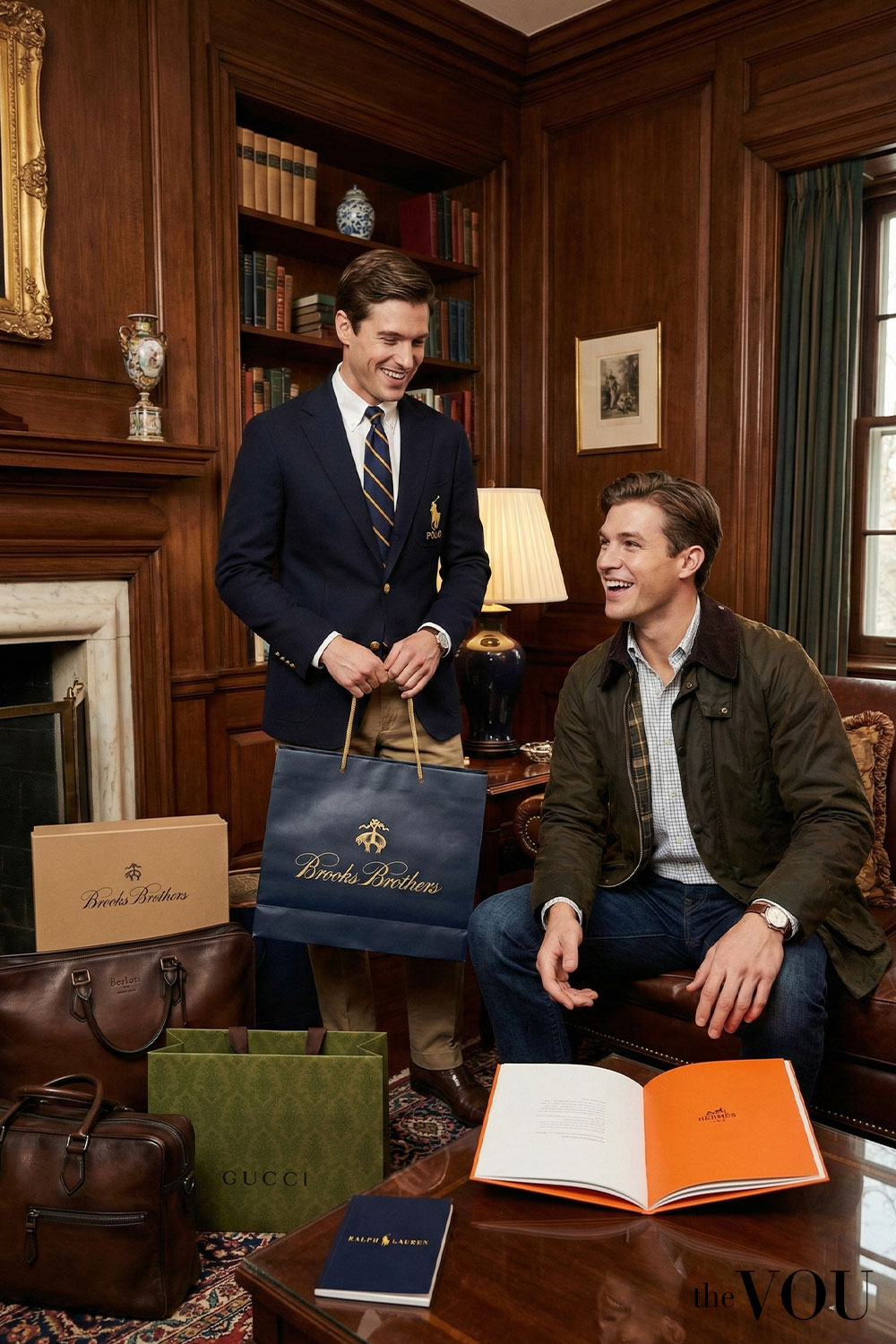
Brooks Brothers is closely associated with the button-down collar shirt.
Ralph Lauren covers the look from Polo Ralph Lauren knitwear and shirts up to Purple Label, its highest-priced line; see our guide to whether Purple Label is worth the price.
L.L.Bean is known for practical outdoor clothing, including its rubber-and-leather Bean boots, flannel shirts and canvas totes.
3. European Brands
Italian brands are often known for softer tailoring that looks smart but feels comfortable.
Zegna is known for suiting cloth and tailoring, and its knitwear and accessories are a smaller first purchase.
Drumohr makes wool and cashmere knitwear, and Smythson makes stationery and leather goods such as wallets.
Fit and Alterations
A well-fitting garment at a moderate price usually looks better than an expensive one that fits badly, so budget for alterations when you buy tailoring.
A good tailor is worth finding before you need one urgently.
1. Key Fit Points
The shoulder seam of a jacket or shirt should end at the edge of your shoulder.
Shirt cuffs should show about half an inch (1 cm) below a jacket sleeve.
Trousers with a slight break or no break, where the hem just touches the shoe, look neater than fabric bunching at the ankle.
Whether you prefer a slim, straight or fuller trouser leg is a style choice, as long as the waist and seat fit you comfortably.
2. Working With a Tailor
Look for a tailor experienced with tailored jackets, not only quick hem and waist alterations.
Sleeve length, trouser length and waist adjustments are routine; changing the shoulders is difficult and expensive, so buy jackets that fit there already.
When buying a suit in a department store, ask whether alterations are included or discounted.
Check the sleeve length of any jacket before you wear it for the first time.
Colours and Fabrics
The look relies on a restrained colour range in which most clothes combine with each other.
1. Core Colours
Navy is the most useful colour across suits, blazers and knitwear.
Mid-grey and charcoal are the softer alternatives to black for suits and trousers.
Cream, ecru and off-white work for shirts, knitwear and summer chinos.
Olive, camel and muted burgundy add depth without drawing attention.
Patterns stay subtle, such as a faint windowpane on grey flannel or a muted Prince of Wales check on a jacket.
2. Natural Fabrics
Natural fibres breathe and age well, which is why the look favours them over most synthetics.
For suits, a mid-range wool such as Super 100s to 130s is a practical balance of softness and durability; very high Super numbers feel finer but wear faster.
Tweed suits the country, sturdy cotton twill suits chinos, crisp poplin suits shirts, and linen suits summer.
For belts and shoes, full-grain leather develops a patina and lasts longer than corrected-grain or bonded leather.
When buying less expensive shirts, check the label for a high cotton content.
Footwear
Classic shapes in good leather, kept polished, complete the look.
1. Leather Dress Shoes
A black or dark brown cap-toe Oxford is the most formal everyday shoe and works with suits.
A Derby, with its open lacing, is slightly more relaxed and suits flannels and tweed.
Church’s and Crockett & Jones are examples of makers of Goodyear-welted shoes that can be resoled.
Polish your shoes regularly and keep cedar shoe trees in them to absorb moisture and hold their shape.
2. Smart Casual Footwear
Penny loafers in brown or burgundy leather, or suede tassel loafers, suit warm weather and smart-casual occasions, with fine socks or no visible socks.
A leather brogue or a suede desert boot works with flannel or tweed.
If you wear trainers, choose plain, clean leather designs in white or a neutral colour without large logos; Common Projects and Duke + Dexter are two brands that make them.
Quiet Accessories
Accessories finish an outfit without drawing attention to themselves.
1. Watches and Jewellery
A plain watch with a clean dial and a moderate case size suits the look; Longines and IWC are two Swiss makers with understated models.
Leather straps suit everyday tailoring better than heavy metal bracelets.
Keep jewellery minimal, such as a wedding band or a simple ring you already wear.
2. Ties, Pocket Squares and Belts
Choose ties in silk, wool or grenadine in repp stripes, small paisleys or solid navy and burgundy; Drake’s is one maker of classic ties.
A pocket square should pick up a colour from the jacket or shirt rather than match the tie exactly.
Match your belt to your shoes in colour and finish, such as brown leather with brown loafers.
A braided leather belt, such as those made by Anderson’s, adds texture to casual outfits.
Caring for Your Wardrobe
Good storage and gentle cleaning make quality clothes last much longer.
1. Storage
Hang suits, blazers and coats on wide, shaped wooden hangers to support the shoulders.
Fold knitwear in drawers or on shelves, because hanging stretches it at the shoulders.
Use cedar blocks or cedar hangers to help deter moths.
Keep shoe trees in leather shoes when you are not wearing them.
2. Cleaning
Dry clean only when a garment is really dirty, because frequent cleaning wears natural fibres.
Refresh wool and cashmere with a garment steamer or by hanging them in a steamy bathroom.
Blot spills such as coffee or wine straight away with a clean cloth and a little cold water.
Keep a small sewing kit to reattach loose buttons before they fall off.
Building the Look on a Realistic Budget
You do not need a Savile Row budget; you need to spend where it shows most.
1. Where to Spend More
Spend most on outerwear, jackets and leather shoes, because they shape the overall impression and get the most wear.
One well-fitting wool blazer is better value than several cheaper synthetic jackets that fit badly.
For shoes, Goodyear-welted construction lets a cobbler resole them, so look for those words in the product description wherever you shop; in the UK, Loake offers one of the more affordable Goodyear-welted ranges.
2. Where to Save
Plain T-shirts, socks and underwear do not need designer labels; look for dense cotton, neat even stitching and a collar that keeps its shape after washing, whether you shop at M&S in the UK or a mid-priced chain in the US.
Plain Oxford shirts from mid-priced brands, bought on promotion, are good value if they fit well.
Dark, straight-cut jeans can also come from affordable brands.
Always include the cost of alterations when you budget for a jacket or suit.
Choose a few makers you trust for the garments that matter most, and you will build a classic wardrobe that lasts.
Sources
Wikipedia, Gieves & Hawkes (bespoke tailor and menswear retailer at 1 Savile Row; read 7 October 2026).
Wikipedia, Turnbull & Asser (flagship on Jermyn Street; bespoke, made-to-measure and ready-to-wear; read 7 October 2026).
John Smedley, brand website (knitwear “made in England since 1784”; read 7 October 2026).
Wikipedia, Drumohr (knitwear brand of Scottish origin, wool and cashmere; read 7 October 2026).
Wikipedia, Smythson (London maker of stationery and leather goods; read 7 October 2026).
Wikipedia, Loake (Kettering shoemaker specialising in Goodyear-welted shoes; read 7 October 2026).
Mandy Meyer’s focus at The VOU is men’s body-shape styling, garment fit and outfit proportions. Her coverage addresses the practical questions behind a wardrobe choice: how a jacket sits across the shoulders, how trousers fall and how different cuts change the silhouette a wearer wants to create.
Her subject areas include the triangle, inverted triangle, rectangle, oval, trapezoid, hourglass and diamond labels used in body-shape styling. These provide starting references for comparing visible proportions; they do not capture every body or prescribe one correct way to dress. The focus connects those observations with garment shape, construction, length and the relationship between the upper and lower parts of an outfit.
Mandy’s editorial coverage combines visual comparisons with fit checks for comfort and movement. Readers can consider whether a cut gives them the room they need, where clothing pulls or gathers and which changes might support their preferred look. The aim is to make menswear choices more understandable while keeping personal preferences and the wearer’s own styling goals central.