
Start here
What’s This About
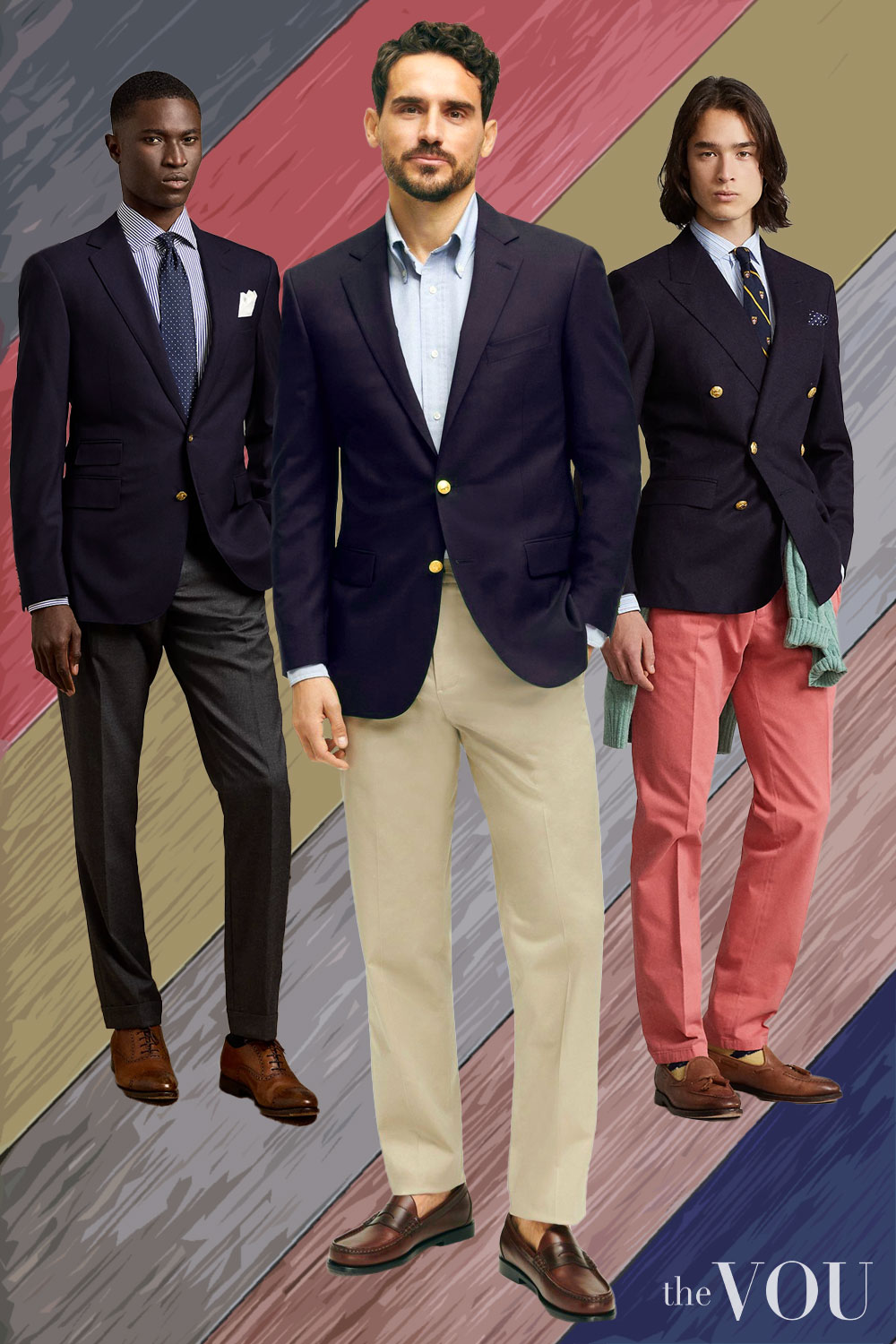
White, khaki, grey, brown or rust cords, red chinos and jeans all go with a navy blazer, and clear contrast in colour or texture is the easiest way to make the outfit work.
This guide covers each trouser colour and how to wear it, such as:
White and off-white trousers for summer
Khaki chinos for everyday wear
Grey wool trousers for the office and dinners out
Cords and cavalry twill for autumn and winter
Shoes that suit each combination
and many more!
Start with grey or khaki, then add the bolder colours as you find the settings for them.
Key Points
01Lighter or clearly different trousers are the simplest way to keep a navy blazer from looking like half of a suit.
02Darker or similar-depth trousers can work as a tonal outfit when the texture or shade differs.
03Grey and khaki suit the widest range of occasions.
04Choose dark or mid-blue jeans without rips when you wear them with a blazer.
A navy blazer goes with more trouser colours than almost any other jacket.
The six colours below are the most common and easiest to wear, and each one changes how dressy the outfit looks.
A simple starting point is contrast: trousers that are clearly lighter than the blazer, or clearly different in colour, make the jacket look deliberate rather than like half of a suit.
Darker or similar-depth trousers can also work as a tonal outfit when the shade or texture is clearly different, for example navy hopsack with charcoal flannel.
Navy trousers that almost match the blazer are the hardest to get right, because they can look like a suit whose halves do not quite match.
1. White or off-white
White or off-white trousers with a navy blazer is a traditional warm-weather combination.
Choose cotton, linen or a light wool, and off-white or cream if pure white feels too bright.
Wear: a navy blazer, a light blue Oxford shirt, off-white trousers and brown suede loafers; add a green or navy tie for a summer wedding where the invitation allows a jacket and trousers.
Brown and white spectator shoes or white buckskins are bolder options for the same look.
White trousers read as summer clothes, so they suit garden parties, lunches, boating and warm-weather weddings better than an office in winter.
2. Khaki, stone or beige
Khaki chinos are probably the most common partner for a navy blazer, and the warm, light colour gives clear contrast.
Both full cuts with pleats and turn-ups and slimmer flat-front chinos work, so choose the shape you prefer and have them hemmed to your shoes.
Wear: a navy blazer, a white button-down shirt, khaki chinos and brown loafers, with a tie if the setting is dressier.
Chinos in other colours, such as olive, light blue or Nantucket red, also pair well with navy.
3. Grey
Grey wool trousers with a navy blazer is a classic combination that suits most occasions, from the office to a dinner out.
Mid-grey and light grey give the clearest contrast; charcoal makes a darker, more tonal outfit that also works.
Choose lightweight worsted in warm months and flannel in cold ones, cut close enough to look neat but with room to move.
Wear: a navy blazer, a white or light blue shirt, mid-grey wool trousers and dark brown or black Oxford shoes, adding a tie when the occasion calls for one.
Black shoes look more formal with grey, and brown shoes look more relaxed.
Burgundy (oxblood) or bottle-green shoes are alternatives if you like the combination and the setting permits them.
You do not need to identify a personal colour season before choosing shoes; if you would like help with colour, a seasonal colour analysis is one option.
4. Brown and burgundy in cords or cavalry twill
Corduroy and cavalry twill trousers bring texture as well as colour to a navy blazer.
Cavalry twill is a sturdy, smooth wool cloth woven with a pronounced diagonal double rib.
Both work in beige, tan, mid-brown or burgundy.
Wear: a navy flannel blazer, a light blue Oxford shirt, tan cavalry twill trousers and dark brown suede chukka boots, with a navy or brown knitted tie for a smarter look.
5. Red and rust
Red or rust chinos or cords with a navy blazer make a bolder, more casual outfit.
Keep the rest of the outfit quiet so the trousers stand out on their own.
Wear: a navy blazer, a white Oxford shirt, rust or brick-red chinos and brown suede loafers.
6. Denim blue
Jeans with a navy blazer are not too much blue, provided the denim is clearly different in shade or texture.
The combination suits casual outings, many business-casual offices on relaxed days, and dinners out.
Choose dark or mid-blue jeans in a straight or slightly tapered fit, without rips or heavy fading, so they match the jacket’s formality.
Wear: a navy blazer, a white or light blue button-down shirt, mid-blue jeans and brown loafers or suede boots.
Our guide to blazers and sports coats with jeans covers that combination in more detail.
Colours to approach with care
Navy trousers can look like a mismatched suit, so if you try them, choose a clearly different cloth, such as navy cotton chinos with a navy wool blazer.
Black trousers give little contrast and can look severe in daylight, but a tonal evening outfit with a black roll-neck can work if you like the look.
Quick reference
Scroll horizontally to see all columns →
| Trousers | How dressy | Shoes that work |
|---|---|---|
| White or off-white | Smart casual, summer | Brown suede loafers, white buckskins, spectators |
| Khaki or stone chinos | Casual to business casual | Brown loafers or boat shoes |
| Grey wool | Business casual to smart | Black or dark brown Oxfords, burgundy or brown loafers |
| Cords or cavalry twill | Smart casual, autumn and winter | Brown suede chukkas or brogues |
| Red or rust chinos | Casual | Brown suede loafers |
| Dark or mid-blue jeans | Casual to relaxed business casual | Brown loafers, suede boots |
For more on the jacket itself, see our guides to wearing a blazer and to styling a navy blazer.
Mandy Meyer’s focus at The VOU is men’s body-shape styling, garment fit and outfit proportions. Her coverage addresses the practical questions behind a wardrobe choice: how a jacket sits across the shoulders, how trousers fall and how different cuts change the silhouette a wearer wants to create.
Her subject areas include the triangle, inverted triangle, rectangle, oval, trapezoid, hourglass and diamond labels used in body-shape styling. These provide starting references for comparing visible proportions; they do not capture every body or prescribe one correct way to dress. The focus connects those observations with garment shape, construction, length and the relationship between the upper and lower parts of an outfit.
Mandy’s editorial coverage combines visual comparisons with fit checks for comfort and movement. Readers can consider whether a cut gives them the room they need, where clothing pulls or gathers and which changes might support their preferred look. The aim is to make menswear choices more understandable while keeping personal preferences and the wearer’s own styling goals central.