

Start here
What’s This About
A blazer is a tailored jacket worn without matching trousers, traditionally navy or club-striped with metal buttons, and it sits between a sports coat and a suit jacket in formality.
This guide covers how to choose and wear one, such as
Where the word blazer comes from
Single- and double-breasted blazers, and English, American and Italian cuts
How to button one-, two- and three-button and double-breasted blazers
A fit checklist for shoulders, sleeves and length
Outfit ideas from business casual to summer lunches
and many more!
A well-fitting navy single-breasted blazer is the easiest first choice for most wardrobes.
Key Points
01On a two- or three-button single-breasted blazer, leave the bottom button undone, and unfasten the jacket when you sit.
02Usually keep a double-breasted blazer fastened when you stand, including the inside anchor button.
03Fit comes first; the cut you choose is a matter of taste and occasion.
04A blazer does not replace a suit or a dinner jacket when the invitation asks for one.
A blazer is one of the easiest ways to make jeans, chinos or grey trousers look more put together.
It also comes in more versions than most men realise, including single- or double-breasted, more or less structured, and with different buttoning conventions.
This guide explains what a blazer is, the main types and cuts, how to button each one, how to check the fit, and how to wear one for different occasions.
What is a blazer?
A blazer is a tailored jacket worn without matching trousers, traditionally in navy or in bold club stripes, and often with metal buttons.
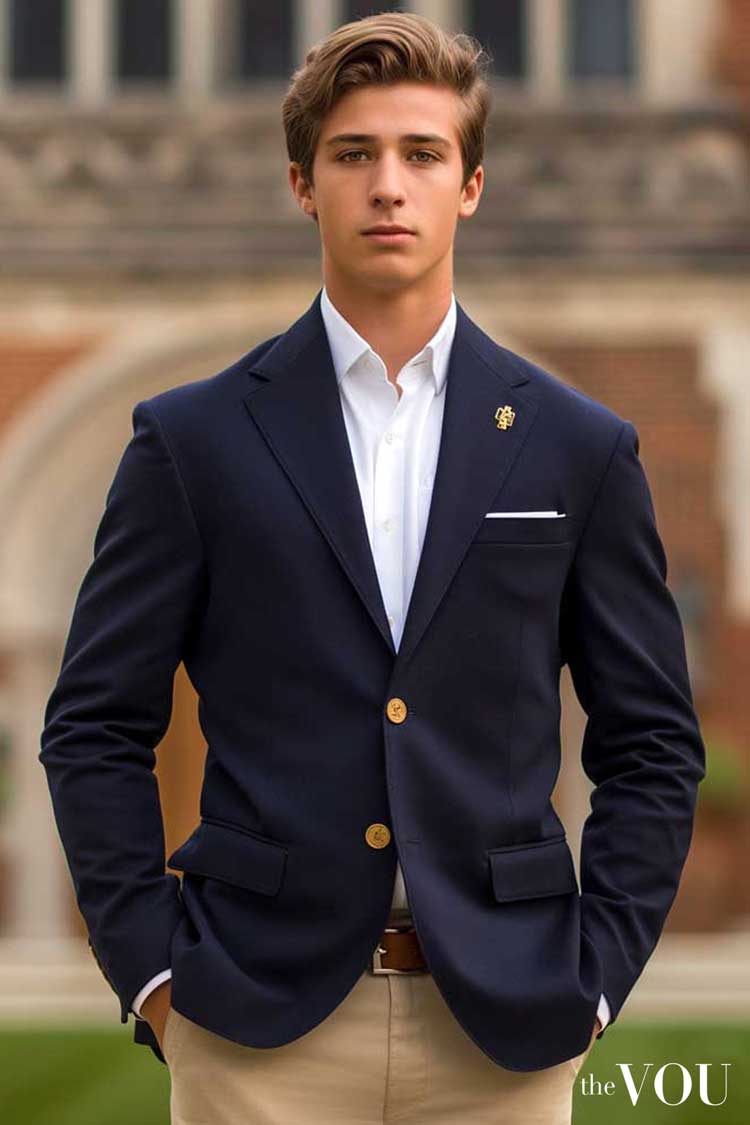
Common blazer cloths include serge, hopsack, worsted, flannel, fresco and linen.
A blazer is usually considered dressier than a sports coat and less formal than a suit jacket.
Where the name comes from
The navy blazer with brass buttons is often linked to naval uniform, and naval officers’ jackets did influence its look.
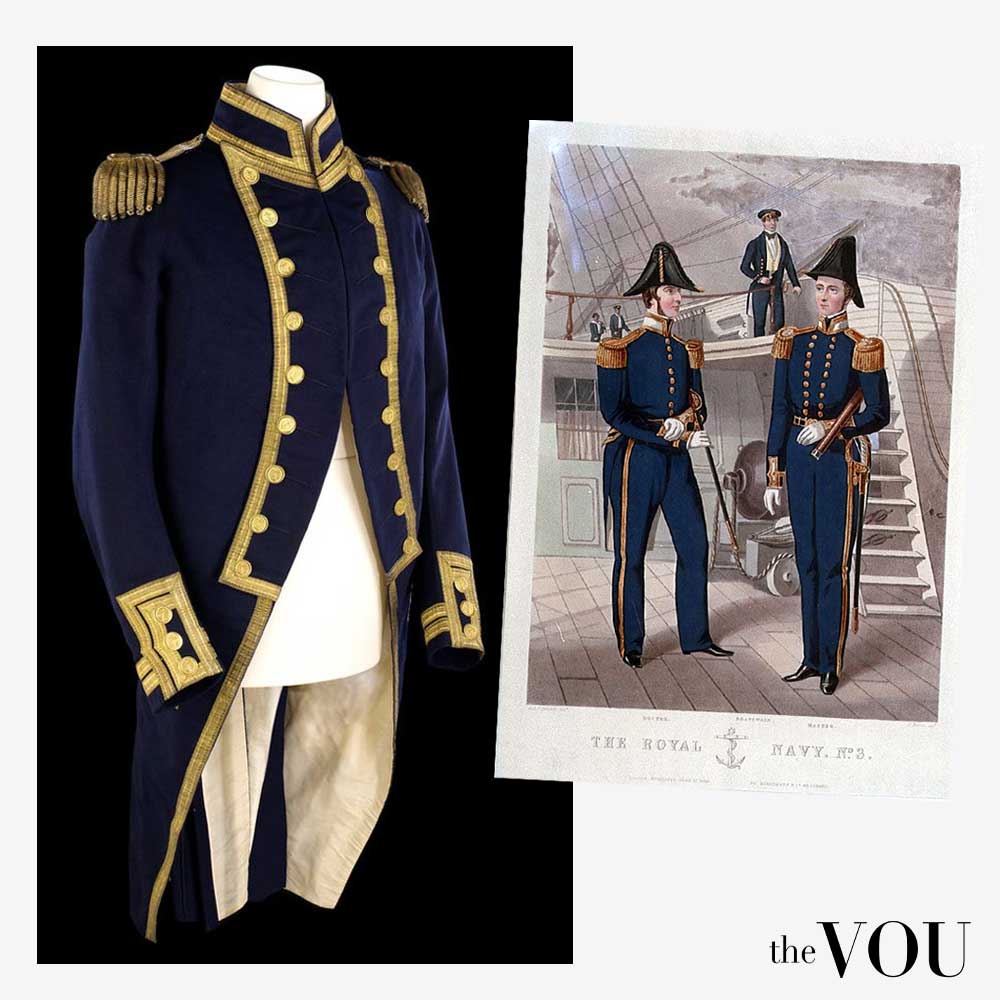
The word itself is usually traced to Cambridge, and an 1889 account describes the blazer as the red flannel boating jacket worn by the Lady Margaret Boat Club of St John’s College.
A popular story says the name comes from the crew of HMS Blazer, but there is no contemporary evidence for it.
Schools, universities, rowing clubs, cricket clubs and yacht clubs still use blazers in their own colours, often with a badge on the breast pocket.
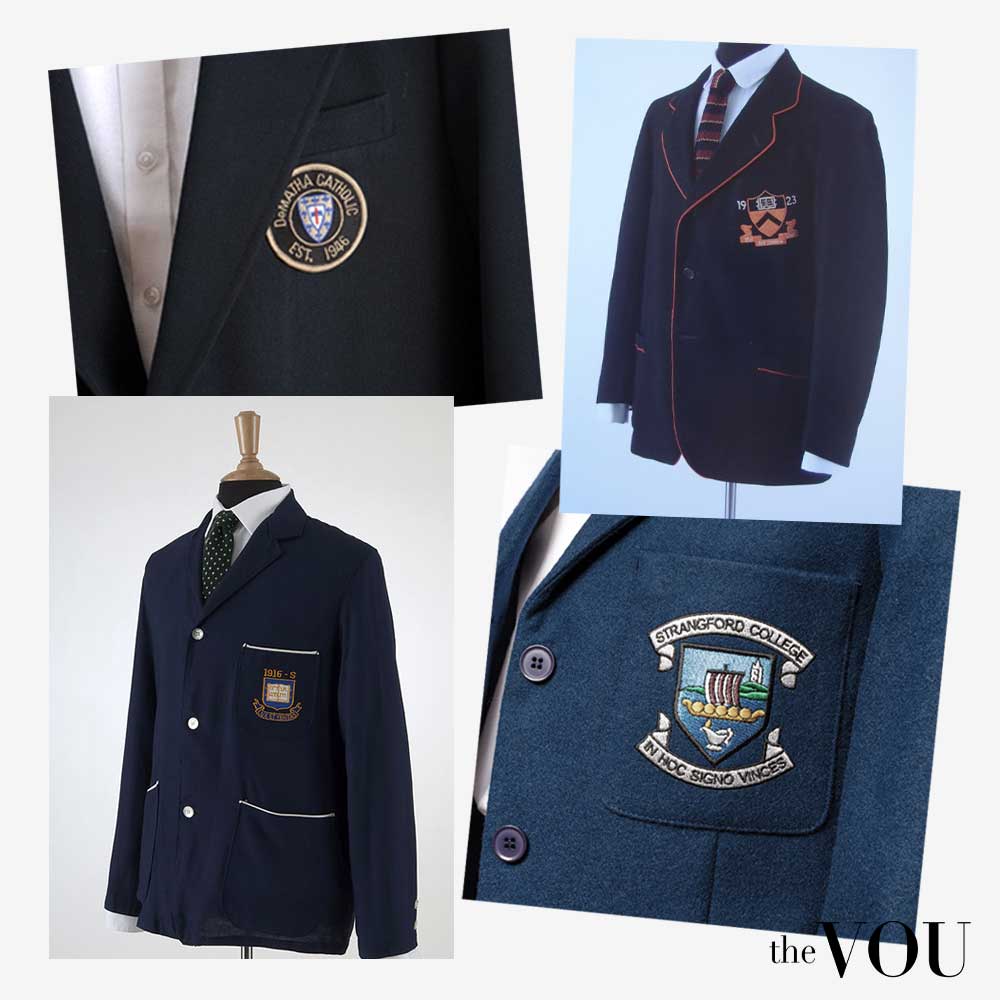
Club blazers may also have contrast piping and buttons in brass, silver, pewter or mother-of-pearl.
A club badge or colours usually signal membership, so wear them only if you belong.
Blazer types and cuts
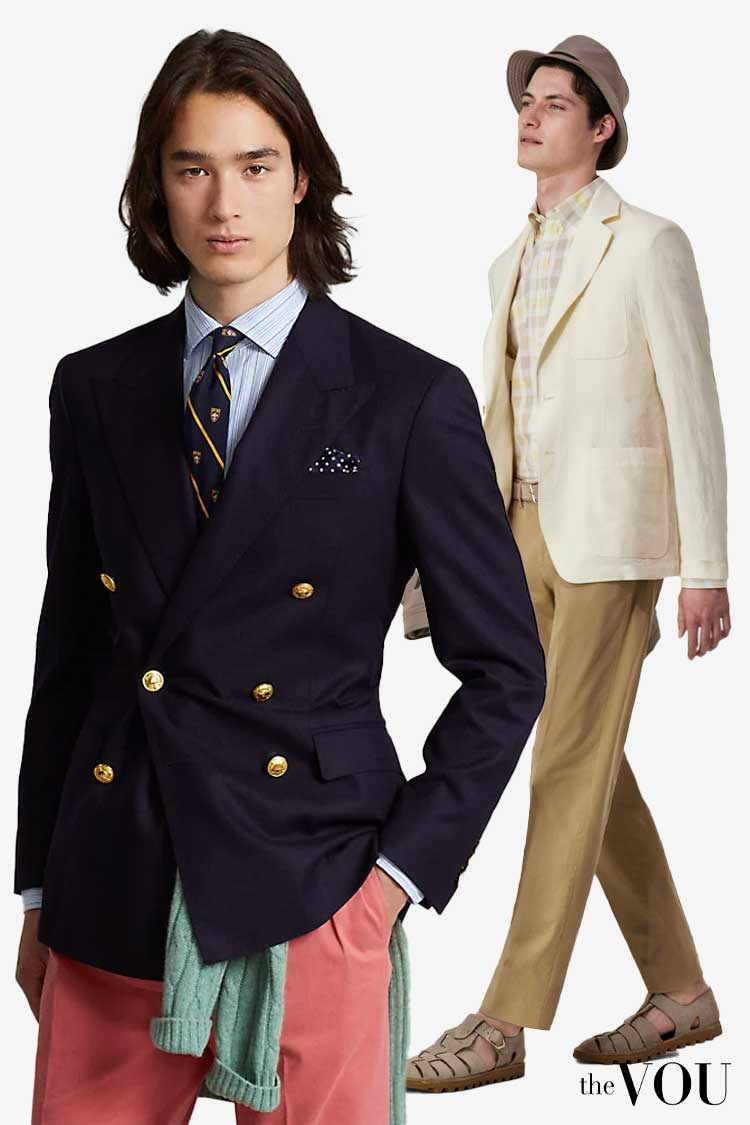
There are two main types of blazer.
Single-breasted, with one column of buttons and fronts that meet.
Double-breasted, with two columns of buttons and fronts that overlap.
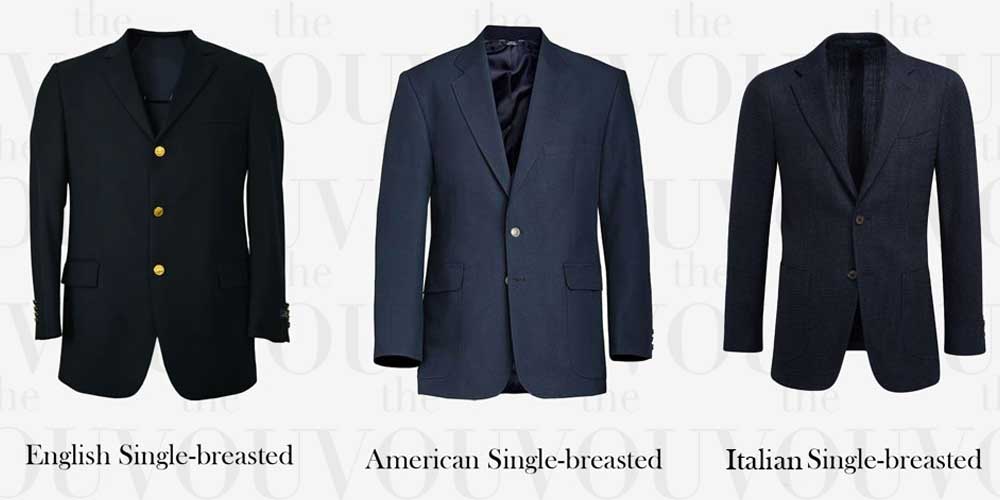
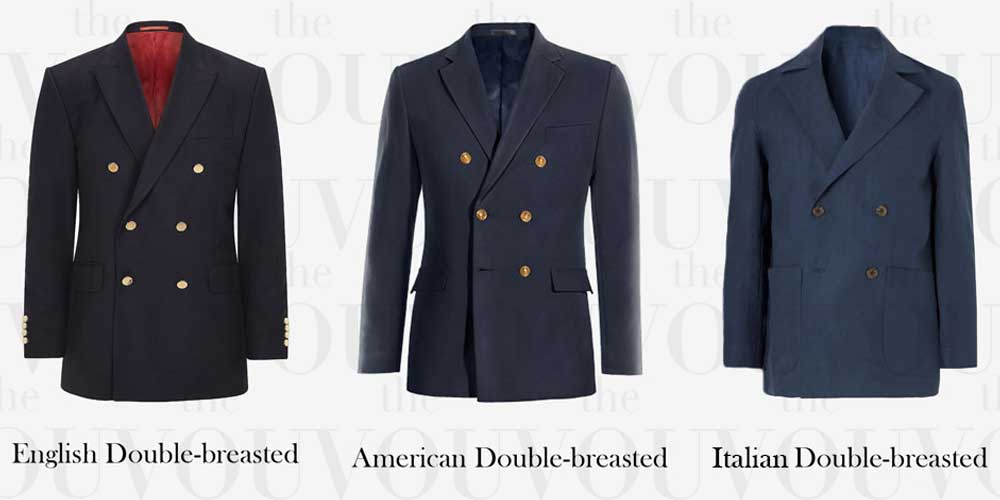
Both types come in different cuts, and three broad traditions are often described.
English, with a more structured shoulder, a shaped waist and often side vents.
American, with a natural shoulder and a straighter, roomier body, often with a single centre vent.
Italian, with a softer, lighter shoulder and a closer, often slightly shorter cut.
These are broad conventions rather than fixed rules, and many makers mix them.
Choose the cut you like and the occasion allows, then make sure it fits.
Single-breasted blazers
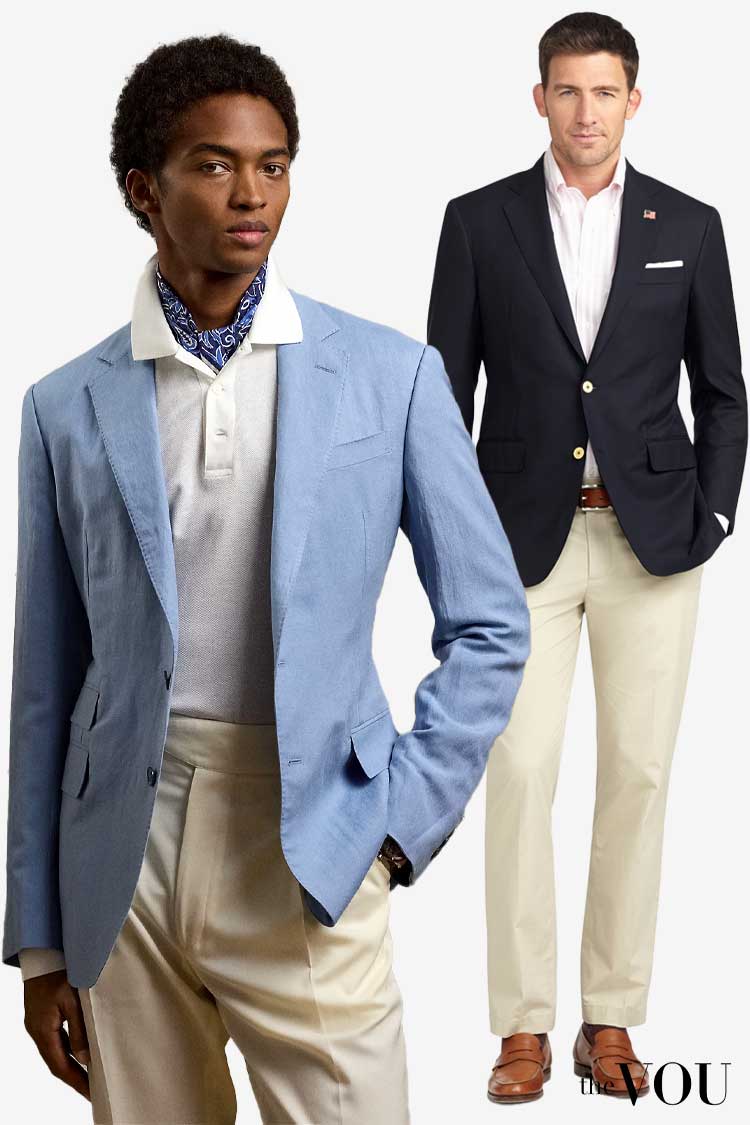
Most single-breasted blazers have two or three front buttons, and some have one.
A single-breasted blazer is the more versatile choice, from a relaxed office to weekend lunches, outdoor events and dinners out.
Double-breasted blazers
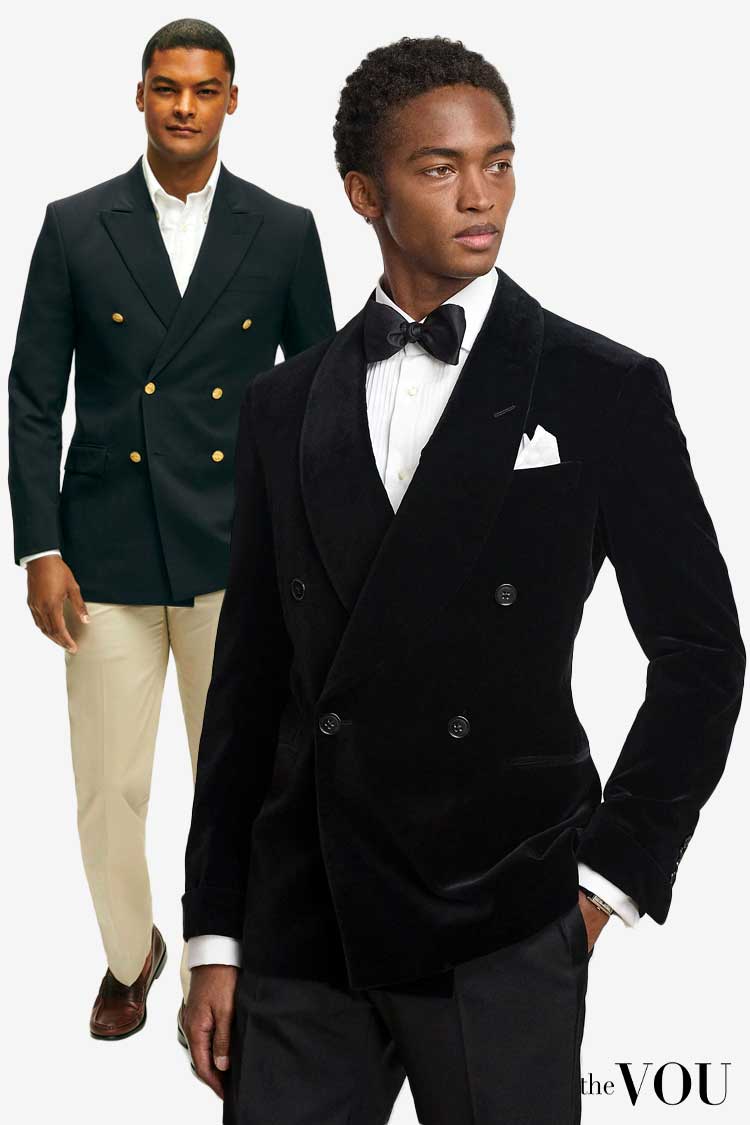
A double-breasted blazer has overlapping fronts and two columns of buttons, often six buttons with two or three that fasten.
It reads slightly more formal than a single-breasted blazer and suits business meetings, cocktail parties, smart dinners and weddings where the invitation allows a jacket and trousers.
Neither style meets a black tie dress code, and neither replaces a suit when the invitation asks for one.
Our guide to single- and double-breasted blazers compares the two in more detail.
How to button a blazer
Buttoning conventions depend on how many buttons the jacket has and whether you are standing or sitting.
One-button single-breasted blazer
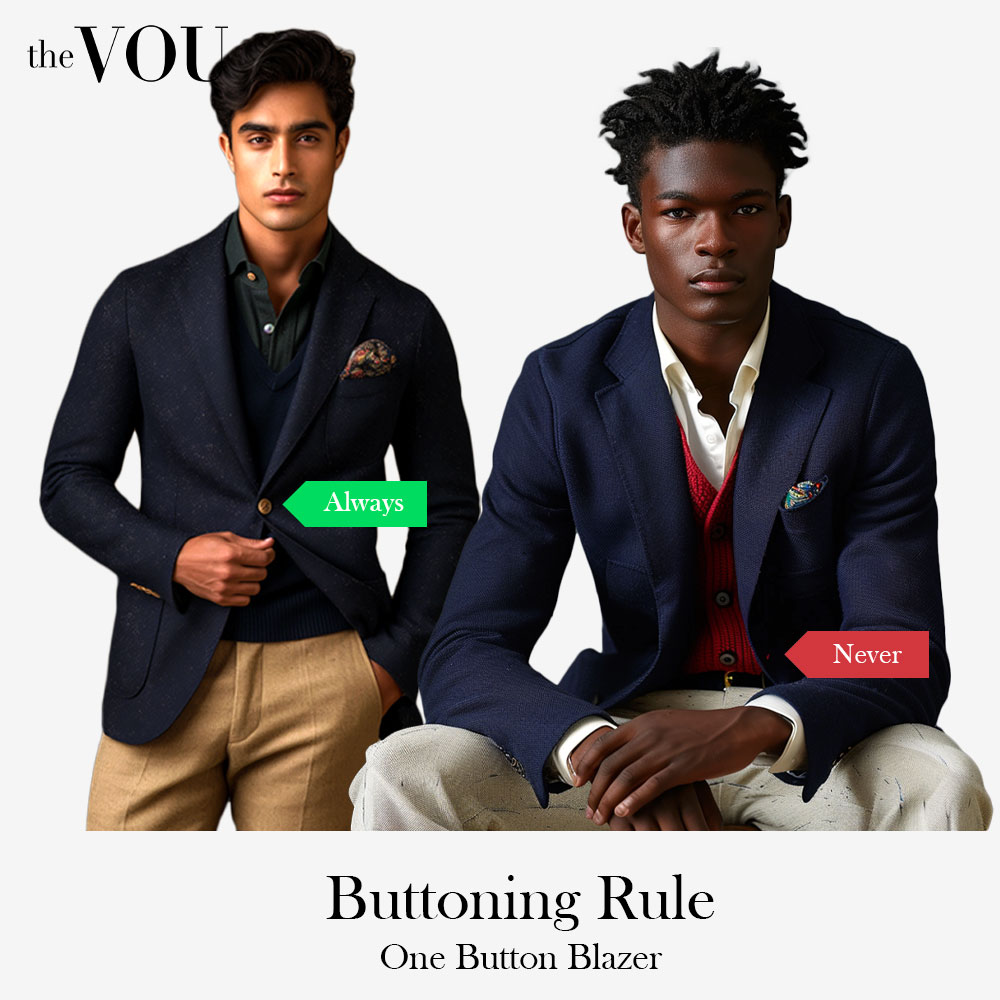
Fasten the button when you stand, and unfasten it when you sit.
Two-button single-breasted blazer
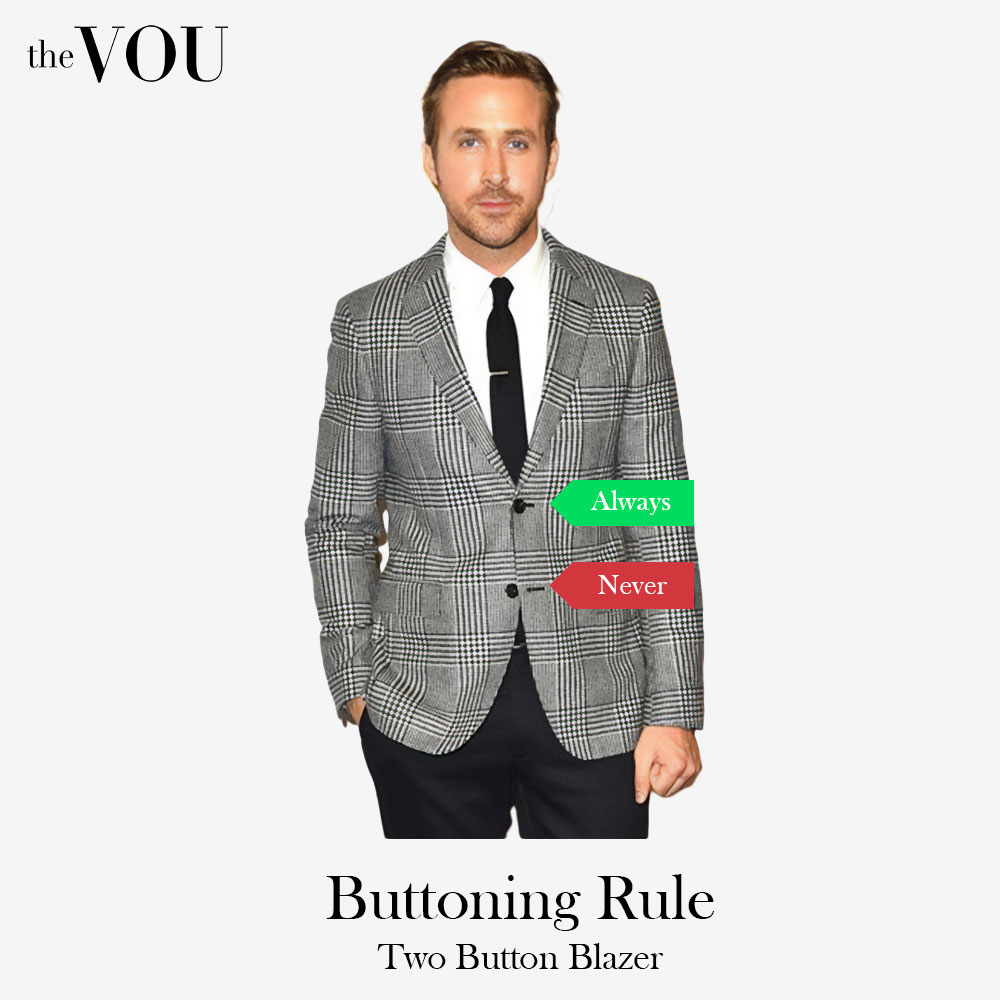
Fasten the top button only, and leave the bottom one undone.
Three-button single-breasted blazer
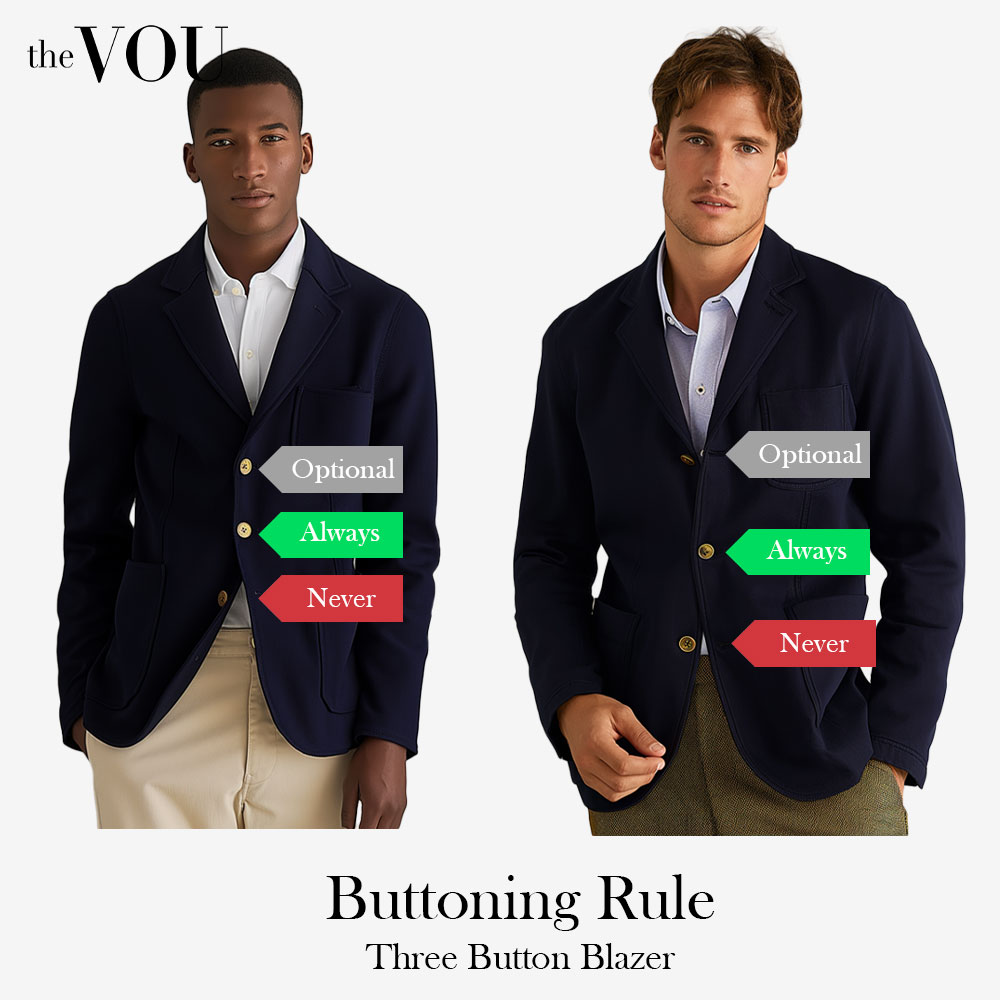
Fasten the middle button; the top button is optional, and the bottom button stays undone.
On a “three-roll-two” jacket, where the lapel rolls over the top button, fasten only the middle one.
Unfasten any single-breasted blazer when you sit, so it does not pull.
Double-breasted blazer
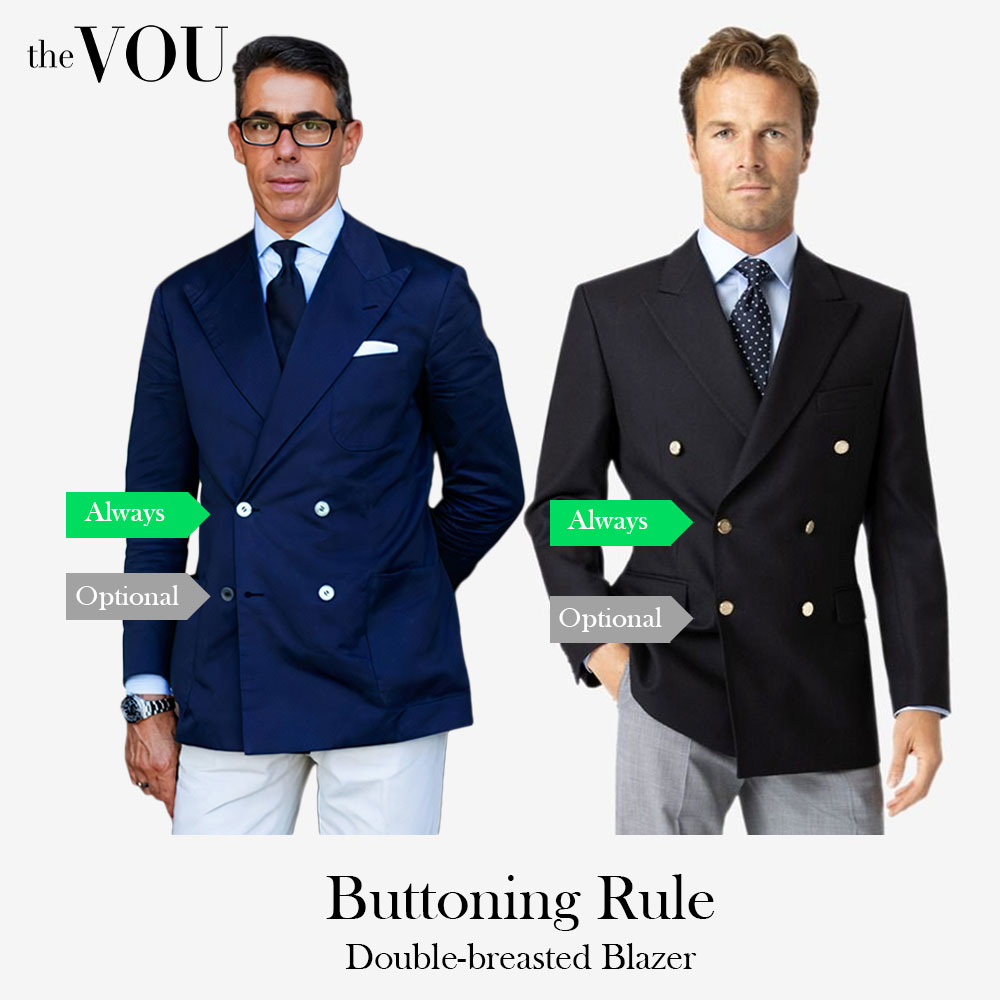
Fasten the working button, usually in the middle row, and the inside anchor button that holds the under-flap in place.
On six-button and four-button double-breasted jackets, the lowest button is often left open; buttons in the top row are usually decorative.
Usually keep a double-breasted blazer fastened when you stand, because the overlapping fronts hang loosely when open.
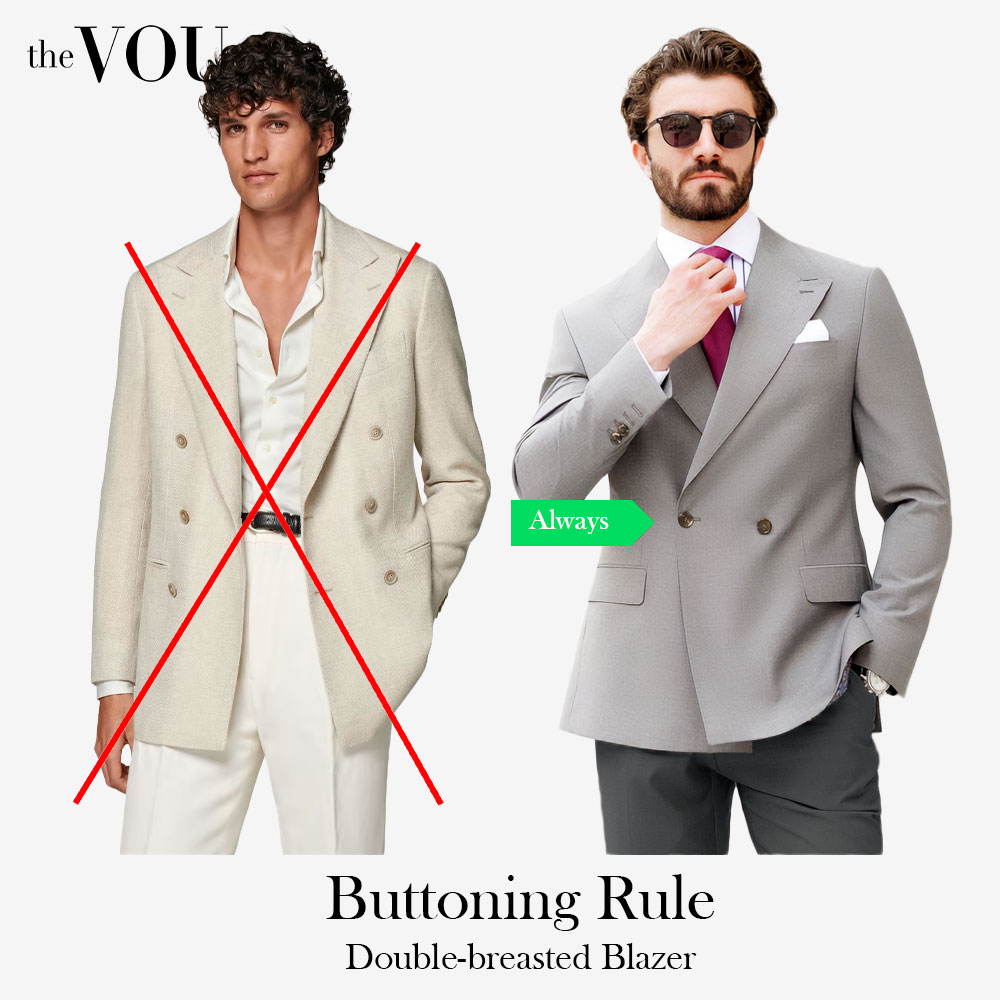
If the jacket has only one working button, fasten it whenever you stand.
Wearing a double-breasted blazer open
Some men deliberately wear a soft double-breasted blazer open for an occasional relaxed look, a choice linked to sprezzatura.
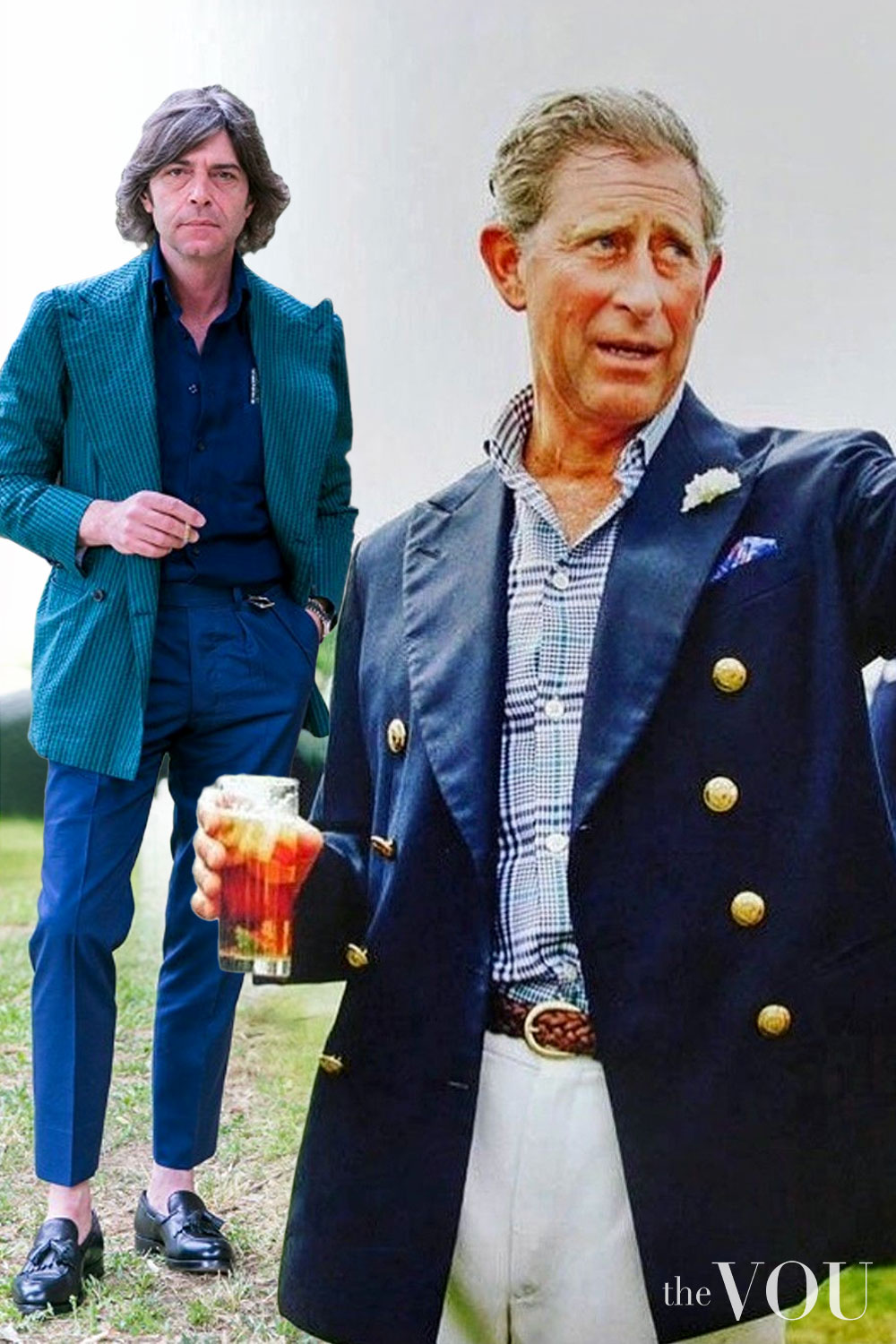
Treat it as an exception rather than the everyday default, since it works best with a soft, lighter jacket and a casual outfit, and it looks less tidy in a business setting.
If you would like a second opinion on your own jackets, you can contact The VOU.
How a blazer should fit
The shoulder seam ends at your shoulder, with no dents or bunching below it.
The sleeves end near the wrist bone, showing about a quarter to half an inch of shirt cuff.
The fastened button closes without pulling into an X shape.
The collar sits against your shirt collar without a gap.
The jacket covers the seat of your trousers in most traditional cuts; shorter cuts are a style choice.
Fit and silhouette are separate decisions.
Fit is whether the jacket sits correctly on you; silhouette is the shape you prefer, such as a soft or structured shoulder, or a closer or roomier body.
Any of these can look good once the fit is right, and a tailor can adjust the sleeves and waist of most blazers.
How to wear a blazer, with outfit ideas
Business casual
Wear a navy hopsack blazer, a light blue Oxford shirt, mid-grey wool trousers, brown leather loafers and a knitted tie if you want one.
Smart casual weekend
Wear a navy single-breasted blazer, a white button-down shirt, dark straight-leg jeans and brown suede loafers or chukka boots.
Our guide to blazers and sports coats with jeans covers that combination in detail.
Summer lunch or garden party
Wear an unlined navy linen or cotton blazer, a white linen shirt, stone chinos and brown suede loafers.
Autumn dinner
Wear a navy flannel double-breasted blazer, a pale blue shirt, a dark tie, charcoal flannel trousers and dark brown Oxford shoes.
For more trouser ideas, see which trouser colours go with a navy blazer.
Blazer do’s and don’ts
Scroll horizontally to see all columns →
| Do | Don’t |
|---|---|
| Have the sleeves and waist altered if needed | Wear a blazer that is tight, baggy, dirty or torn |
| Match the cloth to the season, such as flannel in winter and linen in summer | Pair a structured blazer with very casual sportswear |
| Try ties, pocket squares and knitwear to change the look | Wear a club badge or colours you are not entitled to |
| Follow the dress code on the invitation | Use a blazer where a suit or black tie is requested |
Blazer vs suit jacket vs sports coat
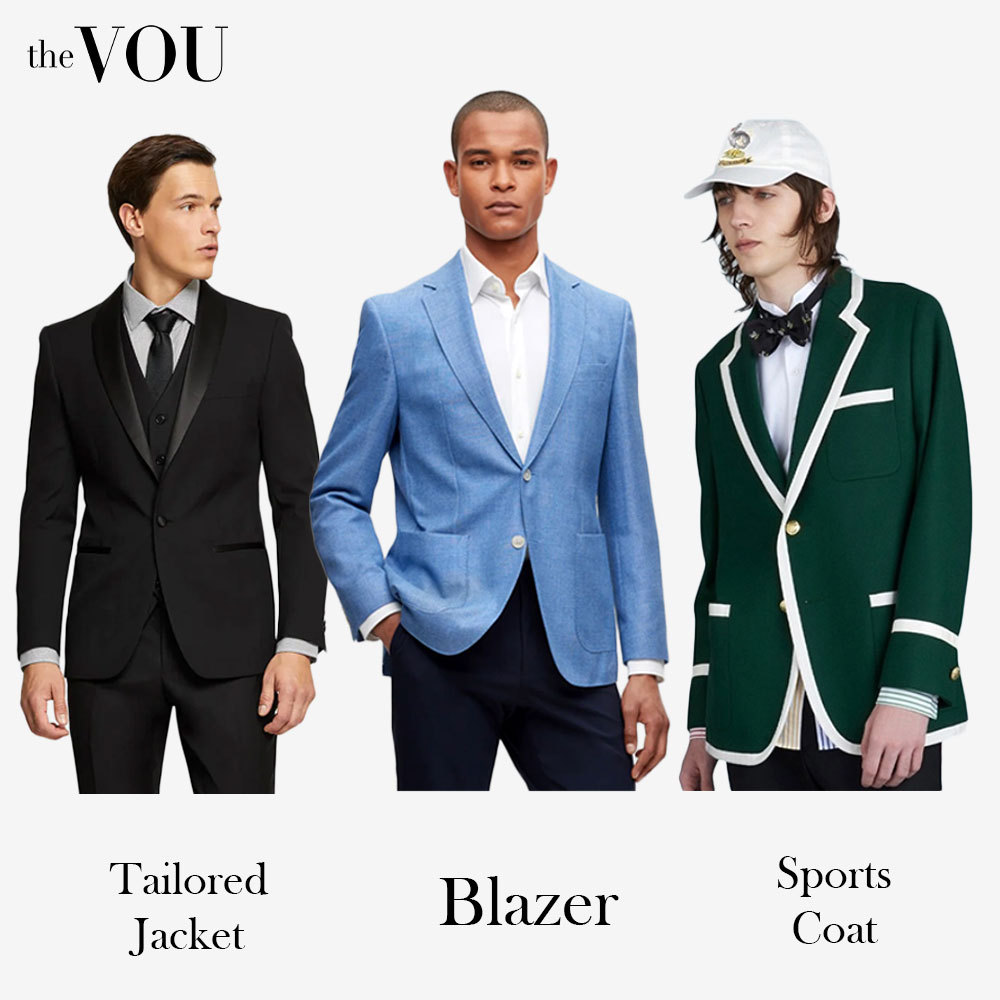
The three jackets share the same basic tailoring, but they come from different traditions and suit different occasions.
The labels in the image above use the terms loosely. By the definitions on this page, the green piped jacket is a club blazer.
Judge any jacket by its cloth and details rather than its label.
A suit jacket is cut from the same cloth as matching trousers, usually smooth worsted in a plain colour or a quiet pattern, and is the most formal of the three.
A blazer is worn with contrasting trousers, traditionally navy or club-striped, often with metal buttons; it sits between the suit jacket and the sports coat.
A sports coat is also worn with contrasting trousers, usually in textured or patterned cloth such as tweed, and is traced to country and shooting jackets rather than naval or rowing dress.
Our guide to the differences between blazers, suit jackets and sports coats explains each one in more detail.
Take the first step with The VOU’s styling quizzes
If you would like help with your wider wardrobe, start with our quizzes, then book a paid consultation if you want personal help.
Check your face shape with the face shape quiz.
Find your seasonal colours with the seasonal colour analysis quiz.
Check your body shape with the body shape quiz.
Take the fashion style quiz to see which styles suit your taste.
None of the quizzes is needed to choose or wear a blazer.
Paid consultations with The VOU
For personal help, The VOU offers paid consultations, such as the face shape analysis package, which covers hairstyle, facial hair, eyewear and grooming suggestions.
The complete image transformation package combines the face shape, seasonal colour, body shape and fashion style analyses.