
Start here
What’s This About
These ten beard styles range from heavy stubble to a full natural beard, and the right one depends on how your beard grows, the outline you want and the upkeep you can keep up.
This guide covers the choices that shape the result, such as:
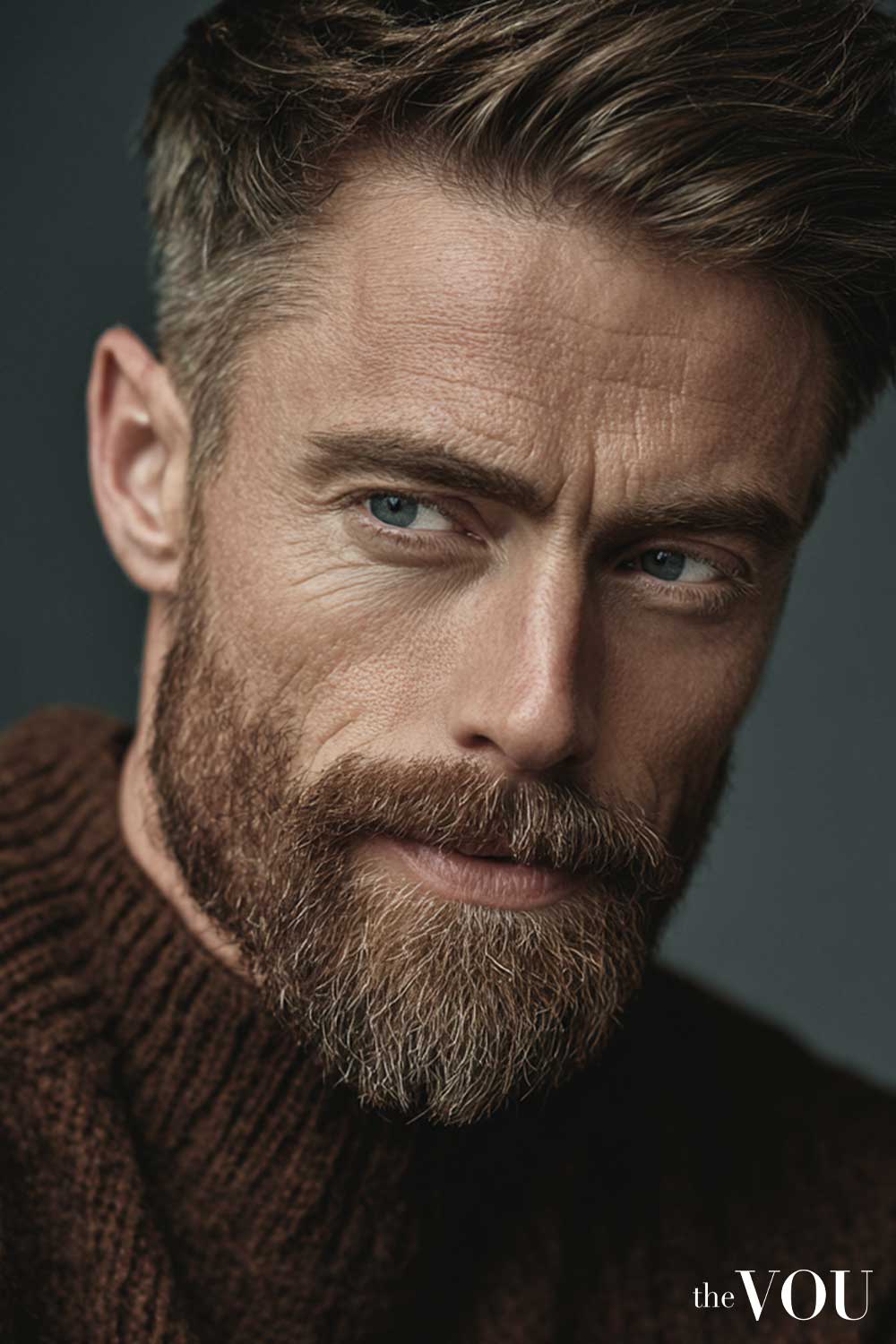
Heavy stubble, the circle beard and the short boxed beard
Where to set the cheek line and the neckline
Which styles work with patchy cheek growth
How beard length changes the look of round, square and long faces
and many more!
We also cover workplace grooming policies and common trimming mistakes.
Key Points
01Face-shape notes are options for the effect you want; no face shape needs correcting.
02Growth coverage limits which outlines you can achieve, and styles without full cheeks suit patchy growth.
03A clean neckline above the neck and a tidy cheek line make any style look deliberate.
04Workplace norms vary, so check your employer’s grooming policy, especially if you wear a tight-fitting respirator.
How to Use This Beard Style Guide
Facial hair is a personal style choice, and a well-kept beard can change how your jaw, chin and cheeks look.
Beyond simply growing a beard, the result depends on clean lines, regular maintenance and working with how your beard actually grows.
This guide describes ten beard styles and explains how each one is shaped, which face shapes it is often discussed with, how much upkeep it needs and how to trim it.
Face-shape notes are options rather than rules; if your face is long with angular corners, our guide to beard styles for rectangle face shapes goes further, and our guide to finding a beard style for your face shape covers every shape.
Four Principles Behind a Good Beard
Work With Your Natural Texture: Curly, wavy and straight beards behave differently, so shape and style the texture you have rather than fighting it.
Comb or brush the beard in the direction it grows before you trim, so you can see its natural shape.
Precision Grooming: Clean cheek lines and a defined neckline make the difference between a deliberate beard and an untidy one, even when the beard itself looks natural.
Workplace Norms Vary: Beards are worn in many workplaces, but expectations differ by employer, role, country and industry, so check your employer’s grooming policy rather than relying on general claims about a sector.
If your job requires a tight-fitting respirator, US workplace safety rules do not allow facial hair that comes between the respirator’s seal and your face (OSHA 29 CFR 1910.134), so the seal area may need to be clean-shaven whatever style you prefer.
Personalisation Over Trends: Choose a shape that suits your growth pattern, hair colour, upkeep and personal style.
Working with how your beard actually grows matters more than copying a particular look.
Ten Beard Styles for Men
1. The Modern Corporate Beard Style
Description: The Modern Corporate Beard balances a neat, professional finish with some personality.
This style is a short to medium beard, roughly 1 to 4 cm (0.5 to 1.5 inches), with neatly groomed coverage from the sideburns along the jawline, connected to a well-shaped moustache.
The cheek line is kept sharp and relatively high, and the neckline is clearly defined; a common starting point is about two finger-widths above the Adam’s apple, adjusted to your jaw and beard length.
Where You Will See It: This short, neatly kept full beard is a familiar look at press events, award ceremonies and in offices, which makes it a reliable choice if you want a beard that reads as tidy.
Where It Works: Because it is short and evenly groomed, it suits most office and client-facing settings where beards are allowed.
It needs regular trims to keep the outline sharp.
Face Shape Notes: This style is often suggested for oval, square and rectangular faces. On a round face, keeping slightly more length on the chin can make the outline look longer and more defined, if you want that.
On a square face, the even length follows the jaw, so its angles stay visible.
The Technical Details: The cheek line should run from the sideburn area to approximately the outer corner of your moustache, creating a subtle downward slope.
The moustache should end just beyond the corners of your mouth, not so wide that it looks comical, but not so narrow that it appears disconnected from the beard.
The neckline is the key line to get right: a common starting point is about two finger-widths above your Adam’s apple, finishing in a clean, curved line that follows your jaw; move it up or down to suit your jaw and beard length.
2. The Heavy Stubble (Designer Stubble 2.0)
Description: The Heavy Stubble keeps facial hair evenly maintained at roughly 4 to 6 mm across all areas, creating a shadow-like effect that looks rugged and refined.
This style is distinguished by an even-looking finish and clean edge work that frames the face.
Where You Will See It: David Beckham is often cited as an example of this look.
Photographs of public figures are only a rough visual reference for this look, since stubble length cannot be read reliably from a picture; use them for the overall outline rather than as a measured target.
Where It Works: Heavy stubble suits casual and smart-casual settings and many creative workplaces; whether it fits a more formal workplace depends on the grooming policy there.
Face Shape Notes: Heavy stubble can be worn with almost any face shape. On a round face, a slightly longer chin and a clean neckline add some definition; on a square or diamond face, the short, even cover follows the outline without changing it much; on an oval face, it simply adds texture.
The Technical Details: This style relies on an even-looking finish. A simple starting point is one guard length across the chin, jawline, cheeks and upper lip, then adjust: if coverage is thinner in one area, a slightly longer setting there can make the stubble look more even, and leaving the chin a touch longer changes the outline if that is the effect you want.
Use a quality trimmer with a guard in the mid single millimetres (around the 4 to 6 mm described above), adjusting to what suits you, and trim on whatever schedule keeps the length consistent.
A clean neckline, usually set just above where your neck meets your jaw, and a tidy cheek line keep stubble looking deliberate; where you place them depends on your growth pattern and the outline you want, and a small variation in length is not a mistake.
3. The Extended Goatee
Description: The Extended Goatee features a connected moustache and chin beard extending along the jawline, typically reaching the corners or slightly beyond.
Unlike the classic goatee isolated to the chin, this extended version creates a frame around the mouth and along the jaw while leaving the cheeks clean-shaven or maintained at very short stubble.
Where You Will See It: Extended goatees with a connected moustache are common in barbershop work; Robert Downey Jr.’s Tony Stark beard is often mentioned alongside them, though its moustache is usually kept separate.
Where It Works: The defined lines look deliberate, so it can work in client-facing roles where beards are allowed, as long as the edges are kept clean.
Face Shape Notes: This style is often suggested for round and oval faces, because the chin beard adds a vertical line that can make the face look longer, if you want that.
On a long or rectangular face, keeping the goatee fuller and rounder rather than pointed avoids adding further length.
The Technical Details: The width of the extended portion is critical. It should run from your chin along your jawline, typically ending somewhere between the corner and the middle of your jaw.
Too narrow looks accidental; too wide approaches a full beard. The connection between the moustache and the chin beard should be seamless, though growth coverage limits how solid it can look. Keep the outer edge following your jawline’s natural curve.
4. The Full Natural Beard
Description: The Full Natural Beard embraces generous growth across the entire beard area, cheeks, jawline, chin and upper lip, typically about 5 to 10 cm (2 to 4 inches) long.
What separates a deliberate full beard from an untrimmed “lumberjack” look is the emphasis on conditioning and subtle shaping that follows natural growth patterns rather than forcing them into unnatural shapes.
Where You Will See It: Jason Momoa is often cited as an example, wearing his beard at various lengths.
Where It Works: A full beard suits casual workplaces and many creative and self-employed settings; in more conservative settings, keeping it shorter and well shaped makes it easier to wear, subject to the grooming policy.
Face Shape Notes: This style is often suggested for oval, diamond and triangle face shapes. On a round face, extra length at the chin can make the outline look longer, if you want that.
On a square face, slightly fuller growth on the chin softens the jaw’s corners if you prefer a softer look.
On a very long face, a long full beard adds further length; keep the bottom shorter and squarer if you would rather not.
The Technical Details: “Natural” doesn’t mean neglected. The bottom should be trimmed into a subtle curve or straight line; leaving it untrimmed makes it look unkempt rather than intentional.
The cheek line needs to be defined; even though you cover your cheeks, there should be a defined upper boundary.
The moustache makes or breaks the look; it should be integrated seamlessly into the beard or deliberately styled to stand out, but it should never be ignored and allowed to overgrow the lip.
5. The Beardstache
Description: The Beardstache features a prominent, well-groomed moustache as the focal point, complemented by shorter facial hair on the cheeks, jawline, and chin, typically maintained at heavy stubble length (4 to 6 mm) or slightly longer (up to about 1 cm).
The moustache is grown significantly longer and fuller, often styled with wax for definition and shape, creating a dramatic contrast.
Where You Will See It: Actors and musicians have worn this look on and off, but beard styles on public figures change often, so treat any photograph as a visual reference rather than a template.
Where It Works: This is a statement style, so it sits most easily in creative, hospitality and casual settings; in a conservative workplace, keep the moustache neat and check the grooming policy.
Face Shape Notes: A prominent moustache adds a horizontal line, so on a long or rectangular face it can make the face look a little wider, if you want that. On a round face, clean, angular cheek and neck lines on the shorter beard add definition.
On an oval face, the choice of moustache shape (walrus, chevron or handlebar) is purely a matter of preference.
The Technical Details: The success of this style depends on contrast between the moustache and beard lengths. Many people aim for the moustache to be noticeably longer than the beard, though the exact proportion is a matter of personal preference and face shape rather than a fixed ratio.
The moustache should extend beyond the corners of your mouth; how far depends on your face width and personal preference.
The beard portion should be meticulously uniform; any patchiness is immediately visible at this length. The cheek and neck lines need sharp definition to prevent the look from appearing unkempt.
6. The Sculpted Short Beard
Description: The Sculpted Short Beard keeps a length of about 1 to 2.5 cm (0.5 to 1 inch) throughout, with close attention to shape, symmetry and edge definition.
This style features precisely cut cheek lines and straight necklines, and it can include contouring, for example slightly fuller on the chin for a round face or on the sides for a long face, depending on the effect you want.
Where You Will See It: Sharply lined short beards are a staple of barbershop work and are worn by many public figures.
Photographs of public figures can show the sharp line work this style is known for, but beard length cannot be read reliably from a picture, so treat any example as a visual reference rather than a measured length.
It usually needs regular barber visits or confident home trimming with a detail trimmer.
Where It Works: The sharp, groomed finish suits image-conscious and client-facing roles where beards are allowed.
Face Shape Notes: The contouring can be adapted to any face shape. On a round face, reducing cheek fullness and keeping more length at the chin can make the outline look longer.
On a square face, slightly softened corners give a gentler outline if you want that, and on a long face, fuller sides with a controlled chin length add width rather than height.
The Technical Details: The cheek line is everything. It should be laser-straight, running from your sideburn area downward at a subtle angle toward the corner of your moustache. A detail trimmer or T-blade makes these lines easier to cut cleanly.
The line should sit high enough to look intentional but not so high that it seems artificial; where exactly depends on your natural growth line.
When viewed from the side, the neckline should be equally straight, creating a right angle where the beard meets the neck.
7. The Circle Beard (Refined Edition)
Description: This Circle Beard is a refined interpretation of the classic style. It features a neatly trimmed goatee that connects with a moustache, creating a circular shape around the mouth.
Modern versions are typically kept at about 1 to 2.5 cm (0.5 to 1 inch) with clean lines and an even shape. The remaining facial areas are either clean-shaven or kept at minimal stubble.
Where You Will See It: The circle beard is a long-standing classic, often worn neatly trimmed by actors, musicians and athletes.
Where It Works: Its compact, tidy shape suits most office and client-facing settings where beards are allowed.
It’s the beard equivalent of business casual; professional enough for most settings, personable enough to seem approachable.
Face Shape Notes: The circle beard can be worn with any face shape. On a round face, a rounded circle echoes the curved outline, while leaving more fullness and length at the chin can make the outline look longer; choose whichever effect you prefer, within what your growth allows.
On a square face, a very small circle leaves more of the angular jaw on show; make it a little wider if you would rather soften the angles.
On a very long face, a narrow circle can add length; keep it fuller and rounder if you would rather not.
The Technical Details: The circle should be in proportion to your mouth width; many people let the outer edges sit a little beyond the corners of the mouth, but the exact width is a preference.
The connection between the goatee and the moustache should curve smoothly, with no sharp angles or corners.
The bottom of the chin beard can be either straight across or subtly rounded; both work depending on your face length. The soul patch area (below the lower lip) should flow seamlessly into the chin beard without gaps.
8. The Van Dyke (Contemporary Version)
Description: The modern Van Dyke separates the moustache from the chin beard with clean-shaven space, creating a distinctive, aristocratic appearance.
Compared with the pointed versions seen in 17th-century portraits, today’s Van Dyke is usually less exaggerated and more natural in proportion. For cohesion, the moustache and chin beard are kept at similar lengths (typically about 1 to 4 cm, or 0.5 to 1.5 inches).
The cheeks and jawline are completely clean-shaven or maintained at minimal stubble.
Where You Will See It: Johnny Depp is often cited as an example of a separated moustache and chin beard.
It is less common than fuller beards, which makes it distinctive if you want to stand out.
Where It Works: The Van Dyke reads as artistic and deliberate, so it suits creative settings and many offices where beards are allowed, as long as the separation is kept clean.
Face Shape Notes: This style is often suggested for round, oval and square faces. The vertical line of the chin beard can make a round face look longer, and the separated moustache and chin beard add interest to an oval face.
On a very long face, a pointed chin beard adds further length; a rounded one avoids that, if that is what you want.
The Technical Details: The defining feature is the separation between your moustache and chin beard: the hair that would connect them at the sides of the mouth is shaved away, so the two do not join. Where exactly you set that clean-shaven break, and how wide you leave it, is a grooming choice rather than a fixed line under the lower lip.
The width of this gap affects the style’s impact: a narrower gap tends to read as more subtle, while a wider one makes a bolder statement, but there’s no fixed measurement that suits everyone.
The chin beard can be either pointed or rounded at the bottom; a pointed tip adds length, which you may want on a round face, and a rounded tip avoids adding length on a long face.
9. The Balbo Beard Style
Description: The Balbo is characterised by a floating moustache (disconnected from the facial hair below) combined with a defined chin beard, often including a soul patch, that can extend a little way along the jaw, with the sideburns and upper cheeks shaved clean.
This creates a distinctive, segmented appearance that’s artistic and unconventional. It is usually kept at a moderate length (about 1 to 2.5 cm, or 0.5 to 1 inch) with exact edge work separating the moustache and chin beard.
Where You Will See It: The Balbo is less common than fuller beards, which makes it distinctive if you want an unusual look.
Where It Works: Because it is unusual, the Balbo sits most easily in creative and casual settings; in a conservative workplace, check the grooming policy first.
Face Shape Notes: This style is often suggested for round and oval faces, where the separate moustache and chin beard add definition. If the chin beard runs along the jaw, it adds horizontal lines that make a square jaw look stronger, which you may or may not want.
On a long face, narrow, separated sections can add length; keeping them fuller helps if you would rather not.
The Technical Details: The Balbo combines a floating moustache with a separate chin beard, which often includes a soul patch, while the sideburns and upper cheeks are shaved clean. The moustache usually ends at or slightly beyond the corners of your mouth, with a clean-shaven space below it that keeps it apart from the chin beard.
The chin beard starts below your lower lip, either joined to a soul patch or with that area left clean, and how far it runs along the jaw, how wide it is and how sharply it is edged are choices for the outline you want rather than fixed channels. The clean break under the moustache is what keeps the look a Balbo.
10. The Short Boxed Beard Style
Description: The Short Boxed Beard is short to medium in length (about 1 to 2.5 cm, or 0.5 to 1 inch) with a distinctly square, geometric shape.
The bottom is trimmed straight across rather than following the natural curve of the chin, creating a “boxed” appearance.
The cheek and neck lines are sharply defined with pronounced angles rather than curves, creating an architectural aesthetic.
Where You Will See It: Short, sharply boxed beards are common in barbershop work and among men who like a clean, geometric finish.
Where It Works: The neat, defined shape suits most office and creative settings where beards are allowed.
Face Shape Notes: This style is often suggested for round, oval and diamond faces, because the angular, boxed shape adds structure and definition.
On an already square or rectangular face, it repeats the angles; slightly softened corners give a less geometric finish if you prefer.
The Technical Details: The bottom line is the defining feature; it should be perfectly horizontal when looking straight ahead.
Use a hand mirror and a wall mirror simultaneously to verify the line’s straightness.
The “box” shouldn’t be too narrow (creating a chin strap effect) or too wide (approaching a full beard).
Generally, the vertical sides should run straight down from the corners of your mouth, and the horizontal bottom connects them.
The corners can be sharp right angles or slightly softened. Sharp creates maximum impact, while softened appears more natural.
Choosing the Right Beard Style for You
According to Your Own Face Shape Analysis
If you are not sure which description fits, you can check your face shape with our free quiz; mixed features are common, and a beard can hide the jaw line, so treat any label as a starting point.
Round Faces do not need correcting. If you want the outline to look longer or more angular, useful options are the Extended Goatee, Van Dyke with pointed bottom, Full Natural Beard with extra chin length, or Short Boxed Beard, depending on your chin and side growth.
If you would rather echo the roundness, a rounded Circle Beard does that, and keeping it fuller on the chin lengthens it instead; a Beardstache with sharp cheek and neck lines adds definition if that is the look you want.
Oval Faces: Like every other shape, an oval face can wear a wide range of beard styles; the choice depends on the effect you want, your growth coverage and the upkeep you are happy with, not on the face having less to offset.
Choose based on personal preference and professional requirements rather than facial structure needs.
Square Faces: You have strong angles that can be emphasised or softened depending on your preference. The Modern Corporate Beard, Full Natural Beard, and Sculpted Short Beard all work excellently.
The Heavy Stubble keeps the angles visible with a softer, shadowed texture. If you would rather not add width, skip styles that add more horizontal lines, like the Balbo, which can make the face appear wider.
Long/Rectangular Faces: If you want the face to look less long, fuller cheek styles that do not add chin length, such as the Beardstache, add width; a longer, pointed beard adds length if you prefer that.
If you want to avoid adding length, skip the pointed Van Dyke and keep a Full Natural Beard trimmed straight across.
Diamond Faces: You have width at the cheekbones with a narrower forehead and chin. Fuller beard styles like the Full Natural Beard and Modern Corporate Beard add fullness at a narrower chin, if you want that.
The Sculpted Short Beard can be explicitly contoured for your face shape with fuller chin coverage.
Growth Pattern Reality Check
Your growth pattern limits which outlines you can achieve, so take it into account alongside your preference:
Patchy Cheek Growth: If your cheeks grow in patchily, a Full Natural Beard may never look even; the Extended Goatee, Circle Beard, Van Dyke or Balbo do not rely on full cheek growth.
These styles leave the cheeks clean on purpose, so thin cheek growth stops being a problem.
Slow Growth: The Heavy Stubble or Designer Stubble works with your growth rate rather than against it.
Men with slow growth often struggle to maintain longer styles because the thin-to-thick transition period lasts too long, creating an awkward phase that never seems to end.
Fast, Dense Growth: You can pull off any style, but you’re particularly suited to the Full Natural Beard, Modern Corporate Beard, and Short Boxed Beard.
Your challenge isn’t growing it; it’s managing it. To maintain your style, you’ll need to trim more frequently than other men.
Grey or White Beards: Salt-and-pepper and fully grey beards can look distinguished; George Clooney’s salt-and-pepper look is an often-cited example.
Stray or uneven hairs can be more noticeable in a grey beard, so regular trimming matters. When well kept, the Modern Corporate Beard, Sculpted Short Beard and Circle Beard all work in grey.
Beard Style Professional Considerations
Workplace expectations vary by employer, country and role, so treat these as general points rather than rules:
Full Beards: Widely worn in creative, technical, academic and skilled-trade settings; some conservative client-facing roles still expect a shorter, tidier beard or a clean shave, so check the policy where you work.
Goatee Styles (Extended, Circle, Van Dyke) Are Versatile: Their defined, limited coverage looks deliberate, which can make them easier to wear where a full beard would stand out.
Heavy Stubble Is A Shorter Option, Not A Policy Pass: If you’re unsure whether your workplace accepts beards, check the actual grooming policy and any requirements specific to your role rather than assuming that any beard style will pass.
Whether short, neatly kept stubble is acceptable is decided by that policy and your role, not by the beard style itself.
Distinctive Styles (Balbo, Beardstache) Stand Out: Because these styles are unusual, consider how they will be received where you work, especially when you are new to a job.
If you are unsure, a more conventional shape is the easier starting point.
Common Mistakes That Ruin Otherwise Good Beards
The Neckline Disaster
A neckline set too low is one of the most common beard mistakes. The neckline should sit above your neck, not on it; a common starting point is about two finger-widths above your Adam’s apple, adjusted to your jaw and beard length.
Everything below that should be clean-shaven or trimmed to the skin. A neckline set too low creates the “neck beard” effect that makes even a well-grown beard look untidy.
The Cheek Line Catastrophe
There are two opposite mistakes: too high (making your beard look sparse and patchy) or too low (creating an unkempt look).
The natural cheek line usually runs from the sideburn area down at a subtle angle toward the outer edge of the moustache.
Don’t shave it higher to create artificial angles; don’t let it grow wild up to your cheekbones.
The Moustache Overgrowth
Your moustache shouldn’t cover your upper lip unless you’re specifically cultivating a Beardstache or walrus moustache.
For most styles, the moustache should end at the top edge of your upper lip. Small scissors or a detail trimmer both work; trim a little at a time.
The Asymmetry Problem
Most faces are slightly asymmetrical, and beard growth often is too, so check both sides as you trim.
Use multiple mirror angles, take photos for reference, and trim conservatively. You can always remove more; you can’t put it back.
Conclusion: Finding Your Signature Beard Look
There is no single correct beard style. Whether you prefer the crisp professionalism of the Modern Corporate Beard, the distinctive character of the Beardstache, or the sophisticated simplicity of the Circle Beard, there’s a style that can enhance your appearance and express your personality.
The most important consideration isn’t which style is objectively “best” or trendy, but which style makes you feel most confident and authentic.
Photographs of public figures can help you picture a style, but use them as a visual reference rather than a template; your growth, face and workplace are your own.
Success with any beard style requires honest self-assessment about your face shape, growth patterns, and professional environment. Don’t try to force a Full Natural Beard if you have patchy cheeks.
If your workplace is conservative, check how a distinctive style like the Balbo will be received. Don’t maintain a style that requires daily detail work if you realistically only groom every few days.
Choose a style you can maintain consistently that complements your facial features and aligns with your professional reality and personal aesthetic.
The perfect beard style is the one that makes you look in the mirror and feel genuinely satisfied with the reflection looking back.
Mandy Meyer’s focus at The VOU is men’s body-shape styling, garment fit and outfit proportions. Her coverage addresses the practical questions behind a wardrobe choice: how a jacket sits across the shoulders, how trousers fall and how different cuts change the silhouette a wearer wants to create.
Her subject areas include the triangle, inverted triangle, rectangle, oval, trapezoid, hourglass and diamond labels used in body-shape styling. These provide starting references for comparing visible proportions; they do not capture every body or prescribe one correct way to dress. The focus connects those observations with garment shape, construction, length and the relationship between the upper and lower parts of an outfit.
Mandy’s editorial coverage combines visual comparisons with fit checks for comfort and movement. Readers can consider whether a cut gives them the room they need, where clothing pulls or gathers and which changes might support their preferred look. The aim is to make menswear choices more understandable while keeping personal preferences and the wearer’s own styling goals central.