
Start here
What’s This About
Choose a beard by what your growth can do and where you want width or length to sit, then use your face shape to narrow the options rather than to set a rule.
This guide covers the decisions that shape a beard choice, such as
Side fullness, chin length, cheek line and neckline, and how each changes the outline
The styles usually suggested for each of the nine VOU face shape descriptions
What to do when a beard already hides your jaw
What to tell your barber and how often a shape needs refreshing
and many more!
Every shape below is a starting point, and a clean-shaven face is always a valid choice.
Key Points
01A beard changes your outline through four separate decisions about how full the sides are, how long the chin is, where the cheek line sits and where the neckline sits.
02Your growth coverage, density, texture and growth direction limit which shapes you can actually wear, so check them before choosing a style.
03Face shape descriptions are navigation labels, not measurements; if your features sit between two descriptions, read both guides.
04The styles for each face shape are options tied to the look you want, whether that is contrast, an echo of your outline, or simply what you like.
Choosing a beard by trial and error can take months, because each attempt needs time to grow before you can judge it.
This guide shortens that process. Check what your growth can do, decide where you want width or length to sit, then use the face shape guides to narrow the options.
Nothing here is a measured formula; it is a set of practical observations you can check in a mirror and discuss with a barber.
Step 1. Identify Your Face Shape
A rough sense of your face shape helps you find the right guide below, and it does not need to be exact.
Look in a mirror in even light with your head level, and compare the overall length of your face, the width of your forehead, cheekbones and jaw, and whether your jaw corners look angular or curved.
If you want a second opinion, take our face shape quiz for men, treating the result as a description to try rather than a diagnosis.

Our guide to reading your own face shape explains the landmarks in more detail.
If a Beard Already Hides Your Jaw
A full beard can hide your jaw corners and chin, and it can make the lower face look wider or rounder than the outline underneath.
You do not need to shave to use this guide. Describe the outline your beard makes now, and record the jaw shape underneath as unknown.
An older clean-shaven photograph taken straight on, from a little further back with your head level, can help, but it is optional.
If a receding or indistinct hairline makes face length hard to judge, work from the widths and jaw corners you can see clearly.
Check What Your Growth Can Do
Let your beard grow for a few weeks without shaping it, then look at it dry and brushed from the front and from each side.
Note where growth is dense and where it is sparse on the cheeks, jaw corners, chin and upper lip, whether the moustache joins the chin, and which way the hair grows.
Curly or coarse hair stands away from the face and looks fuller at the same length, while fine, straight hair lies flatter.
Those observations decide which of the four beard decisions (side fullness, chin length, cheek line and neckline) you can actually control.
Cheek Line and Neckline
Neckline. A common starting point is a neckline about one to two finger widths above the Adam’s apple, curving back towards the angle of the jaw below the ears; check it with your head level rather than tilted back, and adjust it for your beard length and your own neck.
A neckline set too high shortens the beard in profile and can leave it looking like a strap along the jaw, while one left too low looks untidy.
For the cheek line, following your natural growth line looks softest, while a lower or sharper line looks more groomed and can make the sides look narrower.
Both are conventions to try, not rules, so check them in the mirror from the front and the side.
Step 2. Beard Styles to Try for Your Face Shape
Each section names the styles usually suggested for that description and what they change; any of them is a starting point, not a requirement.
Oval Face Shape
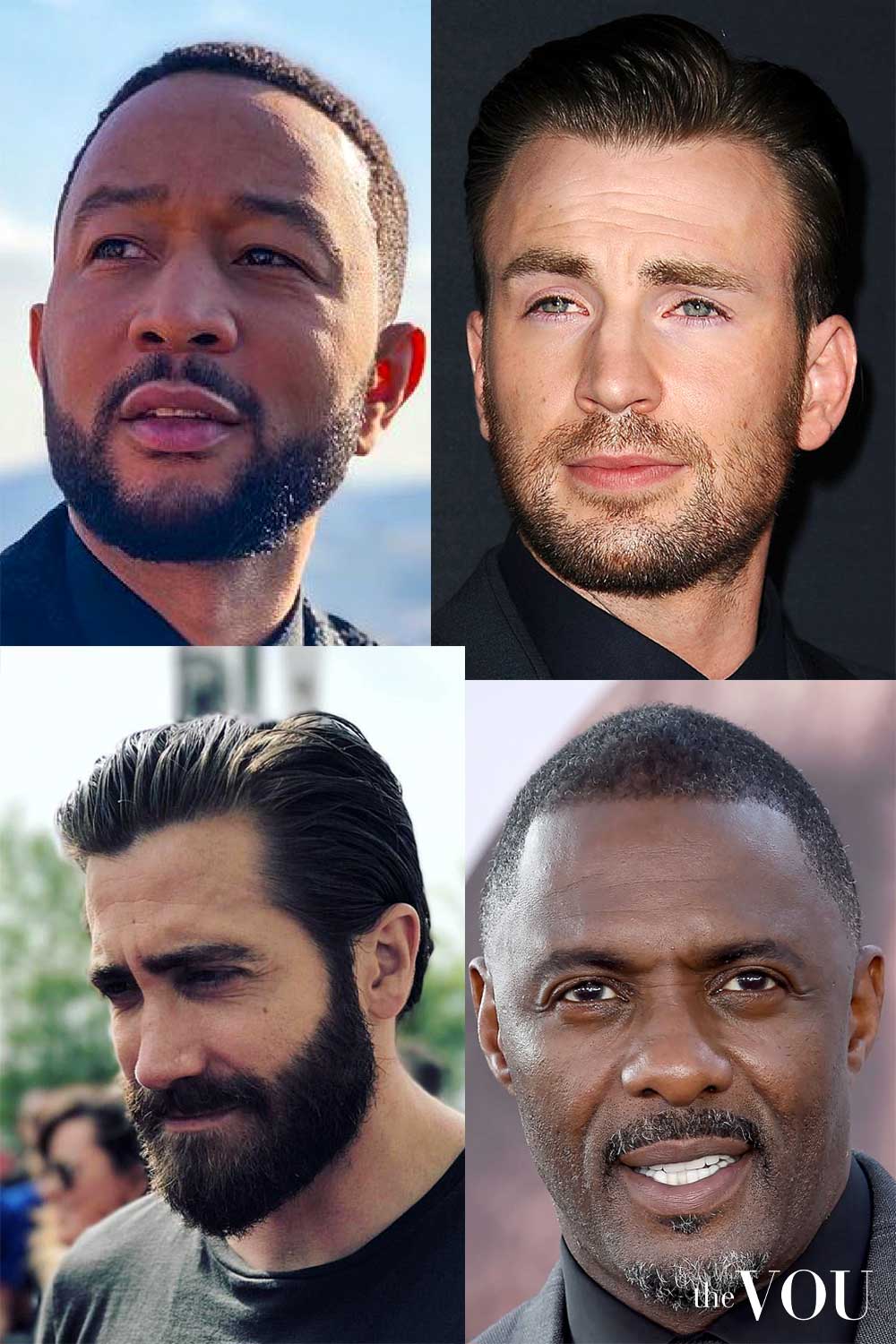
Men with oval faces have an outline a little longer than wide, with no single dominant width, so the choice of beard comes down to the look you want rather than to any correction.
A classic full beard or a short boxed beard keeps the outline much as it is, while heavy stubble keeps the jaw visible.
A Van Dyke or a corporate beard puts the emphasis at the chin and moustache, which changes the lower outline more than the fuller styles do.
Choose by your growth, your upkeep and the setting you need the beard to suit.
Recommended styles include
- Classic Full Beard
- Short Boxed Beard
- Heavy Stubble
- Van Dyke
- Corporate Beard
Square Face Shape
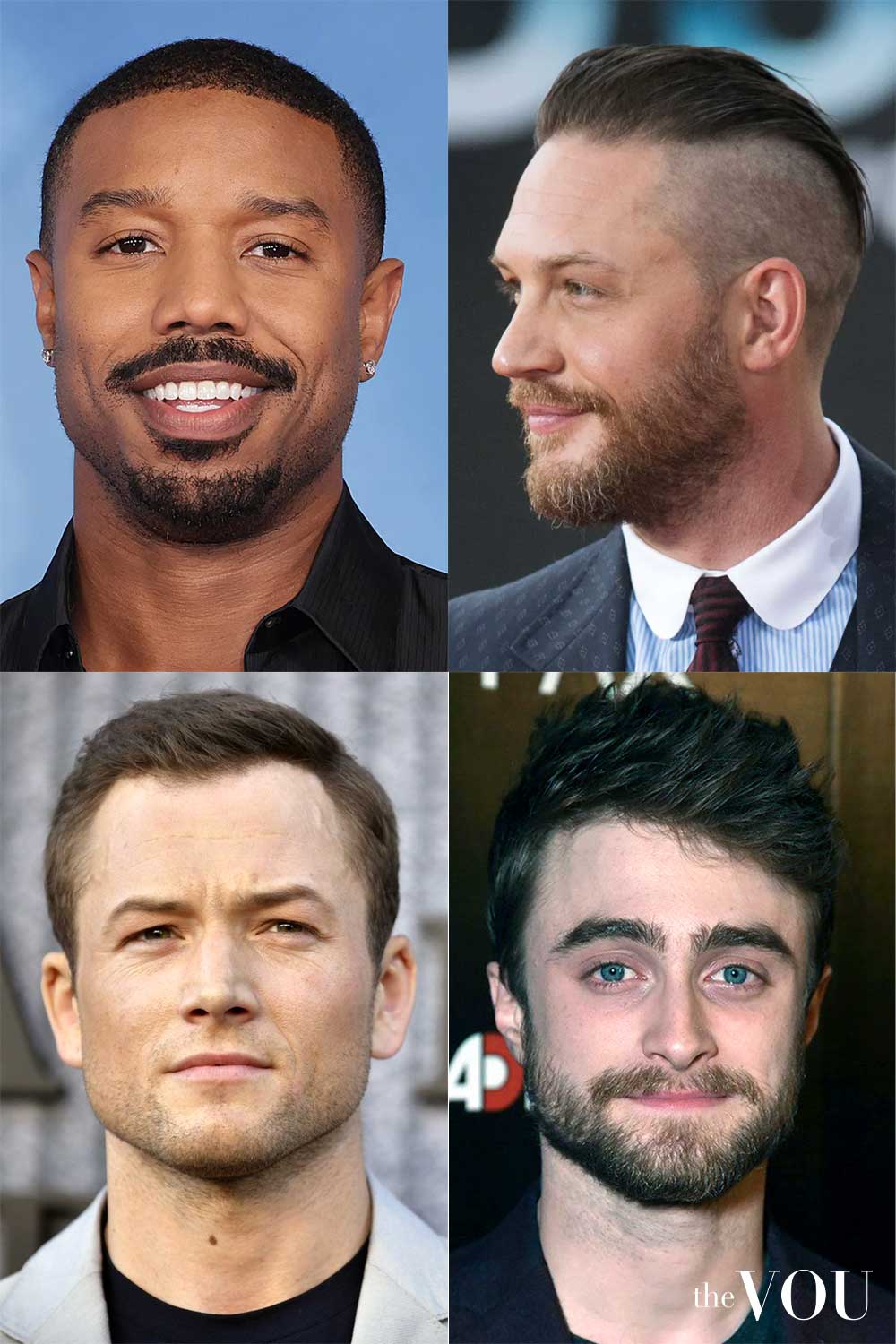
Men with square faces have a relatively compact outline with angular jaw corners, and the beard can either soften those corners or echo them.
If you want contrast, a rounded full beard or a textured medium beard curves the lower outline, and a moustache with an extended goatee draws attention to the centre of the chin.
If you like your jaw as it is, subtle stubble or a faded beard keeps the corners visible.
Both routes are equally valid; nothing about an angular jaw needs fixing.
Recommended styles include
- Rounded Full Beard
- Moustache With Extended Goatee
- Textured Medium Beard
- Subtle Stubble
- Faded Beard
Round Face Shape
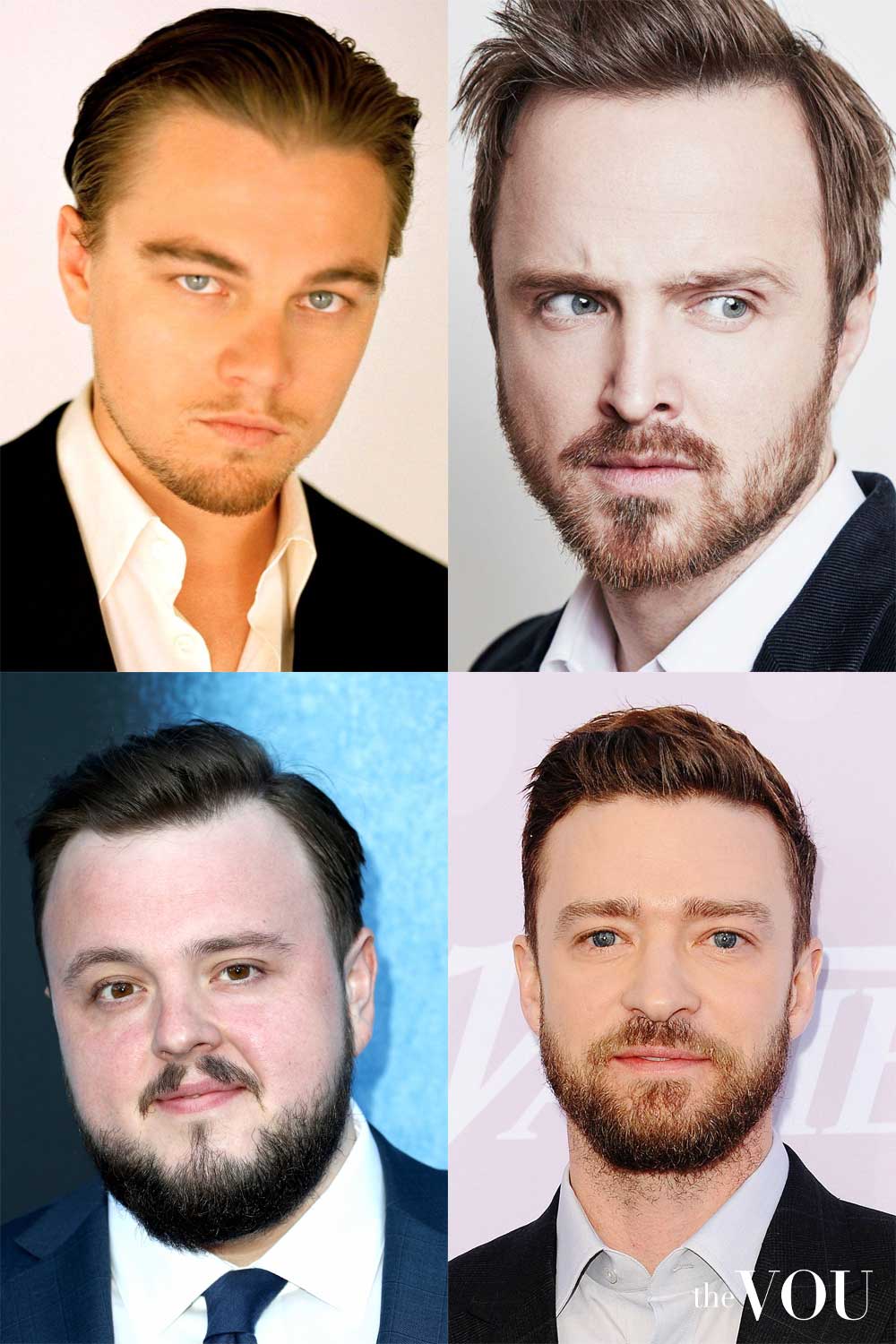
Men with round faces have a relatively compact outline with curved jaw corners; full cheeks on their own do not settle the description.
If you want the outline to look longer or more defined, keep the sides shorter and put length or crisp edges at the chin, as a Balbo with an extended goatee, a tapered beard or a short box beard with length does.
An angular full beard adds defined corners, and a downward-styled beard arranges the length you have so it falls towards the chin.
A softer, fuller beard that echoes your curves is equally open to you.
Recommended styles include
- Balbo Beard With Extended Goatee
- Angular Full Beard
- Tapered Beard
- Short Box Beard with Length
- Downward-Styled Beard
Diamond Face Shape

Men with diamond faces have an outline widest at the cheekbones, and a beard can add width or length below them if that is the look you want.
A full square beard or a wide box beard adds width at the jaw, a graduated full beard grades from shorter cheeks to a fuller lower outline, and an extended chin beard adds length at the centre.
Structured stubble keeps the cheekbones leading with a little definition at the jaw.
If you like your cheekbones as the widest part of your face, a closer beard is just as valid.
Recommended styles include
- Full Square Beard
- Graduated Full Beard
- Extended Chin Beard
- Structured Stubble
- Wide Box Beard
Heart Face Shape

Men with heart-shaped faces have an outline broader at the forehead than at the jaw, and a beard can add fullness at the chin if that is the look you want.
A full chin beard or a Balbo concentrates growth at the chin, a full beard with tapered sides keeps the cheeks shorter than the chin, and defined stubble with a fuller chin is the lighter version of the same idea.
A shaped full beard covers more of the lower face while keeping a tidy outline.
If you like the taper as it is, a clean-shaven face, light stubble or a neat goatee is a perfectly good choice.
Recommended styles include
- Full Chin Beard
- Balbo Beard
- Full Beard with Tapered Sides
- Defined Stubble with Fuller Chin
- Shaped Full Beard
Rectangle Face Shape
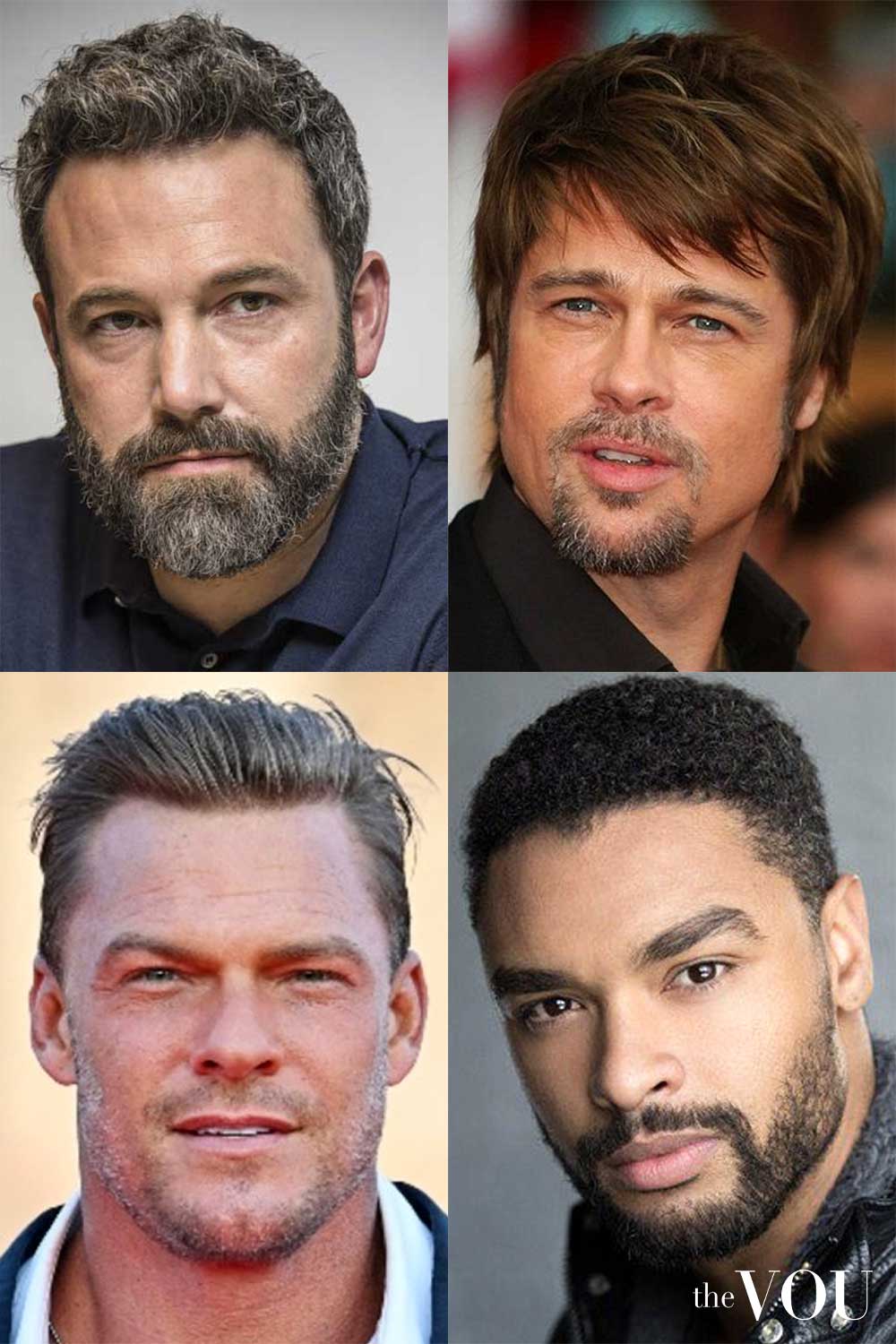
Men with rectangular faces have a clearly longer outline with angular jaw corners, and a beard can add width rather than length if that is the look you want.
A rounded full beard or a circle beard keeps fullness at the sides and curves the lower outline, and designer stubble or a short boxed beard with a fade keeps the lines close.
A full beard with an angled bottom adds a little length at the chin, so keep the angle shallow if you would rather not lengthen the outline.
Recommended styles include
- Rounded Full Beard
- Full Beard with Angled Bottom
- Circle Beard
- Short Boxed Beard with Fade
- Designer Stubble
Oblong Face Shape
Men with oblong faces have a clearly longer outline with softer corners; VOU separates oblong from rectangle by the jaw corners, and other systems combine the two.
If you would rather add width than length, a full width beard, a rounded full beard or wide stubble keeps fullness at the sides, and a box beard with a fade or a short sculpted beard keeps the outline neat without extra chin length.
A longer chin is still yours to choose if you like it.
Recommended styles include
- Full Width Beard
- Rounded Full Beard
- Box Beard with Fade
- Wide Stubble
- Short Sculpted Beard
Triangle Face Shape
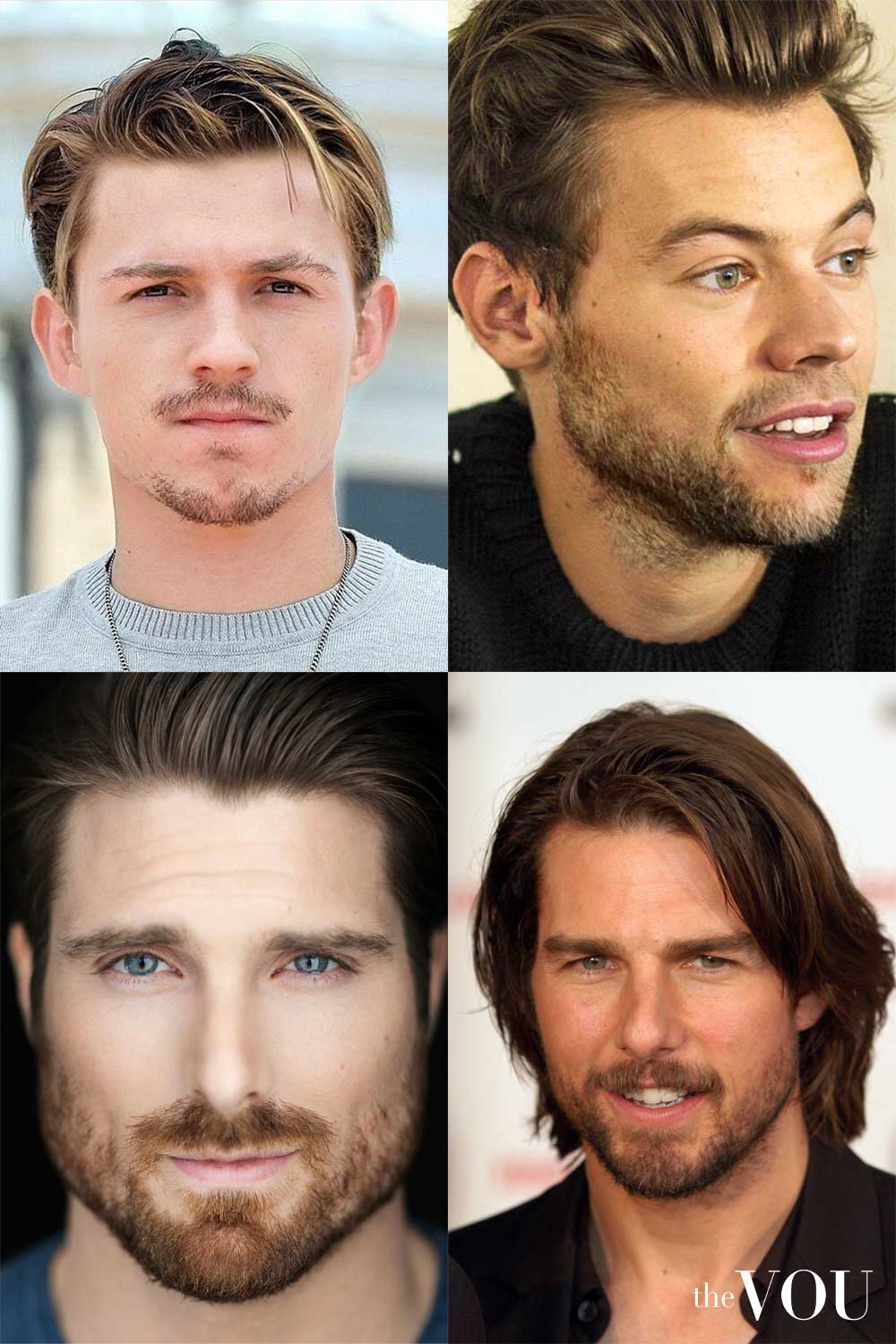
For men with triangle faces, as The VOU uses the description, the jaw is broader than the forehead; VOU uses triangle and pear as two names for one jaw-wide family.
Other guides sometimes use triangle for the opposite outline, with a broad forehead narrowing to the chin, so read borrowed advice by the features described rather than the name.
If you would rather not add width at the jaw, minimal stubble with defined lines, a graduated short beard or defined stubble with clean edges keeps the sides close, and a chin-focused goatee keeps attention at the centre.
Fuller growth on the upper cheeks and sideburns can carry width higher on the face, though a beard cannot add hair at the temples.
Recommended styles include
- Minimal Stubble with Defined Lines
- Graduated Short Beard
- Chin-Focused Goatee
- Upper-Cheek and Sideburn Focus
- Defined Stubble with Clean Edges
Pear Face Shape
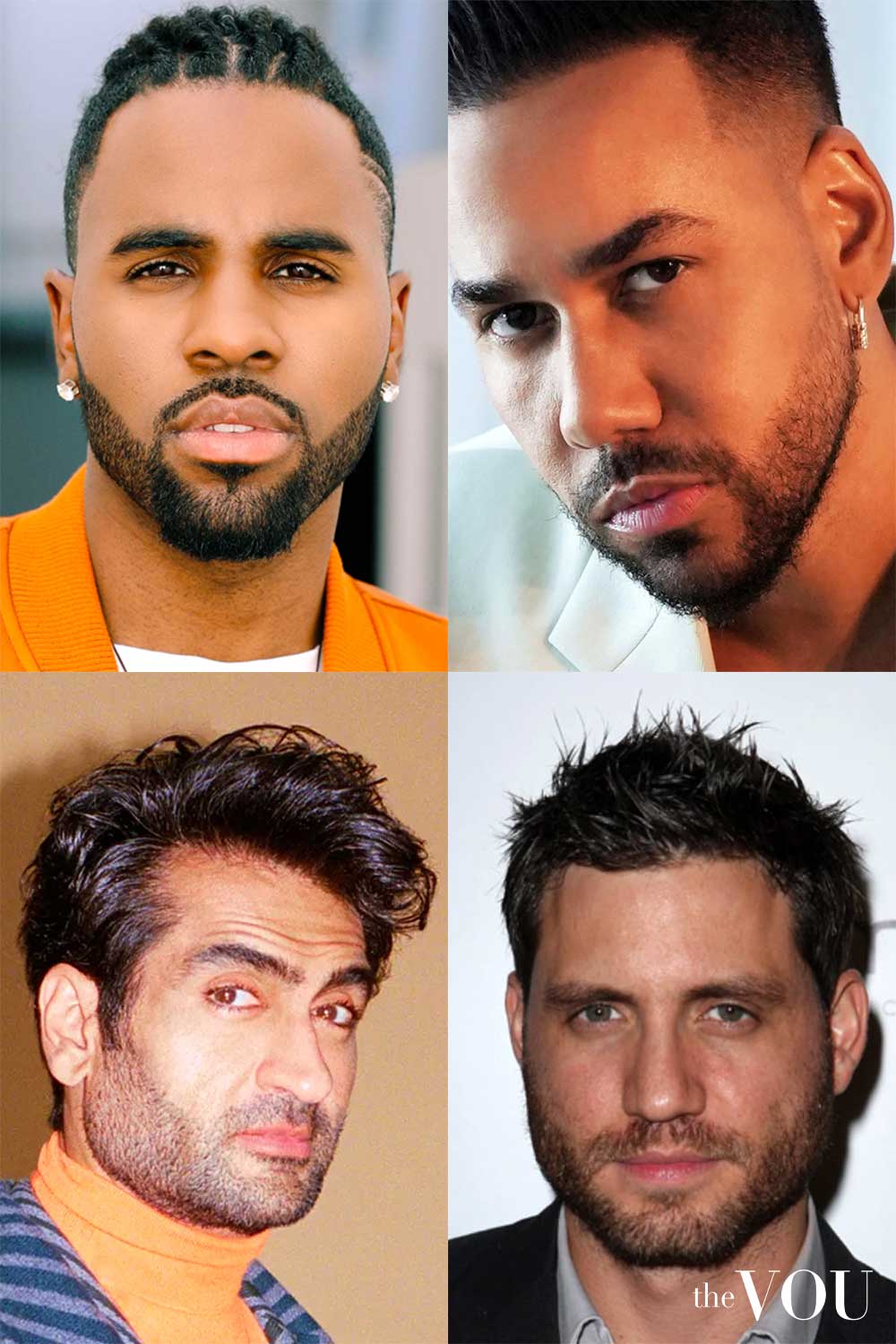
Men with pear-shaped faces belong to the same jaw-wide family as triangle, and the difference in how the taper looks is a nuance rather than a fixed boundary, so read both guides if you sit between them.
If you would rather not add bulk at the jaw, a short boxed beard, three-day stubble or a minimal line beard keeps the sides close, and a tapered short beard or chin-focused growth puts attention at the centre of the chin.
A fuller beard is equally valid if that is the look you prefer.
Recommended styles include
- Short Boxed Beard
- Three-Day Stubble
- Tapered Short Beard
- Chin-Focused Growth
- Minimal Line Beard
Step 3. Working With Your Barber
A barber who shapes beards regularly can read your growth pattern and set the side fullness, chin length, cheek line and neckline for you.
When selecting a barber, consider their expertise in beard styling specifically.
A skilled beard specialist will understand the nuances of facial hair patterns, growth directions, and how to shape your beard to complement your features.
Look for barbers who demonstrate expertise in
- Precise beard trimming and shaping
- Understanding different facial hair textures
- Knowledge of contemporary beard styling techniques
- Experience with your specific beard type
Effective Communication with Your Stylist
When meeting with your barber, share context about your professional life and lifestyle needs.
This information helps them understand how your beard style needs to perform in various situations, from board meetings to social events.
Bring reference photos of your desired style, but be prepared to discuss how these looks can be adapted to your specific features and growth patterns.
Discuss maintenance requirements openly. A precisely shaped beard might look exceptional but require frequent touch-ups, while a more natural style might offer more flexibility between appointments.
Be specific about how much time you can realistically dedicate to daily grooming, because this helps your barber recommend appropriate styles and maintenance routines.
Step 4. Maintaining Your Style
A sophisticated beard requires proper maintenance to continue looking its best.
How often you need a barber depends on how fast your beard grows and how sharp you want the edges. Shaved borders and fades blur first, while fuller, natural shapes can go longer between visits.
Before an important event, a trim a few days ahead gives freshly cut edges time to soften, if you prefer a less freshly trimmed look.
Precise styles with shaved borders may need more frequent clean-ups to hold their lines.
Learn proper trimming and styling techniques from your barber and invest in quality grooming products appropriate for your style.
Your daily grooming routine should align with your lifestyle and time constraints while maintaining the intended look of your beard.
Pay attention to how your facial hair responds to different products and techniques, adjusting your approach as needed.
Creating a Complete Image
A beard is one part of your overall image.
Consider how your beard style works with your haircut choices, wardrobe decisions, and complete grooming routine.
Your beard, haircut and clothes should work together to create a cohesive look.
Professional Styling Support
If you would like personal help, you can book a paid consultation.
Our Professional Face Shape Analysis, Fashion Style Analysis, and Complete Image Transformation services are paid consultations; the shop page lists what each one includes.
Visit our styling services page to see our paid consultations.