

Start here
What’s This About
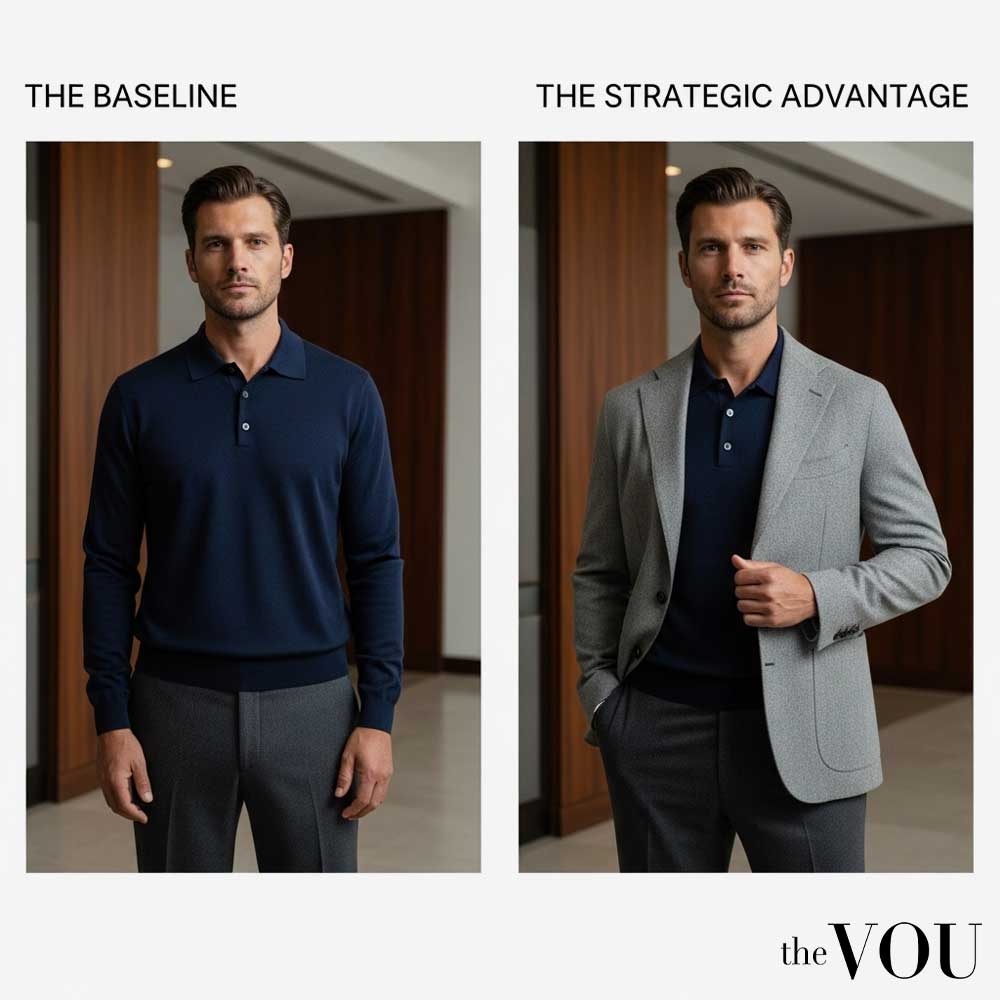
The styling rule named after Ralph Lauren means adding a third visible layer, such as a blazer, overshirt, cardigan or jumper, to a top and trousers; it is not a suit with a matching waistcoat.
This guide explains the idea and how to use it well, such as:
Where the name comes from and why it is linked with Ralph Lauren
Which garments work as the third layer
How to get the fit, colour and fabric weight right
Five outfit ideas built on the rule
When to leave the third layer off
and many more!
Use it as a helpful suggestion when an outfit feels unfinished, not as a requirement.
Key Points
01The name is an informal online label, not an official Ralph Lauren rule.
02The third layer is a garment such as a jacket, overshirt, cardigan or jumper; shoes and belts do not count.
03Choose the third layer’s weight for the weather and its formality for the occasion.
04A suit with a matching jacket, trousers and waistcoat is a different idea.
The “Ralph Lauren 3 piece rule” is a styling idea, not a suit: you wear a top and trousers, then add a third visible layer, such as a blazer, an overshirt, a cardigan or a jumper.
The third layer adds texture, colour and shape, which is why a simple outfit often looks more considered with one.
This guide explains where the name comes from, which garments work as the third layer, how to choose one that fits and suits the weather, and when to leave it off.
What the rule says
Think of an outfit as built in layers:
First: your top, such as a shirt, polo shirt, T-shirt or knit
Second: your trousers, such as chinos, jeans or wool trousers
Third: a visible layer worn over or with the top, such as a jacket, overshirt, cardigan, waistcoat or jumper
A top and trousers on their own are fine, and on a hot day they are often the right choice.
The idea is simply that, when the weather and the occasion allow, a third layer gives the eye more to look at and pulls the colours together.
Why it is named after Ralph Lauren
The name is an informal label that circulates online and among stylists; The VOU has not found any statement from Ralph Lauren setting out such a rule, and it is not a company or trademarked term.
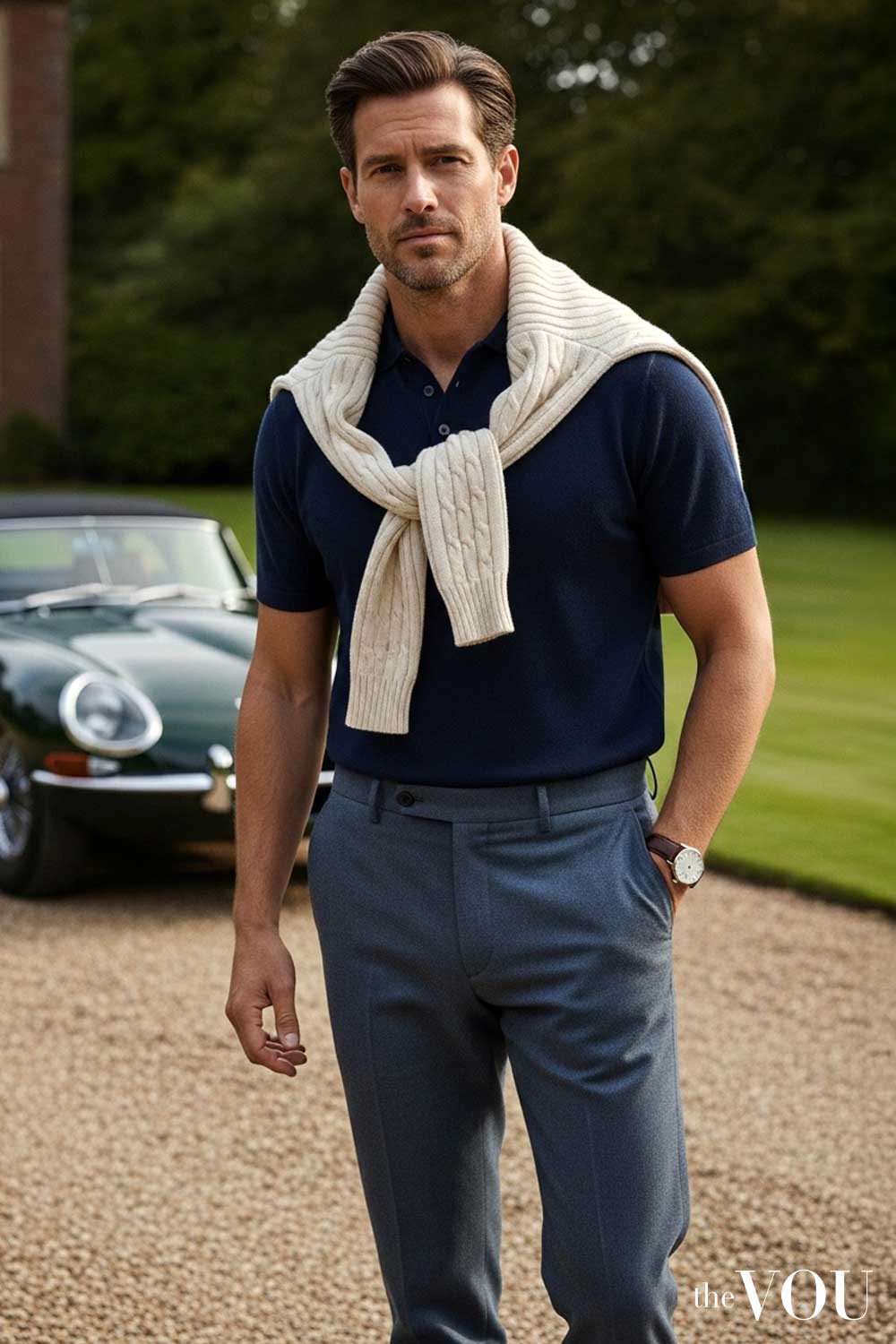
It is linked with the brand because Ralph Lauren’s preppy look is closely associated with layered outfits, such as a polo shirt with chinos and a cable-knit jumper over the shoulders.
The same habit of layering appears in many classic menswear traditions, so you do not need any particular brand to use it.
If you want to see the brand’s own best-known designs, our guide to Ralph Lauren’s most iconic designs covers them, and we also look at whether Polo Ralph Lauren counts as a luxury brand.
The layered look is also a large share of what is now called the old money aesthetic, a contemporary style label rather than a statement about anyone’s background.
Garments that work as the third layer
An unstructured blazer or sport coat
An overshirt in wool, cotton or corduroy
A cardigan
A crew-neck or V-neck jumper, worn over a shirt or draped over the shoulders
A waistcoat worn with separates
A casual jacket, such as a suede bomber, a denim jacket, a Harrington or a field jacket
Shoes, belts, watches and other accessories finish an outfit, but they are not the third layer in this idea, because they do not change the outline of the top half.
How to choose a third layer that works
Fit
A jacket or overshirt should sit at the edge of your shoulders and let you move your arms without pulling across the back.
Sleeves should let a little of the shirt cuff show with a tailored jacket, or end around the wrist bone with a casual jacket or knit.
Length is a choice: a shorter jacket or a jumper that ends near the belt shows more of the trousers, while a longer overshirt or field jacket covers the seat and looks more relaxed.
Colour
The third layer is often the easiest way to bring colours together.
A simple approach is to repeat one colour from the outfit, such as a navy cardigan over a white shirt with navy chinos, or to add one contrasting colour over two neutrals.
Weather and fabric
Choose the weight of the third layer for the day: linen or cotton jackets and light cotton knits in warm weather, wool, tweed and corduroy in cold weather.
A draped jumper is the lightest option, because you can wear it over the shoulders and put it on when the temperature drops.
Formality
Match the third layer to the rest of the outfit: a tweed sport coat lifts an Oxford shirt and jeans, while a denim jacket keeps a T-shirt and chinos casual.
Outfit ideas using the rule
Wear: a navy polo shirt, stone chinos and brown loafers, with a cream cable-knit jumper over the shoulders.
Wear: a light blue Oxford shirt, dark jeans and brown suede boots, with a brown tweed sport coat.
Wear: a white T-shirt, olive cargo trousers and white leather trainers, with an unstructured navy blazer.
Wear: a navy knitted polo, charcoal wool trousers and black loafers, with a light grey jacket.
Wear: a grey T-shirt, dark jeans and white trainers, with a wool overshirt in brown or green check.
When to leave the third layer off
In heat, a well-fitting shirt or polo and trousers are more comfortable and look more natural than an extra layer.
For sport, physical work or a long journey, practical clothes come first.
At formal events, the dress code decides: a suit, with or without a waistcoat, is already a complete outfit, and our guide to the lounge suit dress code explains what that code asks for.
This is not a three-piece suit
The number three causes most of the confusion around this rule.
A three-piece suit is a specific garment: a jacket, trousers and a waistcoat, all cut from the same cloth.
The “3 piece rule” is about layering separates, such as a shirt, jeans and a blazer that do not match each other.
You can wear a waistcoat as a third layer with separates, which is a casual cousin of the three-piece suit rather than the suit itself.
The VOU’s final note
The “Ralph Lauren 3 piece rule” is a useful reminder, not a requirement.
When the weather and the occasion allow, adding one well-fitting layer, such as a blazer, an overshirt or a knit, is a simple way to make a top-and-trousers outfit look finished.
If you are building a small wardrobe, our guide to the 3-3-3 rule for clothing shows how a jacket or knit outside your core nine can serve as your third layer.
Frequently asked questions
Q. Is the “Ralph Lauren 3 piece rule” a real rule?
It is a real and widely shared styling idea, but it is an informal label rather than an official Ralph Lauren rule.
Use it as a suggestion that helps when an outfit feels unfinished.
Q. Is it the same as a three-piece suit?
No.
The rule is about layering separates, such as a shirt, jeans and a blazer, while a three-piece suit is a matching jacket, trousers and waistcoat.
Q. Do shoes or belts count as the third layer?
No; in this idea the third layer is a garment that changes the outline of the top half, such as a jacket, overshirt, cardigan or jumper.
Shoes and accessories still matter, but they are separate choices.
Mandy Meyer’s focus at The VOU is men’s body-shape styling, garment fit and outfit proportions. Her coverage addresses the practical questions behind a wardrobe choice: how a jacket sits across the shoulders, how trousers fall and how different cuts change the silhouette a wearer wants to create.
Her subject areas include the triangle, inverted triangle, rectangle, oval, trapezoid, hourglass and diamond labels used in body-shape styling. These provide starting references for comparing visible proportions; they do not capture every body or prescribe one correct way to dress. The focus connects those observations with garment shape, construction, length and the relationship between the upper and lower parts of an outfit.
Mandy’s editorial coverage combines visual comparisons with fit checks for comfort and movement. Readers can consider whether a cut gives them the room they need, where clothing pulls or gathers and which changes might support their preferred look. The aim is to make menswear choices more understandable while keeping personal preferences and the wearer’s own styling goals central.