Start here
What’s This About
Fast fashion means cheap, trend-led clothes that are made and sold very fast. This guide explains how it works and why people buy it. It also shows why it is criticised for pollution, waste and working conditions likened to modern slavery.
It covers how fast fashion fits within ready-to-wear and how it differs from haute couture. Then it looks at six firms that have faced serious criticism, and ends with practical ways to avoid fast fashion.
Key Points
01Fast-fashion brands follow the latest trends. They use quick factories and supply chains to get new designs into shops fast.
02Fast fashion’s speed shapes the whole industry, from design and seasons to the latest trends. But it comes at a high cost to workers and the environment.
What is Fast Fashion?
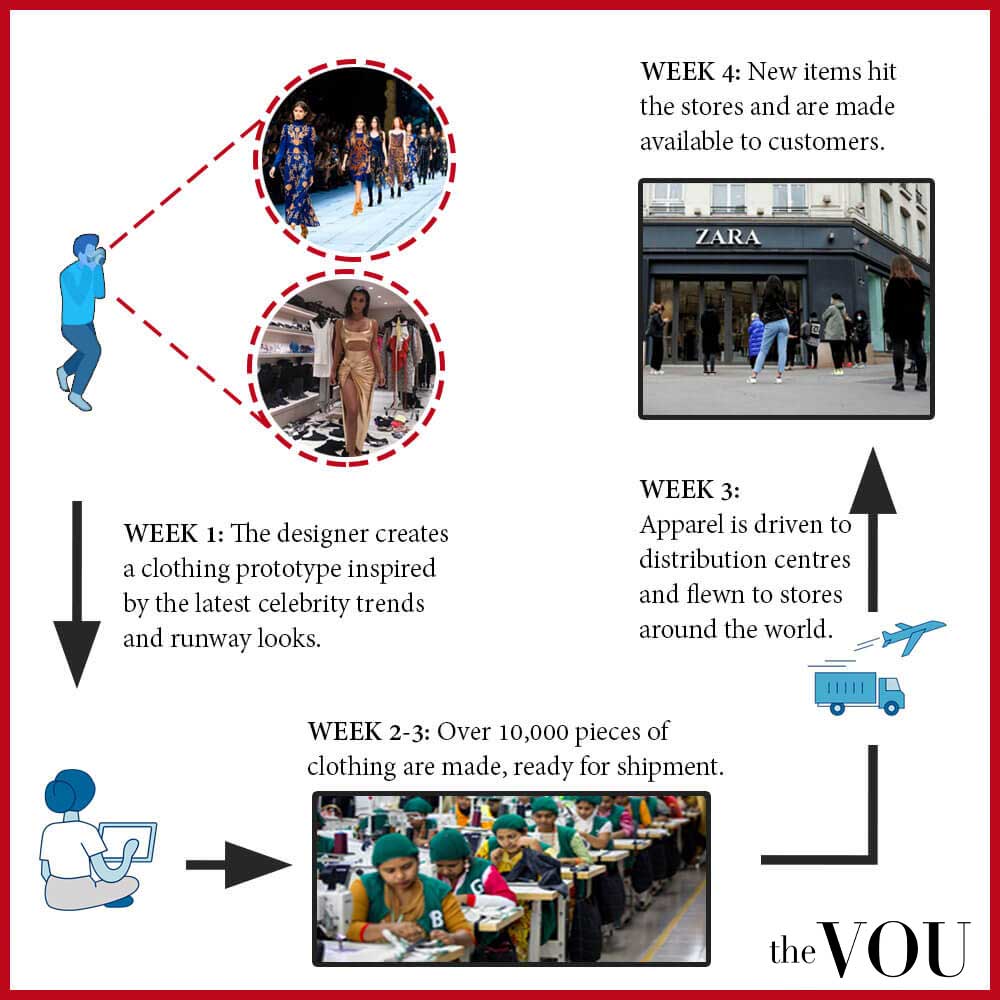
Fast fashion is a fashion business model. It takes designs from the catwalk to the shops as cheaply and quickly as possible.
It starts with large clothing firms that track new trends and what shoppers want.
These firms work closely with suppliers and keep their supply chains simple, so they can make and deliver new products very fast. A supply chain is all the people and businesses involved in getting a product from where it is made to the person who buys it.
In a 2012 Forbes article, Greg Petro wrote that Zara takes only 10 to 15 days to go from design to the shop floor.
Fast Fashion Definitions
Here are three ways that dictionaries and websites define it:
- “Fast fashion is inexpensive clothing produced rapidly by mass-market retailers in response to the latest trends.“, Oxford Languages.
- “Fast fashion is the term used to describe clothing designs that move quickly from the catwalk to stores to take advantage of trends.”, Investopedia.
- “Fast fashion has three main components from the consumer’s perspective: cheap, trendy, and disposable.”, Healthy Human.
The Origin of Fast Fashion
Fast fashion has its roots in the factory boom after the Second World War. It also grew out of the “throwaway” culture that took hold in the 1960s.
Brands such as Zara and H&M then refined this approach. In the late 20th and early 21st centuries, they sped up the fashion cycle.
Fast Fashion vs Ready-to-Wear vs Haute Couture
Fast fashion puts low prices and speed first, which raises questions about quality and ethics.
Ready-to-wear clothes are made in standard sizes and sold ready to wear, rather than made to fit one person. So fast fashion is one kind of ready-to-wear. But ready-to-wear is not a price or quality level. It ranges from cheap high-street clothes to expensive designer collections.
Haute couture is different. It is expensive clothing made by hand for a particular customer, mainly by fashion houses in Paris.
Fast Fashion’s 4 Core Problems
The fast-fashion model causes serious problems. Some of its working conditions are like modern slavery. It also uses toxic dyes and unsustainable materials. And it creates mountains of waste and pollution.
This guide looks at four of the worst: copied designs, modern slavery, throwaway culture, and pollution and waste.
1. Copied Designs
Copying other people’s designs is at the heart of the fast-fashion model.
“Nowadays, anyone, anywhere, could spot a fresh style, copy and sell it, without consequences or having to follow the classic hierarchy of fashion,” says Rebecca Minkoff.
Social media has sped this up. It makes it easier for fast-fashion brands to ‘steal fresh looks that sell.’
When a celebrity or a fashion influencer posts a unique designer piece online, trend spotters copy the look. They then send it to their brand for approval.
A designer label needs five to six months to design, make and launch a new collection. Fast-fashion brands can copy the same style and get it into shops in less than a month.
Because they copy, make and ship so fast, big brands can sell the latest designs before the original designers do.
When several firms copy the same design, the original designer can lose the credit.
2. Modern Slavery
Modern slavery is when people are exploited by others for profit and lose their freedom, whether they are tricked, pressured or forced.
In the documentary The True Cost, the writer and journalist Lucy Siegle put it simply:
“Fast fashion isn’t free. Someone somewhere is paying.”
That cost became clear in 2013. Rana Plaza, a building in Bangladesh that housed clothing factories, collapsed and killed more than 1,000 workers.
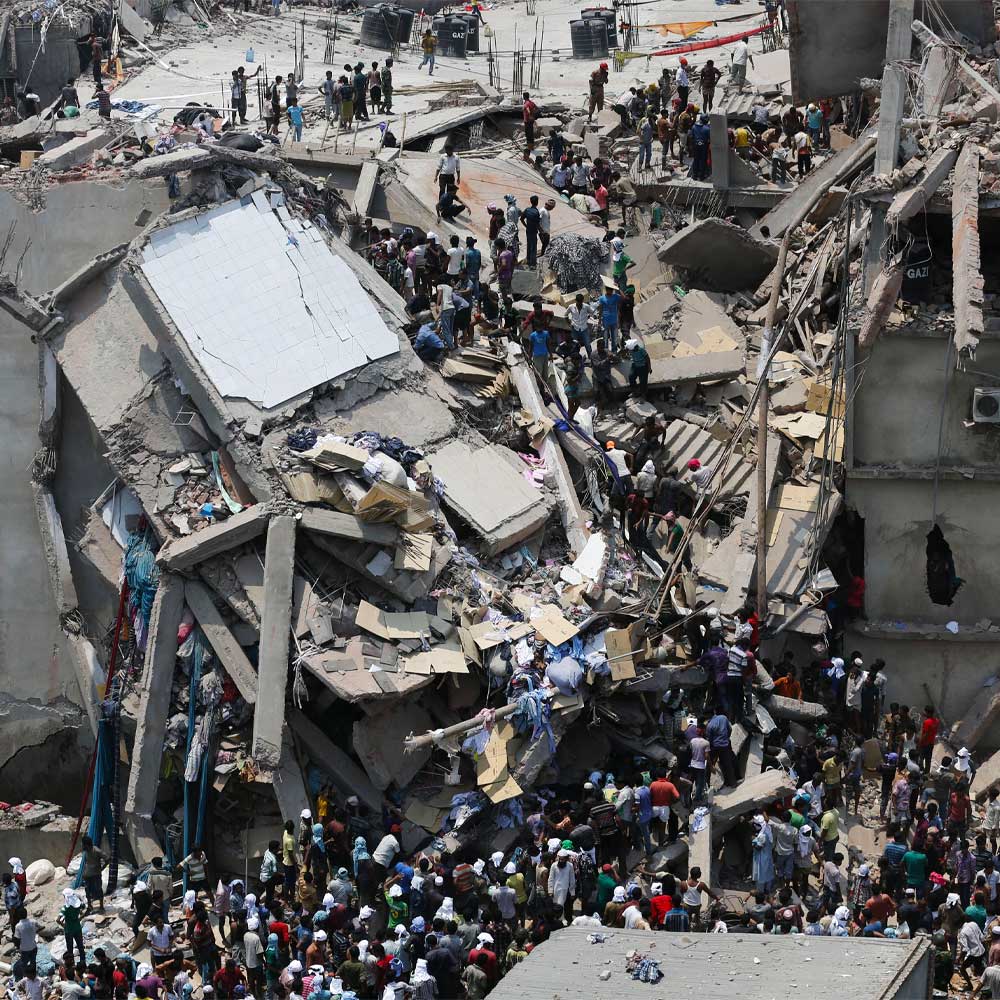
In fast fashion, every choice, from the factory to the shop, aims to cut costs.
In 2020, the Clean Clothes Campaign’s Fashion Checker surveyed 108 fashion brands and retailers. It found that 93% could not show that workers at any of their suppliers were paid a living wage. A living wage is enough money to pay for basic needs, such as food and clothes.
The human cost is huge. Garment workers often earn low wages in poor or even dangerous conditions, without basic human rights.
To keep costs low, fast-fashion brands have moved production to developing countries.
Child labour and modern slavery are deeply wrong.
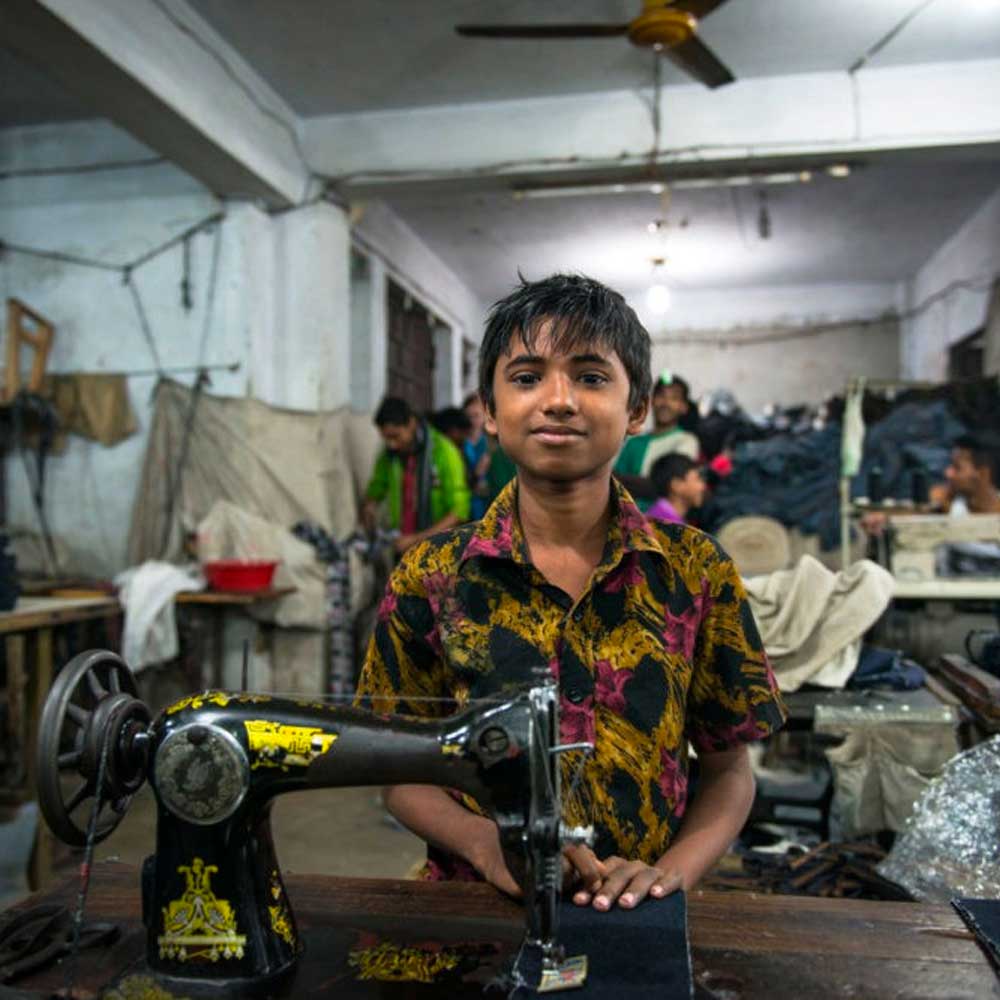
A 2018 paper in the journal Environmental Health describes the health risks garment workers face. In many poorer countries, safety rules often go unenforced. In badly ventilated factories, workers can breathe in cotton dust and tiny synthetic particles. Doing the same movements over and over can also strain muscles and joints.
Factory workers may also face long hours, unfair pay and mental and physical abuse.
3. Throwaway Culture
A throwaway culture is one in which things are thrown away soon after they have been used. In 2016, McKinsey reported that clothing production doubled between 2000 and 2014. Over the same years, the number of garments each person bought rose by about 60%. People also kept most types of clothing about half as long as they had 15 years earlier.
Experts still argue about which came first. Did shoppers want new looks, or did big brands persuade them each month that their clothes were out of date?
According to The Guardian, one in three young women see clothes worn once or twice as old.
Fast-fashion firms also use planned obsolescence, which means deliberately making products that do not last long, as Guiltinan describes.
Fashion depends on styles going out of date more than most industries do, and fast fashion takes this further.
Fast-fashion clothes are often low in quality, so shoppers need to replace them sooner to keep up with trends.
As a result, people throw clothes away quickly and create waste that could be avoided. This is the throwaway culture in action.
In a 2019 opinion piece for The Guardian, Graham Ross wrote that more than 501 million kilograms of unwanted clothing ends up in landfill in Australia each year. He called this a conservative figure, as textile waste was not tracked by government waste plans. The website for the film The True Cost gives an undated figure of more than 11 million tons of textile waste a year from the US alone.
4. Pollution and Waste
Fast fashion also does serious harm to the environment.
The pressure to cut costs and work faster can lead to environmental laws being ignored.
Cheap, toxic dyes help make the fashion industry one of the largest polluters of clean water globally, after agriculture.
The same 2018 paper in Environmental Health explains that untreated wastewater from dyeing is often released into local waters. It can carry heavy metals and other toxic substances that harm the health of animals and people living nearby.
For years, Greenpeace has pushed these brands to remove toxic chemicals from their supply chains.
Cheap fabrics such as polyester are made from fossil fuels.
These fabrics add to carbon emissions and global warming. When washed, they also shed tiny fibres that pollute the oceans and kill sea life.
Even “natural” fabrics cause problems at the scale fast fashion needs.
For example, farmers who grow conventional cotton in developing countries use huge amounts of water and pesticides. This uses up resources and pollutes the environment.
That brings drought risks and competition for resources between firms and local people. It also leads to loss of wildlife and poorer soil. These are just a few of the problems fast fashion causes.
Forests are also cleared for more cotton fields and for leather farming. Leather plants then use hundreds of chemicals to tan animal hides, which means treating them to make leather.
A 2020 study published by MDPI looked at the reports of three fast-fashion retailers. Two of them got most of their clothes from low-wage places such as China and South Asia, and low cost appeared to be their main reason.
The study notes that moving production to low-cost countries has often caused environmental and social problems there. The 2018 Environmental Health paper adds that people who work in or live near textile factories carry an unfair share of the health risks.
Animals suffer too. Toxic dyes and these tiny fibres get into rivers and seas, where land and sea animals swallow them, with devastating effects.
Leather, fur and wool have also been linked to many cases of animal cruelty.
Six Fast Fashion Companies Criticised for Their Practices
Each of the six firms below has faced serious criticism over pay, working conditions, waste or the environment. Some reports are several years old, so a firm’s current practices may differ.
Boohoo
The British fashion retailer Boohoo has grown fast over the past decade.
In July 2020, an undercover investigation by The Sunday Times alleged that some factories in Leicester, UK, that supplied Boohoo paid workers as little as £3.50 an hour. Boohoo denied claims of illegal wages and set up an independent review, led by Alison Levitt QC. In September 2020, Boohoo said the review had found “many failings in the Leicester supply chain”.
The Environmental Audit Committee is a House of Commons committee. In January 2019, it named Boohoo among six retailers it found “least engaged” in efforts towards sustainable fashion. None of the six had signed up to an industry plan to cut carbon, water and waste, or to an agreement on workers’ rights and living wages.
Shein
Shein is a Chinese online fast-fashion brand.
Shein now publishes some information about its suppliers. In its report for 2024, published in June 2025, it says it carried out 4,288 on-site audits of suppliers and subcontractors in China. These are Shein’s own figures, not an independent check of working conditions.
In July 2020, complaints on social media led Shein to apologise twice. It had sold a necklace with a swastika pendant. It had also sold Muslim prayer mats as rugs, and it said sorry to the Muslim community.
Zara
Zara is a Spanish fast-fashion brand. It uses recycled packaging and runs a textile recycling programme.
In 2017, a Zara shopper in Istanbul found a hidden message in a piece of clothing he had just bought.
A follow-up investigation found that garment workers had written this note and others like it. They said they had worked without pay before the firm making clothes for Zara went bankrupt.
Old Navy
Old Navy is an American fast-fashion retailer owned by Gap Inc.
In October 2013, the Institute for Global Labour and Human Rights published a report on Next Collections, a factory in Bangladesh that made clothes for Gap and Old Navy.
The report said that slapping and beating were routine there, and that pregnant workers were illegally sacked or made to work without maternity leave. Common Dreams, a news site, reported one pregnant worker’s case: she was forced to work more than 100 hours a week.
Also in October 2013, Al Jazeera’s Anjali Kamat said her team had found children as young as 12 at a small workshop, putting elastic bands into Old Navy jeans. Gap Inc. denied any link to the workshop.
Primark
Primark, an Irish firm, is one of Europe’s biggest fast-fashion retailers. It pays other firms to make its clothes, so it has little direct control over workers’ conditions or pay.
Primark says the factories it uses follow a code of conduct, a set of rules for suppliers.
In June 2014, NPR reported that a shopper in Northern Ireland had found a note in the pocket of some Primark trousers. Amnesty International translated it. The writers said they were prisoners in a Chinese jail, making clothes for export and working 15 hours a day. Primark said it had last sold the trousers in 2009 and began an investigation. Earlier that week, labels with similar messages had been reported in clothes from a Primark shop in Swansea, Wales. Primark later called the Swansea labels likely hoaxes. It also said inspections of the trousers’ maker had found no forced labour.
Primark now publishes a yearly Sustainability and Ethics Progress Report. These reports are Primark’s own account of its progress, not an independent check.
H&M
H&M is a Swedish brand and one of the largest fast-fashion retailers in the world.
In 2018, H&M was criticised over a promise on pay. It had said that by 2018 its main suppliers would have pay systems for a fair living wage, reaching about 850,000 garment workers. It later scaled back this aim. The Clean Clothes Campaign, an alliance of unions and campaign groups, accused H&M of hiding commitments it had not met. H&M rejected this and said its vision is that “all textile workers should earn a wage they can live on.”
Common Questions Asked About Fast Fashion Answered
What is a Fast Fashion Example?
Zara and H&M are two of the best-known examples. Their model copies high-end designs and turns them into cheap, trendy clothes. These reach shops around the world very quickly.
What 3 Things Define Fast Fashion?
As the Healthy Human definition above puts it, fast fashion is cheap, trendy and disposable. This pushes shoppers to update their wardrobes often to keep up with the latest trends.
Is Fast Fashion Ethical?
Not according to the evidence in this guide. Fast fashion harms people, animals and the environment. And the fashion industry is one of the largest polluters of clean water.
Who Buys Fast Fashion?
Younger shoppers, millennials and Gen Z, are fast fashion’s main buyers, drawn by low prices and new trends.
Key Takeaways
Fast fashion does meet a real need. Designer clothes are priced for the catwalks of the world’s fashion capitals. Few people can afford them, or a personal stylist.
But cheap clothes always cost someone something, whether through modern slavery or harm to the environment.
The demand for new trends, and the wish to copy celebrities, will not go away easily.
As the former Topshop brand director put it:
“People see a celebrity wearing something and want it right away. As long as there’s demand, we make it”
In 2016, McKinsey reported that European clothing companies had gone from an average of two collections a year in 2000 to about five in 2011.
Some went much further. The same report said Zara offered 24 new collections a year, and H&M offered 12 to 16, refreshed weekly.
The real problem is speed. Making clothes this fast puts huge pressure on people and the environment.
So how can you avoid fast fashion? The 2018 paper in Environmental Health suggests four things shoppers in richer countries can do:
- Buy good-quality clothes that last longer.
- Shop at second-hand stores.
- Repair the clothes you already own.
- Buy from shops that are open about their supply chains.
Be wary of green claims, too. The same paper warns that some companies market their products as “green” without meeting any standards. This is greenwashing: making people believe a company does more for the environment than it really does.
The paper also argues that shoppers should buy less. Fast fashion, it says, thrives on the idea of more for less.
For a fuller alternative, our guide to slow fashion explains an approach to clothes that puts quality before quantity.