

Start here
What’s This About
If you want a long face to read a little wider, keep the beard’s fullness on the sides and its chin length moderate; if you like your length, a longer beard is still your choice.
This guide covers the choices that shape the result, such as:
Why side fullness and chin length do different jobs
Full width and rounded full beards when your cheeks grow densely
How a fade blends a box beard without forcing a longer chin
Wide stubble and short sculpted beards when growth is lighter
and many more!
Your real growth decides how much width a beard can show.
Key Points
01Oblong, as The VOU uses it, describes a clearly elongated outline with softer jaw corners; if your corners look angular, the rectangle guide covers the same long-face decisions.
02Fullness on the cheeks and jaw sides can make a face read wider, while extra length below the chin makes it read longer, so treat them as separate choices.
03A beard can only show width where hair grows: trimming and shaping arrange what you have, they do not create new side growth.
04No fixed length is best, so start longer, trim down gradually and check the dry, brushed beard straight on in a mirror.
Men with oblong face shapes, as The VOU uses the term, have a face that looks clearly longer than it is wide, with a forehead, cheekbones and jaw of broadly similar width and softer, more rounded jaw corners.
The VOU separates oblong from rectangle by corner shape alone; if your jaw corners look more angular, our rectangle face beard guide covers the same long-face decisions, and other systems treat the two as one shape.
If you want the face to read a little wider, the useful beard tools are side fullness and a moderate chin length; if you like your length as it is, a longer beard is equally valid.
Understanding your facial structure is useful background, and our face shape analysis quiz can give you a starting point, though it is a guide rather than a measurement.
For every face description in one place, see our guide to choosing a beard by face shape.
Side Fullness and Chin Length Are Separate Choices
Side fullness is the length kept on the cheeks and along the jaw sides; more of it makes the lower face read wider, but only where hair actually grows.
Chin length is how far the beard extends below the chin; more of it adds vertical length, which on a long face you may or may not want.
The cheek line is the beard’s upper edge; leaving it natural or only lightly tidied keeps more coverage on the sides, while a low cheek line narrows the beard.
The neckline sets the bottom edge under the jaw; cut too high, a beard can shrink to a narrow strip along the jaw, and left too low it looks untidy. A common starting point is a neckline about one to two finger widths above the Adam’s apple, curving back towards the angle of the jaw below the ears; check it with your head level rather than tilted back, and adjust it for your beard length and your own neck.
Mirror check: straight on, with the beard dry and brushed, compare the width at the cheeks with the length below the chin; if the chin is outgrowing the sides, trim the bottom before the sides.
Check Your Growth Before You Choose
Look at your cheeks, jaw sides, chin and moustache after a few weeks without trimming, and note where growth is dense, where it is sparse and which way it grows.
If the cheeks are dense, the full width and rounded full beards can show real side fullness; if they are sparse, wide stubble or a short sculpted beard usually looks more deliberate than trying to hold length that is not there.
Curly and coily beards sit fuller at shorter lengths, which helps side width; straight beards can lie flat against the cheek, so a little extra side length or brushing outwards may be needed for a similar effect.
If a beard already covers your jaw, plan from the outline you see now; the underlying jaw shape can stay unknown, and you do not need to shave to use this guide.
Full Width Beard
The full width beard keeps noticeable length on the cheeks and jaw sides, with the chin kept at roughly the same length rather than growing longer.
In the example photograph (Keanu Reeves), the beard covers the cheeks, jaw and chin with the moustache joining it, in a natural rather than sculpted outline.
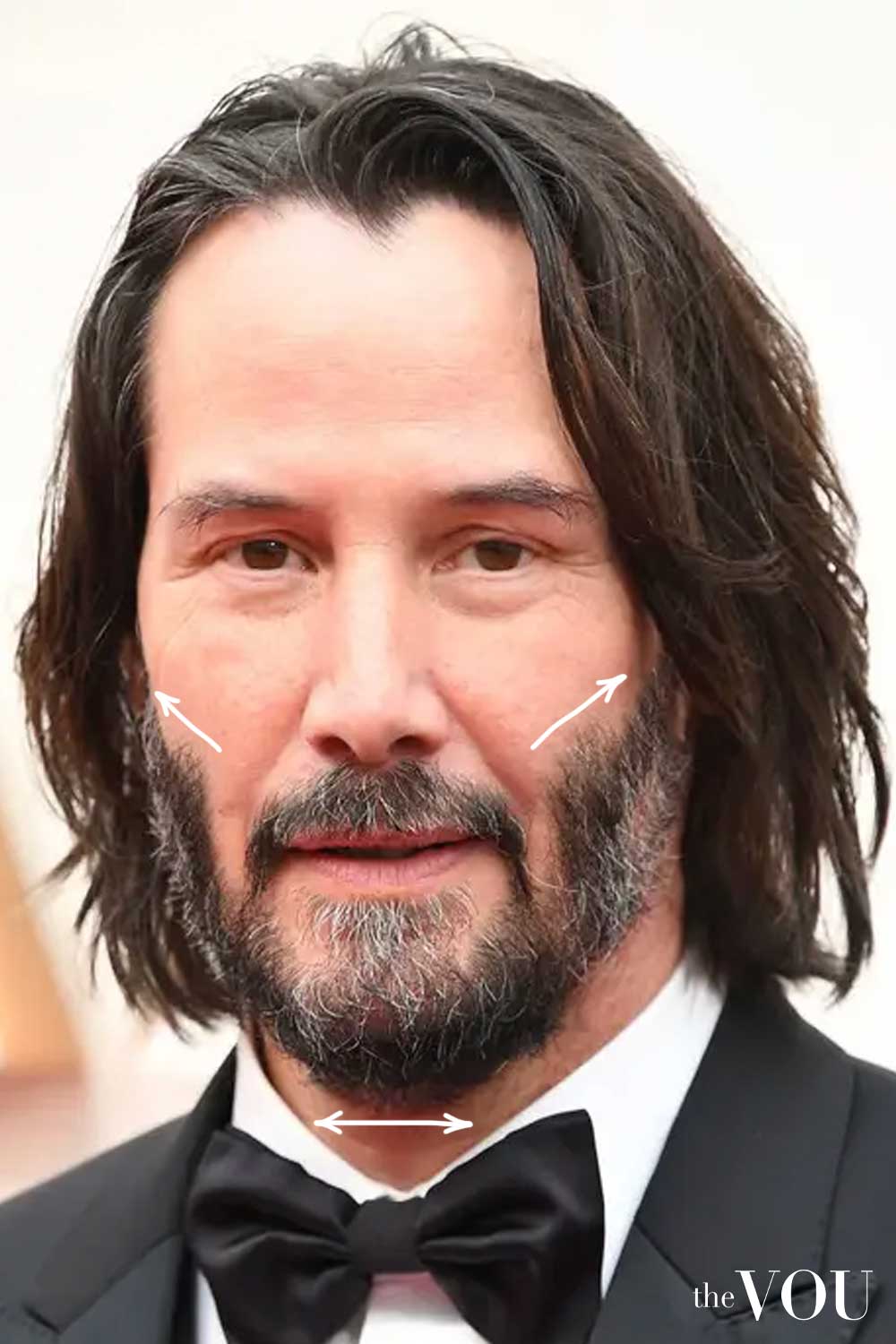
Why it works: Length on the sides adds breadth to the lower face, and keeping the chin no longer than the sides avoids adding length.
Growth check: This depends on dense cheek growth; if your cheeks are patchy, the sides will not hold the width the style needs.
Ask your barber: “Keep the length on the sides, take the chin down to match, leave the cheek line natural and tidy the neckline.”
Maintenance: Regular brushing and a trim every week or two keep the sides even and stop the chin from outgrowing them.
Rounded Full Beard
The rounded full beard is a full beard trimmed to a curved outline, with a rounded rather than pointed or squared bottom.
In the example photograph (Josh Duhamel), the beard is short to medium and even, curving under the chin.
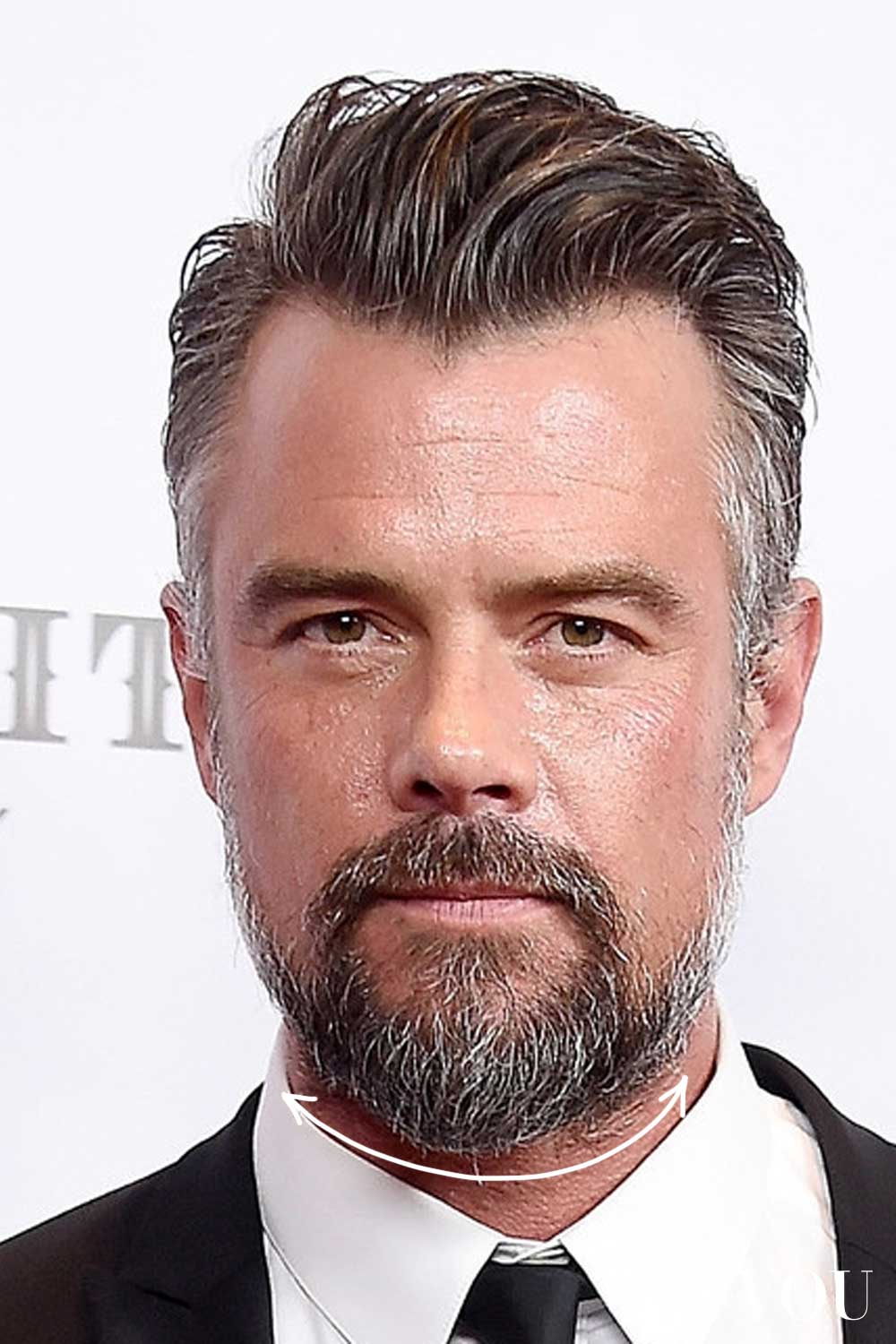
Why it works: A rounded bottom stops the chin extending into a point, and the curved sides carry width around the jaw; it also echoes softer jaw corners if that is the look you like.
Ask your barber: “Full beard, rounded at the bottom, sides kept full, and do not let the chin get longer than the sides.”
Maintenance: The curve is what drifts as the beard grows, so a shape-up every week or two keeps it.
Box Beard with Fade
The box beard with fade is a full beard with a defined outline, where the sideburns fade gradually into the haircut.
In the example photograph (Paul Rudd), seen from the side, the beard is full with a fuller chin, and the sideburns blend into shorter hair.
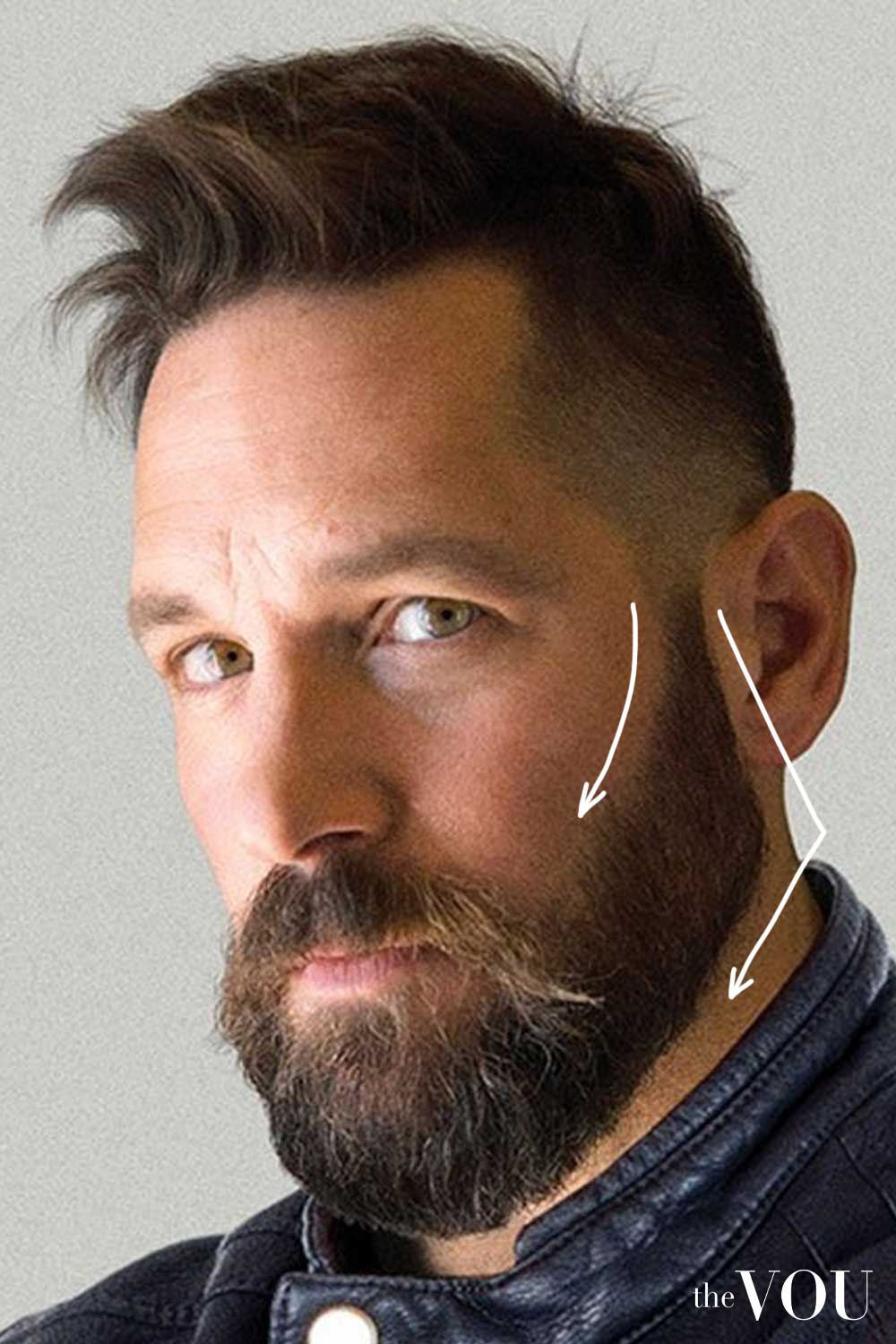
Why it works: A fade is a graduated transition from hair to beard; it does not require a longer chin, so you can keep the chin moderate and the jaw sides full for width.
Fading low down the cheeks shortens the sides at that height and reduces width there, so keep the fade near the sideburns if you want the sides to stay full.
Ask your barber: “Fade from the haircut into the sideburns, keep the jaw sides full, keep the chin about the same length as the sides, and give it a clean, squared outline.”
Maintenance: The fade usually needs a barber visit every couple of weeks to stay smooth, while the outline can be kept at home.
Wide Stubble
Wide stubble is short stubble kept across the full cheeks and jaw, with the cheek line left natural or only lightly tidied.
In the example photograph (Shawn Mendes), the stubble is light and even across the jaw and chin.
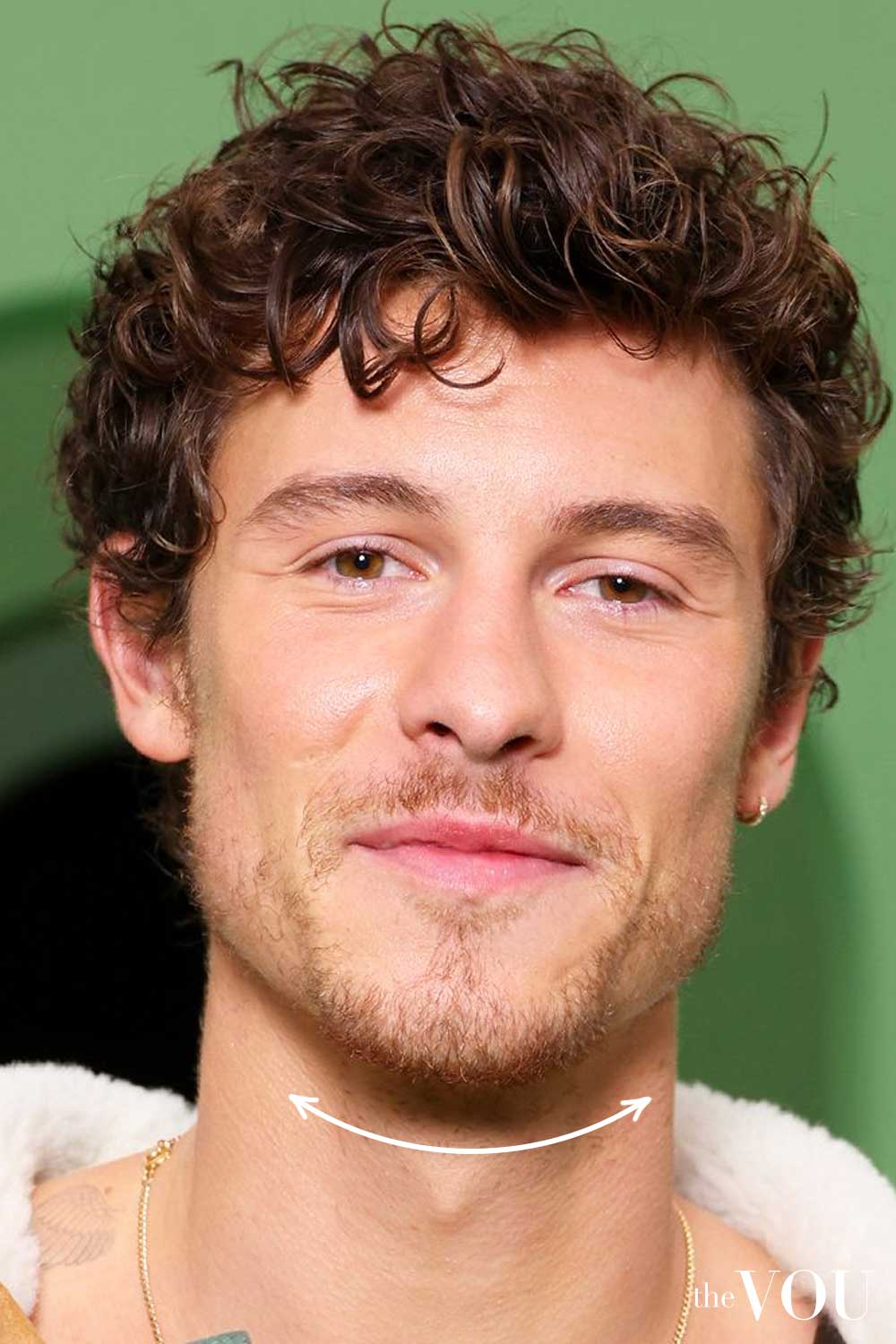
Why it works: At stubble length, a beard adds texture and a shadow along the sides rather than real width; leaving the cheek line natural keeps that shadow as wide as your growth allows.
Growth check: Light or patchy growth reads as a soft shadow, while dense growth reads darker and more defined.
Maintenance: Trim every few days on the same guard, and tidy the neckline so the shadow does not run down the neck.
Short Sculpted Beard
The short sculpted beard is a short full beard with deliberately shaped edges, a defined cheek line and a clear neckline.
In the example photograph (Eddie Redmayne), taken at an angle, the beard is short and close, with a clear cheek line and a curved line along the jaw.
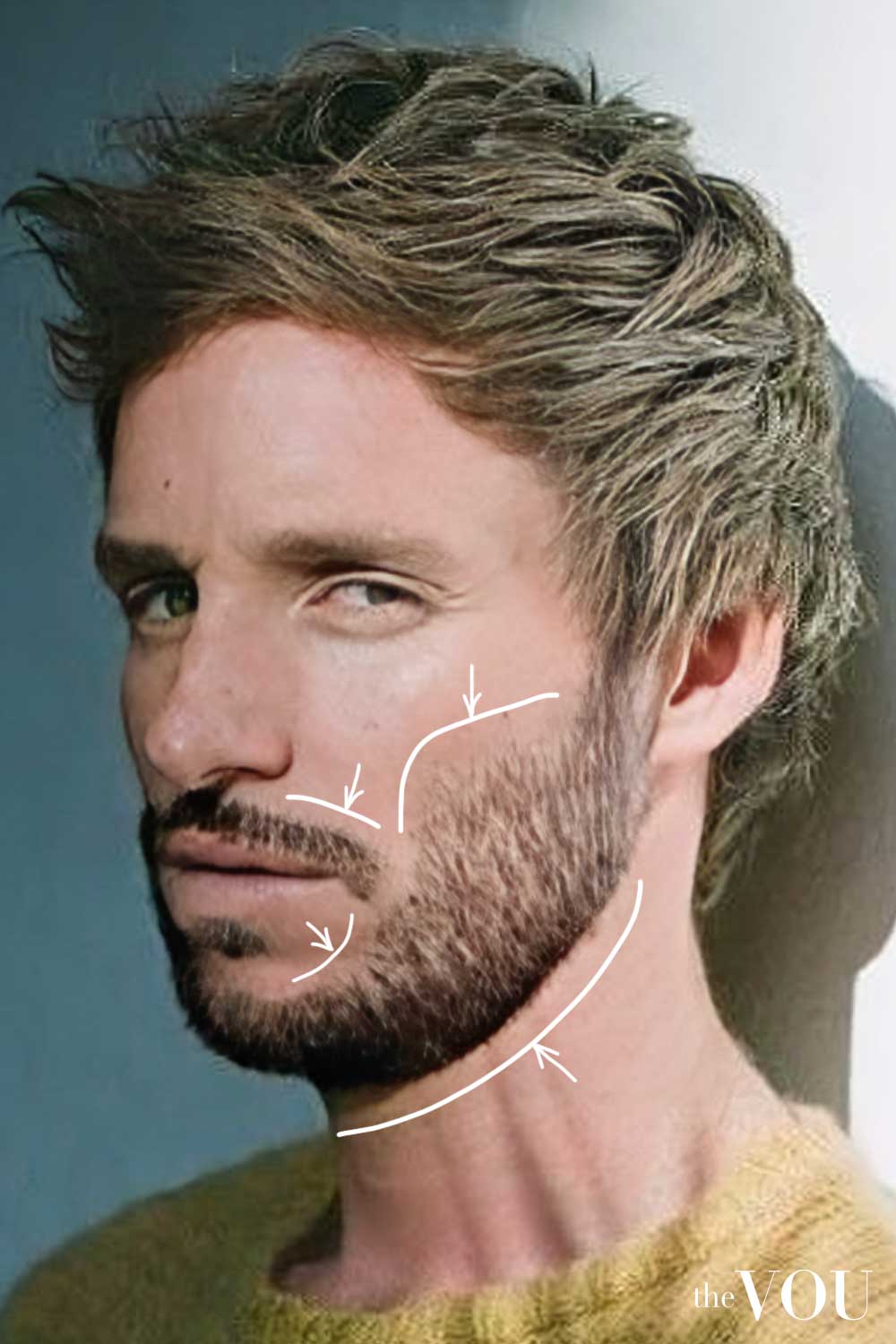
Why it works: The sculpted edges give structure; how much width the beard shows depends on how low the cheek line sits and how dense the sides are, so keep the cheek line natural if width is your aim.
Ask your barber: “Short and even, shape the cheek line where my growth naturally stops, define the neckline, and keep the chin no longer than the sides.”
Maintenance: Sculpted lines need tidying every few days to a week to stay sharp.
Mixed Features and Uncertain Outlines
If your face is long and your jaw corners look angular, this guide and the rectangle guide overlap; read both and use what fits.
If your hairline is receding or unclear, face length is hard to judge, so rely on width and corner shape and keep the oval and rectangle descriptions in mind.
If your beard already hides your jaw, plan from the visible outline; the underlying shape can stay unknown.
If you like a longer beard, it will add length, and that is a choice rather than a mistake.
Conclusion
For an oblong outline, the main beard decision is how much fullness to keep on the sides compared with the length below the chin.
Whether you choose stubble or a full beard, let your real growth, texture and the upkeep you want guide the choice, and check the outline in the mirror rather than chasing a fixed length.
Use our face shape quiz as a starting point, and ask your barber to adapt these styles to your growth and features.
Take the First Step With The VOU’s Styling Quizzes
Start your style journey with our resources. First, take our Face Shape Quiz for a starting point on your face shape and initial styling guidance.
Then, check your colours with our Seasonal Colour Analysis Quiz.
Check your body shape with our Body Shape Quiz, and your personal style with our Fashion Style Quiz.
Styling Consultations
Before you go, a note on where this guide fits in a wider styling plan.
Face shape is one input among several. At The VOU, we look at it alongside your colouring, body shape and personal style.
Our Professional Face Shape Analysis package is a paid consultation; its product page lists what it includes.
Our Complete Image Transformation Package combines the face shape, seasonal colour, body shape and fashion style analyses.
If you would like personal help, you can book a paid consultation.
Our styling services for men are paid consultations; the shop page lists what each one includes.
Mandy Meyer’s focus at The VOU is men’s body-shape styling, garment fit and outfit proportions. Her coverage addresses the practical questions behind a wardrobe choice: how a jacket sits across the shoulders, how trousers fall and how different cuts change the silhouette a wearer wants to create.
Her subject areas include the triangle, inverted triangle, rectangle, oval, trapezoid, hourglass and diamond labels used in body-shape styling. These provide starting references for comparing visible proportions; they do not capture every body or prescribe one correct way to dress. The focus connects those observations with garment shape, construction, length and the relationship between the upper and lower parts of an outfit.
Mandy’s editorial coverage combines visual comparisons with fit checks for comfort and movement. Readers can consider whether a cut gives them the room they need, where clothing pulls or gathers and which changes might support their preferred look. The aim is to make menswear choices more understandable while keeping personal preferences and the wearer’s own styling goals central.