Start here
What’s This About
If you want a long, angular face to read a little wider and softer, a full beard with rounded edges and a controlled chin length does that; a pointed or sharply angled beard is a deliberate alternative that adds length and edge.
This guide covers the choices that shape the result, such as
A rounded full beard versus an angled bottom, and what each adds
How a circle beard frames the mouth while the cheeks stay clean
A short boxed beard with fade and designer stubble for lighter growth
Barber wording and mirror checks for each style
and many more!
Your growth, the upkeep you want and your preference decide the rest.
Key Points
01Rectangle, as The VOU uses it, describes a clearly long outline with broadly similar widths and angular jaw corners; if your corners look softer, the oblong guide covers the same long-face decisions.
02Side fullness adds apparent width, while chin length and a pointed bottom add apparent length, so choose the bottom shape by the effect you want.
03Rounded edges soften angular corners if you want that, and sharper edges echo them, which is equally valid.
04A beard changes the visible outline, not the bone structure, and only where hair grows; no style needs a fixed millimetre setting.
Men with rectangle face shapes, as The VOU uses the term, have a face that looks clearly longer than it is wide, with broadly similar widths at the forehead, cheekbones and jaw and angular jaw corners.
The VOU separates rectangle from oblong by corner shape alone; if your jaw corners look softer, our oblong face beard guide covers the same long-face decisions, and other systems treat the two as one shape.
Understanding these features helps you decide whether you want a beard to add width, soften the corners, echo them, or simply suit your taste.
If you’re not sure about your face shape, our face shape analysis quiz gives you a starting point, though it is a guide rather than a measurement.
For every face description in one place, see our guide to choosing a beard by face shape.
Four Decisions on a Long, Angular Face
Side fullness is the length kept on the cheeks and jaw sides; it is the main way a beard makes a long face read wider, and it depends on how densely those areas grow.
Chin length and bottom shape decide how much length the beard adds. A rounded or squared bottom kept no longer than the sides adds little, while a longer or pointed bottom adds more.
The cheek line is the upper edge on the cheek; a natural line keeps the beard as wide as your growth allows, while a low, sharp line narrows it and looks more groomed.
The neckline is the lower edge under the jaw; a common starting point is a neckline about one to two finger widths above the Adam’s apple, curving back towards the angle of the jaw below the ears; check it with your head level rather than tilted back, and adjust it for your beard length and your own neck.
Mirror check. Straight on, with the beard dry and brushed, look at whether the beard’s visual weight sits at the sides or below the chin; if the chin is outgrowing the sides and you want width, trim the bottom first.
Growth, Texture and an Existing Beard
Before choosing, look at how your cheeks, jaw sides, chin and moustache actually grow, including any patches and the direction the hair lies.
Full, rounded styles need dense cheek growth to hold width; if your cheeks are sparse, the circle beard or designer stubble usually looks more deliberate.
Curly and coily beards look fuller at shorter lengths than straight beards, so the same trimmer guard can give very different results.
If your beard already hides your jaw corners, plan from the outline you see now; whether the jaw underneath is angular can stay unknown, and you do not need to shave to use this guide.
Rounded Full Beard

The rounded full beard is a full beard with softly rounded edges and a curved bottom line.
With the sides kept full and the bottom curved rather than squared, it adds apparent width and softens angular jaw corners, if softening is what you want.
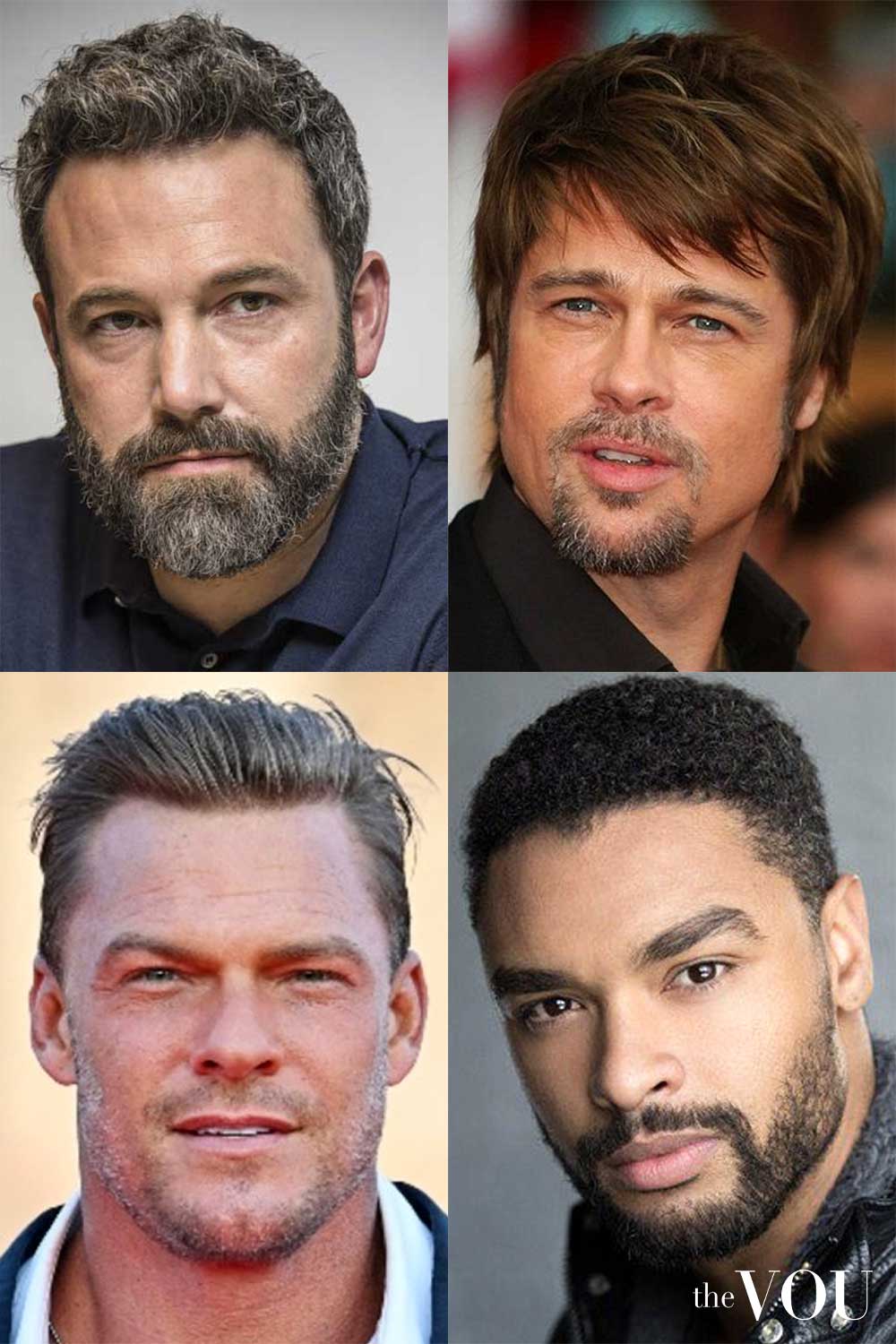
In the example photograph (Ben Affleck), the beard is short to medium and even, with a curved line under the chin.
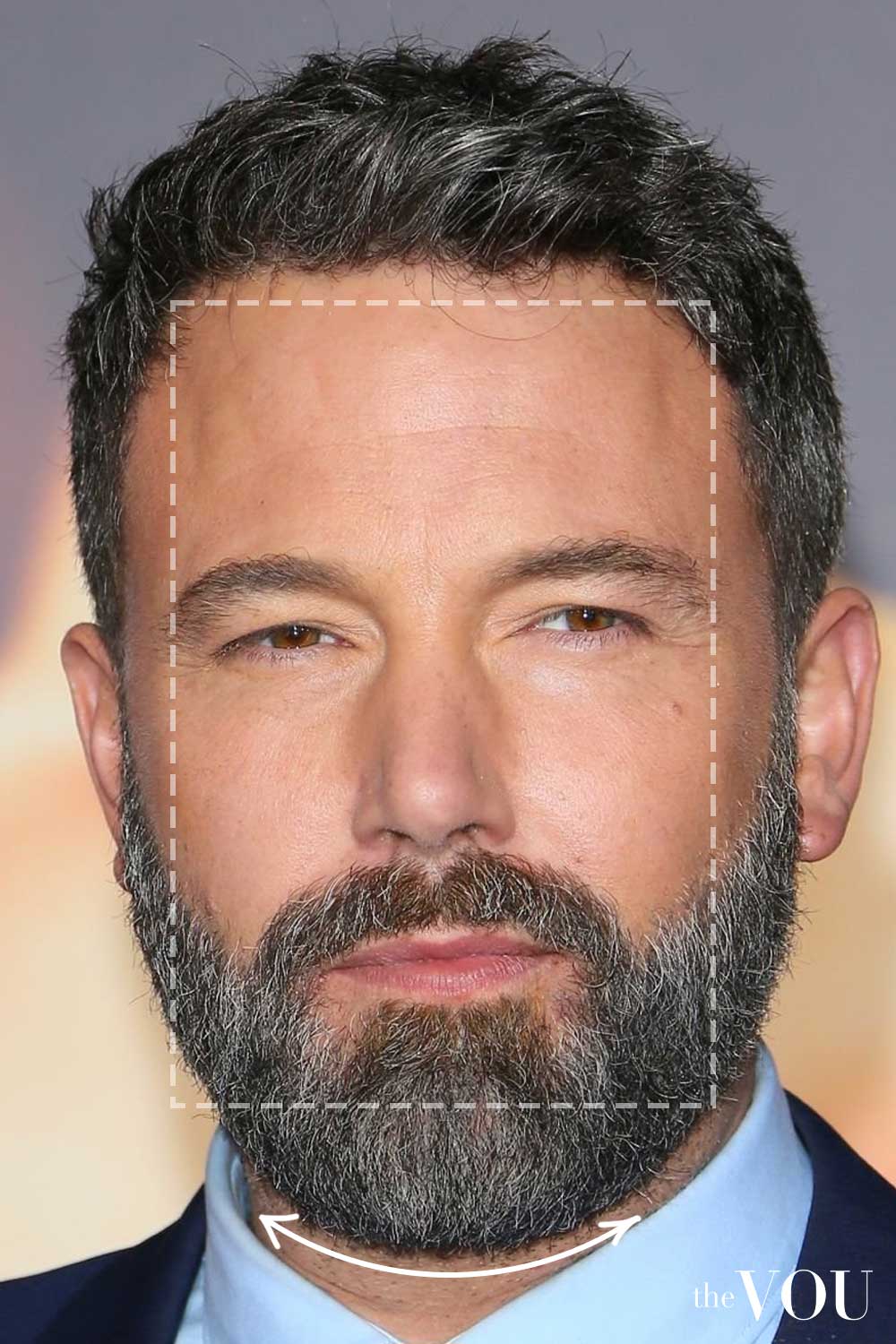
Why it works. Fullness at the sides adds breadth to a long outline, and the curved bottom avoids adding a point, so the overall effect is wider and softer without extra length.
Ask your barber, “Full beard, round the corners and the bottom, keep the sides full, and do not let the chin get longer than the sides.”
For maintenance, keep the bottom line curved and trim whenever the chin starts to outgrow the sides, often about once a week; brushing the sides outwards helps them hold width.
Full Beard with Angled Bottom

The full beard with angled bottom keeps full coverage on the cheeks and jaw and is shaped to a subtle point at the chin.
This is a deliberate angular route. The full sides add width, while the point adds apparent length and sharpness, so it suits readers who like an angular look rather than those trying to make the face look shorter.
In the example photograph (Henry Cavill), taken at an angle, the beard is full and dense along the jaw and narrows towards the chin.
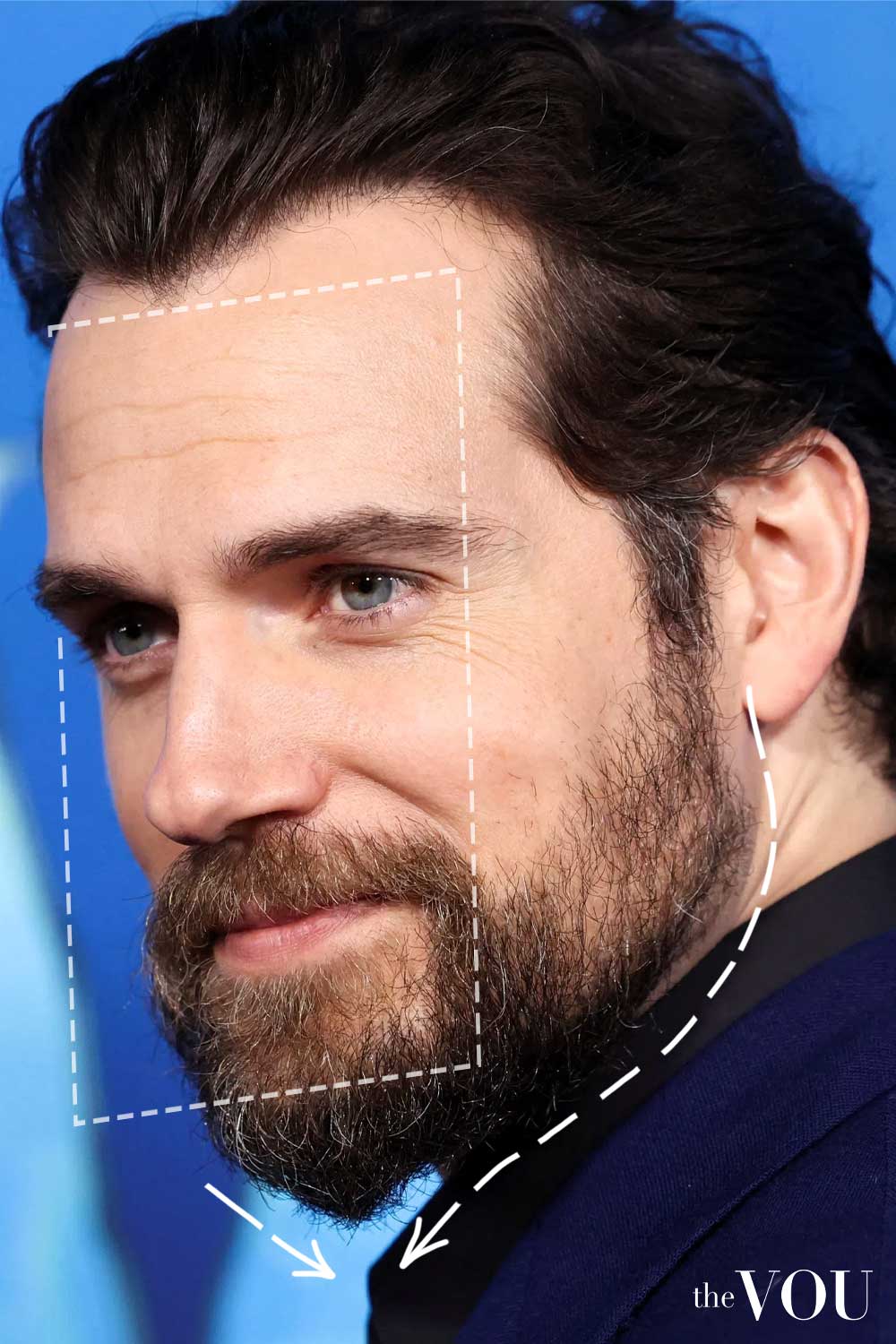
What it does. The point draws the eye down to the chin and echoes angular jaw corners; if you want less added length, keep the point shallow and the sides full, or choose a rounded bottom instead.
Maintenance. Keep the sides even and shape the bottom into a shallow point with scissors or a trimmer, reshaping every few days to a week; the shallower the point, the less length it adds.
Circle Beard

The circle beard, where the moustache connects to the beard around the mouth while the cheeks stay clean-shaven, gives structure through its focused growth pattern.
In the example photograph (Brad Pitt), the moustache and chin hair are light and the cheeks are largely bare.

What it does. Because the cheeks are clean, a circle beard adds no width at the sides; it draws attention to the mouth and chin, and its curves contrast with angular jaw corners.
If adding width is your main aim, a fuller beard does more; if you like a clean, framed mouth, a circle beard is a good choice.
Growth check. It suits strong moustache and chin growth with sparse cheeks, and the moustache needs to reach the chin beard at the corners of the mouth for the circle to close.
To maintain it, keep the connected moustache and chin at one short, even length, shave the cheeks as often as you like them smooth, and trim the curves every few days; a precision trimmer helps keep the connection points clean.
Short Boxed Beard with Fade

The short boxed beard with fade is a short beard with a defined outline, where the sideburns fade gradually into the haircut.
A fade is a graduated transition from hair to beard; it does not require a pointed or longer chin, so you can keep the bottom squared or gently rounded.
In the example photograph (Regé-Jean Page), the beard is short and even with a clean outline, and the sideburns blend into short hair.
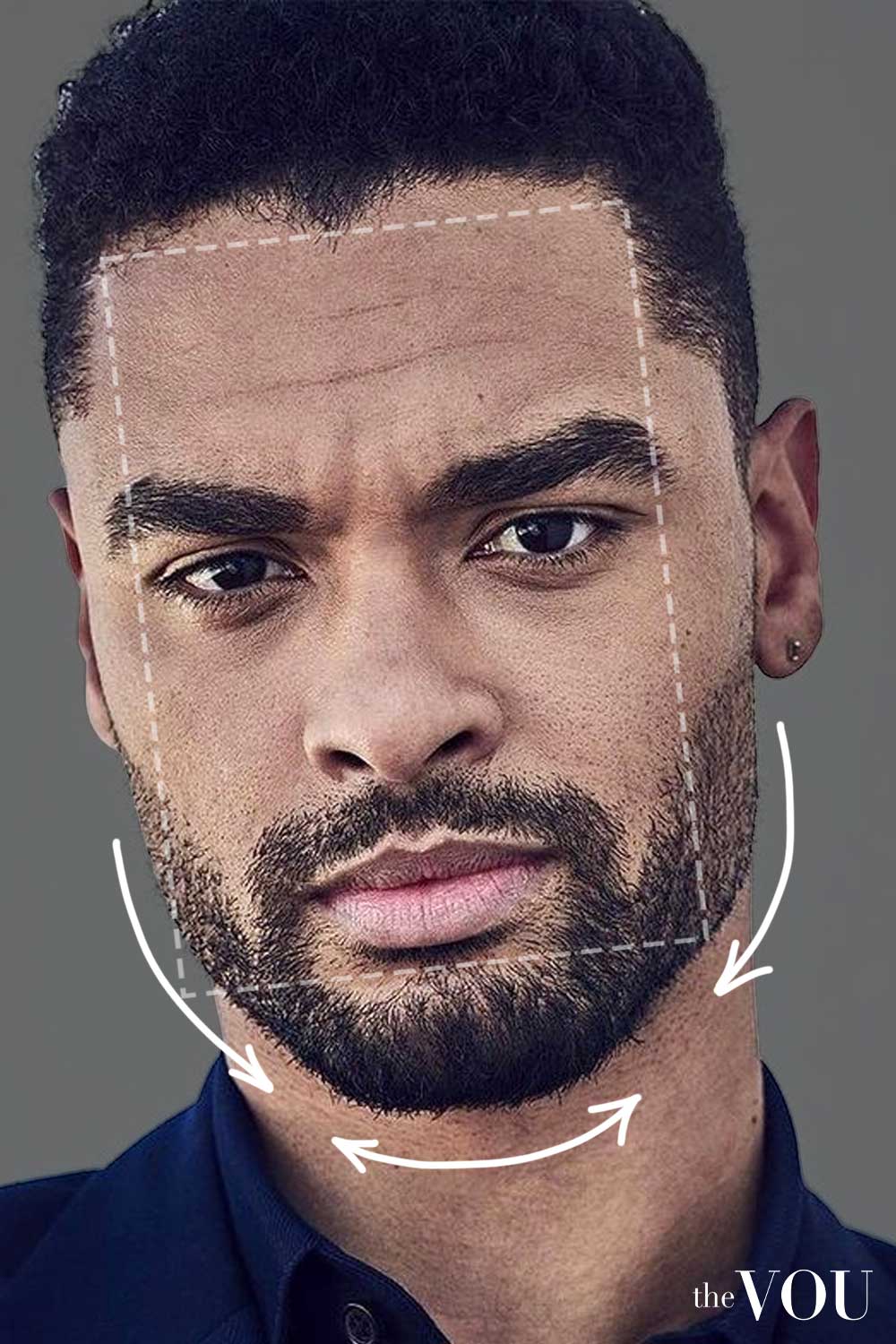
What it does. The short, even sides add a little width and the defined edges echo angular features; a squared bottom keeps the chin from looking longer, while a subtle point adds length if you want it.
Ask your barber, “Short boxed beard, fade from the haircut into the sideburns, keep the bottom square, and clean up the cheek line and neckline.”
Maintenance. The fade needs a barber visit every few weeks to stay smooth, and the outline can be cleaned at home in between.
Designer Stubble

Designer stubble is a short, deliberately groomed shadow of growth, kept at an even length on a very short trimmer setting, with tidy edges.
In the example photograph (Alan Ritchson), the stubble is short and even across the cheeks and jaw.

What it does. Stubble changes the visible outline and texture, not the facial structure underneath; a crisp neckline and cheek line add definition along the jaw, and keeping the sides as full as your growth allows adds a little visual width.
For maintenance, trim every day or two on the same guard to hold the look, keep the edges symmetrical, and choose the guard by the shadow you want rather than a fixed number.
Mixed Features and Uncertain Outlines
If your face is long but your jaw corners look softer, the oblong guide applies; if they look angular but the face is not clearly long, the square guide may fit better.
If your hairline is receding or unclear, face length is hard to judge, so rely on the widths and corner shape you can see.
If your beard already hides your jaw, plan from the visible outline and leave the underlying corner shape as unknown.
If you like a clean-shaven face or a longer, pointed beard, both are valid; they simply show or add length rather than width.
Conclusion
For a rectangle outline, the main beard decisions are how much fullness to keep on the sides and whether the bottom is rounded, squared or pointed.
Whether you choose fuller coverage or minimal growth, let your real growth and the upkeep you want guide the choice, and keep checking the outline in the mirror.
Use our face shape quiz as a starting point, and ask your barber to adapt these styles to your growth and features.
Take the First Step With The VOU’s Styling Quizzes
Start your style journey with our resources. First, take our Face Shape Quiz for a starting point on your face shape and initial styling guidance.
Then, check your colours with our Seasonal Colour Analysis Quiz.
Check your body shape with our Body Shape Quiz, and your personal style with our Fashion Style Quiz.
Styling Consultations
If you would like personal help, you can book a paid consultation.
Our Professional Body Shape Analysis, Fashion Style Analysis, and Complete Image Transformation services are paid consultations; the shop page lists what each one includes.
Visit our styling services page to see our paid consultations.