Start here
What’s This About:
A double-breasted blazer works from business casual offices to summer weddings and weekend lunches, as long as the cloth, colour and what you wear with it suit the occasion and the season.
This guide shows how to wear a double-breasted blazer for different occasions and seasons, such as:
– Business casual outfits with shirts, ties and wool trousers
– Smart casual looks with knitted polos, roll-necks and chinos
– Evening outfits, and why a blazer is not a dinner jacket
– Cloths and colours for spring, summer, autumn and winter
– Fit checks to make before you buy
and many more!
Each outfit names the blazer, top, trousers and shoes, so you can swap in garments you already own.
Key Points:
01Usually keep a double-breasted blazer fastened when you stand, starting with the inside anchor button.
02Navy wool is the most versatile double-breasted blazer, and linen, cotton and tweed versions suit particular seasons.
03For an invitation that asks for a suit or for black tie, wear a suit or a dinner suit instead of a blazer.
04No build rules out a double-breasted blazer; a close fit across the front matters most.
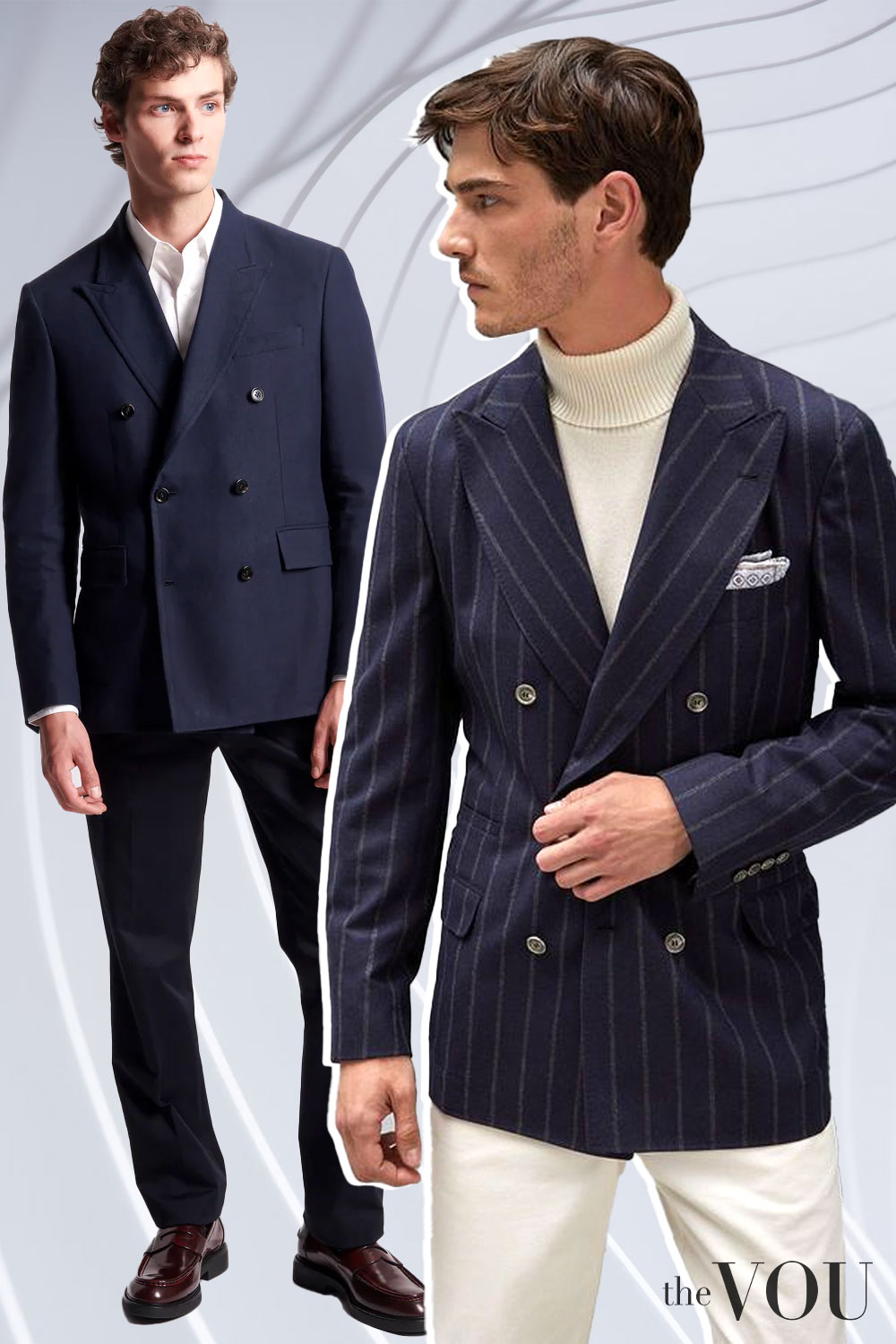
A double-breasted blazer is a tailored jacket with overlapping fronts and two columns of buttons, worn with trousers that do not match it.
It reads a little more formal than a single-breasted blazer, and it is usually worn fastened.
This guide shows how to wear one for different occasions and seasons, and what to check when you buy one, so it can earn a place in a capsule wardrobe.
What is a double-breasted blazer?
A double-breasted blazer has a front that overlaps, with one column of buttons that fastens and one that is mainly decorative.
The classic version is navy wool with metal or horn buttons, a style linked with naval reefer jackets and with the nautical clothes worn by the sea.
It differs from a double-breasted suit jacket, which is worn with matching trousers and often cut in a smoother, more formal cloth; our guide to tailored suits covers suits in more detail.
Compared with a single-breasted blazer, the double-breasted version has a wider overlap and more buttons, so it changes the overall aesthetic of an outfit more noticeably.
Our guide to single- and double-breasted blazers compares the two styles.
How to wear a double-breasted blazer
Fasten the hidden inside button first, then the higher of the two working buttons on a 6×2 or 4×2 blazer; leaving the lower working button open is common, and fastening it too is also acceptable.
Usually keep the blazer fastened when you stand, because the overlapping fronts hang loosely when open.
Wear trousers in a clearly different colour or texture from the blazer, so the outfit does not look like an odd attempt at a suit.
Double-breasted blazer outfits by occasion
These outfits are starting points; swap any garment for one you own in a similar colour and formality.
Business casual
A double-breasted blazer suits business casual offices, client meetings and networking events, where a suit is not expected.
Choose a navy or dark grey wool blazer with a natural shoulder, and wear it with grey or khaki trousers in a lighter or darker shade than the jacket.
Wear: a navy 6×2 wool blazer, a light blue or pale pink shirt, a dark knitted tie, mid-grey wool trousers and brown leather loafers or monk-strap shoes, with a pocket square that picks up a colour from the shirt or tie.
Smart casual
For a date, a weekend lunch or a smart casual party, choose a softer blazer in cotton, linen or a textured wool, ideally with patch pockets.
Wear: a navy or olive cotton double-breasted blazer, a white knitted polo or a plain white T-shirt, stone chinos or dark jeans, and brown suede desert boots or white leather trainers.
Evening
For an evening party or dinner with a smart dress code, a dark double-breasted blazer in velvet or a fine wool looks dressier than a daytime blazer.
Wear: a midnight blue or black velvet double-breasted blazer, fastened over a black or charcoal fine-gauge roll-neck, black or midnight blue wool trousers, and black leather loafers or velvet slippers.
A blazer, even a velvet one, does not meet a black tie dress code, which asks for a dinner suit; our guide to navy blazers covers more evening and daytime ideas.
Formal events and weddings
When an invitation asks for a lounge suit or business formal, a blazer with odd trousers is not a substitute, so wear a suit, which can be double-breasted.
Our double-breasted suit guide covers that option.
For a wedding that asks for smart casual, a double-breasted blazer works well.
Wear: a navy 6×2 blazer, a white shirt with a spread collar, a silk tie in a subtle pattern, mid-grey wool trousers, black or dark brown leather Oxfords and a white pocket square.
Double-breasted blazer outfits by season
Spring
Choose cotton or a wool and linen blend in navy, light grey or a soft blue.
Wear: a light grey double-breasted blazer, a pale blue button-down shirt, cream or white trousers and brown suede loafers.
Summer
Linen, cotton and open-weave wools such as hopsack keep a blazer cooler, and lighter colours such as cream, light blue or stone suit warm days.
Wear: a navy linen double-breasted blazer, a white shirt, a navy knitted tie, white trousers and tan suede loafers.
For a more relaxed summer outfit, wear a cream or light blue blazer with a navy knitted polo, navy linen trousers and loafers.
Autumn
Heavier wools, flannel and tweed in burgundy, forest green, brown or navy suit cooler weather.
Wear: a forest green or brown wool double-breasted blazer, a thin merino jumper or a chambray shirt, brown corduroy trousers and brown leather brogues or Chelsea boots.
Winter
Flannel, tweed and other heavier wools keep a blazer warm, and a double-breasted front adds a layer of cloth across the chest.
Wear: a navy flannel double-breasted blazer, a cream or grey wool roll-neck, charcoal flannel trousers, black leather Chelsea boots and a wool overcoat.
For a dressier winter outfit, swap the roll-neck for a white shirt and a silk tie, and wear black Oxfords.
Fit and sizing
The shoulder seam should end at the edge of your shoulder, and the collar should rest on your shirt collar.
When fastened, the blazer should close without pulling into an X shape around the button, and the overlap should stay closed when you move.
The jacket should usually cover your seat, and the sleeves should end at the wrist bone with a little shirt cuff showing.
Choosing a double-breasted blazer for your build
No build rules out a double-breasted blazer, and a close fit across the front matters more than any proportion rule.
Beyond fit, the style is a choice about the silhouette you like: a 6×2 blazer with a higher button stance gives a shorter opening, and a 4×2 or Kent layout gives a lower, longer opening.
Wider lapels draw more attention to the chest and shoulders, and narrower lapels give a slimmer line, so try a few styles in front of a full-length mirror.
If the proportions look wrong, ask a tailor about the button position, the jacket length and the lapel width before you rule the style out.
Common mistakes
Buying a blazer that only fits when open: a double-breasted blazer is usually worn fastened, so check the fit with every working button done up.
Wearing it open as a habit: an open double-breasted blazer has loose fronts that flap, so keep it fastened when you stand unless you are deliberately wearing a soft blazer open for an occasional relaxed look.
Clashing patterns: if the blazer has a bold pattern, such as a windowpane check or houndstooth, keep the shirt and trousers plain.
Too many accessories: one or two, such as a pocket square and a watch, are usually enough.
Final thoughts
A double-breasted blazer is one of the more versatile tailored jackets once it fits you well.
For the garments it sits beside, see our guide to Old Money wardrobe essentials.
Choose the cloth for the season, keep it fastened, and dress it up or down with the shirt, trousers and shoes you wear with it.
Mandy Meyer’s focus at The VOU is men’s body-shape styling, garment fit and outfit proportions. Her coverage addresses the practical questions behind a wardrobe choice: how a jacket sits across the shoulders, how trousers fall and how different cuts change the silhouette a wearer wants to create.
Her subject areas include the triangle, inverted triangle, rectangle, oval, trapezoid, hourglass and diamond labels used in body-shape styling. These provide starting references for comparing visible proportions; they do not capture every body or prescribe one correct way to dress. The focus connects those observations with garment shape, construction, length and the relationship between the upper and lower parts of an outfit.
Mandy’s editorial coverage combines visual comparisons with fit checks for comfort and movement. Readers can consider whether a cut gives them the room they need, where clothing pulls or gathers and which changes might support their preferred look. The aim is to make menswear choices more understandable while keeping personal preferences and the wearer’s own styling goals central.