
Start here
What’s This About
For an oval outline, the most useful suit is one cut with room through the middle: a jacket that closes without pulling and trousers whose waistband sits where you are comfortable standing and seated.
This guide compares the suit choices that matter most for a fuller middle, such as:
single-breasted jackets, button stance and jacket length
peak versus notch lapels, and when a double-breasted jacket works
trouser rise, waistband position, leg shape and break
British, Italian and American cuts compared
and many more!
Every choice below is an option to try on, with the reason behind it, not a rule.
Key Points
01Fit comes first: the jacket button should fasten without X-shaped creases, and the trousers should not dig in or slide down when you sit.
02A single-breasted jacket with a lower button stance and a gentle shape through the waist is the simplest starting point; a double-breasted jacket can also work if it is cut with enough room.
03Peak and notch lapels both suit an oval outline; choose a lapel width in proportion to your shoulders and jacket rather than a fixed measurement.
04Rise labels vary between makers, so judge trousers by where the waistband actually sits on you, not by the navel or a size label.
Ready-to-wear suits are cut for a standard set of proportions, so a man with a fuller middle often finds that a jacket fits the shoulders but pulls at the button, or that trousers fit the seat but dig in at the waistband.
This guide explains which jacket and trouser cuts give an oval outline room and a clean line, and what each detail is meant to do, so you can compare the options on your own body.
What is an Oval Body Shape?
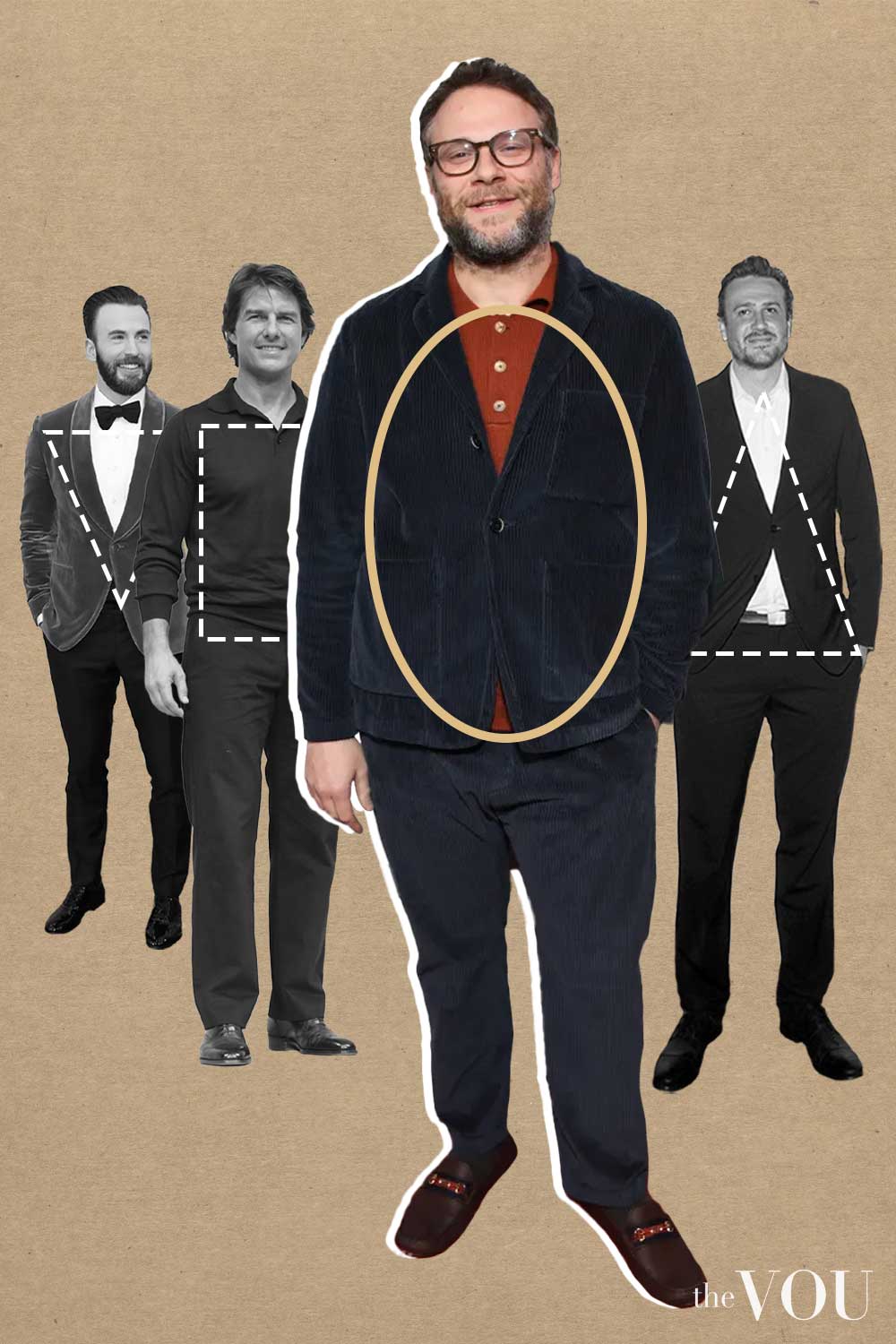
In this guide, we use oval body shape for a rounded, fuller-middle outline, with the fullness spread fairly generally through the torso.
It describes how the outline looks, not a measurement, and it says nothing about health, fitness or the size of your arms and legs.
The VOU uses seven body shape names.
Triangle, Inverted Triangle, Rectangle, Trapezoid and Hourglass follow familiar styling usage; Oval and Diamond are described in The VOU’s own words.
We use Diamond for an outline whose middle stands out more distinctly between a comparatively narrower upper and lower torso, and if both descriptions seem to fit you, the suit advice below applies to both.
There is no tape measurement that settles the label.
What matters for a suit is the room the jacket and trousers need through the middle, which is why tailors, including those in the Savile Row tradition, fit the cloth to the whole torso rather than to a shape name.
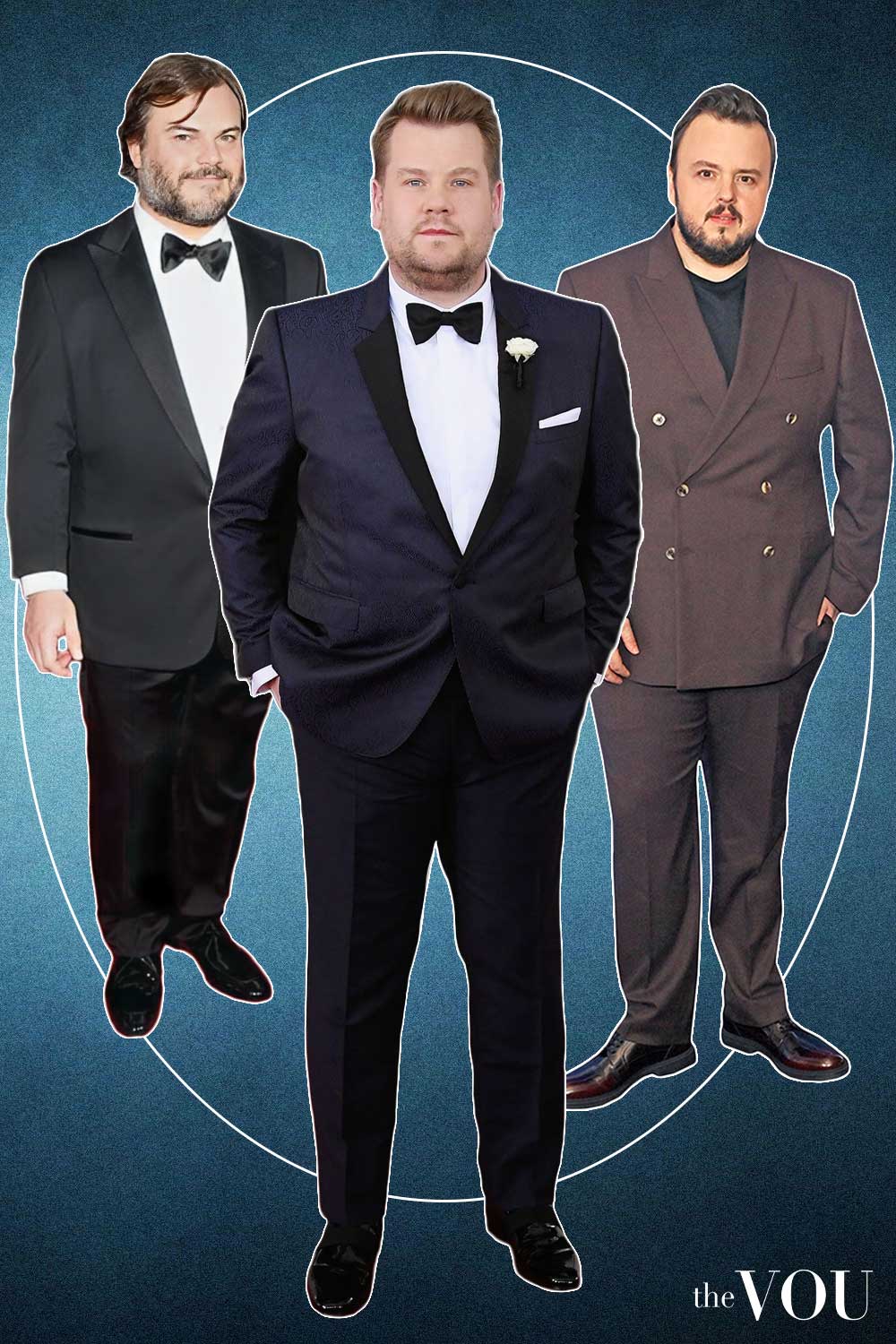
If you want to see how other men dress a fuller middle, our celebrity suit and outfit examples show how fuller-middle outfits have been worn in public.
Which Jacket Cut Works Best for Oval Body Shapes?
Single Breasted
A single-breasted jacket with gentle shaping through the waist and some structure in the shoulders is the simplest starting point for an oval outline.
Heavy waist suppression tends to pull across a fuller middle, while a little shaping keeps the jacket from looking boxy.
A one-button or two-button stance opens a longer V at the front than a three-button jacket, which is meant to give the torso a longer line.
Check where the fastening button falls: if it sits on the fullest point of the stomach, it is more likely to pull, so compare a jacket whose button sits a little higher or lower, or a cut with more room through the front.
A common tailoring convention is a jacket long enough to cover the seat, with the hem near the knuckles of your thumb when your arms hang relaxed.
A jacket that is too short can draw attention to the middle; one that is too long can shorten the legs, so treat the convention as a starting point and compare in a full-length mirror.
Shoulders with light structure, whether roped or natural, give the jacket a clear frame so that the cloth falls from the shoulders rather than resting on the stomach.
Very heavy padding is not needed.
Peak lapels point upward and outward and are meant to draw the eye toward the shoulders; notch lapels are the quieter, more everyday choice and work equally well.
There is no correct lapel width: a lapel that is in proportion to your shoulders and the jacket’s front usually looks right, and a very narrow lapel can make a broad torso look broader by contrast.
Double Breasted
A double-breasted jacket is often said to suit only slim men, but it can work for an oval outline when it is cut with enough room, because the overlapping front adds a layer of cloth over the middle.
The 6×2 button configuration, six buttons with two that fasten, is the most traditional arrangement.
A 6×1 or 4×1 fastens at a single, lower button, which gives a longer lapel line and moves the fastening point, which may help if a 6×2 pulls at the fullest point, so it is worth trying.
A double-breasted jacket is worn fastened, so check it buttoned, standing and seated.
If the front strains or the overlap gapes, choose a single-breasted jacket or a double-breasted cut with more room through the front; shoulder alterations are difficult, so buy for the shoulders first.
Peak lapels are the usual double-breasted lapel and are meant to draw the eye upward.
Keep the rest of the outfit simple: a plain or quiet cloth and little extra detail stop the extra cloth of a double-breasted front from adding bulk.
How Should Suit Trousers Be Cut for Oval Body Types?
Straight or gently tapered legs give the trousers a line that matches the room in the jacket.
A very narrow leg below a fuller middle makes the contrast between them stronger; a very wide leg adds bulk.
There is no correct leg opening, so compare the leg with your shoes and jacket length.
Rise and waistband position matter more than any other trouser detail for a fuller middle.
The navel is not a fixed waist, and your natural waist and the fullest point of your abdomen may be at different heights.
Some men prefer a higher rise that sits above the fullest point; others prefer a waistband that sits below it.
Rise labels vary between makers, so check where the waistband actually sits when you stand and when you sit, and choose the position that stays put without digging in.
For length, a slight or quarter break, where the hem just meets the shoe with a small fold, is one common convention; a fuller break or no break are also valid choices.
What matters is that the cloth does not pool at the ankle.
Side adjusters or braces hold the trousers without a belt pulling at the waist, which many men with a fuller middle find more comfortable and which avoids a belt line across the stomach.
Which Suit Styles Work for an Oval Body Shape?
Suit styles are loose traditions, and makers in every country cut a range of shapes, so treat these descriptions as starting points rather than labels to buy by.
A British cut, with moderate shaping through the waist and some structure in the shoulders, gives a clear frame while leaving room through the middle, which is why it is a common recommendation for an oval outline.
Very slim, closely tapered cuts, whatever their origin, tend to pull across a fuller middle; if you like a lighter Italian style, look for a softer shoulder with enough room through the front rather than a tight fit.
The American sack suit has a straighter body with little or no waist shaping and a natural shoulder.
It gives plenty of room through the middle, which some men with an oval outline find comfortable; others prefer a little more shape and structure.
Made-to-measure tailoring usually adjusts a base pattern to your measurements, while bespoke drafts a pattern for you with fittings, so in either case ask the tailor how the house cut would be adjusted for a fuller middle rather than choosing by reputation.
How Should a Suit Be Tailored for an Oval Body Shape?
Whether you buy ready-to-wear and alter it or commission a made-to-measure or bespoke suit, the same fit checks apply.
The front: the jacket should fasten without X-shaped creases around the button, and the fronts should hang without flaring open at the hem.
A ready-to-wear jacket can often be taken in at the waist, but letting it out depends on how much spare cloth is in the seams, so buy for the middle and alter elsewhere.
The sleeves: sleeve pitch, the angle at which the sleeve is set, should follow the way your arms naturally hang, otherwise creases form across the sleeve.
Whether pitch can be changed on a finished jacket depends on its construction, so ask a tailor before buying.
The back: enough room for movement without folds pooling above the seat, and a hem that hangs level rather than lifting at the back.
The collar: the jacket collar should sit against the shirt collar without standing away from it when you stand naturally.
The sides: the jacket should follow your outline from chest to hip without pulling at the side seams or bunching at the hip.
A well-fitted suit will not change your body, but a jacket that fastens cleanly and trousers that sit comfortably let the cloth hang in a smooth line, which is what makes a suit look good on any build.
Style Like a True Gentleman
Before we say goodbye, fit does most of the work, whether or not you ever work with image consultants.
Professional styling starts with getting the fit right and choosing clothes that suit the occasion; knowing your body shape and seasonal colour palette can make the choosing quicker.
Our guides also cover styling by occasion, location, season and time of day, garments, footwear, accessories and heritage fashion brands.
Take our three quizzes, then book a consultation if you would like personal help:
1. Find Your Body Shape
Different garments suit different silhouettes.
To compare your outline with the seven body shape descriptions, take our body shape quiz for men.
2. Find Your Seasonal Colours
The garments in your outfits come in many colours.
To see which seasonal colour palette may suit you, take our seasonal colour quiz for men.
3. Find Your Fashion Style
To explore your personal fashion style, take our fashion style quiz for men; it suggests styles, outfit ideas and brands to explore.
Book a Consultation with The VOU
For personal help, you can book paid consultations with our image consultants and fashion stylists.
Our styling services for men page lists the paid consultations.
Wearing luxury brands is not enough on its own; how your clothes fit and suit the occasion matters more, and our personal style guide covers the rest.
For more on labels, see our guide to logo-heavy luxury brands and how to wear them.
Contact us if you would like to book a consultation.
Mandy Meyer’s focus at The VOU is men’s body-shape styling, garment fit and outfit proportions. Her coverage addresses the practical questions behind a wardrobe choice: how a jacket sits across the shoulders, how trousers fall and how different cuts change the silhouette a wearer wants to create.
Her subject areas include the triangle, inverted triangle, rectangle, oval, trapezoid, hourglass and diamond labels used in body-shape styling. These provide starting references for comparing visible proportions; they do not capture every body or prescribe one correct way to dress. The focus connects those observations with garment shape, construction, length and the relationship between the upper and lower parts of an outfit.
Mandy’s editorial coverage combines visual comparisons with fit checks for comfort and movement. Readers can consider whether a cut gives them the room they need, where clothing pulls or gathers and which changes might support their preferred look. The aim is to make menswear choices more understandable while keeping personal preferences and the wearer’s own styling goals central.