
Start here
What’s This About
Seven shirt colours (white, light blue, pale pink, navy, sage green, lavender and cream) work well for a slim build, and the shade within each that suits you depends on your colouring.
This guide covers each colour with practical choices, such as:
cloths and textures that hold their shape on a slim frame
seasonal colour shades for Spring, Summer, Autumn and Winter
how to wear stripes, black and dark shirts if you like them
fit checks that matter more than any colour
and many more!
No colour or stripe will reliably make you look broader, so treat each suggestion as an option, not a rule.
Key Points
01Fit comes first: a shirt that fits your shoulders and chest without billowing does more for a slim build than any colour.
02Cloths with some body, such as Oxford, twill and herringbone, hold their shape better than very thin cotton.
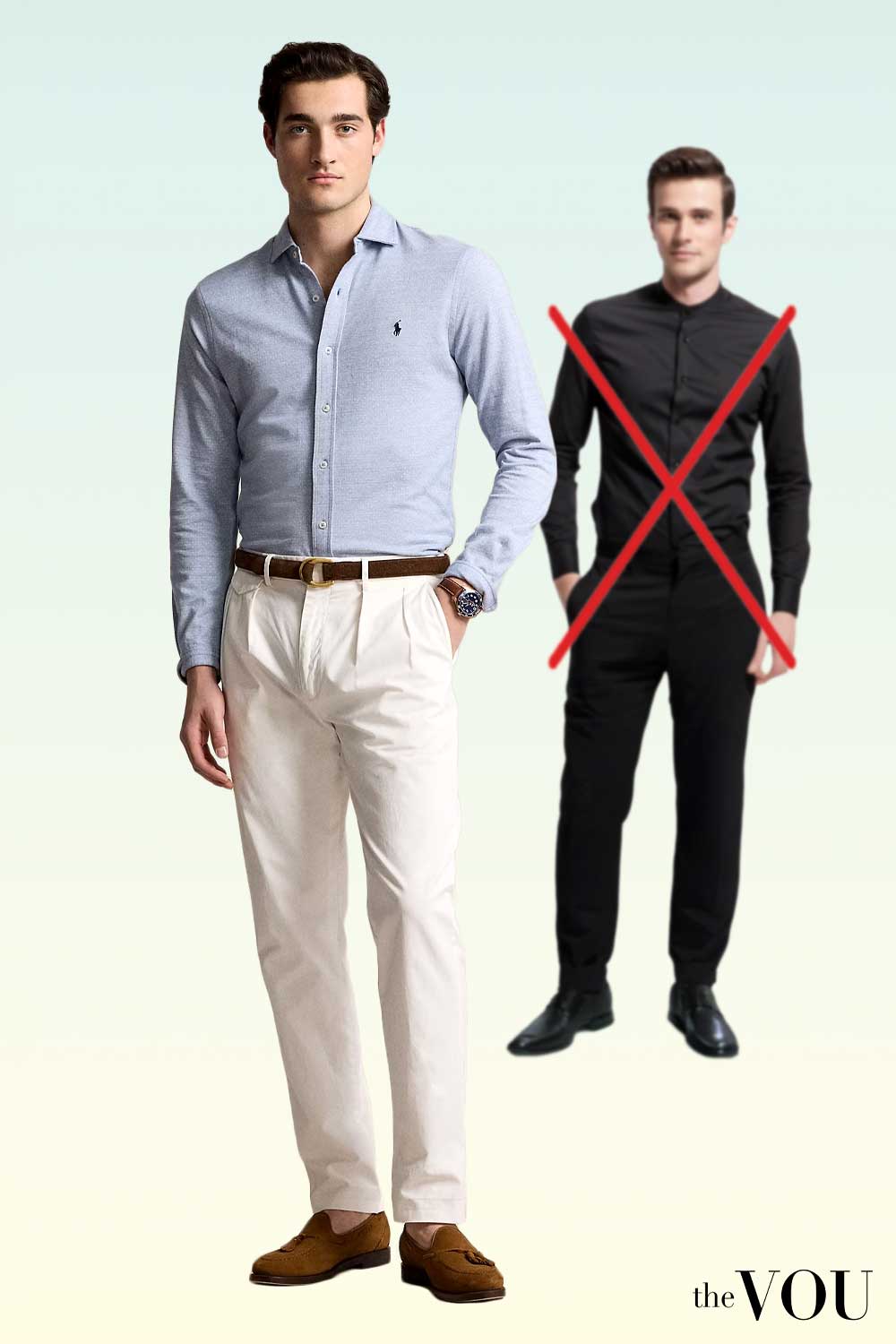
03Lighter and mid tones are a common choice if you want more visual presence on top, but dark shirts are equally wearable.
04Studies do not support a universal widening effect from horizontal stripes or a slimming one from vertical stripes.
Choosing shirt colours for a slim or narrow build comes down to two questions: what look you want for your build, and which shades harmonise with your natural colouring.
A slim build is not a problem to correct.
Some slim men like shirts that give their upper body a little more visual presence; others prefer a clean, narrow line.
Fit matters more than either: a shirt that fits your shoulders and chest without billowing is the starting point for every colour below.
For colouring, the shades within each colour can follow your seasonal colour palette (Spring, Summer, Autumn, or Winter); if you don’t know what your seasonal colour is, here is a simple quiz.
In this article, you’ll find seven shirt colours that work well on a slim build, the cloths that help them hold their shape, how to adapt each one to your seasonal colour palette, and how to approach stripes and darker colours.
1. Classic White
Select a crisp white Oxford shirt that fits your shoulders and chest with a little ease rather than clinging.
Oxford cloth has enough body to hold its shape on a slim frame.
Pure white suits Winter types best, while Spring and Autumn may prefer off-white or ivory.
Shirts with subtle texture, such as herringbone or dobby weaves, add visual interest, which some slim men like, and they work with all seasonal palettes.
Very thin or see-through white cotton tends to cling and show what is underneath, so a slightly heavier cloth is usually the better choice.
Ralph Lauren and Brooks Brothers both sell white Oxford shirts, and Brooks Brothers also offers textured white weaves.
Seasonal colour adaptations:
- Pure white for Winters
- Soft white for Summers
- Ivory for Springs
- Bone White for Autumns
2. Light Blue
Opt for powder blue or chambray shirts; light blue is one of the most versatile shirt colours, for work and weekends alike.
Patterns are a matter of taste.
A horizontal or checked pattern is often suggested for a slim build, and a vertical stripe in light blue is a classic business shirt; studies of stripes have found effects in both directions, one the reverse of the usual rule, and none that settles the widening and slimming rules, so choose the one you like.
Emma Willis and Turnbull & Asser both make light blue shirts.
Seasonal colour adaptations:
- Cool powder blue for Summers
- Bright clear blue for Winters
- Warm turquoise blue for Springs
- Soft steel blue for Autumns
3. Pale Pink
Choose a pale pink shirt in Oxford cloth or royal twill; pale pink can add warmth to the complexion.
A pink shirt with a white collar and cuffs is a smart, slightly formal option if you like the contrast.
Salmon and coral are stronger pinks.
If you prefer a quieter shirt, pale pink is the softer choice, but warm coral and muted salmon appear in the seasonal adaptations below because they can suit Spring and Autumn colouring.
Shirtmakers such as Charvet offer pale pink shirts.
Seasonal colour adaptations:
- Soft rose pink for Summers
- Clear bright pink for Winters
- Warm coral pink for Springs
- Muted salmon for Autumns.
4. Navy
Select navy shirts in cloths with some body, like royal Oxford or twill, which hold their shape well.
Subtle patterns or textures add interest to a dark colour if you find plain navy too flat.
Very lightweight navy cloth can look flimsy and cling to the body, so a slightly heavier weave usually hangs better.
Canali and Tom Ford both offer navy shirts, including textured versions.
Seasonal colour adaptations:
- Deep navy for Winters
- Softer navy for Summers
- Bright navy for Springs
- Muted navy for Autumns
5. Sage Green
Select sage green shirts in textured cloths like Oxford cloth or brushed cotton, which have a soft, substantial feel.
Muted, earthy sage tones are easier to wear than bright or neon greens.
Very pale or washed-out sage can blend into some skin tones, so check the shade against your face in daylight.
Brunello Cucinelli and Drake’s are among the makers that have offered sage and other muted green shirts.
Seasonal colour adaptations:
- Clear sage for Winters
- Soft sage for Summers
- Bright mint sage for Springs
- Deep olive sage for Autumns
6. Lavender
Choose lavender shirts in good cloths like royal Oxford or poplin; lavender is a gentle alternative to blue and pink.
A white collar and cuffs or fine white stripes are options if you like contrast.
Deep purple and strongly saturated lavender are bold shirt colours; if you prefer a softer look, keep to paler shades, and see the seasonal adaptations below for the version that suits your colouring.
Harvie & Hudson and Finamore both make lavender shirts.
Seasonal colour adaptations:
- Clear lavender for Winters
- Soft lilac for Summers
- Warm orchid for Springs
- Muted mauve for Autumns
7. Cream
Select cream shirts in cloths with some body, like royal twill or herringbone, for a softer alternative to stark white.
Cream tones vary from cool to warm, so choose the one that sits best against your skin.
Yellowed or very beige shades can look dated or wash out some complexions.
Kiton and Eton both offer off-white and cream shirts.
Seasonal colour adaptations:
- Cool cream for Winters
- Soft cream for Summers
- Warm cream for Springs
- Rich cream for Autumns
Horizontal and Vertical Stripes
Horizontal stripes are often recommended for slim men to add width.
Controlled studies do not support that as a universal rule: one research paper is titled “horizontal stripes won’t make you look fatter”, and a 2021 study using photographs of a striped dress found horizontal stripes looked slightly thinner than plain cloth.
So choose stripes because you like them.
Evenly spaced stripes in moderate contrast are the easiest to wear, and a stripe width that looks in scale with you is a matter of trying shirts on rather than a fixed measurement.
Saint Laurent sells striped shirts, and Jermyn Street shirtmakers have long offered a wide choice of stripe patterns.
Colours and Patterns to Wear With Care
Black shirts are often discouraged for slim men because dark clothing is thought to make a frame look smaller.
One 2021 study did find darker dresses looked thinner in photographs of a female model, but a perception study of that kind is not a reason to rule black out for a slim man.
If you want more presence on top, a lighter or mid-tone shirt is the usual suggestion; if you like black, wear it, perhaps with a lighter jacket or trousers for contrast.
Vertical stripes are a classic business pattern and suit slim men as well as anyone; some prefer horizontal or checked patterns, which is a matter of taste.
Very busy patterns or tiny checks can look fussy on any shirt, so if you are unsure, a medium-scale pattern is easier to wear.
Dark, all-one-colour outfits such as a charcoal shirt with charcoal trousers tend to give a long, narrow line.
If that is not the look you want, break it up with a lighter layer; if it is, a dark outfit works well.
Final Thoughts on Shirt Selection
Remember that fit comes first; no colour can make up for a shirt that billows or pulls.
Check that the shoulder seam sits at your shoulder point, the chest does not gape between buttons, and the body does not balloon when tucked in.
Choose cloths that hold their shape, such as Oxford, twill and herringbone, rather than very thin cotton that hangs limply.
Consider the occasion when you choose a colour: white and light blue are the safest choices for business, while pink, sage and patterned shirts suit more relaxed settings.
Focus on building a core wardrobe of well-chosen shirts rather than accumulating numerous inferior options.
Style Like a True Gentleman
Before we say goodbye, fit does most of the work, whether or not you ever work with image consultants.
Professional styling starts with getting the fit right and choosing clothes that suit the occasion; knowing your body shape and seasonal colour palette can make the choosing quicker.
Our guides also cover styling by occasion, location, season and time of day, garments, footwear, accessories and heritage fashion brands.
Take our three quizzes, then book a consultation if you would like personal help:
1. Find Your Body Shape
Different garments suit different silhouettes.
To compare your outline with the seven body shape descriptions, take our body shape quiz for men.
2. Find Your Seasonal Colours
The garments in your outfits come in many colours.
To see which seasonal colour palette may suit you, take our seasonal colour quiz for men.
3. Find Your Fashion Style
To explore your personal fashion style, take our fashion style quiz for men; it suggests styles, outfit ideas and brands to explore.
Book a Consultation with The VOU
For personal help, you can book paid consultations with our image consultants and fashion stylists.
Our styling services for men page lists the paid consultations.
Wearing luxury brands is not enough on its own; how your clothes fit and suit the occasion matters more, and our personal style guide covers the rest.
For more on labels, see our guide to logo-heavy luxury brands and how to wear them.
Contact us if you would like to book a consultation.