Start here
What’s This About
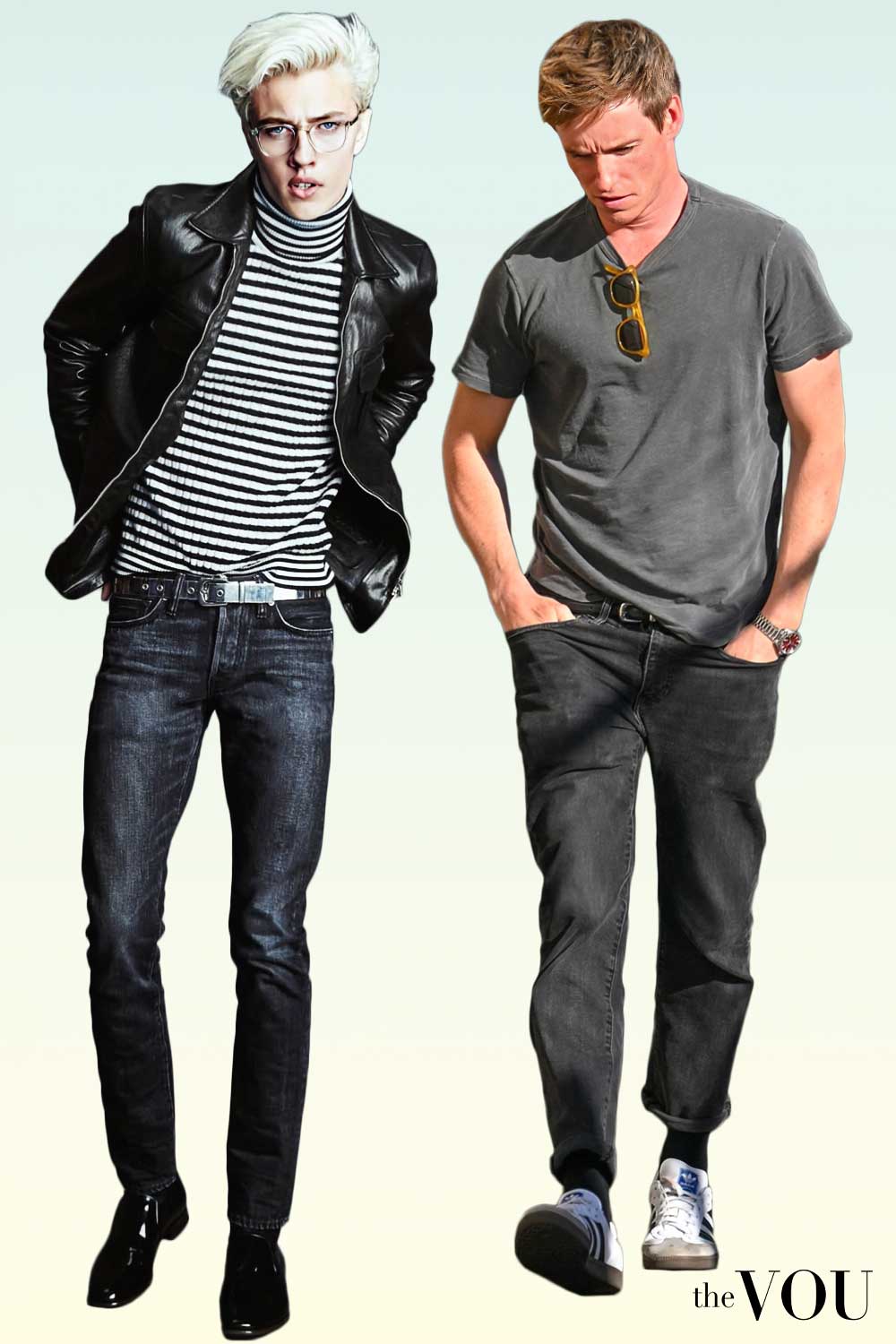
Slim men can wear most jeans; the cut, rise, denim weight and finish decide whether a pair follows your legs closely or gives them a little more presence.
This guide explains the choices that matter on a slim build, such as:
slim-straight, tapered and athletic cuts compared with skinny and baggy fits
where the waistband actually sits, whatever the rise label says
heavier denim, stretch content and dark or faded washes
cuffing, stacking, leg opening and back pocket placement
and many more!
Try jeans on standing and seated, and keep the fits you like wearing.
Key Points
01A slim-straight or gently tapered leg is a common middle ground between skinny and baggy, but neither extreme is wrong if you like it.
02Rise labels vary between makers, so check where the waistband sits when you stand and sit rather than relying on a number.
03Heavier denim tends to hold its own shape more than very light denim; stretch adds comfort, and raw or rigid denim is a valid choice too.
04Wash, cuffs and pocket placement change the look a little, so compare options in a mirror rather than expecting a set effect.
Finding jeans you like with a slim or narrow build can take some trial, because many fits are cut either very close to the leg or with a lot of room.
Slim men can wear most styles of jeans.
The cut, rise, denim weight and finish decide how closely a pair follows your legs, and whether it gives them a little more presence.
This guide explains each of those choices, what it does on a slim build and what to look for when you try jeans on.
Fit comes first: the waistband should sit where you want it without gaping or pinching, the seat and thighs should allow you to sit and bend comfortably, and the length should suit the shoes you wear most.
Compare Slim-Straight, Skinny and Baggy Fits
Slim-straight jeans follow your natural line without clinging, a middle ground between skinny and baggy.
Very skinny fits follow the leg closely, so they show slim legs exactly as they are.
If you want the legs to look a little fuller, a slightly roomier cut is worth trying; if you like the close line, skinny jeans are still a valid choice.
Baggy or relaxed fits carry a lot of extra cloth, and on a slim frame the legs can look lost inside them, particularly with a close-fitting top.
If you like a relaxed fit, balance it with a top that has some volume.
A.P.C.’s Petit Standard (a slim cut) and Acne Studios’ River (a slim tapered cut) are examples of slimmer fits that stop short of skinny.
Check Where the Waistband Sits, Not Just the Rise Label
The rise is the distance from the crotch seam to the top of the waistband.
Labels such as low, mid and high rise are not standardised: one maker’s mid-rise can sit lower or higher than another’s, and the same rise sits differently on a long or short torso.
A jean that sits a little higher, closer to your natural waist, is a common suggestion if you want the legs to look longer and the torso shorter; a lower rise can make the torso look longer.
Neither is wrong, and many men simply prefer the comfort of one or the other.
Rather than relying on a rise number, try jeans on and check where the waistband sits when you stand and when you sit, and whether it stays there without a belt pulling it up.
Nudie Jeans’ Lean Dean and Edwin’s ED-80 are slim tapered fits worth trying; compare the rise measurement each maker lists for your size with a pair you already like.
Consider Mid-Weight or Heavier Denim
Denim weight is usually given in ounces per square yard.
Heavier denim tends to hold its own shape rather than following every line of the leg, which can give slim legs a little more presence.
Very light denim drapes closer to the leg and is cooler in warm weather; it is a fine choice for summer, but it shows a slim build more clearly.
Denim specialists list the weight of each pair, and their ranges vary widely: 3sixteen offers mid-weight denim, while Iron Heart is known for heavyweight denim well above what most high-street brands sell.
Check the listed weight of the exact pair, and try a heavier pair on before buying, because heavy denim can feel stiff at first.
Uniqlo’s selvedge jeans are a lower-priced way to try a firmer denim; check the product page for the current weight.
Choose Washes for the Look You Want
Dark indigo and black washes give an even colour from waist to hem, and they dress up more easily than light washes.
Heavy distressing and strong fading add detail along the leg.
Some men find this breaks up the line of a slim leg; others like the casual look it gives.
Compare a dark and a lighter wash in a mirror rather than expecting a set effect.
Acne Studios’ North fit in ‘Stay Black’ (a skinny cut) and A.P.C.’s New Standard in indigo are examples of darker washes in different cuts.
Try Cuffing Jeans With Boots
A single neat cuff above a pair of boots adds a band of denim at the ankle; choose the cuff width that suits the jeans and boots rather than a fixed measurement.
Jeans that stack in several folds over trainers can look relaxed or untidy depending on the cut and the amount of stacking.
If you prefer a cleaner line, have the jeans shortened or choose a length that just meets the shoe.
Red Wing Iron Rangers and Alden Indy boots are popular boots to wear with cuffed denim.
Notice Back Pocket Placement
Back pockets set a little higher and closer together are often said to make the seat look fuller; low-set or wide-apart pockets are said to make it look flatter.
Treat this as something to compare in a mirror, because the cut of the seat matters more.
Pocket size and position vary between brands and fits, so check them when you try jeans on.
Rag & Bone’s Fit 2 and Tom Ford’s slim-fit jeans are examples of slim jeans to compare.
Consider a Little Stretch for Comfort
A small amount of elastane in the denim allows easier movement while keeping its shape; check the composition on the label, because the amount varies between makers.
Rigid denim with no stretch is also a good choice, and many raw denim jeans are rigid: it holds its own shape and softens with wear, though it can feel stiff at first and needs the right size from the start.
Very stretchy denim is comfortable but may bag at the knee and seat over time.
FRAME’s L’Homme Slim and Paige’s Federal are examples of slim stretch jeans.
Match Your Leg Opening to Your Shoes
The leg opening is the width of the jeans at the hem.
A very narrow opening next to a large shoe can make the foot look bigger, and a very wide one can cover much of the shoe.
There is no fixed opening for each shoe size, because shoe shape and the look you want both matter.
Measure the hem of a pair of jeans or trousers you like with your usual shoes, and compare it with the leg opening listed for the jeans you are considering.
Explore Tapered, Athletic, and Straight-Leg Fits for Versatility
Consider tapered jeans that are roomier in the thigh and narrower towards the ankle, which give a little shape without clinging.
Athletic fits, such as Levi’s 541 Athletic Taper or Bonobos’ athletic fit jeans, offer more room in the seat and thighs while narrowing below the knee; they suit slim men with fuller thighs.
Add classic straight-leg jeans to your wardrobe as a versatile option that works well for both casual and semi-formal occasions.
Japanese denim brand MOMOTARO’s tapered fits and Levi’s 501 Original Fit are examples of these cuts.
Final Thoughts
These suggestions are a starting point for choosing jeans with a slim build; the pair you feel comfortable and confident in is the right one.
Try different fits, rises and weights to see which suit your legs, your shoes and the way you dress.
A few pairs that fit well will serve you better than many that do not.
Specialist denim shops can help you compare slim and tapered fits; Self Edge is one example.
Style Like a True Gentleman
Before we say goodbye, fit does most of the work, whether or not you ever work with image consultants.
Professional styling starts with getting the fit right and choosing clothes that suit the occasion; knowing your body shape and seasonal colour palette can make the choosing quicker.
Our guides also cover styling by occasion, location, season and time of day, garments, footwear, accessories and heritage fashion brands.
Take our three quizzes, then book a consultation if you would like personal help:
1. Find Your Body Shape
Different garments suit different silhouettes.
To compare your outline with the seven body shape descriptions, take our body shape quiz for men.
2. Find Your Seasonal Colours
The garments in your outfits come in many colours.
To see which seasonal colour palette may suit you, take our seasonal colour quiz for men.
3. Find Your Fashion Style
To explore your personal fashion style, take our fashion style quiz for men; it suggests styles, outfit ideas and brands to explore.
Book a Consultation with The VOU
For personal help, you can book paid consultations with our image consultants and fashion stylists.
Our styling services for men page lists the paid consultations.
Wearing luxury brands is not enough on its own; how your clothes fit and suit the occasion matters more, and our personal style guide covers the rest.
For more on labels, see our guide to logo-heavy luxury brands and how to wear them.
Contact us if you would like to book a consultation.