
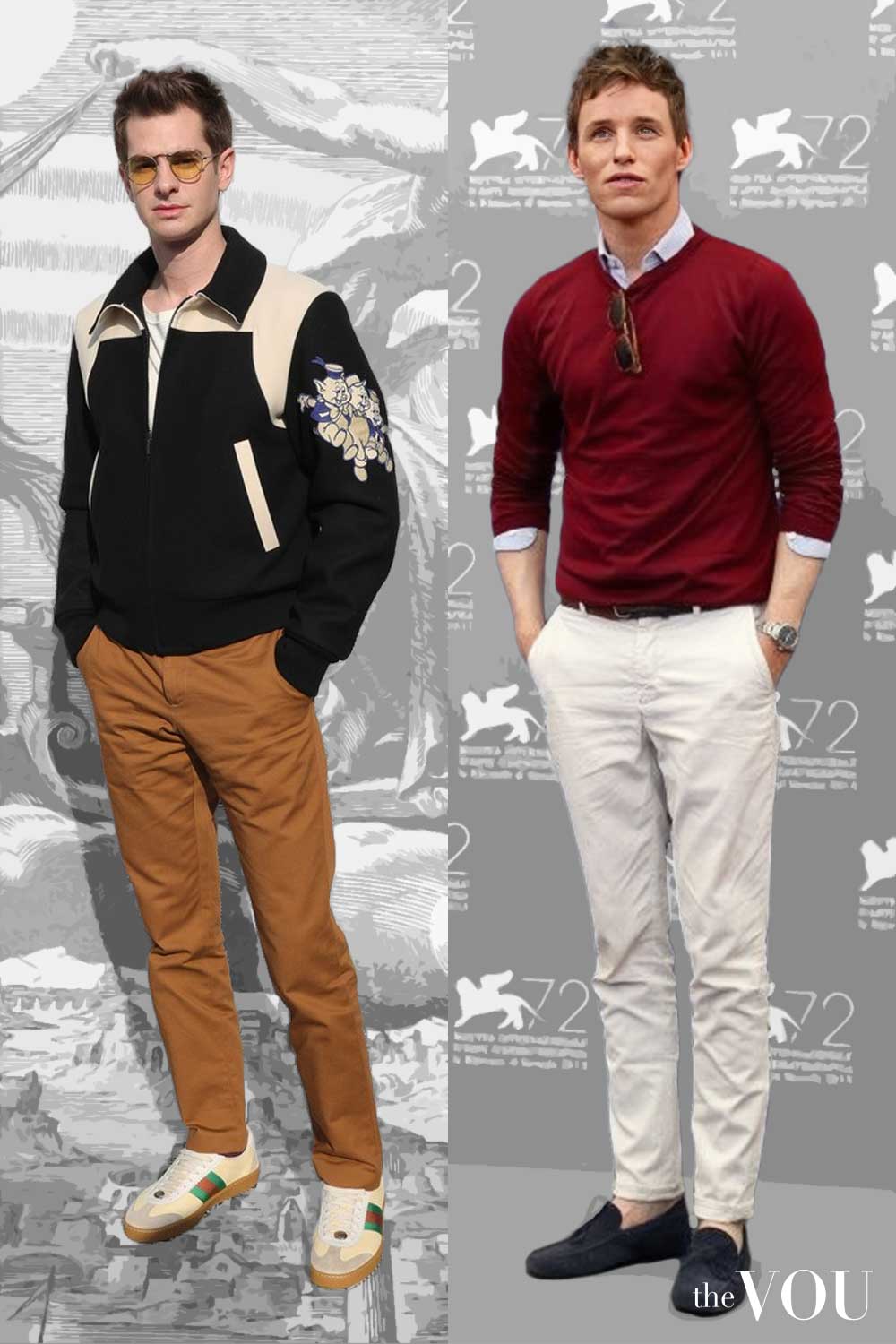
Start here
What’s This About
Chinos suit a slim or narrow build well once the cut, rise and hem length fit you, and styling choices come after that.
This guide covers how to choose and wear chinos on a slim frame, such as
slim-straight, regular and skinny cuts compared
rise, pleats and where the waistband sits
hem length, from a clean break to a rolled cuff
jackets, colours and shoes to wear with chinos
and many more!
A slim build is not a problem to fix, so treat each suggestion as an option to compare in the mirror.
Key Points
01Fit first. Chinos should fasten without pulling, sit where you want them standing and seated, and leave room to move.
02Rise labels vary between makers, so check where the waistband actually sits rather than trusting the label.
03A slim-straight or regular cut is a common choice if you want a little more width at the leg; skinny chinos are a valid look if you like them.
04Choose either a hem that meets the shoe neatly or a deliberate rolled or cropped length, rather than both at once.
Having a slim or narrow build does not limit your choices, and chinos are among the most versatile trousers you can own.
Some men with a slim build avoid chinos because they worry the trousers will hang loosely or make their legs look thinner.
In practice, the cut and the fit decide how chinos look far more than your build does.
A slim build describes overall size, not outline, so it can go with any of The VOU’s seven body shapes; the advice here is about the trousers themselves.
In this guide, you will find how to choose chinos that fit a slim build, and how to style them, from cut and rise to colour and shoes.
Start With a Slim-Straight or Regular Fit
A slim-straight or regular cut leaves a little room through the thigh and keeps some width at the ankle, which some men with a slim build like because the trousers hang cleanly rather than clinging.
Skinny-fit chinos follow the leg closely.
If you want your legs to look fuller, a skinny cut works against that aim; if you like a close, narrow line, skinny chinos are a legitimate choice.
A gentle taper from knee to ankle is a common middle ground; it keeps the hem neat over shoes without hugging the calf.
Ralph Lauren’s Classic Fit and Uniqlo’s regular-fit chinos are examples of roomier cuts to try alongside slimmer ones; fits change between seasons, so check each maker’s current size chart.
Find a Rise That Sits Where You Want It
The rise decides where the waistband sits.
A mid or higher rise that sits at or near your natural waist is meant to give a longer-looking leg line, and many men find it stays in place better when they sit down.
A low rise sits on the hips.
Because it moves the waistband down, it can make the torso look longer and the legs shorter; if you prefer a low rise, a slightly longer jacket or a tucked shirt can change that balance, so compare in a mirror.
Rise labels such as low, mid and high vary between makers, so check where the waistband actually sits when you stand and when you sit rather than relying on the label.
J.Crew’s 484 is one widely sold slim-fit chino to compare; try any pair on, as the rise may sit differently on you than the label suggests.
Consider Subtle Pleats for Room Through the Thighs
Pleats add cloth at the front of the trouser, which gives more room through the hip and thigh.
Some men with a slim build like a pleat or two because the trousers drape with a little more fullness; others prefer a flat front.
Neither is a rule.
One or two shallow pleats give a softer, more relaxed look than deep or multiple pleats.
Check that the pleats lie closed when you stand; pleats that spread open suggest the trousers are tight at the hip.
Pleats can face forward, towards the fly, or backward, towards the pockets.
The direction changes how they open and fold, so try both styles if you can rather than treating one as wrong.
Drake’s and Anderson & Sheppard both sell pleated casual trousers if you would like to see the style in person.
Choose a Hem Length, Neat at the Shoe or Rolled
There are two tidy options for chino length, and it helps to choose one deliberately.
The first is a hem that just meets the top of the shoe, with little or no break.
This gives a clean line and suits loafers, desert boots and smart trainers.
The second is a shorter, more casual length, either cropped or rolled so the hem sits above the ankle.
One or two narrow rolls look neat; how high to go is a matter of taste and the shoes you wear.
Extra length that pools in folds over the shoe is usually unintended; if your chinos do this, a tailor can shorten them.
If rolls keep slipping, a tailor can hem the chinos to the length you prefer, with or without a turn-up.
Layer With Structured Jackets and Knits on Top
If you want more presence above the waist, a blazer or a well-fitted jacket with some shoulder structure is a common choice with chinos.
Textured knits, such as a cable jumper or a shawl-collar cardigan, and layers such as a shirt under a knit, can add visual weight to the upper body.
A tucked-in oxford shirt with a blazer is a classic smart-casual combination; Boglioli and Ring Jacket are two makers of soft-shouldered and structured blazers to try.
For more formal occasions, a fitted waistcoat adds another layer; check that it covers the waistband when you move.
Start With Earth Tones, Then Add Colour
Khaki, olive and stone are versatile chino colours that pair easily with most shirts and jackets, which makes them a practical place to start.
Bright or bold chinos put more attention on the legs.
If you would rather keep the focus on your upper body, keep the brighter colours for shirts and knits; if you enjoy a bright chino, wear it.
Deeper shades such as navy or burgundy work well for evenings and smarter occasions.
Incotex and Officine Générale both make chinos in classic colours.
Match Your Shoes to the Leg Width
Shoes with a moderate profile are an easy match for slim-straight chinos.
Very chunky shoes can look heavy below a narrow leg, and very sleek shoes can make a narrow leg look narrower still; if a balanced line is the aim, compare a moderate shoe with each in a mirror.
Classic options include Clarks desert boots and minimalist trainers such as Common Projects.
For smarter occasions, oxford shoes with a medium-width sole from makers such as Crockett & Jones or Church’s sit well under a chino hem.
Consider the Fabric Weight and Texture
A medium-weight cotton twill holds its shape and hangs straight, which some men with a slim build prefer to a very light cloth that can cling.
Makers describe weight in different ways, so compare the feel in your hand rather than relying on a number.
Very light chinos are cooler in summer; heavier ones feel stiffer at first and soften with wear.
Choose the weight for the season as well as the look.
A cotton twill with a slight texture adds visual interest.
Sunspel and A.P.C. are two makers that sell cotton chinos to compare.
Pay Attention to Pocket Placement and Size
Back pocket size and position change how the seat looks, so check chinos from behind in a mirror.
Pockets that are very large on a narrow seat can look out of scale, and very small ones can look lost.
Slanted front pockets lie flatter than straight side pockets on many trousers; check that they do not gape open when you stand.
Acne Studios and Norse Projects are two makers whose chinos you can compare for pocket shape.
Final Thoughts
Wearing chinos with a slim build is not about limitations; it is about choosing the cut, rise and length that suit you.
Focus on fit first, then experiment with colours, layers and shoes to find what you enjoy wearing.
Confidence in any garment comes largely from how well it fits and how comfortable you feel in it.
A tailor can shorten the hem or adjust the waist of most chinos; ask what is possible before buying a pair that does not quite fit.
Style Like a True Gentleman
Before we say goodbye, fit does most of the work, whether or not you ever work with image consultants.
Professional styling starts with getting the fit right and choosing clothes that suit the occasion; knowing your body shape and seasonal colour palette can make the choosing quicker.
Our guides also cover styling by occasion, location, season and time of day, garments, footwear, accessories and heritage fashion brands.
Take our three quizzes, then book a consultation if you would like personal help.
1. Find Your Body Shape
Different garments suit different silhouettes.
To compare your outline with the seven body shape descriptions, take our body shape quiz for men.
2. Find Your Seasonal Colours
The garments in your outfits come in many colours.
To see which seasonal colour palette may suit you, take our seasonal colour quiz for men.
3. Find Your Fashion Style
To explore your personal fashion style, take our fashion style quiz for men; it suggests styles, outfit ideas and brands to explore.
Book a Consultation with The VOU
For personal help, you can book paid consultations with our image consultants and fashion stylists.
Our styling services for men page lists the paid consultations.
Wearing luxury brands is not enough on its own; how your clothes fit and suit the occasion matters more, and our personal style guide covers the rest.
For more on labels, see our guide to logo-heavy luxury brands and how to wear them.
Contact us if you would like to book a consultation.