
Start here
What’s This About
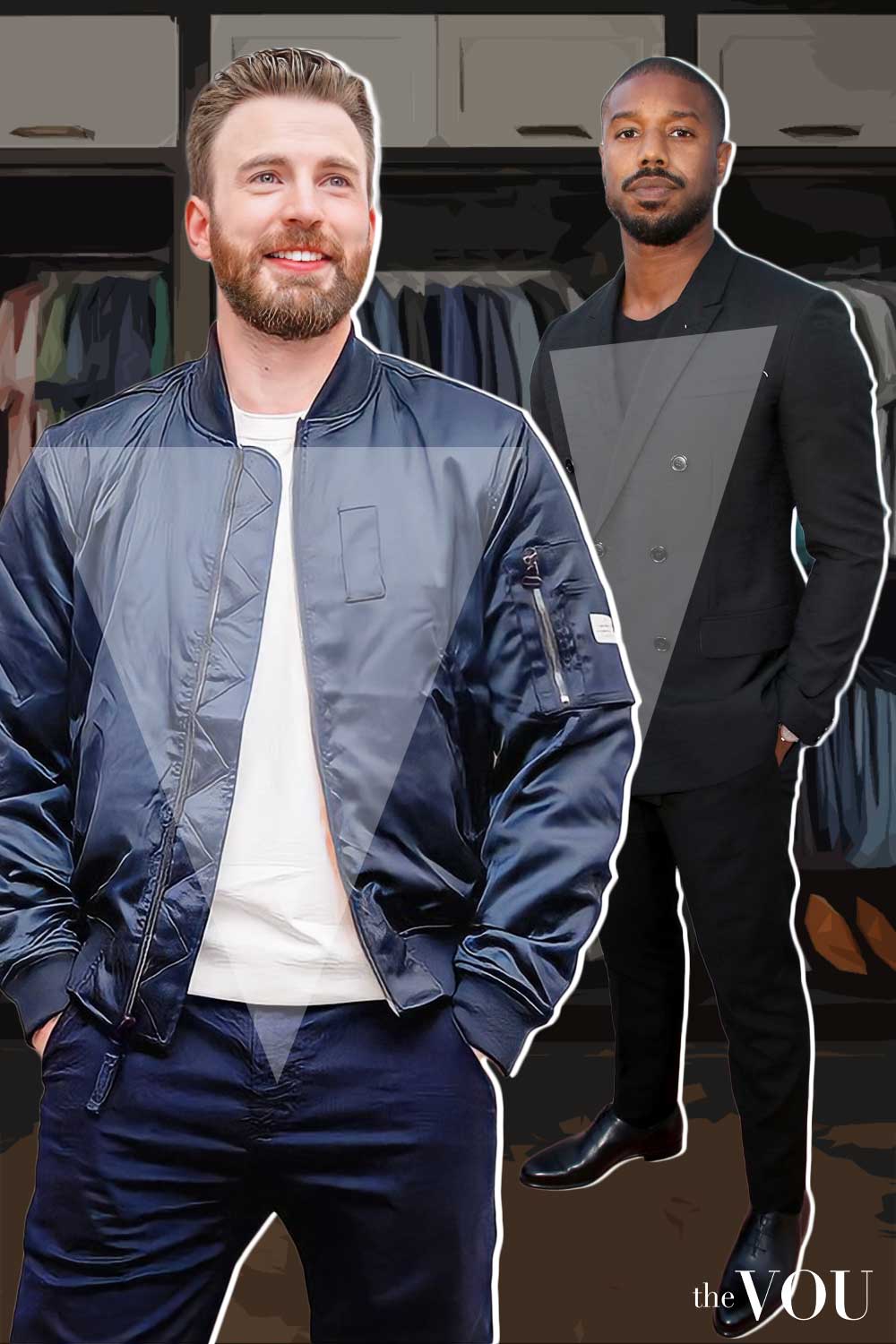
An inverted triangle wardrobe starts with jackets, shirts and knitwear that fit broad shoulders and chest, then adds garments chosen for the look you want.
This guide covers wardrobe staples for an inverted triangle outline, such as:
the fit checks to make before choosing any style
softer and more structured jackets, and what each is meant to do
trousers, jeans and footwear for more presence below the waist
knitwear, polos and accessories with named heritage examples
and many more!
Balancing the outline is an option, not a requirement, so compare each suggestion on your own body.
Key Points
01Buy jackets and shirts for the shoulders and chest first; the waist is usually the easier alteration.
02Softer shoulders tend to play down width, and structured shoulders tend to show it; either is a valid choice.
03Straight, bootcut or wider trousers and sturdier shoes are common ways to add presence below the waist, but no cut has a guaranteed optical effect.
04Named products are examples; check the current range, cut and sizing with the maker before buying.
The inverted triangle body shape describes a shoulder and upper torso outline that looks noticeably broader than the hips.
It is one of seven body shape names The VOU uses: Triangle, Inverted Triangle, Rectangle, Trapezoid and Hourglass follow familiar styling usage; Oval and Diamond are described in The VOU’s own words.
The name describes how the outline reads, not a measurement, and it says nothing about fitness, strength or the size of your thighs.
Some men with this outline want a more even look between shoulders and hips; others are happy to show the contrast.
This guide covers wardrobe staples for either aim, and each section says what the garment is meant to do so you can decide whether that aim is yours.
The suggestions lean towards a classic, old-money aesthetic, with named examples from heritage makers.
Ranges and cuts change from season to season, so check the current product page, size chart and fit notes before buying.
Fit Comes First
Before any styling choice, check how each garment sits on your body.
With this outline, a jacket or shirt that fits the shoulders and chest often has spare cloth at the waist, and a shirt that fits the waist may pull across the chest.
Buy jackets, shirts and knitwear to fit the shoulders and chest: the shoulder seam should sit at or close to the edge of your shoulder (unless the design is deliberately dropped), the jacket should fasten without pulling into an X across the front, and you should be able to reach forward without the back straining.
A tailor can usually take in the waist and sleeves; a jacket that is too narrow across the shoulders is much harder to fix.
For trousers, do not assume a narrow lower half.
Check the seat and thighs standing and seated, and check where the waistband actually sits on you, because rise labels vary between makers.
Tailored Charcoal Grey Blazer
A tailored charcoal grey blazer is a versatile starting point.
If you want to play down shoulder width, look for natural or lightly padded shoulders; having the waist taken in to follow your outline shows the taper instead of hiding it, so choose how closely you want the jacket to follow your body.
Opt for fabrics like lightweight wool or cashmere for versatility across seasons.
The Tom Ford O’Connor wool blazer is one example; it is often listed as a slim fit, so try it on, or compare its measurements, across the chest and shoulders before buying.
Pair the blazer with straight-leg trousers for a simple tailored outfit.
Olive Green Bomber Jacket
An olive green bomber jacket offers a casual yet polished option.
A bomber ends at the waist and gathers into a rib hem, so it tends to show your shoulder-to-hip taper rather than hide it.
If you would rather play the taper down, a longer, straighter jacket such as a field jacket or overshirt is the alternative to try.
Choose a jacket with minimal detailing to maintain a classic aesthetic.
Brunello Cucinelli has made bombers in virgin wool and silk techno poplin, a quiet option for weekends; check the current range for availability.
If your middle is also fuller, our casual outfit ideas for an oval body shape may be useful alongside this guide.
Unstructured Tweed Sport Coat
An unstructured sport coat in tweed or herringbone adds texture and character.
Without heavy shoulder padding, the jacket follows your natural shoulder line rather than adding width to it, which suits you if you want to play shoulder width down.
A heavier tweed adds some bulk of its own, so compare a lighter tweed or herringbone if the jacket feels thick across the chest.
Ralph Lauren has offered Harris Tweed sport coats across its tailoring lines; check the current range for one that fits your shoulders and suits an old-money style.
Double-Breasted Camel Coat
A camel overcoat is a classic winter coat, and the double-breasted version is an option with a condition.
Its overlapping front and two rows of buttons are often said to add width across the chest, which suits you if you are happy to show a broad upper body; if you would rather play the chest down, a single-breasted camel coat with natural shoulders is the alternative to compare.
A belted or half-belted camel coat marks the waist and so emphasises the taper; leave the belt loose or choose a coat without one if you want a straighter line.
Fit the coat over the jacket or knitwear you will wear underneath it.
Loro Piana makes camel hair cloth and coats; check the current range for a cut that suits you.
Polo Shirts
Polo shirts with soft collars are versatile casual shirts.
Choose one that fits the chest and upper arms without gripping them, so the body does not ride up or balloon at the waist.
The Sunspel Riviera polo shirt, made in cotton mesh, is one example, sold in navy, white and other colours.
V-Neck Merino Wool Sweaters
V-neck sweaters in fine merino wool are a common suggestion for this outline: the V is meant to break up the width across the chest, and it opens the neckline.
If you prefer a crew neck, that is also fine; the V-neck is one way to play chest width down, not a requirement.
Fine merino also layers well under a tailored blazer.
The John Smedley Bobby is a fine merino V-neck sweater sold in many classic colours.
(The John Smedley Belvoir, sometimes mentioned in the same breath, is a rollneck.)
Horizontal Striped T-Shirts
A Breton striped T-shirt is a casual classic, usually in navy and white.
Studies of stripes do not support a single rule about whether horizontal stripes make a chest look wider or narrower, so judge the shirt in a mirror.
If you want less attention on your chest, wear it under an open overshirt or jacket, or choose finer stripes.
The Armor-Lux Marinière is a well-known Breton stripe T-shirt from a French maker.
Straight-Leg Wool Trousers
Straight-leg trousers in wool or wool blends are a dependable staple.
A straight leg keeps some width down to the hem rather than narrowing sharply, which is a common choice for men with broad shoulders, and neutral tones such as grey or navy go with most jackets.
Brioni’s straight-leg virgin wool trousers are a luxury example that pairs with tailored blazers or fine knitwear.
Dark-Wash Bootcut Jeans
Dark-wash bootcut jeans widen slightly from the knee to the hem, which is meant to give the lower half a little more presence against broad shoulders.
Compare them in a mirror with a straight leg, which is the usual alternative.
Tom Ford makes stretch-denim jeans in several cuts; check which cut and leg opening the current range offers before buying.
Wide-Leg Tailored Trousers
Wide-leg trousers in a cloth that holds its shape are another way to add presence below the waist, with a vintage-inspired look that suits classic menswear.
Check that the extra width is in the leg and not as loose cloth bunching at the waist.
Zegna makes wide-leg wool trousers; check the current range for cut and cloth.
Silk Ties
Choose a tie width that sits in proportion with your jacket lapels and shirt collar rather than following one rule; a moderate width is the safe choice with most tailoring.
Muted shades or small-scale patterns keep the focus off a broad chest if that is your aim.
Drake’s makes hand-rolled silk ties in many widths and patterns.
Oxford Shoes
Oxford shoes in black or brown leather are the standard choice for formal and business dress.
A slightly rounder toe and a sturdier sole can carry a little more visual weight than a very sleek shoe, if you want more presence below the waist.
The Church’s Consul is a classic British cap-toe Oxford that suits tailored suits.
Chelsea Boots with Chunky Soles
Chelsea boots with a thicker sole are meant to add visual weight at the bottom of an outfit, which some men with broad shoulders like.
They work with casual and semi-formal outfits.
The John Lobb Lawry is a Chelsea boot sold in versions with a lug sole and a leather sole; choose the sole according to how much weight you want at the foot.
Statement Belts
A belt that contrasts with your trousers tends to draw the eye to the waist and mark a break between upper and lower halves, which can show off a narrower waist.
If you want a straighter line instead, choose a belt close to the colour of your trousers.
Classic shades such as tan or dark brown work with most outfits.
The Ferragamo Gancini belt has a recognisable buckle, so it draws more attention than a plain buckle.
Scarves
Cashmere or silk scarves add colour and texture near the face.
A scarf worn draped or loosely knotted creates a vertical line down the front, which some men use to break up a broad chest; a bulky wrap adds width instead.
The Burberry check cashmere scarf is a well-known example that goes with a classic wardrobe.
Building a Wardrobe for an Inverted Triangle Body
Start with fit: jackets, shirts and knitwear that fit your shoulders and chest, with the waist altered as closely as you like, and trousers with enough room in the seat and thighs.
Then decide what you want the outfit to do.
If you want a more even outline, the usual approach is softer shoulders and plainer garments above the waist, with straight, bootcut or wider trousers and sturdier shoes below.
If you like your shoulders as they are, structured jackets, bombers and contrasting belts show the taper instead.
Heritage makers are one route to well-made staples, but quality varies within any brand, so judge each garment on its cloth, construction and fit on you.
For the other six body shape descriptions and how they compare, see our guide on how to dress for your body shape.
Style Like a True Gentleman
Before we say goodbye, fit does most of the work, whether or not you ever work with image consultants.
Professional styling starts with getting the fit right and choosing clothes that suit the occasion; knowing your body shape and seasonal colour palette can make the choosing quicker.
Our guides also cover styling by occasion, location, season and time of day, garments, footwear, accessories and heritage fashion brands.
Take our three quizzes, then book a consultation if you would like personal help:
1. Find Your Body Shape
Different garments suit different silhouettes.
To compare your outline with the seven body shape descriptions, take our body shape quiz for men.
2. Find Your Seasonal Colours
The garments in your outfits come in many colours.
To see which seasonal colour palette may suit you, take our seasonal colour quiz for men.
3. Find Your Fashion Style
To explore your personal fashion style, take our fashion style quiz for men; it suggests styles, outfit ideas and brands to explore.
Book a Consultation with The VOU
For personal help, you can book paid consultations with our image consultants and fashion stylists.
Our styling services for men page lists the paid consultations.
Wearing luxury brands is not enough on its own; how your clothes fit and suit the occasion matters more, and our personal style guide covers the rest.
For more on labels, see our guide to logo-heavy luxury brands and how to wear them.
Contact us if you would like to book a consultation.
Mandy Meyer’s focus at The VOU is men’s body-shape styling, garment fit and outfit proportions. Her coverage addresses the practical questions behind a wardrobe choice: how a jacket sits across the shoulders, how trousers fall and how different cuts change the silhouette a wearer wants to create.
Her subject areas include the triangle, inverted triangle, rectangle, oval, trapezoid, hourglass and diamond labels used in body-shape styling. These provide starting references for comparing visible proportions; they do not capture every body or prescribe one correct way to dress. The focus connects those observations with garment shape, construction, length and the relationship between the upper and lower parts of an outfit.
Mandy’s editorial coverage combines visual comparisons with fit checks for comfort and movement. Readers can consider whether a cut gives them the room they need, where clothing pulls or gathers and which changes might support their preferred look. The aim is to make menswear choices more understandable while keeping personal preferences and the wearer’s own styling goals central.