
Start here
What’s This About
Most haircuts recommended for a fuller face in the barber guides this page draws on add height on top, keep the sides close where the cheeks are widest, and put one clear edge somewhere the face is soft.
This guide gives you ten cuts that do that in different ways.
the pompadour and the quiff, for height at the front
the textured crop and the diagonal fringe, for an edge across the forehead
the undercut and the faux hawk, for close sides and a vertical line
the layered medium-length cut, for men who want to keep their length
and many more!
For each cut you get what it does, the hair it tends to need, typical upkeep, and the words to give your barber.
Key Points
01“Fuller” and “round” are not the same description. Fullness is softness at the cheeks and under the jaw; round is one of the outlines you can observe in a mirror, and a fuller face can read as round, oval, square or another outline.
02The pattern behind most of the cuts below is height on top, sides kept close at cheek level, and one clear edge such as a part, a fringe line or a sharp temple; it is a starting point to adjust to your own proportions, not a rule.
03Your hair often narrows the choice more than your face does. Thick, straight hair tends to hold a pompadour, wavy hair lifts easily into a quiff or a layered cut, and fine hair usually does better with a shorter, textured cut than with a slicked one.
04A haircut changes what people notice first, not the face underneath; choose for how a cut looks on you and how much upkeep you will actually do, not for a promised slimming effect.
If you have a fuller face and you are choosing your next haircut, the short answer is to ask for some height on top, keep the sides close at the level of your cheeks, and add one clear edge, whether that is a part, a fringe or a sharp corner at the temple.
The ten cuts below all do that in different ways, and the right one for you depends on your hair texture, how much hair you have, how long you can grow it, and how often you are willing to sit in the barber’s chair.
One distinction is worth settling before the cuts, namely whether your face is fuller, round in outline, or both, because the words get used as if they meant the same and they do not.
Explore all face shapes and style ideas
The distinction
Fuller and Round Are Not the Same Description
Most haircut guides, including the previous version of this one, treat “chubby face” and “round face” as one label. Each word describes something different about the face.
Fullness is softness, the padding over the cheeks and under the jaw that makes the edges of the face look softer and the lower face heavier.
A round face is an outline. In The VOU’s face-shape method it is “a comparatively compact outline with curved jaw corners”, and you judge it by the features you can see now, such as how wide the forehead, cheekbones and jaw look against each other, how the length of the face compares with its width, whether the jaw corners look curved or angular, and how the chin tapers.
Because the quiz compares what is visible, fullness is part of what it sees. A fuller face can make the corners look softer and the lower face look wider, and a fuller face can come out as round, oval, square or another outline. The quiz cannot separate bone from soft tissue, and it does not try to; it gives you the closest match for the face as it looks today.
Two men can both have a fuller face and still be given different outlines, one round and one oblong, because fullness and outline describe two separate observations of the same visible face. That is why the haircut advice is not identical for everyone with a fuller face.
This matters for the haircut because the advice for fullness is about keeping hair close at cheek level and adding height, while the advice for a round outline is about adding length and angles. If your face is fuller and reads as round, both apply; if it is fuller and reads as longer, you need less height on top than this guide’s pattern suggests, and a fringe may help more than lift.
Use the face-shape quiz above to compare your visible features and find your closest outline. This guide then goes further for a fuller face, with the hair texture each cut needs, how often it needs cutting, and the words to give your barber. If your outline comes out round and your face is not especially full, the haircuts for round face shapes guide is the better starting point, because a round outline without much fullness can usually carry more side length than a fuller face.
The starting pattern
Height on top, sides kept close at cheek level, and one clear edge. The barber sources this guide draws on use it as a starting point for fuller faces and then adjust it, with less height for a long face, a fringe for a wide forehead and a shorter textured version for fine hair.
That pattern is a barbers’ convention about where the eye goes first, not a physiological claim. The London School of Barbering describes the same idea for round faces, with height on top taken tight at the sides “to add structure”, and “the illusion of structure” created with hair where the face has few natural angles. The face underneath does not change; what you notice first does.
The cuts
Ten Hairstyles for Men with Fuller Faces
Each entry tells you what the cut does for a fuller face, the hair it tends to need, typical upkeep, and the words to give your barber.
The pictures show the shape of each cut. They are not before-and-after evidence, and the upkeep intervals are typical ranges barbers quote, not promises; your growth rate and how tight the fade is will move them.
1. Pompadour
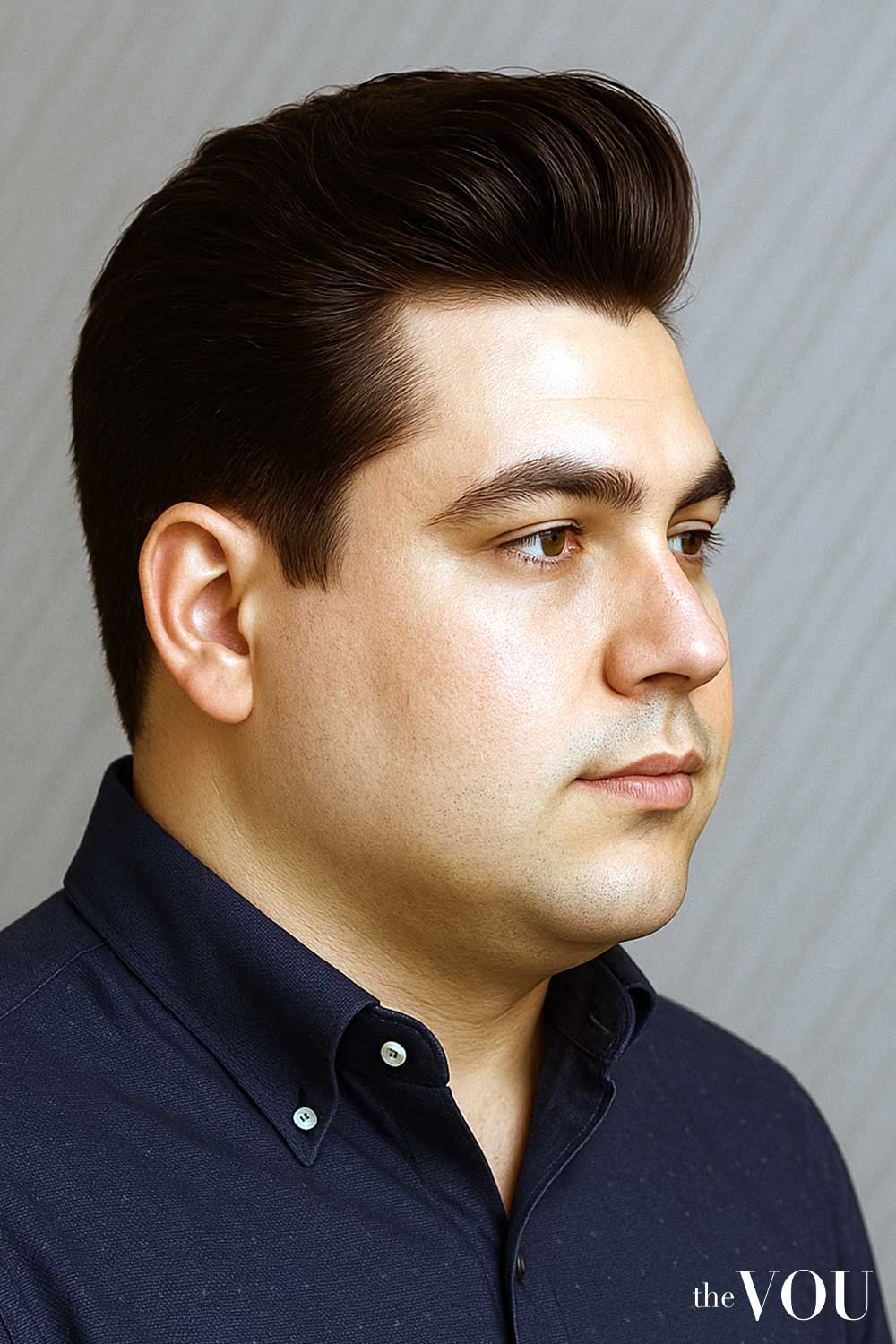
What it does. Short sides with the top swept up and back put the height at the front hairline, above the widest part of the face, so the eye travels up rather than across.
Hair it tends to need. Medium to thick hair, straight or slightly wavy, with enough length on top to sweep back and still stand up, which usually means growing the top out rather than trimming it at every visit. Fine hair tends to lose the height during the day unless the top is cut shorter and backed with volumising powder.
Typical upkeep. Sides every 3 to 4 weeks; a blow-dry most mornings.
What to ask your barber. “A classic pompadour, short tapered sides, keep the length on top for height and sweep it back.”
How to style it. Work a pre-styling mousse or spray into damp hair, blow-dry up and back with a round brush, then finish with pomade for shine and hold.
2. Undercut with Textured Top
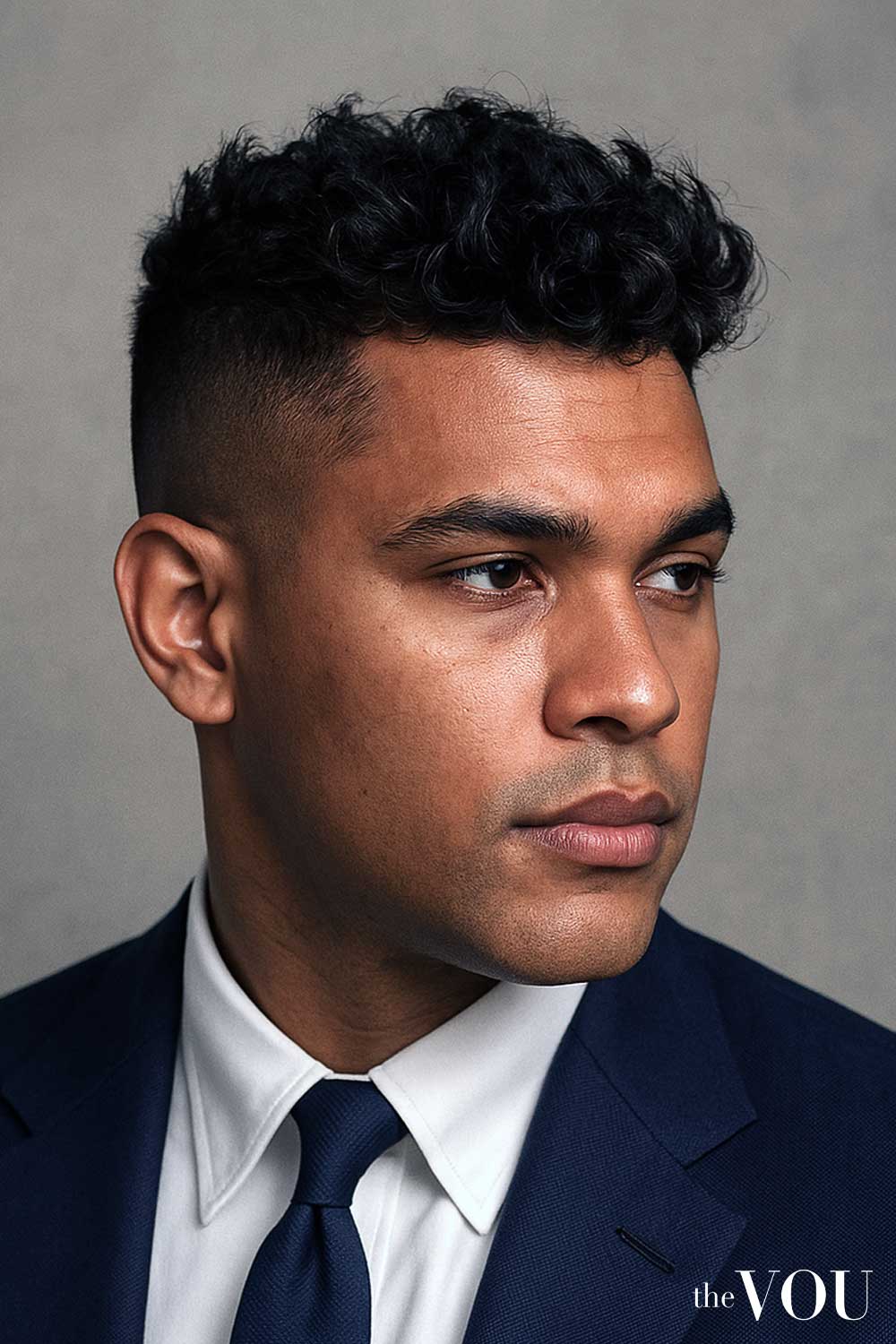
What it does. The hard line between clipped sides and a longer top gives a soft face a sharp edge, and the texture on top breaks up any single smooth surface.
Hair it tends to need. Works on straight, wavy and curly hair; the top needs enough density to look deliberate rather than sparse.
Typical upkeep. The sides usually need clipping every 2 to 3 weeks, because the contrast is what makes the cut work.
What to ask your barber. “An undercut, grade 1 or 2 on the sides, blended or disconnected, and a textured top I can push around with my fingers.” On Wahl’s guard chart, a grade 1 leaves 1/8 inch (3 mm) and a grade 2 leaves 1/4 inch (6 mm).
How to style it. Sea-salt or texturising spray on damp hair, rough-dry, then work matte clay or paste through with your fingers to create separation.
3. Faux Hawk
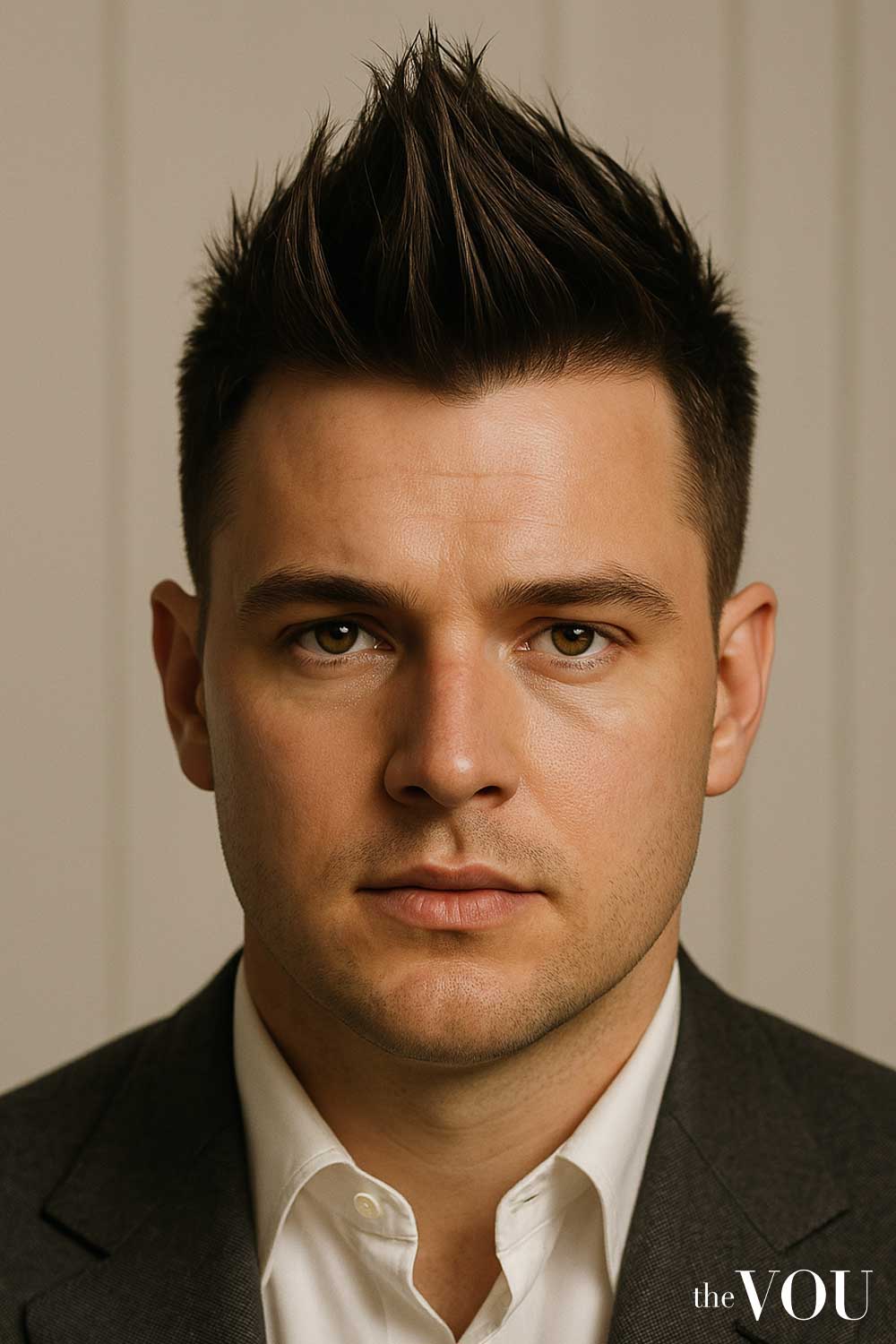
What it does. A central strip of longer hair pushed upward makes a vertical line down the middle of the head; the eye follows it up and down rather than across the cheeks.
Hair it tends to need. Medium to thick hair of any texture; the modern version is softer and more textured than a spiked mohawk, so it does not need a stiff gel finish.
Typical upkeep. Fade every 2 to 3 weeks.
What to ask your barber. “A faux hawk with a taper or fade on the sides, keep the centre longer, and no hard shaved lines.”
How to style it. Pre-styler on damp hair, blow-dry the centre upward, then a strong-hold paste worked toward the middle with your fingers.
4. Side-Swept Fringe with Fade
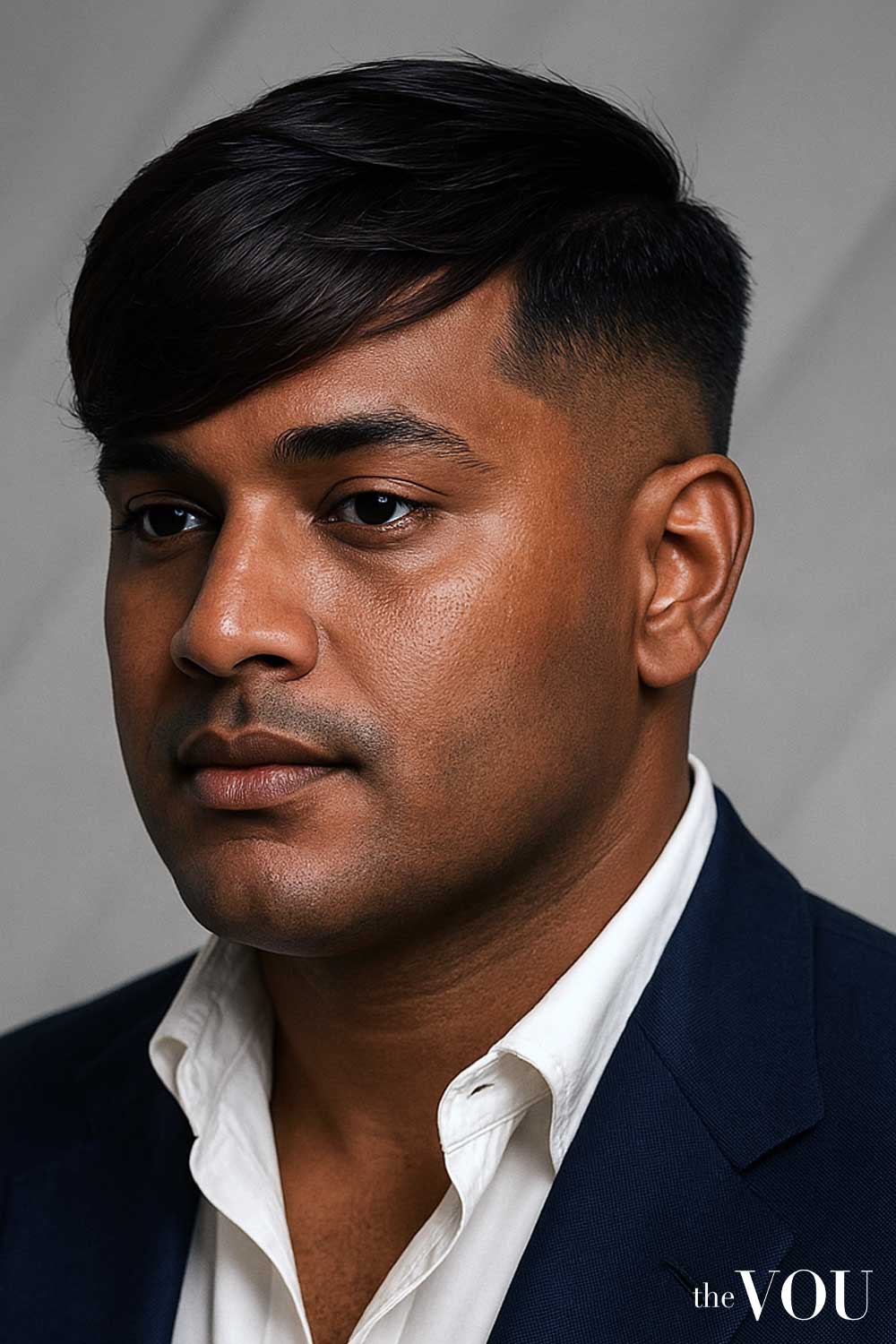
What it does. The diagonal line of the fringe is the edge a fuller face often lacks, and exposing one side of the forehead makes the upper face read as longer than the lower face.
Hair it tends to need. Straight to slightly wavy hair with enough length at the front to reach the eyebrow; tight curls rarely hold a diagonal.
Typical upkeep. Fade every 2 to 3 weeks; the fringe itself can often go longer.
What to ask your barber. “A mid fade on the sides and a longer fringe cut to sweep to one side, not a straight-across fringe.”
How to style it. Pre-styler on damp hair, create the part, blow-dry while directing the front across the forehead, then a light matte paste to hold the line.
5. Quiff with Short Sides
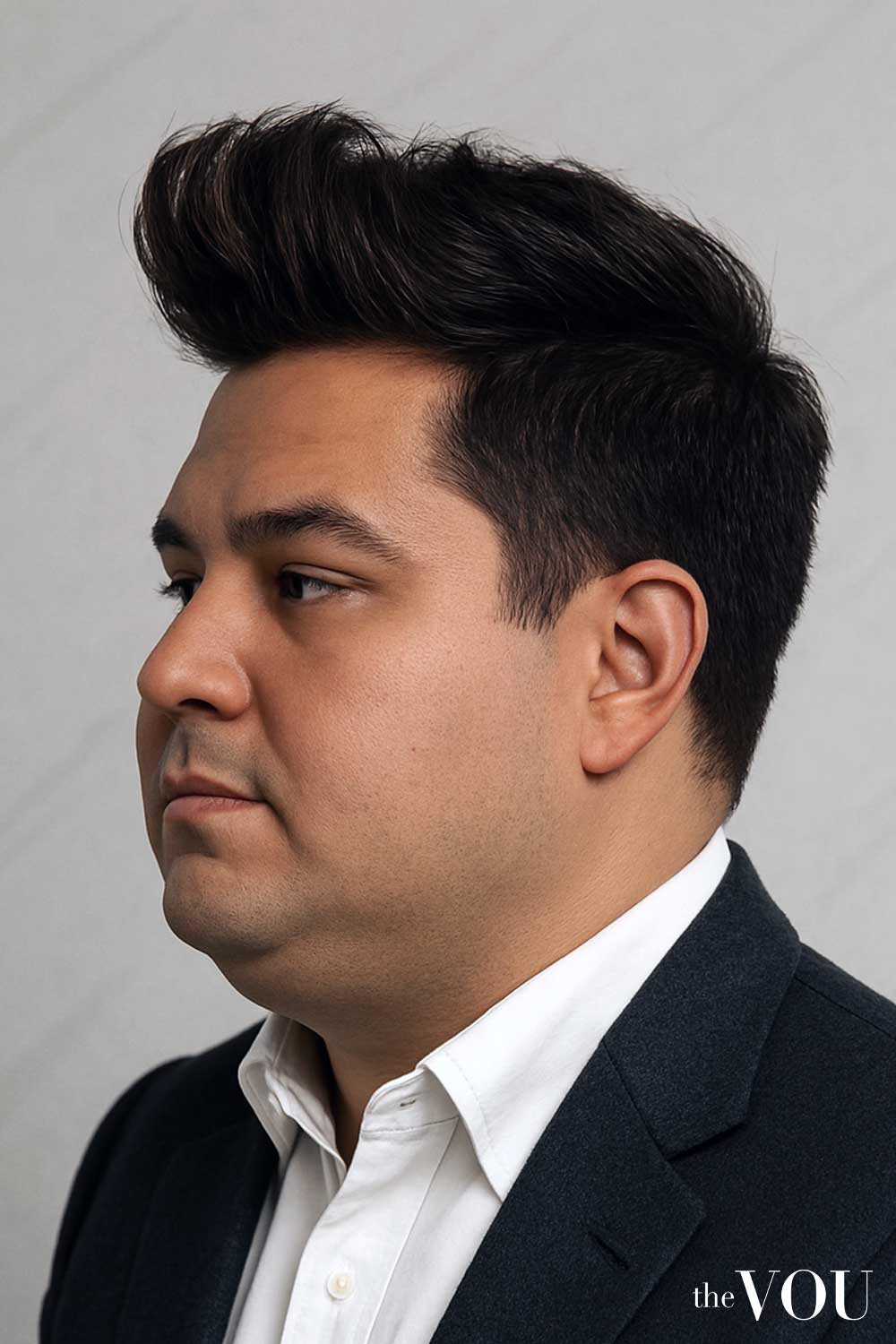
What it does. Like the pompadour it adds height at the front hairline, but with more texture and a forward lean, which suits men who find the slick pompadour too formal.
Hair it tends to need. Wavy hair is the easiest because the wave gives lift on its own; straight hair usually needs a blow-dry or a volumising product to lift, and fine hair usually needs the top kept shorter so it stands.
Typical upkeep. Sides every 3 to 4 weeks.
What to ask your barber. “A textured quiff, short tapered sides, and the front left long enough to lift.”
How to style it. Volumising mousse on damp hair, blow-dry the front upward with a round brush, then a medium-hold matte product to set it.
6. Textured Crop with Fringe
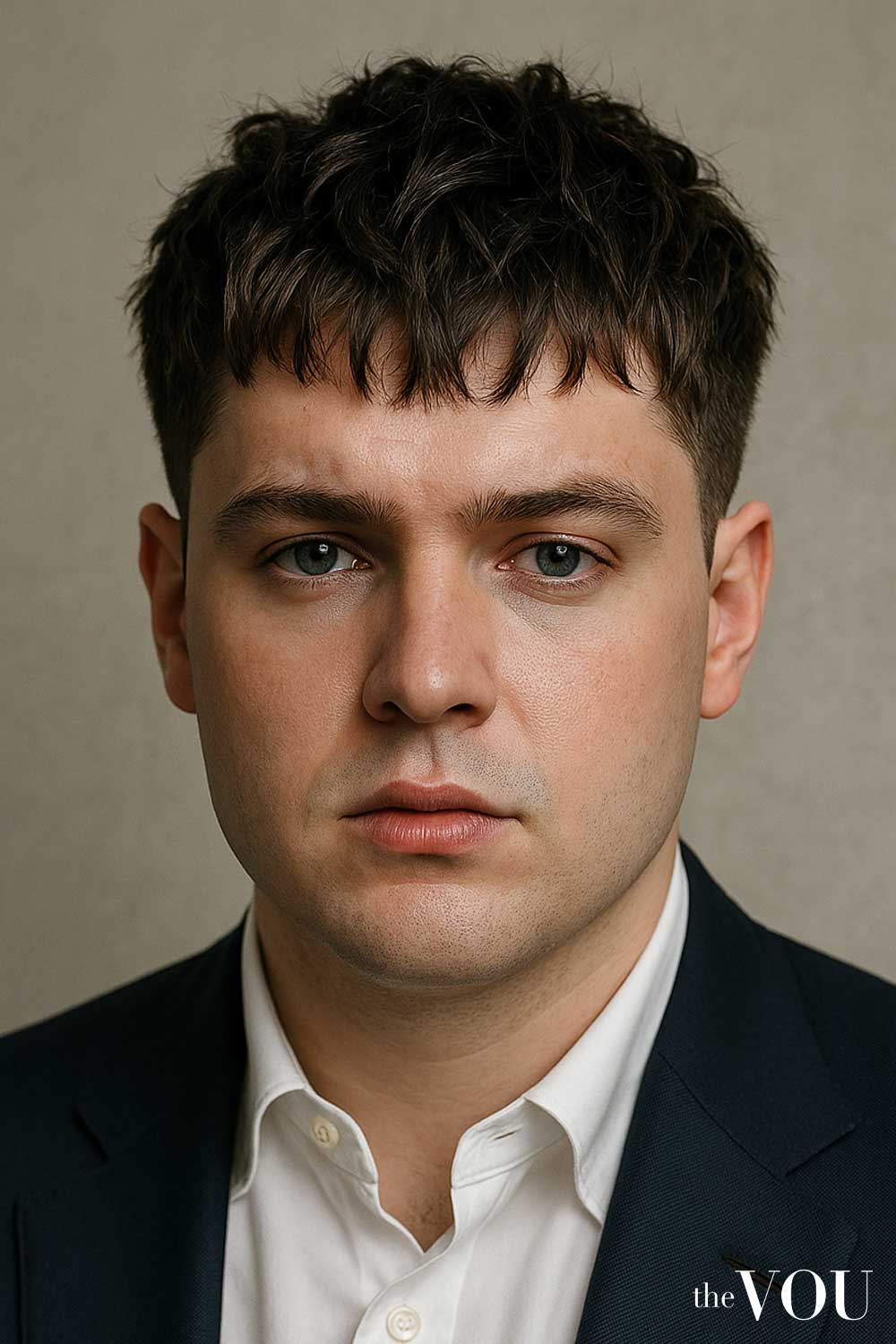
What it does. The choppy fringe puts a horizontal edge above the eyebrows, which stops the forehead reading as a smooth continuation of the cheeks, and the short sides keep width off the face.
Hair it tends to need. The most forgiving cut on this list; it works on fine, thick, straight and wavy hair and is a good choice for a receding hairline because the fringe covers the corners.
Typical upkeep. Every 4 to 5 weeks, and it takes about a minute to style.
What to ask your barber. “A textured crop with a short, choppy fringe and a taper on the sides.”
How to style it. Towel-dry, then work texturising paste between your palms and through the top with your fingers; no blow-dry needed.
7. Vertical Spikes with Tight Sides
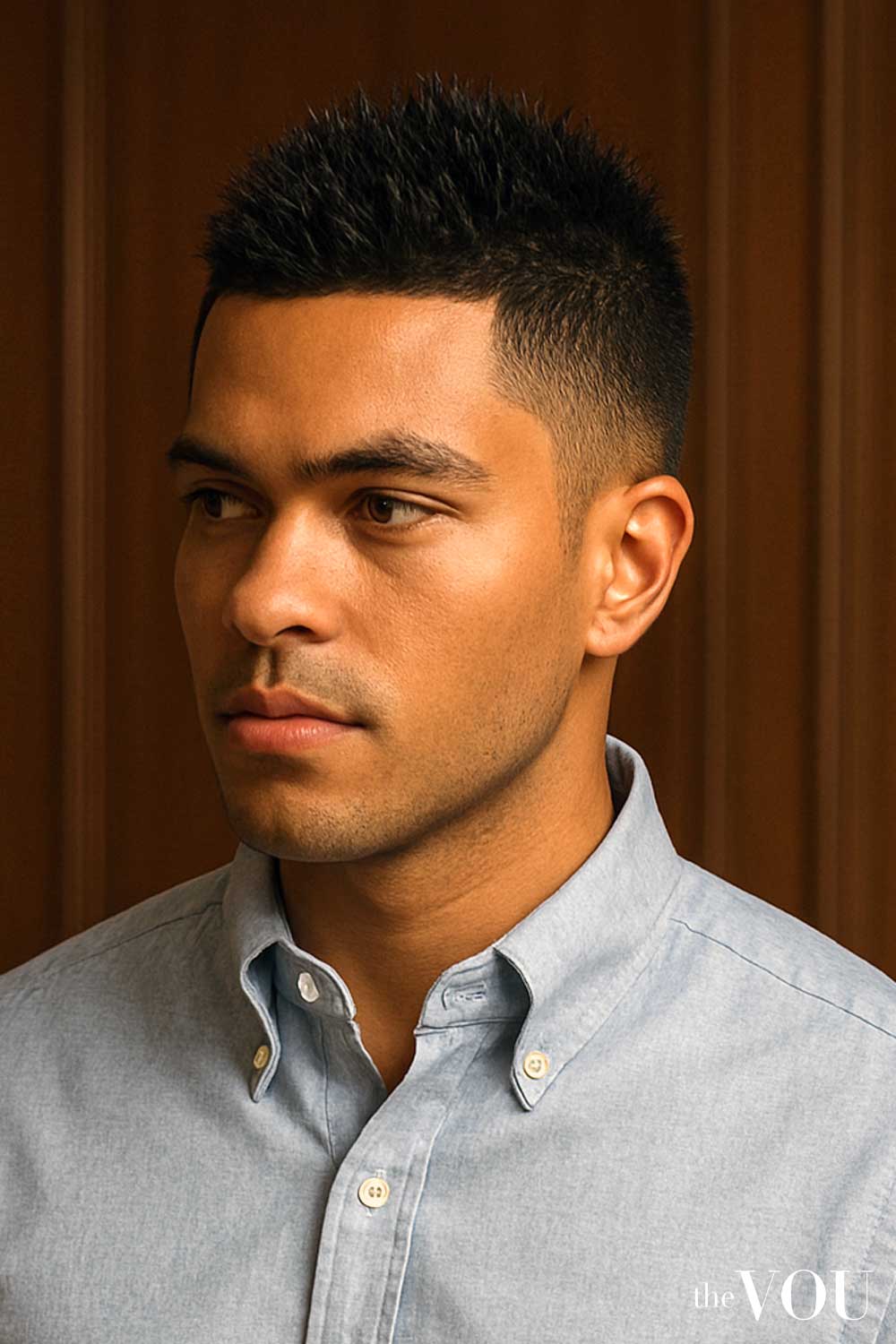
What it does. Short spikes are the quickest way to add height to a short cut; the modern version is soft and textured rather than stiff.
Hair it tends to need. Straight or slightly wavy hair with a few centimetres on top; curly hair does not spike cleanly and usually looks better in the textured crop.
Typical upkeep. Every 2 to 3 weeks; the sides grow out visibly fast at this length.
What to ask your barber. “Short sides, grade 1 or 2, and enough on top to push up into soft spikes.”
How to style it. Towel-dry, then pull small sections upward with a strong-hold paste or gel on your fingertips.
8. Layered Medium-Length Cut
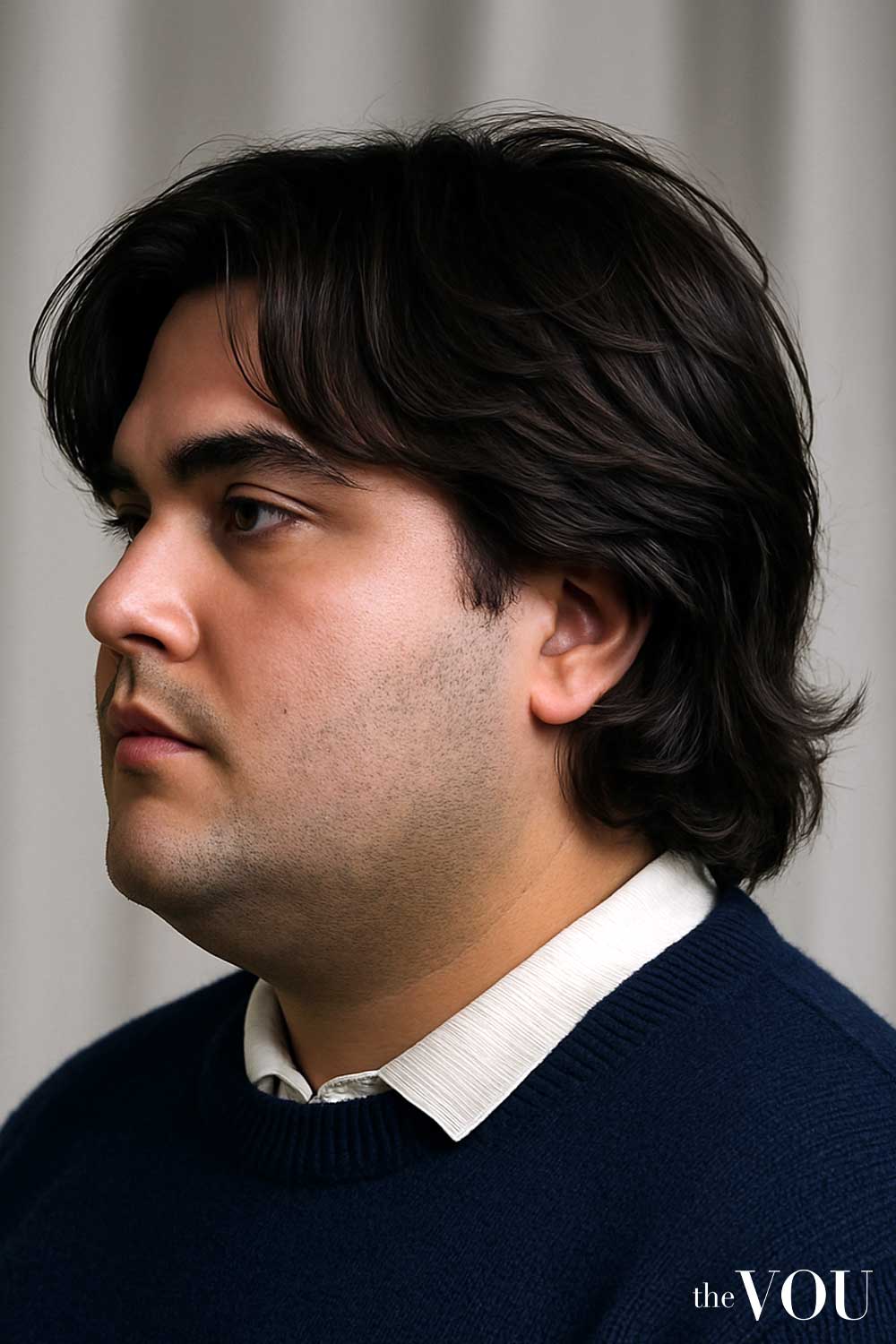
What it does. This is the one longer option, and it works because of the layers. Strands that fall past the cheeks and jaw draw vertical lines down the sides of the face, while the layering removes the bulk that a blunt cut at this length would add.
Hair it tends to need. Wavy or curly hair, ear to collar length; on straight, fine hair it tends to hang flat against the cheeks and add width, which is the opposite of what you want.
Typical upkeep. Every 6 to 8 weeks, but daily styling with cream or a diffuser.
What to ask your barber. “A layered medium-length cut, layers starting around the cheekbone, and take the bulk out around the ears.”
How to style it. Lightweight styling cream on damp hair, then air-dry or diffuse to keep the natural texture.
9. Diagonal Fringe with Undercut
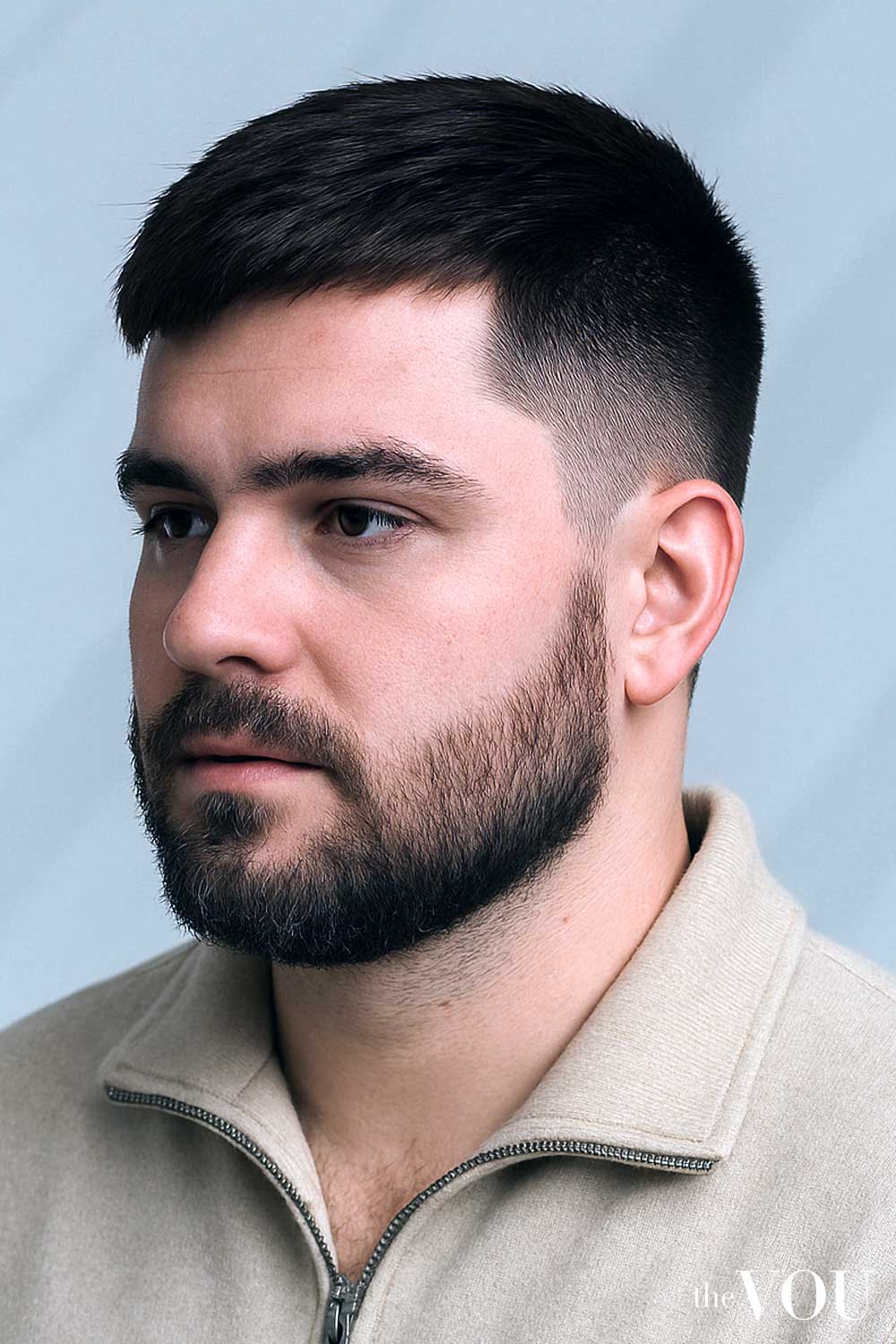
What it does. The sharpest cut on the list; the clipped sides remove width and the diagonal fringe draws one hard line across a soft face. It suits a wider forehead well because the fringe covers part of it.
Hair it tends to need. Straight to wavy hair with a front section long enough to cross the forehead.
Typical upkeep. Sides every 2 to 3 weeks.
What to ask your barber. “An undercut on the sides and the top cut to fall diagonally across the forehead.”
How to style it. Pre-styler on damp hair, blow-dry the fringe diagonally across the forehead, then a light paste to keep the line.
10. Slicked Back Undercut
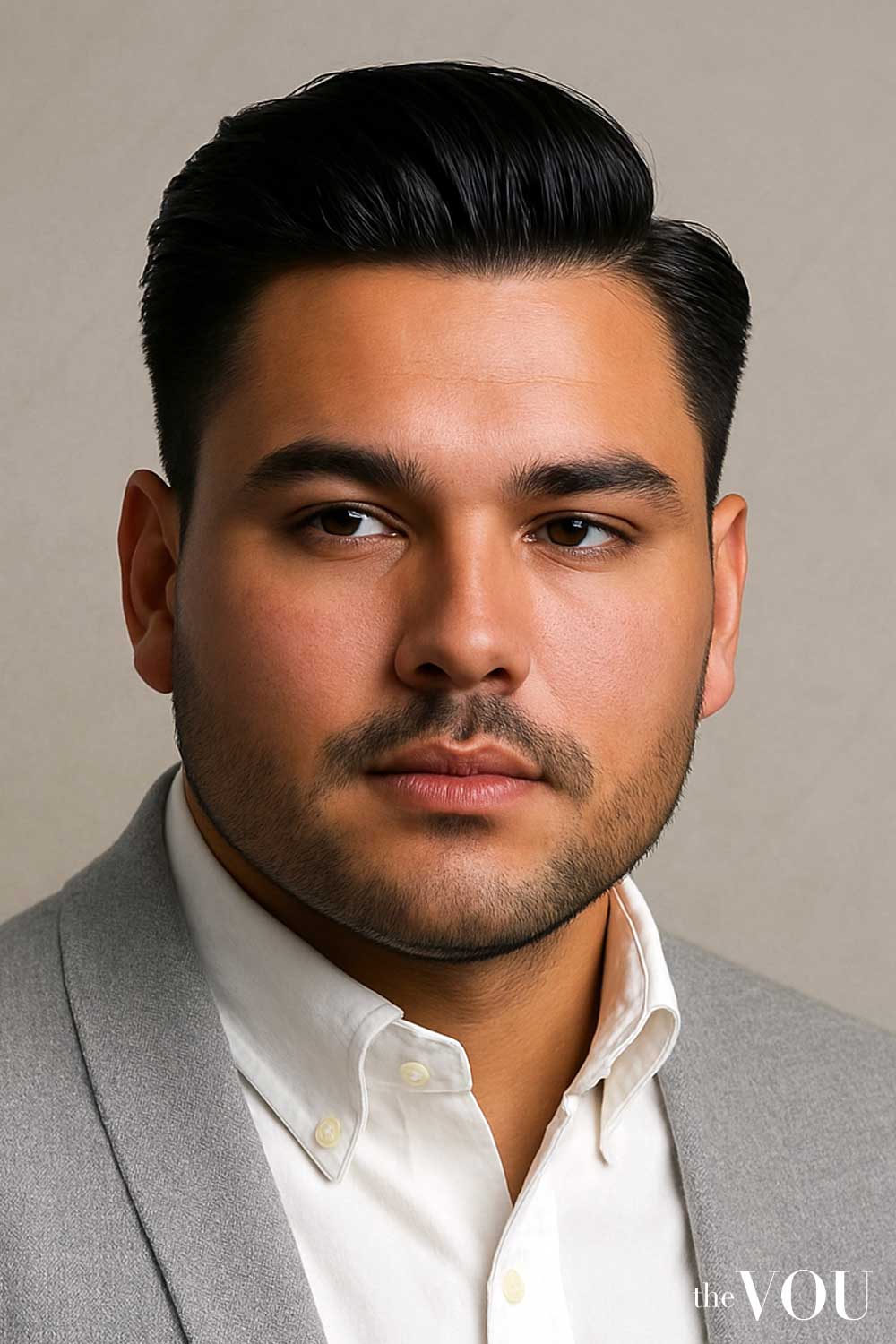
What it does. Combing the top straight back exposes the whole forehead and puts the height at the front, which lengthens the face from hairline to chin; it is one of the most office-friendly cuts on the list.
Hair it tends to need. Straight to wavy, medium to thick hair; fine hair tends to show the scalp when slicked, so the textured crop is usually the better choice.
Typical upkeep. Sides every 3 weeks or so; product most days.
What to ask your barber. “A slicked-back undercut, short sides, and keep the top long enough to comb straight back.”
How to style it. Blow-dry the top back from damp with a comb, then work pomade through for hold and shine.
Choosing between them
Which One Should You Ask For?
Your hair usually narrows the ten down faster than your face does, so start there.
Option one
Thick, straight or slightly wavy hair
The pompadour, the slicked-back undercut and the vertical spikes are all open to you. The pompadour and the slicked-back undercut hold their shape best with a daily blow-dry; the spikes are styled from towel-dried hair with paste and need no blow-dry, so choose by how much morning styling you want.
Option two
Wavy or curly hair
The quiff, the undercut with textured top and the layered medium-length cut use the wave for lift; the layered cut is the one that lets you keep length.
Option three
Fine hair, or a receding hairline
The textured crop with fringe is the safe answer, and the side-swept or diagonal fringe works if you have enough at the front; slicked or spiked styles tend to show the scalp.
Option four
You want the least upkeep
The textured crop and the layered medium-length cut are the two most forgiving of a missed appointment. Cuts with a fade or an undercut depend on the sides staying short, and how often that means a visit is a matter of preference and of how sharp the sides are. A skin fade blurs within a couple of weeks, a softer taper can go five or six, and a grown-out fade simply becomes a softer cut rather than a failed one.
Thinking about a mullet instead? A modern mullet can work on a fuller face when the top has some height, the sides are kept close and the back is tapered, but it has its own variants and its own upkeep, so it has its own guide, Mullet for a round or chubby face: does it suit you, and which version to ask for.
Avoid
Hairstyles That Usually Work Against a Fuller Face
Very short, rounded cuts that follow the curve of the head, such as a plain buzz cut without a fade, tend to repeat the roundness of the face instead of cutting across it.
Bowl cuts and blunt straight-across fringes draw a horizontal line at the widest point of the face.
A centre part splits the face down the middle and can make each half read as wider; a deep side part usually does the opposite.
Fullness at the sides, whether from a grown-out undercut or from curls left long over the ears, adds width exactly where the cheeks already have it.
Completely flat styles with no height on top give up the height a haircut can most easily add, although a long, fuller face is the exception and can wear a flatter top comfortably.
Beard
Pairing the Cut with a Beard
A beard can add length below the chin the way a haircut adds height above the hairline, so the two are best chosen together.
Beard styles with extra length at the chin tend to work with a fuller face, such as a goatee, an extended goatee, or a short boxed beard kept tight at the cheeks and left longer at the chin.
A full beard left wide at the sides adds width at jaw level, so keep the cheek line and the sideburns trimmed so there is a clean edge between beard and haircut.
If you cannot grow a beard, the textured crop, the slicked-back undercut and the quiff are the three cuts that rely least on the jaw, because each adds its edge above the eyes.
Examples
Two Public Examples of the Pattern
Two well-known men with fuller faces show the pattern in use. We are not classifying anyone’s face shape here; look only at where the height and the edges are.
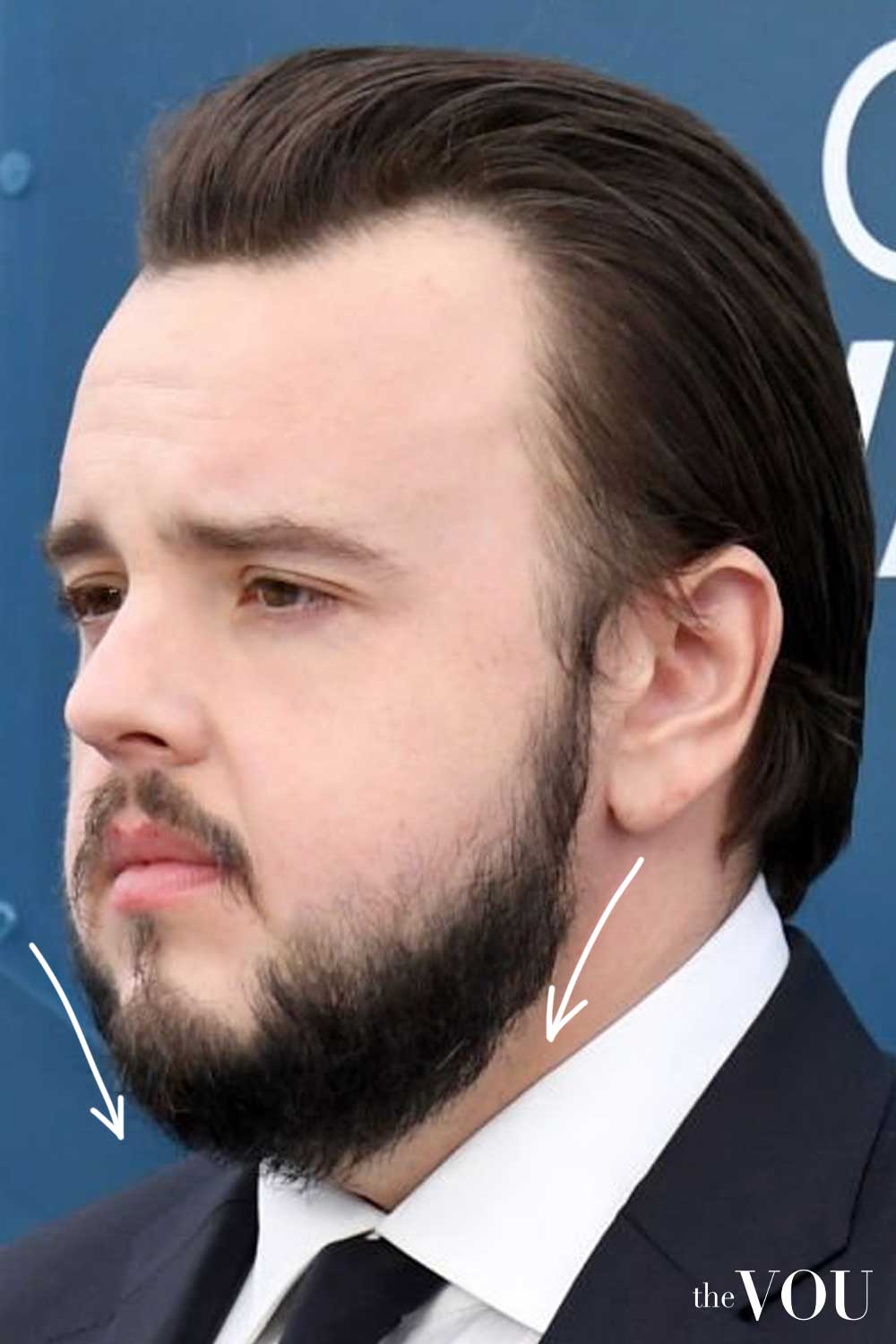
John Bradley shows height swept back from the front hairline, and a beard kept tighter at the cheeks and longer at the chin.
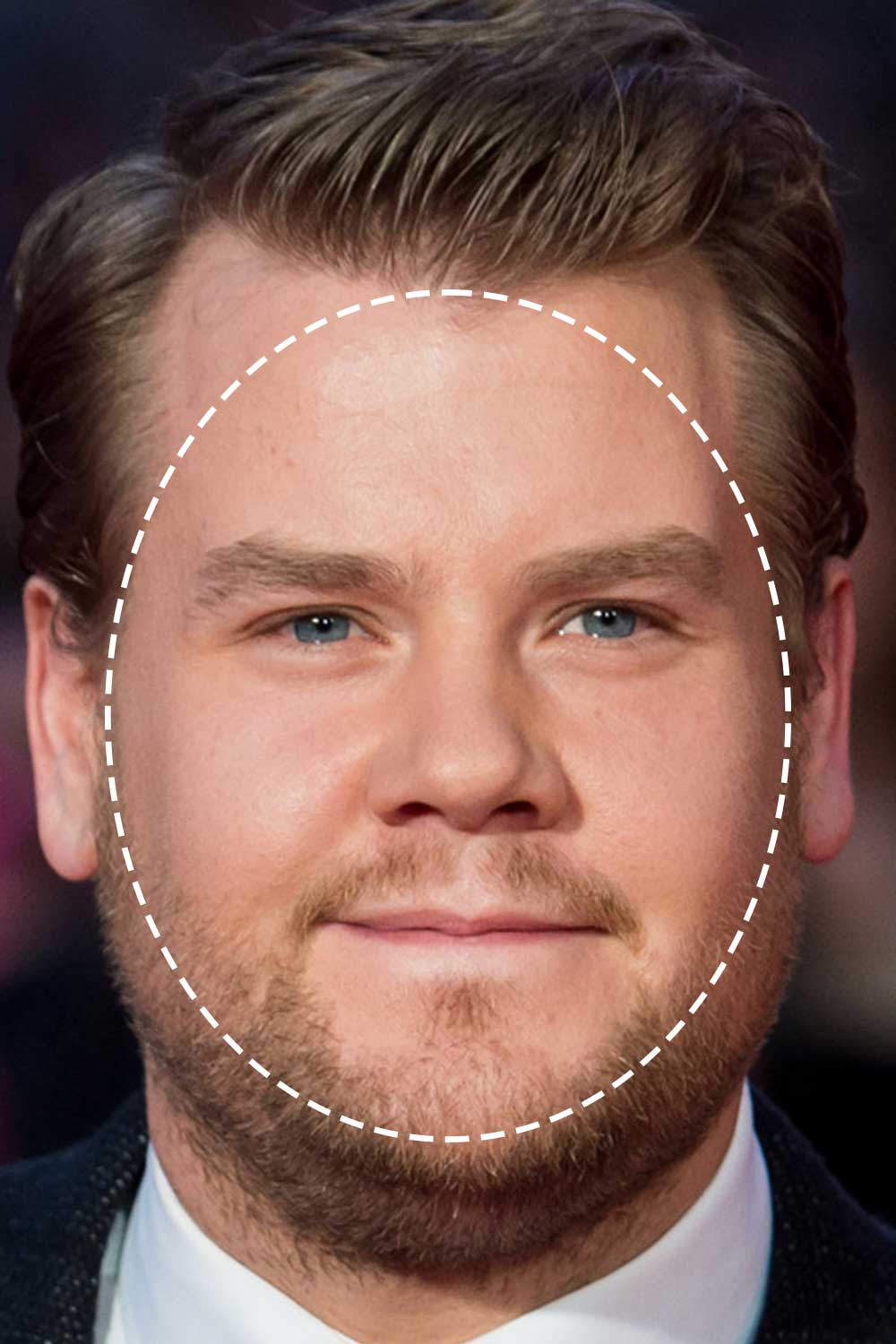
James Corden wears a short beard that keeps the lower face defined, and the dashed line in this picture traces the outline as it appears in the photograph.
At the barber
How to Brief Your Barber
Show a photograph of the cut, but describe the three proportions that matter rather than asking for the exact picture, because your hair will not behave like the model’s.
Say where you want the height (“lift at the front” or “height at the crown”), how short you want the sides at cheek level (“tight through the temples, a taper rather than a skin fade” if you want less upkeep), and where you want the edge (“a side part”, “a diagonal fringe” or “a sharp corner at the temple”).
Tell the barber your hair’s habits, such as whether it lies flat, whether the crown sticks up, and whether you will blow-dry in the morning, because those three facts decide which of the ten cuts survives a real week.
A good barber will adjust any of these cuts to your hairline and density; if you are told a cut will not work on your hair, ask which of the ten will, and expect to be steered toward the textured crop or the quiff.
Daily
Styling Habits That Keep the Height
For the blow-dried styles on this list, the pompadour, the quiff, the slicked-back undercut, the faux hawk and the two fringe cuts, the usual order is a pre-styling product (mousse, sea-salt spray or a volumising spray) into damp hair, the blow-dry with a round brush to create the shape, and the finishing product (clay, paste or pomade) afterwards to hold it. The textured crop, the spikes and the layered cut take a different route, with paste or cream worked into towel-dried or damp hair with the fingers and no blow-dry, which is also how the Rush guide below styles its round-face cuts. Neither route is a rule; if a product’s own instructions say damp or dry application, follow the product.
Use lightweight finishing products that add texture without weight. Clay, matte paste, volumising powder and sea-salt spray keep height, while heavy wax and wet-look gel tend to pull hair down and flat against the sides.
A travel-size texturising spray in a bag or a desk drawer brings the top back up in the afternoon without restyling.
Sources
Where This Advice Comes From
The height, sides and edge pattern, and the note that hair creates “the illusion of structure”, follow the London School of Barbering’s face-shape guidance. The fade and taper intervals are the ranges quoted by licensed barbers in Barberstake’s modern mullet guide, which apply to the fade itself rather than to any one cut on top of it. The longer intervals given for the textured crop and the layered medium-length cut are ordinary barber convention and are not drawn from that source; treat every interval here as a typical range, not a schedule. Per-cut hair-texture notes are common barber guidance, for example in Rush’s round-face hairstyle guide, and are stated here as tendencies rather than rules. The face-shape definitions are The VOU’s own method as used in the quiz above. Nothing here has been reviewed by a stylist for your individual face; that is what your barber is for.
Questions Men with Fuller Faces Ask
Q. How often should I get a trim?
It depends on how sharp you keep the sides and how tidy you want them. A skin fade is usually redone every 2 to 3 weeks, a softer taper every 4 to 6, the textured crop stretches to 4 to 5 weeks and the layered medium-length cut to 6 to 8; letting any of them grow a week longer softens the cut rather than ruining it.
Q. Can these cuts work with a receding hairline?
Yes. The textured crop with fringe covers the receding corners, and a shorter quiff or a slicked-back undercut with the height kept behind the hairline both work; the diagonal fringe relies on a full front section, so it is the one to skip if the front has thinned.
Q. Which styling products work best?
For pre-styling, mousse or sea-salt spray on damp hair; for finishing, clay, matte paste or volumising powder, because they hold height without weight; save pomade for the pompadour and the slicked-back undercut, where you want the shine.
Q. Can I wear these cuts in a conservative office?
In most workplaces the slicked-back undercut, the pompadour, the side-swept fringe and the textured crop read as conventional when the fade is kept low and the top is tidy; the faux hawk and the spikes are the two that tend to draw comment, so judge them against your own office.
Q. Will one of these cuts make my face look slim?
No haircut changes the face underneath it; what these cuts change is what the eye notices first, from the width at the cheeks to the height on top and the edge you have added. That is a real difference in how a face is read, and it is all a haircut can honestly promise.