
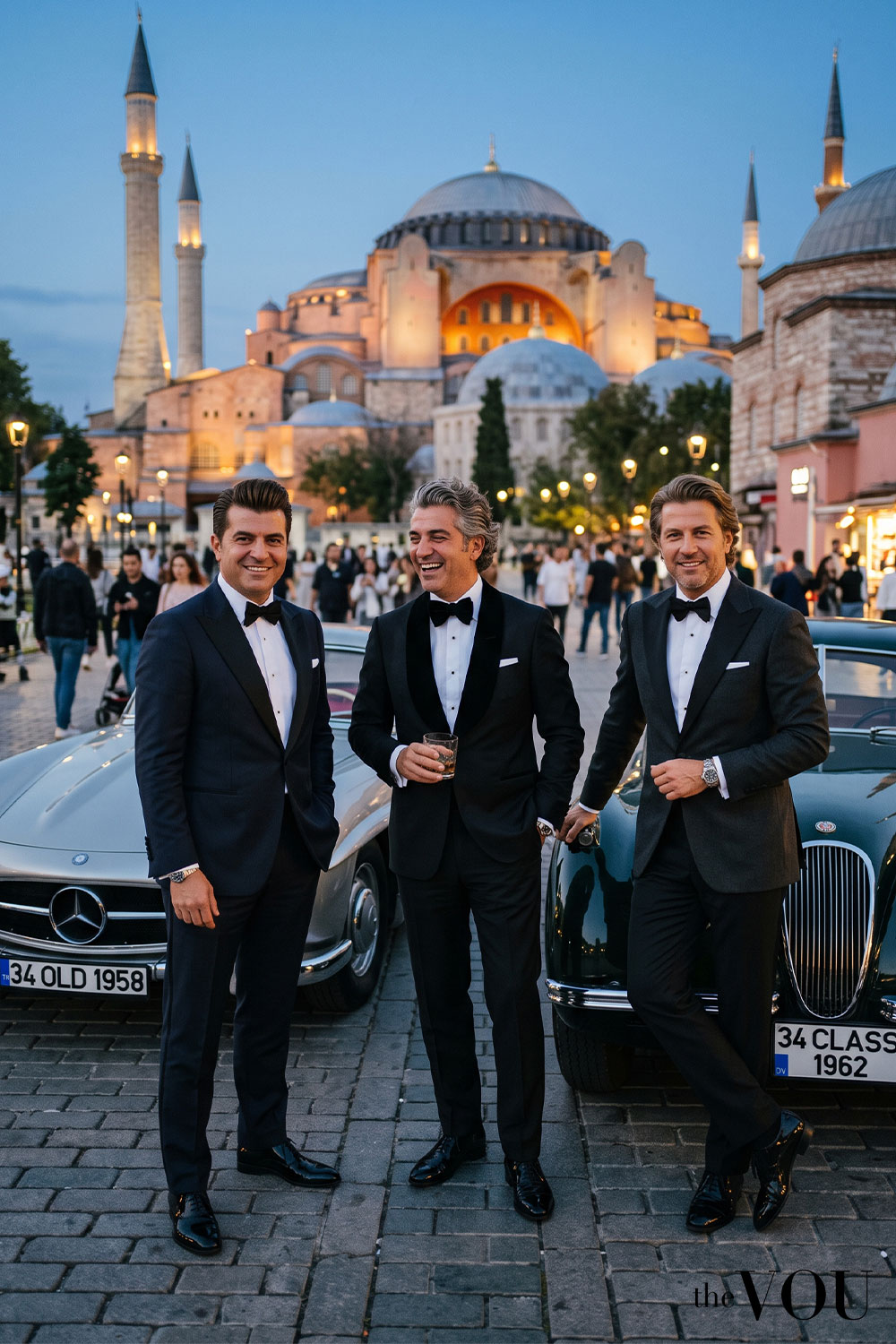
How to Get the Old Money Haircut?
What’s This About:
The old money haircut is not one specific haircut, it is a way of cutting and finishing hair so it looks classic, proportionate and quietly kept rather than aggressively trendy.
What you actually ask a barber for comes down to a handful of decisions, such as:
– how much length to leave on top
– a soft taper or a fade, and how high
– scissors or clippers on the sides
– where the neckline finishes
– whether to part the hair naturally or have a part cut in
and many more!
Each of those five has a section below, with wording you can use in the chair.
The easiest way to get the look is to ask your barber for a classic, scissor-led cut with a soft taper, natural length on top, a clean neckline and enough movement to style a side part, brush-back or relaxed sweep.
Avoid asking for an extreme skin fade, hard razor part or heavily sculpted finish unless you specifically want a more contemporary interpretation.
Key Points:
- “Old money haircut” is not barbering terminology. Describe the shape you want and the finish you want, then show a photograph.
- A soft taper is the safest reading of the look. The higher and tighter a fade, the more contemporary the result becomes.
- There is no universal length. What decides it is whether your hair will hold the direction you want, and how much time you will spend on it.
- How often you go back depends on your growth rate and how crisp you want the edges, not on the name of the cut.
- A photograph is a reference, not a template. Your hairline, density, texture and growth pattern decide what the same cut does on your head.
There is a gap between a photograph of a finished hairstyle and the instructions a barber can work from, and that gap is what this guide is written to close.
That distinction matters. If you show a barber a picture of a man with naturally thick, wavy hair and ask for “old money hair,” you may leave with a completely different result because your hairline, density, texture, head shape and growth pattern are different. Even two men with the same face shape can need different cuts.
So instead of another gallery of finished hairstyles, this guide covers how to actually get the haircut: what to ask for, how much length to leave, whether to choose a taper or a fade, how to adapt the cut to your own hair, and how to style it once you leave the barbershop.
If you are looking for finished hairstyle inspiration first, see The VOU’s 15 Old Money Hairstyles curated for modern gentlemen.
This article is the practical companion, helping you turn the aesthetic into a haircut that works for your head, hair and lifestyle.
What Is the Old Money Haircut?
An old money haircut is best understood as a grooming philosophy expressed through a haircut, not as a single technical style.
This guide uses one working definition, and states it here so that nothing further down depends on you guessing what is meant: classic proportions, natural movement, soft tapering, controlled volume, clean edges and restrained product. Where a section says a cut does or does not fit the look, that is the definition it is being measured against.
The version this guide describes is the less rigid one, closer to natural texture and lightweight product than to the heavily slicked-back gentleman’s haircut. That is an editorial choice, not a finding about what the phrase means to everyone using it.
The 7 Characteristics of an Old Money Haircut
- Classic proportions: the haircut balances the head instead of creating an exaggerated shape.
- Natural length on top: enough hair remains to create movement and different partings.
- Soft sides: tapering is generally more convincing than a dramatic skin fade.
- Clean perimeter: the ears, sideburns and neckline are deliberate and maintained.
- Controlled volume: the hair has dimension without looking inflated.
- Natural finish: the product should support the hair rather than become the most visible part of it.
- Longevity: the cut should still look appropriate when today’s trend disappears.
Important! – Never Ask Your Barber for “an Old Money Haircut”
“Old money haircut” is a useful search term, but it is not precise barbering terminology and your barber can interpret it as an Ivy League, side part, taper, slick back, crew cut or even a modern low fade.
Instead, tell your barber the shape you want and then describe the old-money finish.
Then show a reference photograph. The photograph communicates proportions; your verbal instructions communicate what you want the barber to preserve or avoid.
What to Tell Your Barber – The Five Decisions That Matter
1. How much length should I leave on top?
There is no universal old-money length. As a starting point, around 2–4 inches on top is usually enough hair for a side part, a soft sweep or a brushed-back shape without becoming difficult to control, and your own texture will move that figure in either direction.
Shorter hair works too. An Ivy League or Crew Cut may use considerably less. Medium-length hair can use more, especially if your natural texture is strong.
The important question is not “How many inches?” but:
- Can your hair hold the desired direction?
- Does the length balance your face?
- Does your hair become bulky at the parietal ridge?
- How much time are you willing to spend styling it?
- Will the cut still work as it grows?
2. Should I get a taper or a fade?
For the safest old-money result, choose a soft taper.
A taper gradually shortens the hair around the sideburns, ears and neckline while retaining more visual weight higher on the sides. This creates a softer transition and preserves the classic silhouette.
A fade creates a more obvious reduction in length and can range from subtle to skin-close. A low fade can work as a modern interpretation, but high, skin and burst fades generally make the haircut read more contemporary.
Scroll horizontally to see all columns →
| Option | Old-money compatibility | Result |
|---|---|---|
| Scissor taper | Excellent | Soft, traditional, bespoke |
| Low taper | Excellent | Classic with a modern edge |
| Low fade | Good | Cleaner and more contemporary |
| Mid fade | Moderate | More visibly modern |
| High fade | Weak for the classic interpretation | High contrast |
| Skin fade | Usually too contemporary | Very high contrast |
3. Should the sides be cut with scissors or clippers?
Either can work, but scissor-over-comb is particularly useful when you want a natural, traditional silhouette. Clippers make it easier to create consistent short transitions; scissors give the barber more control over weight and texture.
If your hair is thick, ask your barber to remove weight where necessary rather than simply taking the sides extremely short. If your hair is fine, aggressive thinning can make the hair appear even less dense.
4. Where should the neckline finish?
The neckline is one of the details that separates an intentionally classic haircut from an overgrown one.
A natural or softly tapered neckline generally works better than a harsh squared-off line for an old-money aesthetic. Your barber should account for your natural neckline rather than imposing a geometric shape that grows out awkwardly.
5. Should I have a hard part?
Usually, no. Ask your barber to follow your natural part unless you specifically want a more formal, structured appearance.
A razor-defined hard part can look sharp, but it also makes the haircut more obviously engineered. The old-money approach usually relies on the haircut creating the part naturally.
How to Get the Best Old Money Haircut for Your Face Shape
Face shape should influence the haircut’s proportions rather than force you into one named style. The VOU’s guide to choosing a men’s haircut by face shape covers the broader principles, and how to look at your own face explains how to read your own outline before reaching for any of the labels below.
The names below are a convenience. What your barber works with is the visible feature, the width across the cheekbones, the width of the jaw against the forehead, the length of the face against its width, so each entry is written in those terms.
Oval face
Oval faces are highly adaptable. Classic Side Parts, Ivy Leagues, Princeton Cuts, Natural Tapers, Brushed Backs and moderate Slick Backs can all work.
Your main risk is over-correcting a face that is already balanced. Choose the haircut you prefer rather than adding unnecessary height or width.
Round face
Create a little vertical movement and avoid excessive width at the sides. A restrained quiff, Ivy League, side part or Executive Contour can visually lengthen the face.
Do not automatically request a very high fade. It can create a strong horizontal/vertical contrast that looks more modern than refined.
Square face
Square faces already have strong structure, which makes them particularly compatible with classic barbering. Crew Cuts, Side Parts, Ivy Leagues and Natural Tapers are excellent starting points.
You generally do not need exaggerated volume or an extreme fade to make the jaw look stronger.
Oblong or rectangular face
Avoid excessive height on top. A softer side sweep, medium layered cut or controlled brushed-back style can add width without making the face appear even longer.
Heart-shaped face
Use the haircut to balance a wider upper face and narrower chin. A side sweep, Ivy League or moderate medium-length cut can work well.
Diamond face
Diamond faces often benefit from controlled fullness around the forehead and jaw. Textured Ivy Leagues, side sweeps and medium layered cuts can soften the relationship between prominent cheekbones and narrower forehead/jaw areas.
Hair Restoration and the Old Money Haircut
For some men, the challenge is not choosing the right haircut but dealing with significant hair loss that limits which styles are realistic.
Before any treatment is chosen, the first question is why the hair is being lost. Causes differ, several are reversible, and the answer changes what is worth doing, so establishing the cause comes before choosing a procedure rather than after it. The section on thinning hair further down links the American Academy of Dermatology’s guidance on exactly that point.
Hair transplantation can be an option for appropriately selected patients. Whether it suits you depends on the cause and pattern of the loss, how much donor hair you have, what you expect the result to look like, the technique proposed and the plan for the hair that is not transplanted.
If you do go on to compare clinics, treat it as a medical decision rather than a travel or price decision: who performs the procedure, what is included, how the donor area will be managed, what aftercare is provided and whether the proposed result is realistic for your own pattern of loss.
For independent medical context, the American Academy of Dermatology’s hair-transplant guidance explains the procedure, candidacy and expectations.
From a styling perspective, the important point is to think beyond one haircut. If restoration is being considered, the hairline and density should be planned around the styles you expect to wear for years rather than around one fashionable reference photograph.
How to Get the Best Old Money Haircut for Your Hair Type
Straight hair
Straight hair makes the cut highly visible, which is excellent for classic styles. Side Parts, Ivy Leagues and Executive Contours can look extremely precise.
The challenge is avoiding flatness. Ask for subtle layering or maintain some length through the crown rather than trying to create huge artificial volume.
Wavy hair
Wavy hair is particularly well suited to the modern old-money interpretation because natural movement does much of the styling work.
Tell your barber not to remove all the weight that creates the wave. A Natural Taper, Side Sweep, Brushed Back or refined Flow can be excellent.
Curly hair
Do not try to make naturally curly hair imitate straight-haired old-money references. Shape the curls, control the perimeter and retain a coherent silhouette.
A Natural Curly Taper is often more convincing than heavily gelled curls because it preserves the texture that makes the hair distinctive.
Coily hair
The old-money principle works with coily hair just as well: deliberate proportions, clean edges and excellent maintenance. A short shaped afro, natural taper or controlled short curl can look extremely refined.
Fine hair
Fine hair usually benefits from lighter products and strategic length. Avoid heavy pomades that separate strands and expose the scalp.
An Ivy League, short Side Part, textured Crew Cut or Caesar can create a more substantial visual shape without requiring excessive volume.
Thick hair
Thick hair requires weight management. Ask your barber to remove bulk strategically rather than automatically giving you a very short fade.
The objective is to create movement and shape while retaining enough density to make the haircut look healthy.
How to Get an Old Money Haircut If Your Hair Is Thinning
Hair loss changes the technical problem. A style that looks excellent on dense hair can expose thinning when the same proportions are used on a receding or low-density hairline.
Do not automatically grow the top longer to cover thinning. More length can sometimes make the contrast between dense and thin areas more obvious.
Better options can include:
- Short Ivy League: enough structure to remain polished without excessive length.
- Crew Cut: reduces visual contrast between different-density areas.
- Caesar: a short forward direction can work with a higher forehead.
- Textured Crop: creates movement without requiring a long top.
- Tailored Buzz Cut: useful when density has become sufficiently uneven that a longer style looks forced.
Hair loss has many possible causes, so a changing hairline should not automatically be treated as male pattern baldness. The American Academy of Dermatology’s hair-loss treatment guidance explains why identifying the cause matters before choosing treatment.
The Hairline Is More Important Than the Haircut Name
One of the most overlooked details in old-money grooming is the hairline.
A barber should work with your natural hairline rather than forcing a perfectly straight artificial edge. If your temples are slightly receded, a natural hairline can look considerably more sophisticated than an attempt to redraw it.
This is particularly important with side parts and slicked-back styles because those hairstyles expose the front hairline.
If your hairline has changed significantly, your barber should adapt the haircut rather than trying to make an older haircut fit unchanged.
How to Choose the Right Old Money Haircut by Lifestyle
Scroll horizontally to see all columns →
| Lifestyle | Best starting cuts | Why |
|---|---|---|
| Corporate / formal | Classic Side Part, Executive Contour, Ivy League | Polished and easy to dress up |
| Creative professional | Natural Taper, Textured Ivy, Brushed Back | Classic base with more texture |
| Very low maintenance | Crew Cut, Tapered Crew, Tailored Buzz | Minimal daily styling |
| Active / athletic | Crew Cut, Ivy League, Low Taper | Works without elaborate styling |
| Medium-length preference | Side Sweep, Brushed Back, Refined Flow | Natural movement and versatility |
| Thick hair | Classic Taper, Textured Ivy, Brushed Back | Allows weight management |
How to Style the Old Money Haircut
Classic Side Part
- Start with clean, towel-dried hair.
- Apply a small amount of lightweight cream or low-shine pomade.
- Find your natural part rather than drawing a razor line.
- Blow-dry the hair in the desired direction.
- Use your fingers or a comb to finish the shape.
- Stop adding product once the hair is controlled.
Brushed Back
- Apply a small amount of cream to damp hair.
- Direct the hair backward with your fingers.
- Use low-to-medium heat to establish the direction.
- Let the natural texture remain visible.
- Add only enough product to control the front and sides.
Natural Wave
- Apply a lightweight leave-in or texture cream.
- Scrunch or shape the wave with your hands.
- Air-dry when possible.
- Do not brush the finished wave aggressively.
What Product Should You Use?
There is no special “old money” product. The correct product depends on your hair.
Scroll horizontally to see all columns →
| Hair | Start with | Finish |
|---|---|---|
| Fine | Light styling cream or texture spray | Natural / matte |
| Straight, medium | Light pomade or cream | Low shine |
| Wavy | Texture cream or sea-salt spray | Natural movement |
| Curly | Leave-in conditioner or curl cream | Defined, soft |
| Coily | Moisturising leave-in or curl cream | Healthy, controlled |
| Formal side part | Low-shine pomade | Controlled polish |
The rule is simple: if someone can immediately see the product, you may be using too much.
How Often Should You Get the Haircut?
Two different things are being maintained here, and they do not run on the same clock.
Daily styling effort is how long the top takes you each morning. Length, texture, the cut you chose and the finish you want all feed into it, and it can change as the cut grows: a top that falls into place at three weeks can need more work at six.
Keeping the perimeter crisp is the sideburns, the edges around the ears and the neckline. On a cut with tight edges this is usually what shows growth first, and it is what a return visit is mostly for. On a longer, softer cut the edges are less defined to begin with, so there is less of a line to lose.
So how often you go back is set by your own growth rate and by how sharp you want those edges, not by the name of the cut. The ranges below are worked examples to take to a barber and adjust, not a schedule and not a claim about what most men do. They overlap on purpose, and a slow grower who likes a soft neckline can sit at the long end of any of them:
- Short Crew / Buzz / tight taper: an example range is 2–4 weeks, because the shorter the sides are, the sooner new growth shows against them.
- Side Part / Ivy League: an example range is 3–5 weeks. It overlaps with the range above rather than following it, so a tight taper and a side part can easily want the same interval.
- Medium-length styles: an example range is 4–7 weeks, since the extra length hides growth for longer.
- Curly/coily styles: according to growth and shape rather than a fixed calendar.
If you want a classic haircut that grows out gracefully, tell your barber that this matters. A good cut should not look its best only in the first week.
What Makes an Old Money Haircut Look Cheap?
1. Too much product
Heavy product can make the hair look artificial. Old-money grooming is supposed to suggest that the haircut works because the hair itself is good.
2. Excessive shine
Controlled shine can work with a formal side part, but wet-looking hair is generally more contemporary than quietly refined.
3. An extreme fade
A fade is not inherently wrong. The issue is contrast. The higher and tighter the fade, the more modern the haircut becomes.
4. A fake hard part
Natural parting usually looks more effortless than a razor line.
5. Too much volume
Old-money hair should have dimension, not theatrical height.
6. An untidy neckline
Natural does not mean neglected. The neckline still needs maintenance.
7. Copying someone else’s hair exactly
A photograph is a reference, not a template. Your barber must translate the proportions to your head, hairline and texture.
What Not to Say to Your Barber
Avoid vague instructions such as:
- “Give me whatever old-money haircut is trending.”
- “Make me look rich.”
- “Do the TikTok old-money style.”
- “Just make it expensive-looking.”
Those descriptions communicate an aesthetic but not a haircut.
Instead say:
“I want a classic men’s haircut with natural movement. Keep the top long enough to part or brush back. Use a soft taper or scissor-over-comb on the sides, keep the neckline natural and clean, follow my natural hairline, and avoid a high or skin fade. I want it polished but touchable.”
Three Safe Old Money Haircuts to Start With
1. Classic Side Part
Choose this if: you want the most recognisable traditional result.
Ask for: 2–4 inches on top, natural part, scissor-cut sides or low taper, tapered neckline and low-shine finish.
2. Ivy League
Choose this if: you want something shorter and easier to maintain.
Ask for: short tapered sides, enough top length to sweep sideways and a natural finish.
3. Natural Taper
Choose this if: you want the most versatile and least trend-dependent option.
Ask for: scissor-led sides, natural taper around the ears and neckline, and enough top length to style according to your texture.
Old Money Haircut vs. Old Money Hairstyle
This distinction is useful when searching for inspiration.
A haircut is the underlying architecture. It determines length, weight, taper, neckline, layering and shape.
A hairstyle is how you arrange that haircut. The same classic haircut can become a side part, brushed back, soft sweep or controlled slick back depending on how you style it.
This is why you should not choose a haircut solely from a photograph. You need to understand what the barber actually cut underneath the finished style.
For inspiration, browse The VOU’s 15 Old Money Hairstyles curated for modern gentlemen. Then use this guide to work out which underlying cut will give you the best starting point.
How the Haircut Fits Into the Complete Old Money Image
Hair is only one part of the visual language. The VOU’s Old Money Style for Men guide covers the wider relationship between grooming, clothing, materials, colour and proportion.
The modern old-money aesthetic also benefits from understanding that classic style is not a costume. The VOU’s Complete Old Money Aesthetic Guide for Men explains how the broader aesthetic works across wardrobe, grooming and personal presentation.
The haircut should therefore support the image rather than dominate it. A perfect side part cannot compensate for poor fit, careless grooming or clothing that fights the same visual language.
Frequently Asked Questions
What is the old money haircut for men?
It is a classic men’s haircut characterised by balanced proportions, natural movement, clean edges, soft tapering and restrained styling. Common foundations include the Side Part, Ivy League, Classic Taper, Crew Cut and Brushed Back.
How do I ask my barber for an old money haircut?
Do not rely on the phrase alone. Ask for a classic, timeless cut with natural movement, enough length on top to part or brush back, a soft taper or scissor-over-comb on the sides, a natural neckline and no aggressive fade. Then show a reference photograph.
Is a low taper old money?
Yes. A low taper is one of the easiest ways to make a traditional haircut slightly more contemporary while preserving a refined silhouette.
Can an old money haircut have a fade?
Yes, particularly a subtle low fade. The higher and more dramatic the fade, the more contemporary the result becomes.
How long should the top be?
There is no universal length, but roughly 2–4 inches is a useful starting point for many side-part and brushed-back variations. Shorter Ivy League and Crew Cuts use less; medium-length styles use more.
What is the best old money haircut for a round face?
Choose a style that adds controlled vertical movement while avoiding excessive width at the sides. An Ivy League, restrained Quiff, Side Part or Executive Contour can work well.
What is the best old money haircut for thinning hair?
Shorter structured styles such as a Crew Cut, short Ivy League, Caesar or tailored Buzz Cut can reduce the visual contrast created by thinning. If the change is progressive, identify the cause rather than relying only on styling.
Can curly or coily hair be old money?
Absolutely. The aesthetic is about grooming and proportion, not straight hair. Shape the natural texture, keep the perimeter clean and maintain a deliberate silhouette.
Does old money hair require expensive products?
No. The haircut and hair health matter more. Lightweight cream, matte paste or low-shine pomade is usually enough, depending on your hair type.
How often should I get an old money haircut?
There is no set interval. What decides it is your growth rate and how crisp you want the perimeter. As a worked example to take to a barber, 3–5 weeks suits a side part or an Ivy League, a very short cut will want the shorter end or less, and a medium-length style can often go longer. Those ranges overlap, and none of them is a requirement.
Final Verdict – How to Actually Get an Old Money Haircut?
If you want the safest route, do not start with a trendy photograph and ask your barber to copy it. Start with your face shape, hairline, density, texture and lifestyle.
Then choose a classic foundation, usually a Side Part, Ivy League or Natural Taper, and ask your barber to create soft proportions, a clean perimeter and natural movement. Keep the sides controlled rather than aggressively faded, use only enough product to support the shape, and maintain the neckline before it becomes untidy.
That is the real secret of the old money haircut: it should look like an excellent haircut, not like a haircut that is trying to look “old money.”
And once the underlying cut is right, you can change the hairstyle from a side part to a brushed back, soft sweep or restrained slick back without needing a completely different haircut.
After years of managing hundreds of fashion brands from London's office of a global retailer, Mandy has ventured into freelancing. Connected with several fashion retailers and media platforms in the US, Australia, and the UK, Mandy uses her expertise to consult for emerging fashion brands create top-notch content as an editorial strategist for several online publications.
A passionate advocate for inclusivity and diversity, Aidan is the driving force behind The VOU as its Editorial Manager. With a unique blend of editorial acumen and project management prowess, Aidan's insightful articles have graced the pages of The Verge, WWD, Forbes, and WTVOX, reflecting his deep interest in the dynamic intersection of styling with grooming for men and beyond.
With years of expertise in high-end fashion collabs and a PhD in Sustainable Fashion, Ru specialises in eco-luxe wardrobes for the modern gentleman seeking understated refinement.
Hailing from Miami Beach, Sean Flynn is a NY-based celebrity professional hairstylist specializing in classic haircuts for men but in custom colors. Drawing on a lifetime of hair salon moments of combining fashion, art, and style, Sean is often featured in prestigious styling magazines, including GQ, Forbes, New York Times, and of course, The VOU.