

Start here
What’s This About
Rectangular, square, Wayfarer, aviator and Clubmaster frames are the five families this page walks through for a face described as oval, and every one of them is a choice rather than a rule.
Before the shape of the front matters at all, a few questions decide far more, such as:
whether the frame sits on your nose without sliding or pinching
what the three numbers stamped inside the temple actually describe
whether you want the frame to contrast with your outline or repeat it
what to do when your forehead, cheekbones and jaw do not match one label cleanly
and many more!
Fit comes first here, because a frame that does not sit properly cannot flatter any outline.
Key Points
01An oval outline is a description of proportions, not a qualification you have earned, and nothing on this page is a ban.
02Angular frames read as a contrast against a curved outline, which is one reasonable aim; repeating the curve with a round frame is another, and a comfortable round frame you like is a sound choice.
03The three numbers inside the temple, lens width, bridge width and temple length in millimetres, describe the frame rather than your face, and the front is wider overall than the lens width alone.
04Prescription, lens type, nose-pad adjustment and the final bend of the temples belong with an optician whichever shape you choose.
Men whose faces are described as oval are usually told they can wear anything, which is close enough to true to be unhelpful, because it leaves you with no way of choosing between two frames you like.
This page gives you a way of choosing: settle what you want the frame to do, check that the frame physically fits, then use the five families below as a shortlist to try on.
If you are not sure which description fits your face, our face shape quiz gives you a starting label to work from rather than an anatomical verdict, and the fit checks further down work whatever label you end up with.
Step 1
Decide What You Want the Frames to Do
Most eyewear advice skips this question and jumps straight to a shortlist, which is why two guides can recommend opposite frames for the same face and both sound confident.
There are three honest aims, and you choose between them rather than being assigned one.
Aim one
Contrast with the outline
Straight top lines and square corners sit against a curved outline and read as a change of direction, which is the reasoning behind every rectangular and square recommendation on this page. The effect is a matter of taste, not a measured change to your face.
Aim two
Repeat the outline
Round and oval fronts follow the curves already there instead of arguing with them, which is a settled look rather than a mistake. Wearing round frames on a curved face is a preference many men hold deliberately, and no evidence requires you to avoid it.
Aim three
Ignore the outline and choose the frame you want
Plenty of men choose a frame because of the colour, the weight, the maker or the memory attached to it, then wear it for a decade. Provided the frame fits and carries your prescription properly, that reasoning is as valid as any geometry.
The one sentence to leave with
A face shape narrows a shortlist; it never decides whether a frame fits, and fit is the only question here that is not a matter of opinion.
Step 2
Fit First: The Numbers on the Frame and the Checks on Your Face
Open the left temple of any pair you already own and you will usually find three numbers, often printed as 52-18-145, which give the lens width, the bridge width and the temple length in millimetres.
Lens width measures one lens at its widest, not the whole front, so the overall width of the frame is those two lens widths plus the bridge plus the rim and hinge material on each side. Two 52 mm lenses and an 18 mm bridge come to 122 mm before the rims and hinge ends are counted, and the actual width of the front has to come from the maker’s figure or a measurement.
Bridge width is the gap between the lenses, and the printed bridge figure is a frame dimension rather than a measurement of your nose, and how the frame actually sits depends on the shape and projection of that bridge, on the pads if it has them and on the tilt of the front, so treat the figure as a way of narrowing a search. Temple length is the path from the hinge over and behind your ear, and neither number can be read off a face label. Makers publish these dimensions per model, and Ray-Ban’s size and fit guide also covers bridge types and nose pads.
The quickest starting point is a pair you already wear comfortably: note its three numbers and use them as a reference when you compare anything new, remembering that two frames sharing a lens width can still sit differently because of the bridge, the nose pads and the curve of the front.
The four checks to run in the mirror
Warby Parker’s guide to how glasses should fit sets out the practical checks, and the dispensing profession describes the same ground in more detail: optician Sue Deal’s frame fitting article for the ABDO covers prescription suitability, lens size and weight, bridge contact, head width and side length, and distinguishes sides that grip too tightly from a frame that simply sits loose.
Run these four while the frame is on your face rather than in your hand.
01Nose: the bridge or the pads take the weight without leaving a red mark, and the frame stays put when you look down.
02Temples: the sides clear your head without squeezing, and the bend behind your ear holds the frame without digging in.
03Cheeks and lashes: smile properly, and the lower rim should not ride on your cheeks; blink, and your lashes should not brush the lenses.
04Prescription: lens designs differ in what they need from a frame, so ask your optician whether the frame you like works with the lenses you need before you settle on the shape.
A fuller explanation of frame measurement, including how the same numbers behave across every face description, sits on our guide to glasses styles for men’s face shapes, so this page keeps the version above short and spends its space on the five families.
Step 3
Five Frame Families Worth Trying
These five are a shortlist for trying on, not a ranking, and the reason each one appears is stated plainly so you can disagree with it.
1. Rectangular frames
A rectangular front gives you a straight top line and defined corners, which is the clearest contrast available against a curved outline, and the straight brow line is what most men notice first in the mirror.
What to check: the front should be wide enough that the hinges sit at or just outside your cheekbones rather than pressing inside them, and the corners should clear your brow rather than cutting across it when you raise your eyebrows.
2. Square frames
Square fronts are usually deeper than rectangles for the same width, which reads as a bolder frame, and the extra depth can suit a progressive lens that needs room below the pupil, though both depend on the actual model.
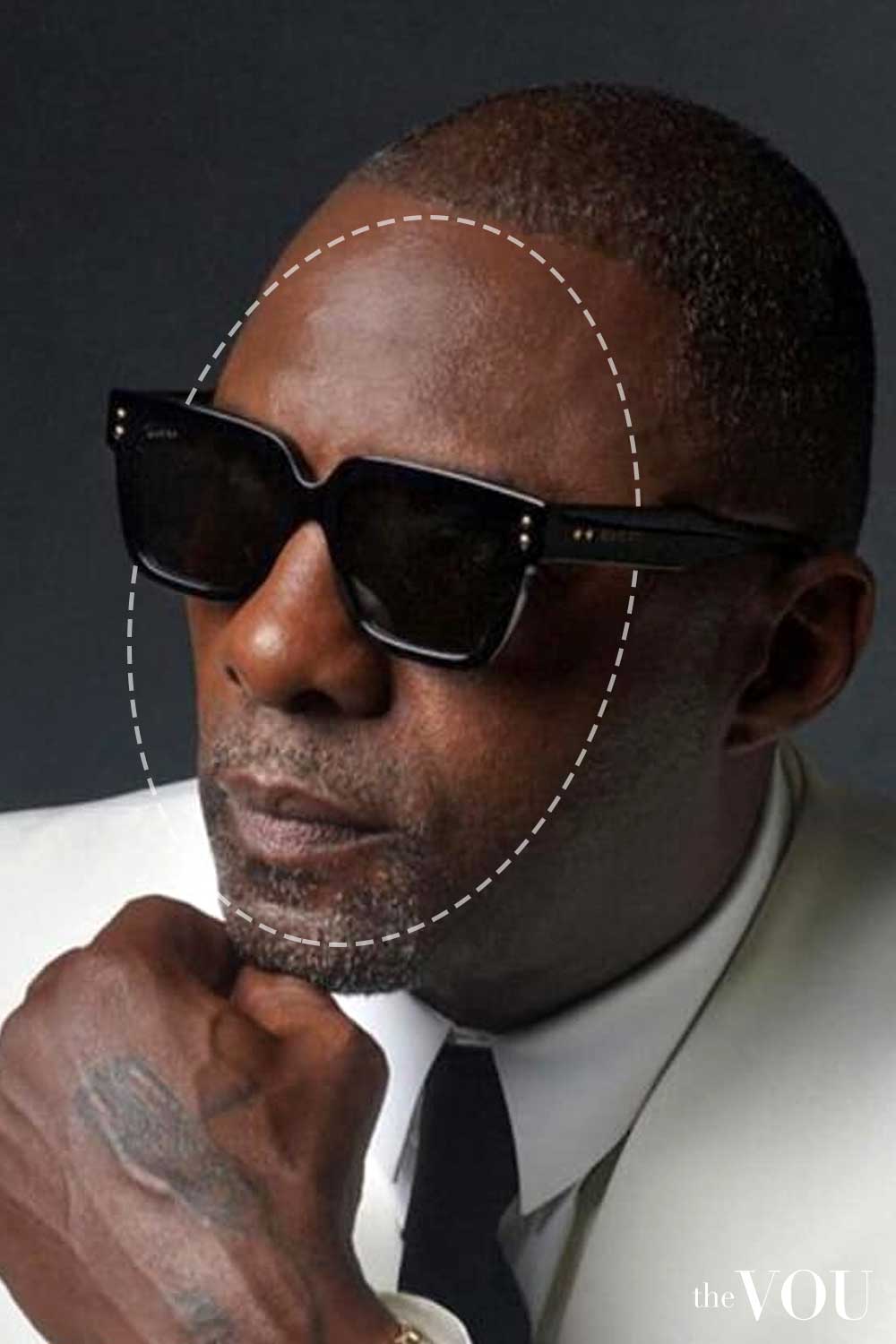
What to check: depth is the trap here, because a square front that suits your width can still land on your cheeks when you smile, so run the smile check before anything else.
3. Wayfarer frames
The Wayfarer front is a trapezoid, wider along the top than the bottom, with the temples set high on the corners, which gives you a strong brow line without the flat severity of a plain rectangle.
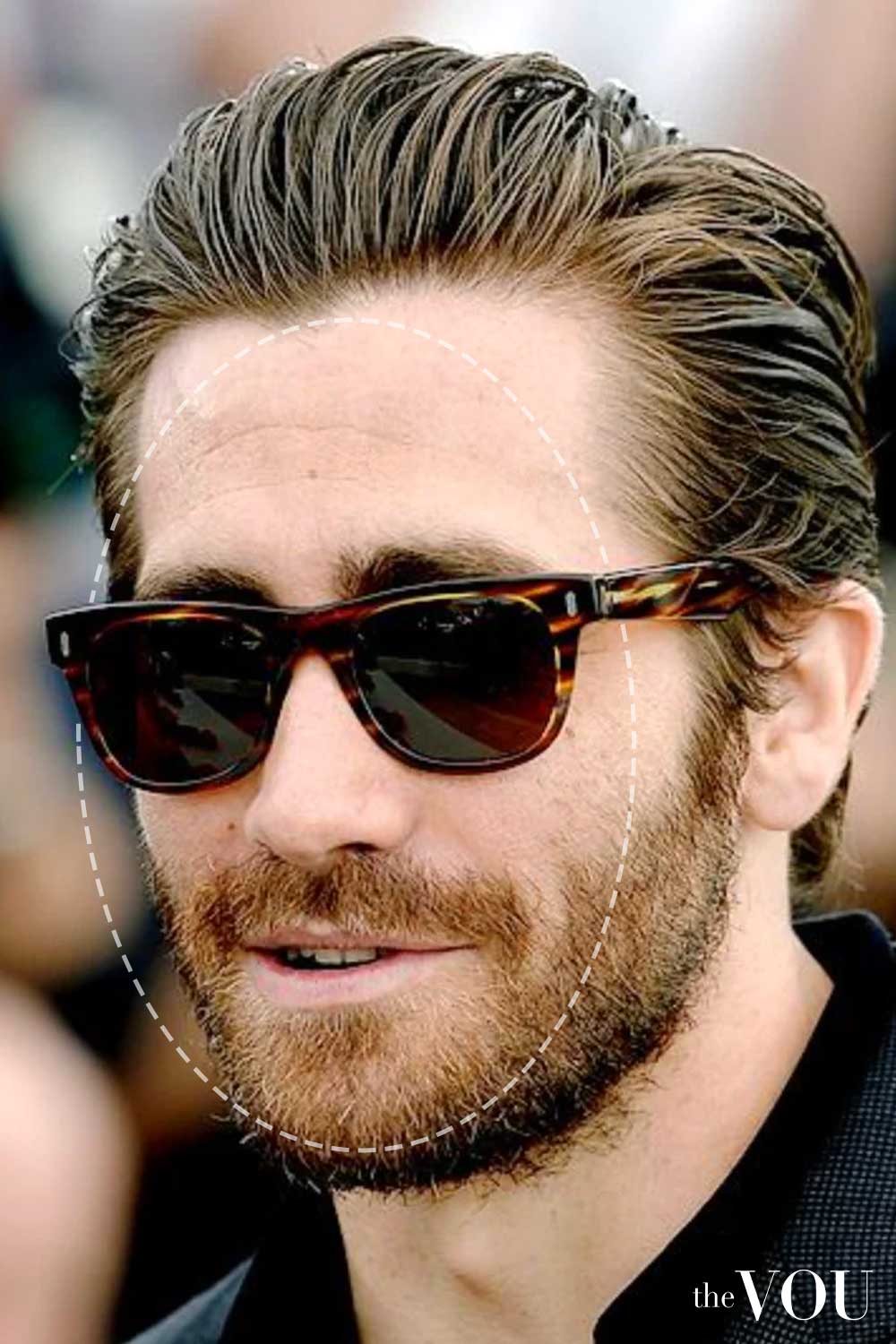
What to check: high-set temples change where the sides cross your head, so check for uncomfortable pressure where the sides cross your head, and look at the moulded bridge, which is fixed on most acetate Wayfarers and cannot be adjusted the way metal nose pads can.
4. Aviator frames
Aviator fronts pair a straight top bar with curved lower lenses, so you get a horizontal line across the brow and softened corners at the same time, which is part of the family’s lasting appeal.
Aviator geometry varies a good deal between makers and between models, so look at the actual front rather than assuming a shape from the name: some taper markedly towards the lower edge, others are squared off into what is usually sold as a navigator.
What to check: the lower curve is the one that reaches your cheeks, and adjustable nose pads on a metal aviator give you real scope to raise or lower the frame, which a fixed acetate bridge does not.
5. Clubmaster and browline frames
A browline frame carries a heavy top rim, usually acetate, over a thin metal rim or no lower rim at all, which concentrates the visual weight along your brow and leaves the lower half open.
What to check: many men like the top rim to follow their own brow, which is a question of appearance rather than a fitting requirement, and a semi-rimless frame holds the lens with a cord rather than a full rim, so ask your optician whether your lenses suit that mounting before you choose one.
When Your Face Does Not Match One Label
A good many men read the oval description, recognise the length and the gentle curves, then notice a jaw squarer than the description allows, or cheekbones that stand further out than the forehead.
Record what you actually see rather than forcing a single answer: overall length, the relative width of forehead, cheekbones and jaw, and whether the jaw corners are angular or curved are four separate observations, and mixed answers are ordinary rather than a failure of the test.
Where the label is unsettled, read the two guides either side of it and try frames from both shortlists, because the fit checks in step two hold whichever description turns out to suit you, and trying on two well-fitting frames side by side settles more than any diagram.
Frame Colour and Your Seasonal Palette
Colour does not change the geometry of a frame, and no frame colour widens or narrows a face, but colour does decide how much the frame stands apart from your skin, hair and eyes, which is the difference between glasses you notice and glasses you look past.
If you don’t know your seasonal colour, take our quiz, and treat a seasonal palette as one styling aid alongside fit, comfort, lens needs and your own preference.
Depth and brightness vary within each family and by subseason, so read the four groups below as directions to compare rather than fixed rules, and judge the actual frame shade on your own face.
Spring colour suggestions
Spring palettes lean warm and clearer, which points to frames in caramel, amber, warm tortoise, golden brown or clear warm tones.
Summer colour suggestions
Summer palettes lean cool and softer, which points to frames in cool grey, blue-grey, mauve, rose brown or cool tortoise patterns, and how far any of them stands out depends on your own colouring and on the frame.
Autumn colour suggestions
Autumn palettes lean warm and softer, at whatever depth suits the subseason, which points to deep brown, olive green, bronze, copper, or warm tortoise carrying amber highlights.
Winter colour suggestions
Winter palettes lean cool and clearer, with depth varying by subseason, which points to black, navy, clear crystal, burgundy, or cool tortoise with black through it.
For a fuller reading of your own colouring, see our Professional Seasonal Colour Analysis; its product page lists what it includes.
The Usual Warnings, and What They Are Worth
Three frames turn up on almost every list of styles to avoid for an oval face, and each warning is worth something narrower than it claims.
Oversized frames: the real objection is physical, because a frame that does not fit your head can press or sit loosely and slide forward, which moves the lenses away from the position they were fitted in. A large frame that measures correctly is a style you may well like.
Very small frames: the same objection in reverse, since a narrow front presses at the hinges and puts the temples under tension all day. Small frames that fit are a recognised look with a long history.
Perfectly round frames: the usual claim is that a round front fails to contrast with curved features, which is true and is not the same as a fault, because repeating the curve is aim two rather than an error. If you like round frames and the pair fits, wear them.
Questions People Ask
Q. Is an oval face really one and a half times as long as it is wide?
No agreed standard sets a numerical border between oval and its neighbours, and different guides print different ratios, so this page describes the outline rather than quoting a figure: longer than it is wide, gently curved along the jaw, with no single dominant width across forehead, cheekbones and jaw. Our oval face shape guide covers identification in full.
Q. Can I wear round frames with an oval face?
Yes. A round front repeats the curves of the face instead of contrasting with them, which is a look rather than a mistake, and the only questions that matter are whether the frame fits and whether you like it in the mirror.
Q. Does the face shape quiz confirm my face shape?
The quiz sorts your answers into one of our navigation categories and gives you a sensible place to start reading, and it is not an anatomical measurement or a professional assessment. Treat the result as a route into the guides, and change route freely if the description on the page does not match what you see in the mirror.
Q. How do I read a frame size if I am buying online?
Take the three numbers from a pair you already wear comfortably, compare them with the numbers on the product page, and allow for the fact that lens width is one lens rather than the whole front. Bridge width and temple length matter more than most buyers expect, and a home trial or a returns policy is worth more than any online face-shape tool.
Q. Which of the five families should I try first?
Start with whichever aim you chose in step one: rectangular or square for contrast, aviator or Clubmaster if you want a strong brow line without hard corners, and a round or oval front if you would rather repeat the curves. Try two that fit properly, side by side, and pick the one you keep looking at.
Take the First Step With The VOU’s Styling Quizzes
Start your style journey with our resources. First, take our Face Shape Quiz for a starting point on your face shape and initial styling guidance.
Try our Seasonal Colour Analysis Quiz as a starting point for colour comparisons, and treat the result as provisional.
Check your body shape with our Body Shape Quiz, and your personal style with our Fashion Style Quiz.
Styling Consultations
If you would like personal help, you can book a paid consultation.
Our styling services for men are paid consultations; the shop page lists what each one includes.
Visit our styling services page to see our paid consultations.