
Start here
What’s This About
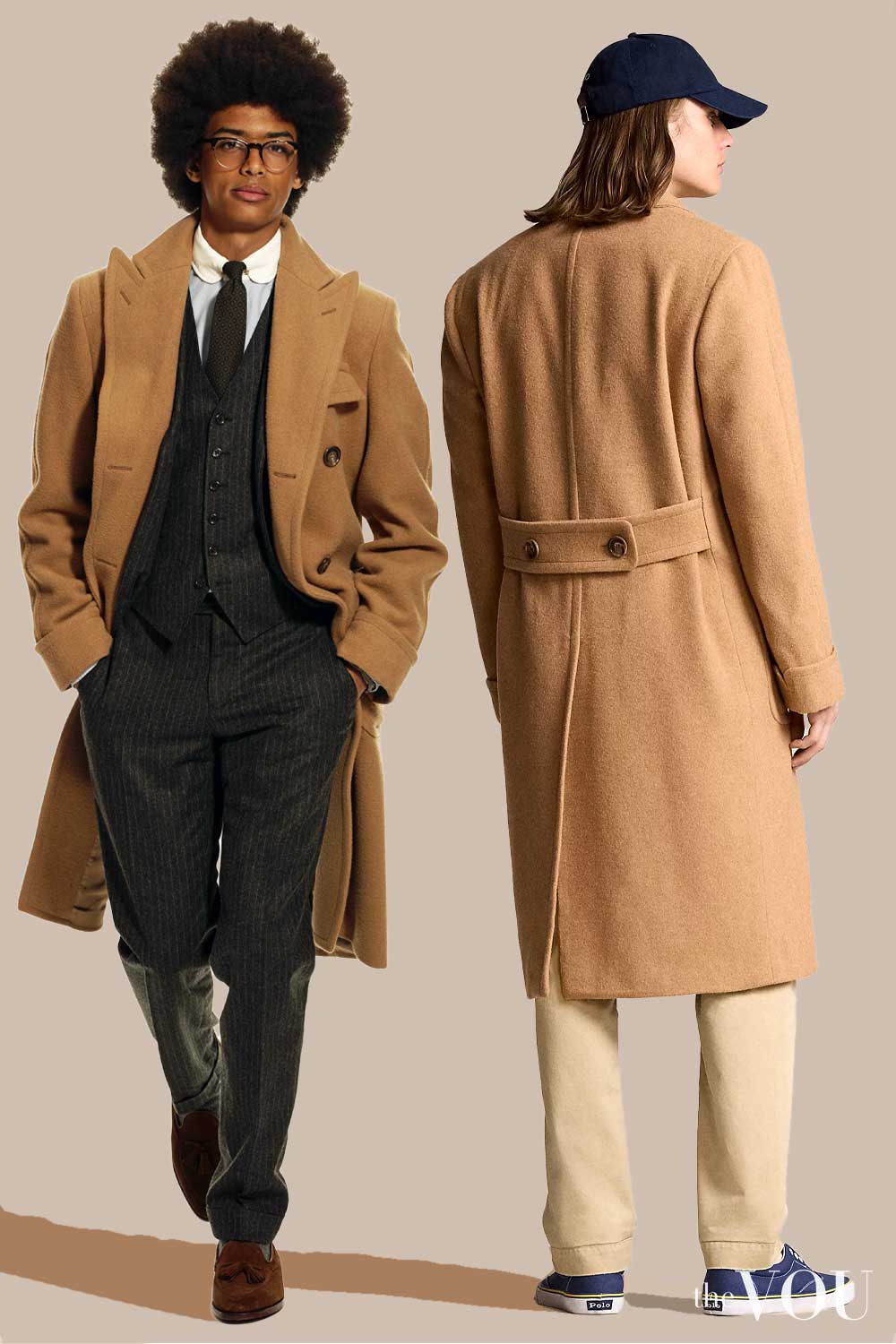
A polo coat is a roomy camel hair overcoat, usually double-breasted with patch pockets and a half belt, that works over a suit or over weekend clothes.
This guide explains how to choose and wear one, covering topics such as
Where the coat came from, on British polo grounds and American campuses
How it differs from the Chesterfield and the Ulster
Which seasons suit it
Five complete outfits, from a vineyard tour to a jazz club
What to check in the cloth, construction and fit
and many more!
Pick the cloth and the fit first, and the coat will cover workdays and weekends.
Key Points
01The classic polo coat is double-breasted with patch pockets and a half belt.
02Camel hair is the traditional cloth; blends are more hard-wearing.
03A double-breasted coat is cut to fasten on its working buttons.
04Label and price do not decide quality; check the coat itself.
A polo coat is a roomy, usually double-breasted overcoat in camel hair or a camel hair blend, with patch pockets, a half belt at the back and wide lapels.
This guide explains where the coat came from, how it differs from the Chesterfield and the Ulster, when to wear it, five complete outfits, and what to check when you buy one.
Why the Polo Coat Matters
The polo coat is one of the few overcoats that sits comfortably between formal and casual dressing.
It came from British polo grounds and became a winter staple of American Ivy League style.
Its warm camel colour and soft cloth work over a suit on a workday and over a jumper and jeans at the weekend.
That range makes it a practical choice if you want one good overcoat for a smart-casual or business-casual wardrobe.
Polo Coat Origin, From Sporting Fields to City Streets
The coat began in England as a “wait” coat that British polo players threw on between chukkas, the periods of play in a polo match.
The Museum at FIT describes that first version as little more than a heavy, bathrobe-type wrap coat.
Brooks Brothers introduced a polo coat in the United States around 1910, and a company history notes that the earliest version was white rather than camel.
When British polo teams made regular visits to the United States in the 1920s, the camel hair polo coat became fashionable on college campuses.
By then the classic American version had settled into a recognisable design.
Double-breasted, usually with six buttons, three to fasten (6×3)
A half belt at the back
Set-in sleeves, often with turned-back cuffs (raglan sleeves also appear)
An Ulster collar, with wide lapels that can be turned up against the wind
Patch pockets
A Brooks Brothers camel hair and wool double-breasted polo coat photographed in 1940 appeared in the museum’s 2012 Ivy Style exhibition, which shows how long the design has stayed in production.
Polo Coat vs. Similar Outerwear
Scroll horizontally to see all columns →
| Characteristics | Polo Coat | Chesterfield | Ulster |
|---|---|---|---|
| Material | Camel hair or a camel hair and wool blend | Plain heavy wool, classically dark | Heavy tweed, often Donegal |
| Fastening | Usually double-breasted (6×3) | Usually single-breasted with a fly front | Double-breasted (6×3 or 8×4) |
| Silhouette | Roomy, with a half belt at the back | Straight and tailored, no waist seam | Long and roomy for layering |
| Collar Type | Ulster collar | Notch lapels, often with a velvet collar | Ulster collar |
| Belt | Half belt, sometimes a full belt | No belt | Usually a half belt |
| Pockets | Patch pockets | Flap or jetted pockets | Patch pockets |
The polo coat shares its collar, belt and patch pockets with the Ulster coat, so the clearest difference between the two is the cloth.
In material, camel hair gives the polo coat its golden tan colour and soft surface, while the Ulster is cut from rough, heavy tweed and the Chesterfield from smooth, plain wool.
In silhouette, the polo coat is roomier than a Chesterfield, which leaves space for a suit jacket or a thick jumper underneath.
As for details, the patch pockets and the half belt give the polo coat a sporty look that a Chesterfield, with its flap pockets and clean front, does not have.
On formality, the Chesterfield is by convention the most formal of the three and the Ulster the most countrified, with the polo coat in between.
That middle position is why the polo coat works over a suit and over weekend clothes, and our overcoat styling guide compares it with other coat types.
Seasonal Suitability, or When to Wear the Polo Coat
The polo coat is a cold-weather coat, but a lighter version can stretch into autumn and spring.
Scroll horizontally to see all columns →
| Season | Suitability | Styling Considerations |
|---|---|---|
| Winter | Excellent | The main season for the coat. Wear it buttoned over a suit or heavy knitwear. |
| Autumn | Very good | Good for crisp days. Wear it open over lighter layers as temperatures change. |
| Spring | Good | Useful on cool mornings and evenings. A lighter cloth or blend helps. |
| Summer | Limited | Usually too warm, except on cool evenings in mild or coastal climates. |
Winter, the Polo Coat’s Main Season
Winter is when the polo coat earns its place.
Dense camel hair or a camel and wool blend keeps out cold wind, and the knee-length cut covers the top of your legs.
Wear it buttoned and belted over a suit on workdays or over a chunky jumper at the weekend.
Autumn Is Good for Changing Weather
As temperatures drop, the polo coat works as an easy top layer.
On milder days, wear it unbuttoned over a light jumper and shirt, and fasten it when the evening turns cold.
The camel colour sits easily with autumn browns, greens and burgundy, from corduroy trousers to tweed jackets.
Spring, Ready for Changeable Weather
A polo coat in a lighter-weight wool or blend can carry you through cool spring mornings.
Wear it open over a shirt and light cardigan, and take it off as the day warms up.
Lighter shades of camel or oatmeal look less wintry in spring.
Limited Use in Summer
In most climates the polo coat is too warm for summer.
On a cold evening by the sea or in a mild climate, a lightweight version can still be useful, worn open or carried over your arm.
In every season, the weight of the cloth, how you layer underneath and your local weather matter more than the calendar.
Five Outfit Ideas for Polo Coat Styling
These five outfits show the coat at different levels of formality; any well-made equivalent of each garment works.
Autumn Vineyard Tour Outfit Idea
For a crisp day in wine country, wear the polo coat over a burgundy merino wool roll-neck jumper.
Add olive green corduroy trousers and brown suede chukka boots.
A patterned wool scarf in autumn colours finishes the outfit, and our guide to ways to tie a scarf covers the knots.
The camel coat sits well with the burgundy and olive, and you can take it off indoors without the outfit losing its shape.
Wear a camel polo coat, burgundy merino roll-neck, olive corduroy trousers and brown suede chukka boots.
Winter Polo Match Spectator Outfit Idea
At a winter polo match, the coat returns to its origins.
Layer it over a cream cable-knit jumper with taupe cavalry twill trousers and burgundy or brown leather boots.
A forest green cashmere or lambswool scarf and tan leather gloves keep you warm while standing outdoors.
The mix of cable knit, twill and camel hair adds texture without loud colour.
Wear a camel polo coat with a cream cable-knit jumper, taupe cavalry twill trousers and brown leather boots.
City Architecture Tour Outfit Idea
For a day walking around a city, wear the polo coat over a charcoal grey cashmere or merino roll-neck jumper.
Add slim or straight indigo selvedge jeans and plain off-white leather trainers for comfort on long walks.
A bright orange wool beanie adds one strong colour against the camel and grey.
This outfit shows the coat at its most casual while still looking put together.
Wear a camel polo coat, charcoal roll-neck jumper, indigo selvedge jeans and off-white leather trainers.
Winter Farmers’ Market Outfit Idea
For a cold morning at a market, layer the polo coat over a chunky oatmeal fisherman’s jumper.
Add dark green moleskin trousers and chocolate brown leather Chelsea boots that can cope with wet ground.
A soft lambswool scarf in a subtle tartan adds warmth.
The roomy patch pockets hold gloves and small purchases.
Wear a camel polo coat with an oatmeal fisherman’s jumper, dark green moleskin trousers and brown leather Chelsea boots.
Winter Jazz Club Evening Outfit Idea
For an evening out, wear the polo coat over a black fine-knit polo shirt.
Add charcoal flannel trousers and polished black leather loafers.
A burgundy silk pocket square is optional if you wear a jacket under the coat.
When you take the coat off indoors, the dark knit and flannel still look smart in a dimly lit room.
Wear a camel polo coat, black knitted polo shirt, charcoal flannel trousers and black leather loafers.
For more ways to wear the colour, see our camel coat styling guide.
Buying a Polo Coat
A good polo coat can last many winters, so check the cloth, the construction and the fit before you buy.
Fabric
Camel hair is the traditional cloth, valued for its softness, warmth and natural golden tan colour, and several alternatives are common.
Pure camel hair is soft and warm, but it can show wear sooner at high-friction points such as the cuffs, collar and pocket edges.
A camel hair blend is camel hair mixed with wool, often half and half, which adds durability while keeping much of the softness.
Wool. A dense wool polo coat gives good warmth and durability, usually for less money.
For cashmere blend, some makers offer cashmere-blend polo coats, which feel softer but need more careful wear.
Whatever the fibre, look for a dense, soft cloth and an even colour, and avoid cloth that feels thin or already shows pilling.
Construction
A well-made polo coat shows its quality in the details.
The buttons are horn or sturdy synthetic, sewn on firmly.
Buttonholes have neat, dense stitching that will not fray with daily use.
Seams show straight, even stitching with no loose threads.
The lining is smooth and attached cleanly, so the coat slides on easily over a jacket.
Pockets are patch pockets stitched on securely, with reinforced top corners.
Fit and Proportion
Fit means the coat is the right size for you; how roomy you want the cut is a separate, personal choice.
The shoulders should sit just beyond your natural shoulder line, so a jacket fits underneath.
The sleeves should cover a suit jacket sleeve and end around the base of your thumb with your arms at your sides.
The length usually falls around the knee; slightly shorter versions are easier with casual clothes, longer ones are warmer.
The coat should button over a jacket or thick jumper without pulling across the chest or at the buttons.
A tailor can shorten sleeves or adjust the back belt on a ready-to-wear coat, but shoulders that are too narrow are hard to fix.
Where to Look
Brooks Brothers introduced its polo coat around 1910, and many other makers include one in their winter ranges, though which makers carry one changes from season to season.
Judge the coat on its cloth, construction and fit rather than the label or the price.
Vintage and second-hand shops are a good source, because camel hair polo coats have been made for about a century and well-kept ones last.
A made-to-measure or bespoke tailor can also make a polo coat to your measurements.
Polo Coat Do’s and Don’ts
Do
Use its range, wearing it over a suit on workdays and over knitwear and jeans at the weekend.
Check the length in a mirror. Around the knee is the classic length, and shorter or longer is a choice.
Layer underneath, because the roomy cut leaves space for a thick jumper or a suit jacket.
Think about the setting. The camel colour stands out more than a navy or charcoal coat, so it suits occasions where a little colour is welcome.
Look after it by brushing the cloth after wear and hanging it on a broad hanger so the shoulders keep their shape.
Add a scarf and gloves in wool, cashmere or leather to finish the outfit.
Don’t
Don’t buy a coat that is tight across the shoulders or chest when buttoned over a jacket.
Don’t wear it in warm weather; it is a cold-weather coat.
Don’t treat it like a suit jacket, because the leave-the-bottom-button-open habit belongs to single-breasted jackets, and a double-breasted coat is cut to fasten on its working buttons.
Don’t skip alterations, as sleeve length and belt position are simple fixes for a tailor.
Don’t pair it with loud graphic T-shirts or sports tracksuits if you want it to look its best; plain knitwear and jeans keep it casual without a clash.
Don’t overfill the pockets. Gloves are fine, but heavy keys and phones pull the patch pockets out of shape.
Conclusion
The polo coat moved from British polo grounds to American campuses and has stayed in production for about a century.
Its camel hair cloth, patch pockets, half belt and Ulster collar set it apart from the Chesterfield and the Ulster.
Choose one that fits over a jacket, in a dense cloth you can wear for years, and it will cover workdays, weekends and winter evenings.
For other cold-weather coats with a similar feel, see our duffle coat guide, and to find the styles that suit what you like wearing, take the fashion style quiz.