Start here
What’s This About
If you have a slim or narrow build and want your clothes to give your frame more visual substance, heavier cloth, fitted layers and well-fitting tailoring are the most practical places to start.
This guide covers options for a slim build, such as:
heavier wool, twill cotton and chunky knits
three fitted layers instead of one bulky coat
jacket shoulders, armholes and length, and how to check them
fine stripes, herringbone and other textured weaves
ties, watches and leather goods in proportion to your frame
and many more!
A slim build is not a problem to fix, so treat every suggestion as an option to compare in the mirror.
Key Points
01Fit comes first: a jacket or jumper that fastens without pulling and sits close without clinging helps more than any fabric or pattern choice.
02Heavier cloth and textured knits tend to stand slightly away from the body, so they show the outline of a slim frame less closely than light, clingy fabrics.
03Several fitted layers usually add more visual depth than one oversized garment.
04Patterns, rise and lapels can shift where the eye goes, but none of them has a guaranteed effect, so compare them on your own body.
Plenty of skinny men are happy with how their clothes look, and a slim or narrow build does not need correcting.
If you would like your clothes to give your frame more visual substance, though, general style advice does not always address the choices that change how a slim frame looks in clothes.
This guide covers those choices: the weight and texture of the cloth, how you layer, how a jacket fits through the shoulders and chest, the scale of patterns, and the size of ties, watches and leather goods.
Start with fit.
A jacket, shirt or jumper that fastens without pulling, sits on your shoulders and reaches the right length matters more than any other choice here; everything else in this guide builds on a good fit.
A slim build describes your overall size, not your outline, so a slim man may match any of the seven body shape descriptions we use, from Rectangle to Inverted Triangle; the suggestions below work alongside whichever outline you have.
Wear Heavier Wool, Twill Cotton and Chunky Knits for More Visual Substance
The weight of the cloth changes how a garment hangs on a lean frame.
Heavier cloth tends to hang straighter and stand slightly away from the body, so it follows the outline of a slim frame less closely than a light, soft fabric that clings or creases.
Suit and jacket cloth is usually described by its weight in grams per linear metre.
Tailors’ guides place autumn and winter suitings, flannels among them, from roughly 340g upwards, with overcoat cloth heavier still, although the exact boundaries differ from one tailor to another.
If you want more body in a suit or jacket, ask to see the heavier cloths in the bunch or check the weight on the product page, and compare how each one hangs on you.
In knitwear, cable knits and ribbed knits add texture and some visual bulk.
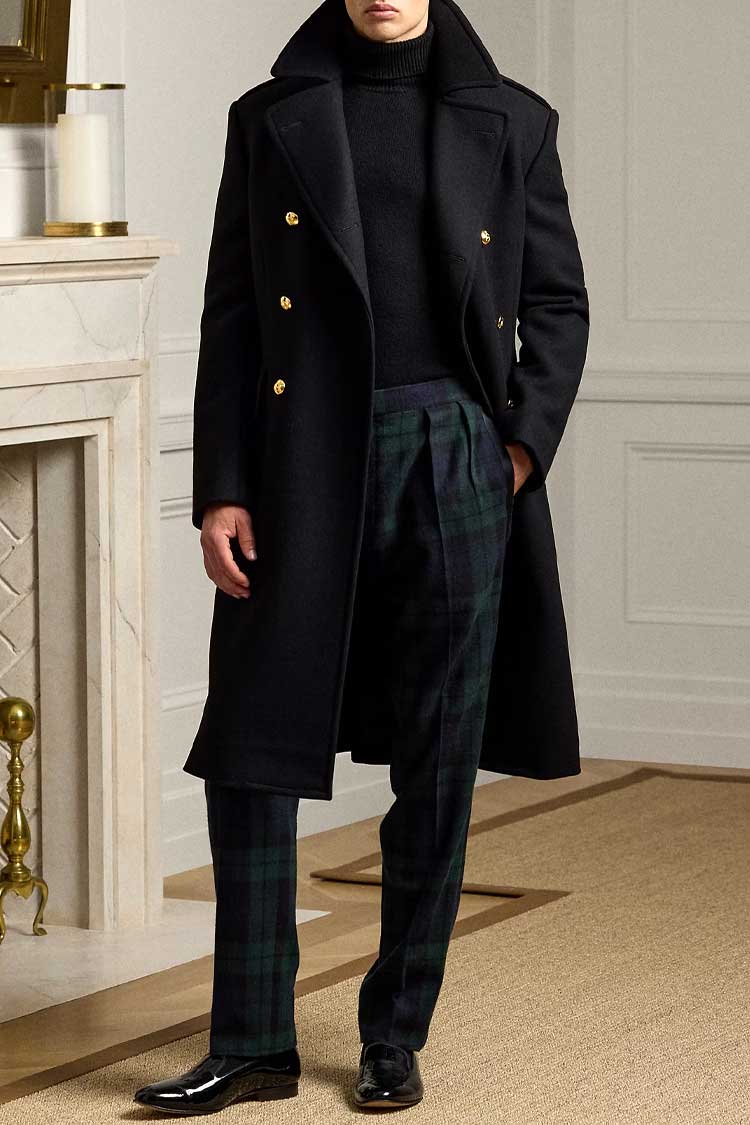
Heavyweight wool overcoats give a clean outline over everything you wear underneath.
Heavier coat cloth tends to keep its own shape rather than collapsing against your frame, which is useful if you want the coat, rather than your build, to set the outline.
Consider Ralph Lauren Purple Label Hand-Tailored Wool-Cashmere Topcoat.
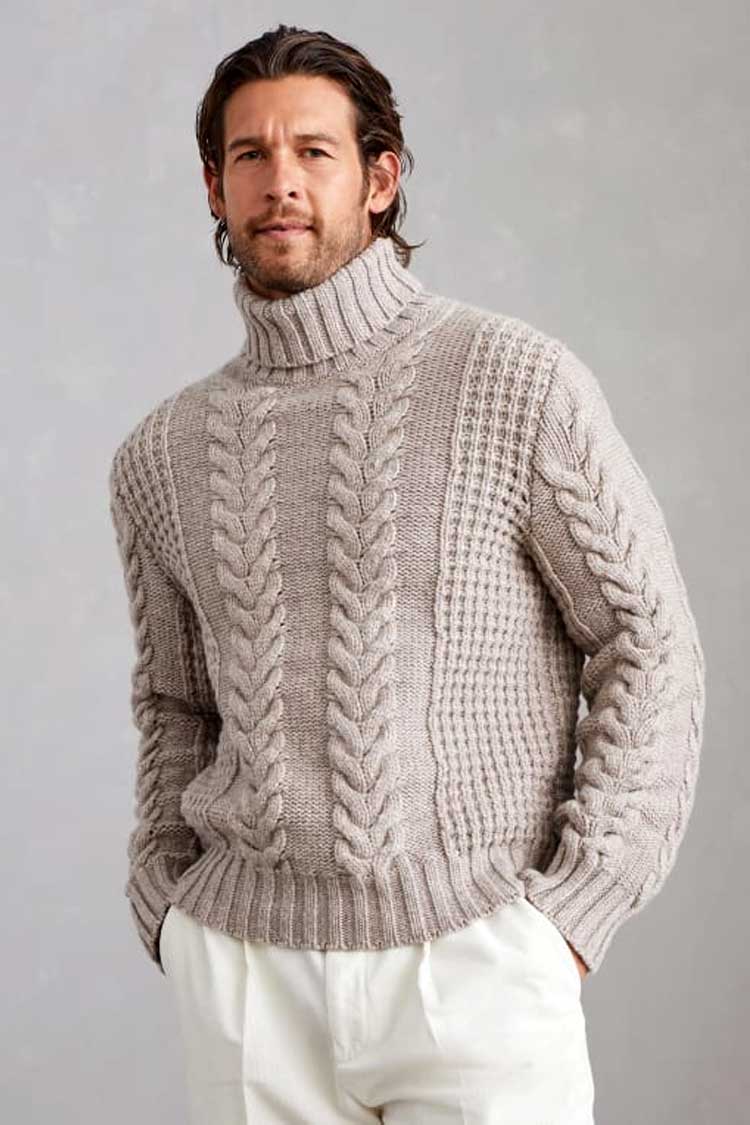
Chunky knit turtlenecks add texture and some bulk around the chest and arms.
The high neck covers the neck and adds depth at the collar, and the thick knit gives the upper body more visual weight; if you prefer an open neckline, a chunky crew neck or shawl-collar cardigan does a similar job.
The Brunello Cucinelli cable knit Cashmere turtleneck is a great option.
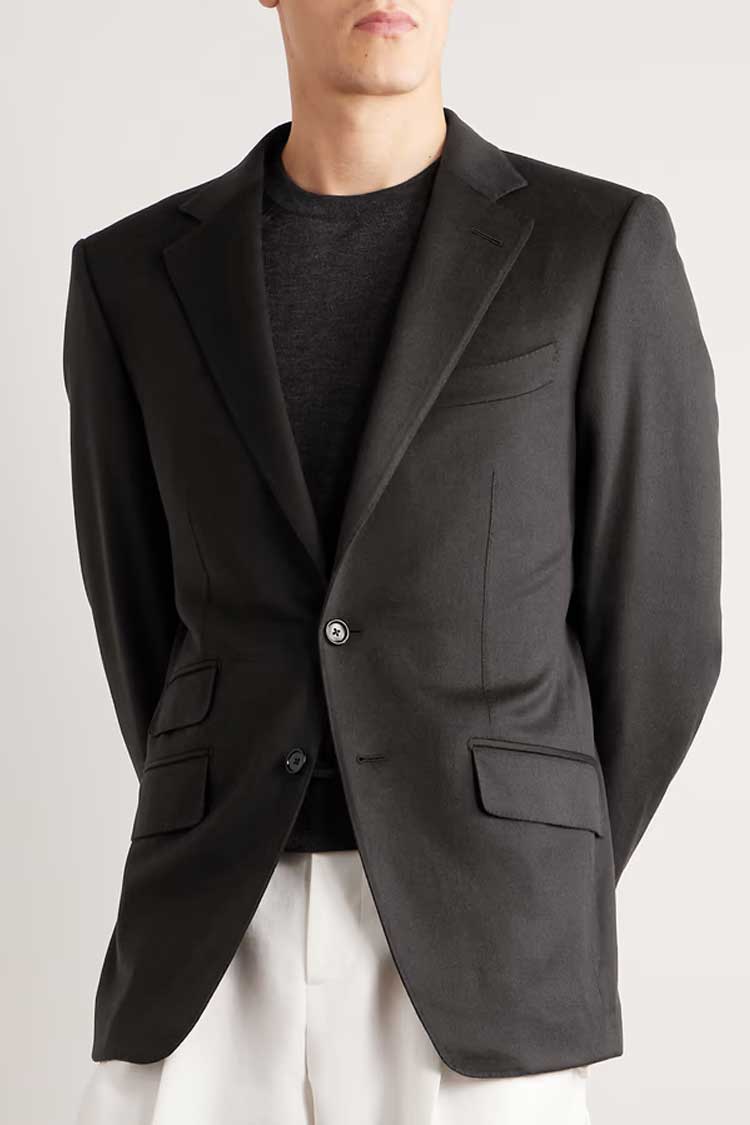
Textured wool or cashmere blazers maintain shape through the shoulders and chest.
Heavier wool holds its shape better than a light, soft cloth, which helps the jacket keep a clean line.
Go for the Tom Ford O’Connor Brushed-Cashmere blazer.
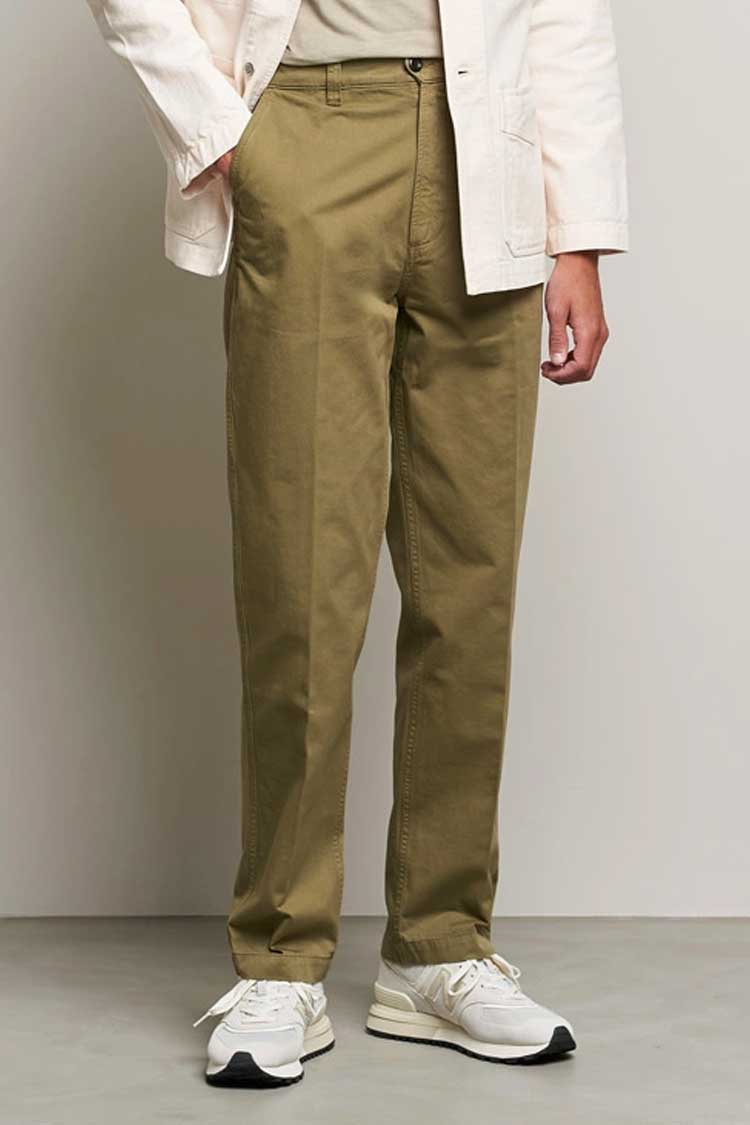
Heavy twill cotton trousers tend to hang cleanly without clinging.
Because heavier twill falls straighter than a light cotton, it follows the shape of the leg less closely.
One option is Drake’s Games Heavy Twill Cotton trousers.
Build Depth Through Three Fitted Layers Instead of One Bulky Coat
Layering is one of the most practical ways to add visual depth to a slim frame while keeping a neat outline.
Several fitted layers usually work better than loose, bulky garments, because each layer adds a little depth without leaving spare cloth hanging off your shoulders.
Start with a light base layer that sits close to the body, add a slightly heavier mid layer for warmth and texture, then finish with a structured outer layer such as a jacket or overshirt.
Check each layer for fit on its own and then together: a layer that is too loose can look as if it belongs to someone larger, while one that is too tight shows the outline underneath more clearly, which you may or may not want.
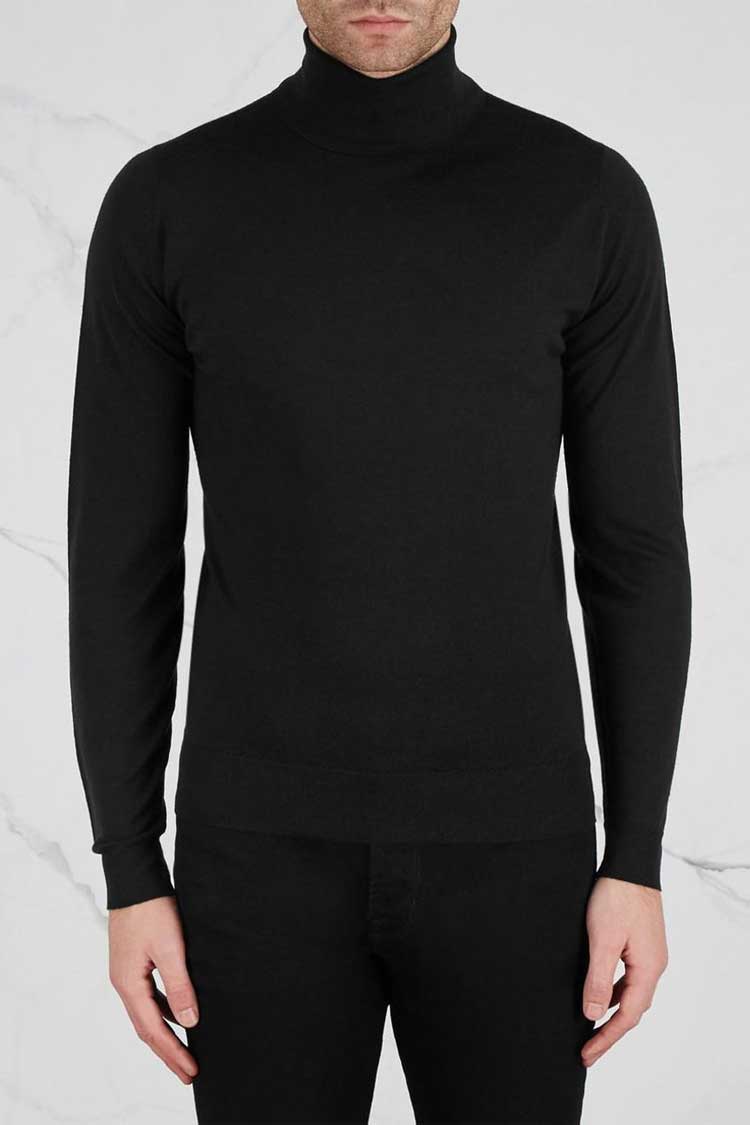
Fine Merino wool base layers, such as the John Smedley Cherwell extra-fine merino roll neck in black, give a smooth first layer without bunching.
A fine merino knit has some give, which makes it comfortable under other layers.
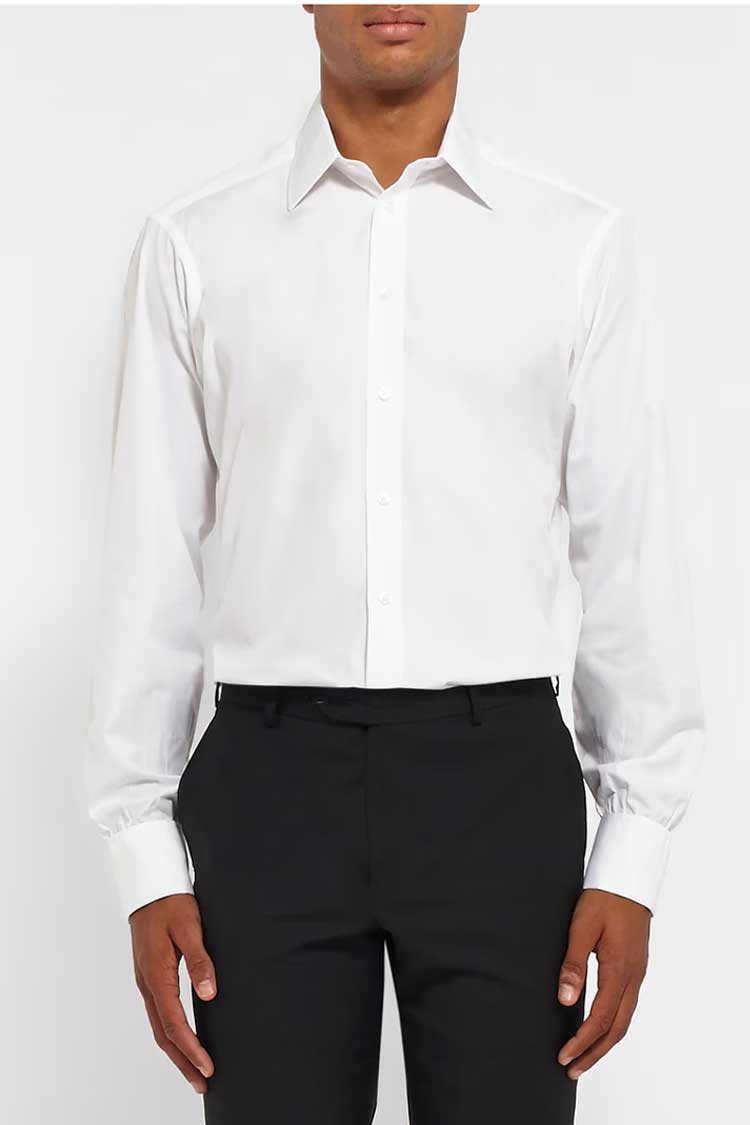
French-cuff dress shirts, such as Turnbull & Asser White Sea Island cotton French cuff shirt, add a little more detail at the wrists, and a dress shirt collar gives the neckline more definition than a knit.
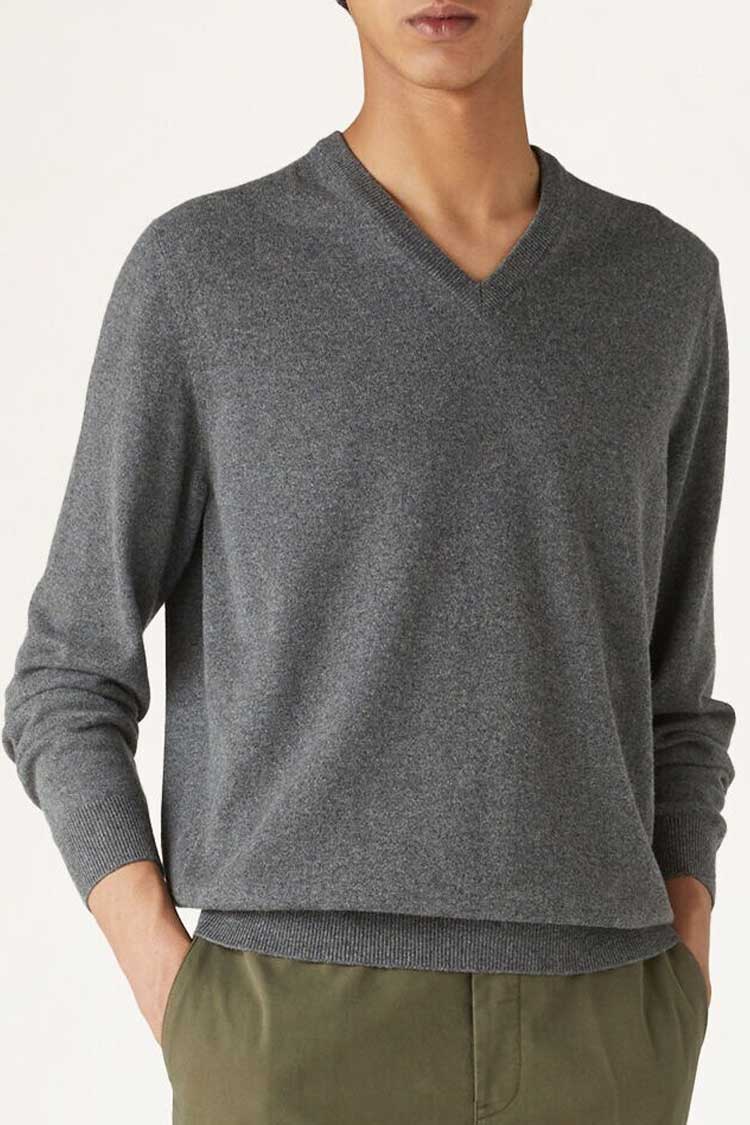
Lightweight cashmere jumpers add warmth without much bulk.
The fine knit keeps a clean line under a jacket while adding subtle texture.
Loro Piana baby cashmere v-neck sweater in light grey is a great option.
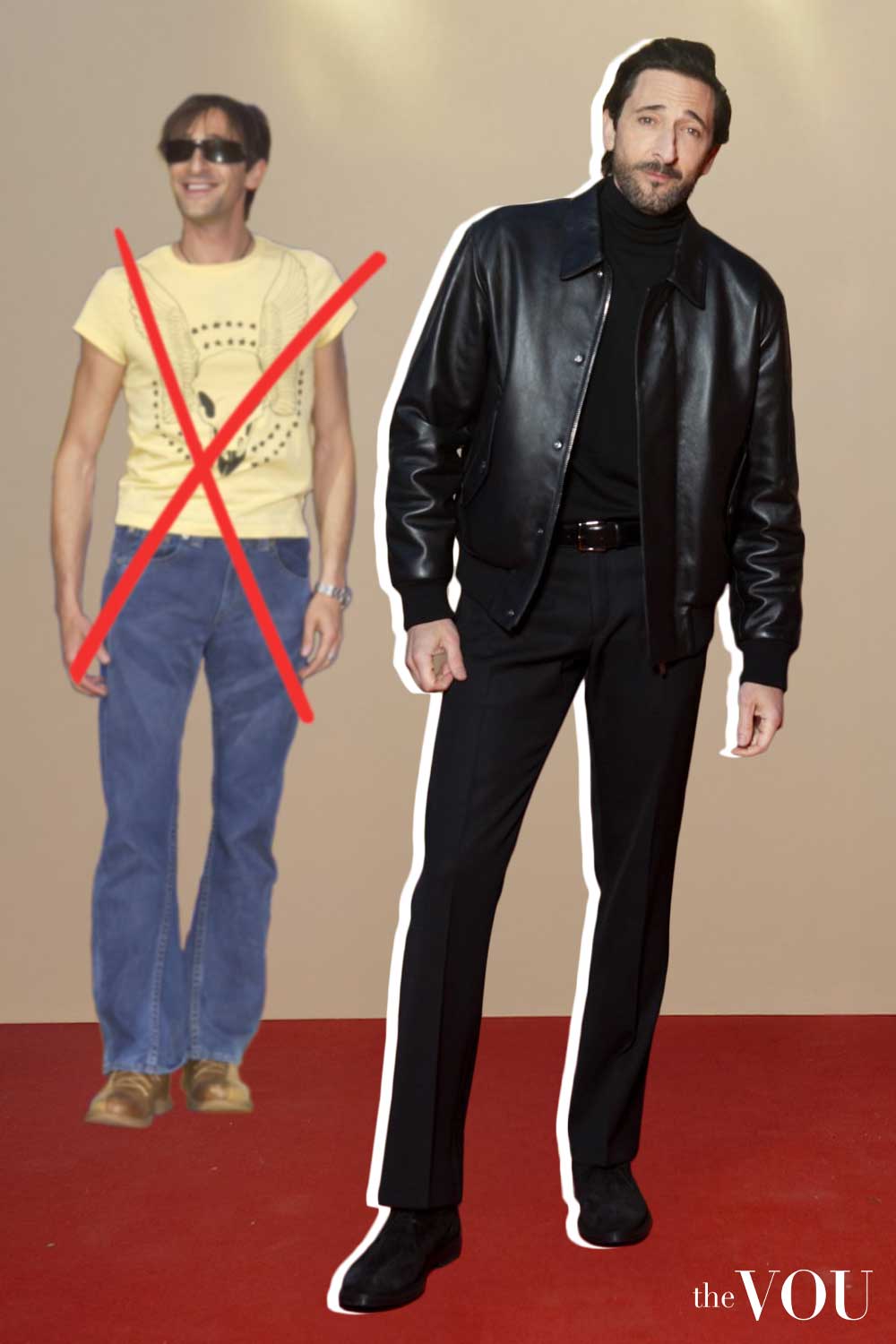
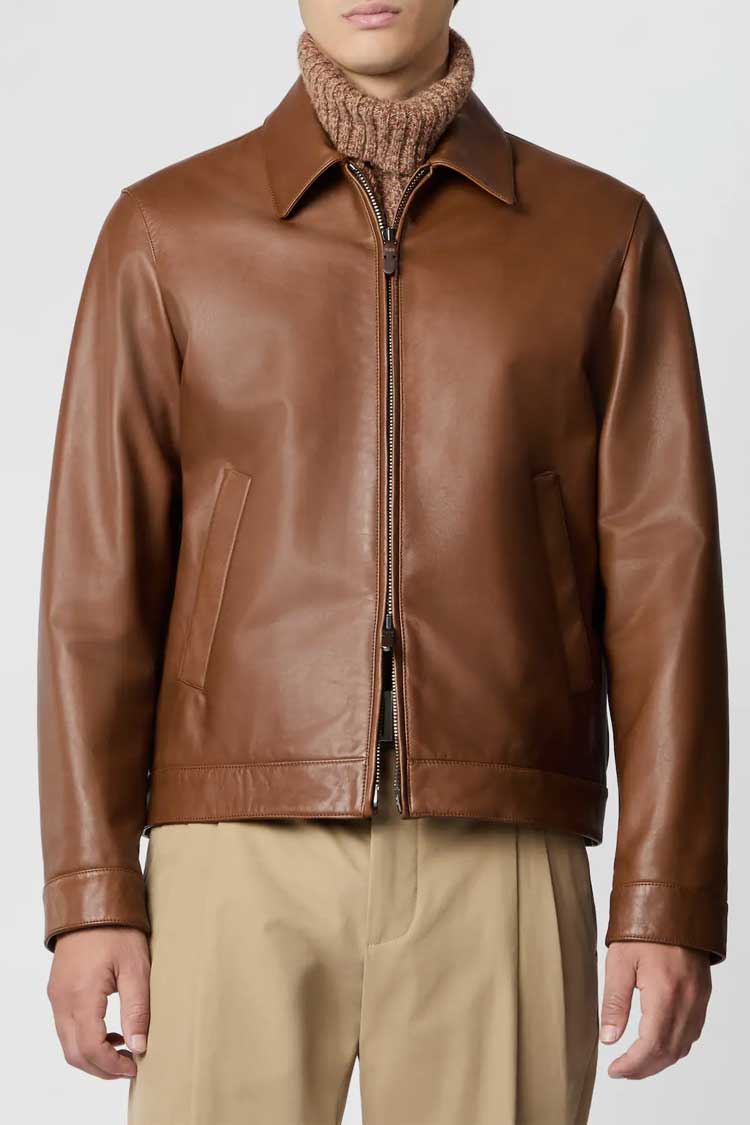
Leather bomber or shirt jackets make a useful outer layer, because leather holds its shape across the shoulders.
Tod’s leather shirt jacket is one example of this kind of outer layer.
Choose Suits and Jackets with Natural Shoulders and Higher Armholes
When shopping for suits and jackets, check the shoulders, armholes, length and room across the back before you think about style.
On a conventionally cut jacket, the shoulder seam usually ends close to the edge of your shoulder; a seam that drops well past it tends to leave spare cloth that a slim frame cannot fill, although some relaxed cuts extend the shoulder on purpose.
Higher armholes leave less spare cloth under the arm, which keeps a cleaner line from chest to sleeve and usually makes it easier to move your arms.
Jacket length is partly a style choice.
Many tailors aim for a jacket that covers most or all of the seat, while a shorter jacket shows more leg; try both lengths in the mirror and see which you prefer on your frame.
One useful check is to reach both arms forward: some tension across the shoulder blades is normal, but if the jacket pulls hard, the collar lifts away from your neck or the sleeves ride far up your arms, there is probably too little room.
If you can pinch a lot of spare cloth across the back, there is probably more room than a slim frame needs.
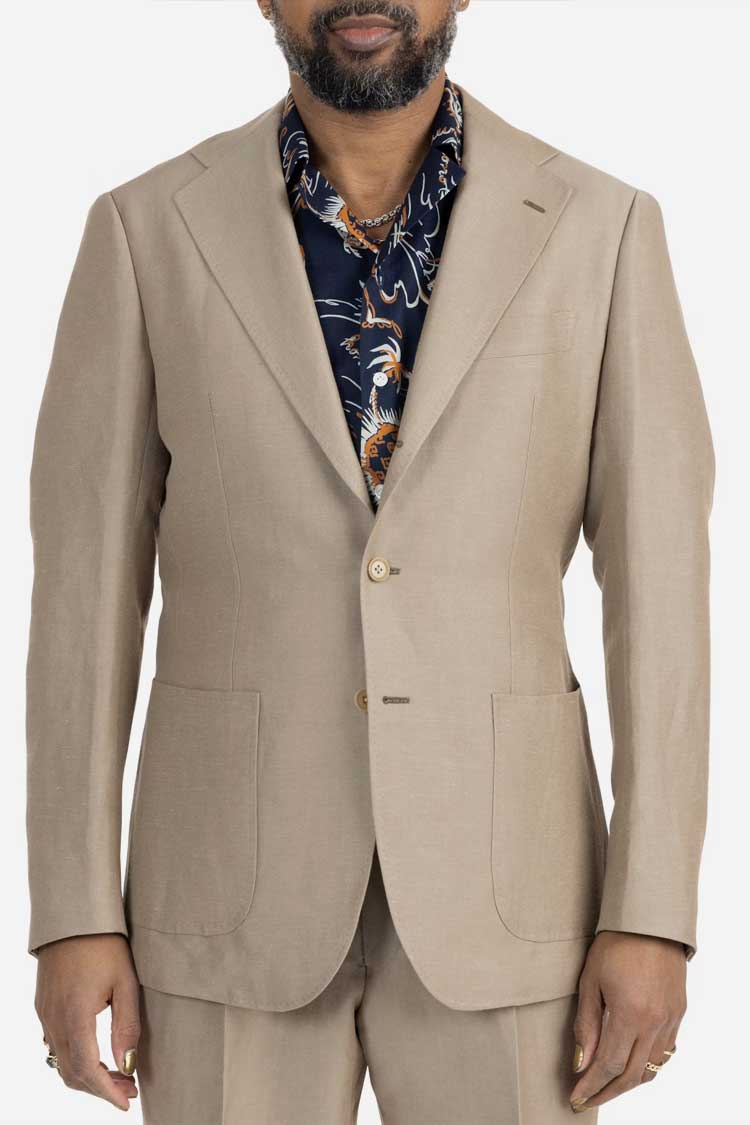
Natural shoulder jackets follow your own shoulder line with little or no padding.
The gentle curve of the sleeve head gives the top of the arm a soft, defined line, which suits you if you prefer a less built-up look than a padded shoulder.
Ring Jacket Model 3B wool suit jacket exemplifies this.
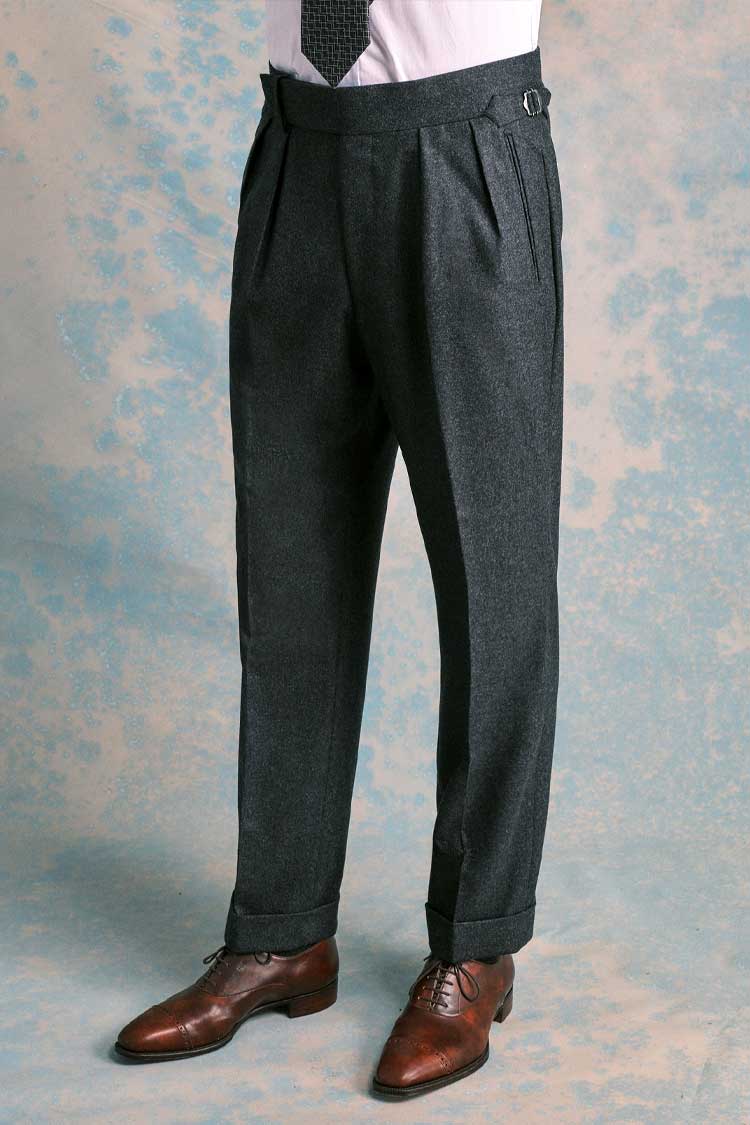
High-rise trousers, such as Stoffa single pleat high-rise trousers, can make the legs look longer, because the waistband sits higher and the jacket or knit meets the trousers further up.
Rise labels vary between makers, so check where the waistband actually sits when you stand and when you sit, rather than relying on the word high on the label.
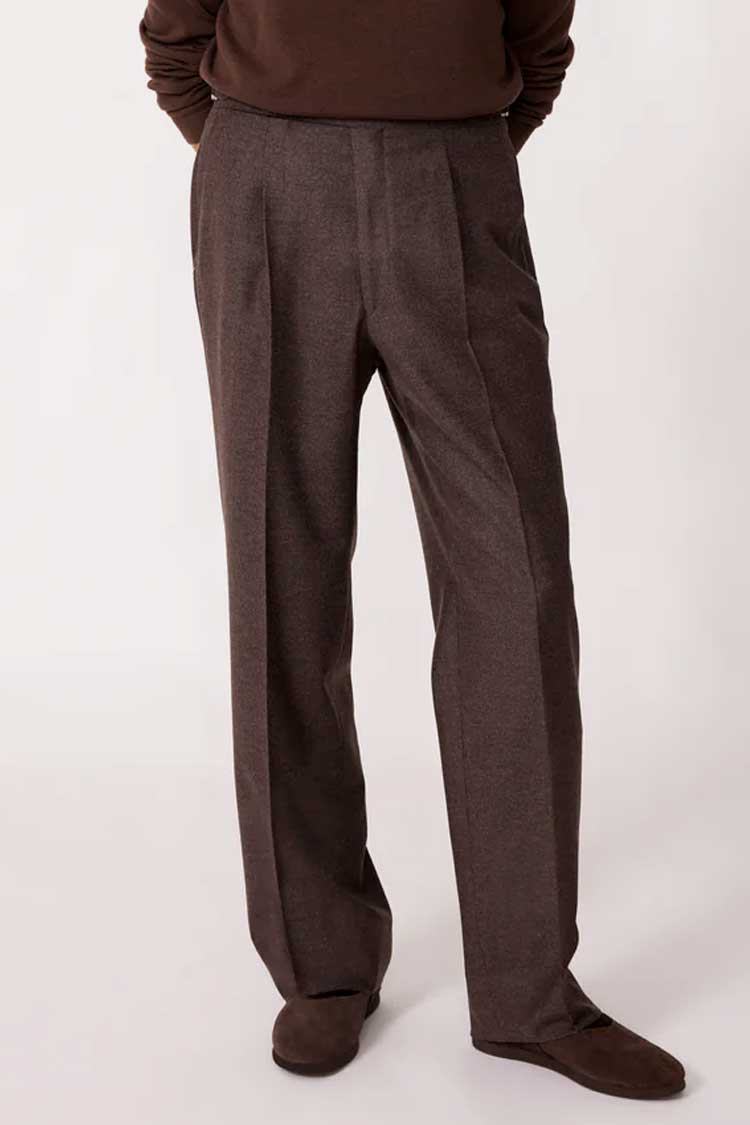
Side-adjusted trousers let you fine-tune the waist without a belt, which gives a cleaner line through the waist.
Side adjusters can take up a little slack, but they will not rescue trousers that are the wrong size through the seat and thigh, so check the fit there first.
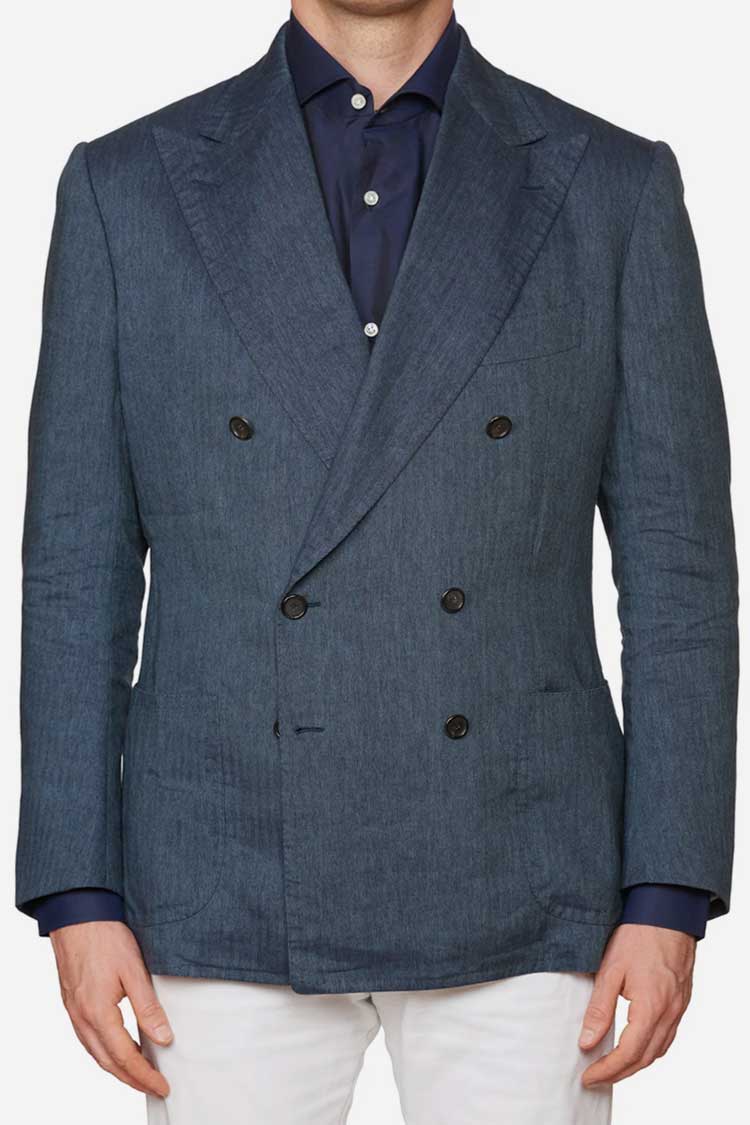
Double-breasted jackets overlap across the front, which adds a layer of cloth over the chest, and peak lapels point up and out towards the shoulders.
Cesare Attolini blue Herringbone linen-wool-silk jacket is one example that combines both.
Use Fine Stripes, Herringbone and Textured Weaves for Interest
Patterns and textured weaves add interest to plain tailoring, and the scale you choose affects how much attention they draw.
There is no reliable rule that a given stripe or check makes a body look wider or narrower; what a pattern does depends on its scale, its contrast and the rest of the outfit.
A pattern in proportion to your frame, such as a pinstripe rather than a bold chalk stripe, or a fine herringbone rather than a large check, is a common choice because a small-scale pattern is less likely to dominate the outfit.
A low-contrast pattern or texture adds depth without a stark contrast; a bolder pattern is still an option if you want the cloth to be the focus.
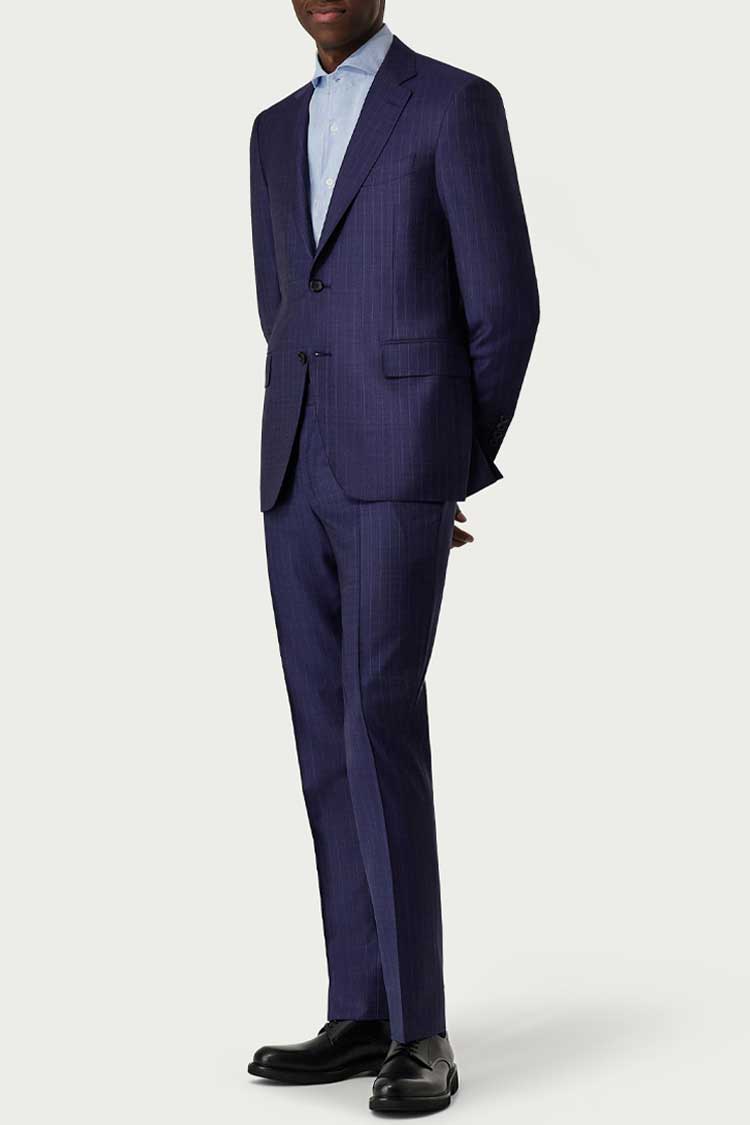
Pinstriped suits, such as the Canali navy cool pinstripe suit, create subtle vertical lines that add visual interest without dominating the suit.
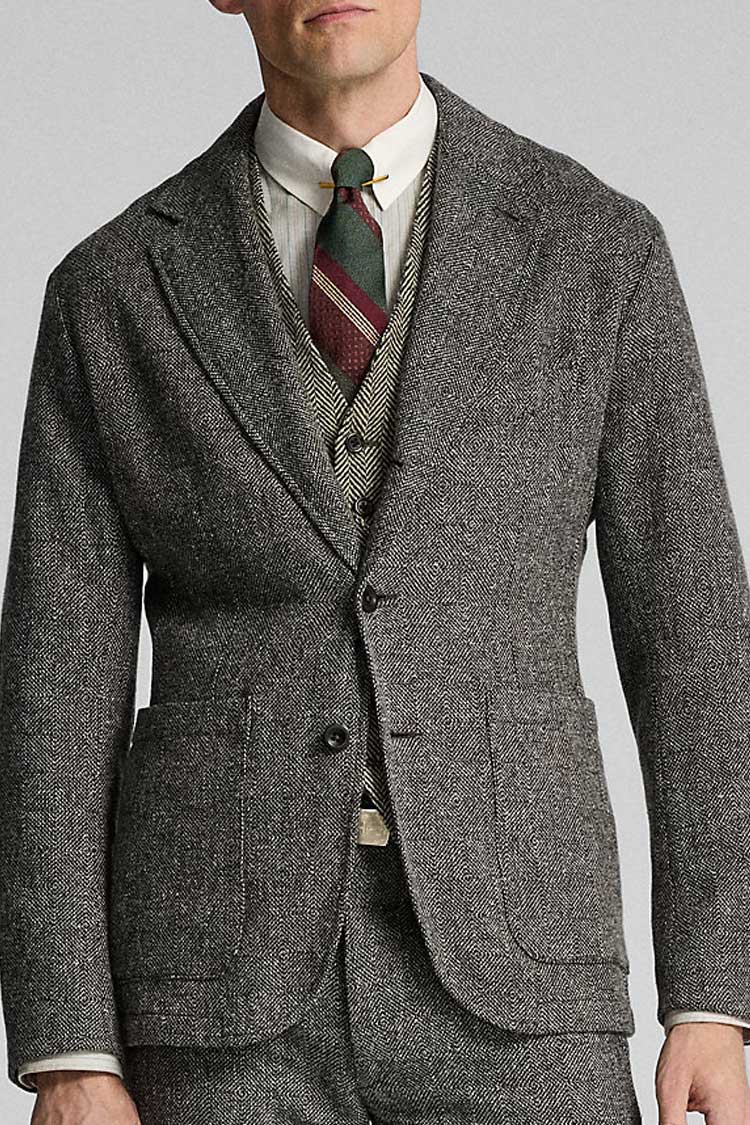
The V-shaped pattern of Herringbone sport coats adds natural texture and depth, and a fine herringbone keeps the pattern small in scale.
One example is RRL Unconstructed Herringbone Sport Coat.
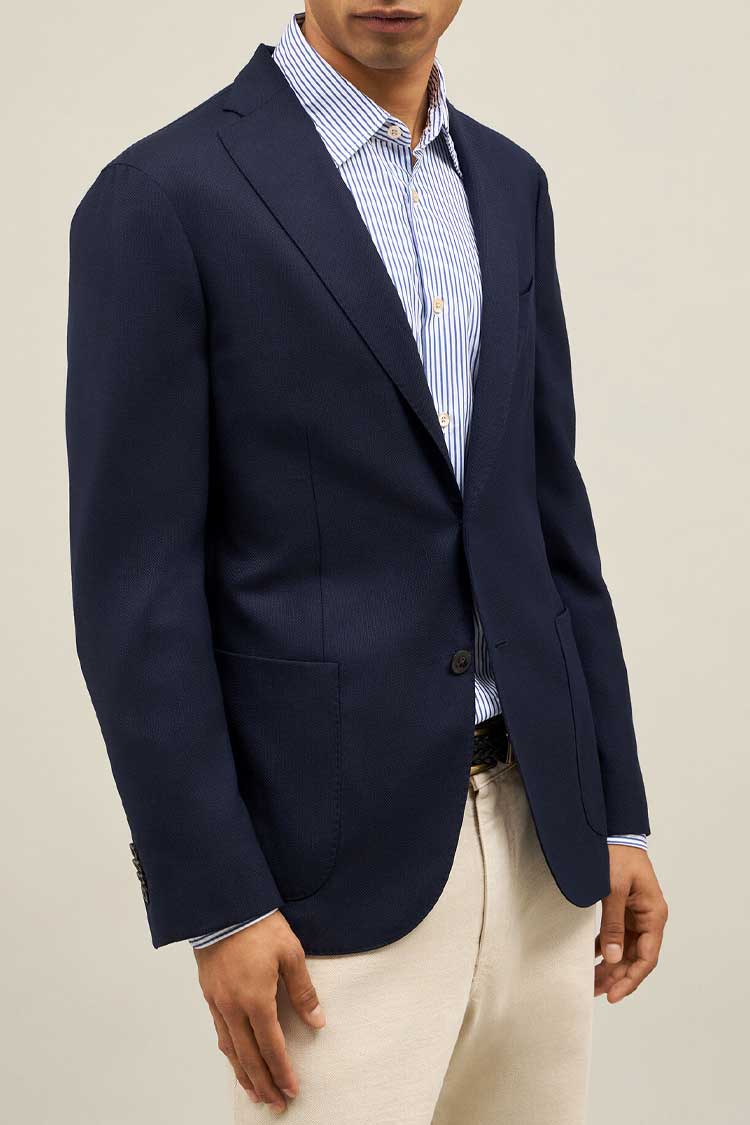
The textured weave of Hopsack blazers keeps its shape well, which makes a hopsack blazer a good choice for smart casual outfits.
Boglioli light wool Hopsack K-Jacket exemplifies this.
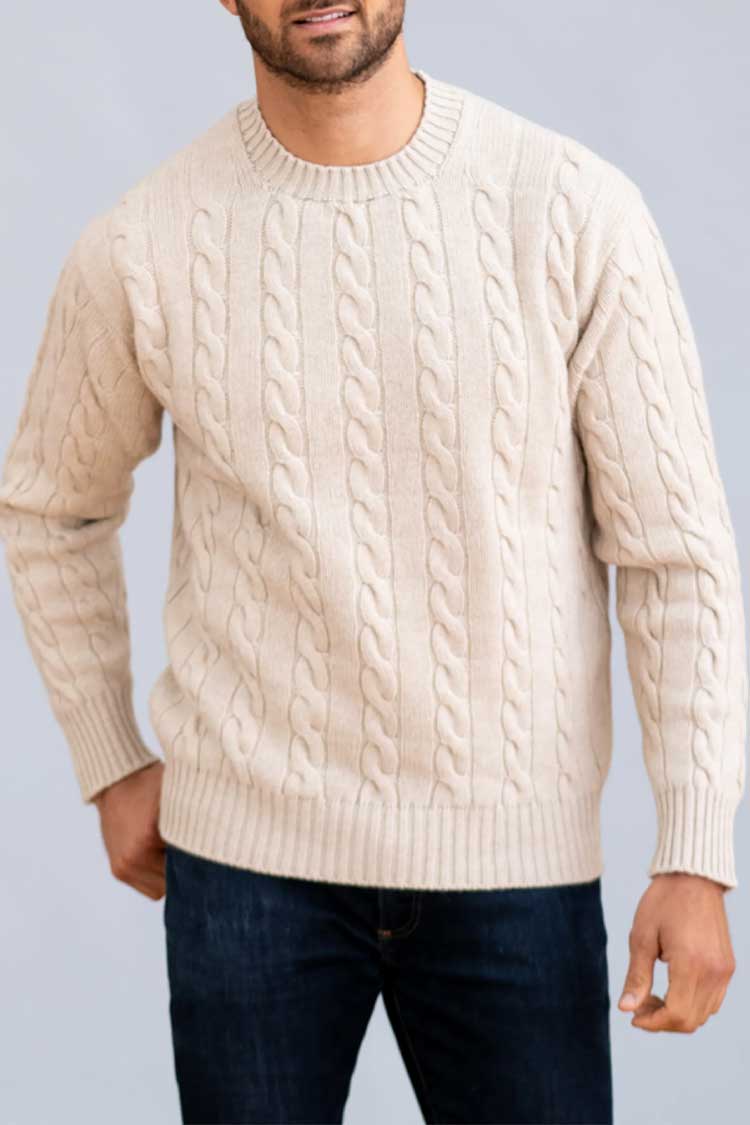
Thanks to their raised patterns, cable-knit jumpers, such as William Lockie Chirnside cable knit sweater, add bulk through texture rather than an oversized cut, which makes them a useful mid layer under a coat.
Choose Ties, Watches and Leather Goods in Proportion to Your Frame
Accessories work best on a slim frame when they are in proportion to it, neither so small that they disappear nor so large that they overpower you.
Ties, watch cases, straps and bags all have a scale, and choosing a middle scale is a simple way to add some visual weight without the accessory taking over.
In practice that means a tie whose width is in proportion with your lapels, a watch that sits comfortably on the wrist, and leather goods chosen for their quality and shape rather than their size.
For example, medium-width silk ties, such as Drake’s Handrolled silk tie, sit comfortably with lapels of ordinary width; a common convention is to keep the widest point of the tie roughly in proportion with the lapel.
The clean lines of structured leather briefcases (see Dunhill Duke leather briefcase) keep their shape, so the bag looks neat whether it is full or nearly empty.
Medium-case watches add some visual weight to the wrist without overwhelming it, and a slightly wider strap adds a little more.
Cartier Tank Must watch with Alligator strap is a great option.
Hand-rolled pocket squares, such as Charvet silk pocket square, add a neat detail at the chest without bulk.
Conclusion
Dressing a slim build well comes down to how fit, cloth weight and proportion work together.
Get the fit right first, then try heavier and more textured cloth, two or three fitted layers, jackets that sit cleanly on your shoulders, patterns in proportion to your frame, and accessories of a middle scale.
The aim is not to transform your frame but to choose clothes you feel good in, so compare each option in the mirror and keep the ones you like.
Style Like a True Gentleman
Before we say goodbye, fit does most of the work, whether or not you ever work with image consultants.
Professional styling starts with getting the fit right and choosing clothes that suit the occasion; knowing your body shape and seasonal colour palette can make the choosing quicker.
Our guides also cover styling by occasion, location, season and time of day, garments, footwear, accessories and heritage fashion brands.
Take our three quizzes, then book a consultation if you would like personal help:
1. Find Your Body Shape
Different garments suit different silhouettes.
To compare your outline with the seven body shape descriptions, take our body shape quiz for men.
2. Find Your Seasonal Colours
The garments in your outfits come in many colours.
To see which seasonal colour palette may suit you, take our seasonal colour quiz for men.
3. Find Your Fashion Style
To explore your personal fashion style, take our fashion style quiz for men; it suggests styles, outfit ideas and brands to explore.
Book a Consultation with The VOU
For personal help, you can book paid consultations with our image consultants and fashion stylists.
Our styling services for men page lists the paid consultations.
Wearing luxury brands is not enough on its own; how your clothes fit and suit the occasion matters more, and our personal style guide covers the rest.
For more on labels, see our guide to logo-heavy luxury brands and how to wear them.
Contact us if you would like to book a consultation.